
Quick Summary: CCA (Cold Cranking Amps) is the measure of how much starting power a car battery can deliver in the cold. Higher CCA helps your car start in winter. Check your owner’s manual and match or exceed the recommended CCA for reliable starts, especially in freezing weather.
If your car struggles to start on a cold morning, your battery’s CCA might be the reason. What is CCA in a car battery? It’s the key number that tells you how well your battery can crank your engine when temperatures drop. In this guide, I’ll explain CCA in simple terms and show you how to test, choose, and improve it. You’ll learn quick fixes, tools you need, and safe steps to get back on the road today.
What Is CCA in a Car Battery?
CCA stands for Cold Cranking Amps. It is the number of amps a 12‑volt battery can deliver for 30 seconds at 0°F (−17.8°C) while keeping the voltage at or above 7.2 volts. In plain English: CCA is your battery’s winter muscle. The higher the CCA, the better your car can crank in the cold.

Think of your battery like a runner. Warm weather is a flat road. Cold weather is a steep hill. CCA tells you how strong that runner is when the hill is icy and long.
Manufacturers test and rate CCA under a set standard. It lets you compare batteries fairly. Most gas cars need 400–650 CCA. Trucks, SUVs, and diesels often need 700–1,000+ CCA. Always match or exceed the factory spec.
Why CCA Matters in Real Life
When it is cold, oil thickens. Engines are harder to turn. Fuel may not vaporize well. Your starter needs more power from the battery to spin the engine fast enough to fire. If your battery cannot supply enough amps, the starter will drag, and you may hear clicks or a slow crank. Then nothing. That is where CCA saves the day.
Cold Weather Starting, Explained
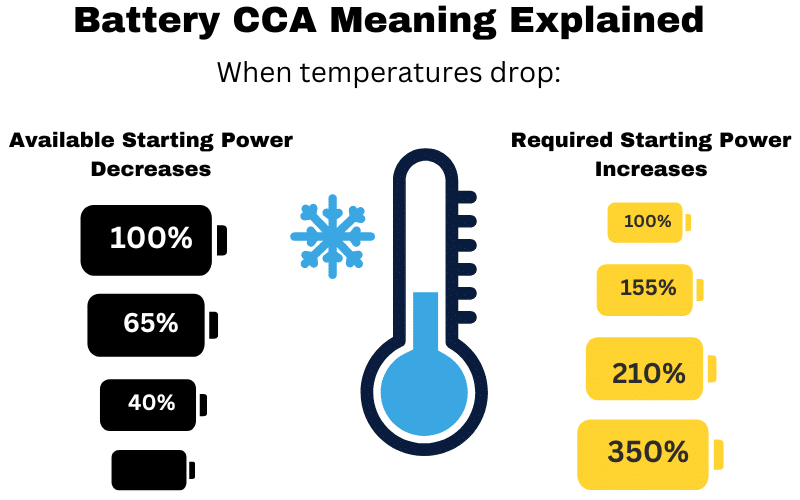
Cold slashes battery output. At 0°F, a healthy lead‑acid battery can lose roughly 40–60% of its warm‑weather cranking ability. Yet your engine may need almost twice the torque to turn. That is a tough combo. CCA measures how your battery performs under those exact harsh conditions. If you live where winters bite, you need enough CCA to cover the drop.

Engine Size, Oil, and Accessories
Bigger engines draw more current to crank. Thick oil (like 10W‑40 in winter) makes it even tougher. Add in headlights, blowers, heated seats, and the draw adds up. If your battery is small or old, you may struggle at the worst time—cold morning, late for work. That is why getting CCA right matters.

CCA vs CA vs MCA vs RC: Know the Labels
Battery labels can be confusing. Here is what the main ratings mean, and how to use them when buying a battery. Hint: for winter starts, CCA is king. But other ratings matter too for overall performance.

| Rating | Temperature & Test | What it Means | Best Use |
|---|---|---|---|
| CCA (Cold Cranking Amps) | 0°F, 30 sec, ≥7.2V | How many amps your battery can deliver in the cold. What is CCA in a car battery? It is your winter starting power. | Cold climates, winter reliability |
| CA (Cranking Amps) | 32°F, 30 sec, ≥7.2V | Starting power at freezing, not as tough as CCA. | Mild climates; marketing number in some cases |
| MCA (Marine Cranking Amps) | 32°F, 30 sec, ≥7.2V | Boat battery cranking rating at 32°F. Similar to CA. | Marine use; not a substitute for CCA in cars |
| RC (Reserve Capacity) | 80°F, @25A load to 10.5V | How long the battery can run essential loads if the alternator fails. | Overall endurance, accessories, emergencies |
Key tip: Some packages highlight CA or MCA because those numbers look bigger. Do not be fooled. Always compare CCA to CCA. Match or exceed your car’s spec for best results. As explained by Consumer Reports, CCA is the standard that matters for cold starts and fair comparison between models.
How to Choose the Right CCA for Your Car
Pick a battery that matches your car’s needs and climate. Start with the owner’s manual. It lists the battery group size and CCA range. If you live where winters dip below 20°F, aim for the higher end of that range or a bit above. In warm regions, you can match the spec without going overboard.
- Check the manual or under‑hood label for group size (e.g., 24F, 35, 48/H6, 94R/H7).
- Confirm the minimum CCA spec. Match or exceed it. Do not go lower.
- Consider climate: colder states benefit from higher CCA.
- Choose the right chemistry: Flooded, EFB, or AGM based on your car’s system.
- Compare warranties, but do not trade away proper CCA for a longer free replacement period.
Quick Rule of Thumb (Not a Hard Formula)
If you cannot find a spec, use this guide: Small 4‑cyl sedans often do fine with 450–550 CCA. V6 cars and crossovers: 600–750 CCA. V8 trucks and SUVs: 700–900 CCA. Diesels: 800–1,100+ CCA, sometimes with dual batteries. When in doubt, choose the higher CCA in the same group size.

Special Cases: Start‑Stop, Diesel, and Accessories
Start‑stop systems need stronger, deeper‑cycling batteries (EFB or AGM) with solid CCA. Do not downgrade to a cheap flooded battery or you will get rapid wear and warning lights. Diesels need big CCA due to higher compression. Big stereos, winches, and off‑road lights draw more power. Pair high CCA with strong reserve capacity for those builds.
How to Tell If Low CCA Is Your Problem
Not every no‑start is about CCA. Starters fail. Alternators die. Parasitic drains happen. But weak CCA shows a pattern: slow crank in the cold, quick improvement after a jump, and worse performance after the car sits overnight.
| Symptom | Likely Cause | CCA Connection | Quick Fix |
|---|---|---|---|
| Slow crank on cold mornings | Weak battery, thick oil | Insufficient CCA under load | Warm battery indoors, jump start, test CCA |
| Single click, then silence | Low voltage, bad connection, bad starter relay | Low CCA or corroded terminals limiting amps | Clean terminals, try jump, load test battery |
| Starts fine when warm, struggles when cold | Borderline battery capacity | CCA margin too small for climate | Replace with higher CCA within spec |
| Voltage looks OK, but cranks weak | High internal resistance | CCA degraded though voltage seems fine | Use a conductance tester; compare to rated CCA |
| Needs frequent jumps | Battery sulfation or charging issue | CCA reduced by age/damage | Charge fully, then test; inspect alternator output |
Pro tip: If a jump start immediately fixes a slow crank, your starter motor and engine are likely fine. The problem is often battery CCA or terminal connections.
Tools You Need to Diagnose CCA at Home
You do not need a full shop to test starting power. A few simple tools can tell you a lot in minutes.
- Digital multimeter (reads DC volts)
- 12V battery conductance tester (reads measured CCA and health %)
- OBD‑II scanner (to check for charging system codes)
- Smart battery charger/maintainer (AGM‑safe if you have an AGM battery)
- Jumper cables or a quality jump pack
- Wire brush and terminal cleaner
- Safety glasses and gloves
Step‑by‑Step: Test Your Battery’s CCA and Health
Follow these simple steps to check if your battery can still deliver the amps your car needs. Work in a well‑ventilated area, wear protection, and be careful around moving parts.
- Let the car sit for at least 3 hours (overnight is best) to remove surface charge.
- Measure open‑circuit voltage with a multimeter:
- 12.6–12.8V is fully charged.
- 12.2–12.4V is low. Charge before testing.
- Below 12.0V is deeply discharged. Charge first.
- Charge the battery to 100% if voltage is low. Many testers need a full charge to read CCA accurately.
- Connect the conductance tester to the battery posts (clean and tight).
- Enter the rated CCA printed on the battery label (e.g., 650 CCA).
- Run the test. Note:
- Measured CCA vs Rated CCA
- State of Health (SOH) and State of Charge (SOC)
- Internal resistance (mΩ)
- Interpret results:
- Measured CCA ≥ 80% of rated: Usually OK.
- Measured CCA 60–79%: Borderline. Plan replacement soon, especially before winter.
- Measured CCA < 60%: Replace now.
- If results are unclear, do a starter draw test:
- Have a helper crank the engine.
- Watch voltage. If it dips below 9.6V at 70°F, the battery is weak or the starter is drawing too much.
- Finally, check charging voltage with engine running:
- 13.8–14.8V is typical.
- Below 13.5V or above 15.0V indicates alternator or regulator issues.
Battery Voltage Chart: Good vs. Bad
Use this chart to read your battery’s resting voltage (car off for at least 3 hours). It helps you decide if you should charge, test, or replace the battery before CCA becomes a headache.
| Battery State | Open‑Circuit Voltage (12V) | What It Means | Action |
|---|---|---|---|
| Fully charged | 12.6–12.8V | Healthy charge level | Good to go; test CCA if the battery is old |
| 75–90% charged | 12.4–12.6V | Usable, but not ideal | Recharge, then test under load |
| 50–75% charged | 12.2–12.4V | Low; can cause slow cranking | Charge fully before CCA testing |
| Discharged | 12.0–12.2V | Likely to struggle | Charge ASAP; check for drains |
| Deeply discharged | < 12.0V | High risk of sulfation | Slow charge; battery may be damaged |
Note: These numbers apply at room temperature. In very cold weather, voltage readings can shift lower. Always confirm with a proper CCA or load test after charging.
Can You Have Too Much CCA? Myths vs. Facts
Short answer: A higher CCA battery will not damage your car. Your starter draws what it needs. More CCA is like having a bigger fuel tank for starting. It gives you margin in the cold and as the battery ages. The only downsides are cost and sometimes weight.
- Myth: “Too much CCA will fry my starter.” False. Amperage is pulled by the load; the battery does not push extra amps.
- Myth: “High CCA means it will last longer.” Not always. Build quality, usage, and heat affect life more than CCA alone.
- Myth: “Any higher CCA battery is fine in any car.” Not quite. You still must match the correct group size and venting/chemistry.
As explained by AAA, regular testing and proper installation matter more than chasing the biggest number on the label. A well‑sized battery with healthy CCA and proper maintenance beats an oversize unit installed wrong.
How to Boost Cold Starting Performance Today
If your car hesitates in the cold, try these quick actions. Many cost little or nothing and can help you through a cold snap before you replace the battery.
No‑Cost and Low‑Cost Tips
These simple moves reduce the load on your battery and increase your odds of a successful start.
- Turn off all accessories before you shut the engine off (heater fan, lights, seat warmers). It reduces the initial draw next start.
- Press the clutch (manuals) or shift to neutral (automatics) while starting to reduce load.
- Cycle the key to “ON” for 3–5 seconds before cranking. It wakes modules and primes fuel.
- Park inside a garage if you can. Even a few degrees help.
- Use an engine block heater or oil pan heater in very cold climates.
- Keep jumper cables or a jump pack in the car.
Maintenance and Charging Habits That Help CCA
Good habits preserve your battery’s ability to deliver its rated CCA. They also make winter starts less stressful.
- Clean terminals twice a year. Bright metal to bright metal. Tighten clamps.
- Use a smart maintainer if the car sits for more than two weeks.
- Fix parasitic drains. A glove box or trunk light can drain a battery overnight.
- Drive long enough for a full recharge (20–30 minutes highway after a start).
- Use oil with the correct winter rating. 0W‑20 or 5W‑30 flows better in the cold than 10W‑40.
- Replace old batteries before winter, not after they leave you stranded.
Based on this battery guide and winter driving advice from well‑known organizations like AAA, prevention beats emergency starts. A clean, charged, properly sized battery with solid CCA will start most healthy engines even in harsh conditions.
Replacement Guide: Picking, Installing, and Registering
Ready to replace your battery? Here is how to choose the right one, install it safely, and keep your car’s electronics happy after the swap.
Pick the Right Group Size and Chemistry
Do not force a battery that does not fit. Group size controls the case size, terminal position, and hold‑down notch so it locks in correctly.
- Find your BCI group size: 24F, 35, 51R, 47/H5, 48/H6, 94R/H7, etc.
- Match or exceed factory CCA. If you face harsh winters, go higher within the same group.
- Choose chemistry to match the car:
- Flooded (standard): Basic, cheaper, fine for many non‑start‑stop cars.
- EFB (Enhanced Flooded): Better for start‑stop and higher cycle life.
- AGM (Absorbent Glass Mat): Strong cranking, handles accessories, resists vibration, great for start‑stop and luxury cars.
- Check venting. Some batteries require a vent tube, especially in trunks or cabins.
Install Safely and Register When Needed
Modern cars can be picky. Some need a “battery registration” using a scan tool so the charging system adapts to the new battery. Skipping it can shorten life or cause warning lights.
- Save settings: Use a memory saver in the OBD‑II port if your car is sensitive to power loss.
- Power down: Turn ignition off. Remove key. Wait for modules to sleep (5–10 minutes).
- Disconnect negative first, then positive. Wear gloves and eye protection.
- Remove hold‑down. Lift battery straight up. They are heavy; use good form.
- Clean the tray. Check cables for corrosion or damage.
- Install new battery. Secure hold‑down. Reconnect positive first, then negative.
- Apply dielectric grease on terminals to slow corrosion.
- Start the car. Verify charging voltage (13.8–14.8V typical).
- Register the battery if your car requires it (common on BMW, Mercedes, VW/Audi, many newer models).
As explained by AAA, many no‑start calls come from loose or corroded terminals. A tight, clean connection is as important as the battery itself.
When to Replace the Battery (Age, Tests, Signs)
Batteries do not last forever. Heat, short trips, and vibration wear them out. Most last 3–5 years. If you live in a hot climate, expect the shorter end. Cold exposes weakness, but heat causes the damage.
- Age: Plan to replace around year 4 if you want to avoid surprises.
- Test results: Measured CCA below 70–80% of rated is a warning sign.
- Frequent slow cranks or multiple jumps: Replace before winter.
- Swollen case, leaks, or rotten egg smell: Replace now and check charging system.
- Dashboard battery light or voltage out of range: Inspect alternator and wiring too.
CCA and Warranty: What Actually Matters
Warranties can be confusing. A long “free replacement” period is nice, but it does not fix poor fit or low CCA. Prioritize the right group size, chemistry, and CCA first. Then consider warranty length and brand support.
- Free replacement vs. pro‑rated: Free replacement is more valuable early on.
- Nationwide support: Easier service if you travel.
- Build quality: Heavier plates and robust construction generally hold CCA longer.
- Correct charging profile: AGM batteries need AGM‑friendly chargers.
According to AAA’s testing and field experience, many battery failures are preventable with correct selection and maintenance. Warranty should back up a good choice, not replace it.
Common Mistakes to Avoid with CCA
Steer clear of these pitfalls. They waste money and can leave you stranded at the worst time.
- Choosing by price only. A bargain battery that misses the CCA spec is not a deal.
- Comparing CA to CCA. Apples to oranges. Use CCA to CCA for winter starts.
- Downsizing group size to fit a sale item. It may not clamp in safely or deliver enough amps.
- Ignoring chemistry. Start‑stop cars need EFB or AGM, not cheap flooded.
- Skipping a full charge before testing. Low SOC fakes a weak CCA result.
- Forgetting terminal cleaning. Corrosion robs cranking amps.
- Not checking the alternator. A bad charge can kill a good battery fast.
Real‑World Scenarios: What to Do Right Now
Here are common situations I see and the fastest way to get moving. Use these as checklists when time is tight.
- It is 10°F, slow crank, no start:
- Turn off all loads. Try again once.
- Jump the car. If it starts strong, suspect low CCA or low charge.
- Charge fully and run a CCA test. If measured CCA is low, replace with higher CCA.
- Car sat two weeks; now it clicks:
- Charge overnight with a smart charger.
- Check for parasitic draw with a multimeter if it happens again.
- Consider a maintainer for storage.
- New battery, still slow crank cold:
- Check oil grade. Use correct winter rating.
- Clean grounds and main power cable to starter.
- Test starter draw; a failing starter can mimic low CCA.
- Battery voltage is fine, but dash flickers on start:
- Inspect and tighten terminals and chassis grounds.
- Load test battery; high internal resistance can sag voltage under crank.
Understanding How Temperature Affects CCA
Temperature is the biggest factor in how much current a battery can supply. Chemical reactions slow in the cold. That limits the flow of electrons and reduces cranking power. Heat does the opposite short term but shortens long‑term life.
- At 80°F: Battery delivers near its rated CCA and capacity.
- At 32°F: Cranking power drops significantly; CA is measured here, not CCA.
- At 0°F: CCA is the measure; performance can be 40–60% of warm levels.
- At −20°F: Even good batteries struggle. A block heater or garage parking helps.
As explained by AAA, extreme temps are the top reason batteries fail early. Plan ahead when seasons change.
CCA, Reserve Capacity, and Your Driving Habits
CCA starts the party. RC keeps it going. If you do many short trips with lights and HVAC blasting, your alternator may not top off the battery. Over time, sulfation builds. CCA falls. A weekly longer drive or a maintainer can save you a replacement.
- Short trips: Under 10–15 minutes do not recharge well after a cold start.
- Heavy accessory use: Heaters, blowers, defrosters, audio; all draw power.
- Idling: Low alternator output at idle can lag behind demand.
- Smart tip: Combine errands or take a weekly 20–30 minute highway drive.
Reading the Label: Decoding Battery Specs Quickly
Here is how to scan a battery label in seconds and know if it is right for you. No more guesswork in the parts aisle.
- Find the group size (e.g., 48/H6). It must match your tray and cables.
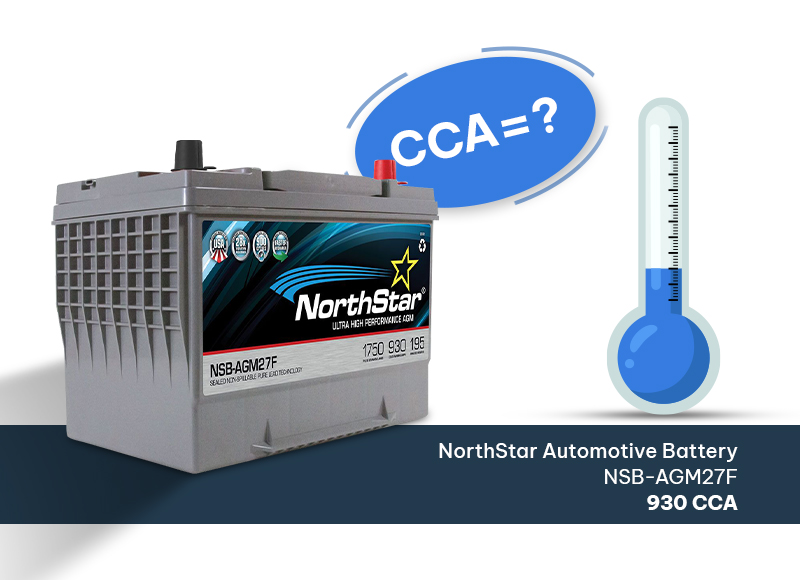
- Find the CCA rating (e.g., 760 CCA). Compare to the manual’s spec.
- Check RC (e.g., 120 minutes) if you run accessories often.
- Note chemistry (AGM/EFB/Flooded). Match your vehicle’s needs.
- Check date code. Newer is better. Fresh stock is usually less than 3 months old.
- Review warranty. Balance it with the right CCA and build quality.
Safety Tips When Working Around Batteries
Batteries can vent hydrogen gas and contain acid. Be smart and safe. A few careful steps prevent burns, sparks, and damage to electronics.
- Wear eye protection and gloves.
- Do not smoke or spark near the battery.
- Disconnect negative first; reconnect negative last.
- Use proper lifting technique. Batteries are heavy.
- Secure the battery firmly. A loose battery can short or leak.
- Dispose of old batteries at a recycler or auto parts store.
According to the National Highway Traffic Safety Administration, basic vehicle safety and maintenance help avoid roadside breakdowns and hazards. Treat the battery with the same respect you would give to any critical system.
Troubleshooting: When CCA Looks Fine but Starting Still Stinks
Sometimes you test and the numbers look okay, but the car still cranks hard. Here is where to look next.
- Starter motor: Worn brushes or bearings increase current draw.
- Ground straps: Corrosion or loose bolts cause voltage drop.
- Power cable to starter: Internal corrosion under the insulation is common.
- Ignition system: Weak spark needs faster cranking to catch.
- Fuel system: Leaky injectors or weak pump complicate cold starts.
- Engine issues: Low compression or thick, wrong‑grade oil.
Do a voltage drop test on the main cables. Measure from battery positive to starter positive while cranking. More than ~0.5V drop means resistance in that path. Repeat for grounds. Fixing cable issues can restore cranking speed even with a modest CCA battery.
Upgrades That Help Beyond CCA
If you drive in deep winter or run heavy accessories, consider upgrades that support your battery and charging system. These help both CCA performance and overall reliability.
- AGM upgrade (when supported): Better cranking and vibration resistance.
- High‑output alternator (for accessory‑heavy builds).
- Big‑3 wiring upgrade (alternator positive, battery positive, and chassis ground).
- Engine block heater or battery warmer in sub‑zero climates.
- Quality smart charger with temperature compensation.
At‑a‑Glance Buying Checklist (Print This)
Walk into the store with confidence. This quick list keeps you focused on the numbers that matter, not the marketing fluff.
- Vehicle: Year/Make/Model/Engine
- Group size: Must fit tray and cables
- CCA: Match or exceed OEM spec (go higher in cold regions)
- Chemistry: Flooded/EFB/AGM per vehicle needs
- RC: Higher is helpful if you use accessories
- Date code: Fresh stock preferred
- Warranty: Reasonable free‑replacement period
- Venting: Tube and port if mounted in cabin or trunk
FAQ
What is CCA in a car battery in one sentence?
It is the number of amps your battery can deliver for 30 seconds at 0°F while staying at or above 7.2 volts—your battery’s cold‑start strength.
How many CCA do I need?
Match or exceed your owner’s manual. Small sedans often need 450–550 CCA, V6 crossovers 600–750, trucks and V8s 700–900, and diesels 800–1,100+.
Is higher CCA always better?
Higher CCA gives more cold‑start margin and does not harm the car, but you still must choose the correct group size and battery type.
Why does my car start fine in summer but not winter?
Cold cuts battery output and thickens oil. Your battery’s available CCA drops, and the engine needs more torque to turn.
Do AGM batteries have higher CCA?
Often yes for the same group size. AGM also handles vibration and accessories better, and it is common in start‑stop cars.
How do I test CCA at home?
Charge the battery fully, then use a conductance tester to compare measured CCA to the rated CCA. Also watch cranking voltage under 9.6V as a warning sign.
Will a jump start hurt my car?
Used properly, no. Follow safe steps and polarity. As explained by AAA, improper jumps can damage electronics—so take care and use a quality jump pack or cables.
Conclusion
CCA is simple once you know what it means. It is your battery’s cold‑start power. The right CCA, in the right group size and chemistry, makes winter starts easy and stress‑free. Test your battery now, not after it leaves you stranded. Charge it fully, clean the terminals, and read the measured CCA. If it is borderline, replace it before the cold hits. You will save time, money, and a lot of hassle.
When you pick a new battery, match or exceed the CCA in your manual, especially if you live where winters are harsh. Choose quality, install it safely, and keep it maintained. With the right CCA on your side, your car will fire up when you need it most, from frosty mornings to late‑night trips—and every start in between.