
Quick Summary: DIN vs BCI battery sizes are two sizing standards. DIN is common in European cars (H5/H6/H7), and BCI is used in North America (Group sizes like 48, 49, 65). Match the standard your car was built for, check dimensions and terminals, and choose the right CCA. This guide shows you how to pick, test, and replace with confidence.
Staring at a dead battery or shopping for a new one can feel stressful. DIN vs BCI battery sizes add to the confusion fast. The wrong size means loose fit, short cables, or a no-start morning. Don’t worry. I’ll make it simple. In this guide, I’ll explain the differences, show you how to find your exact fit, help you test your battery at home, and walk you through safe replacement.
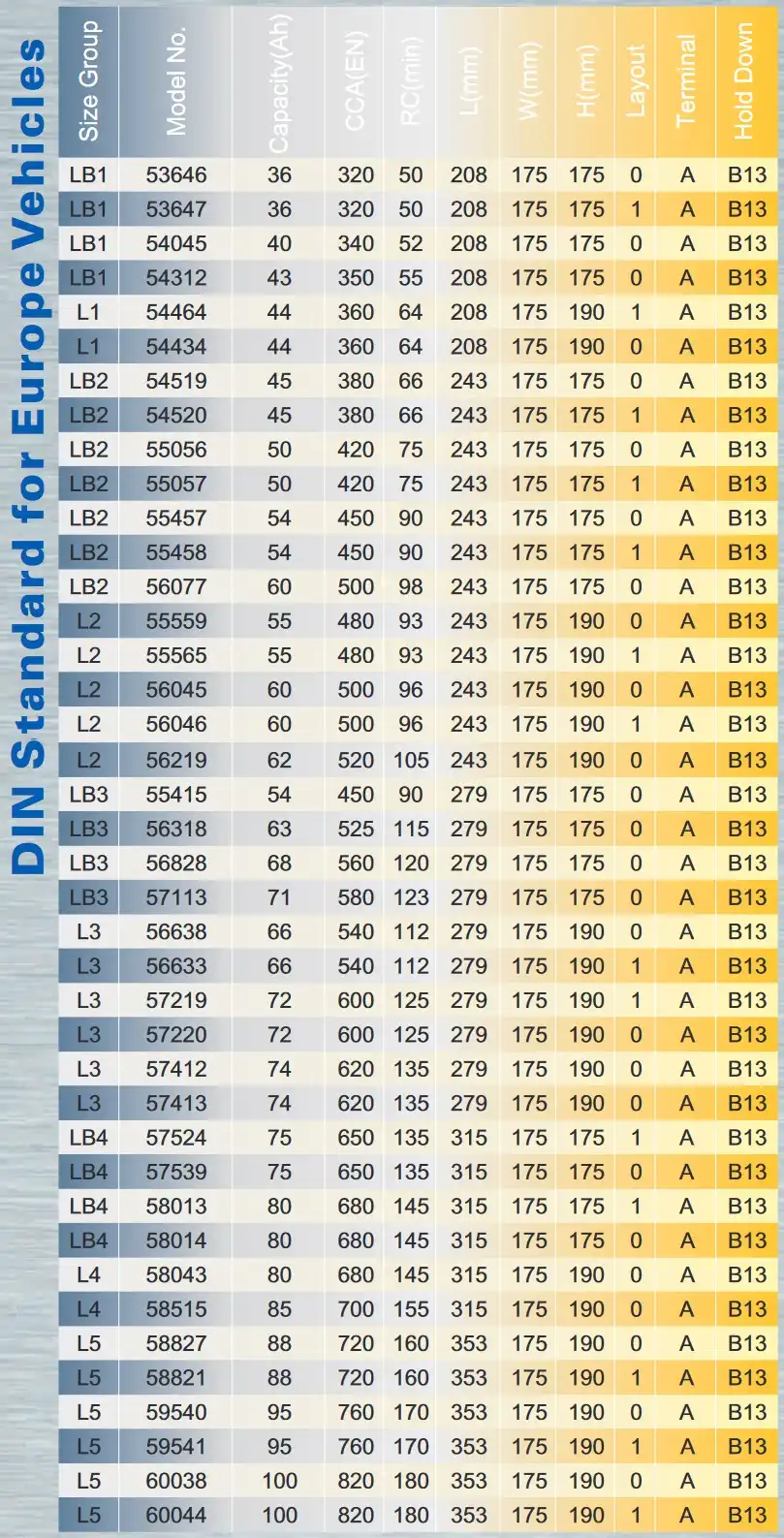
DIN vs BCI: What Do These Battery Sizes Mean?
DIN and BCI are two different sizing standards for car batteries. DIN comes from Europe. BCI comes from North America. Both define the battery’s length, width, height, and terminal layout. They help make sure a battery fits the tray and cables in your car. European cars in the US often use DIN sizes. Most domestic cars and trucks use BCI sizes.
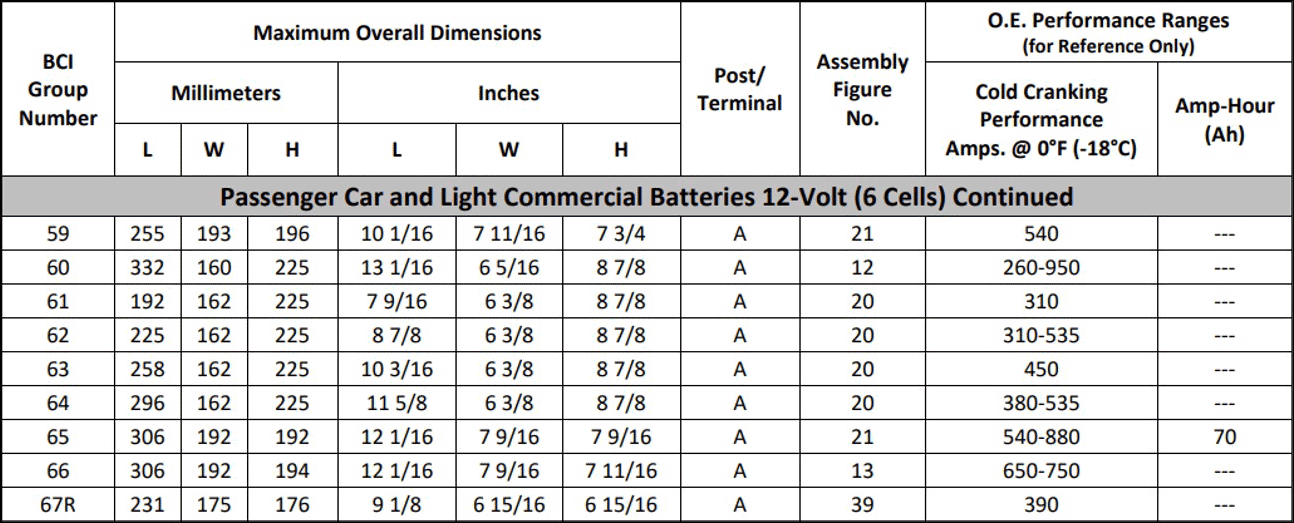
Quick Differences at a Glance
Most US drivers will see BCI group numbers like 35, 48, 49, 65. Many European models (BMW, VW, Mercedes, Audi, Volvo) in the US use DIN formats like H5, H6, H7. The two systems often overlap in size, but not always in terminal style or height. Fit and hold-downs must match.

| Attribute | DIN (European) | BCI (North American) |
|---|---|---|
| Context (includes keyword) | This table compares DIN vs BCI battery sizes for quick selection | |
| Common Names | H5, H6, H7, H8 (also L2, L3, L4) | Group 24, 34, 35, 48, 49, 65, etc. |
| Typical Vehicles | European brands (BMW, VW, Audi, Mercedes, Volvo) | US/Japanese trucks and cars (Ford, GM, Toyota, Honda) |
| Terminal Posts | Often recessed with top posts; some side features vary | Top posts common; some side-terminal on GM (older) |
| Hold-Down Style | Usually bottom ledge/clamp style | Mix of bottom ledge and top clamp bars |
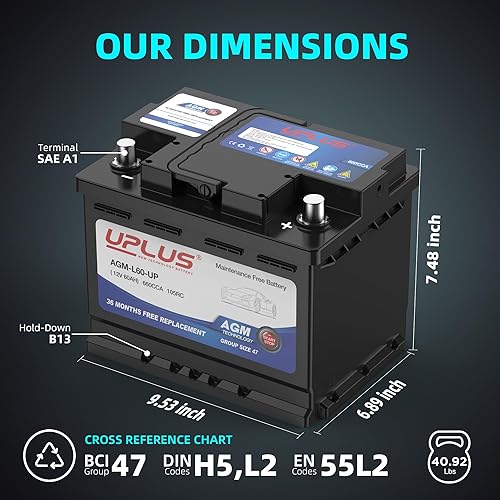
| Cross-Reference Examples | H5≈Group 47; H6≈Group 48; H7≈Group 94R | 48≈H6; 94R≈H7; 47≈H5 |
| Polarity (Left/Right) | Often standardized by size (check your car cables) | Many “R” groups flip polarity (e.g., 94R) |
| Climate Focus | Balanced CCA; many AGM options in Euro cars | Wide CCA ranges for hot/cold US climates |
| Fit Risks When Mixing | Might be too tall or wrong clamp edge | May not seat in Euro trays; terminal reach issues |
How to Identify Your Battery Size (Step-by-Step)
Picking the right size starts with fit. Your car needs the correct dimensions and terminal layout. Follow these steps. You can do this at home in minutes. A little care now saves you a return trip and a no-start later.
1) Check the owner’s manual
Look for the battery section. It may list a group size or DIN size. Some manuals only show dimensions. That is enough to match a new one. If the manual is missing, most automaker sites host PDFs.

2) Read the label on your current battery
Pop the hood and check the battery sticker. You might see “Group 48” or “H6.” Write it down. Note the CCA (Cold Cranking Amps) and RC (Reserve Capacity). Take a photo for the store.

3) Measure the tray and the battery
Use a tape measure. Measure length, width, and height. Check the hold-down type. Some trays clamp the bottom ridge. Some clamp the top. Make sure the lip or ledge on the new battery matches.
4) Match terminals and polarity
Look at your positive cable. It must reach the positive post on the new battery. Some “R” groups flip polarity. Terminal layout is a common mistake. Double-check before you buy.
5) Use a trusted fitment guide
Retail sites and parts stores have fit tools. Input your year, make, and model. Then verify size, terminal layout, and height. Confirm against your photo and measurements. Keep a note of AGM vs flooded type.
6) Consider upgrades only if they fit
You can move to AGM for better vibration and heat resistance. But the case must fit, and the venting must match. On Euro cars, some upgrades need battery registration after install.
Testing Your Battery: Voltage and Health
A simple voltage test tells a lot. You only need a basic multimeter. Test after the car sits for a few hours. Lights off. Engine off. Healthy batteries hold charge near 12.6V. Weak ones dip below 12.2V. Test again while cranking to catch hidden issues.
| Condition | Flooded Lead-Acid (12V) | AGM (12V) | What It Means |
|---|---|---|---|
| 100% Charged (resting) | 12.6–12.7V | 12.8–12.9V | Strong and ready |
| 75% Charged | 12.4–12.5V | 12.6–12.7V | Usable, recharge soon |
| 50% Charged | 12.2–12.3V | 12.4–12.5V | Weak, charge now |
| 25% Charged | 12.0–12.1V | 12.2–12.3V | Very weak, may not start |
| Discharged | <12.0V | <12.2V | Likely no start, charge or replace |
| Cranking Voltage (during start) | >9.6V (at 70°F) | >9.6V (at 70°F) | Lower suggests weak battery or high load |
| Alternator Output (engine running) | 13.7–14.7V | 13.7–14.7V | Outside range = charging issue |
Common Symptoms, Likely Causes, and Quick Fixes
Strange starting issues are not always the battery. Use this quick map. It helps you aim at the true cause. Fixes here are simple and fast. Most need only hand tools and a meter.
| Symptom | Likely Cause | Quick Fix |
|---|---|---|
| Slow crank, then starts | Weak battery, dirty terminals | Clean posts, charge battery, test voltage |
| Clicking, no crank | Very low battery, poor ground, bad starter relay | Jump-start, check grounds, test relay |
| No lights, no power | Dead battery, blown main fuse, cable off | Charge/replace, inspect fuses, tighten cables |
| Starts, then dies at idle | Alternator not charging | Measure 13.7–14.7V running; replace alternator if low |
| Battery light on | Charging fault, loose belt | Check belt tension, test alternator output |
| Frequent dead battery | Parasitic drain, short trips, old battery | Parasitic draw test, longer drives, replace if 4–6 years old |
| Corrosion on terminals | Acid vapor from venting, moisture | Baking soda + water clean, apply protectant |
| Dash resets after start | Low voltage dip on crank | Test battery under load; upgrade CCA if marginal |
Fitment Issues: When Size Standards Cause Problems
Even close sizes can fail to fit. Height and hold-down style cause most trouble. Terminal reach and polarity come next. Here are the traps to avoid before you swipe your card.
- Height mismatch: H7 can be taller than some BCI groups. Hoods need clearance.
- Hold-down lip: DIN often uses a bottom ledge. Some BCI trays clamp the top. If the lip is wrong, the battery will not lock.
- Terminal layout: 94R flips polarity from some similar sizes. Your cables may not reach.
- Vent ports: Many Euro trunk batteries need a vent tube. Make sure the new case has the same vent hole.
- IBS sensors: Some cars have a sensor on the negative cable. Do not move or crush it.
- Battery registration: BMW, Audi, VW, and others may need registration or coding after replacement.
Cold Weather vs Hot Weather: Choosing the Right Standard
Cold starts demand high CCA. Hot climates punish batteries with heat and evaporation. The right battery for your area protects your wallet. Choose CCA and build type with weather in mind.
- Cold climates: Higher CCA helps crank thick oil. AGM handles cold well and recovers faster after short trips.
- Hot climates: Heat shortens life. AGM resists heat and vibration better than flooded. Proper heat shields help.
- Short-trip city driving: Batteries never fully recharge. Pick a higher reserve capacity and use a smart charger monthly.
- Stop-start systems: Use the specified EFB or AGM type. Do not downgrade. It will fail early.
Real-World Scenarios (So You Can Match Fast)
Let’s match common US models to sizes you will see in stores. Use this as a starting point. Always confirm with your manual and a fitment tool before buying.
- BMW 3 Series (2006–2013): Often DIN H6 (BCI Group 48) AGM in trunk. Needs vent and registration.
- BMW 5 Series (2011–2016): Often H7 (BCI 94R) AGM. Taller case. Register after install.
- VW Jetta/Golf (2006–2014): Many use H5 or H6. Check tray height. Some models accept either with spacer.
- Mercedes C-Class (2008–2015): Often H6 or H7 AGM. Some cars have a second auxiliary battery.
- Ford F-150 (2004–2014): Common BCI Group 65 or 94R on newer trims. Check polarity and tray size.
- Chevrolet Silverado (2007–2013): Often Group 48 or 94R on newer LS/LT. Older GM may use side-terminal groups (e.g., 78).
- Toyota Camry (2012–2017): Common Group 35 or 24F depending on engine. Watch polarity on 24F.
- Honda Accord (2013–2017): Often Group 51R or 24F. Smaller bay needs correct height.
- Jeep Wrangler JK (2007–2018): Many use Group 48 (H6) AGM upgrade for off-road vibration.
Tools You Need and Key Safety Tips
Good tools make the job easy. Safety comes first. Batteries store energy and acid. A few simple steps keep you safe and protect your car’s electronics.
Basic tools
Gather these before you start. Keep them near the car. Work in daylight if you can. It helps you see clamps and vents.
- 10mm and 13mm sockets or wrenches (common for terminals and hold-downs)
- Ratchet with extension
- Terminal brush or sandpaper
- Baking soda and water mix for corrosion
- Shop towels or rags
- Multimeter
- Memory saver (optional but helpful)
- Gloves and eye protection
Safety tips
Work with the engine off and keys out. Wear eye protection. Avoid metal jewelry. Keep sparks away from the battery. Ventilate the area.
- Disconnect negative first and reconnect it last. This avoids short circuits.
- Do not tip the battery. Acid can leak from flooded types.
- Check for vent tubes on trunk batteries. Reattach after install.
- Use the right group size. Loose batteries can shift and short.
- If you smell rotten eggs, stop. That can be overcharging. Test the alternator.
Step-by-Step: Replace a Car Battery Safely
Follow these steps to swap your battery without stress. Move slow. Take photos before you start. It helps you place everything back in the right spot.
- Save settings (optional): Plug in a memory saver to the OBD-II port or a 12V outlet that stays live. This holds radio presets and window limits.
- Ignition off: Remove the key. Wait 2–3 minutes to let modules sleep.
- Open and inspect: Note the battery size, vent tube, and IBS sensor (if fitted) on the negative cable.
- Disconnect negative: Use a 10mm wrench. Tuck the cable aside so it cannot touch the post.
- Disconnect positive: Remove the red terminal. Watch for stack-on fuses at the post.
- Remove hold-down: Unbolt the clamp at the base or top bar.
- Lift out: Batteries are heavy. Use two hands. Avoid tilting a flooded battery.
- Clean tray and cables: Neutralize corrosion with baking soda and water. Dry well.
- Set new battery: Verify the orientation. Positive to positive side. Check that the vent port lines up if needed.
- Install hold-down: Tighten until snug. The battery should not move.
- Reconnect positive: Attach and tighten. Do not over-torque.
- Reconnect negative: Attach and tighten. You may see small sparks. That’s normal as modules wake up.
- Reattach vents and covers: Make sure the tube is secure on trunk or cabin batteries.
- Start the engine: Confirm fast crank and stable idle. Check for warning lights.
- Register/coding (if required): On many BMW, Audi, VW, Mercedes, and Volvo models, register the new battery. A scan tool or shop can do this.
Can You Swap DIN and BCI?
Yes, sometimes. H6 and Group 48 are near twins. H7 and 94R also align. But not all pairs match. Small differences in height, ledge, or polarity can break the fit. Use caution and confirm the tray and cables.
- Good swaps: H5↔Group 47, H6↔Group 48, H7↔Group 94R (often direct in many cars)
- Needs care: Some H7 cases are taller than older trays. Check hood clearance.
- Adapters: Spacer blocks or alternate clamps can help, but use only quality parts.
- Warranty note: Mixing standards may void fitment guarantees from retailers.
Buying Tips: Get the Best Value
Not all batteries are equal. You can save money and still upgrade smart. Look beyond price tags. Focus on fresh stock, real capacity, and fit. A good battery starts your day for years.
- Check the date code: Newer is better. Aim for within the last 3–6 months.
- Match or exceed CCA: Do not go lower than stock. Higher CCA helps in cold weather.
- Reserve Capacity (RC): Higher RC helps short-trip cars and audio loads.
- AGM vs flooded: AGM costs more but lasts longer in heat and vibration. Worth it for many drivers.
- Warranty: Focus on free replacement period. Pro-rated warranties are less helpful.
- Brand vs build: Many brands share factories. Fit, specs, and date matter more than the label.
How to Diagnose: Is It the Battery, Alternator, or Something Else?
Before you buy, run three quick checks. These take minutes and avoid guesswork. You can do them with a cheap multimeter and a friend to turn the key.
- Resting voltage: After the car sits, measure the battery. 12.6V is full. 12.2V is 50%. Under 12.0V is very low.
- Crank test: Watch the meter as someone starts the car. If it drops below 9.6V, the battery is weak or undersized.
- Charging test: With the engine running, measure across terminals. You want 13.7–14.7V. If it is low, the alternator or belt may be bad.
- Parasitic draw test: If the battery keeps dying, you may have a drain. Use the meter in series on the negative cable. Typical sleep draw is 20–50mA. Much higher means a stuck module or light.
- Load testers: Parts stores often test free. A conductance test can spot weak cells even if voltage looks okay.
Why Size Standards Matter for Safety and Electronics
Modern cars are picky. Battery shape, vents, and sensors protect your car. The right size keeps the case locked in place. It keeps cables from rubbing. It maintains airflow and cooling.
- Loose batteries can arc, short, or leak. A tight hold-down is key.
- Wrong height can touch the hood and cause sparks. Always measure.
- IBS sensors measure current and state of charge. Do not bypass or strain the cable.
- AGM needs proper charging voltage. Many newer cars are tuned for AGM from the factory.
When to Replace: Age and Usage Rules of Thumb
Most batteries last 3–5 years. Heat, vibration, and short trips shorten life. If you are near year four, plan ahead. A preemptive swap beats a tow bill.
- Check the date: If you are at 4+ years in hot states, test soon.
- Frequent jump-starts mean time is up. Repeated deep discharges damage plates.
- Swollen case or strong sulfur smell can signal failure. Replace now.
- Stop-start systems work best with a fresh, correct-type battery.
Care Tips to Make Your New Battery Last Longer
Small habits make big gains. Keep it charged and clean. Your battery will reward you with quick starts and fewer headaches.
- Drive at least 20–30 minutes weekly to top off the charge.
- Use a smart charger if the car sits for long periods.
- Clean terminals twice a year. Neutralize corrosion as needed.
- Secure the battery. Check the hold-down after rough roads or off-roading.
- Fix charging issues early. A weak alternator kills new batteries fast.
Cross-Reference: Popular DIN and BCI Pairs
Here are common matches you will see in US stores. Still confirm hold-downs, height, and polarity. This list helps you shop smarter and faster.
- H5 ≈ Group 47 (Also called 590 in some catalogs)
- H6 ≈ Group 48 (Often used in Jeep, GM, and many Euro sedans)
- H7 ≈ Group 94R (Common in BMW, Mercedes, Audi)
- H8 ≈ Group 49 (Large Euro sedans and SUVs)
- 24F, 35, 51R are common BCI sizes for Toyota/Honda. DIN crossovers vary; use a fit guide.
Troubleshooting Odd Cases (So You Don’t Get Stuck)
Some cars add a twist. You may find extra fuses on the battery post. Or a second small battery. Handle these with care. Take a picture before you remove anything.
- Stack-on fuse blocks: Move them over one by one to the new battery. Do not break the tabs.
- Auxiliary batteries: Some Mercedes and BMW have a small backup battery. Test or replace both if you have odd electrical gremlins.
- Trunk batteries: Always reconnect the vent tube. Keep cargo from crushing it.
- Start-stop: Use EFB or AGM as specified. Downgrading causes warning lights and early failure.
Can I Fix It Myself? Yes—Here’s How to Stay Confident
Most owners can replace a battery. Use the steps here. Take photos. Lay out bolts and parts on a towel. If coding is needed, plan a quick visit to a shop or use a capable scan tool.
- Plan in daylight when you are not rushed.
- Have a jumper pack nearby in case you need it.
- Keep your radio code or infotainment PIN if needed.
- If anything looks unclear, check a trusted guide or video for your model.
Helpful Resources for Extra Confidence
Reliable sources can back up your checks and steps. Use them to confirm specs or safety tips. They help you avoid myths and bad advice.
- Consumer Reports battery buying guide for unbiased testing and tips
- AAA battery and jump-start advice for roadside and maintenance basics
- NHTSA battery safety notes to stay safe around batteries and charging systems
More Help from TrendingCar
Want more simple, step-by-step help? I write with busy drivers in mind. Start with these pages and sharpen your battery skills fast.
- car battery guide with easy tests and picks
- battery replacement tips for safe DIY swaps
- car maintenance basics to save time and money
FAQs
Here are quick answers to common questions. Keep it simple. Use these as a checklist when you shop or test.
What is the difference between DIN and BCI battery sizes?
DIN is a European sizing system. BCI is North American. Both define length, width, height, and terminals. Many DIN sizes match a BCI group close enough to swap, but not always. Always check tray, hold-down, and polarity.
Can I use a BCI Group 48 instead of H6?
Often yes. Group 48 and H6 are very close. Many cars accept either. Confirm the hold-down lip, height, and cable reach before buying.
How many CCA do I need?
Use the OEM spec or higher. If you live in very cold areas, a higher CCA helps. Do not go below the factory rating.
Do I need AGM?
If your car came with AGM or has start-stop, use AGM or EFB as specified. Many drivers in hot or rough conditions upgrade to AGM for longer life.
How do I know if my alternator is bad?
Measure voltage with the engine running. You should see 13.7–14.7V. If it is low, your alternator or belt may be bad. If it is too high, the regulator may be failing.
Do I need to register the battery on BMW or Audi?
Yes, most late-model Euro cars need battery registration or coding. This tells the car the new battery type and resets charge strategy.
How long does a car battery last?
Most last 3–5 years. Heat, vibration, and short trips shorten life. Test yearly after year three, or sooner in hot states.
Conclusion
DIN vs BCI battery sizes do not have to be confusing. Match the standard your car was built for. Confirm case size, hold-down, height, and polarity. Choose the right CCA and consider AGM for heat and vibration. Test before you buy, replace with care, and register when needed. With the steps here, you will make a smart pick and enjoy easy starts every day.