How to Find Car Stereo That Fits My Car Perfectly

Finding a car stereo that fits your car perfectly doesn’t have to be confusing. This guide walks you through checking your vehicle’s make and model, measuring your dashboard, and choosing a compatible stereo. You’ll learn how to avoid common mistakes and upgrade your ride with confidence.
How to Find Car Stereo That Fits My Car Perfectly
Upgrading your car stereo can transform your driving experience. You’ll enjoy better sound, modern features like Bluetooth and smartphone integration, and a sleek new look. But before you buy, you need to make sure the stereo actually fits your car. A stereo that doesn’t fit can be frustrating, costly, and even unsafe.
Don’t worry—finding a car stereo that fits your car perfectly is easier than you think. With a few simple steps, you can avoid common mistakes and choose the right model with confidence. This guide will walk you through everything you need to know, from checking your car’s specs to installing your new stereo.
Step 1: Know Your Car’s Make, Model, and Year
The first and most important step is identifying your vehicle. Car manufacturers often change dashboard designs between model years, so even a one-year difference can affect stereo compatibility.
Start by checking your car’s owner’s manual or look for a label on the driver’s side door jamb. You’ll find the make (e.g., Toyota), model (e.g., Camry), and year (e.g., 2018). Write these down—you’ll need them for every step that follows.
For example, a 2015 Honda Civic may have a different stereo slot than a 2017 model. Even trims within the same year (like LX vs. EX) can have different dash layouts. So, be as specific as possible.
Step 2: Determine Your Car’s DIN Size
DIN size refers to the standard dimensions of car stereo openings. It comes from a German engineering standard and helps ensure compatibility across vehicles and brands.
There are two main types:
Single DIN
Single DIN stereos are 2 inches tall and 7 inches wide. They’re common in older cars and many compact vehicles. If your current stereo is about the size of a small paperback book, it’s likely single DIN.
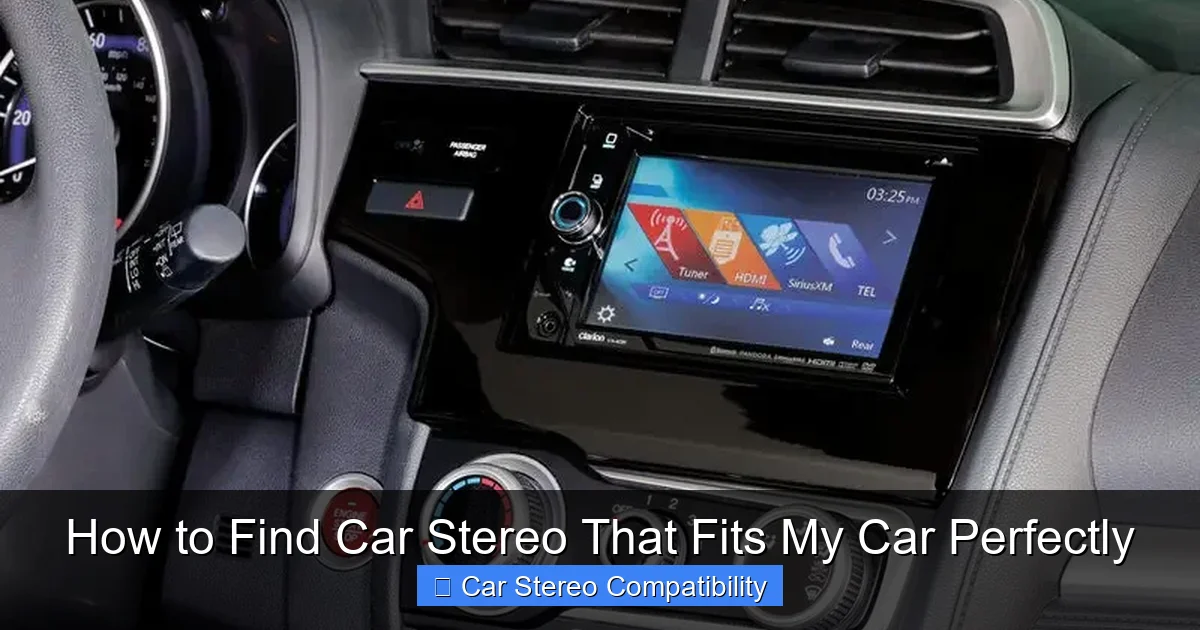
Visual guide about How to Find Car Stereo That Fits My Car Perfectly
Image source: autostereoguide.com
Double DIN
Double DIN stereos are 4 inches tall and 7 inches wide. They’re taller and often include touchscreens, navigation, or large displays. Many modern cars use double DIN slots, especially SUVs and sedans.
To check your DIN size, measure the height of your current stereo opening. Use a ruler or measuring tape. If it’s around 2 inches, it’s single DIN. If it’s about 4 inches, it’s double DIN.
Note: Some cars have non-standard sizes or custom dash designs. In rare cases, you may need a special mounting kit.
Step 3: Use a Compatibility Tool or Fit Guide
Once you know your car’s details and DIN size, use a compatibility tool to find the right stereo. These tools match your vehicle to a list of compatible models.
Online Fit Guides
Websites like Crutchfield, Sonic Electronix, and Amazon offer free fit guides. Just enter your car’s make, model, and year, and they’ll show you stereos that fit. These tools also tell you if you need any adapters.
Retailer Support
Many online stores have customer support teams that can help. If you’re unsure, chat with an expert or call them. They can confirm compatibility and suggest the best options.
Manufacturer Websites
Check the stereo brand’s website. Brands like Pioneer, Kenwood, and Sony often have vehicle-specific compatibility charts. This is especially helpful if you’re looking for a specific model.
Using these tools saves time and reduces the risk of buying the wrong stereo.
Step 4: Check Wiring and Mounting Requirements
Even if a stereo fits physically, it might not connect properly without the right adapters. Wiring and mounting are just as important as size.
Wiring Harness
Your car’s wiring harness connects the stereo to the power, speakers, and other systems. Most new stereos don’t include a harness, so you’ll need to buy one separately. A harness adapter lets you plug the new stereo into your car’s existing wires without cutting them.
For example, a Metra or Scosche harness is often recommended. These brands make adapters for nearly every car model. Just match the adapter to your car and stereo brand.
Antenna Adapter
Some cars use a unique antenna connector. If your new stereo doesn’t have the right plug, you’ll need an antenna adapter. This is a small, inexpensive part that ensures your radio gets a clear signal.
Steering Wheel Controls
If your car has buttons on the steering wheel for volume or track skipping, you’ll want to keep them working. A steering wheel control adapter lets your new stereo recognize these buttons. Brands like Axxess and PAC make these adapters for most vehicles.
Dash Kit
A dash kit (or installation kit) helps mount the stereo securely in your dashboard. It fills gaps and provides a clean, factory-like look. Some kits include brackets, trim pieces, and screws. Always check if a dash kit is needed for your car.
Step 5: Consider Features and Future Needs
Now that you’ve confirmed compatibility, think about what you want from your new stereo.
Basic vs. Advanced Features
Basic stereos play music and have AM/FM radio. Advanced models offer Bluetooth, USB ports, Apple CarPlay, Android Auto, and navigation. Decide what features matter most to you.
Screen Size and Resolution
If you’re getting a double DIN stereo with a screen, check the size and resolution. A 6.2-inch or 7-inch screen is common. Higher resolution means clearer maps and videos.
Sound Quality
Look for stereos with good preamp outputs and equalizer settings. If you plan to upgrade your speakers later, choose a stereo with strong power output or preamp voltage.
Expandability
Some stereos let you add amplifiers, subwoofers, or backup cameras. If you want a full audio upgrade, pick a model that supports these add-ons.
Step 6: Test Fit or Check Return Policy
Before you finalize your purchase, make sure you can return or exchange the stereo if it doesn’t fit.
Buy from a Retailer with a Good Return Policy
Stores like Best Buy, Crutchfield, and Amazon offer generous return windows. Crutchfield even provides a 60-day return policy and free tech support.
Test Fit if Possible
If you’re buying locally, ask if you can test the stereo in your car before buying. Some shops let you try it for a few minutes. This is the best way to confirm fit and function.
Take Photos
Before removing your old stereo, take photos of the wiring and mounting setup. This helps during installation and troubleshooting.
Troubleshooting Common Fit Issues
Even with careful planning, you might run into problems. Here’s how to fix the most common ones.
Stereo Doesn’t Fit the Opening
If the stereo is too big or too small, you may need a different dash kit. Some cars require a specific kit to adapt a single DIN stereo to a double DIN slot, or vice versa. Check online forums for your car model—other owners may have solutions.
Wiring Doesn’t Match
If the wires don’t line up, double-check your harness adapter. Make sure it’s the correct one for your car and stereo. If you’re still stuck, consult a wiring diagram or ask for help at a car audio shop.
Steering Wheel Controls Stop Working
This usually means you need a steering wheel control adapter. Install it between the stereo and the car’s wiring. Some stereos also need to be programmed to recognize the buttons.
No Sound After Installation
Check the wiring connections, especially the ground and power wires. Make sure the antenna is plugged in. If you’re using an amplifier, verify that it’s turned on and properly connected.
Conclusion
Finding a car stereo that fits your car perfectly is all about preparation. Start by knowing your car’s make, model, and year. Then, check the DIN size and use a compatibility tool to narrow your options. Don’t forget about wiring, mounting, and special features like steering wheel controls.
With the right tools and a little research, you can upgrade your car’s audio system without the hassle. A new stereo not only improves sound quality but also adds modern conveniences like hands-free calling and smartphone integration.
Take your time, ask questions, and don’t rush the process. The perfect stereo is out there—and now you know how to find it.