
Battery warranty explained in plain English: what’s covered, what’s not, and how to claim it fast. Learn the steps to test your battery at home, avoid voiding the warranty, and get a free replacement when you qualify. Clear tools, tables, and checklists included.
If your car won’t start and the battery seems dead, you want answers now. You also want to know if the warranty will save you money. Here’s Battery warranty explained without the fluff. I’ll show you how to test it at home, read your terms, and make a smooth claim. You’ll learn what voids a warranty, tools you need, and real fixes you can try today.

Battery Warranty Explained: The Basics
A battery warranty is a promise from the seller or maker. It covers defects and early failure for a set time or miles. It does not promise the battery will last forever. Think of it as protection if the battery dies before it should, under normal use.

What a Battery Warranty Usually Covers
Most car battery warranties cover manufacturing defects and early failures. If your battery fails a proper test within the covered window, the store may replace it at no cost or at a discount, based on the policy.

- Defects in materials or build quality
- Failure during the “free replacement” period
- Discounted replacement during the “pro‑rated” period
What a Battery Warranty Does Not Cover
Warranties do not cover damage from misuse or outside causes. They also do not cover normal wear. Batteries age over time. Heat, vibration, and short trips speed this up.

- Draining the battery (leaving lights on)
- Charging system faults (bad alternator)
- Physical abuse, leaks from impact, loose hold-downs
- Improper installation or wrong battery type
- Normal aging beyond the term
Types of Battery Warranties
Most car batteries come with two time windows: a free replacement period and a pro‑rated period. Some offer only free replacement for a set time. EV high‑voltage packs use different terms than 12‑volt starter batteries.

Free Replacement Period
This is the best coverage. If the battery fails a test during this time, you get a new battery at no cost. You may need your receipt and test printout from the store.

- Length: often 1–3 years for 12V batteries
- What you pay: usually $0 for the battery itself
- What you still may pay: shop fees, installation, or testing
Pro‑Rated Period
After the free window ends, many brands offer a pro‑rated term. You pay part of the price based on how much life is left according to their chart.
- Length: often months to a couple of years after free period ends
- Cost: partial credit toward a new battery
- Proof: receipt and test required
EV vs. 12‑Volt Battery Warranties
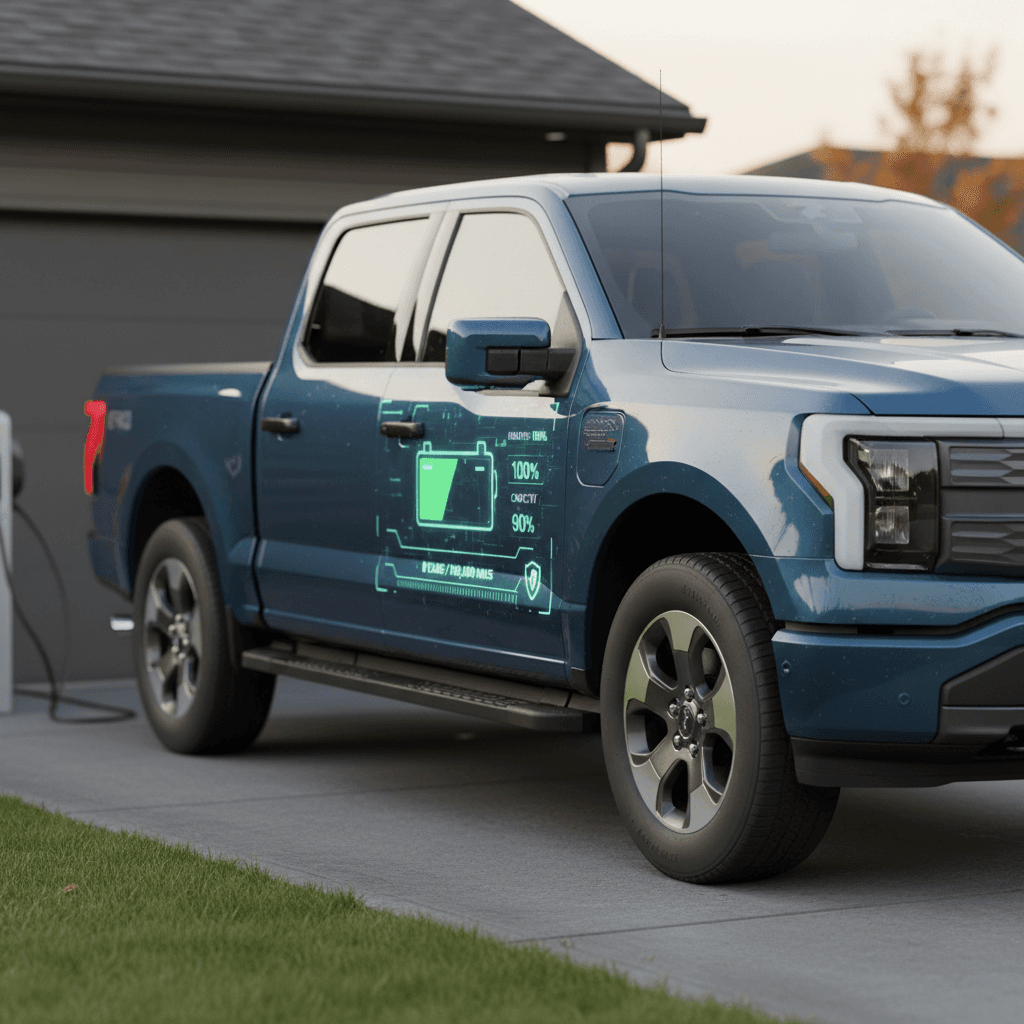
Electric cars have two batteries: the 12‑volt accessory battery and the high‑voltage traction battery. The 12‑volt battery follows rules like any car battery. The traction battery is covered for much longer, often 8 years or more, with capacity guarantees. Check your manual and state rules.

- 12‑volt: similar to gas cars (1–3 years typical free replacement)
- High‑voltage pack: often 8 years/100,000 miles or more for capacity and defects
- In some states, hybrids may have longer coverage for emissions components
For consumer warranty rights, the Federal Trade Commission offers plain-language guidance on what warranties must include, as explained by the FTC. This helps you understand how written warranties work and what to expect at the counter.
How to Read Battery Warranty Terms and Date Codes
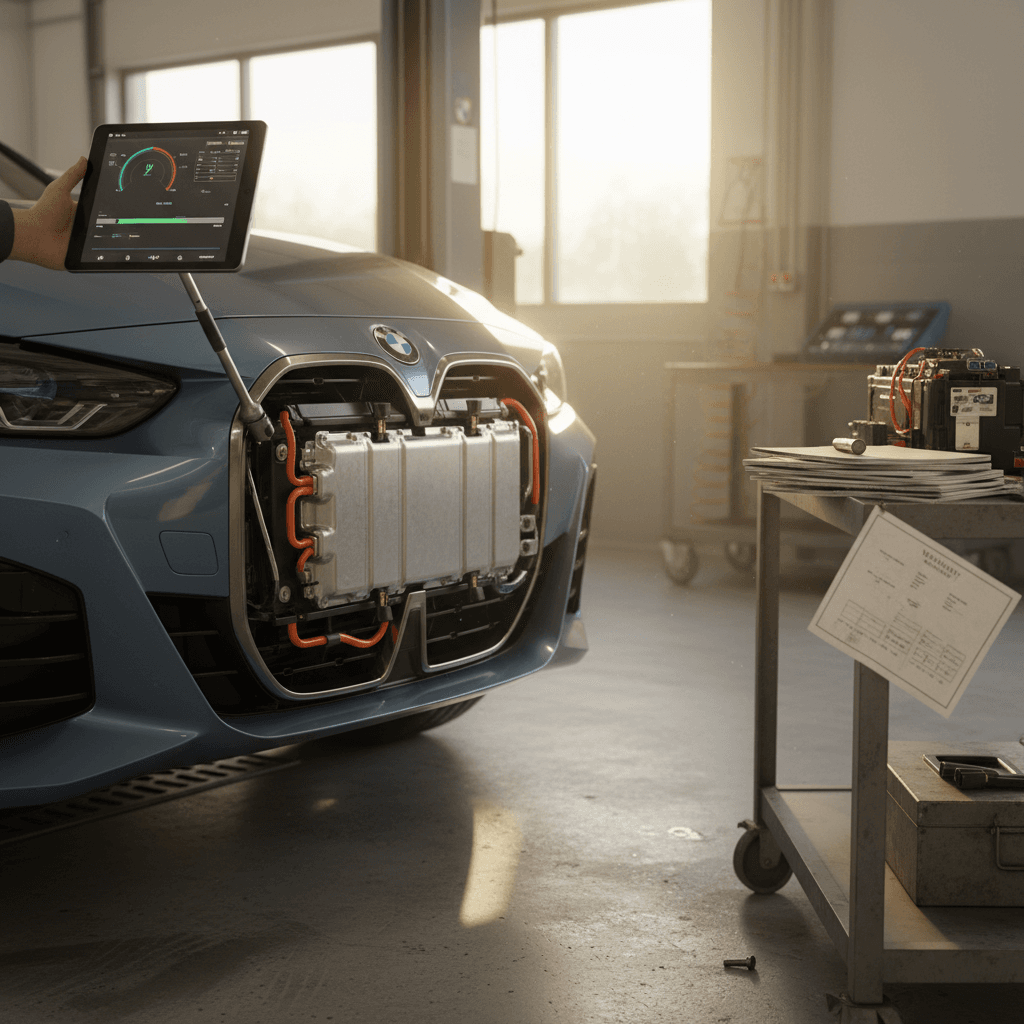
Your warranty starts from the purchase date or manufacture date, depending on the brand. Terms are printed on the receipt, the battery label, or the store’s policy sheet. The date code tells you when the battery was made.
Warranty Length vs. Performance Specs
Do not confuse long warranty with better performance. Cold Cranking Amps (CCA) and Reserve Capacity (RC) describe power and endurance. Warranty is a policy. Specs are performance. You need both to match your car’s needs.
- CCA: starting power in cold weather
- RC: minutes a battery can run limited load
- AGM/EFB batteries: needed for start‑stop and high-load cars
How to Decode Battery Date Codes
Most batteries use a letter for month and a number for year. For example, “C4” might be March 2024 (A=Jan, B=Feb, C=Mar). Some stamps are on the case top, others on a sticker. Newer is better when you buy.
- A=Jan, B=Feb, C=Mar, … L=Dec
- Number is the year (3=2023, 4=2024)
- Ask the clerk if you are not sure
Where to Find the Full Terms
Read the fine print on your receipt and the brand’s web page. Many stores also post “limited warranty” signs near the battery display. Screenshot or save a PDF of the policy when you buy.
- Receipt and warranty card (keep them in your glovebox)
- Brand website policy page
- Store return/warranty policy
Step‑by‑Step: How to Check If Your Battery Is Still Under Warranty
You can confirm coverage in minutes. All you need is the receipt or a date code, and a quick call or visit to the store. Do this before you spend money on a new battery.
- Find your receipt. If lost, ask the store to look it up with your phone number.
- Check the battery label for the purchase date sticker. Some shops add this at install.
- Read the date code on the case if no purchase date is shown.
- Compare dates to the free replacement and pro‑rated windows on your policy.
- Call the store and ask what proof they need (receipt, test printout, ID).
- Ask if testing is free and if an appointment is needed.
Step‑by‑Step: How to Make a Warranty Claim Without Hassle
Stores want a clear, quick process. If you have proof and a failed test, it’s usually simple. Go in prepared and polite. It pays off.
- Charge the battery first if it’s just drained. Warranties don’t cover a dead-from-lights battery. Use a smart charger overnight.
- Clean the terminals so the test is accurate. Tighten hold-downs.
- Ask the store to do a conductance test and print the results.
- If it fails and you are in the free window, ask for a free replacement of equal or better spec.
- If you are in the pro‑rated window, ask how much credit you get. Compare prices.
- Keep the new receipt and warranty documentation. Note the install date.
Tip: AAA notes that short trips and heat are top battery killers. Longer, steady drives and clean connections help the battery and help your warranty claim look valid, as explained by AAA.
Know Before You Go: What Voids a Battery Warranty
Many people lose coverage by accident. Avoid these mistakes and you will save time and money. Treat the battery like a safety part. It is.
- Wrong battery for the vehicle (example: flooded battery in a start‑stop car that needs AGM/EFB)
- Physical damage from loose mounts or impacts
- Signs of overcharging due to a bad alternator not fixed
- Neglect: low electrolyte (in serviceable batteries), severe corrosion not cleaned
- Modified electrical systems without proper installation (big audio amps, extra lights) without upgraded charging
- Tampered or removed serial/date code labels
- No proof of purchase when policy requires it
Testing Your Battery at Home (So You Don’t Waste a Trip)
A quick test at home can tell you if the battery is suspect or if your alternator is the real problem. You need a cheap digital multimeter and five minutes.
Tools You Need
Basic tools keep you safe and make tests easy. Many drivers already own these. If not, they are low-cost and pay for themselves.
- Digital multimeter (auto‑range is fine)
- Safety glasses and gloves
- Wire brush or terminal cleaner
- Baking soda and water (to neutralize corrosion)
- Smart charger or trickle charger (optional but helpful)
- Jumper cables or a jump pack
Safety First
Car batteries can spark. They can vent gas. Treat them with care. Work in a ventilated area and keep flames away.
- Wear eye protection and gloves
- Do not smoke near the battery
- Secure the car in Park with the parking brake
- Keep metal tools away from both terminals at once
Step‑by‑Step Voltage Test
This test shows charge level. It does not fully prove battery health, but it’s a great start. If in doubt, get a load or conductance test at a shop.
- Let the car sit off for 30 minutes (overnight is best).
- Set the multimeter to DC volts. Touch red to +, black to −.
- Read the resting voltage. Use the chart below.
- Crank the engine and watch voltage dip. Under heavy drop, the battery may be weak.
- With engine idling, read charging voltage. It should be about 13.8–14.7 volts.
| Resting Voltage | State of Charge | Condition | Next Step |
|---|---|---|---|
| 12.6–12.8 V | 100% | Healthy | No action, monitor |
| 12.4–12.5 V | 75–85% | Slightly low | Charge and retest |
| 12.2–12.3 V | 50–60% | Weak | Charge fully; load test |
| 12.0–12.1 V | 25–40% | Very weak | Charge overnight; test |
| < 11.9 V | < 20% | Discharged/possibly bad | Charge then test; may replace |
| Crank drop < 9.6 V | — | Poor cranking | Likely failing; warranty test |
| Running 13.8–14.7 V | — | Normal alternator | System OK |
| Running > 15 V or < 13.2 V | — | Charging fault | Check alternator/regulator |
Common Symptoms, Likely Causes, and Quick Fixes
Match what you see to what it likely means. Then fix it fast. This table also shows if a warranty might help. This is your rapid triage.
| Symptom | Likely Cause | DIY Fix | Battery warranty explained: Warranty impact |
|---|---|---|---|
| Slow crank in the morning | Weak battery, cold weather impact | Charge overnight; test; consider AGM in cold regions | Covered if fails test within terms |
| Clicking, no start | Very low charge, corroded terminals | Clean terminals; jump-start; charge and test | Not covered if drained by lights left on |
| Starts, then stalls or resets radio | Poor connection, loose clamp | Tighten clamps; clean corrosion | Not a battery defect; not covered |
| Battery dies after short trips | Undercharging due to short cycles | Take a 20–30 min drive or use a charger | Usually not covered; no defect |
| Battery warning light on while driving | Alternator or belt problem | Check belt tension; test alternator output | Not a battery defect; alternator issue |
| Hot battery smell or swelling | Overcharge from faulty regulator | Stop driving; test charging system | May void if caused by overcharge |
| Car sits weeks, then dead | Normal self-discharge; parasitic draw | Use maintainer; check for parasitic drain | Not covered; no defect |
Real‑World Scenarios and What Warranty Will Do
Let’s turn real problems into clear outcomes. This helps you plan your next move and avoid surprise costs at the counter.
- Cold snap overnight: Your 4‑year‑old battery fails to crank. It charges to only 12.1 V after a full charge. It fails a conductance test. If you are inside the warranty term, you likely get a free or pro‑rated swap. If out of term, replace now. Cold slashes available cranking amps.
- New battery, dead after leaving dome light on: After a full charge, it tests fine. No coverage. Drain from lights is not a defect.
- Battery swelling and hot to touch: Alternator overcharges at 15.5+ V. Warranty may deny if damage came from the car’s charging fault. Fix alternator first.
- Short-trip city driving, lots of start‑stop: Battery tests borderline. Many short trips never recharge fully. Not a defect. Use a smart charger weekly. Consider AGM if the car supports it.
- Road trip and battery light turns on: Alternator fails. Your battery might get drained but is not at fault. Replace alternator, charge battery, and retest. Warranty applies only if the battery still fails due to its own defect.
AGM, EFB, and Start‑Stop Systems: Warranty Nuances
Cars with start‑stop demand stronger batteries. AGM or EFB is required. Using the wrong type can void the warranty and cause early failure.
- AGM: Great for start‑stop and high accessory loads. More resistant to vibration. Often longer free replacement terms.
- EFB: Mid-tier option for lighter start‑stop duty. Better than flooded for cycling.
- Flooded: Standard cars only. Do not install in a start‑stop car unless the spec allows it.
- Coding/Registration: Some cars need the battery “registered” with a scan tool. Skipping this can hurt life and void coverage.
EV High‑Voltage Battery Warranties: What Drivers Should Know
EV traction batteries are covered for many years. Most makers promise coverage for defects and for capacity loss beyond a set threshold. Details vary. Read your owner’s manual.
- Common terms: often 8 years/100,000 miles minimum for traction battery defects
- Capacity promise: replacement or repair if capacity falls below a percent threshold within the term
- Usage limits: frequent fast charging or thermal abuse could be excluded if policy says so
- 12‑volt battery in EVs: covered like any regular car battery
For independent buying and warranty advice on both gas and EV batteries, Consumer Reports provides in-depth testing and guidance, based on this battery guide.
How to Protect Your Warranty and Extend Battery Life
Good habits keep your battery strong. They also make claims smoother. A healthy battery with neat records is easy to approve.
- Drive at least 20–30 minutes weekly to recharge
- Use a smart maintainer if your car sits
- Clean terminals twice a year; coat with dielectric grease
- Secure the hold‑down to stop vibration damage
- Fix parasitic drains and charging issues fast
- Choose the right battery type and size for your car
- Keep proof of purchase and any test records
Documents and Proof You Need
Bring the right papers and your claim goes fast. The clerk wants to see dates and failure proof. Keep a small folder in your glovebox.
- Original receipt or digital copy
- Warranty card or policy printout
- Photo of the battery date code and install sticker
- Recent test results (print or photo)
- Your ID if the warranty is tied to your name
Costs You Might Still Pay Under Warranty
Even a free replacement policy can have small costs. Know them so you do not get surprised at the counter.
- Shop or disposal fees
- Installation labor (some stores install free, others do not)
- Diagnostics for charging system faults
- Towing if your car will not start
- Upcharge if you choose a higher-spec battery
Quick Reference: Battery Warranty Explained in One Table
Use this snapshot before you head to the store. It sums up coverage, proof, and what to expect. Keep it simple and you will get help faster.
| Item | What It Means | Typical Range | Your Action |
|---|---|---|---|
| Battery warranty explained | Coverage for defects/early failure, not misuse or aging | Free 1–3 yrs; Pro‑rated after | Keep receipt; test battery; claim in-window |
| Free replacement period | New battery at no cost if test fails | 12–36 months | Bring proof and test report |
| Pro‑rated period | Partial credit toward new battery | Up to 12–36 months after free period | Compare credit vs new battery price |
| What voids coverage | Wrong type, damage, charging faults, neglect | — | Use correct spec; fix alternator; secure mounts |
| Testing needed | Conductance or load test with printout | 5–10 minutes | Charge first; clean terminals; then test |
| Proof of purchase | Receipt, warranty card, or store lookup | — | Store digital copy on your phone |
Diagnose Before You Claim: Step‑By‑Step Flow
Follow this quick flow to know what to do next. It saves time and prevents a denied claim. Simple steps, big results.
- Car is slow to start or won’t start. Check lights and accessories are off.
- Measure resting voltage. If below 12.4 V, charge overnight.
- After charge, retest voltage and try to start. Watch cranking drop.
- If running voltage is not 13.8–14.7 V, fix alternator first.
- If battery still fails a conductance test, check warranty dates.
- Bring receipt and test report. Request free or pro‑rated replacement.
Warranty and Seasonal Weather: What to Expect
Heat kills batteries slowly. Cold exposes the weakness. Plan around seasons to get the most from your warranty and avoid breakdowns.
- Summer heat speeds up plate corrosion and water loss
- Winter cold reduces chemical reaction speed, cutting cranking power
- Replace an aging battery before winter if it tests weak
- Keep the top of the case clean to reduce self‑discharge
As explained by AAA, most batteries last 3–5 years, but heat and short drives shorten that life. Plan a fall check to avoid winter no‑starts.
Alternator, Parasitic Drains, and Warranty Decisions
Many “bad battery” cases are not the battery. The alternator or a small drain can be the real cause. Fix the root issue first or you will kill the new battery too.
Quick Alternator Check
Use your multimeter at idle, lights and blower on. Healthy systems hold around 13.8–14.7 V. If voltage is low or swings, diagnose the alternator and belt.
- Low voltage: weak alternator or loose belt
- High voltage: bad regulator
- Voltage drop test: check big power and ground cables
Parasitic Drain Basics
Modern cars “sleep” and draw small current. Excess draw drains the battery overnight. Common causes are glove box lights, trunk lights, dash cams, or faulty modules.
- Symptom: battery fine after a drive, dead next morning
- Check: pull fuses with a meter in series (advanced), or see a pro
- Interim: use a maintainer until you can fix the drain
Buying a Replacement: Warranty Tips That Save Money
When you do need a new battery, buy smart. Match specs, pick the right type, and keep documentation tidy. A good buy today saves a headache tomorrow.
- Match group size and terminals to your car
- Choose AGM if your car has start‑stop or many accessories
- Pick fresh stock (check the date code)
- Compare warranties: longer free replacement beats longer pro‑rated
- Ask about on-car testing, installation, and return policy
Tools and Gear That Pay for Themselves
A few basic tools can diagnose most issues at home. They save a tow and help with smooth warranty claims. Keep them in your trunk or garage.
- Digital multimeter: measure resting and charging voltage
- Smart charger: recover a low battery and avoid sulfation
- Terminal cleaning kit: keep connections clean and tight
- Jump pack: safe, quick starts without another car
- OBD‑II scanner: check charging and battery-related codes
Load Testing vs. Conductance Testing
Shops use two main tests. Both are valid. Conductance tests are fast and common for warranty claims. Load tests stress the battery more.
- Conductance: quick, safe, good for most batteries (printed results help claims)
- Load test: simulates starting load; needs full charge first; older but solid
- If tests disagree, charge fully, test again, or run both methods
Warranty Language You Should Know
Policy terms can feel confusing. Here are the big ones in simple words. Knowing them gives you confidence at the counter.
- Limited warranty: only defects are covered; excludes misuse
- Free replacement: full swap at no cost in this window
- Pro‑rated: partial credit later in the term
- Original purchaser: coverage often tied to the first buyer
- Transferable: some warranties can pass to a new owner (rare for batteries)
The FTC explains your rights and what a written warranty must include. It helps you spot fair vs. unfair terms and how to keep proof.
Cold Weather Playbook: Maximize Starting Power
Winter makes small problems big. Follow this plan to keep cranking power high and avoid morning surprises. This also keeps your battery in better shape for any claim.
- Park indoors or shield the battery from wind if possible
- Use a battery maintainer if you drive short trips
- Switch off blowers and heated seats before you shut off the car
- Crank in short bursts and rest between tries
- Replace borderline batteries in fall, not mid-winter
Heat Season Playbook: Beat the Silent Battery Killer
Heat kills batteries faster than cold. You feel fine in summer, but the damage shows in winter. Reduce heat stress and extend life.
- Keep the case top clean to reduce self-discharge
- Ensure under-hood vents and cooling paths are clear
- Avoid long idling with high electrical load if possible
- Check charging voltage; high heat can spike regulator behavior
- Inspect for swelling; replace if you see it
Signs You Should Replace Even If It’s Not Dead
Don’t wait for a tow. If these show up, plan a proactive swap. It’s cheaper and easier on your schedule.
- Battery age 4+ years and winter is near
- Two or more jump-starts in a month
- Resting voltage won’t hold above 12.4 V after full charge
- Cranking dip below 9.6 V on a mild morning
- Repeated “charge and fail” conductance test results
Troubleshooting Checklist: From No‑Start to Answer in 10 Minutes
Use this quick checklist on your driveway. It leads you straight to the cause so you know if warranty helps.
- Are the headlights bright with the engine off? Dim = low charge.
- Any heavy corrosion on the terminals? Clean and tighten.
- Resting voltage test. Under 12.4 V? Charge first.
- Crank test. Voltage plunges below 9.6 V? Battery likely weak.
- Running test. Outside 13.8–14.7 V? Alternator issue.
- Check receipts and warranty dates. Decide free vs. pro‑rated claim.
When to Visit a Shop vs. DIY
Some problems need pro tools. Know when to hand it over. It protects your car and your wallet.
- Go to a shop if the battery swells or smells like rotten eggs
- See a pro for parasitic drain tests if your car dies overnight
- Get help if your car needs battery registration/coding
- Let pros handle EV high‑voltage battery work
Extra Tip: Keep a “Battery Binder”
This simple habit wins claims. It also helps you track life and plan replacements. Five minutes now saves hours later.
- Receipt and warranty policy
- Date code photo and install date
- Test printouts and notes on symptoms
- Charging system test results
- Service visits related to battery or alternator
FAQ
How long do car battery warranties last?
Most 12‑volt batteries have a 1–3 year free replacement term. Some add a pro‑rated period after that.
Does a warranty cover a drained battery?
No. If you left a light on or the car sat, that is not a defect. Charge it and test again.
Can I claim warranty without a receipt?
Sometimes. Many stores can look up by phone number, but a receipt makes it faster and more certain.
What test do I need for a warranty claim?
A conductance or load test with a printed result. Charge the battery first for a fair test.
Will a bad alternator be covered by the battery warranty?
No. The alternator is a different part. Fix it first or you may void the battery warranty.
Is an AGM battery worth it?
Yes, if your car has start‑stop or many accessories. It handles deep cycles better and often lasts longer.
How often should I test my battery?
Twice a year is smart. Test in fall and spring, or before a long trip.
Conclusion
You now have Battery warranty explained in simple steps. Test at home. Fix charging issues first. Bring proof and a test printout. Expect a free swap in the early window and credit later on. Use the checklists and tables above to make fast decisions. Today, grab your multimeter, check voltage, and look at your receipt. A few minutes now can save a tow and a big bill.