How to Measure Car Seat Cover for Perfect Fit Every Time

Measuring your car seat cover correctly ensures a snug, safe, and stylish fit. This guide walks you through every step—from gathering tools to double-checking dimensions—so you can buy or make covers that look great and last longer.
Key Takeaways
- Accurate measurements prevent loose or tight covers: A well-fitted seat cover enhances comfort, safety, and appearance.
- Use the right tools: A flexible tape measure, notepad, and camera help capture precise dimensions and seat shape.
- Measure all key areas: Include seat base, backrest, headrest, armrests, and side bolsters for full coverage.
- Account for seat features: Heated seats, airbags, and adjustable headrests require special attention during measurement.
- Double-check before ordering: Compare your measurements with manufacturer size charts to avoid returns.
- Take photos for reference: Visual documentation helps when shopping online or communicating with custom makers.
- Test fit before final installation: Lay the cover over the seat first to spot any fit issues early.
Why Measuring Your Car Seat Cover Matters
You wouldn’t buy shoes without knowing your size—so why guess when it comes to car seat covers? A poorly fitted seat cover can slip, bunch up, or even interfere with airbag deployment. On the flip side, a perfectly measured cover looks sleek, protects your original upholstery, and adds comfort. Whether you’re replacing worn-out fabric, upgrading to leather, or adding custom designs, accurate measurements are the foundation of a great fit.
In this guide, we’ll walk you through a simple, foolproof method to measure your car seat cover—whether it’s for front bucket seats, rear bench seats, or even captain’s chairs. You’ll learn what tools to use, which areas to measure, and how to avoid common mistakes. By the end, you’ll be confident that your next seat cover purchase will fit like it was made just for your vehicle.
Tools You’ll Need
Before you start measuring, gather these essentials:
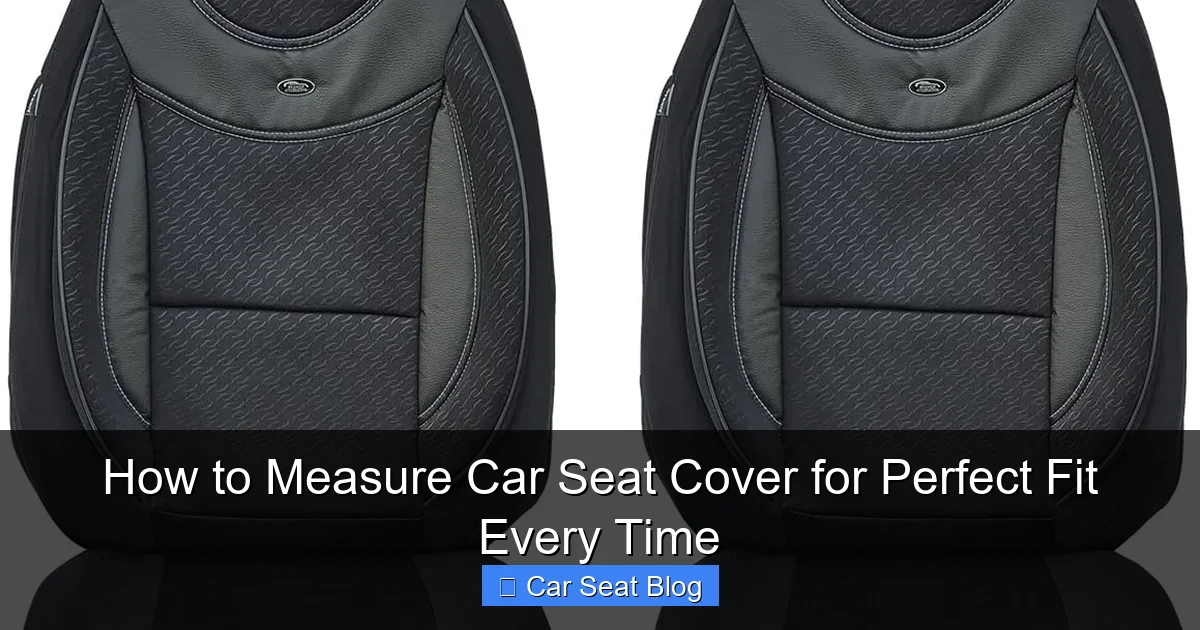
Visual guide about How to Measure Car Seat Cover for Perfect Fit Every Time
Image source: m.media-amazon.com
- Flexible tape measure: A fabric or sewing tape measure works best—it bends around curves and contours.
- Notepad and pen: Jot down measurements as you go to avoid confusion later.
- Smartphone or camera: Take clear photos of your seat from multiple angles. This helps when comparing options online or explaining details to a custom upholsterer.
- Masking tape (optional): Use small pieces to mark tricky spots like airbag locations or seat controls.
- Measuring ruler or straight edge: Helpful for measuring flat sections like the seat base.
Pro tip: Measure in daylight or under bright interior lights. Shadows can distort your perception of edges and seams.
Step 1: Identify Your Seat Type
Not all car seats are created equal. Start by determining what kind of seat you’re working with:
- Bucket seats: Individual front seats with high backs and side bolsters (common in sedans and SUVs).
- Bench seats: Long, flat rear seats that span the width of the vehicle.
- Captain’s chairs: Two individual rear seats with armrests, often found in minivans or large SUVs.
- Split-folding seats: Rear seats divided into sections (e.g., 60/40 split) that fold down independently.
Knowing your seat type helps you understand which parts need coverage and how the cover should attach. For example, a bucket seat needs separate pieces for the base and backrest, while a bench seat may require one continuous piece or multiple sections.
Step 2: Measure the Seat Base
The seat base is the part you sit on. It’s usually the easiest to measure but often overlooked in detail.
How to Measure Length and Width
Start at the front edge of the seat base (where your knees rest) and measure straight back to the rearmost point where the base meets the backrest. Record this as the depth. Then, measure from left to right at the widest point—this is the width. Most seat bases are slightly wider at the front, so take the maximum width.
Check for Contours and Bolsters
Many modern seats have raised side bolsters for support. Measure the height of these bolsters by placing your tape measure vertically from the base surface up to the top of the bolster. Also note if the base has a dip or contour in the center—this affects how the cover sits.
Example: A typical driver’s bucket seat might measure 20 inches wide, 22 inches deep, with 3-inch side bolsters.
Step 3: Measure the Backrest
The backrest supports your torso and often includes headrests and side wings. Accuracy here ensures the cover doesn’t pull or sag.
Width and Height
Measure the backrest from left to right at its widest point—usually at shoulder level. Then measure from the top of the backrest (excluding the headrest) down to where it connects to the seat base. This gives you the height.
Headrest Dimensions
Remove the headrest if possible (most twist or pull out easily). Measure its width, depth, and height. Note whether it’s adjustable and how many positions it has. Some covers include built-in headrest sleeves; others require separate pieces.
Side Bolsters and Lumbar Support
Like the seat base, backrests often have side bolsters. Measure their height and depth. If your seat has built-in lumbar support (a protruding cushion), note its location and size—this may require extra material or stretch in the cover.
Step 4: Account for Seat Features
Modern cars come packed with features that affect seat cover fit. Ignoring them can lead to a cover that blocks controls or interferes with safety systems.
Airbags
Side-impact airbags are commonly located in the seatback or side bolsters. Look for labels like “SRS Airbag” or stitching that appears designed to tear open. Never cover airbag seams with non-compatible materials. Most quality seat covers are airbag-certified and have pre-cut openings or reinforced seams. Measure the distance from the edge of the seat to the airbag seam so you can verify compatibility.
Heated and Ventilated Seats
If your seat has heating or cooling elements, ensure the cover material is breathable and doesn’t trap heat. Measure the location of control buttons or vents on the seat side or center console. Some covers include pass-through openings for these controls.
Armrests and Cup Holders
For captain’s chairs or rear seats with center armrests, measure the armrest’s length, width, and height. Note if it folds down or has built-in cup holders. These details help determine if you need a separate armrest cover or a one-piece design.
Seat Controls and Adjustments
Power seats with motors and levers on the side need extra clearance. Measure the distance from the seat edge to any protruding controls. Some covers include elastic panels or zippers to accommodate adjustments.
Step 5: Measure for Attachment Points
Seat covers stay in place using hooks, straps, elastic bands, or Velcro. Knowing where these attach helps ensure a secure fit.
Under-Seat Clips and Straps
Lift the seat cover (if removing an old one) or peer underneath the seat. Look for clips, hooks, or loops where the cover attaches. Measure the distance between these points—this helps when choosing a cover with compatible fasteners.
Headrest Posts
Most covers secure the headrest area using sleeves that slide over the posts. Measure the diameter of the headrest posts and the distance between them. Standard posts are usually 0.5 to 0.75 inches in diameter, but some luxury vehicles use thicker posts.
Seat Belt Access
Ensure the cover doesn’t block the seat belt buckle or retractor. Measure the location of the seat belt opening relative to the seat base and backrest. Some covers include reinforced slits or flaps for easy access.
Step 6: Double-Check and Document
It’s easy to mix up numbers or forget a measurement. Before you finalize your notes, do a quick review.
Verify Key Dimensions
Go back and confirm the largest measurements: seat base width and depth, backrest height and width, and headrest size. These are the most critical for fit.
Take Reference Photos
Snap clear photos of the seat from the front, side, top, and underneath (if accessible). Include close-ups of airbag labels, control buttons, and attachment points. These images are invaluable when shopping online or consulting with a custom upholsterer.
Compare with Manufacturer Charts
Most seat cover brands provide size charts based on vehicle make, model, and year. Cross-reference your measurements with these charts. If your numbers fall within the recommended range, you’re good to go. If not, consider a custom-fit option.
Troubleshooting Common Measurement Mistakes
Even careful measurers can run into issues. Here’s how to avoid or fix common problems:
Cover Too Tight or Too Loose
If the cover is tight, you may have underestimated the seat’s contours or bolsters. If it’s loose, you likely missed the full width or depth. Always round up slightly—most covers have some stretch, but they can’t compensate for major measurement errors.
Headrest Doesn’t Fit
This usually happens when the headrest posts are thicker than standard or the cover’s sleeve is too small. Double-check post diameter and consider a universal cover with adjustable headrest straps.
Airbag Interference
If the cover blocks the airbag seam, stop using it immediately. Only use covers labeled “airbag compatible” or “SRS safe.” When in doubt, consult your vehicle manual or a professional.
Straps Won’t Attach
Some covers come with generic straps that don’t match your seat’s attachment points. Look for covers with adjustable straps or universal hooks. Alternatively, use aftermarket clips designed for your vehicle model.
Final Tips for a Perfect Fit
- Measure twice, order once: It’s better to spend an extra 10 minutes now than deal with returns later.
- Choose quality materials: Neoprene, leather, and polyester blends offer durability and stretch for a better fit.
- Consider custom options: If your seat has unique features, a custom-made cover may be worth the investment.
- Test fit before final installation: Unpack the cover and drape it over the seat to check alignment and coverage before securing it.
- Follow care instructions: Proper cleaning and storage extend the life of your seat cover and maintain its fit.
Conclusion
Measuring your car seat cover doesn’t have to be complicated. With the right tools, a systematic approach, and attention to detail, you can achieve a perfect fit every time. Remember: a well-measured cover isn’t just about looks—it’s about safety, comfort, and longevity. Whether you’re protecting new upholstery or refreshing an old interior, taking the time to measure correctly pays off in the long run. So grab your tape measure, follow these steps, and drive with confidence knowing your seats are covered—literally and figuratively.