7 Essential tire inflator safety tips for Drivers

Use your vehicle placard for the correct PSI, inspect the inflator before each use, and inflate in short bursts to avoid overheating. Stop immediately if the tire shows damage, a persistent leak, or any sign that it needs professional repair.
Keeping tires at the right pressure is one of the simplest ways to improve safety, but using a portable inflator the wrong way can create new problems. These tire inflator safety tips are meant to help drivers top off pressure confidently, avoid damage, and know when a tire needs more than air.
- Correct PSI: Follow the vehicle placard, not the tire sidewall.
- Safer inflation: Add air in short intervals and recheck often.
- Equipment check: Inspect cords, hoses, fittings, and gauges first.
- Damage limits: Do not inflate tires with bulges, cuts, or bead issues.
- Professional help: Repeated leaks or visible damage need a shop visit.
What Tire Inflator Safety Tips Mean for Drivers in 2025
Portable inflators are now common because many drivers want a compact backup for low-pressure warnings, long commutes, and seasonal temperature drops. They are convenient, but convenience can make it easy to rush through inflation and miss an important warning sign.
Good safety habits matter because a tire inflator can be helpful for small pressure adjustments, yet it is not a fix for structural tire damage. A careful approach helps prevent overinflation, overheating, and avoidable wear that can shorten tire life.
Why portable inflators are more common in modern cars
Many newer vehicles rely on tire pressure monitoring systems, so drivers notice pressure changes sooner than they used to. That makes portable inflators a practical tool for quick correction, especially when a tire is only slightly low.
They are also popular because they fit into trunk storage, work during road trips, and can save a trip when a service station is not nearby. Still, their ease of use should not replace basic checking and inspection.
How this guide helps prevent overinflation, overheating, and damage
Inflating a tire without checking the correct PSI can push pressure too high, which may affect handling and tire wear. Running a small inflator too long can also heat the unit and the hose, especially in hot weather or when the tire is very low.
This guide focuses on simple habits that reduce those risks. It also explains when a tire is unsafe to inflate and when to ask a professional instead of trying to solve the problem on the roadside.
Check Your Tire Pressure Before Inflating
The safest inflation process starts before the inflator is even turned on. You need the correct target pressure, and that number is not always the same as what appears on the tire sidewall.
Use the vehicle placard, not the sidewall number
The vehicle placard, usually found on the driver’s door jamb or inside the fuel door, lists the recommended pressure for your specific vehicle. The number on the tire sidewall is the maximum tire pressure rating, not the normal driving target.
Using the sidewall number can lead to overinflation, which may make the ride harsher and reduce the tire’s contact patch. For daily driving, the placard is the safer reference.
How to read PSI correctly for front, rear, and spare tires
Some vehicles use the same PSI front and rear, while others specify different values depending on load and handling balance. If your car has separate recommendations, check both locations before inflating.
The spare tire can also have its own pressure requirement, and it is easy to overlook because it sits unused for long periods. If the spare is low, it may not help in an emergency when you need it most.
Example: topping off a low tire after a cold morning commute
Cold weather can lower tire pressure enough to trigger a warning light even when the tire is not punctured. In that case, you can measure the pressure when the tire is cold, then add air in small amounts until it reaches the placard recommendation.
If you want more seasonal context, freezing weather safety tips can help you understand why pressure drops are more common in winter. The key is to avoid guessing and to recheck after a few minutes of driving only if the tire has not been driven far enough to heat up.
Inspect the Inflator, Hose, and Power Source Before Use
A portable inflator is only as safe as its parts. Before connecting it to a tire, take a quick look at the cord, hose, gauge, and nozzle so you do not discover a failure halfway through inflation.
Look for cracked cords, loose fittings, and damaged pressure gauges
Cracked insulation, bent connectors, and loose hose fittings can create unreliable readings or stop the inflator from working properly. A damaged gauge is especially risky because it may show a pressure that is higher or lower than the tire actually has.
If the display is hard to read, the hose leaks air, or the connection feels unstable, it is better to replace the unit than to trust it. A bad reading can be worse than no reading because it encourages the wrong decision.
12V plug vs. battery-powered inflators: safety and convenience comparison
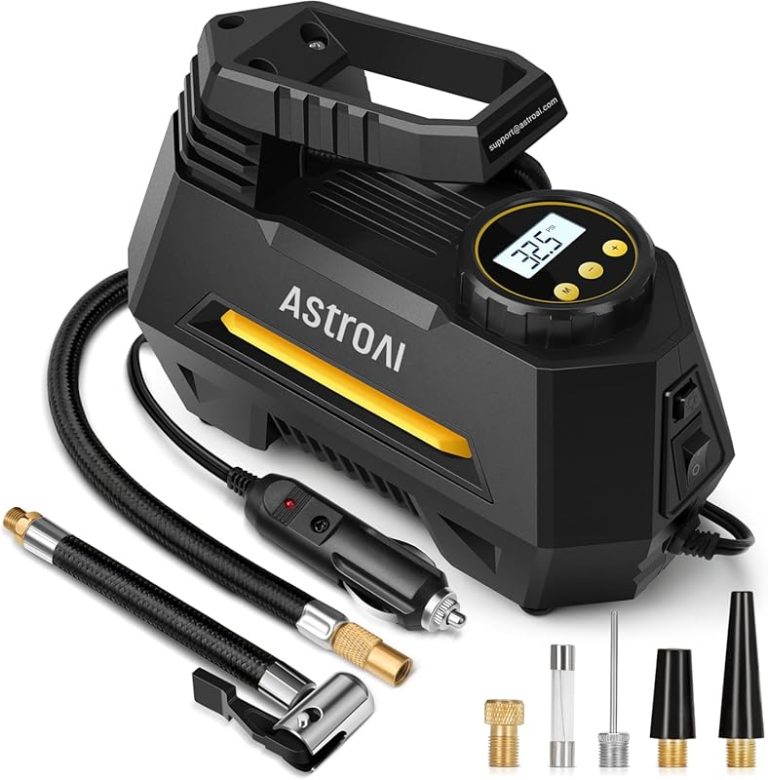
12V inflators are often convenient because they draw power from the vehicle, but they depend on the car’s electrical system and cord length. Battery-powered models offer more mobility, though the battery must be charged and kept in good condition.
Neither type is automatically safer in every situation. The better choice depends on where you plan to use it, how often you need it, and whether you want a backup that works even if the vehicle battery is weak.
When a low-cost inflator becomes a risky buy
Very cheap inflators may work for occasional use, but some have weak gauges, noisy motors, or hoses that wear out quickly. If the unit vibrates excessively, overheats fast, or gives inconsistent readings, it may not be worth relying on in an emergency.
Note
Cost alone does not determine safety, but build quality matters when pressure accuracy and heat control are involved. A reliable mid-range unit is often a better long-term choice than a bargain inflator that fails when you need it most.
Follow Safe Inflation Steps to Avoid Overheating and Blowouts
Safe inflation is usually slow, controlled, and repetitive: check, add a little air, pause, and check again. That rhythm helps avoid overshooting the target and reduces stress on the inflator.
Run the inflator in short intervals instead of nonstop use
Many portable inflators are not designed to run continuously for long stretches. Short intervals give the motor time to cool and make it easier to stop near the correct PSI.
Pro Tip
If a tire is very low, add air in small bursts rather than trying to fill it in one uninterrupted session. That habit lowers heat buildup and gives you more chances to verify the pressure.
Keep hands, clothing, and face away from the hose and valve area
The hose, chuck, and valve stem area can move slightly during inflation, especially if the connection is not secure. Loose sleeves, hair, or fingers should stay clear so nothing gets caught or pinched.
It is also smart to stand to the side instead of directly over the tire. If the connection slips or a fitting fails, you will be in a safer position.
Stop at the recommended PSI and recheck after the tire cools
Do not keep adding air just because the gauge is close to the target. Stop at the recommended number, then check again after the tire has cooled if driving or weather may have changed the reading.
Warning
Never assume a hot tire is at the correct pressure just because the gauge looks close. Heat can raise the reading enough to hide an overinflation problem.
Common Tire Inflator Mistakes Drivers Still Make
Most inflator problems come from rushing, using the wrong setup, or ignoring the reason the tire went low in the first place. A quick refill can seem harmless, but repeated mistakes can create bigger repair costs later.
Inflating a hot tire and misreading the pressure
A tire that has been driven recently can show a higher pressure than it will show once it cools. If you inflate based on that temporary reading, the tire may end up under- or overinflated after temperature changes.
For the most accurate result, measure and inflate when the tire is cold whenever possible. If you must add air after driving, be conservative and recheck later.
Using the wrong nozzle or forcing an attachment onto the valve stem
Not every nozzle fits every valve perfectly, and forcing the wrong attachment can damage the stem or let air escape. A poor seal also wastes time and can make the gauge reading unreliable.
If the connector does not sit securely, stop and switch to the correct adapter rather than pushing harder. Small fit issues are easier to fix than a broken valve stem.
Ignoring slow leaks that return after every refill
If a tire keeps losing pressure after you top it off, the inflator is only masking the real issue. A nail, damaged valve, or bead leak may be the actual cause, and it will usually need repair.
For that kind of recurring problem, a portable inflator is just a temporary helper. If the tire drops again within a short period, schedule an inspection instead of repeatedly refilling it.
When to Stop and Call for Help Instead of Continuing
Some tire problems are not safe to solve with an inflator at all. Knowing when to stop can protect you from a roadside failure, a ruined tire, or a dangerous blowout.
Warning signs of sidewall damage, punctures, or bead failure
Bulges, deep sidewall cuts, exposed cords, or a tire that will not hold air are signs that inflation may be unsafe. If the tire looks deformed or the bead appears to be separated from the rim, do not keep adding pressure.
Those conditions can worsen quickly and may fail suddenly under load. In that situation, the safest move is to avoid driving farther than necessary.
Situations where a tire inflator is not a safe fix
A tire inflator is not the right answer for a large puncture, a shredded tire, or a wheel that has been bent by impact. It also is not the right tool if the tire is completely flat and the cause is unknown.
If the tire pressure warning comes back immediately after inflation, or if you hear a strong hissing sound, stop and inspect the tire before continuing. Air alone will not solve a serious leak.
When to contact roadside assistance, a mechanic, or a tire shop
Call for help when you cannot identify the cause of the pressure loss, when the tire damage is visible, or when the vehicle is unsafe to move. A tire shop can usually inspect the tire, patch it if appropriate, or recommend replacement.
If you are unsure whether the tire can be repaired, ask a professional before driving long distances. That is especially important when the tire supports a heavy load, the weather is poor, or the damage is near the sidewall.
Smart Storage, Maintenance, and Cost Tips for Safer Use
Safe use does not end after inflation. Storing the inflator properly and checking it periodically can make it more dependable when you need it most.
Keep inflators dry, clean, and protected from heat in the trunk
Heat, moisture, and loose cargo can shorten the life of a portable inflator. Keep it in a case or organized storage area so the hose, gauge, and cord do not get crushed or tangled.
If you live in a region with extreme summer heat, avoid leaving the unit exposed for long periods in direct trunk heat. For broader seasonal car care, hot weather safety stay out without risk is a useful reminder that high temperatures can affect both people and equipment.
How regular gauge checks can prevent costly tire wear
Even a good inflator is only useful if it reads pressure accurately. Comparing it occasionally with a trusted tire gauge can help you catch drift before it turns into uneven wear or poor fuel economy.
Small pressure errors add up over time, especially if you drive daily or carry heavy loads. A few extra minutes of checking can help preserve tire life and reduce the chance of running on underinflated rubber.
Choosing between budget, mid-range, and premium inflators in 2025
Budget inflators may be fine for occasional emergency use, but they often trade away consistency and durability. Mid-range options usually offer a better balance of gauge clarity, hose quality, and cooling performance.
Premium models can make sense if you use an inflator often, maintain multiple vehicles, or want features like better displays and more stable construction. The best choice depends on how often you will rely on it, not just the sticker price.
Final Recap: The 7 Safety Habits Every Driver Should Remember
Safe tire inflation is mostly about slowing down and checking the basics. A portable inflator is useful, but it works best when paired with the right PSI, a quick inspection, and a willingness to stop when something looks wrong.
Quick summary of the most important do’s and don’ts
Do use the placard pressure, inspect the inflator, inflate in short bursts, and recheck the tire when needed. Don’t trust the sidewall number, force a bad-fitting nozzle, or keep inflating a tire that shows damage or a persistent leak.
How safe inflation protects tires, fuel economy, and road safety
Correct pressure helps tires wear more evenly, supports predictable handling, and can reduce wasted fuel from underinflation. Most importantly, careful inflation lowers the chance of a roadside failure and keeps a simple maintenance task from becoming a safety problem.
Frequently Asked Questions
No. The sidewall number is the tire’s maximum rating, not the recommended driving pressure. Use the vehicle placard for the correct PSI.
You can, but the reading may be higher because the tire is warm. For the most accurate result, check and inflate when the tire is cold.
That depends on the model, so check the manufacturer guidance. In general, short intervals are safer than nonstop use because they reduce heat buildup.
A recurring pressure loss usually means there is a leak or another tire problem. Have the tire inspected by a shop or roadside professional instead of repeatedly refilling it.
Not automatically. Battery-powered inflators offer more mobility, while 12V models are convenient if your vehicle power source is reliable; safety depends more on build quality and correct use.
Stop if you see sidewall damage, a bulge, a strong leak, or a tire that will not hold air. In those cases, roadside assistance or a tire shop is the safer choice.