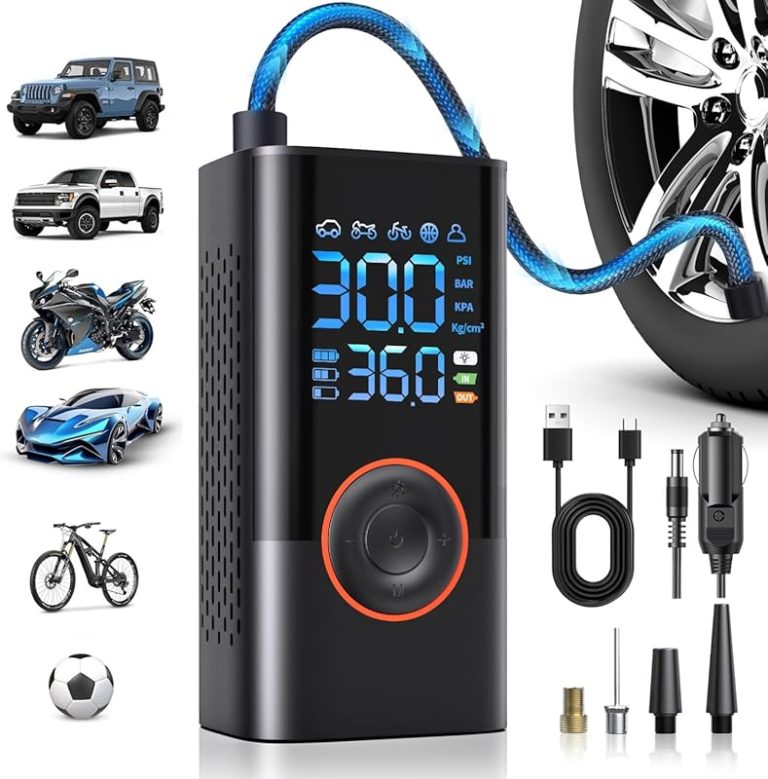
How Long Does a Tire Inflator Take to Fill a Tire

Most tire inflators take a few minutes for a normal top-off and longer for a very low or larger tire. The exact time depends on tire size, starting pressure, and the inflator’s airflow.
If you are asking how long does a tire inflator take, the short answer is usually a few minutes per tire for a normal top-off, and longer if the tire is very low or a larger SUV or truck tire needs more air. The exact time depends on the inflator’s airflow, the tire size, the starting pressure, and how efficient the setup is.
- Typical top-off: Usually just a few minutes per tire.
- Low tire fill: Can take 5 to 15 minutes or more.
- Biggest factors: Tire size, PSI change, and inflator type.
- Common slowdowns: Weak power, overheating, and air leaks.
- Safety first: Very low or damaged tires need professional help.
How Long Does a Tire Inflator Take to Fill a Tire? Quick Answer and Real-World Expectations
For many passenger cars, a portable tire inflator can add a small amount of air in about 1 to 3 minutes and bring a low tire back to the recommended PSI in roughly 3 to 10 minutes. Larger tires, weaker 12V units, or cordless inflators may take longer, especially when the tire starts very low.
That said, “fill a tire” can mean different things. Topping off a tire from slightly low pressure is much faster than inflating a nearly flat tire, and neither is the same as trying to rescue a tire that has a puncture or a damaged valve.
Check the door-jamb tire placard before you start, then set your target PSI first so you do not waste time inflating in small, repeated bursts.
What Affects Tire Inflator Fill Time in 2025
Inflator speed is not just about the tool itself. The tire’s volume, the amount of air missing, and the condition of the valve system all affect how long the job takes.
Tire size, starting pressure, and target PSI
A compact car tire has less air volume than a large SUV or light truck tire, so it usually fills faster. Starting pressure matters too: going from 28 PSI to 35 PSI is much quicker than going from 10 PSI to 35 PSI.
The target PSI also changes the answer. A tire that only needs a small correction may be finished in minutes, while a tire that is very low may require a longer run time and a short cooling pause if the inflator is not designed for continuous use.
Inflator type: portable 12V, cordless, or garage air compressor
Portable 12V inflators are common because they plug into the vehicle, but many are slower than a full-size shop compressor. Cordless inflators offer convenience, though battery level can affect speed and consistency.
Garage air compressors are often the fastest option for home use, especially when they have a larger tank and stronger airflow. If you also deal with warning lights or tire-related diagnostics, a guide like how to learn an OBD2 scanner can help you separate tire pressure issues from other vehicle alerts.
Valve efficiency, hose length, and ambient temperature
A leaky valve stem or a loose hose connection can slow inflation because air escapes while you are trying to add it. Even a small leak can make the process feel much longer than it should.
Temperature matters as well. Cold air is denser, and cold tires can read lower than warm tires, so the same tire may appear to take longer on a winter morning than on a mild afternoon.
Inflation time is only one part of the job. Accurate pressure matters more than speed, because overinflating or underinflating can affect ride quality, wear, and safety.
Average Tire Inflator Times by Common Use Case
There is no universal timer for every inflator and every tire, but a few common scenarios can help set expectations. The ranges below are practical estimates, not guarantees.
Top-off from low pressure to recommended PSI
If a tire is only a few PSI low, a decent portable inflator often finishes in a short window. Many drivers can expect a top-off to take around 1 to 5 minutes per tire, depending on the machine and the amount of air needed.
This is the most common use case for daily driving. It is also where a small inflator feels “fast enough,” because the tire does not need a large volume of added air.
Filling a standard passenger car tire from flat-ish to usable
When a tire is low enough to look visibly soft, the job takes longer. A standard car tire may need 5 to 15 minutes or more to reach a usable pressure, especially with a compact cordless unit or a lower-output 12V model.
If the tire is nearly flat, the inflator may still be able to help, but the time increases and the risk of heat buildup rises. In that situation, it is worth checking for a puncture before assuming the tire simply needs air.
Inflating larger tires: SUVs, trucks, and trailers
Larger tires hold more air, so they naturally take more time. SUVs, pickups, and trailer tires may take several extra minutes compared with a small sedan tire, even when the same inflator is used.
For these vehicles, an inflator that feels quick on a compact car can seem slow on a truck. That is why airflow rating and duty cycle matter more as tire size increases.
- Confirm the recommended PSI before inflating
- Check whether the tire is slightly low or nearly flat
- Make sure the hose and valve are sealing properly
- Watch for heat buildup on smaller inflators
How to Estimate Tire Inflator Time Before You Start
You can make a decent time estimate before plugging anything in. The key is to match the inflator’s airflow to the tire’s size and the amount of pressure you need to add.
Reading the inflator’s airflow rating and matching it to the tire
Inflators are often described by airflow or output, but labels vary by brand and model. Higher airflow usually means faster inflation, but real-world speed also depends on hose design, pressure range, and how well the unit handles heat.
If the inflator is intended mainly for emergency use, expect slower fill times than a larger compressor. If it is built for repeated use, it will usually recover pressure faster and hold performance better over multiple tires.
Use a tire gauge or the inflator’s built-in reading to see how much air the tire actually needs.
Small corrections are quick; large jumps in PSI take much longer, especially on bigger tires.
Portable 12V and cordless models usually take longer than a garage compressor with stronger airflow.
Simple time estimate examples for different tire sizes
Here is a simple way to think about it: a compact car tire needing a small top-off may be done in a few minutes, while a larger SUV tire needing a bigger pressure increase may take several more. A nearly flat tire can stretch the time further because the inflator has to move much more air.
As a rough planning tool, think in ranges instead of exact minutes. That keeps expectations realistic and helps you avoid assuming a small inflator will perform like a shop compressor.
Why the same inflator can feel fast on one tire and slow on another
The same tool can seem dramatically different depending on the job. A light top-off on a sedan may finish quickly, but the same inflator can feel slow on a truck tire or a tire that has dropped far below normal pressure.
That is why product comparisons should be based on use case, not just on the headline speed claim. If you are deciding between vehicle types, it can help to read broader ownership and maintenance comparisons such as Tesla Model Y maintenance cost or other vehicle-specific guides when tire needs are tied to daily driving habits.
Common Mistakes That Make Tire Inflation Take Longer
Many slow inflation experiences are not caused by a bad inflator. They come from setup mistakes, power issues, or small leaks that waste time.
Using the wrong pressure setting or overinflating in stages
If you stop too early and keep rechecking in short bursts, the process becomes slower and less convenient. It is better to aim for the correct target pressure once, then fine-tune at the end if needed.
Overinflating and bleeding air back out also wastes time. It can be tempting to “go a little high just in case,” but that adds extra steps and can leave you with an inaccurate final reading.
Poor battery charge, weak power source, or overheating
A cordless inflator with a weak battery may slow down noticeably as charge drops. A 12V inflator can also underperform if the vehicle power source is weak or the engine is off when the unit is designed to run with the engine on.
Some inflators need cooldown periods after several minutes of use. If the unit gets hot, output may fall until it rests, which makes the total job take longer than the initial run time suggests.
Do not keep forcing a small inflator to run continuously if it is overheating. Heat can damage the tool and may create a safety risk if the unit is not rated for extended use.
Leaks at the valve stem or hose connection
A poor seal at the valve stem can leak air while you inflate, making the pressure climb slowly or unevenly. A worn hose connector can do the same thing, especially if the fitting is not fully seated.
If you hear hissing or see pressure not holding after you disconnect, inspect the valve core, cap, and hose connection before assuming the tire itself is the problem.
When a Tire Inflator Is Not Enough: Warning Signs and Expert Help
A tire inflator is useful for routine pressure maintenance, but it is not the right fix for every tire problem. Some situations call for inspection instead of more air.
Slow leaks, punctures, and sidewall damage
If a tire keeps losing pressure after you fill it, there may be a puncture, a damaged valve stem, or a bead leak. Sidewall bubbles, cuts, or visible damage are especially concerning because they can point to structural problems.
In those cases, continued inflation is not a real solution. The tire may need repair, replacement, or a professional assessment depending on the damage.
When to stop and use a shop compressor or call roadside assistance
If the tire is extremely low, if the inflator cannot reach the needed PSI, or if the unit keeps shutting down, it may be time for a stronger compressor or roadside help. A shop compressor is often the better choice when speed and reliability matter more than portability.
If you are unsure whether the tire is safe to drive on, ask a professional. That is especially important after a pothole hit, a curb impact, or any situation where the tire or wheel may have been damaged.
Safety note on driving with very low tire pressure
Driving on a very low tire can damage the tire further and may affect steering and braking. If the tire is close to flat, it is safer to stop and inspect it rather than assuming an inflator will solve everything.
When in doubt, use roadside assistance or a tire shop instead of risking the wheel, the tire, or your safety.
Best Value vs Fastest Option: Cost and Performance Comparison
The best inflator for you depends on whether you want the lowest cost, the quickest fill, or the easiest tool to keep in the car. Speed and value do not always point to the same product.
Budget portable inflators vs premium cordless models
Budget portable inflators are usually attractive because they are simple and affordable, and they can be perfectly adequate for occasional top-offs. Premium cordless models often improve convenience, battery handling, and overall usability, but they are not automatically the fastest in every situation.
If you want a broader vehicle-cost perspective before buying tools and accessories, a guide like Tesla ownership cost explained can help frame how maintenance habits and equipment choices fit into the bigger picture.
| Option | Best For | Limit |
|---|---|---|
| Budget portable inflator | Occasional top-offs and emergency use | Slower on large or very low tires |
| Premium cordless model | Convenience and frequent use | Battery life can affect speed |
| Garage air compressor | Fast inflation for multiple tires | Less portable and usually less convenient on the road |
Tradeoffs between speed, portability, noise, and accuracy
The fastest option is not always the easiest to live with. Garage compressors tend to be quicker, but portable inflators are easier to store and use anywhere.
Noise and accuracy also matter. A unit that is loud or hard to read may feel more frustrating than a slightly slower inflator that is easy to set and monitor.
- Portable inflators are easy to keep in the vehicle
- Garage compressors are usually the fastest
- Better accuracy reduces repeated adjustments
- Cheaper units may take longer to fill larger tires
- Cordless models depend on battery condition
- Repeated overinflation adds unnecessary time
Final Takeaway: How Long a Tire Inflator Takes and How to Get Faster Results
Most tire inflators take only a few minutes for a simple top-off, but the time can stretch to 10 minutes or more when a tire is low, large, or being filled with a compact portable unit. The most accurate answer depends on tire size, starting pressure, inflator type, and whether the setup is sealed properly.
For faster results, start with the correct PSI target, use a well-charged or properly powered inflator, and watch for leaks or overheating. If the tire is nearly flat, keeps losing air, or shows visible damage, stop and get professional help instead of treating the inflator as a full repair tool.
Frequently Asked Questions
A small top-off often takes 1 to 5 minutes, while a low passenger car tire may take 5 to 15 minutes or more. The exact time depends on the inflator, tire size, and starting pressure.
Not always, but battery level can affect cordless performance. Some 12V models are slower, while others are strong enough for quick top-offs.
Common reasons include low battery, weak power supply, leaks at the valve or hose, or a small inflator being used on a large tire. Overheating can also reduce speed.
It may be able to help if the tire is only low, but a nearly flat tire can take much longer and may have a puncture or other damage. If the tire will not hold air, it needs inspection.
SUV tires usually take longer than standard car tires because they hold more air. A top-off may still be quick, but a large pressure increase can take several extra minutes.
Stop if the tire is very low, keeps leaking, shows sidewall damage, or the inflator cannot safely reach the target PSI. In those cases, roadside assistance or a tire shop is the safer choice.