
Our readers keep the lights on and my garage snacks stocked. As an Amazon Associate, I earn from qualifying purchases.
Specs are compiled from manufacturer listings and verified buyer reviews and can change over time — please confirm the key details on the product page before buying.
When a hydraulic hose bursts in the middle of a job, the downtime can cost you an entire day and a small fortune. A universal hydraulic hose crimper is the tool that puts repair back in your hands — letting you make factory-quality crimps on site, in the field, or in the shop. The catch is that not all of these manual machines deliver the same force, reliability, or die fit, and picking the wrong one can mean a crimp that leaks or a pump that locks up after just a few hoses.
I’m Min Islam — the founder and writer behind Trending Car. This guide is built by comparing the manufacturers’ published specifications and the patterns across verified customer reviews, so you get each pick’s real strengths and trade-offs instead of marketing spin.
Whether you maintain a fleet of construction equipment or just need to fix a tractor hose on the weekend, this review of the top universal hydraulic hose crimper models cuts through the conflicting specs to help you choose one that actually holds up.
Our Picks at a Glance
How To Choose The Best Universal Hydraulic Hose Crimper
Picking a manual hose crimper is about matching the machine’s raw capability to the size and pressure of the hoses you crimp most often. Three specs dictate whether the tool will do the job cleanly or frustrate you from the first stroke.
Crimp Force (KN) Matters Most
The crimp force, measured in kilonewtons (KN), tells you how much squeezing power the head delivers. A 1000KN unit works for light to medium single-wire braid hoses up to about 1 inch. If you regularly crimp double-braided industrial lines or larger fittings, a 2000KN machine gives you the headroom to get a full compression without stopping mid-stroke. Skimping on force is the fastest path to a leaky crimp that has to be cut off and redone.
Hydraulic Oil Tank Capacity Determines Your Rhythm
This spec is often overlooked, but it directly affects how many pumps you need per crimp. A 0.16-gallon (0.6 Liter) tank means more refills and slower cycling over a string of repairs — you will find yourself pausing to pump more often. A 0.26-gallon (1 Liter) tank holds roughly 62% more fluid, which translates to fewer strokes per hose and a smoother work flow when you are doing a full machine’s worth of lines.
Die Quality and Die Range Define Versatility
The dies are the only parts that directly touch your hose and fitting. Forged steel heads with properly machined die slots produce consistent, round crimps. Magnetic die holders, as found on mid-range units, make swapping sizes quick — you click in a new pair without tools. And a conversion chart on the body lets you dial the right die diameter for the fitting you are using, so you are not guessing the closure gap.
Quick Comparison
| Model | Best For | Crimp Force | Oil Tank Capacity | Weight | Amazon |
|---|---|---|---|---|---|
| LABFENG 8-Die Crimper★ Best Overall | High-volume farm/shop work | 2000 KN | 0.26 gal (1 L) | 25 kg | Amazon |
| EXKNDG 8-Die Crimper | Budget-conscious fleet owners | 2000 KN | 0.26 gal (1 L) | 25 kg | Amazon |
| Flynsu 8-Die Crimper | Light-duty / occasional use | 1000 KN | 0.16 gal (0.6 L) | 36.74 kg | Amazon |
In‑Depth Reviews
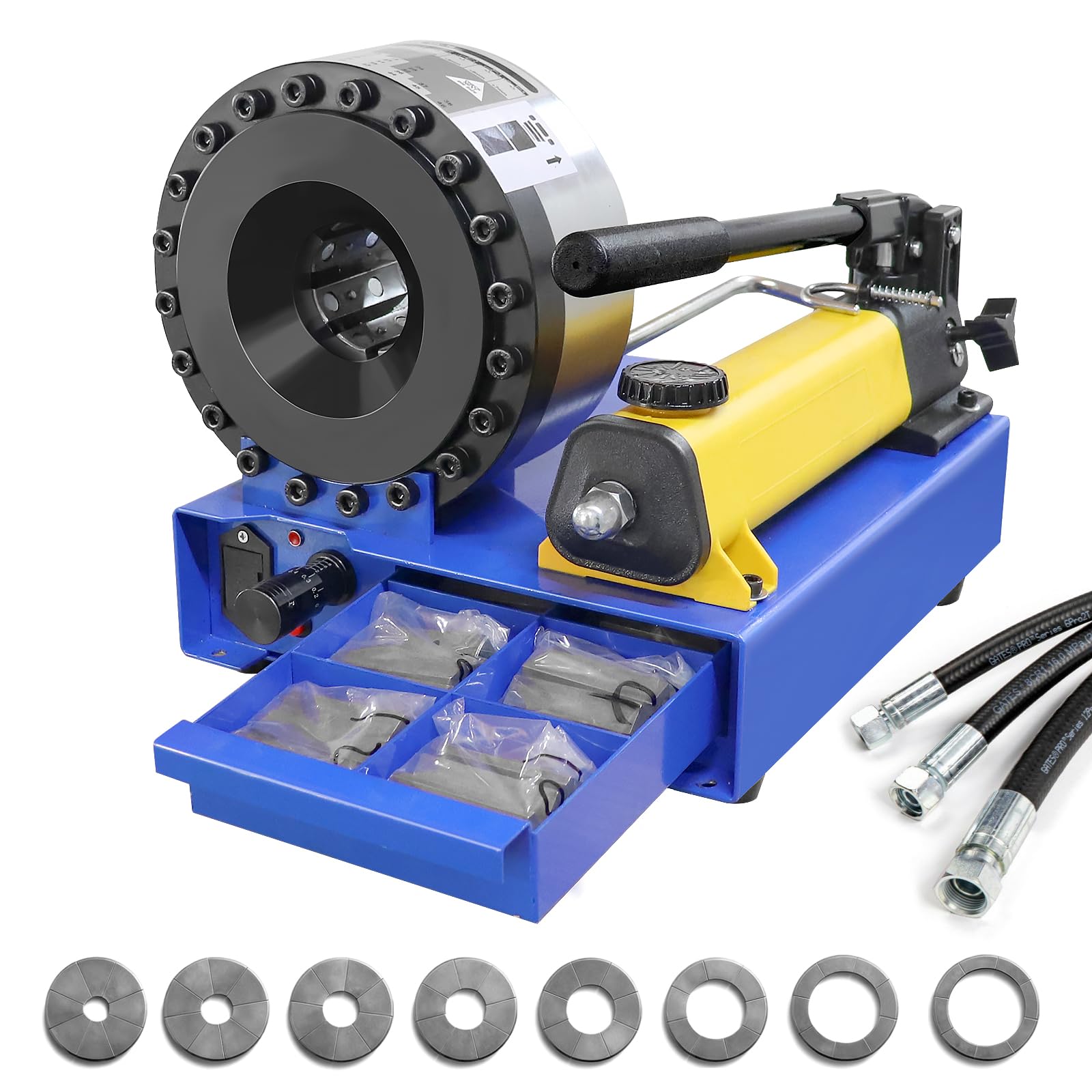
1. LABFENG Hose Crimper with 8 Sets of Dies
Our pick — over 4★ from 50+ verified ratings; the strongest balance of quality and price.
The portable workhorse that doubles the force of cheaper options.
The hydraulic oil tank holds 0.26 gallons (1 Liter), giving it 62% more fluid capacity than the Flynsu, which means fewer pumps per cycle and a noticeably smoother rhythm when you are doing a string of hoses back to back.
Buyers report excellent results on 3/8 inch hydraulic lines and farm equipment. The forged steel head and Italian-style sleeve joints are built to resist oil leaks, and the magnetic die holders make swapping sizes a one-handed operation. At 25 kilograms, this machine is also 11.74 kilograms lighter than the Flynsu, so carrying it across a job site is genuinely easier. The consensus among owners is that the crimp quality here rivals shop-made hoses, and the adjustable dies allow repeatable crimps that match fitting specs.
The main trade-off is the hand pump: expect well over 100 strokes per full cycle. A few units have arrived missing a die, though the seller response has been quick. As buyers put it: “My company has several pieces of construction equipment. This unit saves me time and a considerable amount of money.”
The Force Advantage
- 2000 KN crimp force handles double-braid and larger lines
- 0.26 gal tank keeps you pumping, not refilling
- Magnetic dies swap fast without tools
- Portable weight (25 kg) for field use
The Real Cost
- Hand pump requires 100+ strokes per crimp
- No included manual — you need some hydraulic expertise
- Occasional missing die on arrival
Grab it for: farm, construction, or fleet work where you need a portable 2000 KN crimper that travels lighter than the competition and holds more hydraulic oil.
Think twice if: you want a one-pump-per-crimp experience — this is a manual machine that demands arm work.
2. EXKNDG Hose Crimper with 8 Drill Sets
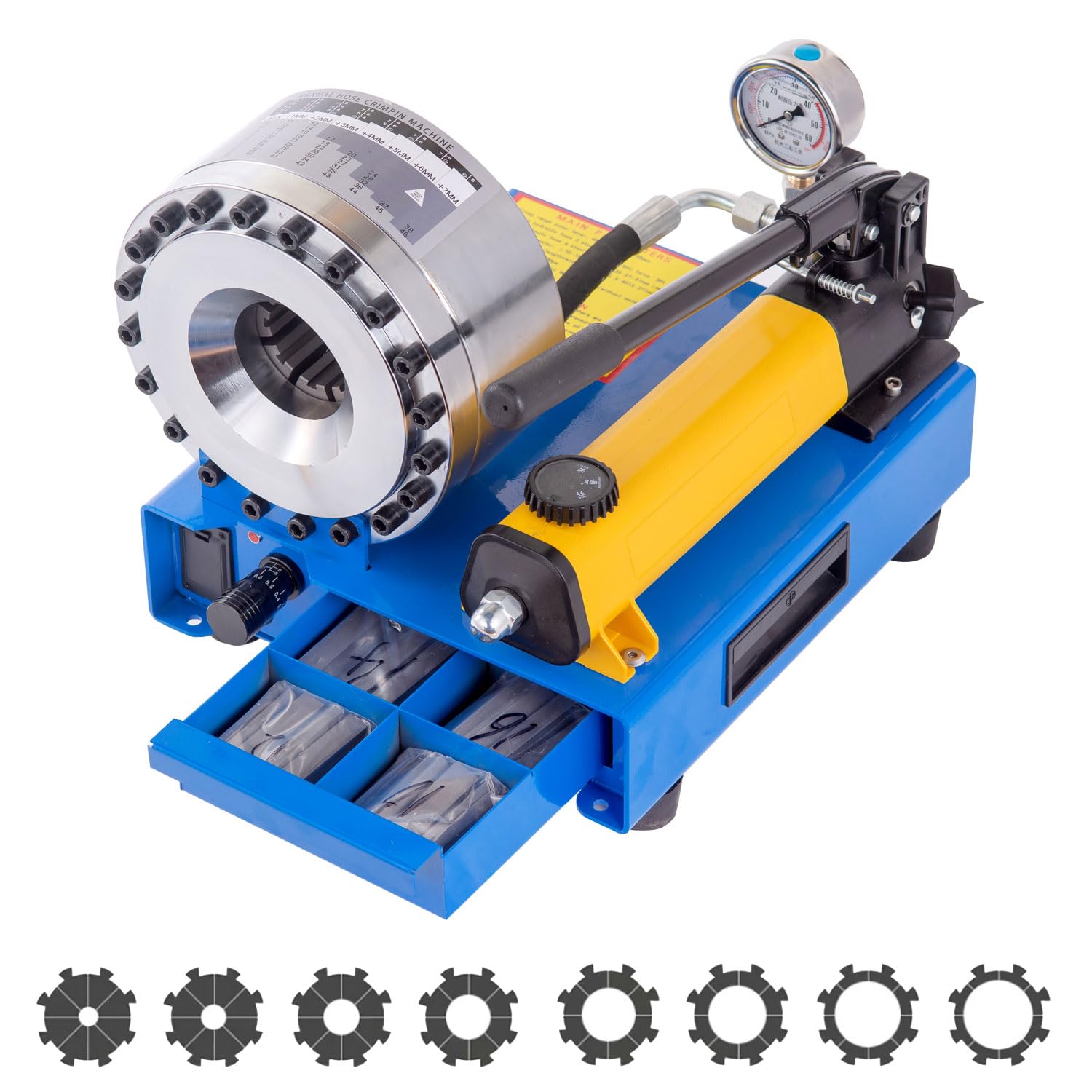
The same 2000 KN force and tank size for a no-frills build that gets the job done.
The EXKNDG shares the same critical specs as the LABFENG — 2000 KN of crimp force and a 0.26-gallon oil tank — at a lower entry point. That makes it the smart play if you are running a fleet of construction gear and need to crimp single and double-braid hoses from 0.25 to 1 inch without investing in a premium label. The high-carbon steel ergonomic handle and forged steel head are built for repeated use, and the included 8 die sets cover the most common sizes.
Owners consistently call out the quality and functionality, with one noting that after changing most of the hoses on a single machine, the tool had already paid for itself. The magnetic die holders and conversion chart are the same convenience features found on the more expensive unit, so you get the same speed when swapping between hose diameters.
Where this model falls short is refinement. The process requires well over 100 pumps per crimp — owners mention 100+ strokes — and some experienced owners warn that the adjustment pressure takes a feel you only develop over time. A few noted that the tool is “not for industrial lines” in demanding environments, and it works best when you already understand hose crimping and are not learning from scratch.
Best-value pick if: you need 2000 KN capacity and the largest hydraulic oil tank, and you are comfortable dialing in the pressure yourself without a detailed manual.
The real catch: the hand-pump stroke count is high and the machine demands operator experience for consistent crimps.
Reach for this when: the budget is tight but the hoses are large — same power and fluid capacity as the top pick at a lower cost.
Look elsewhere if: you expect turnkey ease of use or are crimping critical industrial lines where every crimp must be perfect immediately.
3. Flynsu Hydraulic Hose Crimper with 8 Sets of Dies
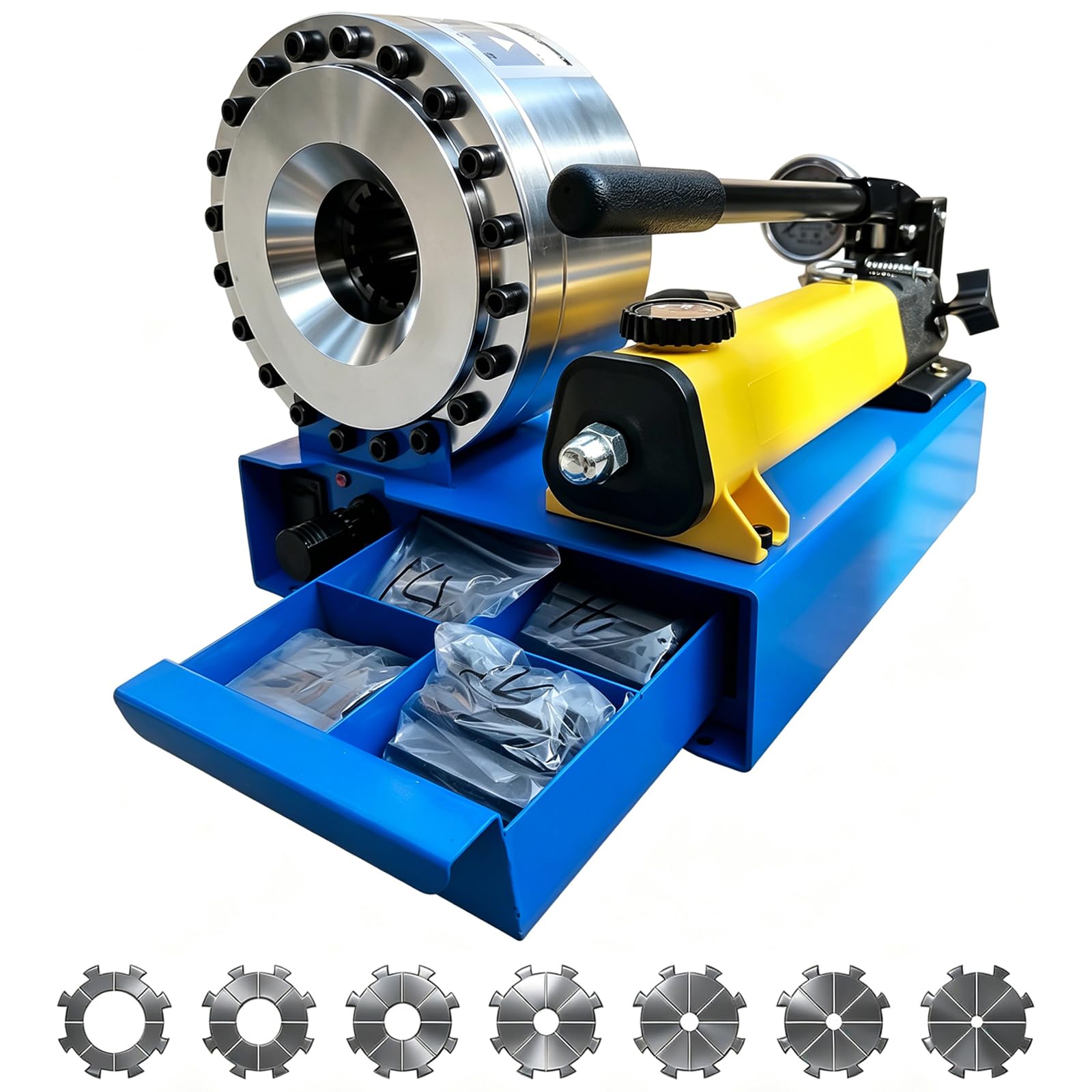
A lighter-duty unit that trades force and tank size for a lower price — but buyer satisfaction is mixed.
At 1000 KN, the Flynsu delivers half the crimp force of the two picks above, so it is best suited for single-braid hoses and smaller lines. Its oil tank holds 0.16 gallons (0.6 Liters), which runs out faster during a string of crimps. The machine is also noticeably heavier at 36.74 kilograms, making it harder to carry around a job site than the 25-kilogram competitors.
The 12-month warranty is a nice safety net, and users who get a good unit find it easy to learn with quick results. The ergonomic grip and chrome finish look solid on the shelf, and the slide-in buckle dies are simple to install. Several customers note the dies arrived with surface rust, however, requiring wire-wheel cleaning before first use — a common theme in buyer feedback.
The reliability reports are this unit’s biggest concern. Others noted that the instruction sheet is minimal and offers no real troubleshooting. This makes the Flynsu a roll of the dice — you might get a machine that works fine for occasional use, or one that stops after a few cycles.
Who it suits: a hobbyist or occasional user crimping single-braid hoses who can accept the risk of early failure and does not mind cleaning dies and figuring out the setup themselves.
Good for: light-duty, at-home repairs where the alternative is driving to a shop every time a hose blows.
Not for: anyone who needs to rely on a crimper day in, day out for work — the reliability complaints and lower force cap make it a gamble for professional use.
Understanding the Specs
Crimp Force (KN)
This is the squeezing power the head applies to the die set. Think of it as the tool’s strength ceiling. 2000 KN handles double-braid hydraulic lines up to 1 inch with ease. 1000 KN works for single-braid and thinner hoses, but it will struggle or fail to fully compress a larger, reinforced hose — leaving you with a leak.
Hydraulic Oil Tank Capacity
This is the volume of hydraulic fluid the pump draws from to push the cylinder. A bigger tank (0.26 gal / 1 L) means the pump can cycle more times before you need to refill, so you spend less time topping off and more time crimping. A smaller tank (0.16 gal / 0.6 L) will need a refill after fewer hoses.
Forged Steel Head vs Standard Steel
The head is the main structural part that holds the dies and absorbs the 2000 KN of force. A forged steel head is stronger and more durable because the metal grain is compressed during manufacturing — it resists cracking and deformation under repeated high loads. Standard steel heads can fatigue faster over hundreds of crimps.
Magnetic Die Holders
A magnetic die holder uses magnets to hold the die halves in place while you position the hose and fitting. This makes swapping between sizes a tool-free, seconds-long operation. Without magnets, you fiddle with set screws or clamps each time you change diameters.
FAQ
Can a 1000 KN crimper handle double-braid hydraulic hose?
How many strokes does a manual hydraulic crimper need per hose?
What type of hydraulic oil do these crimpers use?
Do these crimpers work on air conditioning (A/C) pipes or power steering lines?
How do I know which die size to use for my fitting?
Is a manual hydraulic crimper portable enough for field repairs?
What is the difference between a forged steel head and a regular steel head?
Can I use a crimping machine for gas pipes or water pipes?
How long does a manual hose crimper typically last?
Final Thoughts: The Verdict
Across the board, the universal hydraulic hose crimper winner is the LABFENG 8-Die Crimper because it delivers class-leading 2000 KN force and the largest 0.26-gallon oil tank in a portable 25 kg package that owners trust for field and shop work. If you are outfitting a fleet on a tighter budget, the EXKNDG 8-Die Crimper matches the same power and fluid capacity for less. And if you only occasionally crimp single-braid hoses and are willing to gamble on reliability, the Flynsu is the budget entry point — just budget time to clean rusty dies and study the skimpy instructions.
How We Picked
We do not accept paid placement. Every pick is matched to a real buyer and a real use-case; we do not hands-on test units.
Sources & Methodology
Specifications: manufacturer listings and product documentation. Review insights: verified customer reviews, as of July 2026. Pricing: not shown on this page (it changes often); check the current price via the retailer link.
As an Amazon Associate, Trending Car earns from qualifying purchases. This does not affect which products we feature.