
Our readers keep the lights on and my garage snacks stocked. As an Amazon Associate, I earn from qualifying purchases.
Specs are compiled from manufacturer listings and verified buyer reviews and can change over time — please confirm the key details on the product page before buying.
You plug it in, you turn it on, and you wait for warmth. But for many of these so-called portable car heaters, the real result is a lukewarm breeze that barely reaches your knees. The category is full of small, 12-volt fans that promise cabin comfort but often deliver only a gentle whir. This guide cuts through the noise, pairing published specs with the reality of thousands of owner experiences, so you know which one actually adds heat instead of just noise.
I’m Min Islam — the founder and writer behind Trending Car. This guide is built by comparing the manufacturers’ published specifications and the patterns across verified customer reviews, so you get each pick’s real strengths and trade-offs instead of marketing spin.
If you have been scrolling through dozens of options wondering if any of these little plugs actually work, this breakdown of the best portable car heater for your specific vehicle shows you exactly where the real heat lives and what catches fire instead.
Our Picks at a Glance

How To Choose The Best Portable Car Heater
A small box that plugs into your cigarette lighter looks simple. But picking the right one is about matching the heater’s actual electrical pull to your vehicle’s circuit, your climate, and your need for safety. Here is what separates the warmers from the hazards.
Wattage is everything
The electrical demand is measured in watts. A 150W heater pulls around 12.5 amps from your accessory socket, while a 200W unit pulls roughly 16.7 amps. Many car lighter circuits are fused at 10 to 15 amps. Running a heater that draws more than your circuit can handle will blow the fuse instantly — or melt the wiring. Always check your vehicle’s owner’s manual for your accessory socket rating before buying anything over 150W.
Heat output versus fan noise
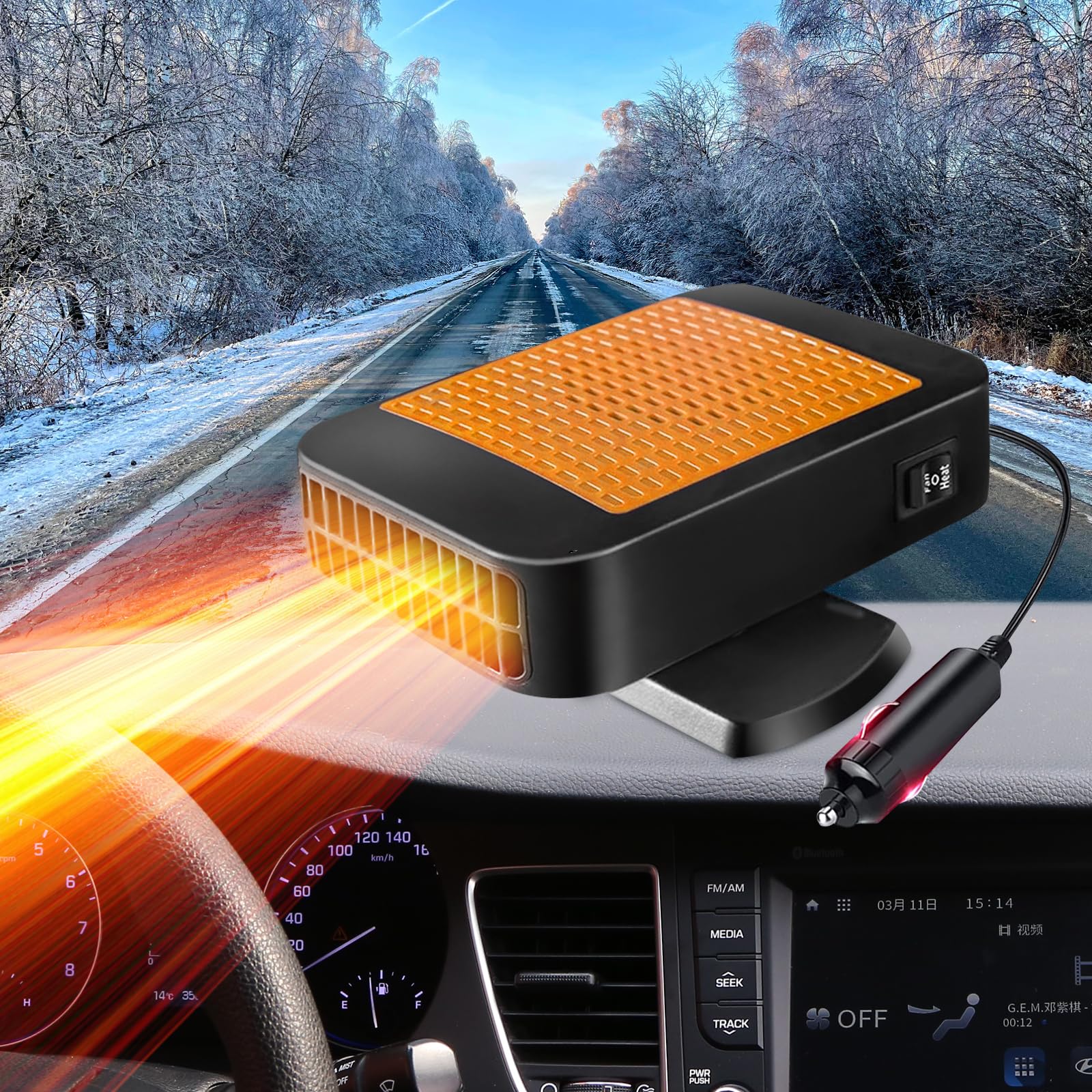
These are resistance heaters. The element inside gets hot, and a tiny fan pushes air across it. The hotter the element and the stronger the fan, the more warmth you feel. The trade-off is noise and, in some designs, the risk of the plastic housing melting if the fan fails or the heat builds up. Look for units with a built-in fuse and a housing made from heat-resistant ABS or polymer plastic.
Placement and rotatability
A 360-degree rotatable base lets you aim warm air directly at your windshield for defogging or at your legs for comfort. Some units also include a headrest mounting adapter for directing heat to the rear seats. The ability to angle the heater makes a big difference when you are working with only 150W-200W of power — every bit of directed air counts.
Quick Comparison
| Model | Best For | Wattage | Weight | Rotatable Base | Amazon |
|---|---|---|---|---|---|
| Baquler 2-Pack 150W★ Best Overall | Budget 2-Pack | 150W | 1.54 lbs | Yes (360°) | Amazon |
| KINOWJI 200WAlso Great | Best Overall Power | 200W | 12.6 oz | Yes (360°) | Amazon |
| Therwen 3-Pack 150W | Multi-Unit Value | 150W | 2 lbs | Yes (360°) | Amazon |
| WITIFIG 12V Heater | Compact Size | — | 13.1 oz | — | Amazon |
| CYDZSW 500W | High Heat for UTVs | 500W | 3.1 lbs | — | Amazon |
In‑Depth Reviews
1. Baquler 2 Pcs 12V 150W Car Heater
Two heaters for the price of one, but only if you sit within three inches.
The value pitch is plain: you get two 150W units in the box, each with a 360-degree rotatable base, a built-in fuse, and a headrest mounting adapter for rear-seat airflow. At 1.54 pounds total and measuring just 4.52 x 3.46 x 2.36 inches per unit, they are designed to tuck into tight dash spots. The idea is to run one at the windshield and one pointed at the cabin for double the defogging muscle.
The honest reality, as the customer consensus puts it, is that this is a close-range tool. The heat only feels genuinely warm within a few inches of the vent; beyond that, the air turns into a cool breeze. Owners of small cars like a Honda Civic get the best results, parking the heater on the dash and blasting it straight at themselves. The sticky base is a consistent weak point — many report it won’t hold the unit in place on textured dashboards. If you are hoping to heat an entire cabin from a distance, this set will disappoint. But as a personal defroster aimed directly at your face or the windshield, the two-pack value still holds up for the price.
The short-range truth: get this if you are okay keeping the heater planted in front of you and don’t expect it to change the temperature of the full car.
Reach for this if: you drive a small car and want a cheap way to defog a single spot.
Look elsewhere if: you want cabin-wide warmth or need a base that sticks to rough dash surfaces.
2. KINOWJI 12V 200W Fast Heating Defroster
The only unit here that packs 200W for noticeably faster heat.
This is the one to reach for if you actually want to feel warmth, not just hear a fan. At 200W, it delivers a meaningful boost (200W vs 150W) — a meaningful bump when every degree counts on a cold morning. That extra wattage translates to heat the owners call “amazing,” with the strongest airflow of any pick here. It also weighs just 12.6 ounces, making it the lightest high-wattage option in the lineup, and the 360-degree rotatable base lets you aim that warmth right at your windshield or your legs.
The crowd favorite rating — the highest of all five products — backs up the strong initial impressions. Plenty of owners run two of these to keep backseat passengers cool in summer or warm in winter, praising the three fan speeds for being quiet yet powerful. The trade-off, as a few note, is reliability over time. A small but vocal set report the fan stops working or starts shorting after the return window closes. That is a real risk, one you balance against the fact that this is the only heater here that genuinely raises cabin temperature rather than just pushing air.
The Heat You Came For
- At 200W, it is the most powerful plug-in heater on this list.
- Three fan speeds run quiet and push serious airflow.
- Light at 12.6 oz and the rotatable base means great aim.
The Honest Caveat
- Some units develop an intermittent short after a few months of use.
- Draws roughly 16.7 amps — verify your socket’s fuse rating first.
Reach for this if: you want actual warmth from a cigarette-lighter plug and accept the trade-off in long-term build consistency.
Best paired with: a vehicle that has a 15-amp or higher accessory circuit.
3. Therwen 3 Pcs 150W 12V Car Heater

Three units for the price of one, but safety warnings dominate the feedback.
The per-unit cost here is the lowest of any pick, and the compact size (5.12 x 4.33 x 2.76 inches) means you could theoretically stash one in each door pocket. The unit includes a heating and cooling mode switch, and the 360-degree bracket lets you pivot airflow. At 2 pounds for the three-pack, the individual heaters are light enough to move between cars.
But this is the product where the trade-off between cost and safety becomes stark. The consensus from owners is clear: the heat output is very low — users report the air is “not even warm enough to feel it from just a few inches away.” More concerning, multiple accounts describe the unit melting in the cup holder after 15-25 minutes of use, and one instance where a unit blew the vehicle’s fuse within seconds. The housing is made from ABS and heat-resistant polymer, but the fan may not move enough air to keep the element cool, leading to plastic deformation. If you buy this, treat it as a localized defogger for a tiny space and never leave it unattended. The three-pack makes sense only if you accept these as short-burst, close-proximity units with a high risk of electrical issues.
The stark reality: this is the cheapest way to get three heat sources, but melting and blown fuses are the most-discussed outcomes, not warmth.
Reach for this if: you need many units for very small spaces and promise to monitor them constantly.
Do not buy if: you expect reliable cabin heat or cannot afford to risk your vehicle’s electrical system.
4. WITIFIG 12V Portable Car Heater
A tiny dual-mode heater that works great for some and blows fuses for others.
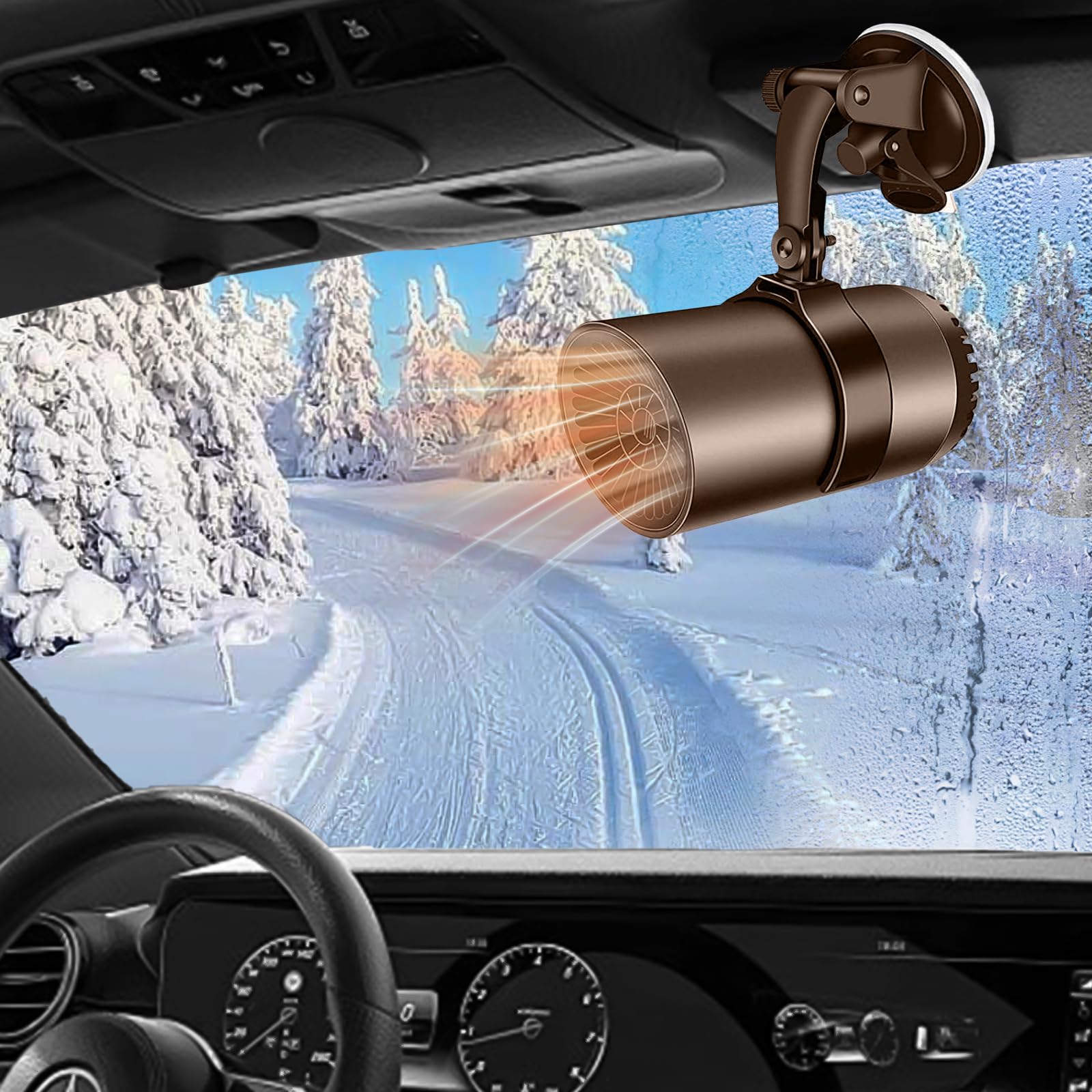
The immediate appeal is the size and weight. At just 13.1 ounces, this is one of the smallest units here, and it switches between heat and cool modes on the fly. The maker says it quickly removes frost and mist from the windshield, and some owners confirm it “works very well in my car, keeps it nice and toasty” when aimed directly at the driver. The compact package dimensions (6.06 x 5.12 x 3.27 inches) mean it stows easily in a glovebox when summer comes.
The other side of the coin is loud and clear. The most-discussed aspect is the heat output, which reviewers call mixed — for every owner getting toastier, another reports the air is “very weak” and the unit shuts off automatically after two minutes. The airflow is the most consistently criticized spec, with many saying it “barely blows.” A specific pattern shows the heater blowing the vehicle’s cigarette lighter port entirely, requiring a replacement. This is a classic lottery product: some get a useful personal warmer, others get a port-killer. It is worth trying only if you can test it immediately and return it during the window.
The split verdict: half the owners call it toasty, the other half call it a fuse-blower. The airflow is the most reliable complaint.
Reach for this if: you want a tiny heater for targeted face-level warmth and can return it fast if it fails.
Think twice if: your vehicle has a sensitive 10-amp circuit or you need sustained heat beyond two minutes.
5. CYDZSW 12V 500W 4-Hole Car Heater

Serious 500W heat for UTVs and trucks, but hardwiring is required.
This is a different animal entirely. At 500W, this unit produces real heat — the element reaches 86-100 degrees Celsius and uses four aluminum foil telescopic tubes to direct that warmth to multiple zones. It is housed in metal, not plastic, which eliminates the melting risk that plagues the lower-watt units. The kit includes four tubes, two brackets, clamps, and fasteners for a semi-permanent installation. It weighs 3.1 pounds and measures 12.8 x 6.02 x 5.28 inches in the box, making it too large for a dashboard plug-in.
The catch is power delivery and installation. This is not a cigarette-lighter device. It draws roughly 41 amps at full load, which is far beyond any accessory socket. Owners confirm you need to run heavy-gauge wire directly to the battery with an inline fuse, and even then, idling the vehicle for more than five minutes can drain the battery. The airflow volume is limited — the unit blows hot but not hard, so it works best in a sealed cab like a UTV or small truck. Buyers report it “works ok for what it is” but warn not to expect it to perform like your car’s factory heater. This is a niche tool for off-road or work vehicles where you need defrosting power and can supply the electrical infrastructure.
The 500W reality check: real heat output, but requires a direct battery connection and drains idle batteries fast.
Reach for this if: you run a UTV, tractor cab, or work truck and want genuine defrosting heat without a plastic housing.
Not for: anyone who expects a simple plug-and-play experience or needs to heat a large, leaky cabin.
Understanding the Specs
Wattage and Your Car’s Circuit
Wattage is the core spec that determines both heat output and electrical strain. A 150W heater pulls about 12.5 amps, while a 200W unit pulls closer to 16.7 amps. Most modern car cigarette lighter ports are fused at 10 to 15 amps. If your heater demands more amps than the fuse allows, the fuse blows and you lose the port entirely. It is not a sign of a bad heater — it is a sign the heater was too powerful for that specific circuit. Always check your vehicle’s owner’s manual for the fuse rating of the accessory socket before plugging in anything above 150W. For anything above 200W, you are in hardwire territory.
Heat Output Versus Airflow
Every 12V car heater uses a resistive heating element and a small fan. The spec that matters most is the wattage of the element, but the fan’s strength determines whether you feel that heat. A 200W heater with a weak fan wastes its potential; all that hot air sits trapped inside the housing. Conversely, a 150W unit with a strong fan feels warmer because it moves the heat out faster. Look for mentions of fan speeds and airflow in reviews — if owners consistently call the airflow “weak” or “barely blowing,” the heat will never reach you, regardless of the wattage number on the box.
FAQ
Can a portable car heater replace my car’s built-in heater?
Will a 200W car heater blow my cigarette lighter fuse?
How do I install a 500W heater in my truck or UTV?
Why does my car heater blow cold air?
Is it safe to leave a portable car heater unattended?
How close do I need to be to feel the heat?
Can I use a portable car heater in an RV or camping setup?
What does the 360-degree rotatable base do?
Are there any car heaters that actually heat the whole cabin?
Final Thoughts: The Verdict
Across the board, the best portable car heater is the KINOWJI 200W because it delivers the highest wattage you can safely plug into most car sockets, backed by strong airflow and a rotatable base. If you need to cover multiple spots on a tight budget, the Baquler 2-Pack offers two units for close-range defogging. And for UTVs and work trucks that need real heat from a metal housing, the hardwired CYDZSW 500W is the only pick that can genuinely warm a small sealed cab. Pick the right heater now and start your mornings warm before winter arrives.
How We Picked
We do not accept paid placement. Every pick is matched to a real buyer and a real use-case; we do not hands-on test units.
Sources & Methodology
Specifications: manufacturer listings and product documentation. Review insights: verified customer reviews, as of July 2026. Pricing: not shown on this page (it changes often); check the current price via the retailer link.
As an Amazon Associate, Trending Car earns from qualifying purchases. This does not affect which products we feature.