
Our readers keep the lights on and my garage snacks stocked. As an Amazon Associate, I earn from qualifying purchases.
Specs are compiled from manufacturer listings and verified buyer reviews and can change over time — please confirm the key details on the product page before buying.
When you are parked off-grid, baking in the sun, the last thing you want is a noisy generator running all night just to get a little sleep. The real challenge with cooling an RV isn’t finding an AC unit; it’s finding one that runs on your battery bank without draining it in an hour, fits your roof or floor space, and actually does the job.
I’m Min Islam — the founder and writer behind Trending Car. This guide is built by comparing the manufacturers’ published specifications and the patterns across verified customer reviews, so you get each pick’s real strengths and trade-offs instead of marketing spin.
Understanding the power source, BTU rating, and installation type is the real key to choosing the right portable ac for rv that fits your camping style.
Our Picks at a Glance
How To Choose The Best Portable AC for RV
Choosing the right air conditioner is less about brand loyalty and more about how much power your rig can provide. You need to match the unit’s electrical appetite to your battery capacity or generator, and the unit’s physical setup to the space you have available.
Power Source: 12V DC vs 110V AC
The most frequent mistake is buying a standard 110V AC unit, then discovering it needs a large inverter or a running generator. A 12V DC unit runs directly off your house battery bank, making it the true off-grid solution, while AC units require a power source that produces standard household electricity.
BTU: Understanding Cooling Capacity
This number, the British Thermal Unit (BTU), tells you how much heat the unit can remove in an hour. A higher BTU sounds better, but it also usually means more power draw and a bigger size. For a compact van or tent, a 3,500 to 5,200 BTU unit can be plenty; for a larger RV, you will want a rooftop unit in the 11,000 to 13,500 BTU range, which requires significantly more energy to run.
Quick Comparison
| Model | Best For | Cooling Power | Power Source | Form Factor | Amazon |
|---|---|---|---|---|---|
| JAYGOVAN 12V Split★ Best Overall | Budget off-grid vans | 11000 BTU | 12V DC | Split | Amazon |
| BougeRV PC35Smart Pick | Tent & small spaces | 3500 BTU | 110V AC | Portable | Amazon |
| Chansim 5200 BTUValue 5200 | Compact 130 sq ft spaces | 5200 BTU | 110-120V AC | Portable | Amazon |
| GETUHAND 5200 BTU | Small tents | 5200 BTU | 110V AC | Portable | Amazon |
| Treeligo 12V Rooftop | Quiet heat & cool | 11000 BTU | 12V DC | Rooftop | Amazon |
| Cybertake S2 Pro | Versatile power options | 5100 BTU | 48V DC / 12-24V / AC | Portable | Amazon |
| EcoFlow WAVE 3 | Cordless battery operation | 6100 BTU | 1024Wh Battery | Portable | Amazon |
| TURBRO 13.5K Rooftop | Whole-RV comfort | 13500 BTU | 110V AC | Rooftop | Amazon |
| Gidrox 12V Rooftop | Whole-RV off-grid | 12000 BTU | 12V DC | Rooftop | Amazon |
In-Depth Reviews
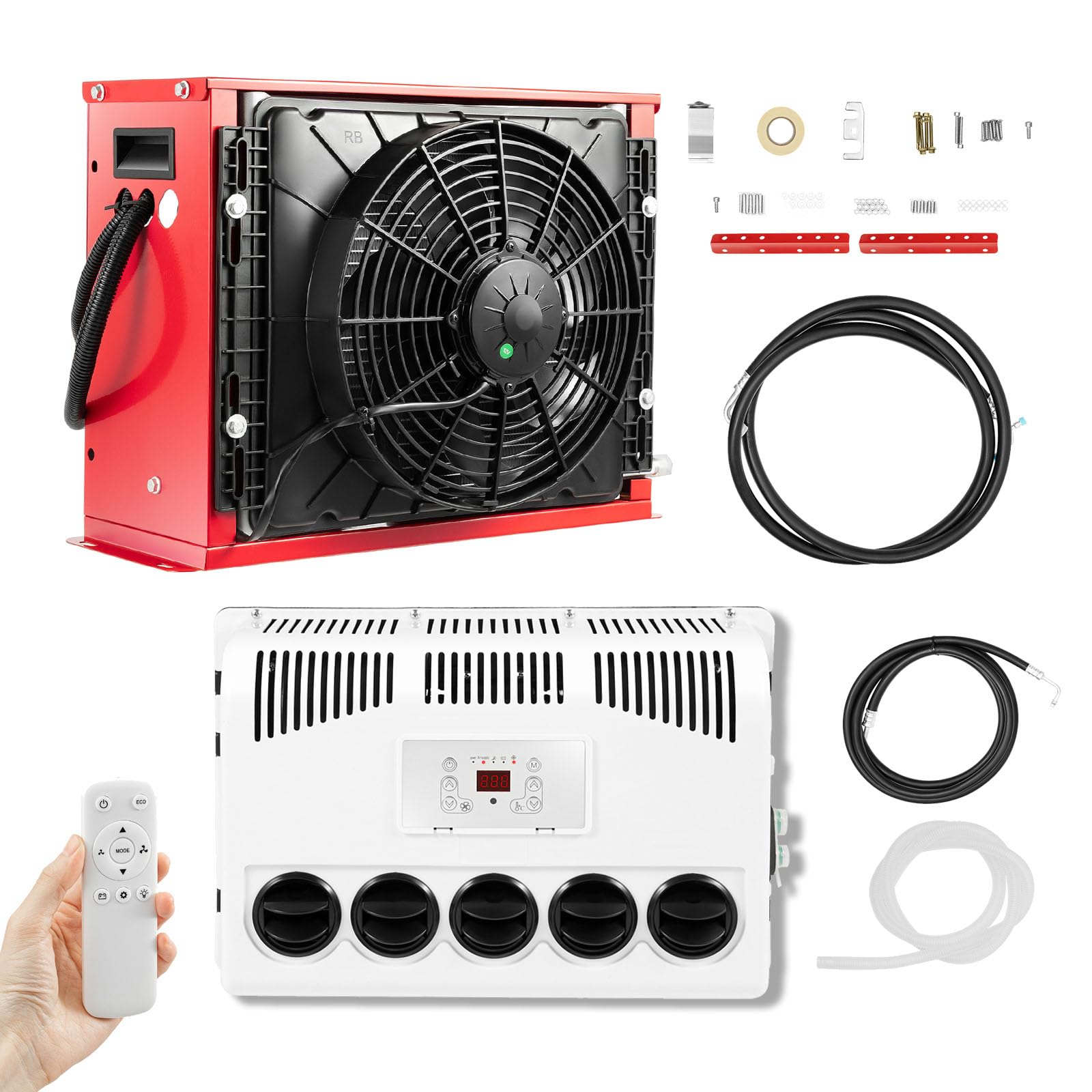
1. JAYGOVAN 12V Split Type 11000BTU
The budget 12V split that brings heavy cooling power to off-grid vans.
If you are building a camper van and want to skip the inverter entirely, this split system runs directly off your 12V battery. It’s one of the few budget-friendly options with a serious 11000 BTU rating, which is 3.1x the output of smaller portable units like the BougeRV PC35, making it capable of cooling a much larger living space.
Buyers report it’s highly efficient at max ~600W and works with solar power setups, which is the real promise of 12V gear. The internal unit uses a sturdy plastic shell while the external unit is wrapped in a hard iron shell with an aluminum condenser, which is meant to hold up to road vibration.
The catch is simple: the installation and setup are not for the faint of heart. It requires running a low-pressure pipe and high-pressure pipe between the units, and the instructions are widely described as next to useless. Also, a few owners mention electrical problems where the unit shuts off and struggles to restart, which is a risk you accept at this price point.
The Off-Grid Appeal
- Runs on 12V battery power, no inverter needed
- Powerful 11000 BTU output for its category
- Low voltage protection at 11V to protect your battery
The Reality Check
- Installation is complex with refrigerant lines
- Instructions are nearly zero help per owners
- Some units have intermittent shutdown issues
Ideal low-budget build: This fits the DIY van builder who understands 12V systems and wants maximum BTU for the dollar.
Think twice if: You are not comfortable with a complex, pipe-based installation and troubleshooting without clear instructions.
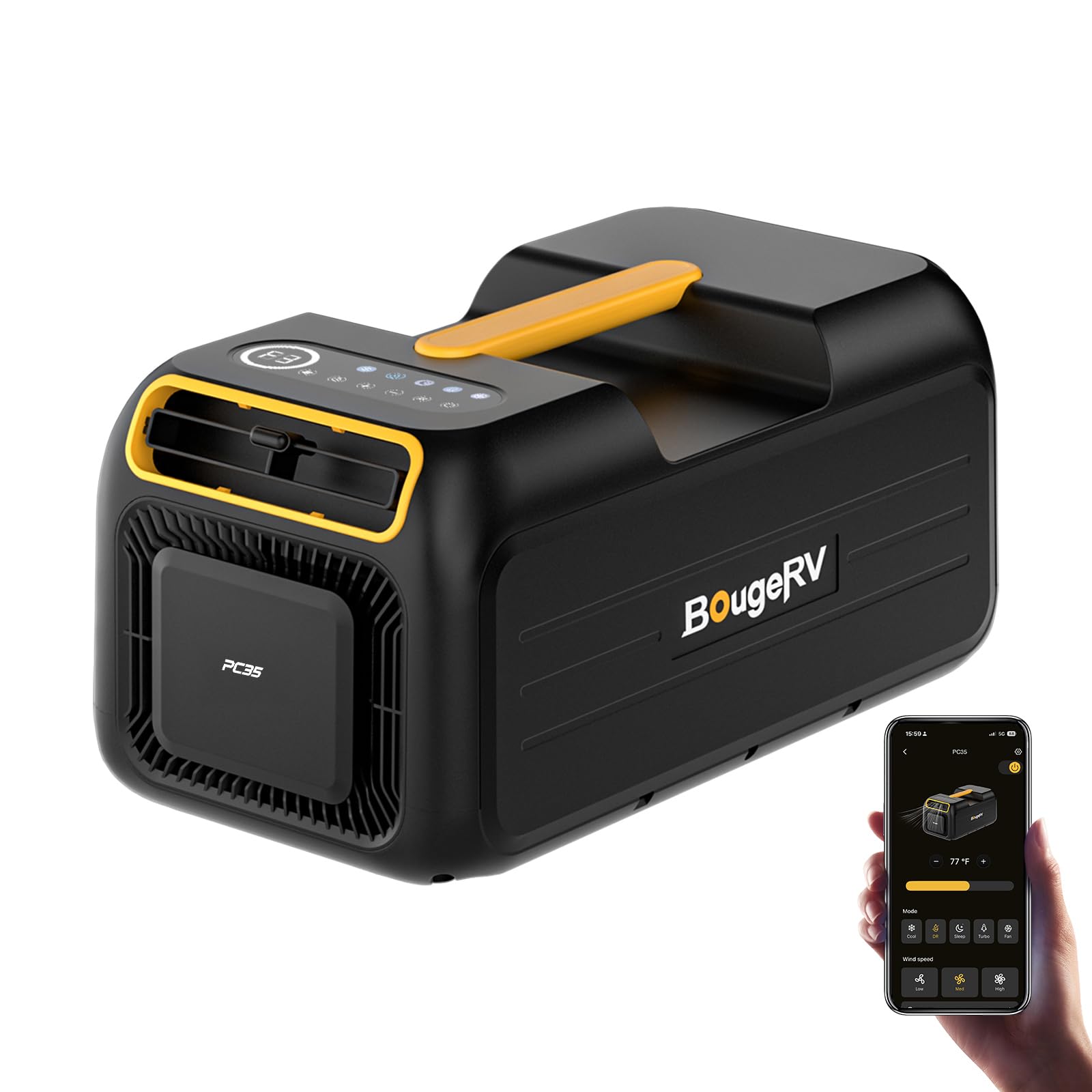
2. BougeRV PC35 Portable AC
A smart, app-connected portable that promises fast cooling for tents and small trailers.
This unit is built for convenience, letting you control the temperature, modes, and timers straight from your phone via the BougeRV App. It’s rated for 3500 BTU and claims to cool spaces up to 64.58 ft², dropping the temperature by 18°F in 15 minutes in strong mode.
What wins people over is the value for money, with the 5-in-1 functionality — Cooling, Dehumidifying, Fan, High Power, and Sleep modes — packed into a portable form factor with an ergonomic handle. It is reasonably quiet and has performed well during extreme heat outages when paired with a solar generator.
The recurring gripe, however, is reliability and cooling consistency. Some customers note the unit fails with an E3 error right after starting turbo mode, and others find it blows warm humid air while overheating in smaller spaces. This is a single-hose portable, meaning it can struggle to keep up in tight, hot environments unless properly vented.
App-first convenience: The strongest feature is the smooth smart control, but you are betting on the unit’s reliability when you unbox it.
Who it suits: Tent campers and small trailer owners who prioritize app control and have a strong 110V power source like a generator or large power station.
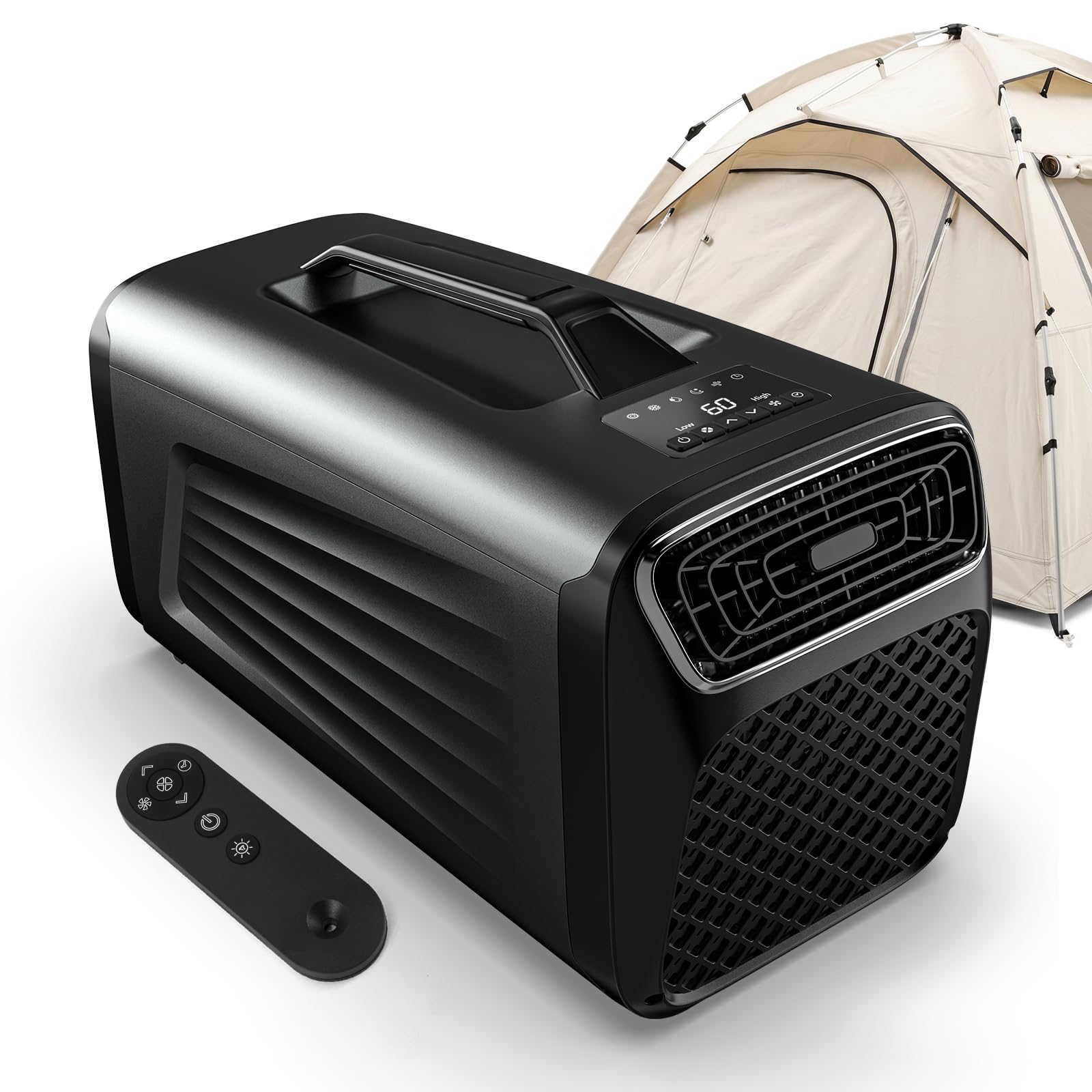
3. Chansim 5200 BTU Portable AC
A 5200 BTU portable that offers drainage-free comfort for tents and small RVs on a budget.
With the power to cool spaces up to 130 sq. ft., this unit brings more punch than the BougeRV, but it relies on a standard 110-120V AC outlet. That means you will need a generator or a power station with a maximum output of at least 1500W, because the compressor needs that instant start-up kick.
The standout feature is its drainage-free design — you don’t have to empty a water bucket as long as the humidity stays under 70%. For muggy days, the included drain pipe handles the excess. It is a solid performer in small, enclosed areas.
One owner found it works perfectly with an EcoFlow River 2 Pro, running for 2.5 hours of cooling in 102°F heat. But there are two major warnings: it does not come with a window exhaust kit, so you must rig up your own venting, and some owners found the cooling drop minimal in small tents — just 4° in a 3×3 tent over 4.5 hours.
Why It Earns Its Spot
- Drainage-free operation under 70% humidity
- Cools up to 130 sq. ft. of space
- Sleep mode runs as low as 46-50dB for quiet nights
Know Before You Buy
- Requires two exhaust ducts for proper cooling
- Needs 1500W startup power, so many inverters fail
- No window exhaust kit included
Reach for this if: You have a small cabin or tent space under 130 sq ft and a sturdy power source.
Look elsewhere if: You expect a dramatic temperature drop in a large open area; this is a compact-space cooler.
4. GETUHAND 5200 BTU Portable AC
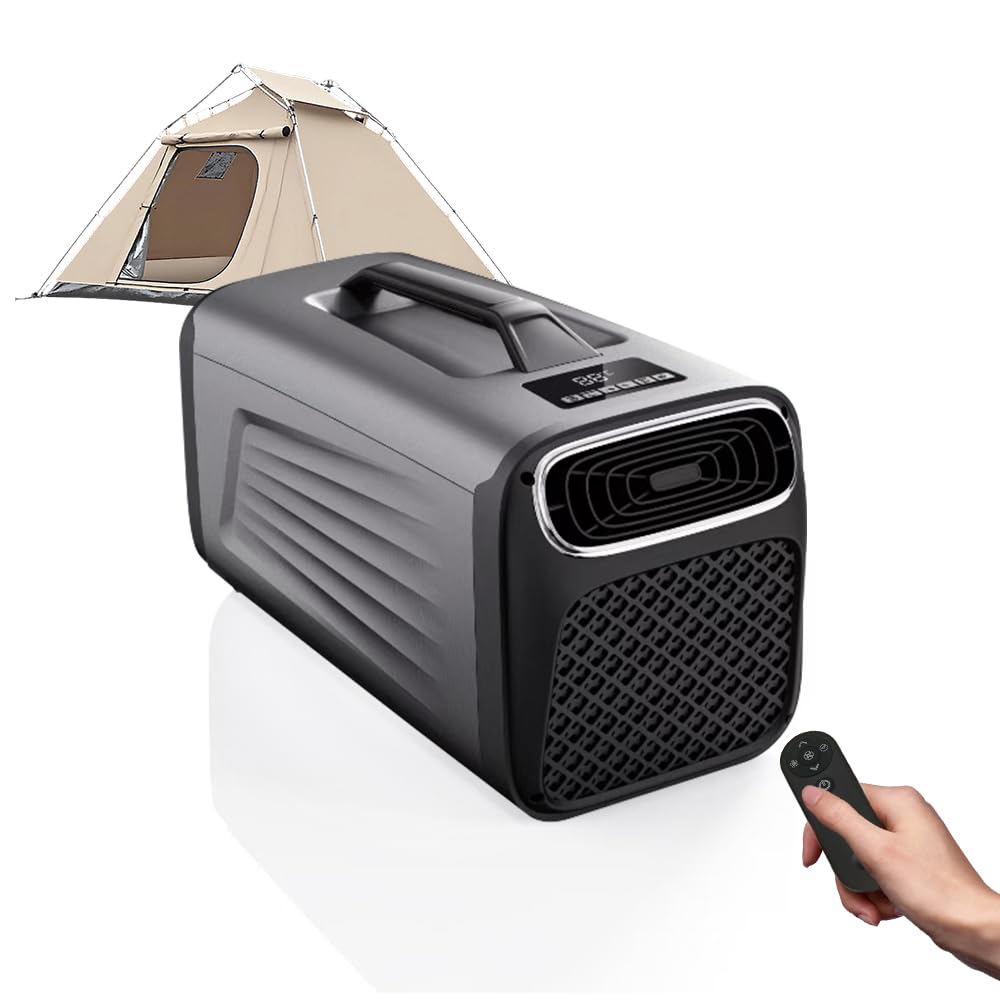
The portable that leans on a premium GMCC compressor for fast tent cooling.
This unit’s defining spec is its GMCC high-end compressor, which pushes the 5200 BTU rating to drop the temperature by 18°F in just 5 minutes. It’s designed to cool up to 108 sq ft, making it a direct rival to the Chansim above, but it positions itself as the faster cooler.
In practice, the build quality and quiet operation win over owners using it in 4-person tents. The sleep mode noise level of 46-50dB means you can run it all night without the compressor roaring in your ears, and the 24-hour timer helps you automate shut-off.
The honest downside here is the marketing vs. reality gap. The listing advertises outdoor use, but the manual states indoor only, and several owners in RVs found it failed to cool a 48 sq ft space effectively after 3 hours. It also requires a proper exhaust hose setup; otherwise it won’t perform.
Fast-cooling claim: The GMCC compressor provides strong airflow and quick cooling in small tents, but does not meet expectations in larger RVs.
Who this misses: Anyone expecting a whole-RV solution from a portable unit — this is strictly for small, semi-enclosed spaces.
5. Treeligo 11000BTU 12V Rooftop AC
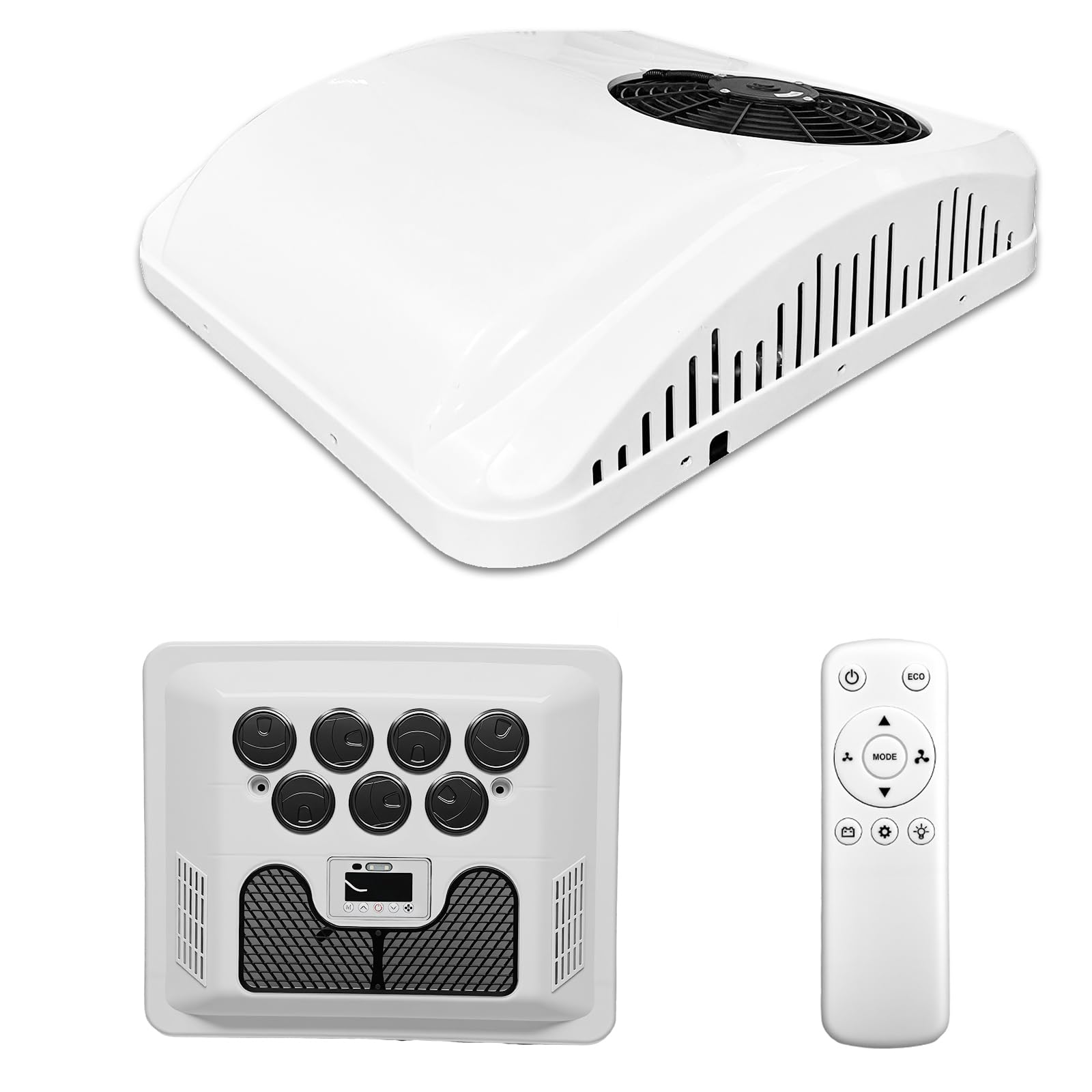
A 12V rooftop unit that cools and heats quietly so you can run it overnight.
This is a step up from the JAYGOVAN split, offering both 11000 BTU cooling and 4000 BTU heat from a rooftop-mounted unit. Running on a 12V DC system, it uses 330W to 1000W across different modes, and keeps the noise below 45 decibels, which is quiet enough for a good night’s sleep.
Reviewers point out that it cools a 5th wheel bedroom fast even in 100°F heat, and they can run it on solar setups with MPPT controllers. Because it’s a rooftop unit, installation is more straightforward than a split system, and it’s pre-charged with R134a refrigerant for instant use.
The trade-off is on the control side, where some owners hit a wall with support. There are reports that the unit locked into a mode showing error codes 2P/3P/4P unable to let you select your desired temperature, with zero response from the support team. It also needs a solid battery bank — owners suggest a 12V 300Ah battery to run it at 50A.
What Owners Praise Most
- Ultra-quiet operation below 45 decibels
- Provides both cooling and heating year-round
- Runs efficiently on solar and battery power
The Known Gaps
- Support can be unresponsive when errors appear
- Some units struggle in consistently high humidity
Your best bet for: Off-grid camper vans and 5th wheels where quiet, battery-powered cooling and heating are the priority.
A word of caution: The control interface is not simple to use; you need to be ready to troubleshoot errors independently if support lags.
6. Cybertake S2 Pro Portable Camping AC
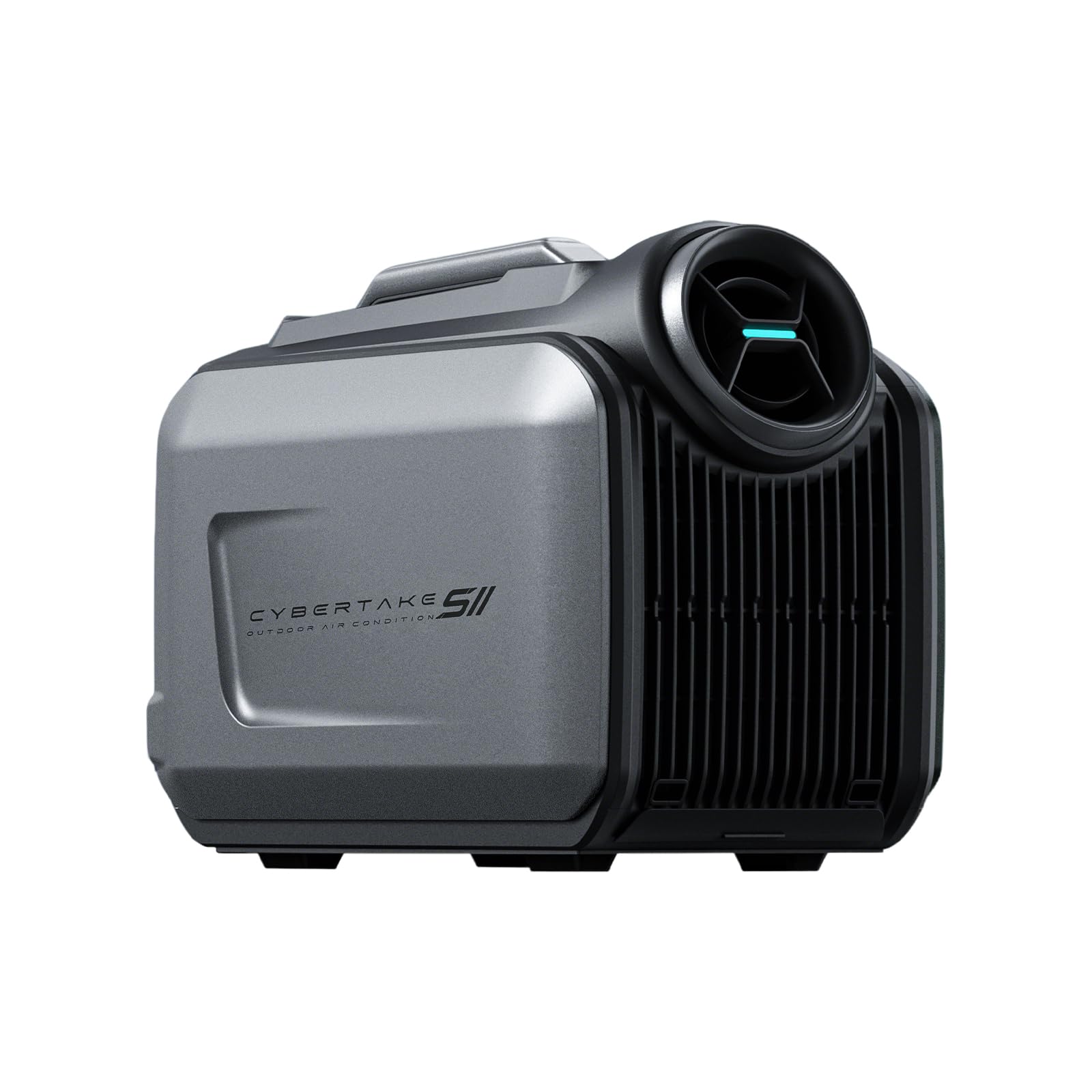
The all-in-one portable that takes power from your wall, your rig, or your power station.
Versatility is this unit’s superpower. It works with a standard AC wall outlet (100-240V), your vehicle’s 12V/24V system, or a portable power station via DC 48V, so you can use it at a campsite, in a truck, or at home. It delivers 5100 BTU of cooling and 6100 BTU of heating for spaces up to 130 sq. ft.
Efficiency is what people rave about here: in Eco+ mode, it uses as little as 1kWh per 8 hours, and it runs at a whisper-quiet 40dB. The IPX4 water-resistant shell means you don’t have to panic if a little rain or splash hits it.
But the label “portable” has limits. Owners stress this works best when set up outside the tent or vehicle — the exhaust gets very hot and the high power draw can drain a 2kWh battery in under 3 hours on Eco mode. Also, some accessories, like the remote control and the 12V-48V boost converter for hardwiring, need to be purchased separately.
The flexible all-rounder: Its true strength is fitting any power situation, but it is a half-in/half-out machine, not a fully indoor unit.
Ideal for: overlanders who want one AC unit that works across multiple vehicles and power sources without permanent installation.
7. EF ECOFLOW WAVE 3 Portable AC
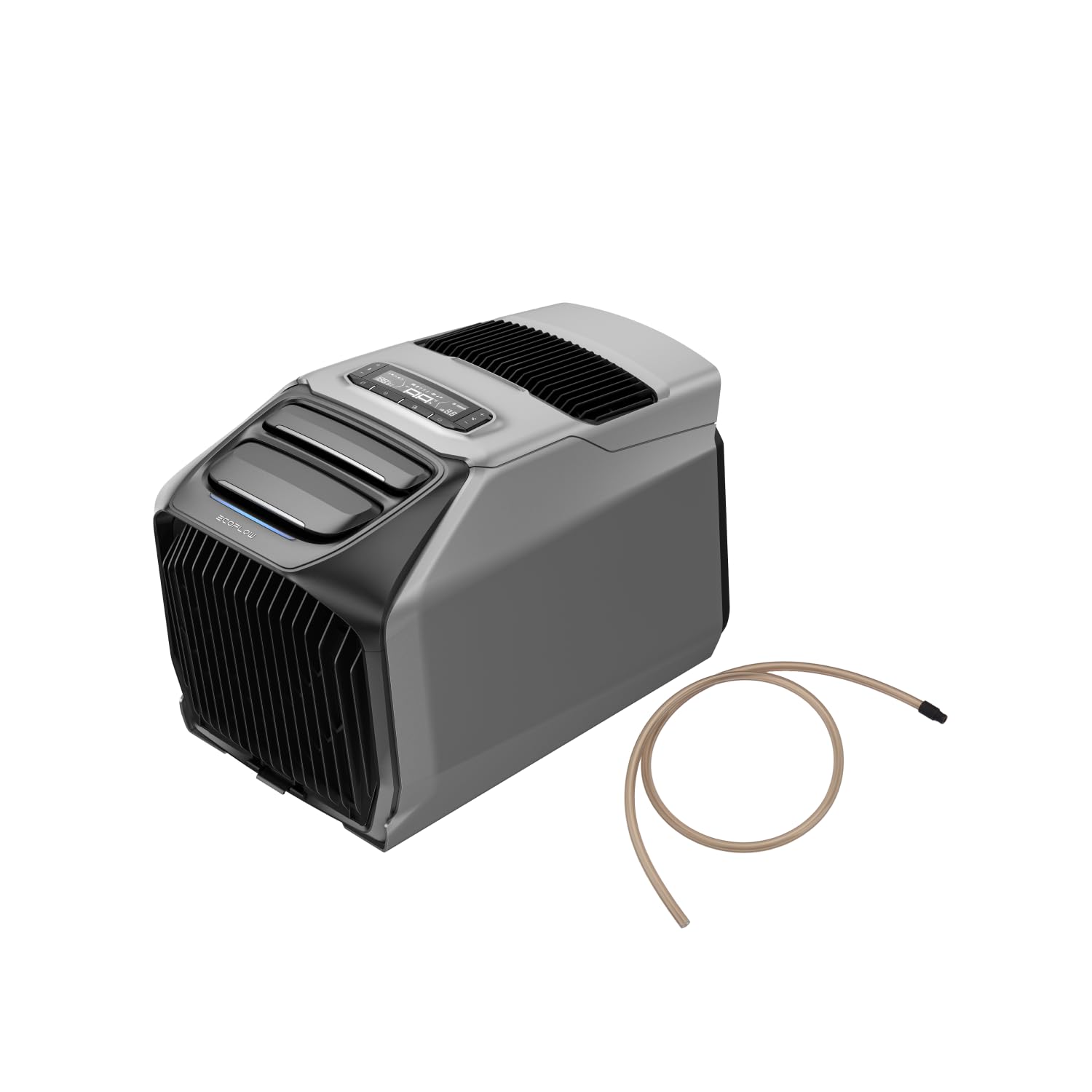
The only true cordless pick here, with a built-in battery for genuine grab-and-go cooling.
This unit is the one that frees you from wiring entirely. It packs a 1024Wh LFP battery inside to deliver 8 hours of cordless operation, and can fast-charge back to full in 75 minutes via AC, your car, or solar. The 6100 BTU cooling output maintains comfort in 120-180 sq ft spaces.
In the field, the cooling performance holds up. It keeps things cool even in harsh conditions when properly vented, and the companion app gives you real-time power monitoring plus alerts for water levels. The Sleep mode at 44dB and a PetCare function that auto-activates if the cabin overheats are thoughtful extras.
However, this is where branding meets reality. The “8-hour wireless running” applies to the unit alone; the battery is a separate add-on for some configurations. More critically, a significant share of shoppers say leak issues — water seeping from the bottom even on level ground and with the drain tube in place — which makes reliability a genuine lottery at this price.
Genuine Strengths
- 1024Wh LFP battery allows true cordless use for 8 hours
- Compact 20″ luggage size with an ergonomic handle for easy carrying
- Fast charging to full in just 75 minutes
The Real Deal Risk
- Recurring reports of water leaking from the base
- Premium price that feels steep if you hit a defective unit
Choose this for: Maximum portability where you refuse to be tethered to a power cord, especially for overlanding trips.
Be aware: If your unit leaks on day one, the return process can be slow and costly, so buy with a good return policy in mind.
8. TURBRO Inverter 13.5K BTU Rooftop AC
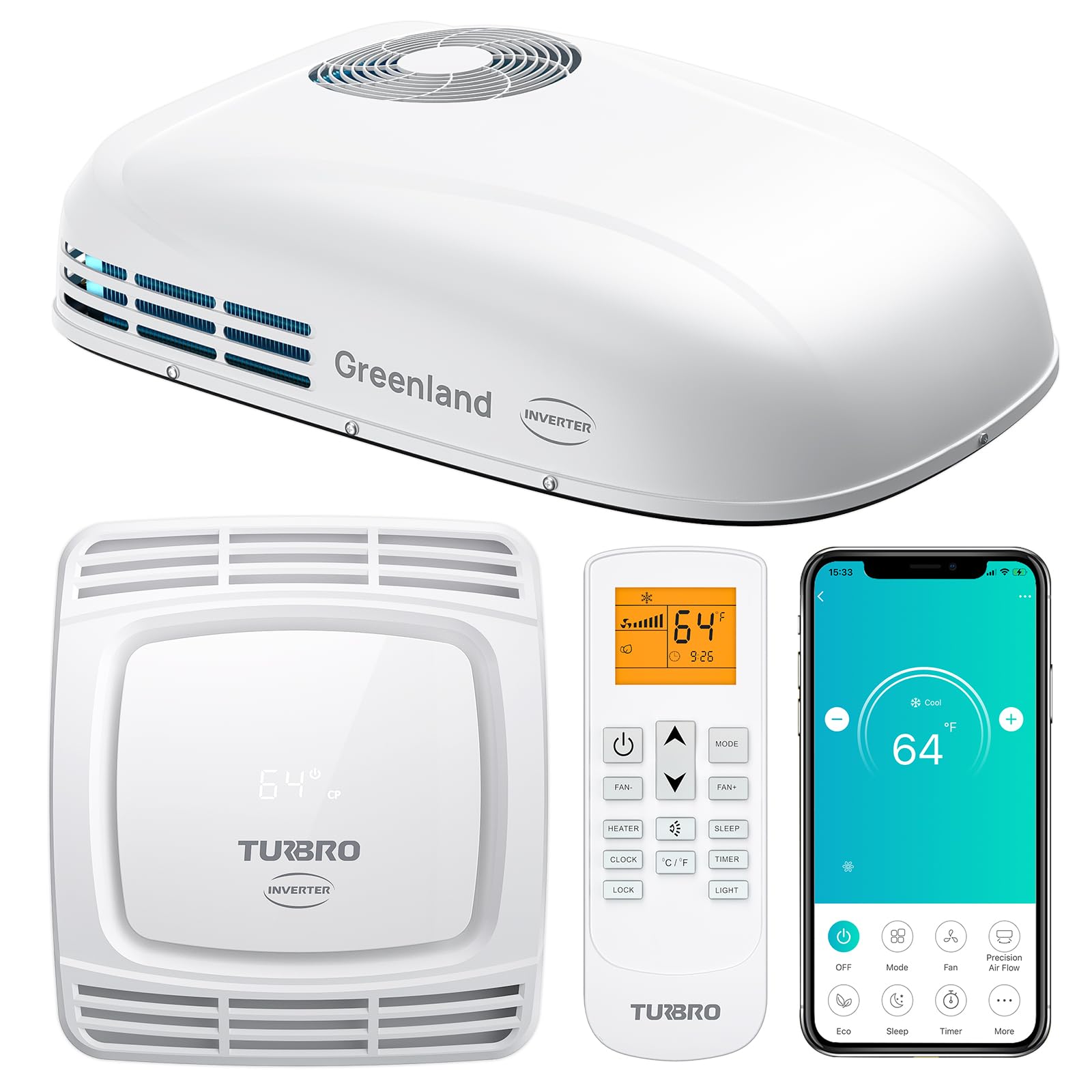
The quiet powerhouse that replaces noisy rooftop units with smooth inverter-driven comfort.
For anyone sick of the loud, cycling compressors of older RVs, this is the upgrade that matters. At 13,500 BTU cooling, it delivers serious whole-rig comfort, and its inverter technology ramps power up and down gently rather than slamming on and off. Owners note it runs two units on a 30A service easily and cools a 35-foot coach even in 90°F+ heat.
The heat pump is a huge plus, providing up to 13,500 BTU of heating too — enough to keep you warm through chilly nights without a separate heater. It’s built to be 35% thinner than most competitors, which reduces air resistance and improves fuel efficiency while driving. The WiFi scheduling and remote control also work well, letting you pre-cool the cabin before you arrive.
This is the crowd favorite for good reason — owners replacing older Coleman units describe it as “the best AC ever,” praising how it eliminates temperature spikes and runs quieter. The main trade-off is that “quiet” is relative; it’s noticeably louder as a direct dump vent than a ducted system, and some find the thermostat sensor reads low, wasting battery. But for the overwhelming majority, it is a clear, reliable upgrade.
Why This Rises to the Top
- Smooth inverter start means no need for a soft starter
- Powerful heat pump delivers 4x the output of electric heaters in cold weather
- Thin 10.0″ profile improves fuel economy
Only Fair Caveats
- Fan may run continuously after reaching the set temperature
- Smaller bolts included can be an issue for some installations
The definitive choice: If you want year-round comfort and efficiency in a full-sized RV without a generator running constantly, this is the one to reach for.
Only skip if: you are strictly off-grid with no 110V power source — this needs a generator or shore power.
9. Gidrox 12000 BTU 12V Rooftop AC
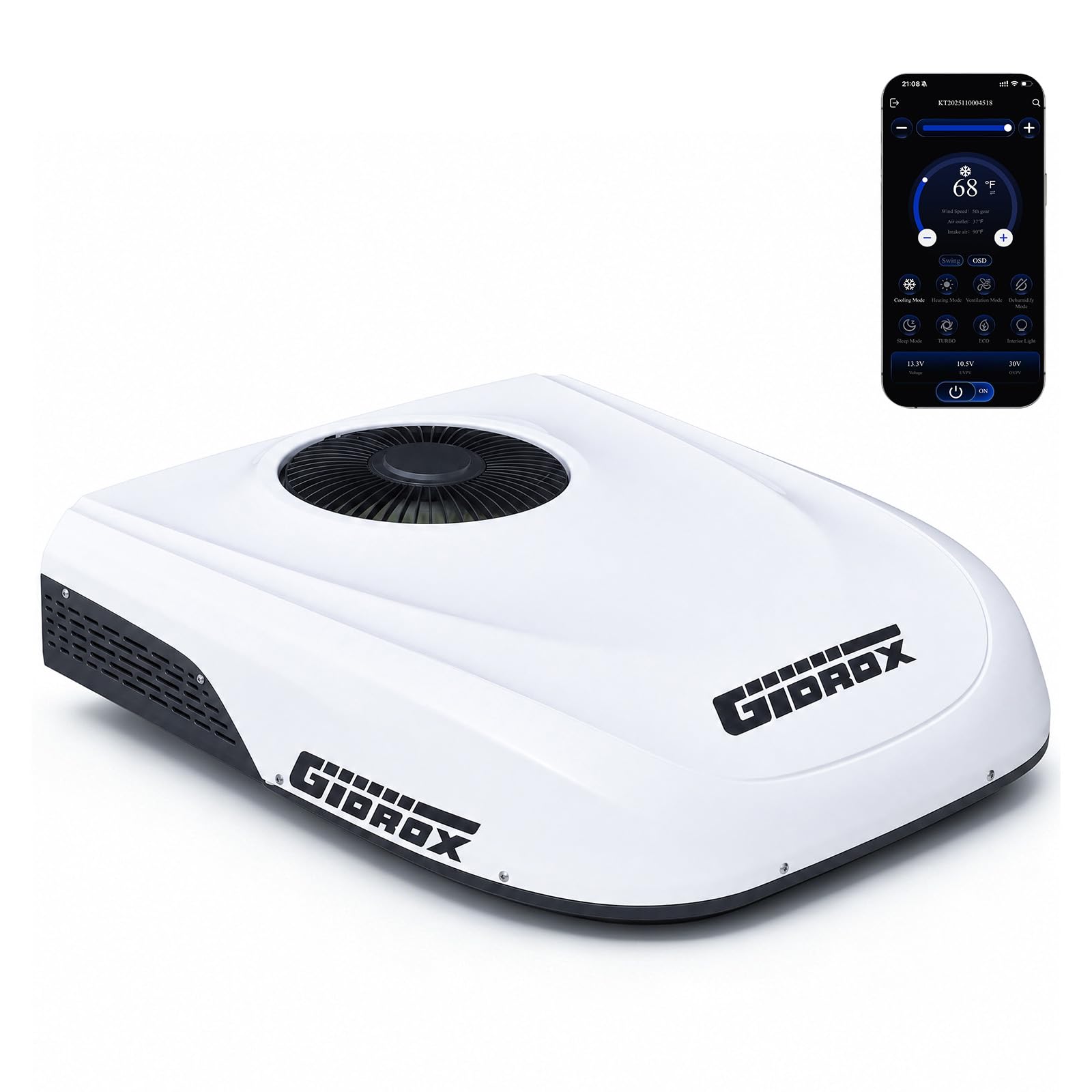
A premium 12V rooftop heat pump that keeps your RV cool all night on battery alone.
This is the answer for RVers with a large battery bank who want whole-rig cooling without shore power. It delivers 12,000 BTU of cooling and 9,000 BTU of heating, with a tested average power consumption of only about 350W during nighttime operation in 30°C ambient conditions. That efficiency translates to around a 60% energy saving compared to traditional ACs.
The real-world result is impressive: buyers report running it for 10 hours on a 400Ah battery where their old unit only managed 6 hours. It also runs at a library-quiet 40dB in Sleep mode and is noticeably lighter than old-school roof units. The pre-wired design made one owner’s install take under an hour.
The catch, as with any unit in this class, is that 12,000 BTU of 12V cooling performs more like a good 8,000 BTU AC in real life — weaker than a 13.5K unit. Also, voltage drops to 11.7V under load can be a concern, and the build quality can vary between units with the same part number.
Off-grid efficiency king: The 350W average draw is what makes all-night battery operation possible.
Perfect for: RV owners with a strong existing battery bank (400Ah+) who want efficient heat and cool without a generator.
Understanding the Specs
Power Source & Consumption
This is the most critical spec for RV use. A 12V DC unit is designed to run directly from your battery bank, which is ideal for off-grid camping without an inverter. A 110V AC unit needs a source of household power, like a generator, shore power, or a large portable power station.
Pay close attention to wattage: a low draw like 350W means efficient battery use, while the compressor’s startup power — often 1500W or 2kW — is what actually trips generators and inverters.
BTU Rating & Space
BTU (British Thermal Units) is a measure of cooling power. A higher number means more heat removed per hour, so it can cool a larger space. A 3,500 BTU unit is fine for a tent or small truck cab, while a 13,500 BTU rooftop unit is needed for a 35-foot RV. Always match the BTU to the actual size of your sleeping or living area — oversizing wastes power.
Form factor matters here: rooftop units are best for big RVs, portable units work for tents, and split systems offer a balanced option for vans.
FAQ
What size portable AC do I need for my RV?
Can I run a 110V portable AC on my RV battery?
How much power does an RV air conditioner draw?
What is the difference between a heat pump and a regular AC?
How long can I run a portable AC off a battery?
Will a portable AC cool a tent effectively?
Do I need a soft starter for an inverter AC?
Is a rooftop or portable AC better for a camper van?
Why does my portable AC stop cooling and blow warm air?
What does BTU per hour actually mean for me?
Final Thoughts: The Verdict
Across the board, the portable ac for rv winner is the TURBRO 13.5K because it pairs the crowd-favorite reliability with powerful cooling and a heat pump for year-round comfort. If you want battery-powered, off-grid freedom, grab the Gidrox 12V rooftop. And for tent camping where portability is everything, the Cybertake S2 Pro is the one to reach for.
How We Picked
We do not accept paid placement. Every pick is matched to a real buyer and a real use-case; we do not hands-on test units.
Sources & Methodology
Specifications: manufacturer listings and product documentation. Review insights: verified customer reviews, as of August 2026. Pricing: not shown on this page (it changes often); check the current price via the retailer link.
As an Amazon Associate, Trending Car earns from qualifying purchases. This does not affect which products we feature.