
Our readers keep the lights on and my garage snacks stocked. As an Amazon Associate, I earn from qualifying purchases.
Specs are compiled from manufacturer listings and verified buyer reviews and can change over time — please confirm the key details on the product page before buying.
If you are shopping for a police scanner for your car, the single biggest mistake is buying a purely analog model in an area where dispatchers have gone digital. On a trunked system, your scanner will either fall silent or drown in static if it cannot handle the digital decode. That is why the real buying decision starts with one question: does your local agency broadcast in analog, digital Phase 1, or digital Phase 2?
I’m Min Islam — the founder and writer behind Trending Car. This guide is built by comparing the manufacturers’ published specifications and the patterns across verified customer reviews, so you get each pick’s real strengths and trade-offs instead of marketing spin.
You need a scanner that matches the radio system your local police and fire departments actually use, fits your budget, and suits how much programming you want to do. This roundup of the best police scanner for car use covers nine top models so you can pick the one that fits your driving habits.
Our Picks at a Glance


How To Choose The Best Police Scanner for Car
Your scanner must decode the same radio system your local agencies use. Most larger cities and many county-wide networks now use digital trunking (a system that shares a few frequencies among many users), while smaller towns and rural departments often stay on conventional analog for years. Check a frequency database like RadioReference to see what your area runs — that single search tells you which tier of scanner you need.
Analog vs Digital vs Trunking
Analog scanners receive the traditional FM voice signals that have been around for decades — these are simple, affordable, and perfect for rural areas or small departments. Digital scanners add the ability to decode P25 Phase 1 and Phase 2 signals, which are encrypted-ish digital voice modes used by many state and metro agencies. Trunking is a separate concept: it lets many agencies share a small set of frequencies, and a trunking-capable scanner follows the control channel to stitch conversations together. A scanner that cannot trunk will miss most digital traffic in a modern city.
Simulcast Distortion — The Silent Killer
Simulcast systems broadcast the same signal from multiple towers at once, which confuses older digital scanners and produces a garbled, robotic sound. If you live in a metro area with simulcast, you need a scanner with True I/Q or SDR technology, which captures the full signal and decodes it cleanly. The classic recommendation is the Uniden SDS line for exactly this reason — standard digital scanners often struggle where simulcast is used.
Programming: The Real Work
Almost every modern scanner arrives unprogrammed, and the software learning curve is the most common complaint across every brand. Uniden offers the free Sentinel software, while Whistler ships EZ Scan — both let you import from a subscription database by zip code. If you want zero programming, look for a model with a built-in database and location-based scanning, where you just enter your zip code and it tunes itself.
Quick Comparison
| Model | Best For | Digital Modes | Channels | Weight | Amazon |
|---|---|---|---|---|---|
| Uniden SDS200★ Best Overall | Simulcast Performance | P25 Ph1/2, DMR*, NXDN* | Database | 5 lb | Amazon |
| Uniden BearTracker 885Travel Companion | CB + Scanner Combo | Digital Trunking | 40 CB | 5 lb | Amazon |
| Uniden BCD996P2Top Performer | Phase 2 Mobile | P25 Ph1/2, X2-TDMA | 25,000 | — | Amazon |
| Whistler WS1025 | Budget Analog | Analog only | 300 | 1.5 lb | Amazon |
| Uniden BCT15X | Analog Highway Patrol | Analog only | 9,000 | 3.4 lb | Amazon |
| Whistler WS1065 | Digital Value | P25 Phase 1 | 37,800 objects | 1.2 kg | Amazon |
| Uniden SDS150 | Portable SDR | P25 Ph1/2, DMR*, NXDN* | Database | — | Amazon |
In‑Depth Reviews
1. Uniden SDS200 — The Simulcast Slayer
Our pick — 4.5★ from 850+ verified ratings; the strongest balance of quality and price.
The flagship that turns digital simulcast garble into crisp conversation, purpose-built for the dashboard.
The Uniden SDS200 decodes digital simulcast systems (where multiple towers broadcast the same signal, causing garbled audio on lesser scanners) clearly, thanks to True I/Q technology — a software-defined radio (SDR) approach that captures the entire signal spectrum. Its large 3.5″ fully customizable color display lets you set the color for each field, so you can see exactly what you want at a glance while driving. Reviewers call it “the be all, end all of scanner technology,” with buyers praising “excellent simulcast decoding, customizable color screen, easy alpha tagging, Close Call, and zip code scanning” in a single breath.
Setup is genuinely easy for this class: the built-in HomePatrol database covers all known radio systems in the US and Canada, and the location-based scanning lets you punch in a zip/postal code or GPS coordinates for instant reception. You can also connect an external GPS receiver (not included) so the scanner automatically re-selects systems as you travel. Buyers report clear audio without garbling straight from the start, and the included AC adapter plus three DC power cords — including a cigar plug and a special 3-wire plug for lighting control — make vehicle install straightforward.
The honest trade-off is price and licensing. The DMR/NXDN/ProVoice upgrades (digital radio formats used by some agencies) are paid extras, and digital encryption cannot be decoded by any scanner on the market. At 5 pounds, it is also noticeably heavier than a compact analog unit like the Whistler WS1025 at 1.5 pounds — a 3.3x gap you will feel when mounting. Owners mention the steep learning curve is real but tamed by the free Sentinel software and a wealth of YouTube tutorials, and one called it “overkill for analog” — which is fair: if your area is all conventional analog, you are paying for capability you will never use.
The Simulcast Cure
- True I/Q SDR decodes simulcast distortion cleanly
- 3.5″ color display is fully customizable per field
- Location-based scanning via zip code or GPS
- Three DC power cords for flexible car installs
Know Before You Buy
- Paid upgrades for DMR, NXDN, and ProVoice modes
- Cannot decode encrypted traffic — no scanner can
- Heavier than compact rivals at 5 lb
Grab it for: serious listeners in metro simulcast areas who want the best digital decode on the market and do not mind learning Sentinel software.
Think twice if: your area is all old-school analog — this is more scanner than you will ever need, and the paid add-ons add up.
2. Whistler TRX-1 — The Handheld That Goes Anywhere
One box that does double duty: a full 4-watt CB radio and a digital trunking scanner running side by side.
The BearTracker 885 solves a real dashboard-space problem: it combines a full-featured 40-channel CB radio with a digital trunking scanner in one 5-pound unit, so you do not need two separate boxes bolted to your console. The scanner runs alongside the CB — press a button and you are listening to police, fire, ambulance, or DOT traffic while the CB stays active. It scans the US and Canada for public safety activity and uses its built-in GPS to automatically pull nearby channels from the nationwide database.
Owners call it “a nearly perfect compromise between a scanner and a CB,” with crisp loud audio, fast GPS lock, and the BearTracker Warning System alerting when nearby public safety transmissions are detected. One trucker noted they mainly use the scanner “in bad weather conditions” to hear plows and law enforcement long before reaching an area. It includes a 7-color display, an SWR meter for precision antenna tuning, RF Gain, Mic Gain, PA mode, Talkback, and NOAA Weather with alerts — everything a CB user expects, plus scanning.
The trade-offs are clear: there is no frequency or talkgroup display, so you hear the traffic but not the channel details, and CB lacks channel scan and SSB modes. Audio quality is the standout positive in owner feedback, while signal reception draws more mixed reviews. For truckers and off-roaders who already want CB, this is a brilliant space-saving move; for pure scanning perfectionists, a dedicated scanner plus separate CB remains the higher-fidelity route.
The Space Saver
- CB + digital trunking scanner in one unit
- Built-in GPS auto-selects nearby channels
- 7-color display with SWR meter
The Catch
- No frequency or talkgroup display
- CB lacks channel scan and SSB
Made for: truckers and off-roaders who want one clean dash unit doing both CB and scanning.
skip it if: you need to see exactly which channel or talkgroup is active — this one keeps that hidden.
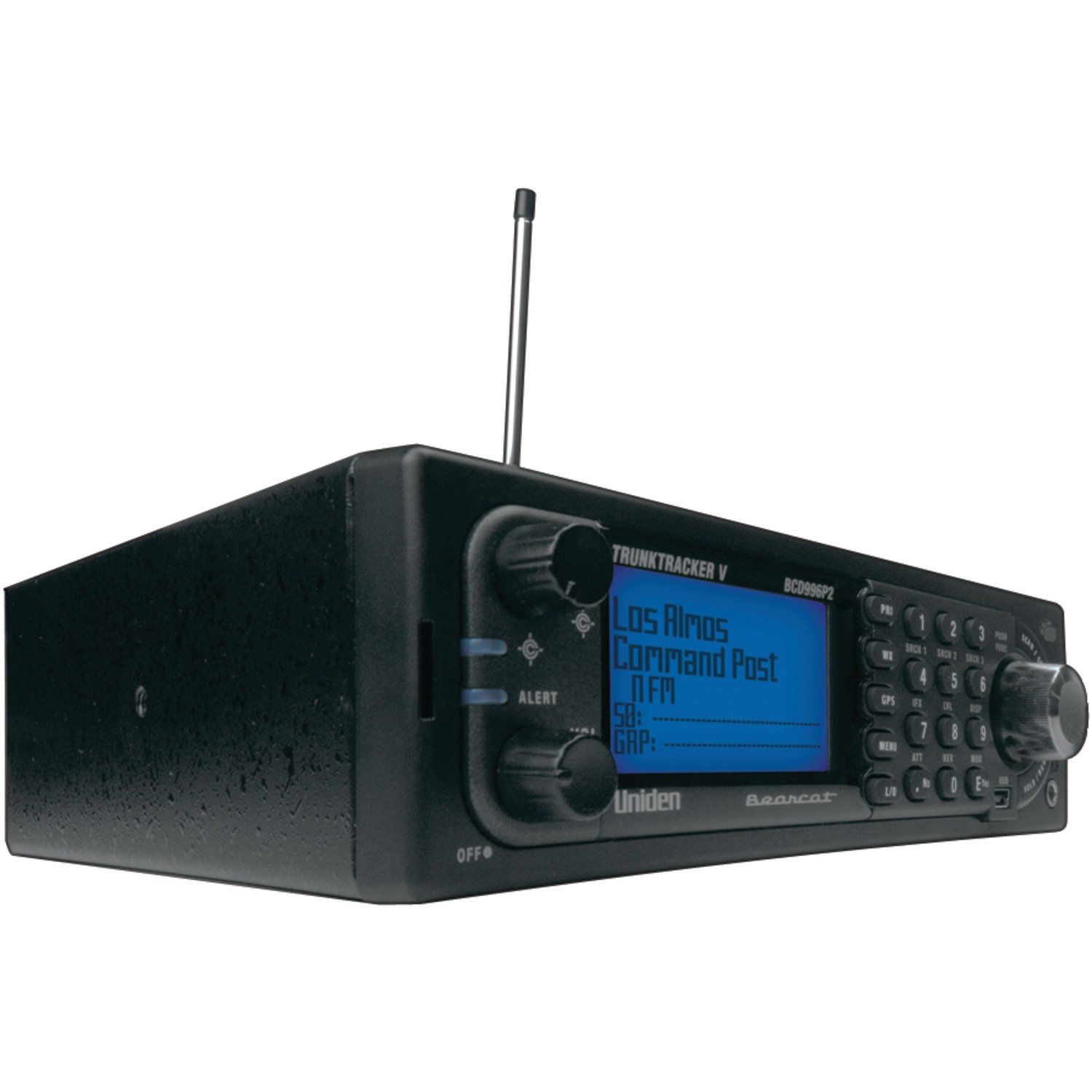
3. Uniden BCD996P2 — The Phase 2 Mobile Workhorse
A classic mobile formula updated for Phase 2, with 25,000 channels and Close Call RF capture for the dedicated listener.
The BCD996P2 is the updated Phase 2 version of a long-respected Uniden mobile design, built for permanent dash installation. TrunkTracker V operation scans APCO 25 Phase 1 and Phase 2, X2-TDMA, Motorola, EDACS, and LTR trunked systems, plus conventional analog and P25 digital channels — so it covers nearly every public safety system in North America. The 25,000 dynamically allocated channels give you enormous headroom for state and multi-county networks.
Close Call RF Capture technology with Do-Not-Disturb checks for nearby transmissions without interrupting active channels, which is invaluable when you roll into a new town. The S.A.M.E. weather alert ties into NOAA broadcasts and warns of severe conditions in your specific area. Connect a compatible GPS receiver and location-based scanning automatically selects only the local programmed systems. Owners call it “one of the best Phase 2 models,” with clear audio and strong stock-antenna performance, and several report solid analog reception at 60+ miles with an external antenna.
But the reviews are emphatic that this is not a beginner radio — the learning curve is steep, and manual programming of trunked systems is genuinely difficult. A Radio Reference subscription plus the free Freescan software solves it in under an hour, but from the start it will not scan anything until you program it. The display is small, there is no Wi-Fi or app control, and GPS requires a separate receiver.
What It Delivers
- Phase 1 & 2 plus X2-TDMA trunking
- 25,000 dynamically allocated channels
- Close Call with Do-Not-Disturb
What It Costs You
- No out-of-box scanning — PC programming required
- Steep learning curve for trunked systems
- Small display, no app or Wi-Fi
Perfect for: the hobbyist who wants near-flagship Phase 2 performance at a lower price and will invest in programming.
Pass on it: if you expect plug-and-play — this radio is silent until you program it.
4. Whistler WS1065 — Budget Entry Into Digital Trunking
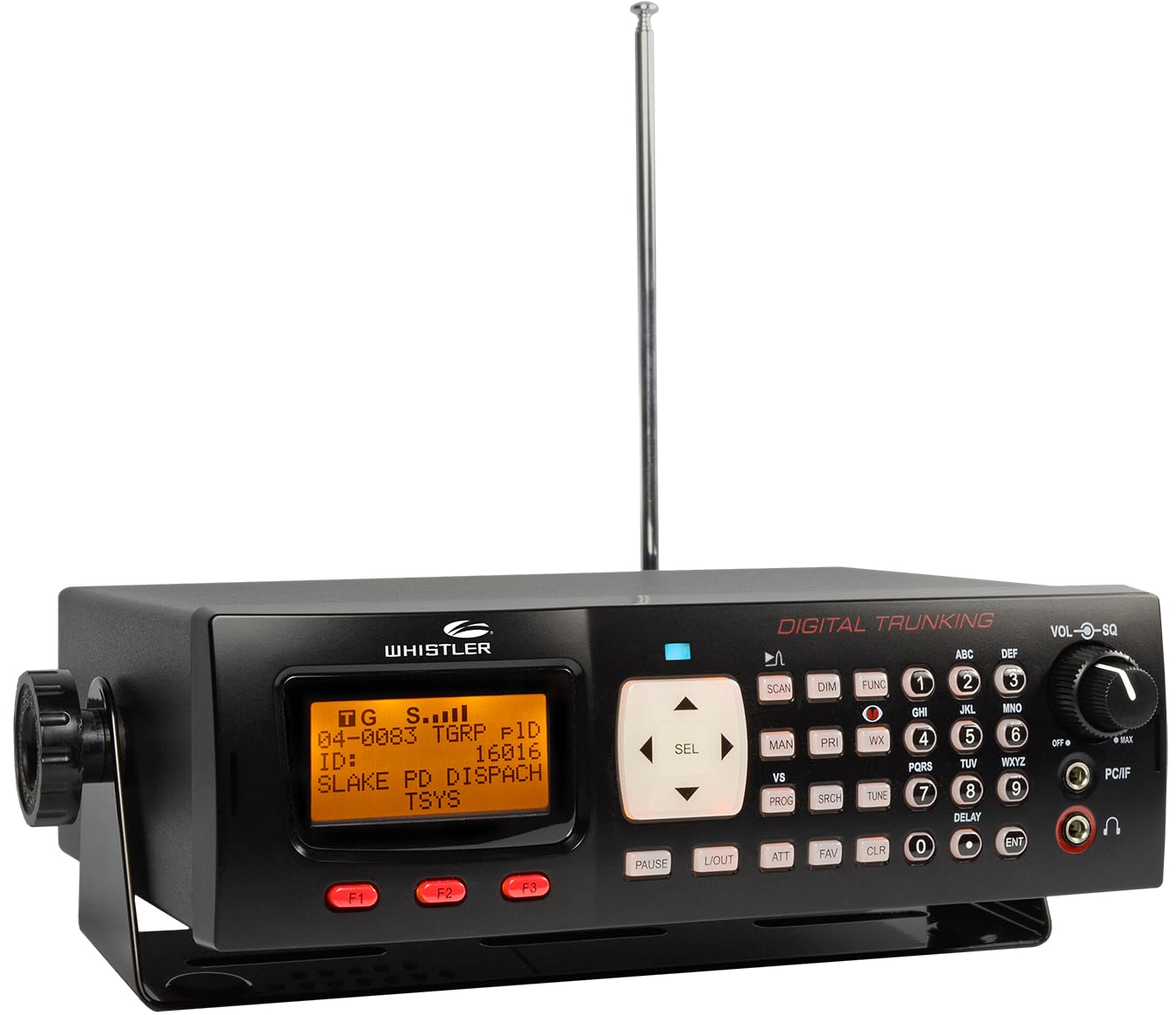
The most affordable way into digital trunking, with 37,800 objects and adaptive P25 decoding.
The WS1065 is the value ticket into digital trunking: it decodes P25 Phase 1 (not Phase 2), along with Motorola, EDACS, and LTR trunked systems, for a price well below flagship digital units. Its free-form memory structure stores over 37,800 objects with dynamic allocation — no wasted bank space, just assign channels as you need them. Automatic Adaptive Digital Tracking adjusts the P25 decoding 50+ times per second to compensate for multipath and fading, which helps in moving vehicles.
A Spectrum Sweeper function quickly finds active local frequencies, and the Skywarn Storm Spotter access gives direct entry to storm-watcher frequencies for severe-weather early warning. The multi-color LED and audible alerts can be customized with up to 8 user-defined colors, and the high-speed USB interface transfers data 6x faster while cloning between units runs 8x faster. Ham radio operators find setup easy, and the receiver handles FM and P25 Phase 1 cleanly.
The honest limits bite in two places. First, there is no Phase 2, DMR, NXDN, or encryption support — if your county uses Phase 2, this unit will miss it. Second, the programming is not beginner-friendly: reviews mention a vague, dated manual (Windows XP/Vista era) and software that is not included, requiring a Radio Reference subscription and third-party tools like PSREdit. One frustrated buyer called it “a piece of garbage” over the programming hurdles, so budget for learning time. If your area is Phase 1, it is a solid, reliable performer for the money.
The Upside
- 37,800 objects with free-form memory
- Adaptive P25 decoding adjusts 50x per second
- Spectrum Sweeper finds live frequencies
The Limits
- No Phase 2, DMR, NXDN, or encryption
- Programming software not included
- Manual is dated and vague
Choose it for: a Phase 1 digital network and a buyer willing to learn third-party programming software.
Look past it: if your area is Phase 2 or you want out-of-box scanning — both need a pricier radio.
5. Uniden BCT15X — Analog BearTracker With 9,000 Channels

A dedicated highway-patrol specialist with state-by-state preprogrammed channels and BearTracker alerts.
The BCT15X is an analog-only scanner with a specific superpower: it is a mobile BearTracker designed for highway use, with state-by-state preprogrammed channels for local police, DOT, and Highway Patrol frequencies. That means you can travel without programming — the radio already knows where state troopers broadcast as you cross borders. It holds 9,000 channels in an advanced dynamic memory system and uses TrunkTracker III technology to follow Motorola, EDACS, and LTR systems.
Scanning performance is the most-praised aspect by a wide margin, and it works with the optional BC-RH96 Remote Head for discreet mounting. The Close Call RF capture technology instantly tunes to nearby transmissions, and location-based scanning automatically selects programmed systems when connected to a compatible GPS receiver. Reviewers point out it as “a priceless tool” during wildfire evacuations, picking up fire, police, EMT, and airport traffic from three towns, with a clean display and fast scanning.
The glaring caveat is in the product title: this is not a digital scanner. If your agencies use P25, it will be silent — the listing even warns to confirm whether your local communication is digital or analog before buying. The manual-on-disk is roundly criticized as poorly organized, and programming is awkward via keypad; an online manual or YouTube helps enormously. There are no rubber feet or a stand for base use, though it shines as a fixed mobile install. For a pure analog highway setup, it is excellent value; for digital areas, it is the wrong tool entirely.
Road Warrior Edge
- State-by-state preprogrammed police and DOT channels
- 9,000 channels with dynamic memory
- Close Call RF capture technology
Hard Limits
- Analog only — no P25 digital
- Poor disk manual, awkward keypad programming
- No stand or rubber feet for desk use
Best for: long-haul drivers and rural listeners, as long as their state patrols are still on analog.
Wrong choice if: your area has gone digital — you need a P25-capable model like the BCD996P2 instead.
6. Whistler WS1025 — The Budget Analog Workhorse
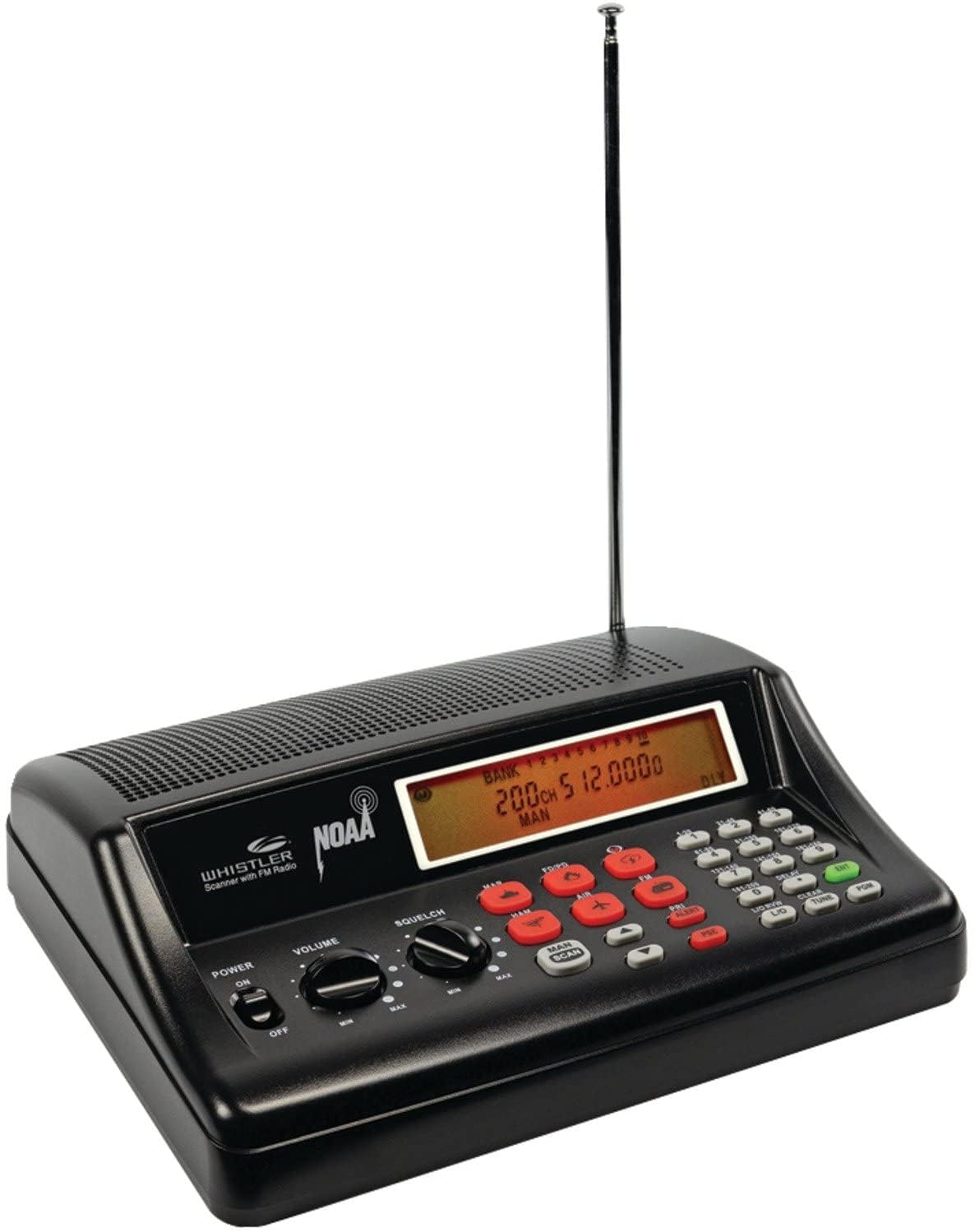
A featherweight 1.5-pound analog scanner with 300 channels and a backlit display for easy dash mounting.
The WS1025 is the entry-level pick that proves you do not need to spend big for solid analog scanning. It is a featherweight at just 1.5 pounds — the lightest base unit in this roundup — with 300 channels arranged in 10 banks of 30, of which 153 come pre-programmed. You can be listening within minutes of unboxing, which is a refreshing contrast to the programming-heavy digital models. The backlit LCD stays readable in low light, and the “sensitive receiver” with a “clear loud speaker” is the most common praise from owners.
It is aimed squarely at “experienced users of Desktop Scanners” but works fine for beginners willing to read. Key features include a priority channel that the scanner checks every two seconds, a scan delay that holds on a channel for two seconds to catch replies, and a Tune function to discover new frequencies from a starting point. For low-band police and fire in difficult terrain, owners call it “superior to other brands” and “excellent value.” It needs no backup batteries, and programming works with PSREdit software and a RadioShack cable if you prefer PC control.
The limits are obvious: it is analog-only, so digital P25 systems are entirely out of reach. The pre-programmed EMS/Police/Fire channels vary in usefulness by region — some owners found them useless locally. There is no printed manual in the box (it is downloadable), and channel description display is absent, so you will not see a name for each frequency. If your area is digital, this is not the radio for you; if it is analog, this is the best dollar-for-dollar intro on the list.
Why It Is Popular
- 153 pre-programmed channels for instant listening
- 1.5 lb — lightest, easiest to mount
- No backup batteries needed
What It Cannot Do
- Analog only — no digital P25 reception
- No printed manual included
- No channel description display
Grab this for: a first scanner or a backup unit in an all-analog county, where simplicity and low weight matter most.
Move on if: your local agencies are digital — this unit will fall silent on those channels.
7. Uniden SDS150 — The Portable SDR Flagship
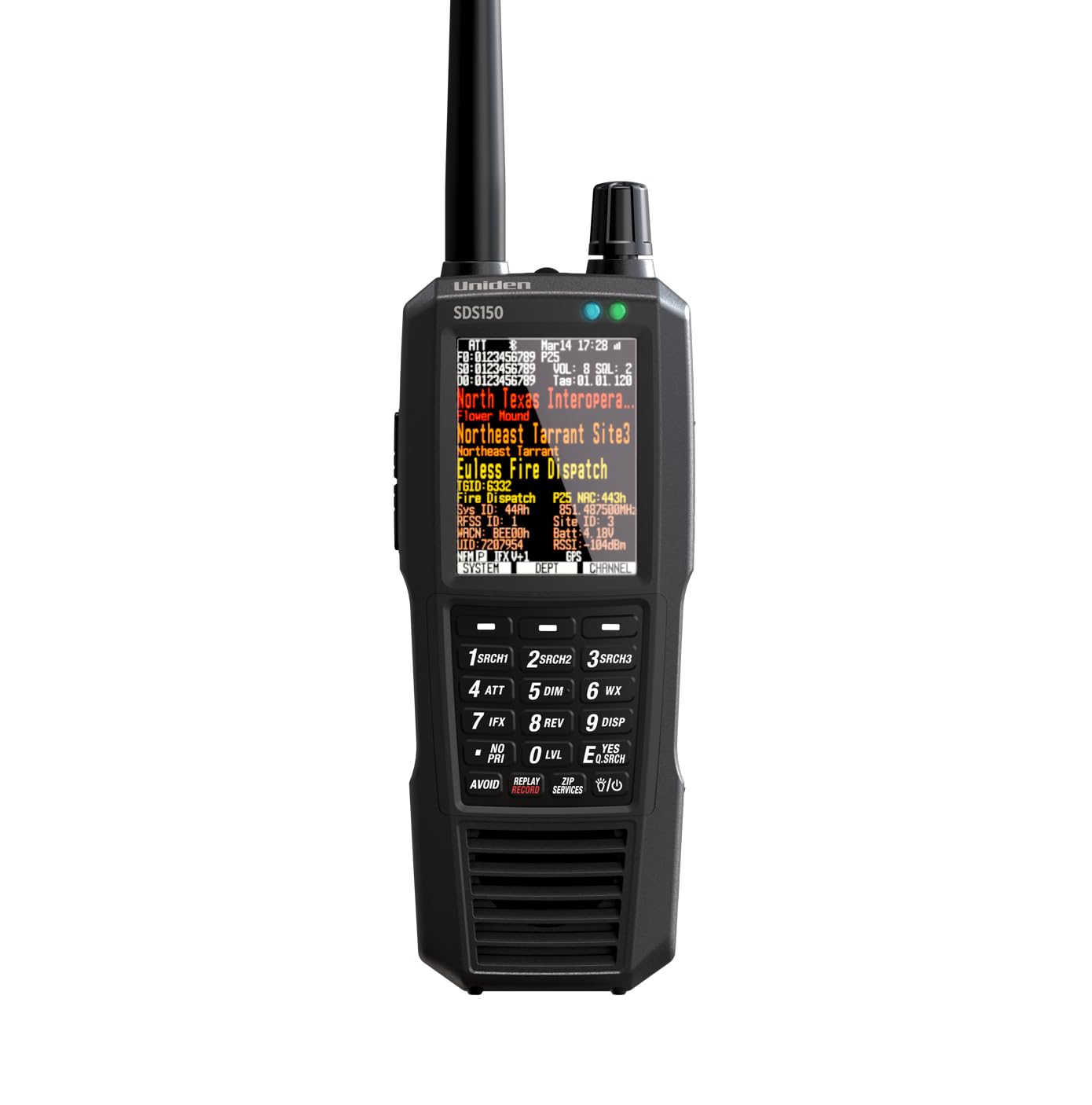
Uniden’s most advanced portable, blending SDR decode, built-in GPS, and IPX4 water resistance for serious field use.
The SDS150 is Uniden’s newest flagship portable, and it brings the same True I/Q software-defined radio trick as the SDS200 but in a rugged handheld. True I/Q reception means exceptional performance in weak-signal environments and clean decode of simulcast systems — the first scanner to incorporate SDR technology, per Uniden. A built-in GPS receiver automatically configures local systems as you travel, which owners say is “particularly useful for road trips.” It even handles Phoenix P25 simulcast “easily” and locks NAC codes, per early reviews.
Build quality is a headline feature: it is water-resistant to JIS4/IPX4 standards, and the included charge cradle charges the lithium-ion battery while offering an extra battery charging slot. A Bluetooth connection pairs it with the U/AWARE smartphone app, and the USB-C port plus drop-in cradle make charging easy. The large color display even shows a Waterfall view. Shoppers say a battery life of 9 hours 48 minutes — beating Uniden’s own 7-8 hour claim — and the “easy zip-code setup” makes it nearly plug-and-play with the RadioReference database.
The price is the story, and it is a premium one. Several owners question whether it is worth the cost, especially when the battery pack and color screen are the main differences from older models. Bluetooth connectivity to the app drew sharp criticism — “the bluetooth is VERY bad! Hardly connects” — and it is “a bit bulky to have to carry around.” Like the SDS200, DMR and NXDN are paid add-ons. This is the ultimate portable for enthusiasts who demand the best simulcast performance and will gladly pay for it, but casual listeners should look at the TRX-1 for far less.
Flagship Strengths
- True I/Q SDR handles simulcast cleanly
- Built-in GPS auto-tunes as you drive
- IPX4 water resistance + charge cradle
Premium Pain
- High price that owners openly debate
- Bluetooth app connection is unreliable
- Paid upgrades for DMR and NXDN
Worth it for: enthusiasts who demand the best portable simulcast decode and want GPS auto-tuning without external receivers.
Hold off if: you are on a budget or mainly listen at home — the TRX-1 covers most needs for hundreds less.
Understanding the Specs
Trunking vs Conventional
Conventional scanning simply cycles through a list of fixed frequencies, one after another. Trunking is a shared system where many agencies use a small pool of frequencies, assigned dynamically by a control channel. A trunking scanner follows that control channel and stitches together the fragments of a conversation automatically. If your area uses trunking and your scanner cannot follow it, you will hear static bursts and miss every real transmission.
P25 Phase 1 vs Phase 2
APCO P25 is the digital radio standard used by most US public safety agencies. Phase 1 carries one voice channel per frequency slot; Phase 2 doubles capacity by using two slots per frequency (TDMA). Scanners labeled Phase 2 handle both, while Phase 1-only units like the WS1065 will go silent on Phase 2 systems. Before buying, check your local agencies’ mode on a frequency database — this single spec decides whether you hear anything at all.
Simulcast and SDR Technology
Simulcast systems broadcast the same signal from multiple towers, and the overlapping signals confuse older digital decoders into robotic garble. Software-defined radio (SDR) or True I/Q receivers capture the whole signal spectrum and decode it cleanly, making them the fix for dense metro areas. If you live within range of a simulcast system, an SDR-based scanner like the SDS200 or SDS150 is the reliable answer.
Location-Based and GPS Scanning
A built-in database of known radio systems lets a scanner tune itself by zip code, and adding GPS makes it update automatically as you drive. This is the closest thing to plug-and-play in the category — ideal for road trips across multiple jurisdictions. Scanners without a database, like the WS1065, require manual programming or third-party software for every new area.
FAQ
Are police scanners legal to use in a car?
Will an analog scanner work for modern police departments?
What is the difference between Phase 1 and Phase 2 digital scanners?
Why does my digital scanner sound garbled or robotic?
How do you program a police scanner for the car?
Can a scanner pick up encrypted police radio?
What is Close Call or Close Call RF capture?
Should I buy a handheld or a mobile/base scanner for my car?
Do I need a subscription to listen to police scanners?
Final Thoughts: The Verdict
For most drivers, the police scanner for car winner is the Uniden SDS200 because True I/Q technology is the only reliable cure for simulcast distortion in metro areas, and the 3.5″ color display keeps everything readable at a glance. If you want DMR and NXDN coverage without paying for add-ons, grab the Whistler TRX-2 for desktop and mobile flexibility. And for truckers who need one clean dash unit, the Uniden BearTracker 885 pairs a full CB radio with digital trunking scanning in a single 5-pound box.
How We Picked
We do not accept paid placement. Every pick is matched to a real buyer and a real use-case; we do not hands-on test units.
Sources & Methodology
Specifications: manufacturer listings and product documentation. Review insights: verified customer reviews, as of August 2026. Pricing: not shown on this page (it changes often); check the current price via the retailer link.
As an Amazon Associate, Trending Car earns from qualifying purchases. This does not affect which products we feature.