
Our readers keep the lights on and my garage snacks stocked. As an Amazon Associate, I earn from qualifying purchases.
Specs are compiled from manufacturer listings and verified buyer reviews and can change over time — please confirm the key details on the product page before buying.
If you’ve ever watched a bright pink or purple liquid bleed down your alloy wheel, you already know the real question this category answers: which formula removes caked-on brake dust without etching, yellowing, or stripping your painted finish? A true painted wheel cleaner has to be acid-free or pH-neutral, and it has to prove it can lift iron particles without you scrubbing for an hour. The list below separates the reactive iron dissolvers from the gentle daily sprays, so you can match the chemistry to how dirty your wheels actually get.
I’m Min Islam — the founder and writer behind Trending Car. This guide is built by comparing the manufacturers’ published specifications and the patterns across verified customer reviews, so you get each pick’s real strengths and trade-offs instead of marketing spin.
The bottom line is simple: the best painted wheel cleaner is the one that matches your specific wheel finish and how much brake dust you fight, and this guide shows you exactly which formula wins for your situation.
Our Picks at a Glance


How To Choose The Best Painted Wheel Cleaner
Your painted wheel’s worst enemy isn’t dirt — it’s the wrong chemistry. Some aggressive cleaners use acids that eat through clear coat and leave a dull, yellowed haze. The safest painted wheel cleaner is either acid-free or pH-neutral, and you’ll want to match that formula to how heavy the brake dust buildup actually is.
Reactive Iron Removers vs. Maintenance Cleaners
A reactive cleaner (often called an iron remover) turns red or purple when it touches brake dust, because it chemically dissolves the metal particles. These are your heavy artillery for neglected wheels. A pH-neutral maintenance spray won’t give you that color show, but it’s gentler for weekly washes and safer on delicate finishes like matte black or plasti-dip.
Dwell Time and Agitation
Most products tell you to spray, let it sit, then rinse. That “sit” time — often 1 to 3 minutes — is when the chemistry does the work. After it dwells, a gentle brush or sponge lifts what the chemical loosened. If a product requires zero scrubbing, expect a heavier chemical; if it’s super gentle, expect to put in a little elbow grease.
Quick Comparison
| Model | Best For | Volume | Formula Type | Color Change | Amazon |
|---|---|---|---|---|---|
| KOCHCHEMIE Reactive★ Best Overall | Heavy iron fallout | 750ml | Acid-free | Yes (Red) | Amazon |
| Adam’s EcoEco Choice | Eco-friendly weekly | 16oz | pH Neutral | No | Amazon |
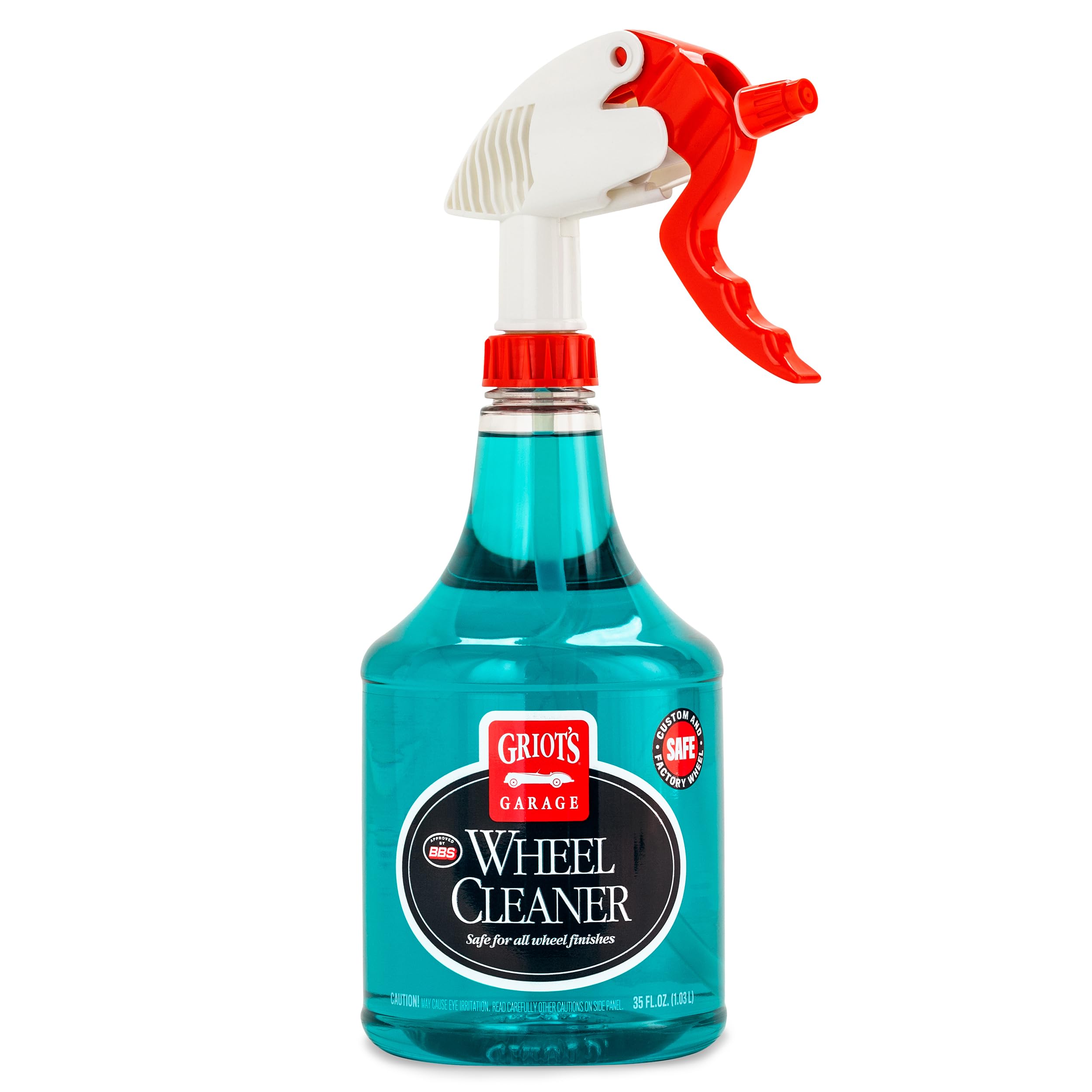
| Griot’s GarageAll-Finish Safe | All finishes daily | 35oz | pH Balanced | No | Amazon |
| 303 Heavy Duty | Iron buildup | 15.5oz | Acid-free | Yes (Purple) | Amazon |
| P&S Iron Buster | Pre-wash decon | 16oz | pH Balanced | Yes | Amazon |
| Nanoskin | Pro dilution value | 1 Gal | Non-acid | No | Amazon |
| KOCHCHEMIE Magic | Viscous cling | 500ml | Acid-free | Yes (Red) | Amazon |
| SONAX Beast | Baked-on grime | 33.8oz | Acid-free | Yes (Purple) | Amazon |
| 3D Yellow | Tire & whitewall | 1 Gal | Acid-free | No | Amazon |
In‑Depth Reviews
1. KOCHCHEMIE Reactive Wheel Cleaner
Our pick — over 4.5★ from 400+ verified ratings; the strongest balance of quality and price.
The reactive powerhouse that visually proves it’s dissolving brake dust while you watch.
This is the color-changing formula that turns red the moment it touches iron, showing you exactly where the chemistry is working. It’s pre-diluted and ready to spray straight from the bottle, so you skip the mixing step and go right to the wheel. Simply spray, let it sit for 1-3 minutes, agitate with a brush, and rinse to reveal the clean underneath.
Because it’s acid-free, KOCHCHEMIE claims it’s safe for steel, chrome, powder-coated, aluminum, and painted wheels alike. Buyers report it works well on aluminum wheels and leaves zero residue behind. The formula even includes gloss additives that leave a nice shine — a “lotus effect” that helps water and future dirt slide right off. The trade-off is the smell, which has been described as intensely unpleasant — definitely a well-ventilated-garage product.
This brand has been making cleaning chemistry since 1968, and that heritage shows in the balanced reaction: strong enough for heavy buildup, gentle enough for painted surfaces. The 750ml bottle is slim and easy to store, standing just 2.76 x 2.76 x 10.63 inches. As owners put it: “This works so damn good. Sure it smells like 40 women just got a perm in your garage, but its worth it!”
Visual proof: The red reaction lets you see the iron dissolve in real time — no guessing if it’s working.
The honest catch: The odor is genuinely strong; plan to use it outside or with the garage door open.
Your wheel match: Grab this if you face heavy brake dust and want to watch the chemistry do its thing.
Look elsewhere if: You’re scent-sensitive and want a cleaner you can use indoors.
2. Adam’s Eco Wheel Cleaner
The citrus-scented, eco-friendly cleaner that’s gentle enough for plasti-dip yet tough on dust.
Adam’s took a different path from the iron-remover crowd: this pH-neutral, non-acid formula skips the harsh chemicals entirely. It’s safe on everything from matte black to polished aluminum to chrome, and even extends to vinyl-wrapped or plasti-dipped wheels — finishes that aggressive acids would ruin. The formula uses DRE (direct release to the environment) technology, so it breaks down in a way that’s friendlier to your driveway.
What wins people over is the cleaning performance and the lack of chemical odor — it now carries a pleasant citrus scent instead. Owners note it suds up better than Griot’s eco cleaner and works especially well on aluminum alloy OEM wheels. The recommended routine is a pre-rinse, a spray, a gentle agitate with a boar-hair brush, then a rinse and microfiber dry. One cloth folded into 8 surfaces handles all four wheels.
The recurring gripe is the spray bottle itself. A few owners mention the bottle warped — one noted it happened on two separate purchases. The liquid inside gets high marks, but the packaging quality trails the premium formula. At 16oz and just 1 pound, it’s a compact, easy-to-store option that fits neatly on a shelf.
Why it wins fans
- Safe on the widest range of finishes, including plasti-dip
- Mild citrus scent instead of chemical fumes
- Eco-friendly DRE formula, made in the USA
What to watch
- Spray bottle quality has drawn a few complaints
- Ideal for lightly soiled wheels, not heavy neglect
Reach for this if: You want a maintenance cleaner that’s safe on delicate finishes and smells like citrus, not a chemical plant.
Think twice if: Your wheels are caked in months of baked-on iron — you’ll want a reactive formula instead.
3. Griot’s Garage Wheel Cleaner
The pH-balanced workhorse that offers a massive 35 ounces of gentle, protective cleaning.
Griot’s built this as a one-bottle solution for every finish you own — chromed, polished, powder-coated, aluminum, or steel. The pH-balanced, high-tech blend lifts brake dust, tar, dirt, and road grime without harming protective coatings, so your wheels stay clean and guarded. It’s made in the USA and comes unscented, which some owners actually prefer.
The biggest advantage here is volume: 35 fluid ounces at a budget-friendly price point means far more cleanings per bottle than the smaller 15.5oz options on this list. Sales volume means it’s a crowd favorite — the review pages show thousands of owners weighing in, with an effectiveness rating that earns high marks. The spray application is efficient, with owners noting just 2-3 sprays per wheel does the job.
Here’s the honest trade-off: this is a maintenance cleaner, not an iron remover. A few owners note it’s on the “weaker side” and that agitation is required — one detailed review on ceramic-coated wheels praised it as a great weekly product precisely because it won’t strip sealants. It also carries no iron removers, which is a plus for coating preservation but means it won’t give you that dramatic color-change show.
Best maintenance pick: Gentle enough for ceramic coatings and delicate finishes, big enough to last for months.
Best if: You clean weekly and want to protect your sealant — skip it if your wheels are severely neglected.
Your wheel match: Perfect for owners who want a big, safe bottle for regular washes without stripping their protective coatings.
Not your match: Those facing heavy iron buildup who want the reactive color-change chemistry instead.
4. 303 Heavy Duty Wheel Cleaner

The purple-indicating formula that tackles heavy iron with a professional-grade punch.
303’s heavy-duty formula is all about the visual: spray it on, wait about 2 minutes, and watch the purple iron-indicating reaction wash brake dust away with minimal scrubbing. It’s non-corrosive and acid-free, so it’s safe on aluminum, chrome, steel, and alloy wheels without the risk of etching your paint. The brand has been making premium protection products for over 40 years, and it shows in the balanced chemistry.
Customers note serious results on neglected wheels. A 2017 Jeep’s front wheels with months of brake dust came clean in a single application with no repeat needed, rinsing off to look like new. Even heavy cases — like a 2021 Audi RS5 with launch-wheel-level dust — broke down with a 3-4 minute dwell and a quick rinse. It’s a strong formula that outperforms cheaper chain-store options while staying milder than pure iron removers.
The honest downsides: you need to apply a generous amount per wheel, and the scent is divisive — described as a mix of grape candy and something far less pleasant. Owners recommend using it outdoors. At 15.5 fluid ounces, it’s enough for roughly two cars, making it best for occasional deep cleans rather than weekly maintenance.
Where it shines
- Purple color change shows the iron dissolving in real time
- Non-corrosive, acid-free formula protects painted rims
- Removes months of buildup in one pass
The trade-offs
- Goes through product quickly — best for occasional use
- Odd grape-like odor that demands outdoor use
Your wheel match: Pick this for periodic deep cleans when brake dust has had time to bake on.
Who it won’t suit: Weekly maintainers who want a mild, faint-smelling spray for regular upkeep.
5. P&S Iron Buster

The professional decon step that dissolves embedded iron before your main wash even starts.
Iron Buster isn’t just a wheel cleaner — it’s a dedicated iron remover designed to break down embedded iron, brake dust, and industrial fallout from both wheels and painted panels. The pH-balanced formula is safe for chrome, aluminum, steel, alloy, and painted surfaces, making it a true multi-surface decontamination step. It’s part of the Renny Doyle Double Black Collection, a line trusted by professional detailers.
The color-changing formula reacts quickly — owners note it turns as it works, showing exactly where the iron is being lifted. It’s especially effective on wheels “a little too neglected for a standard cleaner to fix by itself.” Many use it as a pre-spray before a rinseless or waterless wash, letting it soften the fallout so the next step glides over the surface.
The realistic take: it works like every other brand of iron remover, which is to say it needs some elbow grease to finish the job. One detailed review found it removed about 75% of remaining dust after a thorough pre-wash, requiring a bit more work for perfection. Wear rubber gloves — the chemical reaction produces a noticeable smell, though the reactivity is fast and effective.
Detailer’s tool: Use it as the first step in a two-stage process to break up embedded fallout.
Expect to work: It softens and dissolves, but a brush or towel still finishes the job.
Your wheel match: Ideal for detailing enthusiasts who want a dedicated decon step before polishing or sealing.
Skip this if: You want a one-step spray-and-rinse maintenance product for everyday dirt.
6. Nanoskin Non-Acid Wheel & Tire Cleaner

The concentrated gallon that dilutes 4:1, turning one jug into a year of professional-grade cleaning.
This is the value king of the list, and it earns that crown through dilution. The highly concentrated formula mixes at a 4:1 ratio — add 6 oz to a 32 oz spray bottle, or one gallon to a 5-gallon tank. That means a single 1-gallon jug stretches impressively far, which is why mobile detailers use it daily. The advanced alkaline, non-acid chemistry is safe for clear-coated, powder-coated, chrome, alloy, and factory-painted wheels.
What owners rave about is the extreme cling foaming action. The thick foam adheres to vertical surfaces for extended dwell time, lifting brake dust, oil, dirt, stains, and light corrosion while it sits. It also deep-cleans tires by removing silicone residues, grease, wax buildup, and old tire dressings — leaving rubber clean and ready for fresh dressing. One detailer calls it “the best most dilutable product while still having more than enough power to break down nasty wheels.”
The honest caveat is the container. Several reviewers point out cracks in the gallon jug, and leakage has been a recurring theme. At 9 pounds, the full gallon is heavy to handle. But the cleaning performance is undeniable — one owner reported it took off about 98% of serious brake dust with just scrubbers. The “Xtreme Cling” foam is the standout feature that justifies the price.
Why pros love it
- 4:1 dilution makes the gallon last for many cleanings
- Thick clinging foam stays on vertical wheels
- Cleans both wheels and tires in one product
Handle with care
- Gallon jug has a history of cracking and leaking
- Heavy at 9 pounds — needs a sturdy shelf
Your wheel match: The smart buy for detailers or multi-car households that go through cleaner quickly.
Not your match: Casual owners who clean once a month and don’t want to mix concentrates.
7. KOCHCHEMIE Magic Wheel Cleaner

The high-viscosity gel-like formula that clings to wheels and scrubs dirt off with a long working time.
KOCHCHEMIE’s Magic Wheel Cleaner is the brand’s answer for wheels that need the chemistry to stay put. The high-viscosity application sticks to the surfaces — including the wheel well — giving it a long working time so the active ingredients can dissolve iron before you even touch a brush. It turns red as it dissolves iron particles, giving you the same visual feedback as the brand’s Reactive formula.
Owners are genuinely impressed. One describes it as the best wheel cleaner they’ve ever used, noting front wheels “caked in brake dust” came clean with zero scrubbing. The viscous texture also makes it an excellent tire cleaner, reviving black rims to a like-new deep gloss. It’s safe on painted alloy wheels, high-quality chromed wheels, and steel rims — the brand has been making washing chemistry since 1968.
The trade-offs are real: it’s expensive, and like most iron removers, the smell is pungent. But the value debate is split — some call it “not worth the money” while others insist “definitely expensive, but worth the cost.” At 500ml (16.9 oz), the bottle is small, but the high viscosity means a little goes a long way. One owner notes it can be diluted 2:1 with water without losing much effectiveness.
The cling factor: High viscosity means it stays where you spray it, dissolving grime over a longer dwell.
Pro-grade strength: Caked-on dust falls away with minimal effort — a standout for neglected wheels.
Your wheel match: Perfect for European car owners who want a thick, clinging cleaner that works on wheels and tires.
Who it won’t suit: Budget-conscious buyers who flinch at premium pricing and strong odors.
8. SONAX Beast Wheel Cleaner

The acid-free giant that sprays clear, then turns deep red or purple as it melts baked-on grime.
SONAX named this product “Beast” for a reason. The acid-free, pH-balanced formula is safe on all factory-installed wheels — chrome, aluminum, steel, clear-coated, PVD, painted plastic wheel covers, and even magnesium. As you spray it on, it’s clear; then it turns deep red or purple as it reacts with ferrous metals from brake dust. You watch the chemistry happen in real time.
Shoppers say it “melted all of the dirt and grime off” after a rough winter, and one detailed the concentrated power: only 25% of one bottle handled a full wheel-off cleaning. The 1-liter bottle (33.8 oz) is one of the larger reactive options here, giving you more work per purchase than the smaller iron removers. It works especially well on black rims, where the contrast of clean is most visible.
The honest reality: you still need a little scrubbing on heavy buildup, and a second application may be needed for truly neglected wheels. It’s also strong — owners advise gloves and eye protection, as overspray can sting. The value debate is split, with some calling it expensive and used quickly, but most agree the results justify the premium.
Why it’s a beast
- Dramatic red-to-purple color change for visual proof
- Large 33.8 oz bottle outlasts smaller reactive options
- Safe on the widest range of factory finishes
Before you buy
- Heavy buildup still needs scrubbing or a second pass
- Strong enough to sting eyes — use protection
Your wheel match: The go-to for winter-weary wheels that need serious decontamination without acid damage.
Think twice if: You want a mild weekly spray — this is heavy artillery, not a light cleaner.
9. 3D Yellow Degreaser

The biodegradable degreaser that revives rubber sidewalls and makes white letters pop again.
3D Yellow Degreaser is a different animal — it’s a true degreaser built for tires and whitewalls as much as wheels. The acid-free, pH-neutral formula breaks down stubborn brake dust, silicone residue, road grime, and tire gunk without damaging rims or wheel wells. It’s safe for chrome, painted, and polished finishes, and it’s biodegradable — a real plus for eco-conscious owners.
Where this product shines is rubber restoration. Old tire dressings and built-up grime get lifted away, reviving sidewalls and making white letters or walls pop again. It’s the pick for deep-cleaning neglected tires before reapplying your favorite tire shine. The gallon size (128 oz) makes it a practical choice for multi-car households — one owner buys it in bulk for all the family cars.
The mixed feedback comes on tires specifically: some report it completely removes tire discoloration, while others find their tires still look dirty after use. On wheels, it works well with a pressure washer, with an occasional brush on stubborn dust. Owners appreciate that scrubbing isn’t always required — “just spray, let dwell, and rinse off.”
Tire specialist: This is the best pick here for restoring rubber and whitewalls, not just cleaning rims.
Mixed results: Tire discoloration removal varies — some see complete results, others need a second pass.
Your wheel match: Ideal for classic car owners and RV enthusiasts who care as much about tire sidewalls as wheels.
Not your match: Detailers who want a reactive iron remover with a color-change visual — this has none.
Understanding the Specs
Acid-Free vs. pH-Neutral
These two terms are the safety gate for painted wheels. Acid-free means the formula contains no harsh acids that can etch clear coat. pH-neutral means the chemistry sits at a balanced 7 on the pH scale — neither acidic nor alkaline. Both protect your paint, but pH-neutral is often gentler for weekly maintenance, while acid-free reactive formulas pack more dissolving power.
Color-Changing Iron Indicators
When a cleaner turns red or purple on contact, it’s reacting with ferrous metals in brake dust. This visual feedback tells you the chemistry is working and where the iron is concentrated. It’s the difference between guessing and knowing. If you want proof your cleaner is dissolving iron rather than just rinsing dirt, look for a formula that changes color.
Dwell Time and Working Time
Dwell time is how long the product needs to sit before rinsing — typically 1 to 3 minutes. Working time is how long the formula stays active on the surface. High-viscosity products with longer working times are better for vertical wheel surfaces, where thinner liquids run off too fast to do their job. More cling equals more dissolved grime.
Concentrate vs. Ready-to-Use
Ready-to-use sprays are convenient but run out fast. Concentrates dilute with water — like Nanoskin’s 4:1 ratio — turning one gallon into several gallons of cleaner. If you clean multiple cars or detail professionally, a concentrate saves money over time. If you wash one car monthly, a ready-to-use bottle is simpler and avoids mixing errors.
FAQ
Will a wheel cleaner damage my painted rims?
What does the red or purple color change mean?
Is a pH-neutral cleaner strong enough for heavy brake dust?
Do I still need to scrub if the cleaner changes color?
How long should I let a wheel cleaner sit?
Can I use the same cleaner on tires and wheels?
Why do some wheel cleaners smell so strong?
Is a concentrated cleaner worth buying over a ready-to-use spray?
Final Thoughts: The Verdict
If you want one dependable pick, the painted wheel cleaner winner is the KOCHCHEMIE Reactive because it pairs acid-free safety with a visible red reaction that proves it’s dissolving iron — the crowd favorite with a 4.7-star average across hundreds of owners. If you want an eco-friendly citrus option that’s gentle on delicate finishes, grab the Adam’s Eco. And for heavy winter buildup that needs serious decontamination, the SONAX Beast is the one to reach for.
How We Picked
We do not accept paid placement. Every pick is matched to a real buyer and a real use-case; we do not hands-on test units.
Sources & Methodology
Specifications: manufacturer listings and product documentation. Review insights: verified customer reviews, as of August 2026. Pricing: not shown on this page (it changes often); check the current price via the retailer link.
As an Amazon Associate, Trending Car earns from qualifying purchases. This does not affect which products we feature.