
Our readers keep the lights on and my garage snacks stocked. As an Amazon Associate, I earn from qualifying purchases.
Specs are compiled from manufacturer listings and verified buyer reviews and can change over time — please confirm the key details on the product page before buying.
Before you pick a paint for engine block surfaces, ask one question: how hot will the part actually get? A header pipe runs far hotter than a valve cover, so choose a coating rated for the worst-case temperature. That choice decides whether you get a clean, lasting finish or one that blisters and flakes off after a few drives.
I’m Min Islam — the founder and writer behind Trending Car. This guide is built by comparing the manufacturers’ published specifications and the patterns across verified customer reviews, so you get each pick’s real strengths and trade-offs instead of marketing spin.
This guide compares nine high-heat aerosol coatings for engine bays, exhaust systems, and manifolds, covering temperature ratings, finish types, and real-world durability to help you repaint your block with confidence.
Our Picks at a Glance

How To Choose The Best Paint for Engine Block
Engine paint is a quick-compare purchase, but the wrong choice means stripping the part down and starting over. Focus on the heat rating first, then the finish, then how much prep you are willing to do.
Match the heat rating to the part
Engine blocks and heads run hot, but not as hot as exhaust manifolds or headers. A coating rated for 650°F (343°C) suits a block, valve cover, or bracket perfectly. For manifolds and exhaust systems, you want something closer to 1200°F or 2000°F so the finish does not burn off under sustained load.
Decide on the finish you actually want
The finish is a visual choice that changes how the engine bay looks. Flat black hides grime and looks factory-tough. Gloss black pops and shows every fingerprint. Metallic finishes add sparkle but only look right on smooth, well-prepped surfaces — porous castings can swallow the flake effect.
Be honest about your prep and cure time
Every high-heat paint needs a clean, oil-free surface to bond, and most need a full cure before they hit real operating temperature. If you skip the cleaning step or rush the cure, the paint will peel no matter how expensive the can was. Check the cure time before you buy so the car is not out of service longer than you planned.
Quick Comparison
| Model | Best For | Heat Rating | Finish | Size | Amazon |
|---|---|---|---|---|---|
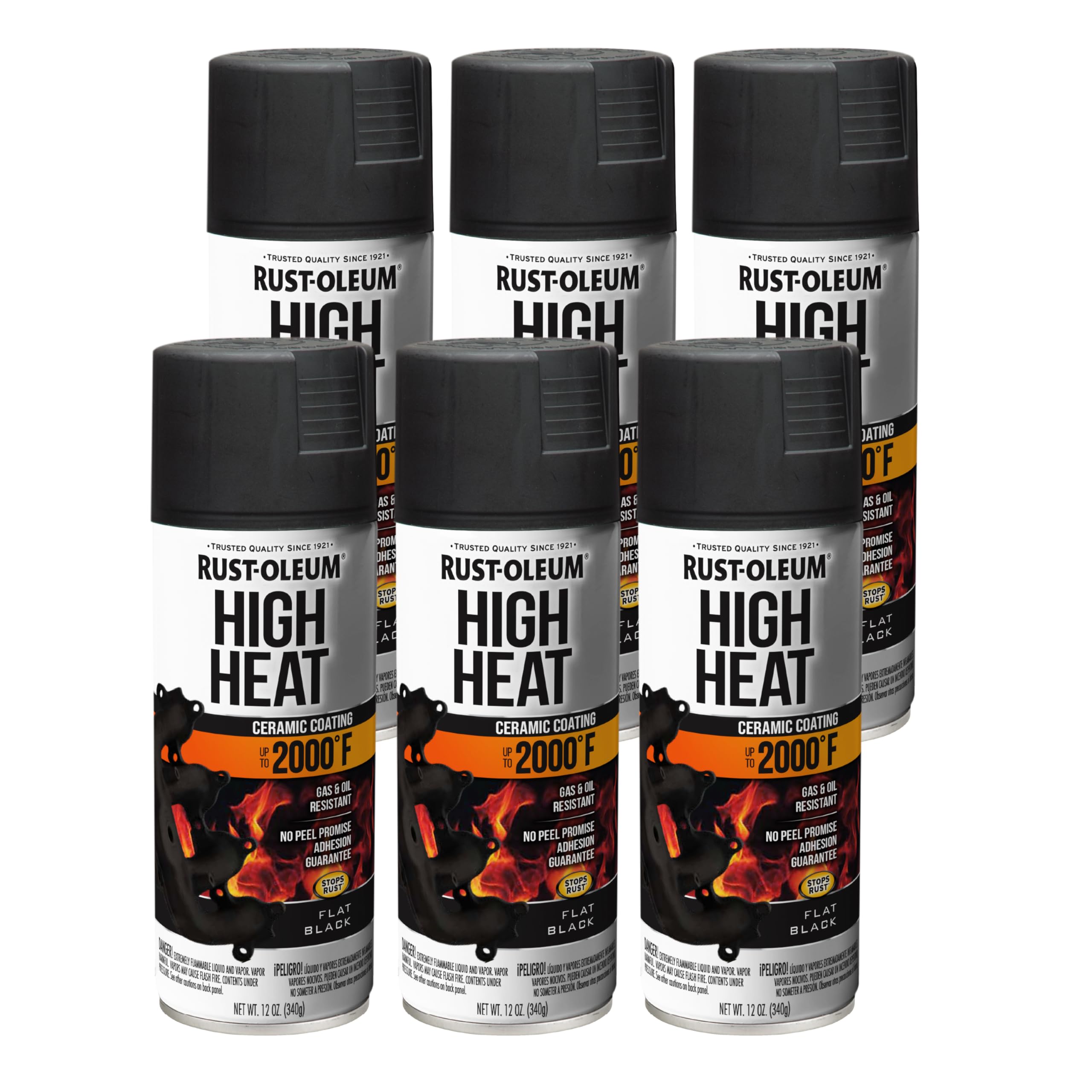
| Rust-Oleum High Heat Flat Black★ Best Overall | Exhaust parts & fire pits | 2000°F | Matte | 12 oz (6-pack) | Amazon |
| RAPTOR Flameproof Flat RedPro Grade | Headers & dirt bike pipes | 2000°F | Matte | 354 ml | Amazon |
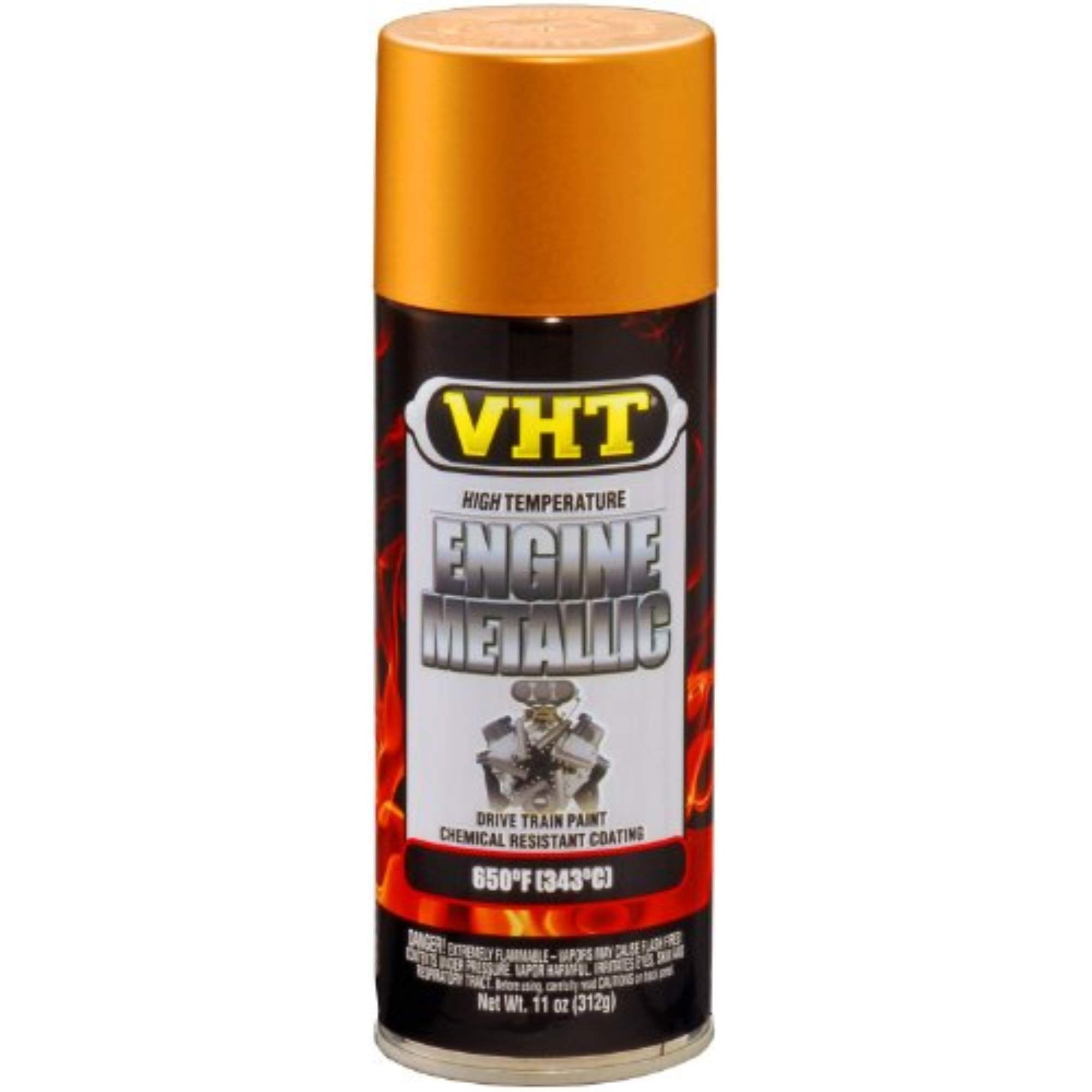
| VHT SP404 Gold FlakeCaliper Flash | Caliper touch-ups | 650°F | Metallic | 11 oz | Amazon |
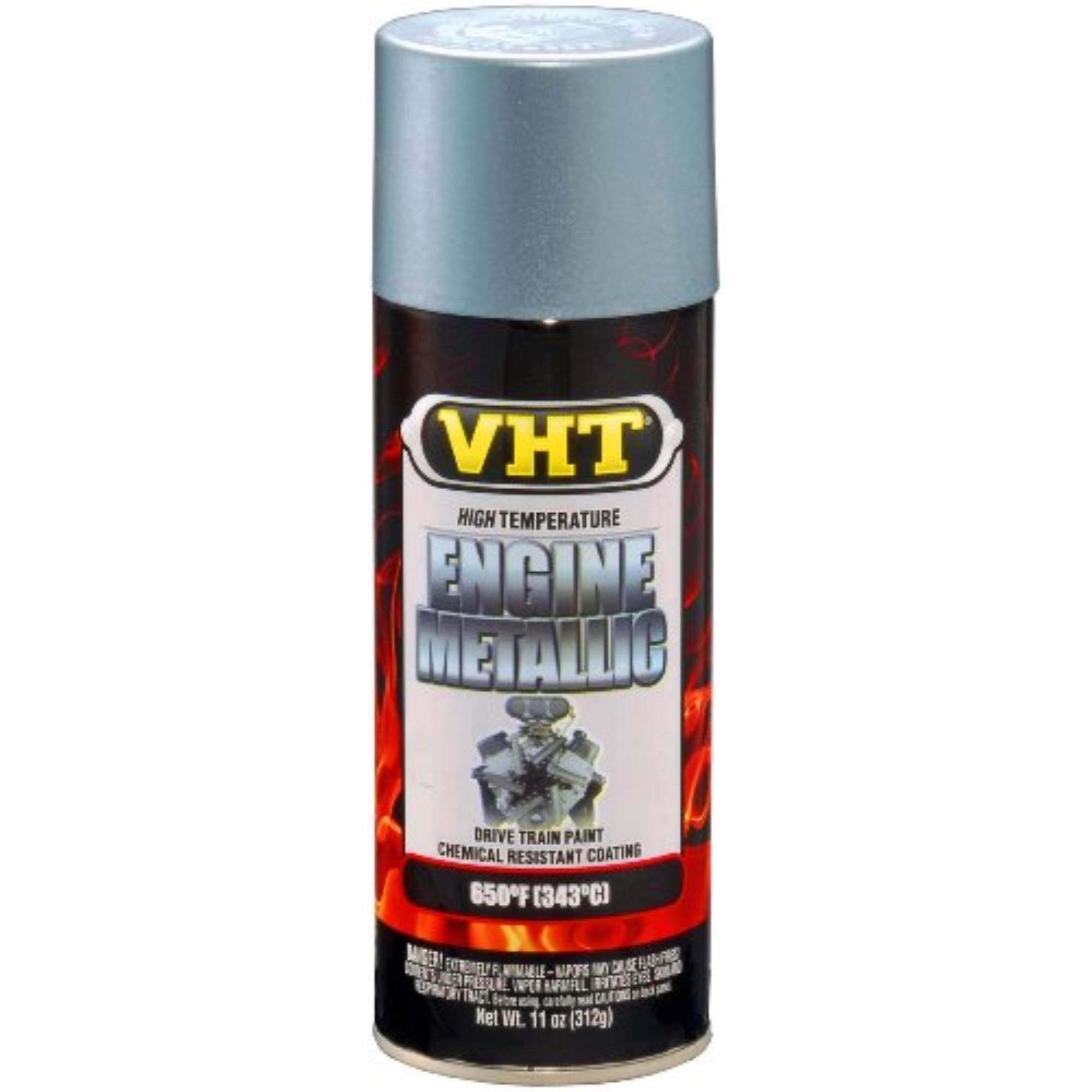
| VHT SP403 Titanium Silver Blue | OEM color matching | 650°F | Brushed | 11 oz | Amazon |
| Stove Bright New Bronze | Wood stoves & fireplaces | 1200°F | Satin | 12 oz | Amazon |
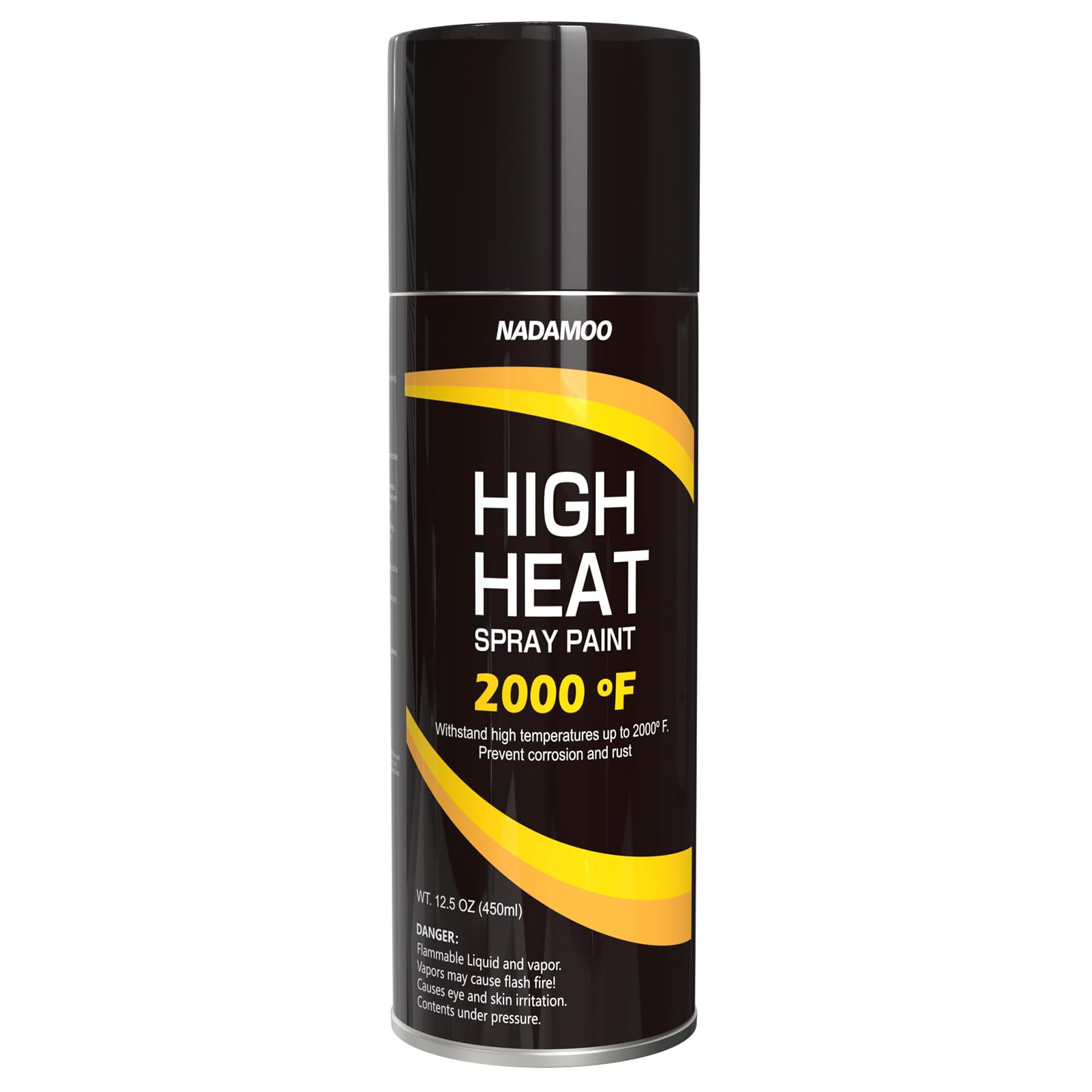
| NADAMOO Matte Black | BBQ grills & exhausts | 2000°F | Matte | 450 ml | Amazon |
| POR-15 Flat Black | Manifolds & heavy use | 1200°F | Matte | 15 fl oz | Amazon |
| Eastwood 2K Gloss Black | Show-quality gloss finishes | 650°F | Gloss | 11.9 oz | Amazon |
In-Depth Reviews
1. Rust-Oleum Automotive High Heat Spray Paint, Flat Black
Our pick — over 4.5★ from 13,500+ verified ratings; the strongest balance of quality and price.
The six-pack workhorse that shrugs off a 2000°F exhaust, one can at a time.
Coating exhaust manifolds, headers, or a full exhaust system? This Rust-Oleum flat black handles intermittent heat up to 2000°F — the same ceiling as the RAPTOR and NADAMOO picks here — but comes in a multi-can bundle that covers a whole project at once. Each 12-ounce can covers about 10 square feet, so you can do a block, headers, and brackets without running dry.
The rust-preventive formula resists oil, gas, grease, salt, and humidity — a bigger priority than color for under-hood parts. It dries to the touch in 30 minutes, and buyers report the matte finish holds up through repeated heat cycles on fire pits and grills without peeling or flaking. One owner said their grill “looks almost brand new” after a smooth, even pass.
Any-angle spray technology means you can point the can upside down to reach awkward spots under the car, a small convenience that saves real frustration on a cramped exhaust. With a 4.6-star crowd of over 13,000 ratings behind it, this is the most-proven can on the list — the safe first choice for anyone who wants results without gambling on an unknown brand.
Why owners stick with it
- 2000°F rating covers exhaust manifolds, headers, and block surfaces
- 10 sq ft coverage per can means fewer cans per project
- Flat matte finish resists oil, gas, and salt
- Dries to touch in 30 minutes for fast reassembly
What to weigh first
- 6.1-pound pack is heavy to handle in one box
- 6-can bundle is overkill for a single valve cover job
Reach for this if: you are tackling a full exhaust or block refresh and want the most-bought, most-reviewed high-heat coating on the market.
Think twice if: you only need a single small bracket painted — the multi-pack leaves you with leftover cans.
2. RAPTOR Flameproof Automotive Body Paint, Professional Grade, Flat Red
A 2000°F ceramic coating built for shops that rebuild machines for a living.
RAPTOR Flameproof uses ceramic technology rated to 2000°F, matching the Rust-Oleum ceiling and tripling the VHT 650°F cans, with the brand claiming 5X tougher wear resistance. Once fully cured, it protects against heat, oil, and other automotive fluids, which is exactly what a rebuilt engine compartment throws at it.
The shop-owner appeal shows in the details. The spray nozzle has anti-clog technology for steady application, and the paint dries fast to a finish that won’t blister, flake, crack, or peel. Owners mention it “has held up the best so far and looks good” on a rusty dirt bike expansion chamber, and that a full caravan exhaust system “doesn’t burn off” after application.
The catch is curing: let it fully cure before use, or it can transfer onto anything placed on top of it. Once it has burned in, that stops — a one-time ritual common to high-heat coatings. It comes in a flat red, flat black, and satin clear, with a 4.4-star average across over a hundred ratings, making it the strongest pick here for a color-matched exhaust build.
Shop-floor verdict: The 2000°F rating and anti-clog nozzle make this the pick for exhaust parts you want to paint once and forget. The 354 ml can is smaller than the Rust-Oleum 12 oz units, so budget for two if you are doing a full system.
Prep note: Buyers stress that a full cure before heat exposure is mandatory — rushed jobs let the paint transfer onto tools or parts.
Grab this for: headers, expansion chambers, and exhaust systems where the ceramic toughness earns its keep. It out-holds the standard VHT line on extreme heat parts.
Skip it for: a quick single-coat touch-up where you cannot wait for a complete cure cycle.
3. VHT SP404 Engine Metallic High Heat Spray Paint – Gold Flake – 11 oz.
The gold-flake caliper coat that still looks fresh six months later.
This is the twin of the Black Pearl above — same 650°F (343°C) urethane-and-ceramic blend — but in a vivid gold that owners consistently call a great color. The stand-out real-world test comes from calipers: one owner sprayed theirs on a bored night and reported “roughly 6 months and still hasn’t faded one bit” even after brake cleaner and heat cycles.
It dries to the touch in 30 minutes with a full cure in 8 hours, and the 11-ounce can stretches further than you would expect — one owner applied 7 coats over calipers and still had product left. The finish reads true gold rather than dull, and customers note the end result “looks awesome” and that it does not chip or fade on daily-driven Olds engines.
Rated 4.7 stars across a few hundred buyers, this is the highest-scoring VHT can on the list and the clear choice when you want a bright metallic accent rather than black.
The color wins trust: “Not quite as orange as it looks in the picture” was the only color note, and owners still loved the end result on calipers and trim.
Coverage streak: Seven coats on a pair of calipers with leftover paint makes this an economical pick for small parts.
Make it yours if: you want a bright gold flake on calipers, valve covers, or brackets that holds its hue for months of daily heat.
Look elsewhere if: you need a flat, non-metallic finish or a rating beyond 650°F for exhaust work.
4. VHT SP403 Engine Metallic Titanium Silver Blue 11 oz.
The blue-silver rattle can that revives a classic outboard or distributor.
This titanium silver blue matches the same 650°F (343°C) rating as the other VHT metallics, but its real talent is color matching. A restorer of a Sun distributor machine called it “almost a perfect color match” to the original OEM shade, and an owner of a 1981 35HP Evinrude used it with an etching primer and clear coat to make an outboard “look like new.”
The finish reads as a brushed silver-blue, and buyers find it easy to apply with good quality. At 4.5 stars across over two hundred ratings, it is the most-reviewed of the VHT metallic trio — a sign that the color match keeps people coming back. One owner paired it with primer and clear, calling the result “perfect,” while another warns it sprays as blue rather than silver, so check your expectation before buying.
On durability, the feedback is mixed but the success stories involve proper prep: etching primer on bare metal and a clear top coat. The can sprays nicely but cannot go upside down, a minor limit for tight engine-bay angles. Durability also shows mixed reviews, so this one rewards surface prep more than most.
Restoration favorite: This is the pick for matching old outboard or industrial equipment colors where an exact OEM shade matters more than gloss.
Know the hue: It reads as blue-silver, not pure silver — owners on the fence should look at sample photos first.
Choose this for: color-matched restorations of outboards, distributors, and engine parts where the 650°F ceiling is enough.
Leave it if: you expect a straight silver — this one leans blue and demands a clear coat for maximum depth.
5. Stove Bright High Temp Spray Paint, New Bronze

A silicone-based 1200°F coating equally at home on a stove or an exhaust.
Stove Bright is built around a silicone protectant that resists rust, scratching, and marring, tested to 1200°F — a middle ground between the 650°F VHT cans and the 2000°F extremes. The brand pitches it at wood stoves, fireplace inserts, radiators, engines, auto exhaust, manifolds, mufflers, and barbecues, so it doubles as a home and garage paint.
Owners praise the easy spray and quick dry, with one transforming a fireplace face to a “deep rich bronze” and another happy with the subtle sparkle. The big caveat is the color: multiple reviewers point out that “New Bronze” reads as black, not bronze, calling it a mislabeled shade and a manufacturer fault. If you want an actual bronze tone, this is not it — but as a satin dark finish it performs well.
The 3.9-star average reflects that color confusion more than performance, so treat this as a fit-note rather than a quality warning. The brand explicitly says to shake the can for 2 full minutes or the tip can clog — a simple habit that avoids a frustrating spray. With only a modest review base of a few dozen, this is a niche pick for stove owners who also happen to have an exhaust job.
Read the color twice: “New Bronze” runs dark, near black — buyers who knew that were thrilled, those expecting bronze were not.
Shake discipline: A full 2-minute shake prevents the clogged tip the label warns about.
Grab it for: a dual-purpose can that works on fireplace inserts and engine exhausts at 1200°F, if the dark shade suits you.
Skip it for: true bronze color matching or any job where a mid-3-star review base gives you pause.
6. NADAMOO High Heat Spray Paint for Metal, Matte Finish, Black
A 2000°F matte black that bonds to cast iron and smoker steel with ease.
NADAMOO pairs heat-resistant aluminum pigments in a silicone polymer resin for working temperatures up to 2000°F, matching the Rust-Oleum and RAPTOR ceiling. The 450 ml can covers about 10-12 sq ft for two light coats, and the matte finish hides the “brush stroke” look entirely since it is a true aerosol spray.
The applications skew toward high-heat metal: fireplace surrounds, stove pipes, BBQ grills, automotive exhaust systems, and engine manifolds, adhering to steel, cast iron, aluminum, brick, and most metals. One owner restored an older Ducane grill with power wire brushing and mineral spirits prep, calling the two-coat result clean, while another returned a smoker firebox to flat black and said the paint “bonds well” even when applied hot.
The brand warns honestly — do not use it where flames make direct contact at 3000°F, like grill grates or inside fireboxes. One buyer did report the paint coming off when heat was on, so prep and cure time matter as much here as anywhere. At a 4.1 average across a small sample, this is a solid mid-range option for rust protection on grills and exhausts, though the review base is thin.
Rust shield first: The formula is designed to stop rust spread and create a corrosion-resistant shield, not just color the metal.
Respect the limits: Direct flame contact above 3000°F will defeat it — keep it off grill grates and firebox interiors.
Reach for it if: you need a 2000°F matte black that jumps between BBQ grills, stove pipes, and engine manifolds without cracking.
Be careful if: your part sits in direct flame — the label’s own caution tells you to use another coating there.
7. POR-15 High Temperature Paint – Flat Black – 15 fl. Oz.

The 1200°F flat black that survives racing abuse and heavy hauling.
POR-15 brings its rust-prevention reputation to a high-heat coating rated to 1200°F (648.8°C) that resists cracking, chipping, and peeling while protecting against weather, salt, and moisture. The 15-fluid-ounce can is the biggest single-can option here, and owners say one can covers roughly four manifolds — strong value for a full exhaust or block project.
The durability stories are the selling point: shoppers say it survived “severe use” including heavy hauling and racing after a careful prep of acetone soak, wire brushing, and surgical cleaning. The finish goes on evenly like a powdercoat, dries fast, and leaves a flat black that reads more like satin — a nuance worth knowing before you commit. It meets or exceeds the MIL-C-13370 military spec standard, backing the brand’s “uniform heat-resistant coating” claim.
Prep is non-negotiable: all surfaces must be free of dirt, loose rust, oil, grease, and wax, and glossy surfaces need 320-grit sanding. The brand requires a 24-hour cure before the temperature exceeds 300°F, and the curing process smokes heavily, so paint outdoors. At a 4.6-star average across several hundred ratings, this is the most-proven premium pick for manifolds that take real abuse.
The case for it
- 1200°F rating with a tough corrosion-resistant finish
- 15 fl oz can covers about four manifolds
- Sprays evenly and dries fast, no drip or streak
- Meets or exceeds MIL-C-13370 spec
What it demands
- Full 24-hour cure before exposing it to heat above 300°F
- Curing smokes heavily — plan to paint outdoors
- Surgical-level cleaning is key to longevity
Choose this for: manifolds and exhausts that face severe heat and hard use, where the 1200°F rating and rust protection earn their keep.
Skip it for: quick jobs where you cannot commit to a full 24-hour cure and outdoor painting.
8. Eastwood 2K Aerospray High Temperature Ceramic Engine Gloss Black

A two-part urethane gloss that sprays like a paint gun and shines like one.
Eastwood’s 2K Aerospray is the premium outlier here: a 2-component urethane catalyzed technology that cures into a real gloss finish at 650°F — lower than the 2000°F extreme-heat cans, but far stronger chemically. It is rated for engines, where the 650°F ceiling is plenty for a block, valve cover, or bracket.
Buyers consistently call it the highest-quality paint they have used, with one noting it “sprays like a paint gun” and delivers a gloss with no flaking or peeling. The durability test is a 2000 Cherokee XJ’s bare-metal valve cover: after half a year, the gloss held with no hiccups, and hoses rubbing against it did not wear through the paint. Another owner painted a motorcycle cylinder and lower frame, calling the results superior to VHT after stripping damaged clear coat.
The trade-off is cost and patience. This is a premium spray that asks for a full 72-hour cure to reach its best shine, and it pairs best with Eastwood’s own 2K Primer on stripped metal. At 4.6 stars across a committed review base, it is the right call for show-quality engine bays where gloss depth matters more than raw heat tolerance.
Gloss that lasts: The 2K urethane chemistry delivers a true car-paint shine, not a rattle-can look, on properly prepped metal.
Give it time: A 72-hour cure open up the full gloss and durability — plan the job around that wait.
Grab it for: a show-quality gloss-black valve cover or block that will sit in an open engine bay and get looked at.
Look elsewhere if: you need 2000°F exhaust protection or cannot wait a 72-hour cure cycle.
Understanding the Specs
Heat Rating (°F)
This is the maximum temperature the cured paint can survive without burning off, blistering, or discoloring. A 650°F rating suits engine blocks, valve covers, brackets, and water pumps. Exhaust manifolds, headers, and mufflers run hotter and need 1200°F to 2000°F coatings. Match the rating to the hottest part you are painting, not the prettiest finish.
Finish Type
Matte hides grime and looks factory-tough. Satin sits between flat and gloss with a soft sheen. Gloss shows every fingerprint but delivers a show-car shine. Metallic adds sparkle but only looks right on smooth surfaces — rough castings can swallow the flake effect. Pick the finish for how you display the engine, not just how it photographs.
FAQ
What is the best heat rating for painting an engine block?
Can I use barbecue paint on my engine block?
How long should I let high-heat engine paint cure?
What is the difference between 650°F and 2000°F engine paint?
Do I need primer before painting my engine block?
Will metallic engine paint look good on a rough cast-iron block?
How do I stop high-heat paint from peeling off?
Is the RAPTOR Flameproof stronger than standard VHT engine paint?
Can I spray high-heat paint upside down for tight engine-bay spots?
Which finish hides grime best in an engine bay?
Final Thoughts: The Verdict
For most buyers, the paint for engine block winner is the Rust-Oleum High Heat Flat Black because its 2000°F rating and six-can bundle cover a full exhaust and block project with the most-proven track record on this list. If you want a ceramic-grade coating for headers and dirt bike pipes, grab the RAPTOR Flameproof. And for a show-quality gloss finish on a valve cover or block, the Eastwood 2K Aerospray is the one to reach for.
How We Picked
We do not accept paid placement. Every pick is matched to a real buyer and a real use-case; we do not hands-on test units.
Sources & Methodology
Specifications: manufacturer listings and product documentation. Review insights: verified customer reviews, as of August 2026. Pricing: not shown on this page (it changes often); check the current price via the retailer link.
As an Amazon Associate, Trending Car earns from qualifying purchases. This does not affect which products we feature.