
Our readers keep the lights on and my garage snacks stocked. As an Amazon Associate, I earn from qualifying purchases.
Specs are compiled from manufacturer listings and verified buyer reviews and can change over time — please confirm the key details on the product page before buying.
That glowing check-engine light usually points to a bad oxygen sensor. It is a small part with a big job: it tells your car’s computer exactly how much oxygen is in the exhaust so the engine can burn fuel cleanly and efficiently. A lazy or dead sensor means wasted gas, rough idling, and failed emissions tests — none of which you want to deal with.
I’m Min Islam — the founder and writer behind Trending Car. This guide is built by comparing the manufacturers’ published specifications and the patterns across verified customer reviews, so you get each pick’s real strengths and trade-offs instead of marketing spin.
Your check engine light is on, your fuel economy has dropped, and you need a replacement that actually fits and works the first time. This guide picks the best oxygen sensor for your specific vehicle — whether you drive a Silverado, a Wrangler, or an Audi — so you get smooth miles and cleaner tailpipe readings without the guesswork.
Our Picks at a Glance

How To Choose The Best Oxygen Sensor
Picking the right oxygen sensor depends on your vehicle’s year, engine, and how much wiring work you want to do. A bad match means your engine light stays on even with a brand new part.
Direct-Fit vs. Universal
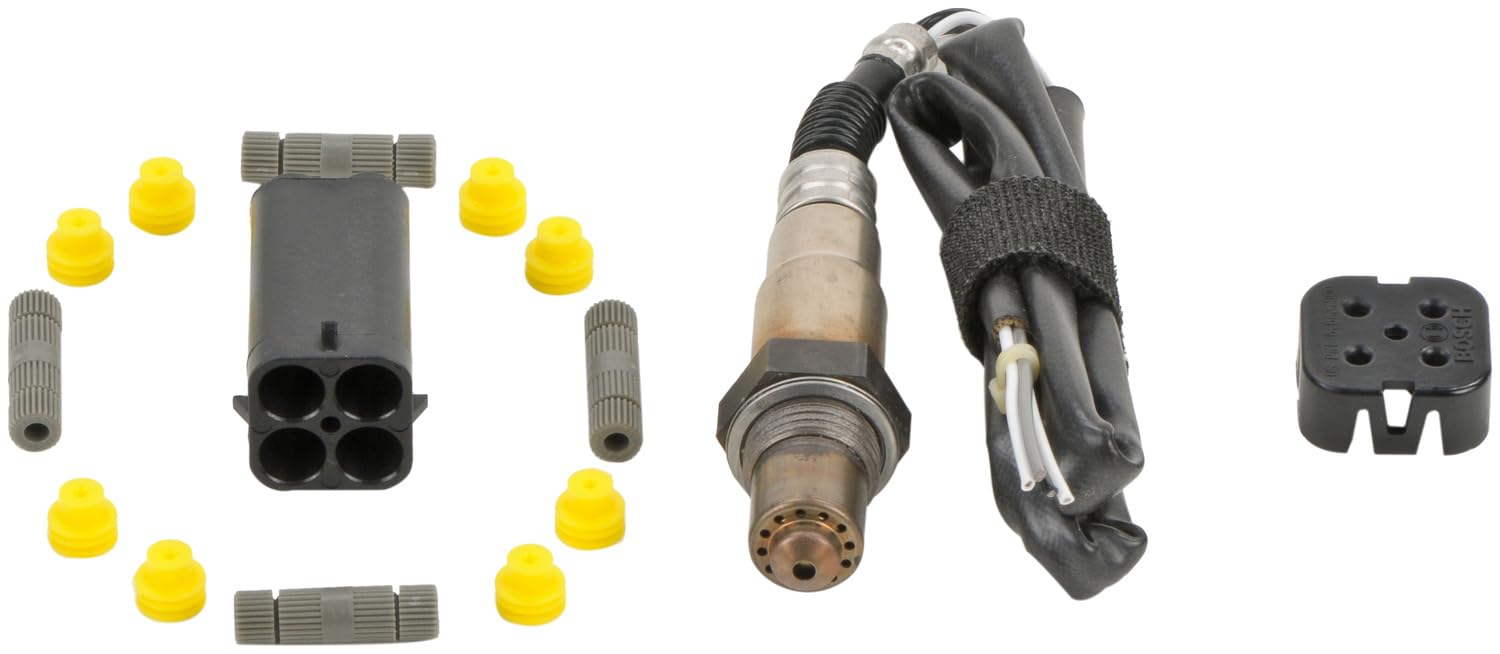
A direct-fit sensor has the exact connector and wire length of the factory part. You unplug the old one and plug the new one in — no cutting or splicing. A universal sensor (usually 4-wire) comes with a bare connector you must crimp or solder yourself. Direct-fit saves time; universal saves money and works when the factory harness is damaged.
Wire Count and Heater Type
Most modern vehicles use a 4-wire heated sensor. Two wires are for the signal, and two power a tiny internal heater that gets the sensor working in seconds. Older vehicles may use 1, 2, or 3-wire sensors. Using the wrong wire count will cause the sensor to read slowly or trigger a fault code.
Quick Comparison
| Model | Best For | Wire Count | Mounting Type | Weight | Amazon |
|---|---|---|---|---|---|
| BOSCH 15284★ Best Overall | Best Overall | 4-Wire (Heated) | Threaded | 0.15 Pounds | Amazon |
| BOSCH 15733Top Value | Damaged Harnesses | 4-Wire (Universal) | Threaded | 4 ounces | Amazon |
| A-Premium OS129CPCBudget Champion | Late-Model GM 3.6L | 4-Wire (Heated) | Threaded | 0.14 Kilograms | Amazon |
| Delphi ES10966 | Classic GM Trucks | 4-Wire | Flange Mount | 4 ounces | Amazon |
| Sangyue 2PCS Kit | Dodge/Jeep 2.4L | 4-Wire | Flange Mount | 0.2 Kilograms | Amazon |
| Walker 350-34039 | Jeep Wrangler | 4-Wire | Flange Mount | 0.24 Pounds | Amazon |
| Denso 234-4012 | GM OBD-I & II | 4-Wire | Threaded Mount | 4 ounces | Amazon |
| GM Genuine 213-4537 | Equinox/Terrain | 4-Wire | Flange Mount | 0.22 Pounds | Amazon |
| NTK 23162 | Chrysler/Dodge | 4-Wire | Threaded | 1.44 ounces | Amazon |
In‑Depth Reviews
1. BOSCH 15284 Premium OE Fitment Oxygen Sensor
Our pick — over 4.5★ from 500+ verified ratings; the strongest balance of quality and price.
The sensor that wrote the book on O2 sensing — Bosch invented the thing in the 1960s.
This direct-fit sensor comes ready to install with the factory-style connector and threads pre-coated with anti-seize compound. You pull the old one out, spin this one in, and plug it up. The exclusive double laser-welded stainless steel body is fully submersible and sealed tight against exhaust contaminants, which is why so many buyers report it lasting well beyond typical service life.
Buyers on a 2004 Chevy Silverado 5.3L say it “drastically improved MPG” and cleared the check engine light immediately. A 2005 Tahoe owner confirms the same. The fast-acting heater brings the sensor to operating temperature in seconds, so your engine stops guessing the air-fuel mix almost right away. The catch: this is a specific OE-fitment part — verify your year, engine, and sensor position (upstream vs. downstream) using the fit checker, because it will not work for every 2000s GM truck.
OE fitment reliability
- Direct-fit OE connector and harness – no wiring work
- Double laser-welded stainless steel body resists corrosion
- Fast-acting heater reaches operating temp in seconds
- Top-rated at 4.6 stars with nearly 550 ratings
premium price point
- Limited vehicle compatibility – mainly GM 5.3L / 4.8L V8s from the early 2000s
- Some owners mention the check engine light persists if the PCM dislikes the switching rate
reach for this if: you own a 2003-2006 GM truck or SUV with a 4.8L or 5.3L and want a proven direct-fit swap with no splicing.
think twice if: your vehicle falls outside the compatibility list — this sensor is not a universal part, so verify fitment before buying.
2. BOSCH 15733 Premium Universal Fitment 4-Wire Oxygen Sensor
The universal hero when your factory connector is too far gone to reuse.
Sometimes the original wiring harness gets brittle or the connector breaks. That is exactly what Bosch designed this universal sensor for. It includes an OE Smart Link Connector that requires no soldering — just strip, crimp, and click — and two feet of sensor wire to replace damaged cables. The stainless steel body is fully submersible and sealed tight. Functionality is the standout here, with 137 owners calling it out as the reason they bought it.
One owner on a 2001 Audi TT 1.8T Quattro says the wiring install was easy with great instructions, cleared the engine light, and ran thousands of miles without issues. A 2005 Mercedes C230 owner says using this sensor passed a smog test and saved 70% versus a shop quote. The universal fit means it works on mid-1990s and newer vehicles from most domestic, Asian, and European makers. The recurring real-world verdict: “It did its job for 7 1/2 years — pretty impressive for a five-year part.” Installation is mixed, though — some find the connector tricky to seat, so take your time with the splice.
universal wiring ease: you are dealing with a damaged harness or a non-standard connector — the universal splice kit lets you adapt where a direct-fit would not. installation complexity: 83 buyers rated installation as mixed, mostly due to the connector; patience with the splice pays off in a reliable long-term fix.
3. A-Premium O2 Oxygen Sensor (OS129CPC)
A friendly price tag for late-model GM 3.6L V6 owners tackling a DIY fix.
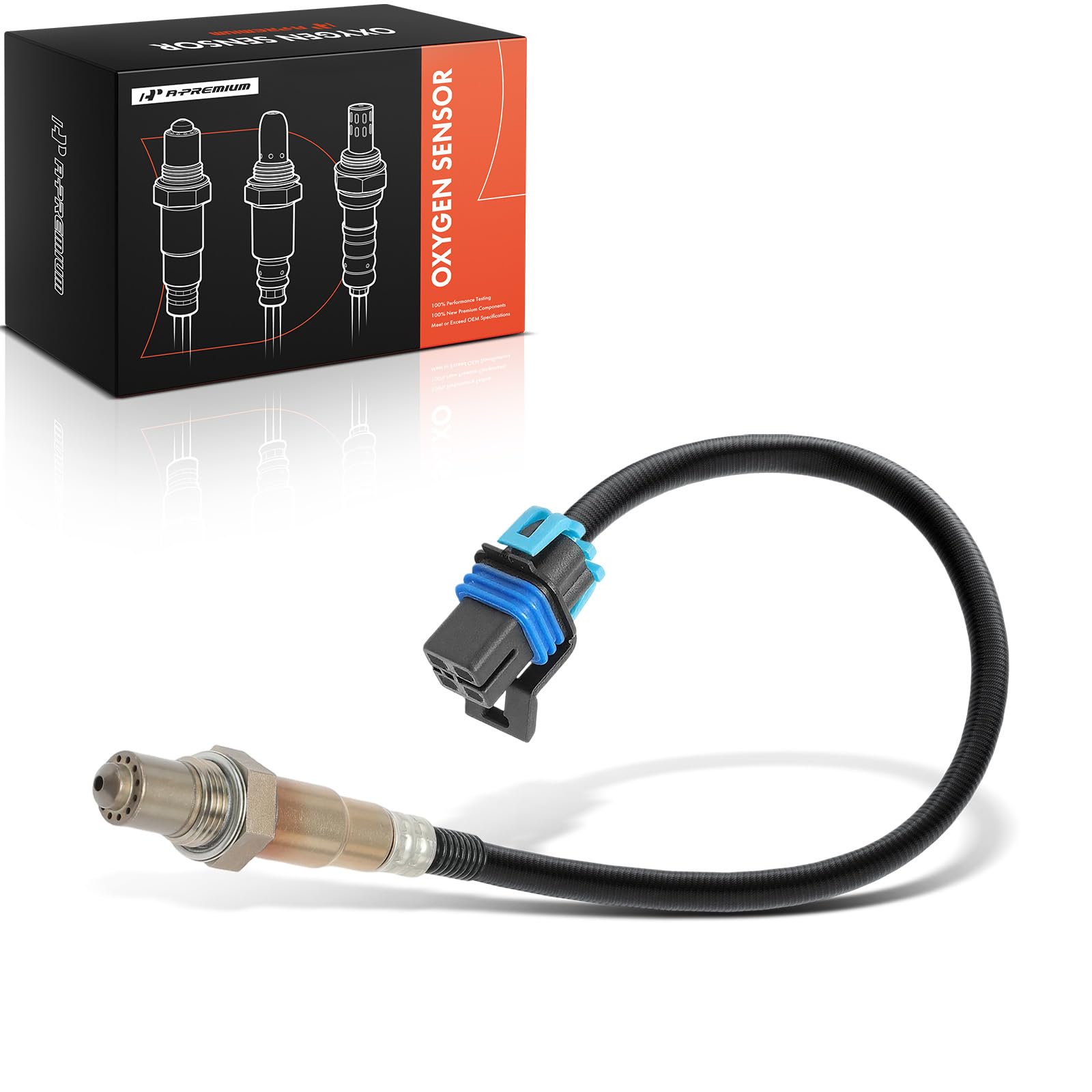
This 4-wire heated sensor is purpose-built for the GM 3.6L engine family — think Buick Enclave, Chevy Traverse, GMC Acadia, and Cadillac ATS. It is a threaded mount with an overall length of 375 mm, and it works for either upstream or downstream positions. The standout point among owners is fit — 7 buyers specifically praised how it lined up and threaded in without forcing. “Fit perfectly problem solved” is the most common refrain.
A DIY owner on a 2014 Chevy Traverse says it saved a shop estimate, took three hours for a non-skilled mechanic, and has run four months with zero problems. The one-year unlimited-mileage guarantee adds confidence. The mixed area is reliability — 7 owners flagged that their engine light remained on after installation. That could be a sensor position mismatch (upstream vs. downstream) or a vehicle incompatibility, so double-check that your exact model is on the compatibility list before buying.
great pick if: you drive a Chevy Camaro, Traverse, Equinox, or similar 3.6L GM vehicle and want a budget-friendly direct-fit.
better to skip if: your vehicle is not on the extensive fitment list — the compatibility is tight and a wrong guess could trigger the check engine light again.
4. Delphi Oxygen Sensor ES10966

OEM-grade match for first-gen S-10s and 90s GM trucks that wants the factory brand.
Delphi uses patented planar sensor construction and unique sensor-coatings that protect against contaminants — the kind that trigger false check-engine lights and premature failure. This sensor comes as a flange-mounted 4-wire unit and is an exact OEM match for vehicles like a 1991 S-10, a 1995 GMC C2500, and a 2003 GM LS engine swap. The dominant praise is functionality — 15 owners highlight that it reads correctly and solved their check engine light.
One owner on a 1991 first-gen S-10 says it “works and was super easy to replace” and fits just like the original. A 1995 GMC C2500 owner confirms it is an exact OEM match and recommends Delphi for GM vehicles. The rub is connectivity — a few owners note that off-center pins in the connector can cause intermittent issues. Check the connector alignment closely during installation. Unlike direct-fit sensors, this one uses a flange mount, so make sure your vehicle’s bung matches.
best for: owners of 1990s-2000s GM trucks, S-10s, or LS-swap builds who want a factory-quality sensor without the dealership cost.
look elsewhere if: you need a simple threaded direct-fit — the flange mount and potential connector pin issues demand a bit more attention during install.
5. Sangyue 2PCS Oxygen O2 Sensor Kit for Dodge Journey 2.4L

Two-sensor kit that covers the Dodge/Jeep/Chrysler 2.4L family in one box.
This is a two-piece kit — one upstream, one downstream — purpose-built for the 2.4L engine found in the Dodge Journey, Jeep Compass, Chrysler 200, and PT Cruiser, among others. The sensors are made of aluminum oxide and stainless steel, and buyers highlight quality (10 mentions) and value for money as the top positives. One owner on a 2011 Dodge Caliber 2.0L says these worked right away and did not have the three-day reset delay that the previous set caused.
Functionality is the most-discussed aspect with 12 mentions, and the sentiment is mixed: while most say it works perfectly, a 2017 Dodge Journey owner reports the sensor caused error P2096 on the same day of installation. That points to the importance of verifying that your exact model year and engine combination are on the fitment list. The kit covers 2011-2020 Dodge Journey 2.4L along with a long list of Chrysler, Jeep, and Dodge applications, so cross-reference carefully before pulling the trigger.
smart buy if: you need both upstream and downstream sensors for a 2.4L Chrysler/Jeep/Dodge and want the convenience of a matched pair at a reasonable price.
proceed with caution if: your model year is at the edge of the compatibility list — a handful of customers note it triggers codes on specific vehicles, so verify first.
6. Walker Products 350-34039 Oxygen Sensor

A protective coating and platinum electrode layer for long-term accuracy.
Walker coats this 4-wire direct-fit sensor with gas-permeable platinum electrodes for accurate oxygen sensing, plus a protective coating that resists erosion from combustion residue and exhaust particulates. The result is a sensor that maintains consistent readings over time. The chorus from owners is overwhelmingly positive: the sensor works well, fixed check engine lights, fits perfectly, and offers great value for money. One owner says it took about 30 minutes to replace all four sensors on a Wrangler, and after a year of use, there were zero codes.
Functionality leads the positive mentions with 40 callouts, followed by quality (11) and fit (8). The sensor is about half the cost of a brick-and-mortar auto parts store. One owner summed it up: “1/2 the cost of auto parts stores and does the same job. Over a year of use and no codes.” The trade-off is that this is a flange mount, so your vehicle’s bung must match — it is not a threaded universal that fits every car. It works on a 2013 Jeep Wrangler and similar models, but confirm fitment through the Amazon checker.
go with this if: you want a direct-fit platinum-electrode sensor with strong owner recommendations for Jeeps and GM vehicles — the protective coating is a genuine durability upgrade.
skip it if: your vehicle uses a threaded mount or a non-standard bung — the flange mount may not match.
7. Denso 234-4012 Oxygen Sensor

The manufacturer-recommended brand that rescued owners from failed aftermarket sensors.
Denso is one of the world’s largest suppliers of original equipment sensors, and the 234-4012 is a 4-wire narrow-band sensor with a 15.35-inch wiring harness. It features corrosion-resistant stainless steel construction, a PTFE filter that blocks efficiency-robbing contaminants, and a refined zirconia element for faster sensor response. This sensor covers a huge range of GM, Honda, Isuzu, and Daewoo vehicles from the mid-1990s to early 2000s.
The most telling story comes from an owner who tried Bosch and another brand first — both failed and one even caused a catalytic converter failure. After switching to Denso, the faults cleared on the first start-up. A Silverado owner shares the same experience: “Denso O2 sensor resolved faults after Bosch and another brand failed.” For 1998-2005 S10/Blazer 4.3 Vortec owners, it is a direct-fit that resolves rough idle and high fuel consumption in about 30 minutes. One important fitment note: for a 2001 Chevy Silverado 4.8L, the correct part is Denso 234-4650, not the 234-4012 — always check fitment on your specific year and engine.
Denso precision: Denso is the sensor that GM and Honda trusted for factory builds, and the owner data backs up the reputation — it is particularly dominant for 1996-2002 Chevy/GMC trucks and Blazers. higher cost: Amazon’s fitment checker can be wrong on some Silverado 4.8L years, so verify the connector plug shape before ordering.
8. GM Genuine Parts 213-4537 (12606671) Heated Oxygen Sensor
The dealership part without the dealership markup — GM-specific, down to the connector.
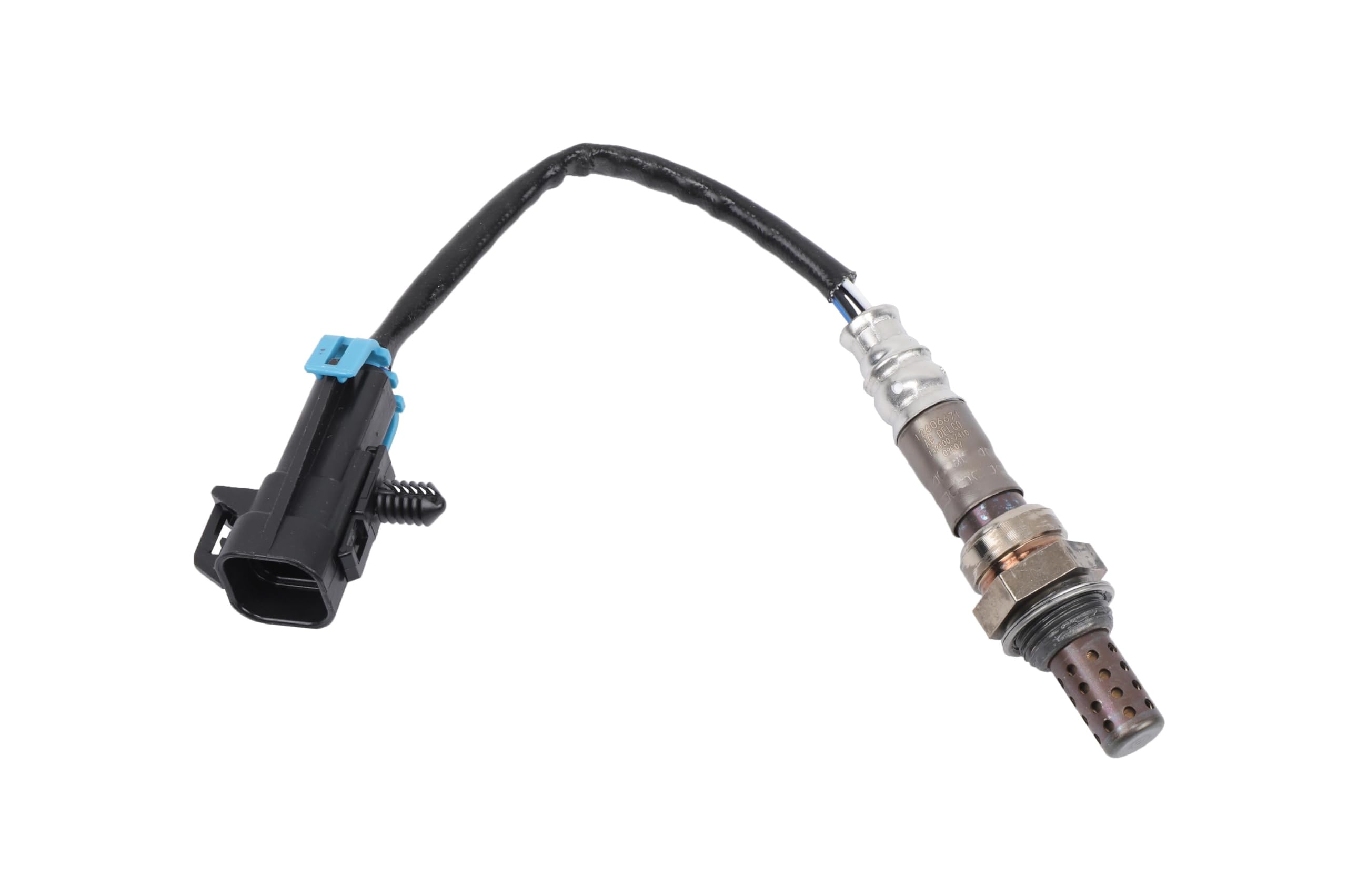
This is a genuine GM Genuine Parts heated oxygen sensor, manufactured to GM OE specifications for fit, form, and function. It detects oxygen content in the exhaust gases to tune emissions and fuel economy. For owners of GM vehicles like the 2011 GMC Terrain and 2013 Chevy Equinox, it is a direct swap — exact configuration of the connector, length, and sensor itself. Reliability leads the positive feedback with 29 mentions, followed by quality (22) and fit (18).
One owner on a 2013 Chevy Equinox says it was the OEM replacement for a vehicle that never had the sensor changed, and after the swap, there were zero dashboard errors. Another owner chasing a P0053 code (heated O2 sensor) tried aftermarket sensors with no luck — switching to this GM part fixed the car in under 30 minutes and saved versus the local parts store. The mixed feedback is around the “replacement part” category — some reviewers point out receiving units that looked non-new, though they still functioned correctly. Inspect yours on arrival.
pick this if: you own a GM vehicle from the 2010s (especially the 2.4L Equinox, Terrain, or Malibu) and want an exact OE replacement with no guesswork.
pass if: you drive a non-GM brand or an older GM vehicle — this is vehicle-specific for late-model GM platforms.
9. NTK 23162 Oxygen Sensor

The sensor that Chrysler/Dodge owners learn to buy the hard way — after the cheap ones fail.
NTK is NGK’s OE sensor division, and the 23162 is a corrosion and abrasion-resistant unit made from metal and ceramic. It is a vehicle-specific direct-fit sensor that weighs just 1.44 ounces. Functionality is the top praise with 29 mentions, and quality is second with 17. The most revealing owner story comes from a Dodge Caravan owner who admits, “I found out the hard way by replacing for two generic brand with + for 2 NTK.” That is the recurring theme: Chrysler and Dodge vans are notoriously sensitive to knock-off sensors, and NTK is the brand that actually works.
On a 2016 Jeep Wrangler and a 2015 Ram 1500 5.7L, shoppers say the sensor worked without issues, improved MPG, and showed consistent readings right away. A 2014 Town and Country owner says it was an easy direct-fit installation that cleared the check engine light and improved smoothness. The higher upfront cost compared to generic brands is the trade-off, but the owner consensus is clear: buy once, cry once. As one review put it: “Just buy these and do the job once.”
essential for: Dodge Caravan, Ram, Jeep Wrangler, and Chrysler Town and Country owners who have had sensor issues with cheaper brands — NTK is the fix that sticks.
not needed if: your vehicle is not sensitive to sensor brand — for many older GM trucks, a well-regarded aftermarket sensor works fine without the premium price.
Understanding the Specs
Wire Count
The number of wires tells you how the sensor communicates with your engine computer. A 1-wire sensor has just a signal wire — it relies on exhaust heat to warm up, which takes minutes. A 3-wire adds a ground. A 4-wire sensor (the modern standard) has two wires for the signal and two for an internal heater, so it reaches operating temperature within seconds. If your car came with a 4-wire sensor, a 1-wire replacement will cause slow readings and a check engine light.
Planar vs. Thimble Design
Older oxygen sensors use a “thimble” design — a finger-shaped zirconia element that heats up slower. Newer planar sensors (like most Bosch and Denso models) sandwich the sensing layer flat against a heater, so they warm up faster and react quicker to changes in the air-fuel ratio. Planar sensors are the standard for modern emissions control and generally last longer.
FAQ
How do I know if my oxygen sensor is bad?
Can I use a universal sensor instead of a direct-fit one?
How often should an oxygen sensor be replaced?
Will a new oxygen sensor improve my gas mileage?
What is the difference between upstream and downstream O2 sensors?
Do I need to reset the ECU after replacing an O2 sensor?
Why does my check engine light come back after replacing the sensor?
Can a bad O2 sensor damage the catalytic converter?
Final Thoughts: The Verdict
The best oxygen sensor for most owners is the BOSCH 15284 because it combines Bosch’s decades of OE experience with a direct-fit design and a stainless steel body — no wiring, no fuss, and proven reliability on GM trucks. If you need a universal fix for a damaged harness, the BOSCH 15733 covers virtually any 4-wire application. And if you own a Chrysler van, a Ram truck, or a Jeep and have struggled with cheap sensors, the NTK 23162 is the one that stops the headache for good.
How We Picked
We do not accept paid placement. Every pick is matched to a real buyer and a real use-case; we do not hands-on test units.
Sources & Methodology
Specifications: manufacturer listings and product documentation. Review insights: verified customer reviews, as of July 2026. Pricing: not shown on this page (it changes often); check the current price via the retailer link.
As an Amazon Associate, Trending Car earns from qualifying purchases. This does not affect which products we feature.