
Our readers keep the lights on and my garage snacks stocked. As an Amazon Associate, I earn from qualifying purchases.
Specs are compiled from manufacturer listings and verified buyer reviews and can change over time — please confirm the key details on the product page before buying.
GDI engines (Gasoline Direct Injection, where fuel sprays straight into the cylinder instead of the intake port) give you great power and fuel economy, but they also coat intake valves with carbon over time.
I’m Min Islam — the founder and writer behind Trending Car. This guide is built by comparing the manufacturers’ published specifications and the patterns across verified customer reviews, so you get each pick’s real strengths and trade-offs instead of marketing spin.
Whether your daily driver is a turbocharged Ford, a Subaru Outback, or a Toyota Camry, the right oil for gdi engines keeps your valves cleaner longer, cuts sludge, and blocks LSPI.
Our Picks at a Glance
How To Choose The Best Oil for GDI Engines
GDI engines spray fuel directly into the combustion chamber, bypassing the intake valves. So the oil has to lubricate the engine and also keep those valves free of carbon buildup. Focus on three things: the certification level, viscosity, and whether it is full synthetic with low ash content.
API SP & dexos1 Gen3 Certifications
API SP (the latest gasoline-engine oil standard from the American Petroleum Institute) specifically blocks LSPI, prevents timing-chain wear, and controls deposits — all critical for GDI engines. dexos1 Gen3 (GM’s own certification) goes further, with stricter limits on volatility (how easily the oil vaporizes) and deposit formation. If your car is a modern turbo GDI, you need one of these on the bottle.
Viscosity Grade (0W-20 vs 5W-30)
Most modern GDI engines recommend 0W-20 because it flows well in freezing cold (the “0W” means winter-grade, so the oil stays fluid in low temperatures) and saves fuel (the “20” means a thin film at operating temperature). Some engines, especially in older models or higher-performance builds, may call for 5W-30. Check your owner’s manual first — the wrong viscosity can hurt fuel economy and protection.
Full Synthetic Base Oil
Conventional or blend oils break down faster under the high heat and pressure of a turbocharged GDI engine. A 100% full synthetic resists thermal breakdown and stays cleaner longer, reducing sludge and varnish. Look for “100% synthetic” or “full synthetic” on the label.
Quick Comparison
In‑Depth Reviews
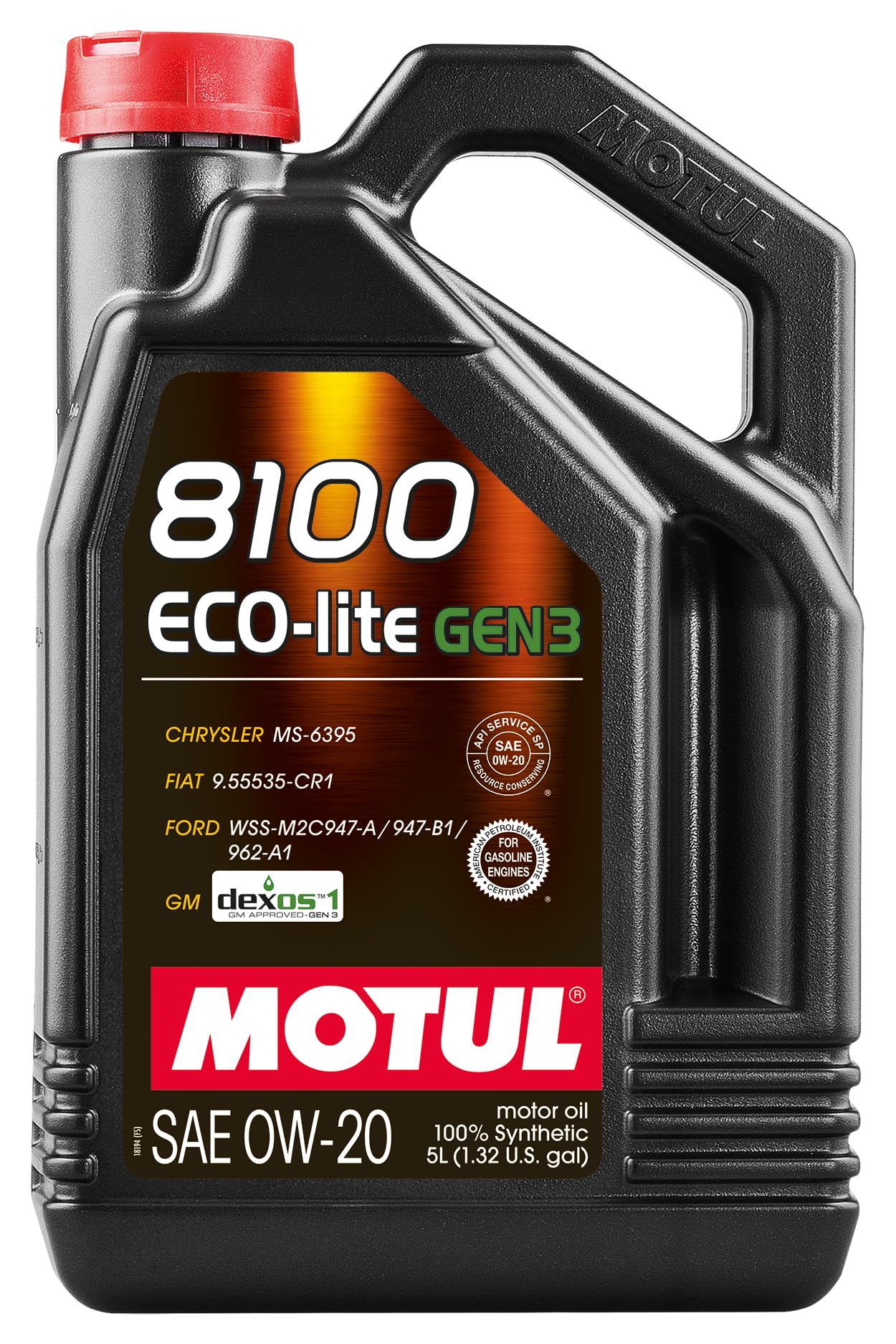
1. Motul 8100 ECO-lite 0W-20 Full Synthetic Motor Oil
Our pick — over 4.5★ from 700+ verified ratings; the strongest balance of quality and price.
This premium synthetic boosts real-world gas mileage by up to 3 MPG, according to buyers, while protecting your GDI engine from LSPI.
This 100% synthetic 0W-20 oil from Motul withstands extreme heat with a flash point of 433 degrees Celsius — the temperature where oil vapor catches fire, so it stays stable inside a turbocharged direct-injection engine. It meets both API SP and the tougher dexos1 Gen3 standard, giving you certified protection against LSPI and timing-chain wear.
Buyers report a standout result: a Subaru Crosstrek owner said “I have increased my average gas mileage by 3 MPG city driving” after switching to Motul. The same reviewer noted the oil still looked amber at a 6,000-mile change, less dirty than Mobil 1. It comes as 5 liters (roughly 5.3 quarts) in one jug — 20% more volume than the Idemitsu IFG3’s 5 quarts, enough for most oil-change intervals.
One trade-off: a long-time buyer says the price increased, making it a premium pick. But for drivers who want the highest thermal stability and a real shot at measurable MPG gains, this is the one.
Standout Strengths
- Real owner reports of 3 MPG city-driving improvement
- 433°C flash point means extreme heat stability in turbo GDI engines
- API SP and dexos1 Gen3 certified — covers LSPI, timing-chain wear, and deposit control
Honest Limitations
- Cost more than before, per a verified buyer
- 5-liter bottle means you need a separate quart for engines that need a full 6-quart fill
Choose if you want: the best chance at a noticeable fuel-economy boost and the highest-grade thermal protection for your turbo GDI.
Look elsewhere if: you want the lowest per-quart price or your engine takes exactly 6 quarts — you will be roughly 0.3 quarts short of a full 6-quart change.
2. Havoline PRO-DS 0W-20 Full Synthetic Motor Oil
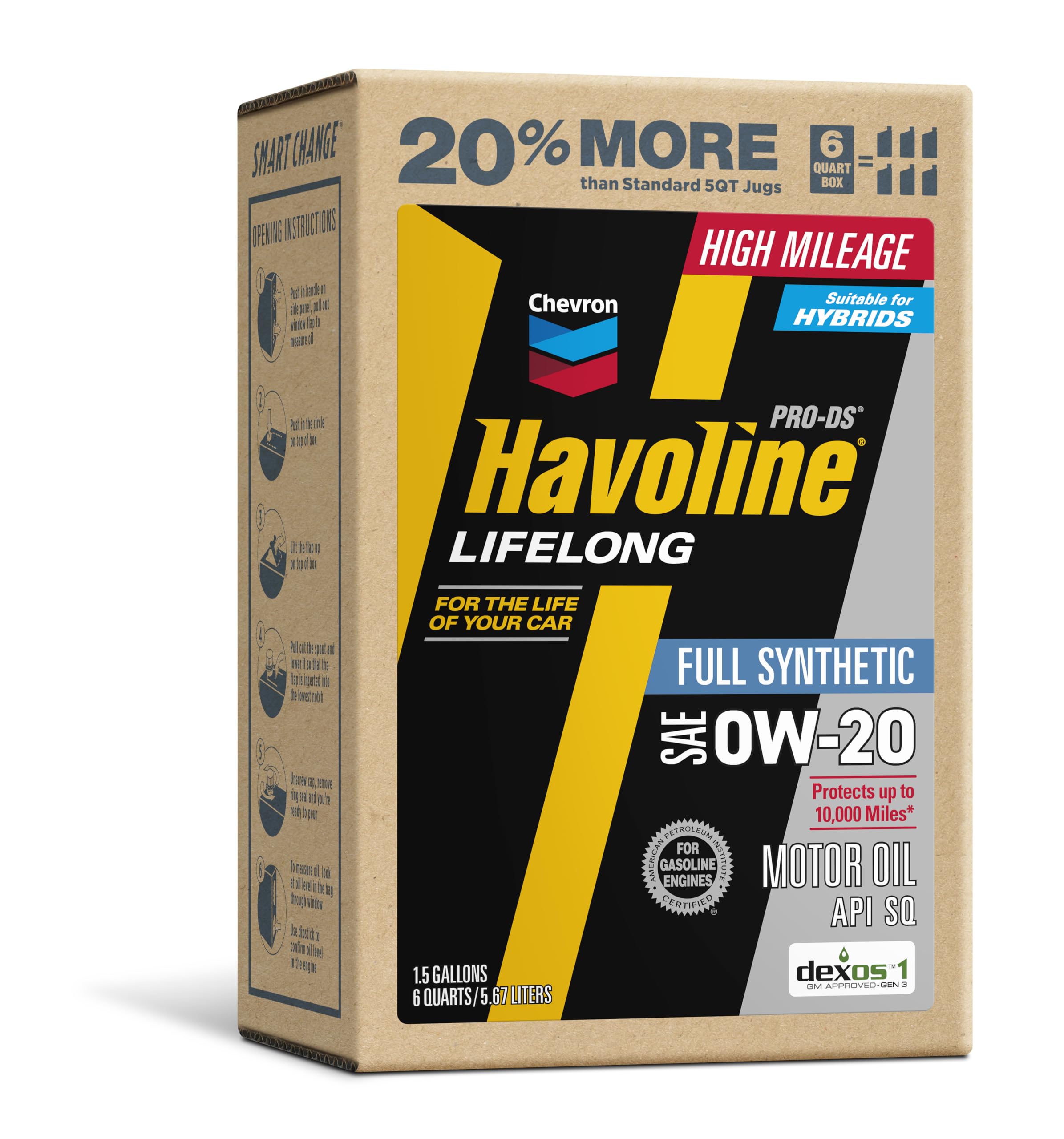
The 6-quart box undercuts the competition while matching the top-tier LSPI protection — and gives you a full fill without an extra bottle.
Havoline’s PRO-DS formula delivers the same critical LSPI mitigation as the premium Motul, but in a 6-quart pack ideal for many trucks and SUVs. Unlike the Motul’s 5-liter jug, which leaves you about 0.3 quarts short of a 6-quart fill, this box gives you exactly six quarts. One buyer called it “best oil value and packaging out there,” and another said they are “never going back mobile 1.”
Owners mention the cost per quart is low, and the single cardboard box is recyclable with a pour-friendly bag inside that avoids the glug-and-mess of traditional jugs. It meets API SP standards and specifically targets turbocharged direct-injection engines — but unlike the Motul, it does not carry the stricter dexos1 Gen3 certification, so newer GM engines may need the Motul.
The Amazon product description says it provides “unsurpassed protection against sludge, varnish and deposit buildup” — exactly what a GDI engine needs to keep intake valves cleaner. It also covers bearings and turbocharger durability for high-mileage drivers.
Performance per dollar: tough to top at this price point. The lack of dexos1 Gen3 is the only spec gap.
Best suited for: GDI owners who want a full synthetic with proven LSPI protection at the lowest per-quart cost — especially for vehicles with a 6-quart oil capacity.
One thing to note: No dexos1 Gen3 certification, so newer high-performance GM direct-injection engines may be better matched with the Motul.
3. Idemitsu IFG3 0W-20 SP/GF-7A Full Synthetic Motor Oil
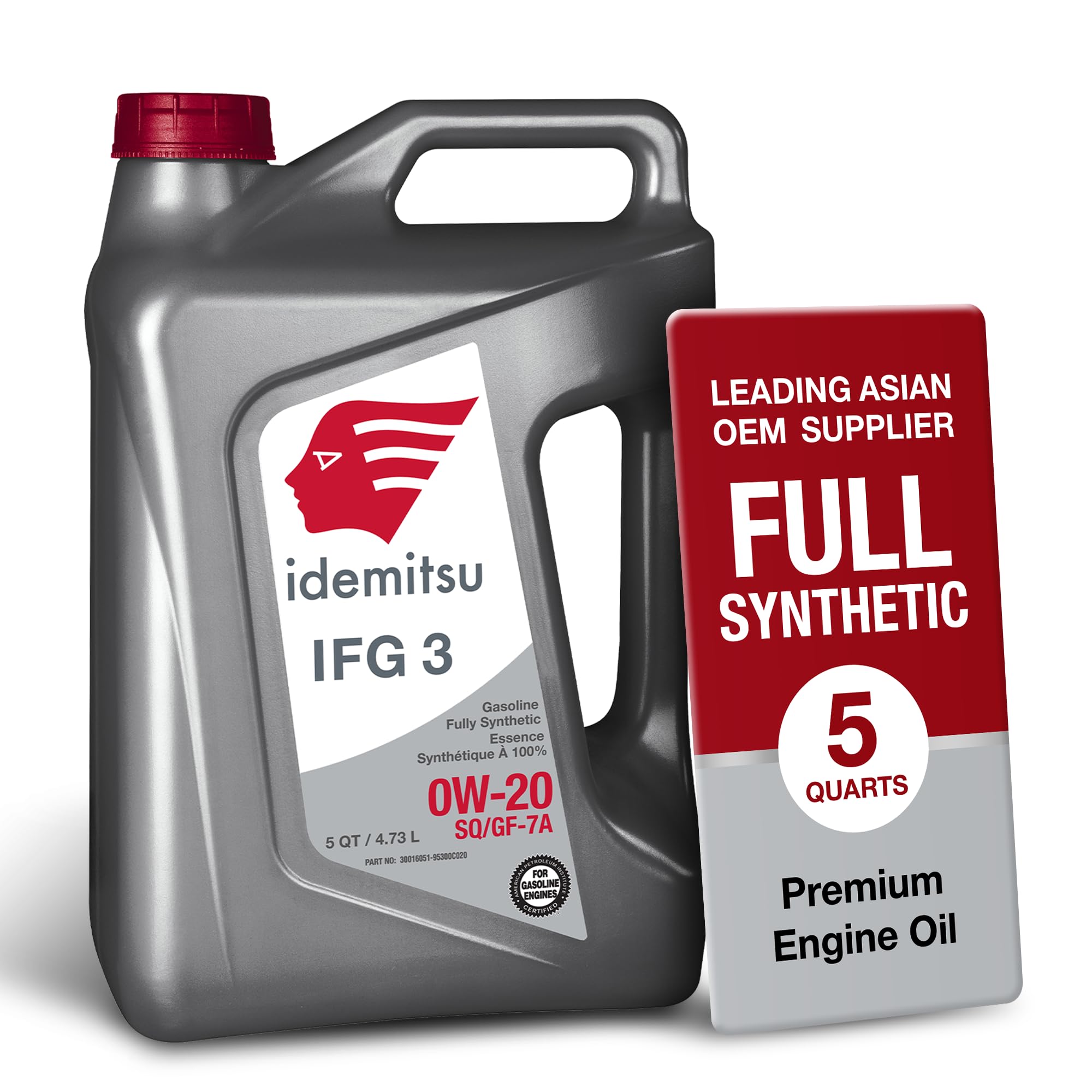
The Subaru dealer oil in a bottle — trusted by a tech who uses it daily — at a lower price than the dealer charges.
Idemitsu is a Japanese refiner that supplies many Asian automakers. The IFG3 formula meets SP/GF-7A (the latest standard from the International Lubricant Standardization and Advisory Committee), which emphasizes fuel economy and protection for turbo engines. A buyer who works as a Subaru tech said: “It’s the same stuff they use at the dealer. Its the best synthetic oil you can get for the cost. Also GF-7A is the latest in protection with turbo engines.”
One owner ran this 0W-20 for about 25,000 miles, changing it every 3,000 to 4,000 miles in a 2021 Subaru, then sent a sample to Blackstone Laboratories for analysis. The result: “engine is healthy, no issues.” Another put it in a Lexus IS300 and said the car “runs a lot smoother than before.” The 5-quart bottle holds at 5 quarts versus the Havoline’s 6-quart box, so for engines needing 6 quarts, you need another quart. But many Asian GDI engines take 5 quarts, making this a perfect match.
It also has advanced additive technology to protect against LSPI, making it a solid mid-range option for Toyota, Subaru, and Honda vehicles.
Why it wins for Asian makes
- Certified SP/GF-7A — the latest ILSAC fuel-economy standard
- Dealer-grade oil used by Subaru techs
- Real owner verified engine health at 25,000 miles with oil analysis
What to watch for
- 5 quarts is compared to the Havoline’s 6-quart — not enough for a full 6-quart change
- Does not carry dexos1 Gen3 certification, so not the top pick for newer GM engines
Reach for this if: you drive a Subaru, Toyota, Honda, or other Asian GDI engine and want the exact oil the dealer would pour in.
skip it if: your engine takes 6 quarts or you need a GM dexos1 Gen3 spec — the Motul or Havoline are better fits.
Understanding the Specs
API SP & ILSAC GF-7A
API SP (the latest gasoline-engine oil standard from the American Petroleum Institute) requires protection against Low-Speed Pre-Ignition (LSPI), timing-chain wear, and high-temperature deposits — all critical for GDI engines. ILSAC GF-7A (the next-generation fuel-economy standard from the International Lubricant Standardization and Advisory Committee) includes even tighter requirements for turbocharged engines. If your bottle has either of these labels, it meets current best practices for GDI protection.
dexos1 Gen3
This is GM’s own certification, which goes beyond API SP by setting stricter limits on volatility (how easily the oil turns to vapor), deposit formation, and shear stability (how well the oil holds its thickness under stress). It is required for GM vehicles but also indicates an oil formulated to fight intake-valve deposits in direct-injection engines more aggressively. If you drive a modern Ford, GM, or Chrysler GDI, look for dexos1 Gen3.
FAQ
Can I use regular synthetic oil in a GDI engine?
What does LSPI mean in GDI engines?
How often should I change oil in a GDI engine?
Does 0W-20 vs 5W-30 matter for GDI engines?
Is Motul oil worth the extra money?
Can I use Havoline PRO-DS in a turbocharged engine?
Is Idemitsu IFG3 the same as Subaru OEM oil?
What is the difference between 5 quarts and 6 quarts of oil?
Does GF-7A mean better fuel economy?
Which oil is best for high-mileage GDI engines?
Final Thoughts: The Verdict
For most drivers, the best oil for gdi engines is the Havoline PRO-DS 0W-20 because it delivers the same critical LSPI protection as the premium picks in a full 6-quart box at a low per-quart cost. If you want the highest thermal stability and a real shot at a 3 MPG gain, grab the Motul 8100 ECO-lite. And if you drive a Subaru, Toyota, or Honda and want the exact oil the dealer uses, the standout is the Idemitsu IFG3.
How We Picked
We do not accept paid placement. Every pick is matched to a real buyer and a real use-case; we do not hands-on test units.
Sources & Methodology
Specifications: manufacturer listings and product documentation. Review insights: verified customer reviews, as of July 2026. Pricing: not shown on this page (it changes often); check the current price via the retailer link.
As an Amazon Associate, Trending Car earns from qualifying purchases. This does not affect which products we feature.