
Our readers keep the lights on and my garage snacks stocked. As an Amazon Associate, I earn from qualifying purchases.
Specs are compiled from manufacturer listings and verified buyer reviews and can change over time — please confirm the key details on the product page before buying.
That glowing check-engine light is a gamble. It could be a loose gas cap, or it could be a catalytic converter. The right scanner tells you which before you ever step into a shop, and it pays for itself on the first use. This guide breaks down the best OBD2 scanners by what they actually do for you, separating simple code readers from full diagnostic powerhouses.
I’m Min Islam — the founder and writer behind Trending Car. This guide is built by comparing the manufacturers’ published specifications and the patterns across verified customer reviews, so you get each pick’s real strengths and trade-offs instead of marketing spin.
Whether you only want to clear a check engine light or need to run bidirectional tests, the best obd2 scanner for the money is the one that matches your skill level and your car’s needs.
Our Picks at a Glance


How To Choose The Best OBD2 Scanner for the Money
Choosing a scanner starts with an honest look at your own wrenching. If you just want to know why the light is on and turn it off, a basic code reader is enough. If you plan to bleed brakes, reset oil life, or test components, you need a bidirectional tool. Matching the tool to the job is what gets you the most value.
Decide: Code Reader vs. Full-System Scanner
A basic code reader talks only to the engine control module, which is where most emission codes live. A full-system scanner also communicates with the ABS, airbag (SRS), transmission, and other modules. If you own an older car and only see engine codes, save money with a reader. If you drive a newer or European vehicle, a full-system tool is often worth the jump.
Check the Protocol Support and Compatibility
Most cars from 1996 onward use the standard OBD2 port and one of the common protocols like CAN or ISO9141. If you shop for a newer model (2020+), look for CAN FD support, which is the newer, faster version of the CAN protocol. Some Chrysler, Dodge, Jeep, and Fiat models also need FCA AutoAuth to access certain modules.
Quick Comparison
| Model | Best For | Type | Connection | Screen | Amazon |
|---|---|---|---|---|---|
| ANCEL AD310★ Best Overall | Budget code reading | Code Reader | Cable | Monochrome | Amazon |
| TOPDON AL400Best Value | Compact code reading | Code Reader | Cable | 2.4″ Color | Amazon |
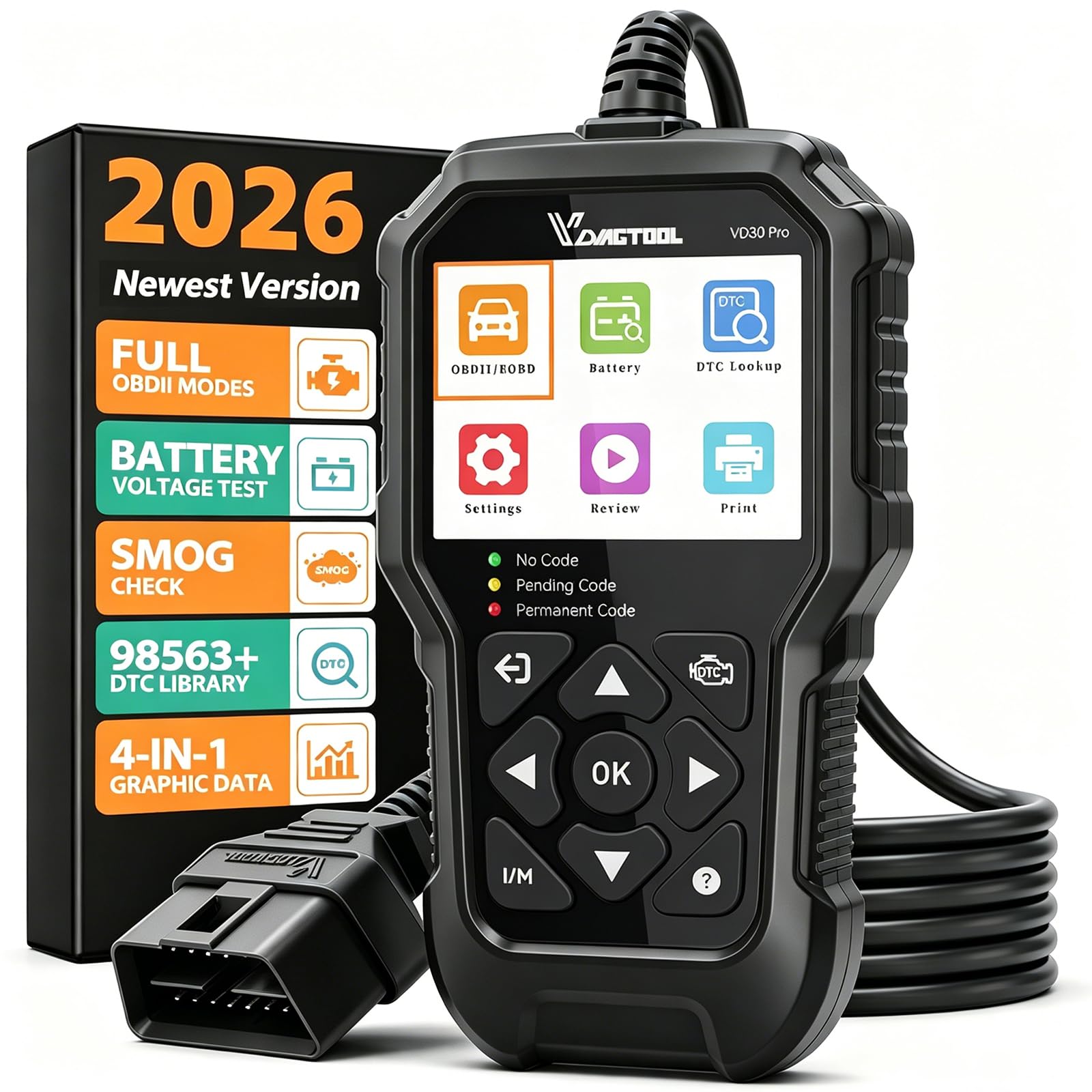
| VDIAGTOOL VD30 ProTop Performer | DIY diagnostics | Code Reader | Cable | 2.8″ Color | Amazon |
| XTOOL AD20 Pro | Wireless full-system | Full System | Bluetooth | Phone App | Amazon |
| A-Premium AD200 | Data-heavy reading | Code Reader | Cable | 1.77″ Color | Amazon |
| Autel AL549 | ABS + battery checks | Enhanced | Cable | 2.8″ Color | Amazon |
| KINGBOLEN Ediag Elite | Bidirectional DIY | Full System | Bluetooth | Phone App | Amazon |
| XTOOL A30D | Bidirectional + resets | Full System | Bluetooth | Phone App | Amazon |
| GEARWRENCH GWSMARTBT | Pro-grade on a budget | Full System | Bluetooth | Phone App | Amazon |
In‑Depth Reviews
1. ANCEL AD310
Our pick — over 4.5★ from 65,500+ verified ratings; the strongest balance of quality and price.
The gateway scanner that clears a stubborn limp-mode code when even disconnecting the battery won’t.
This is the crowd favorite for a reason — it nails the fundamentals. The AD310 reads and clears emission-related trouble codes in seconds, and it supports every OBD2 protocol, including KWP2000, J1850 VPW, ISO9141, J1850 PWM, and CAN. That means it talks to most 1996 US-based cars, 2000 EU-based and Asian cars, light trucks, and SUVs without drama.
It is a pure code reader, not a full-system tool, so it only handles emission-related issues. The 2.5-foot cable is thick and flexible, and the unit itself weighs 12 ounces, so it survives the drop when you reach across the engine bay. The 128×64 screen is large and clear, and the buttons are plainly labelled.
Buyers report that it works right from the start and matches the printouts from the parts store. As one owner put it, the scan tool said the same thing the report from AutoZone printed. The only real limitation is that it can’t read codes unrelated to the emission system, so if your ABS or airbag light is on, this isn’t the tool for that job.
What Wins People Over
- Functionality earns the most praise by far — thousands of owners single out how well it identifies problems.
- Ease of use is the second biggest draw, with a simple plug-and-play setup that needs no car knowledge.
- Gets power straight from the OBD2 port, so there are no batteries or chargers to worry about.
The Honest Limits
- It only diagnoses emission-related engine faults, not ABS, SRS, or other systems.
- There’s no printer capability, which a few owners note as a minor miss.
Reach for it if: you want a reliable, no-subscription way to read and clear engine codes on older or standard OBD2 cars.
Look elsewhere if: you need to diagnose ABS, airbag, or other non-emission systems.
2. TOPDON AL400
A pocket-sized code reader that explains the fault on its own screen, so you never touch a search engine.
The AL400 packs a lot of hand-holding into a very small body. It weighs just 7.8 ounces and measures 2.95 x 0.96 x 5.67 inches, which makes it far more compact than the bulky ANCEL AD310 above. Even better, the built-in DTC library explains what each code means right on the device, so beginners aren’t left wondering what “P0420” stands for.
It handles all the standard OBD2 functions — reading and erasing codes, viewing freeze frame data, and one-click I/M readiness checks. The 2.4-inch color screen is bright enough for a sunny driveway or a dark garage, and the 240×320 resolution keeps text crisp. The buttons are arranged for easy menu navigation, and the device supports seven languages.
Owners mention that it works beautifully across multiple vehicles, with the device itself decoding the codes. It runs all 10 OBD2 functions and gets free lifetime updates from TOPDON. The main trade-off is the same as any budget reader — it only covers emission-related systems, not ABS or airbag modules.
Pocket mechanic: this is the grab-and-go pick when you want a diagnosis explained to you, not just a code number.
Who it suits: first-timers and DIYers who want a simple, portable answer without an app.
Know the limit: skip it if you need full-system coverage; this one stays in the engine bay.
3. VDIAGTOOL VD30 Pro
A code reader with a built-in library of over 98,000 DTC definitions that speak plain English.
The VD30 Pro outperforms pricier rivals with a 2.8-inch color screen and a 320×240 resolution that makes live data graphs easy to read. It runs all 10 essential OBD2 tests, including one-click I/M readiness for smog checks and on-board monitor tests. The 4-in-1 graphing displays live data from four sensors at once, which is handy for watching fuel trims while you drive.
You get lifetime free updates via the included USB cable (you’ll need a Windows PC), so the tool stays current without extra cost. A 3-year warranty and 24/7 tech support back it up. The rugged, drop-resistant housing survives garage drops, and the built-in voltage test lets you check your battery before it dies and strands you. The DTC lookup library (a database of diagnostic trouble codes) explains faults in plain English, so you know what’s wrong, not just the code number.
Customers note it communicates well with multiple vehicles and that the live data pages and graphing are genuinely useful. One owner found a new gas cap was the fix, which saved a trip to the garage. The one catch is that it doesn’t support TPMS reset or diagnose ABS, SRS, or airbag systems — it’s an engine-focused tool with a very good screen.
Graphical edge: the color display and 4-point live data graphing are rare at this level, making it a joy to watch sensor behavior.
Data hoarder: data review, playback, and printing let you build a service report to hand your mechanic.
Not for brakes: it’s engine-only, so if ABS or airbag codes are your goal, look higher up this list.
4. XTOOL AD20 Pro
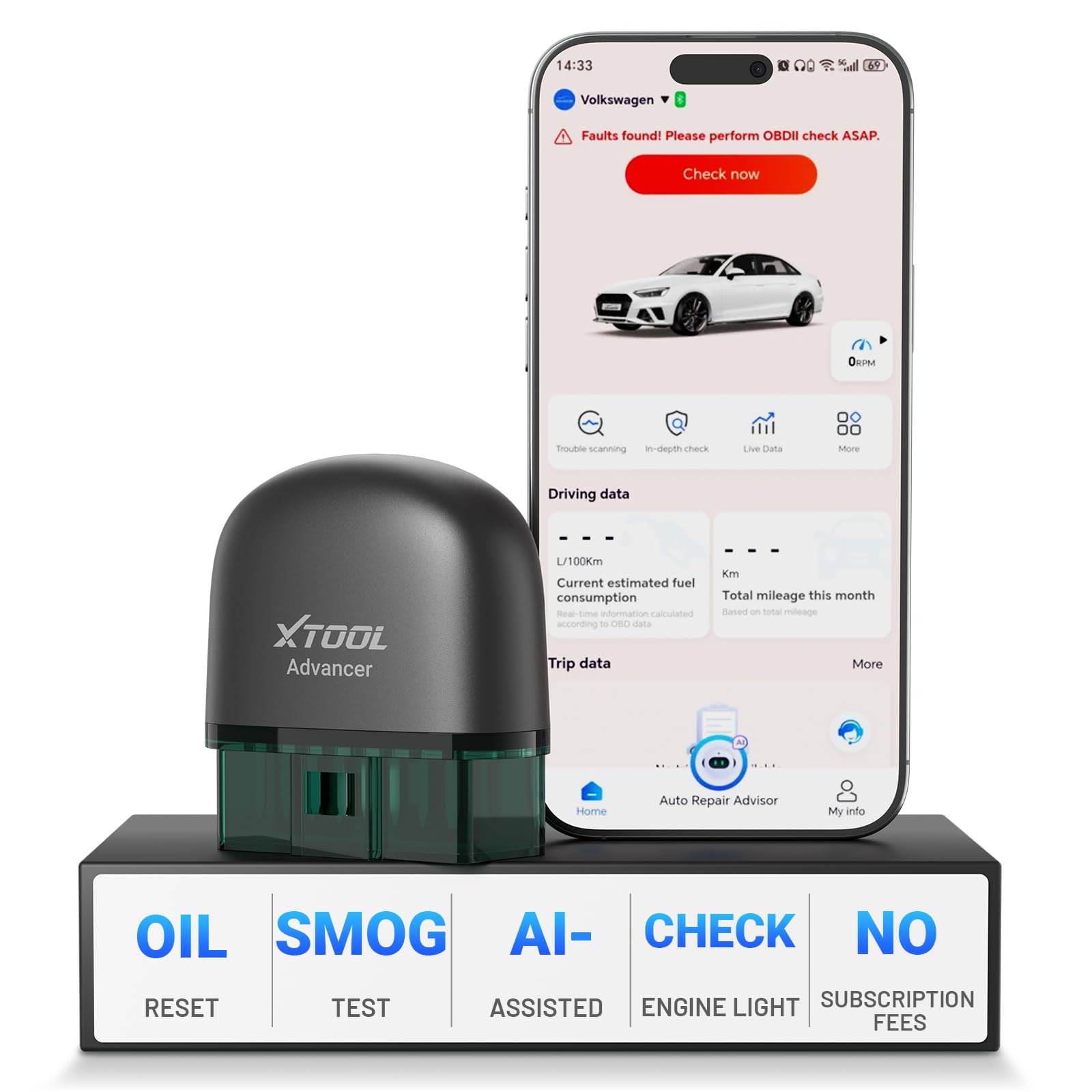
A feather-light wireless dongle that scans ABS, SRS, transmission, and TPMS, not just the engine.
The AD20 Pro is a genuinely different beast. It’s a full-system scanner that digs into ABS, airbags, transmission, TPMS, and even A/C, with a deep scan that catches problems a basic reader can’t see. It uses Bluetooth 5.0 for a wireless range up to 33 feet, and AutoVIN identifies your car’s make, model, and year the moment you plug it in.
It has no subscription fees and scans unlimited vehicles, making it perfect for a family with several cars or helping friends. The AI diagnostics analyze real-time sensor data to explain the root cause in plain English and suggest fixes. At just 1.13 ounces, it’s small enough to leave plugged into the OBD2 port, and the low-power sleep mode protects your battery when the engine is off.
Reviewers point out it works well across many brands, including Dodge, Mazda, Honda, Hyundai, Toyota, and BMW. One owner found emissions, ABS, SRS, and even non-obvious A/C codes on a single scan. The trade-off is that the app can be buggy — some shoppers say Bluetooth drops that need a dongle restart, and switching between vehicles initially takes some figuring out.
Why It Stands Out
- Full-system coverage catches ABS, SRS, and transmission issues a basic reader misses entirely.
- No subscription and unlimited vehicles make it a true one-time purchase.
Where It Trips Up
- Bluetooth connectivity is the most-discussed headache, occasionally requiring a restart.
- The app can’t save or view previous scan reports, which some owners find limiting.
Pick this for: full-system scans across multiple cars without any ongoing fees.
Avoid if: you want a cable-free tool with a rock-solid app connection every single time.
5. A-Premium AD200
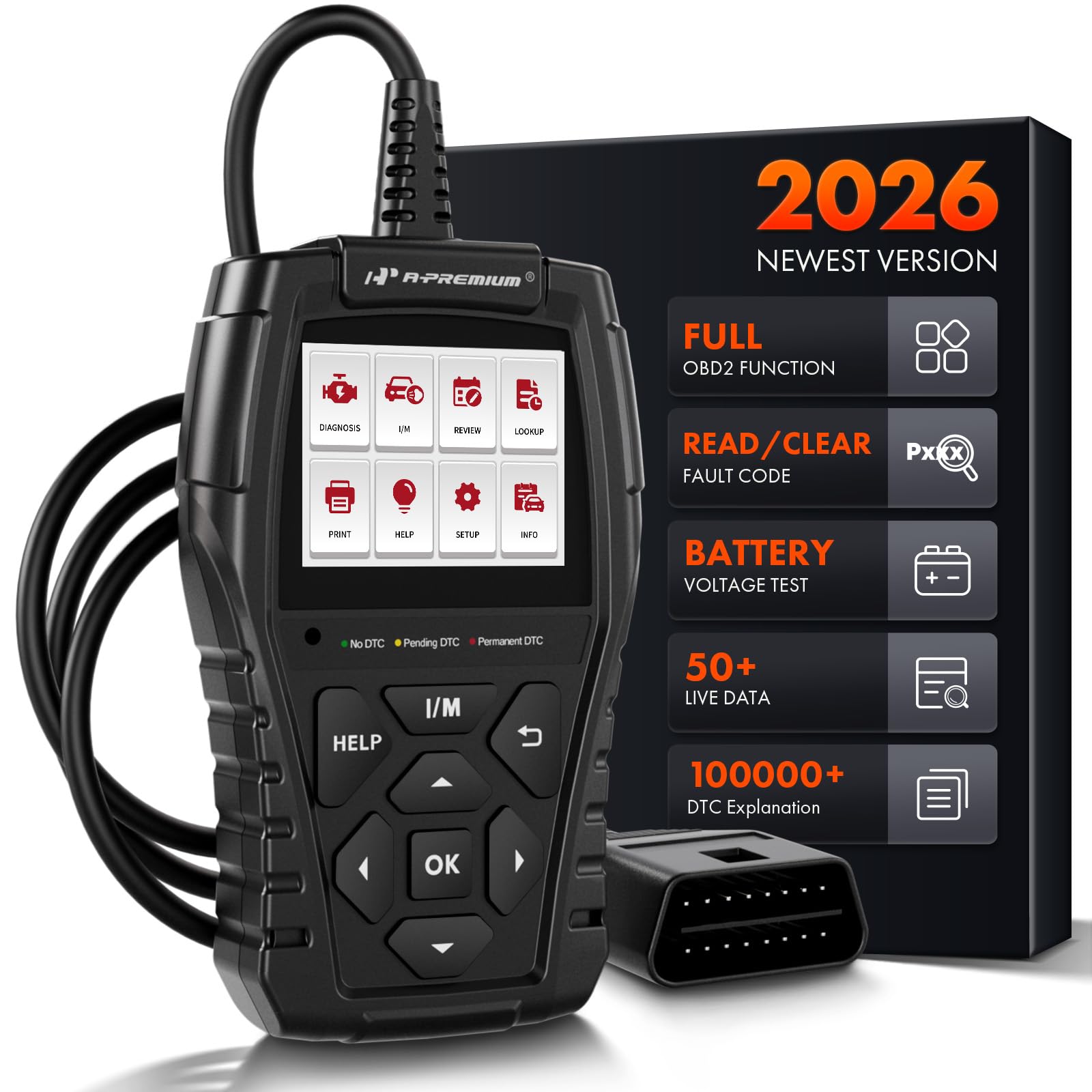
A 3.9-foot cable and 50 live data parameters make this the deep-dive choice for serious DIYers.
It reads up to 50 different live data parameters, from battery voltage and coolant temp to engine RPM and fuel rail pressure, and turns them into real-time visual curves. That’s a huge step up from basic readers, and it’s the kind of detail that helps you spot a failing sensor before it strands you.
The 3.9-foot-long cable is a standout — it lets you operate the scanner in tight or awkward positions without contorting. The body is strong plastic that survives drops, and the advanced ARM CPU is said to be three times faster than entry-level scanners. Three warning lights (green, yellow, red) tell you the seriousness of a fault at a glance, and the device can generate or print diagnostic reports.
Buyers report it saved hundreds on a Prius dealer diagnostic, and a first-time user fixed a fuel issue after reading, researching, and clearing the code. It supports 1996-2024 North American cars, 2000-2024 European cars, and 2008-2024 Asian cars. The catch is the 1.77-inch screen is on the small side, and some owners note the instructions could be clearer.
Data sponge: 50 live parameters and visual curves give you a mechanic’s view of engine behavior.
Long reach: the 3.9-foot cable is the longest on this list, and it makes awkward ports a non-issue.
Screen reality: the small 1.77-inch display means you’ll squint at dense data streams.
6. Autel AL549
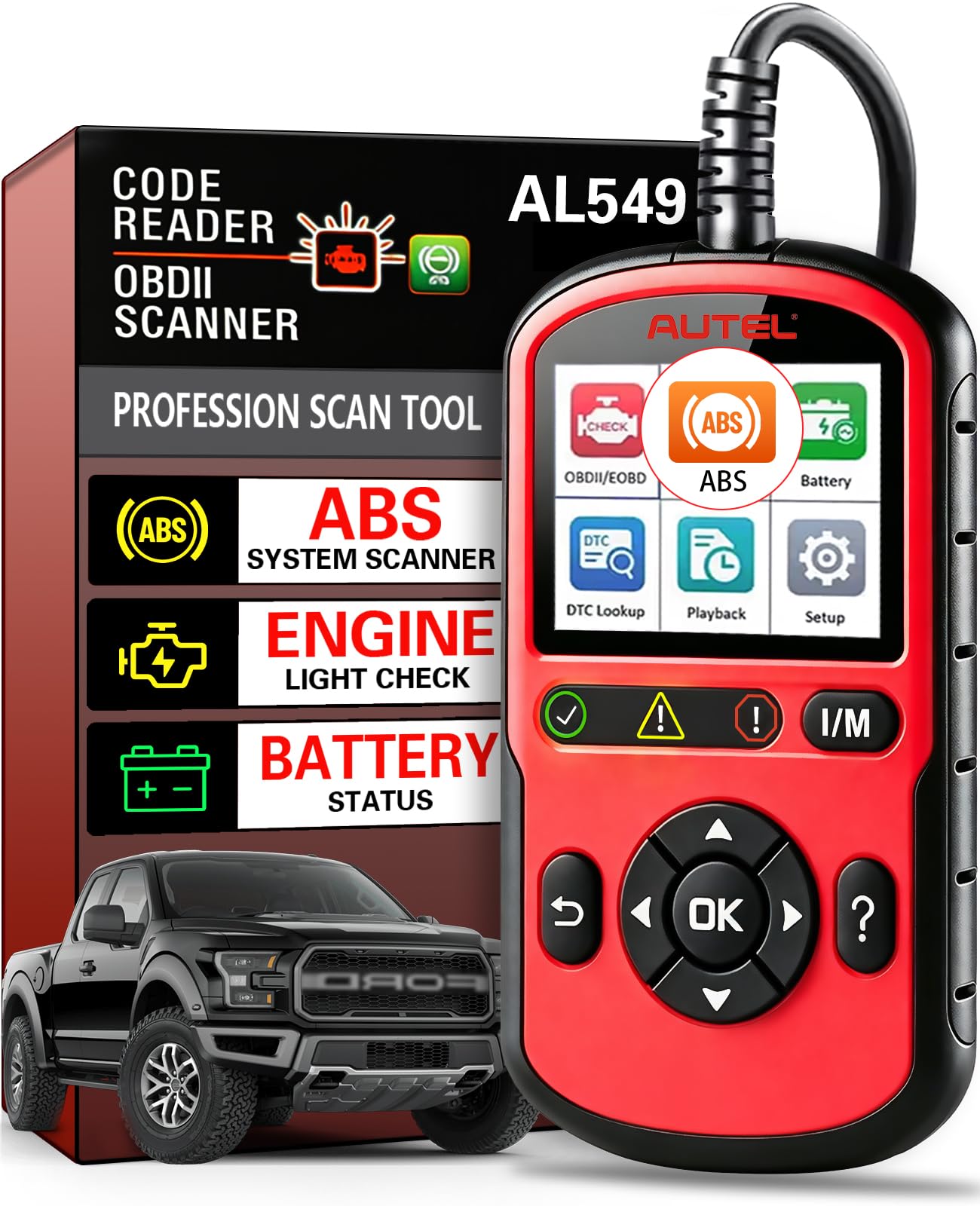
The only budget-priced unit here that reads ABS codes and tests your battery and alternator too.
The AL549 is a 3-in-1 tool that goes beyond the usual check-engine-only scanners. It handles all 10 OBD2 test modes including I/M readiness and freeze frame, then steps up to read and erase ABS codes and turn off ABS warning lights. On top of that, it runs a universal car starting and charging system test, which can tell you if your battery or alternator is the real problem.
It reads enhanced powertrain codes for Ford, GM, and Chrysler, which is a bonus for those brands. The 2.8-inch screen is clear, and the on-screen guidance walks you through the battery and alternator tests step by step. Data recording and playback let you capture live PID data, and the print function works through a Windows PC via a Type-C cable (not included).
Owners mention it works on all their vehicles and that the first scan told them exactly what the problem was, saving money on parts. It’s the upgrade version of the popular AL519, AL529, and AL539, with lifetime free updates via the Maxi PC Suite. The main note is that ABS diagnosis only supports 2000 to 2020 OBD2 vehicles, so very new or very old cars may not get ABS coverage.
Triple threat: OBD2 codes, ABS codes, and battery/alternator testing in one handheld unit.
Smart guidance: the battery test gives intuitive results with clear explanations and fix tips.
ABS window: ABS coverage is limited to 2000-2020 vehicles, so check your model year.
7. KINGBOLEN Ediag Elite
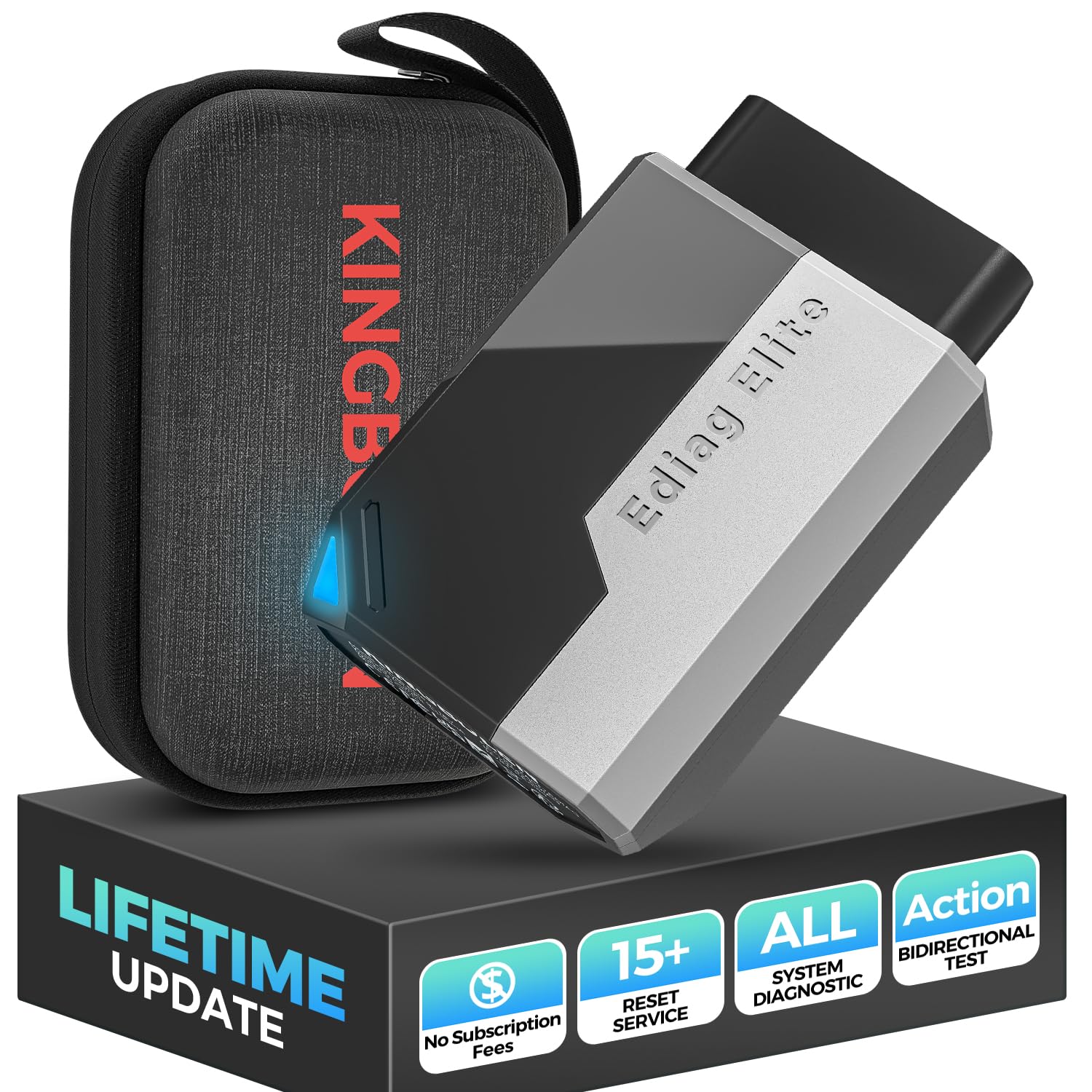
A pocket-sized Bluetooth tool that commands your car’s components to test them, not just read their codes.
The Ediag Elite is the gateway into active testing. Its bidirectional control lets you send commands from your smartphone to cycle the AC clutch, roll windows, open doors, or test a sunroof — all without disassembly. This is the fastest way to confirm a component works or fails, and it cuts diagnostic guesswork dramatically.
It uses Bluetooth 5.2 for a stable wireless connection up to 33 feet, so you can watch a component react from wherever you’re standing. The current version includes 15+ popular special functions like Oil Reset, TPMS Reset, BMS Reset, and Throttle Learning. It also supports the newest CAN FD protocol and FCA AutoAuth for Chrysler, Dodge, Jeep, and Fiat models.
Customers note it “does everything an expensive scan tool does for way less” and that the setup is easy. The app is intuitive, and the data can be displayed in graphs, numeric, or meter formats. The honest trade-off is that scans can be slightly slow on the first pass, and it doesn’t do ECU coding, TPMS reset, or key programming — it’s a diagnostic tool, not a programmer.
The Big Wins
- Bidirectional testing finds faulty components fast without tearing anything apart.
- No subscription and lifetime updates keep the cost of ownership at zero.
- FCA AutoAuth open up works on Chrysler, Dodge, Jeep, and Fiat models.
Keep in Mind
- Full-system scans can take a few minutes on the first pass.
- No ECU coding or key programming — a different tool class does that.
Best suited to: DIYers who want to actively test components and do their own maintenance resets.
pass on it if: you need to reprogram modules or write new keys.
8. XTOOL A30D
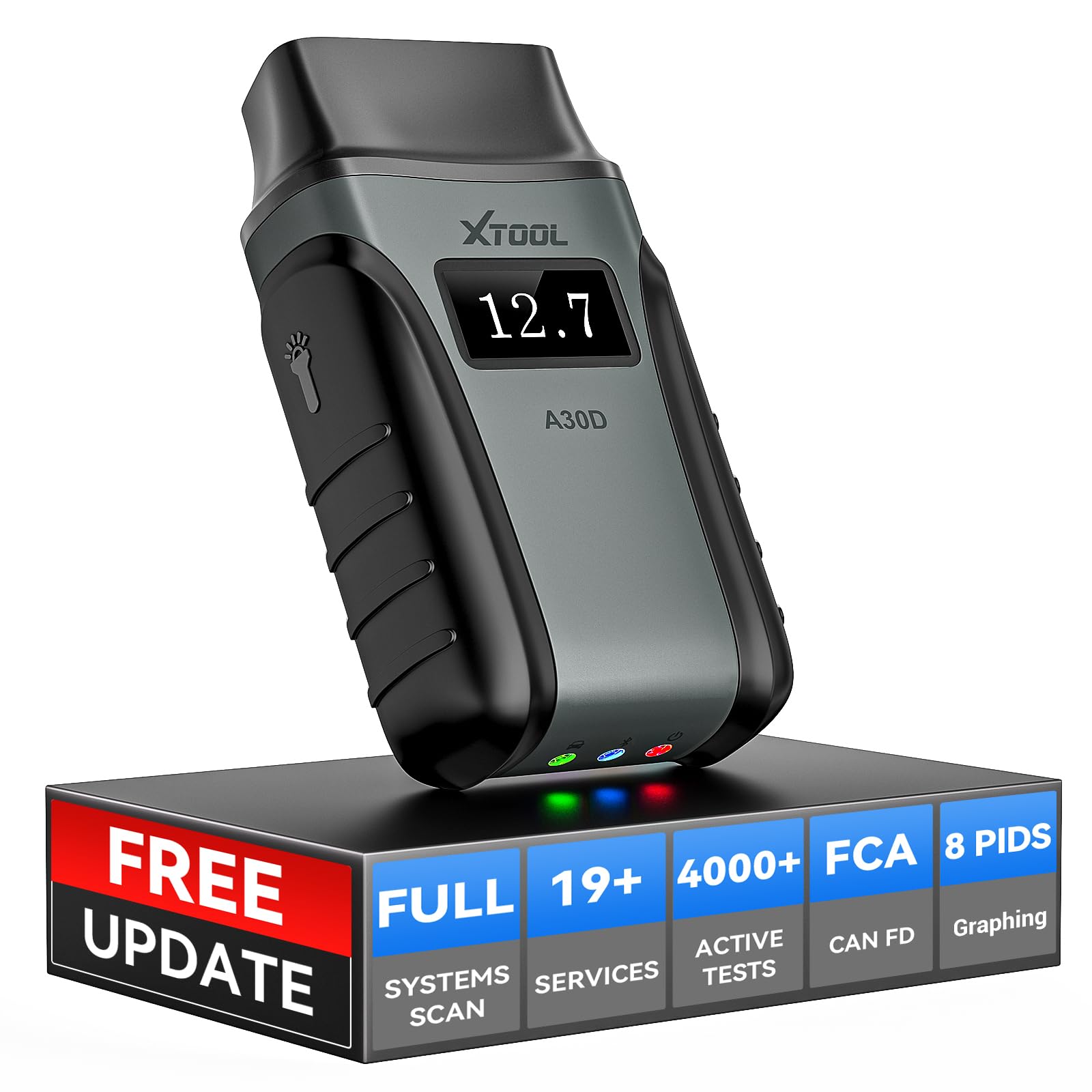
Nineteen relearn functions turn this wireless scanner into a home-garage maintenance station.
The A30D is the most function-dense tool on this list. It offers 19 reset and relearn functions without extra charges, including EPB Reset for parking brake replacement, TPMS Reset after tire changes, ABS Auto Bleeding, Oil Reset, and Crank/Cam Sensor Relearn. These are the jobs that usually send people to a shop, and this tool handles them in your driveway.
It’s a full-system scanner with bidirectional control, so it can command fuel pumps, valves, wipers, and headlamps to test them in real time. It pairs via Bluetooth with Android 9.0+ and iOS 10.0+ devices, showing up to 8 PIDs at once on clear graphs and meters. The wireless range is rated up to 33 feet, and it supports CAN-FD and FCA AutoAuth for newer vehicles.
Reviewers point out it solved a Challenger stalling issue through deep PCM access and sensor relearn, and that the ABS bleeding procedure works beautifully. The XTOOL app is familiar and comprehensive. The genuine drawbacks are that it needs lots of phone storage for manufacturer modules, and support has been slow for some owners, plus coverage gaps on certain newer Fords.
Maintenance center: 19 reset functions cover the most common dealership jobs at home.
Component commando: bidirectional actuation tests confirm parts work before you replace them.
Compatibility check: coverage varies by make and year, so confirm your vehicle before buying.
9. GEARWRENCH GWSMARTBT

Roughly 95% of the functionality of a pricey Autel, with free software updates forever.
The GEARWRENCH brings OE-level diagnostics to your smartphone with a battery-powered Bluetooth dongle. It offers full bidirectional control with live actuation tests, and it supports 23 vehicle reset and relearn functions, including throttle matching, ABS bleeding, and TPMS reset. Live data mapping and freeze frame capture round out the feature set.
The headline here is the pricing model: free software updates with no subscriptions and no fees — ever. That’s a direct contrast to the big-name tools that charge yearly for the same access. Shoppers say it reads and resets all modules on BMW, Tacoma, and Mazda, and one owner notes it reads CVT fluid temperature with 0.1-degree resolution and live gear states.
FCA AutoAuth bypass works for Chrysler and Dodge models, which is a common sticking point for other tools. The real-world caveats are a slower Bluetooth connection and no auto-detect on older tablets, plus some JDM (Japanese Domestic Market) cars may need extra effort. One owner noted a Mazda airbag module reset that required a different tool, so coverage isn’t universal.
Autel rival: the functionality gap to the expensive tools is small, but the update cost is zero.
Deep data: fine-resolution live data like CVT fluid temp and gear states are pro-level reads.
Coverage varies: some modules on certain Mazda and JDM cars may not reset with this unit.
Understanding the Specs
OBD2 Protocols and CAN FD
OBD2 is the standard diagnostic port in your car, but it speaks a few dialects. Older protocols like ISO9141 and J1850 cover many 1996-2007 cars, while newer vehicles use CAN (Controller Area Network). The newest cars, especially 2020+ models from GM and Chrysler, use CAN FD, a faster version. If you own a newer car, look for CAN FD support so the scanner can actually talk to it.
Bidirectional Control
This is the feature that separates powerful scanners from simple readers. Bidirectional control means the scanner sends a command to your car’s computer to activate a component — like cycling the AC clutch or opening a window — so you can see if it responds. It lets you test parts without buying new ones first, and it’s essential for jobs like ABS bleeding and throttle relearn.
FAQ
What is the difference between a code reader and a bidirectional scan tool?
Will an OBD2 scanner work on my 1996 or older car?
What is I/M readiness and why should I care about it?
What does CAN FD mean and do I need it?
Why do some scanners need FCA AutoAuth?
Can a scanner drain my car battery if left plugged in?
What is the difference between a stand-alone scanner and a Bluetooth phone app scanner?
Can an OBD2 scanner diagnose ABS or airbag issues?
How important is the DTC lookup library in a scanner?
Why does the check engine light come back after I clear it?
Final Thoughts: The Verdict
For most buyers, the obd2 scanner for the money is the ANCEL AD310 — a 4.6-star tool with tens of thousands of owner reviews praising its simplicity and accuracy. If you want built-in code explanations without using a phone app, choose the TOPDON AL400. For full-system diagnostics plus active testing (like commanding parts to turn on), the KINGBOLEN Ediag Elite is the one to grab.
How We Picked
We do not accept paid placement. Every pick is matched to a real buyer and a real use-case; we do not hands-on test units.
Sources & Methodology
Specifications: manufacturer listings and product documentation. Review insights: verified customer reviews, as of August 2026. Pricing: not shown on this page (it changes often); check the current price via the retailer link.
As an Amazon Associate, Trending Car earns from qualifying purchases. This does not affect which products we feature.