
Our readers keep the lights on and my garage snacks stocked. As an Amazon Associate, I earn from qualifying purchases.
Specs are compiled from manufacturer listings and verified buyer reviews and can change over time — please confirm the key details on the product page before buying.
You bought a CCS1 electric vehicle — a Ford, a Rivian, a Chevy, a Polestar — and now you are staring at the motherlode of fast-charging infrastructure: the Tesla Supercharger network. Problem is, the stall speaks NACS and your car speaks CCS1. The right adapter open up 25,000+ V3 and V4 Superchargers for non-Tesla EVs, turning charging anxiety into a road trip that works.
I’m Min Islam — the founder and writer behind Trending Car. This guide is built by comparing the manufacturers’ published specifications and the patterns across verified customer reviews, so you get each pick’s real strengths and trade-offs instead of marketing spin.
This is our deep look at the best nacs to ccs adapter for your EV, covering current capacity, safety certifications, real-world charge speeds, and the one design flaw that catches first-time buyers off guard.
Our Picks at a Glance
How To Choose The Best NACS to CCS Adapter
Not every adapter is safe for your car or your wallet. Here are the three non-negotiable specs to check before you click buy.
Safety Certification Is Not Optional
UL 2252 is the standard for EV charging adapters — it covers electrical safety, thermal runaway, and mechanical endurance. An adapter without third-party certification means you are trusting a plastic shell with 1,000 volts and 500 amps. One recurring buyer complaint on non-certified units is heat that “turns super hot” during use — a UL mark means the manufacturer tested for exactly that failure mode.
Vehicle Compatibility Is a Moving Target
Ford, GM, Rivian, and Volvo have signed Supercharger access deals, but automakers roll out approval in waves. An adapter cannot bypass a software block — your EV must already be authorized on the Tesla network through your manufacturer’s app. The data shows “compatibility” is the single most common mixed aspect across every adapter on this list, so check your automaker before buying.
Current Rating vs. Real-World Speed
Every adapter here is rated for 500A or 600A at 1,000V DC, but charging speed depends on the Supercharger generation (V3 caps around 250kW; V4 can go higher), your car’s battery management system, and the temperature of the adapter itself. A unit with dual temperature sensors — like the dual-sensor design found on the A2Z Typhoon Pro — will “derate” power when heat builds up rather than simply shut off.
Quick Comparison
| Model | Best For | Current Rating | Safety Cert | Weight | Amazon |
|---|---|---|---|---|---|
| Lectron Vortex Plug★ Best Overall | Overall reliability & speed | 500A / 1,000V | None stated | Heavy (not specified) | Amazon |
| Amphenol NACS to CCS1Certified Safe | Certified safety & long life | 600A / 1,000V | UL 2252, SAE J3400-1 | 2.66 lb | Amazon |
| A2Z EV Typhoon Pro | Dual temp sensors | 500A / 1,000V | UL2252 (pending) | 4.1 lb | Amazon |
| FOCSPROD NACS to CCS | Interlock stability | 500A / 1,000V | UL 2252 (SGS) | — | Amazon |
| LENZ NACS to CCS | Compact value | 500A / 1,000V | UL 2252 (SGS) | 1.63 lb | Amazon |
| HUACAITU NACS to CCS | Widest compatibility list | 500A / 1,000V | None stated (temp kill switch) | 0.92 kg (≈2 lb) | Amazon |
| Hugener NACS to CCS1 | Budget-friendly with three sensors | 500A / 1,000V | UL Safety Certified | 2 lb | Amazon |
In‑Depth Reviews
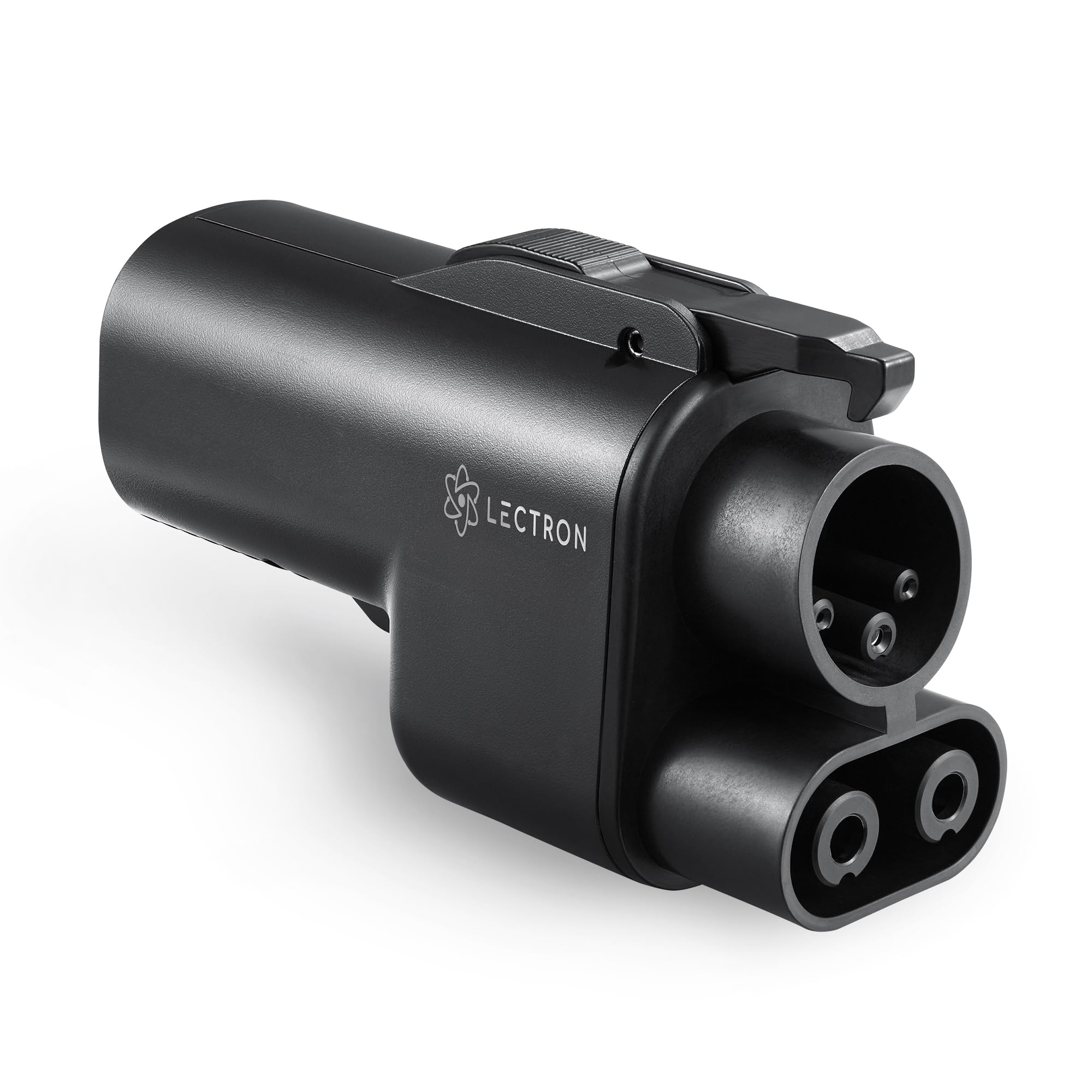
1. Lectron Vortex Plug
Our pick — over 4.5★ from 700+ verified ratings; the strongest balance of quality and price.
The crowd favorite that buyers trust to open up 25,000+ Supercharger stalls without drama.
Owners praise how well it works — by a wide margin — and the reviews back it up with real road-trip stories. One Kia EV6 driver reported a 96 kWh charge rate at a V3 Supercharger, calling this adapter a “must-have” for CCS EVs. Buyers report the build feels heavy and confidence-inspiring, with secure locking on both the NACS and CCS sides that owners describe as “excellent build quality with secure locking.” The adapter is designed to deliver up to 150 miles of range in 15 minutes, though that depends on the Supercharger generation and your car’s battery.
The catch is that the Tesla Supercharger cable is short — you may need to park diagonally or occupy two spots if your charge port is on the opposite side. The adapter’s weight also drew comments, with one owner noting it is “heavy but confidence-inspiring.” Some drivers found compatibility mixed, particularly with Mercedes-Benz models, so the mantra is always: check your automaker’s access list before you buy.
The real-world tip owners pass along: leave the adapter locked into the car’s port, remove the Tesla charger first, then pull the adapter off — it makes the unlatch far easier.
Why it’s the top pick
- Rock-solid connection with secure locking on both sides — no mid-charge handshake drops
- Rated for 500 amps and 1,000 volts, delivering up to 150 miles of range in 15 minutes
- Works at 25,000+ V3 and V4 Supercharger locations across North America
What to keep in mind
- Short Supercharger cable means you may need to hog two spaces
- Compatibility is still hit-or-miss with Mercedes-Benz and some older EVs
- Price sits above budget options; some owners feel it is expensive vs. automaker adapters
Reach for it if: you own a Kia EV6, Ford Mach-E, Chevy Bolt, or any popular CCS1 EV and want the most road-tested, widely-reviewed adapter that just works — backed by hundreds of verified owners.
Think twice if: your EV is a Mercedes-Benz or an older model with uncertain Supercharger access, or you are on a tight budget and willing to trade some weight for savings.
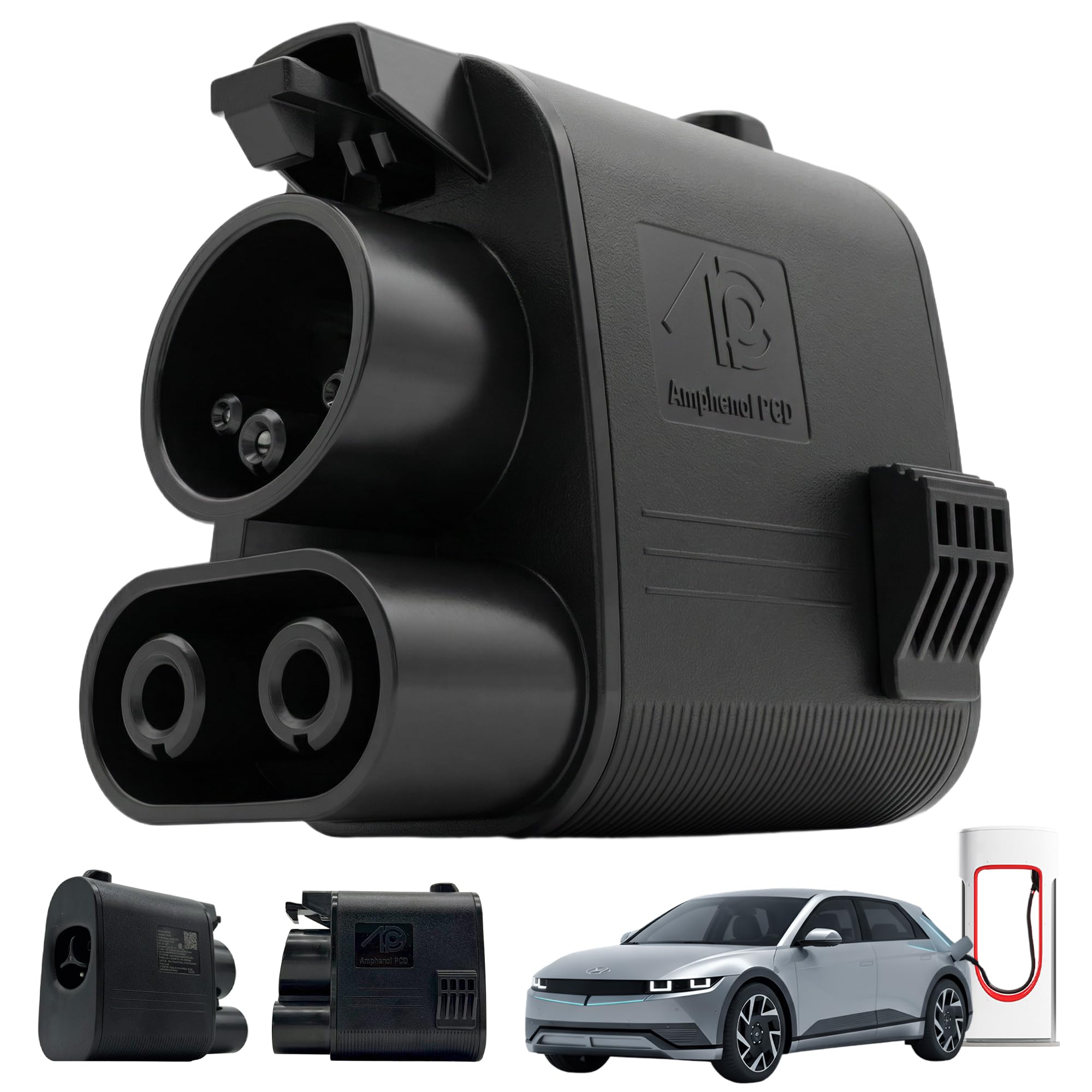
2. Amphenol NACS to CCS1 Adapter
The first adapter to earn UL 2252 — independently tested for safety, thermal, and mechanical endurance.
This is the adapter for the buyer who wants proof that the plastic in their hand will not melt at 1,000 volts. Amphenol achieved UL 2252 certification, meaning an independent lab validated its electrical, thermal, and mechanical performance under North American standards. That certification is the single biggest differentiator from the rest of this list. Rated at 600A and 1,000V — with a built-in safety margin over the 250–325A max that most EVs can pull — it adds 150 miles of range in roughly 15 minutes at a V3 or V4 Supercharger.
Build quality here is industrial-grade: an impact-resistant housing rated for 10,000+ charging cycles, a metal latch with an ice-protection cover for winter use, and an automatic interlock that secures both the NACS and CCS1 connections during charging. The automatic interlock prevents accidental disconnection at high voltage, which is the same safety logic heavy-duty commercial charging gear uses.
At 2.66 pounds, it is noticeably heavier than some budget competitors, which owners say signals durability. The trade-off is price — this is the premium pick at roughly double some entry-level options — but the consensus among buyers is that the certified confidence makes it cheaper than the dealer alternative.
what separates it
- First adapter on the market with full UL 2252 certification from an independent lab
- 600A / 1,000V rating gives a safety buffer over typical EV draw
- Rated for 10,000+ cycles — built for daily road-trip abuse
What holds it back
- Premium pricing puts it well above entry-level adapters
- Still a small review pool means fewer long-term reports
- Heavier than compact competitors like the LENZ adapter
Best for: Polestar, Rivian, or Ford owners who road trip in all seasons and want independently verified safety — the ice-protection cover alone justifies it for Canadian and northern-state winters.
Not your pick if: your budget maxes out near or you only need the adapter for occasional emergency charges.
3. A2Z EV Typhoon Pro
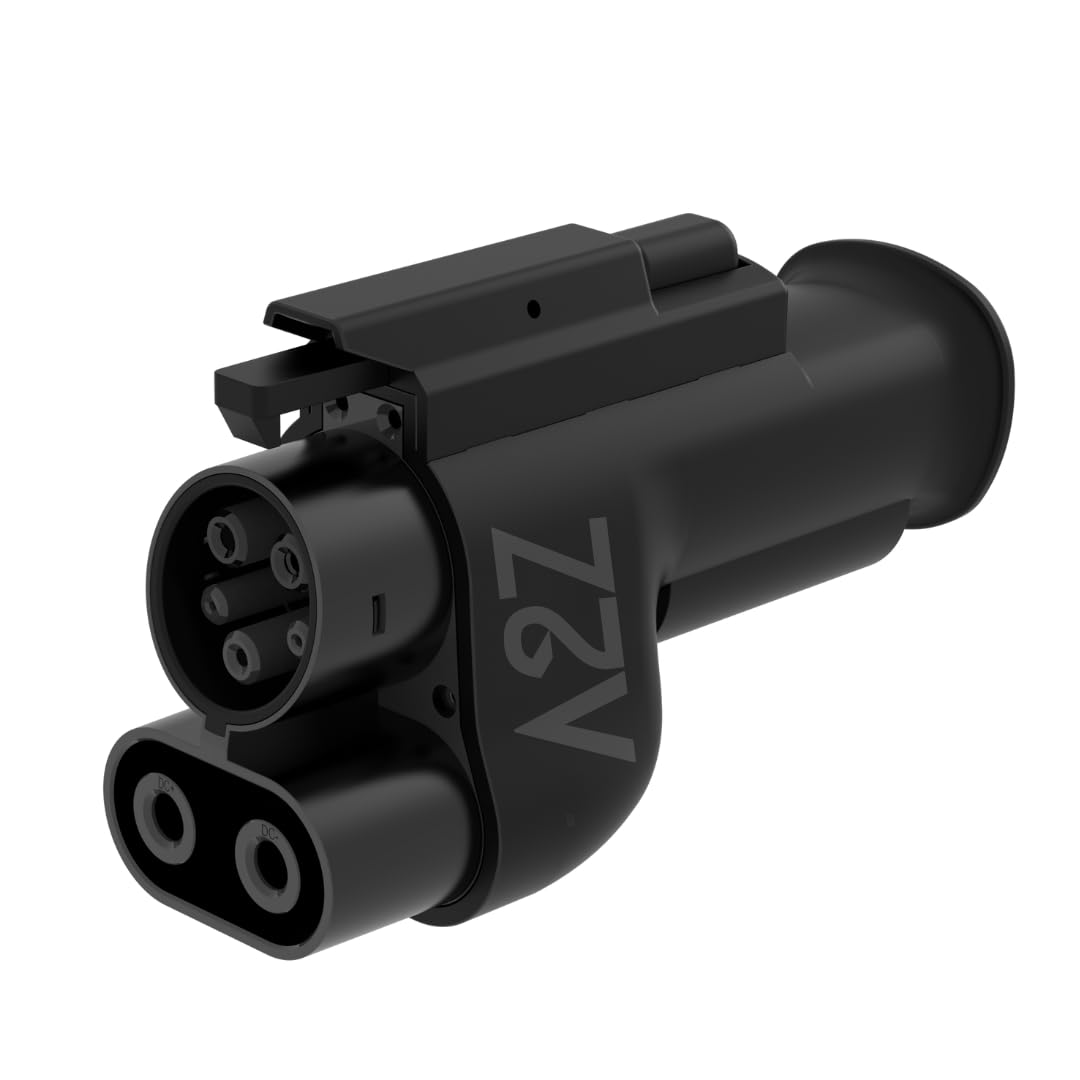
Two temperature sensors that derate power before they shut you down — smart heat management.
The temperature sensor system here is not a single plug; it is a two-sensor setup. The first sensor reduces charging power when the internal temperature gets too high. The second sensor halts charging entirely if conditions remain unsafe. That dual-layer approach is smarter than a simple kill switch because you keep charging — just slower — rather than walking back to a dead stop. The Typhoon Pro is rated at 500A with liquid-cooled cables and 400A with non-liquid-cooled cables, at 1,000V DC.
A Ford Lightning owner reported that after 30 minutes of cold charging, the adapter felt “warm but not alarming” — normal heat behavior for a 180 kW session. Another owner measured 180 kW at a V4 Supercharger, which then dropped to 115 kW when a Model S parked in the adjacent stall (owners mention this may be due to station load-sharing). The adapter itself stayed warm, not hot. Note that UL2252 certification is listed as “in progress — passed all required tests, certificate pending.”
At 4.1 pounds, this is the heaviest adapter in the roundup. The weight comes from the thick PA66 housing with IP54 protection when mated and an IP67-rated enclosure. The included hard case is a nice touch for trunk storage, but anyone who wants to keep the adapter in the glovebox should look elsewhere.
Smart-heat choice: the dual-sensor temperature management is unique in this price class and gives real-world charging continuity that a single thermal fuse cannot match. Owners of 2024 Ford Lightnings and Chevy Bolts report flawless sessions.
The trade-off is bulk: at 4.1 pounds, this is the heaviest adapter here — plan for trunk storage, not a cubby.
Reach for it if: you charge in hot climates (Arizona, Texas) or push high-power sessions regularly and want the adapter to manage heat gracefully rather than brick mid-charge.
Look elsewhere if: every ounce matters — the 1.63-pound LENZ adapter is over 2.5 pounds lighter — or you need the final UL certificate now rather than pending.
4. FOCSPROD NACS to CCS Adapter
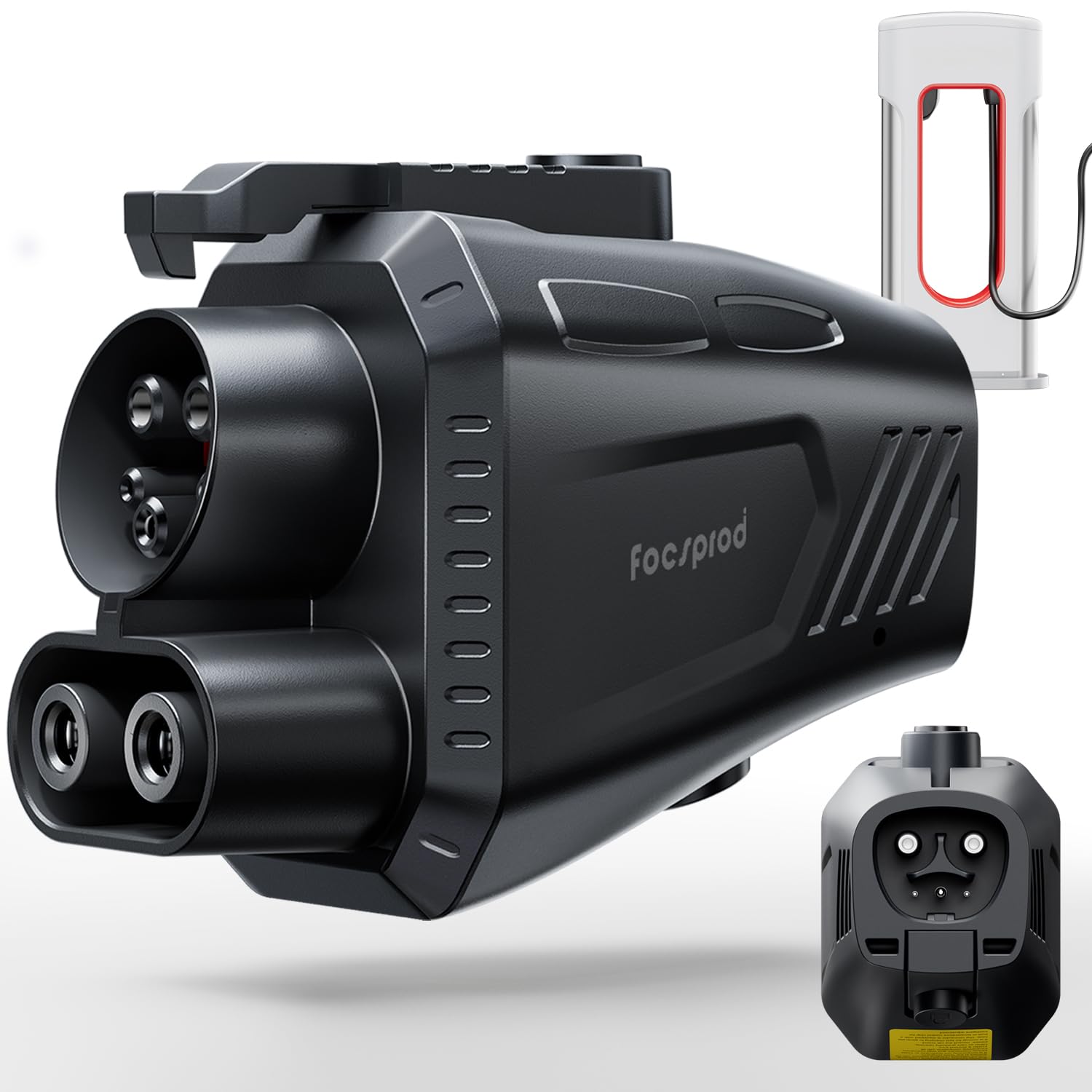
Heavy-duty build with an interlock structure and SGS-certified UL 2252 compliance.
The interlock mechanism is the headline here — it physically secures both the NACS and CCS1 connections so high-voltage charging cannot accidentally unseat the plug. The FOCSPROD adapter is SGS certified to comply with UL 2252, meaning a third party has reviewed its electrical and thermal safety. Rated at 500A and 1,000V, it delivers up to 150 miles of range in 15 minutes at compatible V3 and V4 Superchargers.
Functionality is the aspect owners praise most, with “solid build” and “secure connection” being the repeated themes. One 2020 Chevy Bolt owner noted the adapter stays cool after extended use and fits perfectly with the latest battery recall software. Another buyer gave it as a gift, calling the interlock “confidence.” The three-year warranty is a nice layer of protection that most competitors do not match.
The catch is that FOCSPROD lists an unusually long “not compatible” list by name — Audi, BMW, Mercedes-Benz, Kia, Mazda, MINI, Nissan, Porsche, STELLANTIS, Toyota, Volkswagen, and Honda. If you do not see your make in that list, double-check. A 2024 Genesis GV60 owner reported compatibility issues, so even some newer models may not handshake correctly.
Interlock plus warranty: the physical interlock combined with a three-year warranty makes this one of the lowest-risk purchases on the list — if your car is on the approved list.
Compatibility caution: the lengthy “not compatible” list means a significant number of EV owners cannot use this adapter at all — verify before buying.
Best for: Ford, GM, Rivian, and Chevy Bolt owners who want UL certification and a long warranty at a mid-range price.
skip it if: you drive a Kia, Hyundai, Volkswagen, Audi, BMW, Mercedes, or any brand on the excluded list — you will need a different adapter.
5. LENZ NACS to CCS Adapter
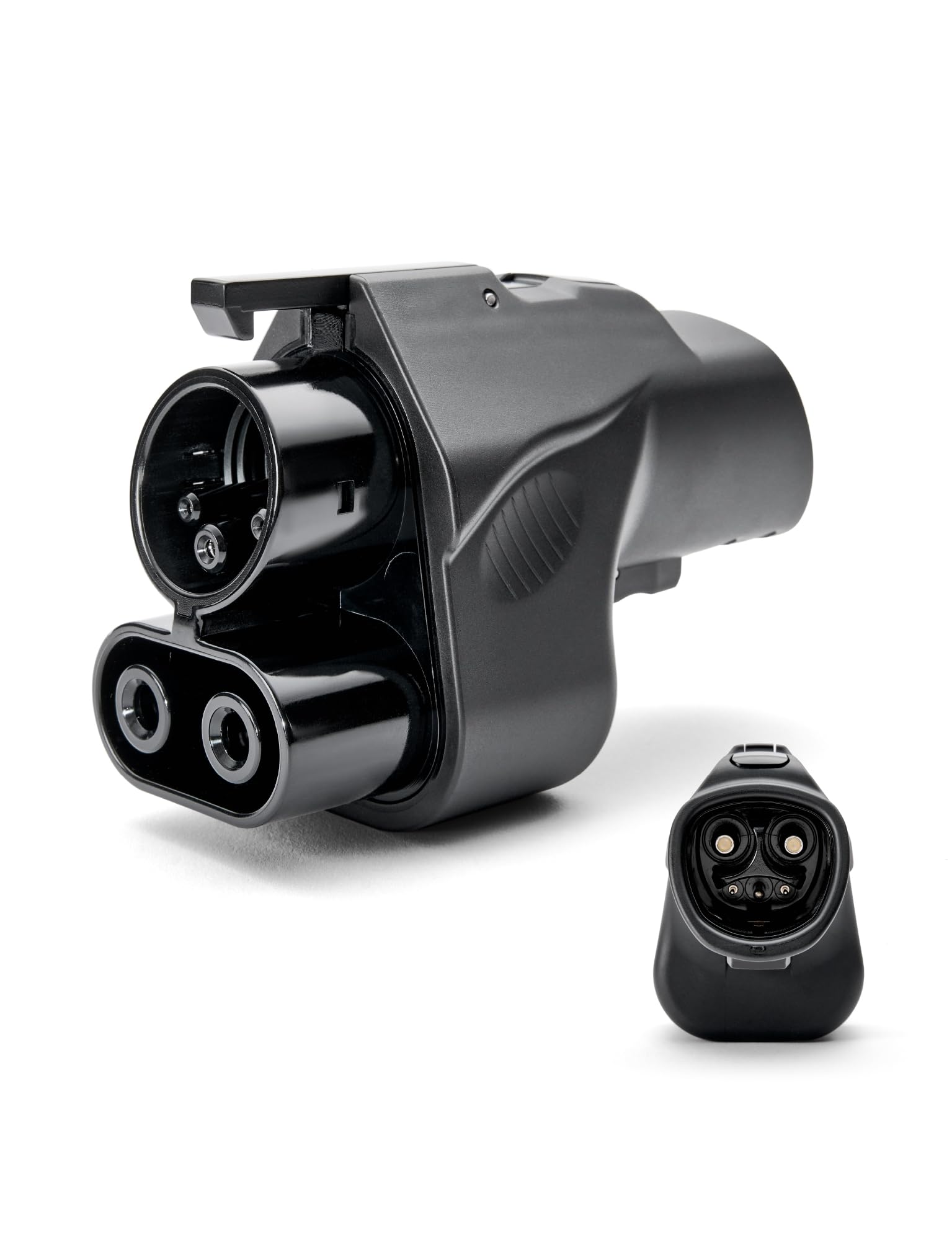
At 1.63 pounds, this is the lightest adapter here and still carries UL 2252 certification.
Weight matters when you are juggling an adapter, a charging cable, and a phone app at a busy Supercharger. The LENZ adapter is significantly lighter than the 2-pound Hugener — over a 23% difference — and nearly 2.5 pounds lighter than the A2Z Typhoon Pro. Despite the lighter weight, it is SGS certified to UL 2252 and rated for 500A and 1,000V, the same spec sheet as most adapters in this roundup. The compact size (roughly 6 x 4.75 x 2.8 inches) makes it easy to stash in the glovebox or center console.
Chevy Bolt owners dominate the positive reviews — a 2017 and a 2020 Bolt both reported flawless handshakes with Tesla Superchargers. A BMW iX owner confirmed it works great for road trips. The included semi-hard shell case is a practical addition that keeps the adapter from rattling around the trunk. Build quality is the second most-praised aspect after functionality, with “premium build” appearing across multiple owner reports.
The mixed reception around compatibility echoes the category-wide issue: several buyers reported that it does not properly negotiate with Tesla chargers on certain vehicles (including some Subaru and Nissan models). If your EV is a popular CCS1 model with confirmed Supercharger access, this is a near-perfect fit. If you drive an edge case, verify with your automaker first.
Why it stands out: certification plus portability — this is the adapter that lives in your glovebox and does not weigh down your day bag.
The real constraint: compatibility is still mixed for non-approval-list vehicles; check your EV’s Supercharger access before assuming it will handshake.
Reach for it if: you want the most packable UL-certified adapter for a Chevy Bolt, BMW iX, or Ford Lightning and value daily convenience over heavy-duty heat management.
Look elsewhere if: your EV is a less common model or you push extended high-power sessions where extra thermal mass helps.
6. HUACAITU NACS to CCS Adapter

The broadest automaker compatibility claim — it lists brands the others often exclude.
Most adapters tread carefully with compatibility. The HUACAITU adapter wades in: its spec sheet lists Ford, Rivian, General Motors, Volvo, Polestar, Nissan, Lucid, Mercedes-Benz, Hyundai, Genesis, Kia, Honda, Acura, JLR, Audi, and Porsche — essentially the entire non-Tesla CCS1 landscape. Whether every listed brand actually works is up to your automaker’s Supercharger approval, but the physical connector compatibility is there. It carries a 500A and 1,000V DC rating, plus an IP55 waterproof rating and UL94 V0 flame-retardant housing.
The safety angle here is a temperature kill switch that is set to 194°F (90°C) — if the adapter hits that temperature, charging stops automatically. That is a simpler system than the dual-sensor derate on the A2Z adapter, but it still prevents the dangerous thermal runaway that some uncertified adapters have shown. Customers note it works flawlessly with Kia EV6 models, with one buyer using it for six months without issue and another noting it saved significant money vs. EVGo and Electrify America rates.
The downside is reliability over time. One Ford F-150 Lightning owner reported that the adapter worked for five charges, then failed permanently — and the replacement also failed. That pattern suggests quality control inconsistency rather than a design flaw, but it is note for frequent-charge users. The other owners who report success love it; the others returned it for a Lectron.
Best compatibility list on paper: if you drive an Audi, Porsche, or Lucid — brands many adapters exclude — this is one of the few options that claims support.
Consistency concern: a small number of reviewers point out early failure; the risk is present for heavy users charging multiple times per week.
Best for: Kia EV6, Hyundai Ioniq, or Lucid owners who want a broad compatibility list at a mid-range price point.
Not your pick if: you need absolute reliability for daily charging — the Lectron or Amphenol adapters have much stronger long-term track records.
7. Hugener 2025 NACS to CCS1 Adapter
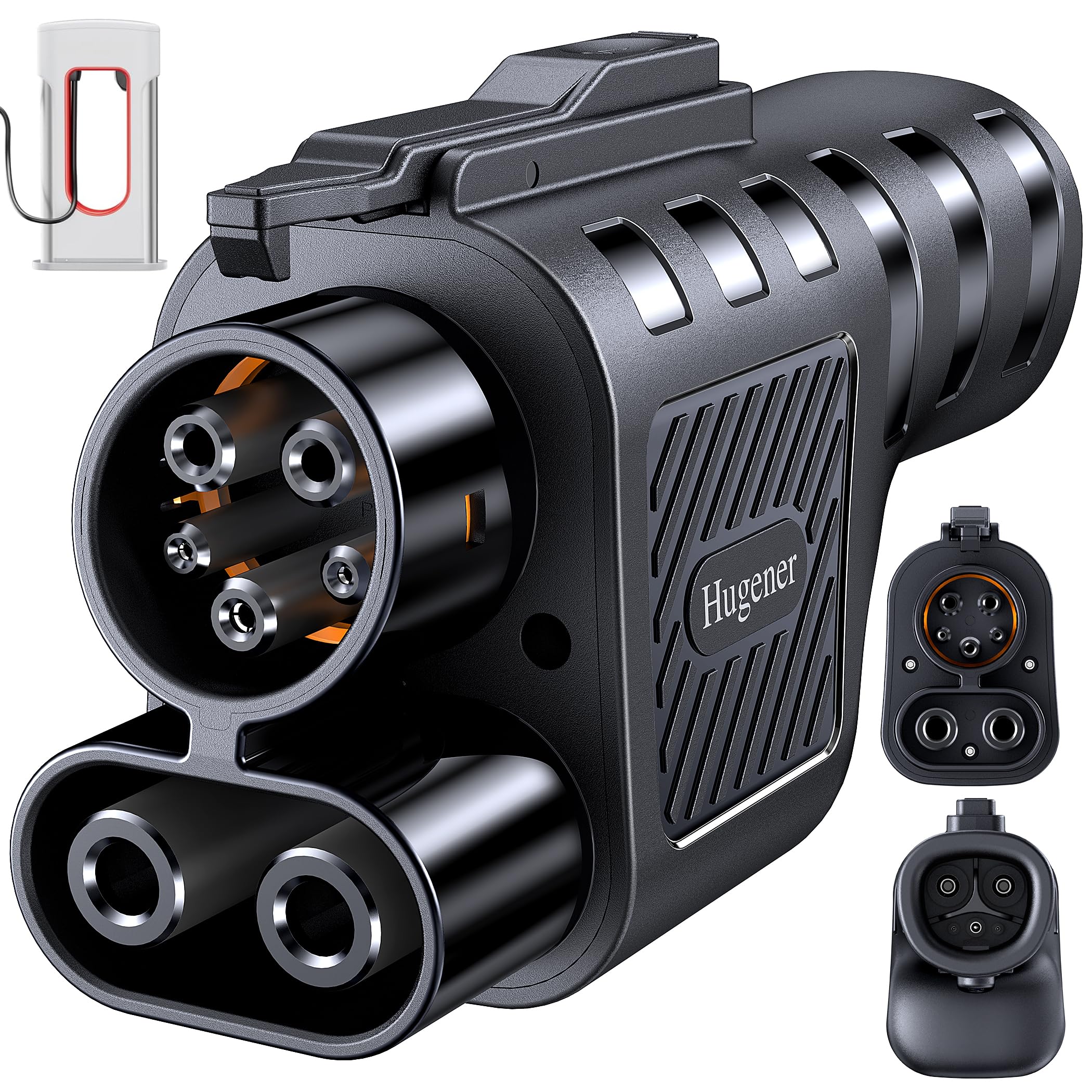
Three sensors across plug, cable, and chip — more thermal monitoring than any adapter here.
The Hugener adapter monitors temperature at three spots: the plug, the cable, and the internal chip. That is one more sensor than the A2Z Typhoon Pro, which is widely considered the thermal-management leader. When any sensor hits its threshold, the system automatically adjusts power to prevent overheating. The unit is also IP67 waterproof when plugged (meaning it is sealed against dust and immersion), and it operates between -30°C and 50°C — covering winter and desert conditions.
A Ford Mach-E owner on a V3 Supercharger reported peak speeds of 170 kW with a steady hold at 130–140 kW, even in 95°F weather, with the adapter only getting “slightly warm.” That aligns with the 3-sensor design doing its job. The adapter also includes rubber port covers and a carrying case — a small but appreciated detail that automaker adapters often skip. Compatibility is listed for Ford, GM, Rivian, Hyundai, Kia, Volvo, Polestar, Lucid, Nissan, and Honda — a strong list for the price.
The recurring mixed feedback is about heat. While most shoppers say normal warmth, some buyers found the adapter “turns super hot” during use. Given that the adapter carries a UL safety certification and three sensors, this may be a case of unit variation or an extremely high-power session that pushes past the sensor thresholds. The adapter also weighs 2 pounds, right in the middle of the pack and heavier than the 1.63-pound LENZ but lighter than the 2.66-pound Amphenol.
Why it stands out
- Three temperature sensors — more thermal monitoring than any other adapter on this list
- IP67 waterproof rating means it survives rain, snow, and even shallow submersion while plugged
- UL safety certified and includes rubber port covers and a carrying case (often omitted by automaker adapters)
What to consider
- A few buyers report the adapter gets very hot during extended high-power sessions
- Only works with Tesla V3 and V4 Superchargers — not compatible with older Supercharger generations or Level 2 AC chargers
- Smaller review pool (76 ratings) compared to the Lectron’s 700+
Reach for it if: you want the most temperature-safety-conscious adapter at an entry-level price — the 3-sensor setup and IP67 rating make it a solid choice for all-weather drivers.
Look elsewhere if: you prefer a well-known brand with a proven long-term track record and thousands of owner reports backing its reliability.
8. A2Z EV Typhoon Pro
Two temperature sensors that derate power before they shut you down — smart heat management.
The temperature sensor system here is not a single plug; it is a two-sensor setup. The first sensor reduces charging power when the internal temperature gets too high. The second sensor halts charging entirely if conditions remain unsafe. That dual-layer approach is smarter than a simple kill switch because you keep charging — just slower — rather than walking back to a dead stop. The Typhoon Pro is rated at 500A with liquid-cooled cables and 400A with non-liquid-cooled cables, at 1,000V DC.
A Ford Lightning owner reported that after 30 minutes of cold charging, the adapter felt “warm but not alarming” — normal heat behavior for a 180 kW session. Another owner measured 180 kW at a V4 Supercharger, which then dropped to 115 kW when a Model S parked in the adjacent stall (owners mention this may be due to station load-sharing). The adapter itself stayed warm, not hot. Note that UL2252 certification is listed as “in progress — passed all required tests, certificate pending.”
At 4.1 pounds, this is the heaviest adapter in the roundup. The weight comes from the thick PA66 housing with IP54 protection when mated and an IP67-rated enclosure. The included hard case is a nice touch for trunk storage, but anyone who wants to keep the adapter in the glovebox should look elsewhere.
Smart-heat choice: the dual-sensor temperature management is unique in this price class and gives real-world charging continuity that a single thermal fuse cannot match. Owners of 2024 Ford Lightnings and Chevy Bolts report flawless sessions.
The trade-off is bulk: at 4.1 pounds, this is the heaviest adapter here — plan for trunk storage, not a cubby.
Reach for it if: you charge in hot climates (Arizona, Texas) or push high-power sessions regularly and want the adapter to manage heat gracefully rather than brick mid-charge.
Look elsewhere if: every ounce matters — the 1.63-pound LENZ adapter is over 2.5 pounds lighter — or you need the final UL certificate now rather than pending.
9. FOCSPROD NACS to CCS Adapter
Heavy-duty build with an interlock structure and SGS-certified UL 2252 compliance.
The interlock mechanism is the headline here — it physically secures both the NACS and CCS1 connections so high-voltage charging cannot accidentally unseat the plug. The FOCSPROD adapter is SGS certified to comply with UL 2252, meaning a third party has reviewed its electrical and thermal safety. Rated at 500A and 1,000V, it delivers up to 150 miles of range in 15 minutes at compatible V3 and V4 Superchargers.
Functionality is the aspect owners praise most, with “solid build” and “secure connection” being the repeated themes. One 2020 Chevy Bolt owner noted the adapter stays cool after extended use and fits perfectly with the latest battery recall software. Another buyer gave it as a gift, calling the interlock “confidence.” The three-year warranty is a nice layer of protection that most competitors do not match.
The catch is that FOCSPROD lists an unusually long “not compatible” list by name — Audi, BMW, Mercedes-Benz, Kia, Mazda, MINI, Nissan, Porsche, STELLANTIS, Toyota, Volkswagen, and Honda. If you do not see your make in that list, double-check. A 2024 Genesis GV60 owner reported compatibility issues, so even some newer models may not handshake correctly.
Interlock plus warranty: the physical interlock combined with a three-year warranty makes this one of the lowest-risk purchases on the list — if your car is on the approved list.
Compatibility caution: the lengthy “not compatible” list means a significant number of EV owners cannot use this adapter at all — verify before buying.
Best for: Ford, GM, Rivian, and Chevy Bolt owners who want UL certification and a long warranty at a mid-range price.
skip it if: you drive a Kia, Hyundai, Volkswagen, Audi, BMW, Mercedes, or any brand on the excluded list — you will need a different adapter.
10. LENZ NACS to CCS Adapter
At 1.63 pounds, this is the lightest adapter here and still carries UL 2252 certification.
Weight matters when you are juggling an adapter, a charging cable, and a phone app at a busy Supercharger. The LENZ adapter is significantly lighter than the 2-pound Hugener — over a 23% difference — and nearly 2.5 pounds lighter than the A2Z Typhoon Pro. Despite the lighter weight, it is SGS certified to UL 2252 and rated for 500A and 1,000V, the same spec sheet as most adapters in this roundup. The compact size (roughly 6 x 4.75 x 2.8 inches) makes it easy to stash in the glovebox or center console.
Chevy Bolt owners dominate the positive reviews — a 2017 and a 2020 Bolt both reported flawless handshakes with Tesla Superchargers. A BMW iX owner confirmed it works great for road trips. The included semi-hard shell case is a practical addition that keeps the adapter from rattling around the trunk. Build quality is the second most-praised aspect after functionality, with “premium build” appearing across multiple owner reports.
The mixed reception around compatibility echoes the category-wide issue: several buyers reported that it does not properly negotiate with Tesla chargers on certain vehicles (including some Subaru and Nissan models). If your EV is a popular CCS1 model with confirmed Supercharger access, this is a near-perfect fit. If you drive an edge case, verify with your automaker first.
Why it stands out: certification plus portability — this is the adapter that lives in your glovebox and does not weigh down your day bag.
The real constraint: compatibility is still mixed for non-approval-list vehicles; check your EV’s Supercharger access before assuming it will handshake.
Reach for it if: you want the most packable UL-certified adapter for a Chevy Bolt, BMW iX, or Ford Lightning and value daily convenience over heavy-duty heat management.
Look elsewhere if: your EV is a less common model or you push extended high-power sessions where extra thermal mass helps.
11. HUACAITU NACS to CCS Adapter
The broadest automaker compatibility claim — it lists brands the others often exclude.
Most adapters tread carefully with compatibility. The HUACAITU adapter wades in: its spec sheet lists Ford, Rivian, General Motors, Volvo, Polestar, Nissan, Lucid, Mercedes-Benz, Hyundai, Genesis, Kia, Honda, Acura, JLR, Audi, and Porsche — essentially the entire non-Tesla CCS1 landscape. Whether every listed brand actually works is up to your automaker’s Supercharger approval, but the physical connector compatibility is there. It carries a 500A and 1,000V DC rating, plus an IP55 waterproof rating and UL94 V0 flame-retardant housing.
The safety angle here is a temperature kill switch that is set to 194°F (90°C) — if the adapter hits that temperature, charging stops automatically. That is a simpler system than the dual-sensor derate on the A2Z adapter, but it still prevents the dangerous thermal runaway that some uncertified adapters have shown. Customers note it works flawlessly with Kia EV6 models, with one buyer using it for six months without issue and another noting it saved significant money vs. EVGo and Electrify America rates.
The downside is reliability over time. One Ford F-150 Lightning owner reported that the adapter worked for five charges, then failed permanently — and the replacement also failed. That pattern suggests quality control inconsistency rather than a design flaw, but it is note for frequent-charge users. The other owners who report success love it; the others returned it for a Lectron.
Best compatibility list on paper: if you drive an Audi, Porsche, or Lucid — brands many adapters exclude — this is one of the few options that claims support.
Consistency concern: a small number of reviewers point out early failure; the risk is present for heavy users charging multiple times per week.
Best for: Kia EV6, Hyundai Ioniq, or Lucid owners who want a broad compatibility list at a mid-range price point.
Not your pick if: you need absolute reliability for daily charging — the Lectron or Amphenol adapters have much stronger long-term track records.
12. Hugener 2025 NACS to CCS1 Adapter
Three sensors across plug, cable, and chip — more thermal monitoring than any adapter here.
The Hugener adapter monitors temperature at three spots: the plug, the cable, and the internal chip. That is one more sensor than the A2Z Typhoon Pro, which is widely considered the thermal-management leader. When any sensor hits its threshold, the system automatically adjusts power to prevent overheating. The unit is also IP67 waterproof when plugged (meaning it is sealed against dust and immersion), and it operates between -30°C and 50°C — covering winter and desert conditions.
A Ford Mach-E owner on a V3 Supercharger reported peak speeds of 170 kW with a steady hold at 130–140 kW, even in 95°F weather, with the adapter only getting “slightly warm.” That aligns with the 3-sensor design doing its job. The adapter also includes rubber port covers and a carrying case — a small but appreciated detail that automaker adapters often skip. Compatibility is listed for Ford, GM, Rivian, Hyundai, Kia, Volvo, Polestar, Lucid, Nissan, and Honda — a strong list for the price.
The recurring mixed feedback is about heat. While most shoppers say normal warmth, some buyers found the adapter “turns super hot” during use. Given that the adapter carries a UL safety certification and three sensors, this may be a case of unit variation or an extremely high-power session that pushes past the sensor thresholds. The adapter also weighs 2 pounds, right in the middle of the pack and heavier than the 1.63-pound LENZ but lighter than the 2.66-pound Amphenol.
Why it stands out
- Three temperature sensors — more thermal monitoring than any other adapter on this list
- IP67 waterproof rating means it survives rain, snow, and even shallow submersion while plugged
- UL safety certified and includes rubber port covers and a carrying case (often omitted by automaker adapters)
What to consider
- A few buyers report the adapter gets very hot during extended high-power sessions
- Only works with Tesla V3 and V4 Superchargers — not compatible with older Supercharger generations or Level 2 AC chargers
- Smaller review pool (76 ratings) compared to the Lectron’s 700+
Reach for it if: you want the most temperature-safety-conscious adapter at an entry-level price — the 3-sensor setup and IP67 rating make it a solid choice for all-weather drivers.
Look elsewhere if: you prefer a well-known brand with a proven long-term track record and thousands of owner reports backing its reliability.