
Our readers keep the lights on and my garage snacks stocked. As an Amazon Associate, I earn from qualifying purchases.
Specs are compiled from manufacturer listings and verified buyer reviews and can change over time — please confirm the key details on the product page before buying.
Range anxiety is so last decade. The real stress for a non-Tesla EV owner is pulling into a charging station and realizing the plug doesn’t fit your car. A NACS adapter is the small piece of hardware that open up thousands of Tesla Superchargers for your CCS1 vehicle, and this guide breaks down the best ones for your specific car and driving habits.
I’m Min Islam — the founder and writer behind Trending Car. This guide is built by comparing the manufacturers’ published specifications and the patterns across verified customer reviews, so you get each pick’s real strengths and trade-offs instead of marketing spin.
This guide names the best nacs adapter for your EV, covering speed, safety certifications, and the real-world quirks owners hit at the plug.
Our Picks at a Glance
How To Choose The Best NACS Adapter
Choosing the right adapter hinges on which direction the power flows. If you drive a Tesla or a brand-new EV with a NACS port (the Tesla-style plug), you need a CCS1-to-NACS adapter to use stations like Electrify America. If you drive a Ford, GM, Rivian, or other CCS1 car, you need the reverse—a NACS-to-CCS1 adapter—to open up Tesla Superchargers.
Check Your Automaker’s Approval First
This is not optional. Tesla only allows charging on Superchargers for non-Tesla vehicles that the automaker has officially blessed. Before you buy, check your car’s app or the automaker’s website to confirm your exact model and year are on the list. Buying a top-tier adapter for a car that isn’t approved is a waste of money.
Understand Your Car’s Max Charging Speed
An adapter rated for 500 amps won’t make your car charge faster than its own battery allows. The adapter just needs to handle more power than your car can draw, so it becomes a safety buffer. Focus on the adapter’s rated voltage and amperage, but know that your car’s actual charging curve determines the real-world speed.
Quick Comparison
| Model | Best For | Type | Max Amperage | Safety Rating | Amazon |
|---|---|---|---|---|---|
| Lectron Vortex★ Best Overall | Non-Tesla EVs needing Supercharger access | NACS to CCS1 | 500 A | — | Amazon |
| Raylix UpgradedBest Value | Budget CCS1 to NACS for Tesla | CCS1 to NACS | 400 A | IP54 | Amazon |
| MUETUX MaxTech-Smart Pick | Non-Tesla EVs wanting smart thermal control | NACS to CCS1 | 500 A | IP67 | Amazon |
| LENZ CCS1 to NACS | New NACS EVs at CCS stations | CCS1 to NACS | — | UL 2252, IP67 | Amazon |
| LJH NACS to CCS1 | Ford/GM/Rivian at Tesla Superchargers | NACS to CCS1 | 500 A | IP54 | Amazon |
| LENZ NACS to CCS1 | Approved CCS1 EVs at Superchargers | NACS to CCS1 | 500 A | UL 2252, IP67 | Amazon |
| Lectron CCS to Tesla | Tesla owners at CCS stations | CCS1 to NACS | 500 A | — | Amazon |
| DEWALT CCS1 to NACS | Tesla owners wanting a trusted brand | CCS1 to NACS | 350 A | IP54 | Amazon |
| Amphenol NACS to CCS1 | Non-Tesla EVs wanting max certified durability | NACS to CCS1 | 600 A | UL 2252 | Amazon |
In‑Depth Reviews
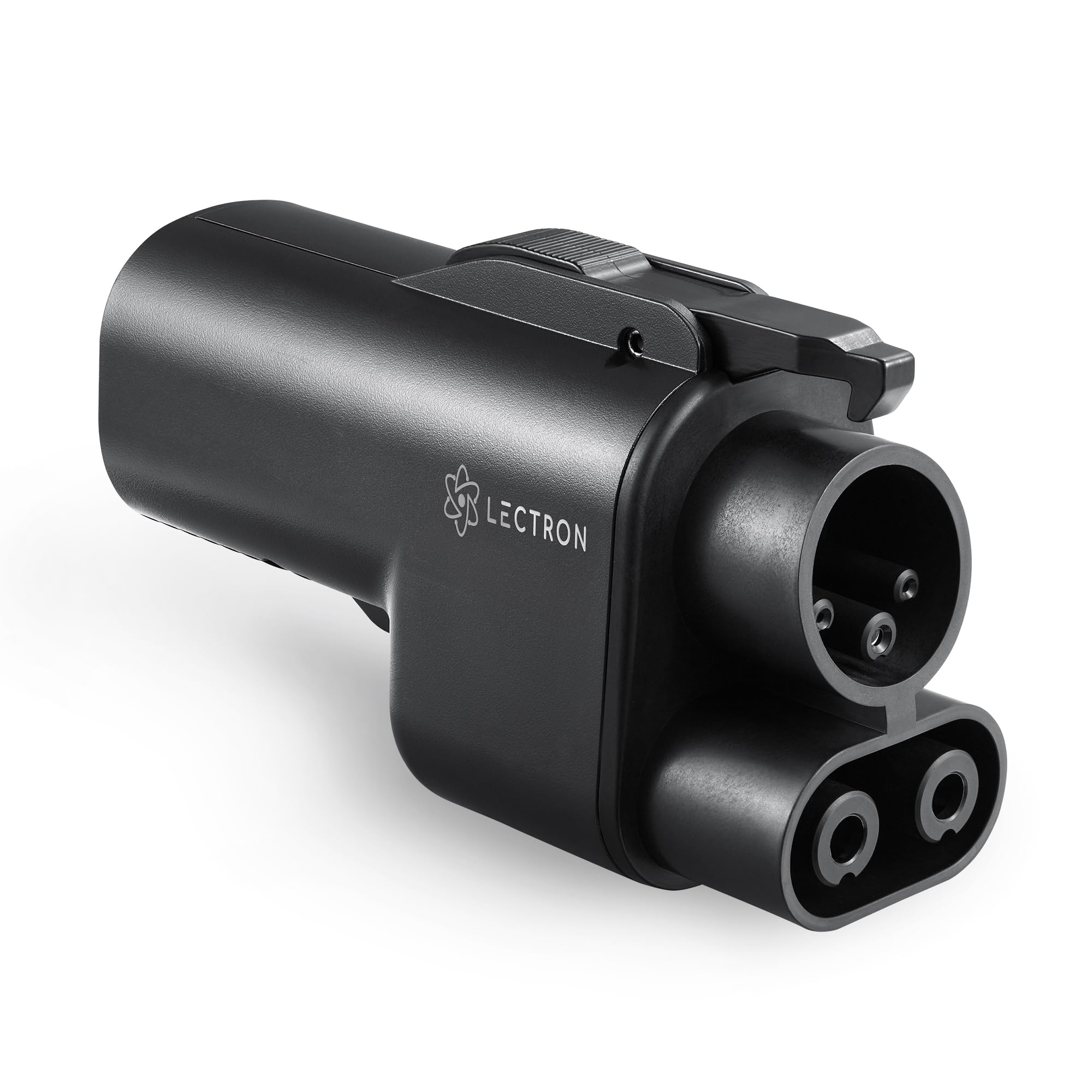
1. Lectron NACS to CCS Electric Vehicle Adapter
Our pick — over 4.5★ from 700+ verified ratings; the strongest balance of quality and price.
The heavy-duty bridge that turns a 2025 ID Buzz into a Supercharger regular.
This Lectron is the pick for non-Tesla CCS1 owners who want the widest possible key to Tesla’s network. It’s rated for 500 amps and 1,000 volts, which is a higher ceiling than the Raylix’s 400 A, giving your car a bigger safety margin before the adapter ever becomes the bottleneck.
It open up more than 25,000 V3 and V4 Superchargers, and buyers report it works “like a charm” on a 2025 ID Buzz. In practice, that can double your potential charging stops on a long trip, which is the exact reason road-trippers buy this thing.
At about 1.6 pounds, owners describe it as slightly heavy and cumbersome, but that heft reads as reassuring durability rather than a flaw. The one recurring note is price—it sits above most of the field—and the cold metal casing is unpleasant to grip in freezing weather, so keep gloves handy.
What owners rave about
- Owners consistently call out the premium feel and sturdy construction
- Rated for 500 A / 1,000 V, so it handles high-power sessions without sweating
- Secure locking on both NACS and CCS1 sides keeps the connection firm
The honest trade-offs
- It’s one of the pricier adapters on this list
- The metal body gets very cold to touch in freezing weather
- Supercharger cables are short, so you may need extra parking space if your port is positioned differently than a Tesla’s
Reach for this if: you drive an approved non-Tesla EV and want the most reliable, highest-rated access to Superchargers without thinking twice.
Think twice if: you only need an occasional emergency charge; the premium price is a lot to pay for a once-a-year backup.
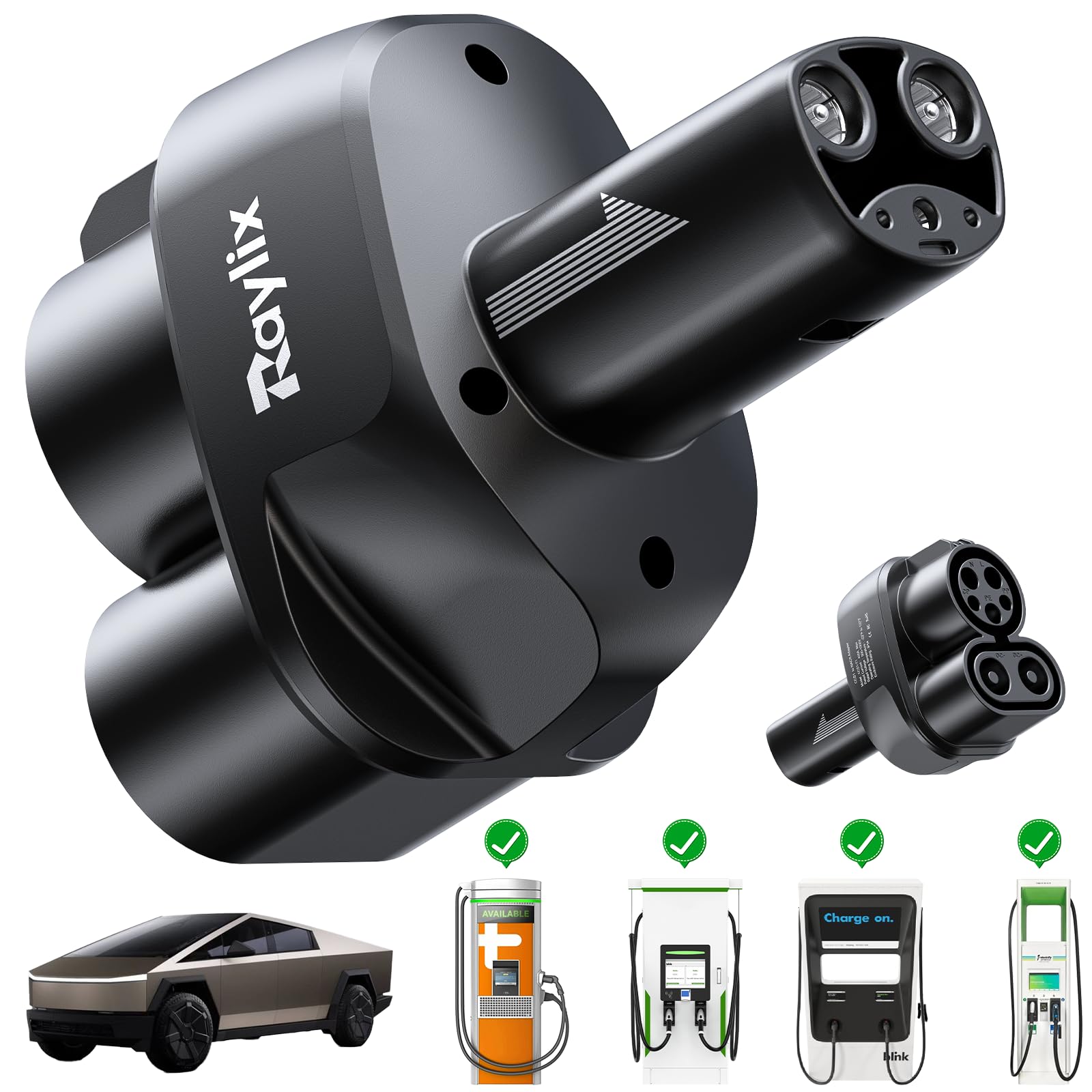
2. Raylix Upgraded CCS to Tesla Adapter
open up CCS stations for your late-model Tesla without the dealership markup.
If you drive a Tesla or a next-gen NACS EV and want to tap into the CCS charging networks, the Raylix is the budget champion.
The Raylix team logged over 100,000 charge sessions across ChargePoint, Blink, EVgo, and Electrify America to ensure compatibility. What that means for you is simple: you’re not locked to one network, and since CCS stations often cost less than Superchargers, you can save money on every fill-up.
It’s built with a six-layer thermal protection system to prevent overheating, and the included zippered case keeps it tidy in the frunk. The catches are minor: the docs mostly mention Teslas even though it works fine on a 2025 Kia EV6, and you’ll want to confirm your pre-2021 Tesla has CCS support enabled before you rely on it.
Top of the list: Buyers call this “Tesla OEM quality, without Tesla price,” and the carrying case seals the deal for glove-box storage.
Best for: Tesla and Cybertruck owners who want a cheap, dependable key to CCS stations and a 365-day warranty behind it.
Not for: anyone with a pre-2021 Tesla that hasn’t verified its CCS Adapter Support setting is enabled.
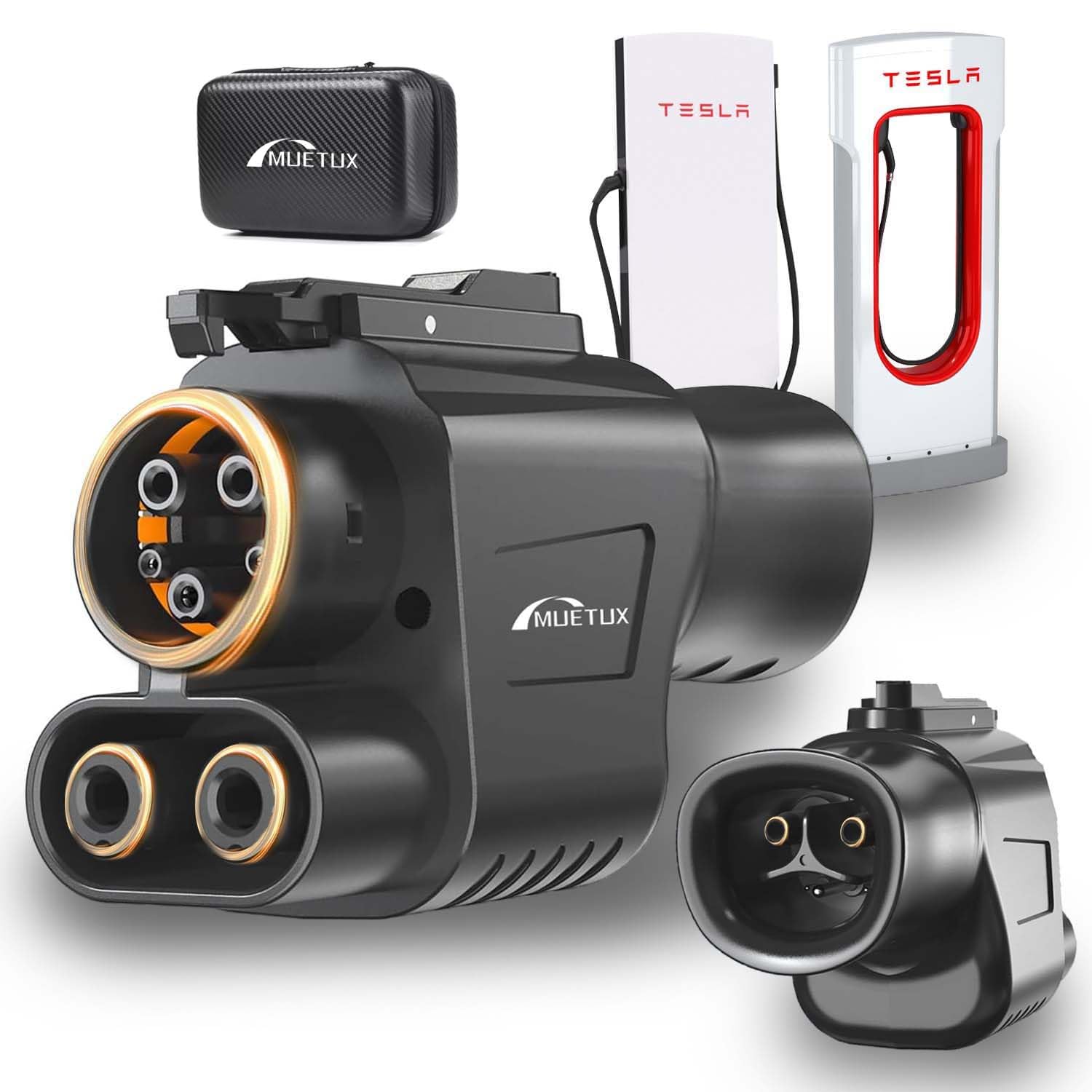
3. MUETUX NACS to CCS1 Charging Adapter
The smart-temperature brain that throttles itself down before it ever gets hot.
The MUETUX is for the non-Tesla EV owner who obsesses over safety margins. It packs three temperature sensors that monitor the plug, cable, and circuit, and when things climb near 140°F (60°C), it automatically dials back output to protect itself while keeping 90%+ of its speed. That Smart-Charge system is why the maker claims up to 20% faster charging than standard adapters.
Compatibility is wide—Ford, GM, Rivian, Hyundai, Kia, Volvo, Polestar, Lucid, and more—and it’s rated for 500 A and 1,000 V like the top pick. The build is rugged and fully weatherproof with an IP67 rating, which means it’s sealed against dust and can handle being submerged in water briefly.
Buyers praise the sturdy feel and plug-and-play operation, noting it worked flawlessly with a Rivian at Tesla Superchargers. The honest caveats: compatibility varies by your exact vehicle, not every older Supercharger supports it, and for someone who charges at home 95% of the time, it’s a lot of hardware for rare use.
Standout feature: The automatic 140°F thermal adjustment is a genuine safety net that cheap adapters simply don’t have.
Choose this if: you road-trip through hot climates or want the smartest thermal protection available on a 500 A adapter.
skip it if: you only fast-charge a handful of times a year; the tech is overkill for occasional use.
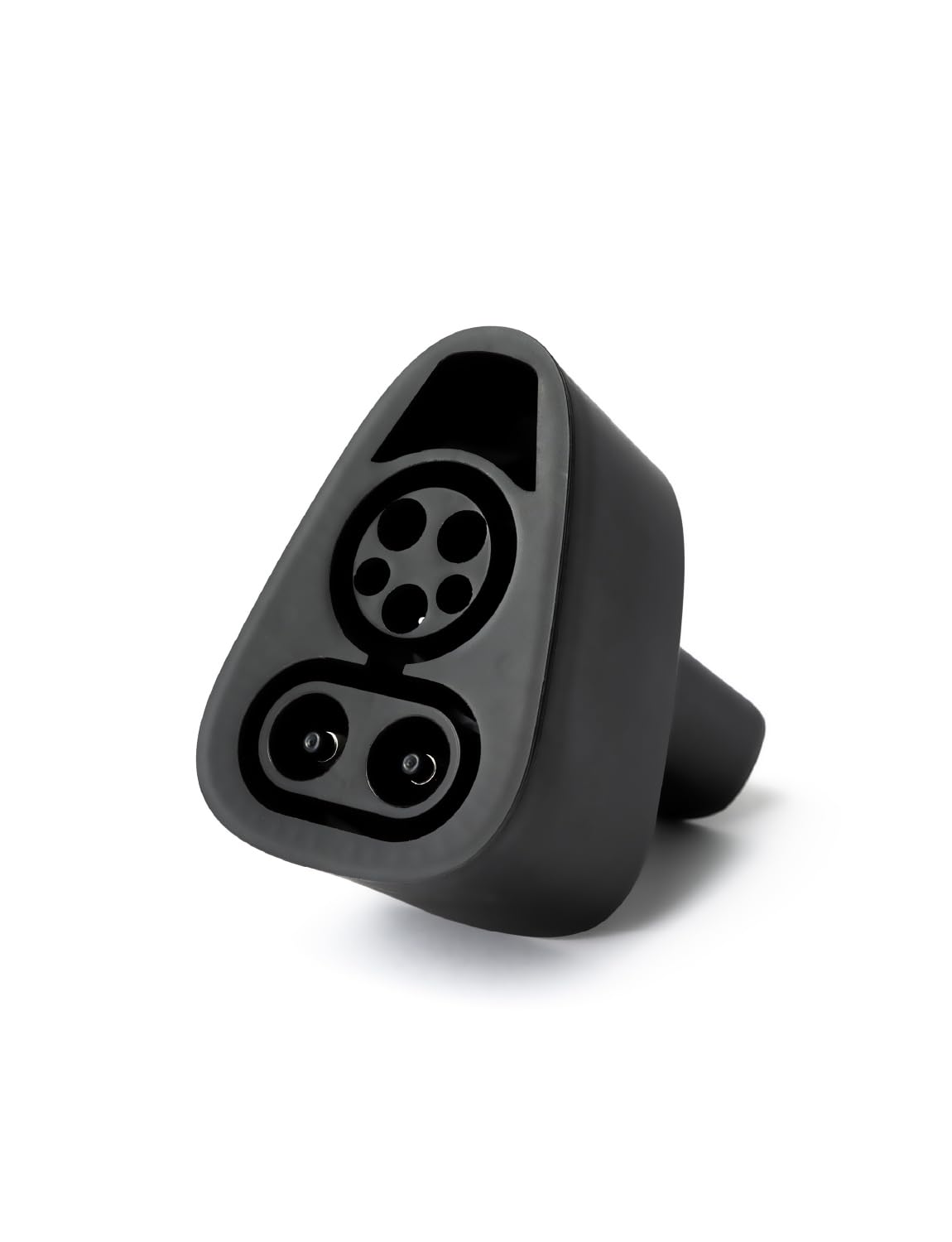
4. LENZ CCS1 to NACS Adapter
The forward-looking adapter built for 2026+ NACS cars at CCS stations.
This LENZ takes the opposite direction of the top picks: it lets a car with a NACS port connect to CCS1 DC fast chargers like Electrify America and EVgo. It’s built for the wave of 2026+ non-Tesla EVs adopting NACS, including the Hyundai Ioniq 5 and Ioniq 9, Kia EV6 and EV9, and 2026 Rivian and Toyota bZ models.
It’s UL 2252 compliant and SGS certified, meaning it’s been independently tested to a rigorous North American electrical safety standard. The unit is rated for 2.55 pounds of reassuring heft and supports up to 250 kW, so it keeps pace with today’s fastest CCS stations.
Owners love the solid build and perfect fit, calling it “exactly what I needed” and noting it works well with a Tesla Model 3 at Electrify America. The critical warning is in the specs: it is NOT for the Tesla Cybertruck and NOT for Level 2 AC charging.
Owner note: After a dozen-plus sessions, owners mention no throttling and no connectivity problems—just durable, compact performance with a carry case included.
Grab this if: you’re buying a 2026 NACS-port EV and want a certified adapter ready for the CCS networks.
Avoid it if: you drive a Cybertruck or plan to charge on Level 2 AC—this unit simply won’t work for those.
5. LJH NACS to CCS1 Adapter
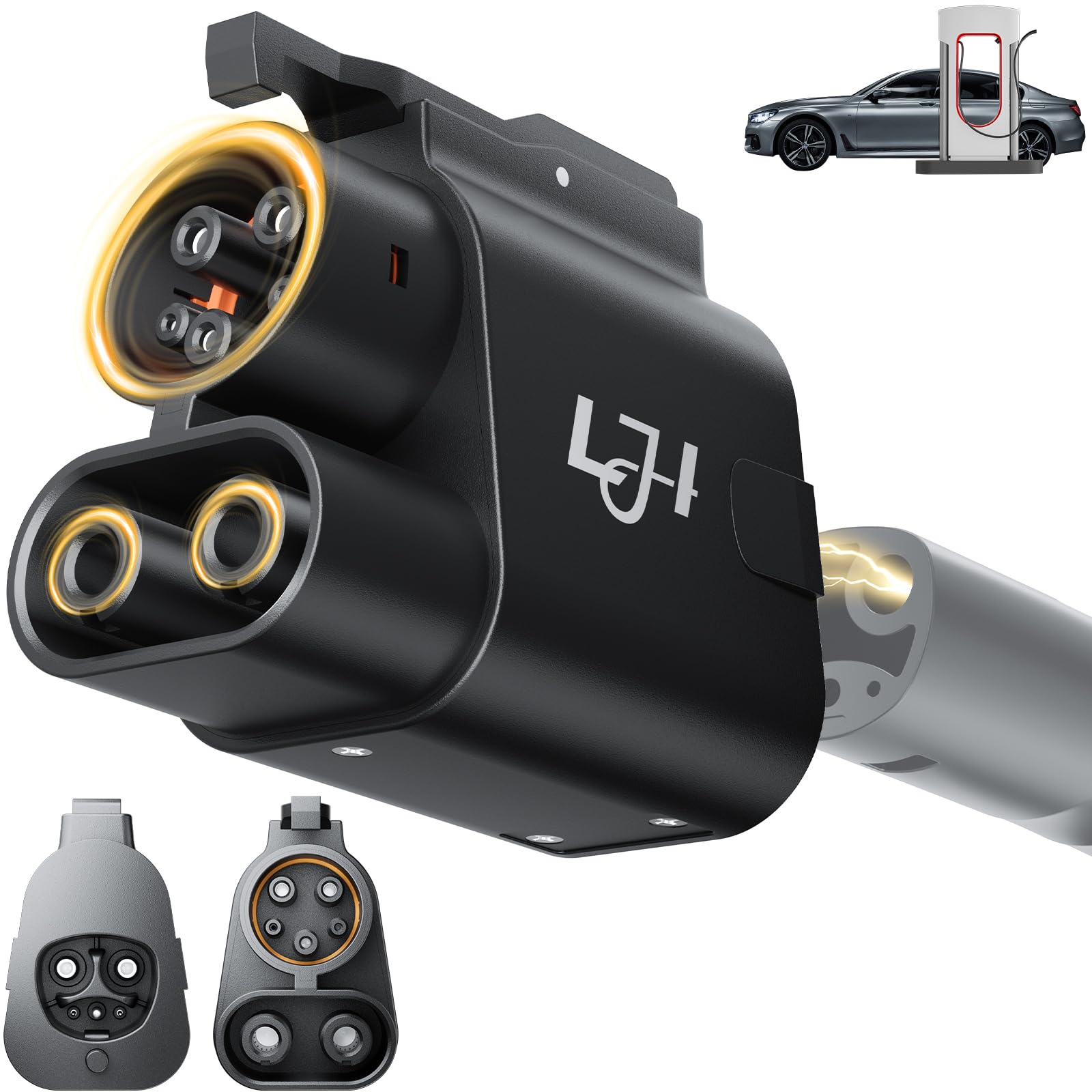
A metal-clad 500 A bridge for Ford, GM, and Rivian drivers hitting the highway.
The LJH adapter is aimed squarely at the family EV doing real miles. It claims 150+ miles in 15 minutes at a Tesla Supercharger, backed by a 500 A / 1,000 V DC capacity that reaches 80% charge in 30 minutes on compatible cars. That kind of speed turns a charging stop into a bathroom break.
It’s engineered with an automotive-grade metal enclosure and a 140°F auto-shutoff that protects against overheating, plus IP54 weatherproofing for rain and road spray. The temperature range is the headline for cold-climate drivers: it’s rated to survive from -40°F to 122°F without issue.
Buyers confirm it “works perfectly with tesla super charger on my chevy equinox ev.” The main caveat is compatibility: it’s explicitly NOT for Ford Plug-in Hybrids (PHEVs) or the 2012-2016 Focus EV, and some owners note it only works at specific Tesla chargers, so check your station before you roll up.
Why it stands out
- Metal enclosure feels tough and premium in hand
- 2-year warranty plus 24/7 expert support from LJH
- -40°F to 122°F operating range covers extreme climates
Keep in mind
- Not compatible with Ford PHEVs or older Focus EV models
- Some customers note it only works at specific Supercharger sites
Pick this for: daily commuters and road-trippers in an approved Ford, GM, or Rivian who want a 2-year warranty and a rugged metal build.
Look elsewhere if: you drive a Ford plug-in hybrid—the LJH won’t handle your vehicle.
6. LENZ NACS to CCS1 Adapter
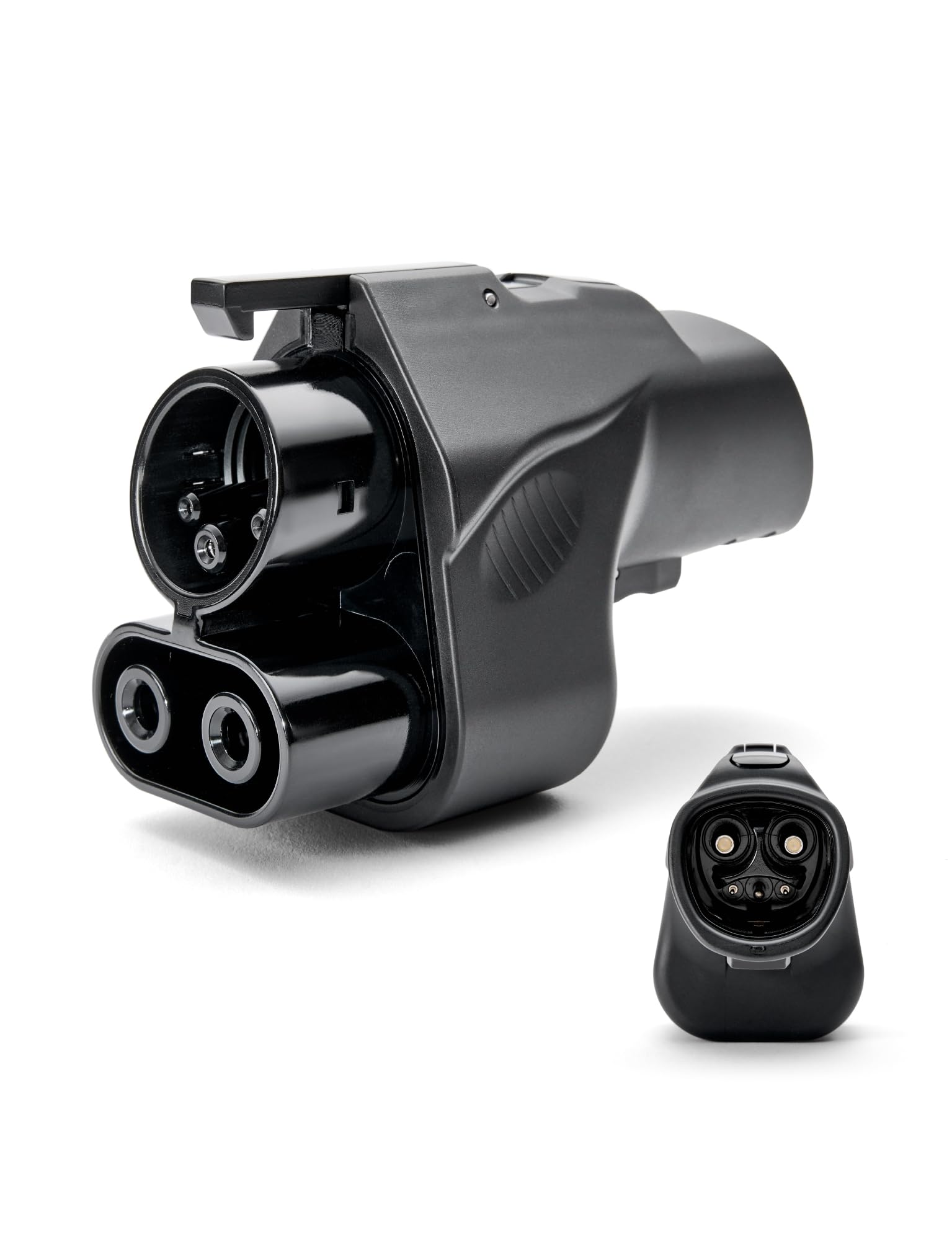
The UL 2252-certified key for approved CCS1 EVs at Tesla Superchargers.
This is the LENZ adapter that lets an approved non-Tesla CCS1 vehicle charge at a Tesla Supercharger, and it carries the weight of a UL 2252 certification. It’s SGS certified to the ANSI/CAN/UL 2252 standard, which means an independent lab verified its electrical safety and thermal performance—not just a marketing claim.
It’s rated for 500 A and 1,000 V, putting it on par with the top pick for raw capacity. The compact 1.63-pound design is easy to store, and the secure locking mechanism keeps the connection stable during high-power sessions.
Owners tested it on a 2020 Chevy Bolt and a 2017 Chevy Bolt, both working flawlessly at Superchargers, and a 2024 BMW iX owner calls it reliable for road trips. The compatibility caveat is real: only CCS1 EVs granted Supercharger access by Tesla will work, and a few reviewers point out Mercedes compatibility issues, so verify your car’s approval status first.
Build quality: “Quality is obvious when you hold it as it is solid and well-crafted,” and it’s a better value than a dealer option.
Best for: Chevy Bolt and BMW owners who want a certified, compact adapter that fits older EVs without fuss.
Not for: anyone whose automaker hasn’t approved their car for Supercharger access, or Mercedes drivers with reported compatibility issues.
7. Lectron CCS to Tesla Adapter
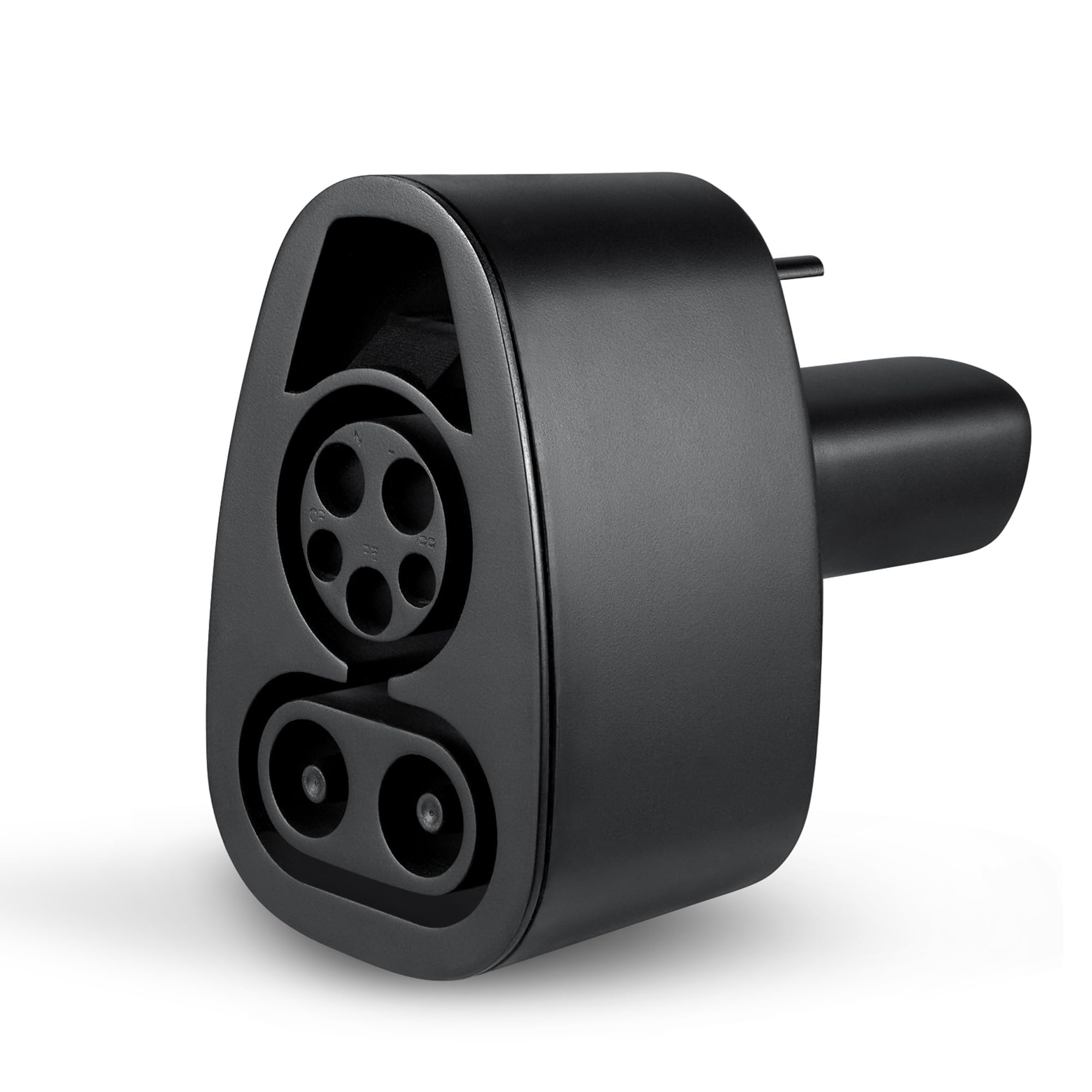
Tesla’s passport to 12,000+ CCS chargers, with a thermal brain to match.
For Tesla owners who want to stop worrying about whether the next station is a Supercharger, this Lectron open up over 12,000 CCS fast chargers across North America. It’s rated for 500 A and 500 V, supporting up to 250 kW charging on compatible Teslas—though your car’s battery level and the station’s specs will ultimately set the speed.
The safety engineering is the standout: it features real-time internal temperature monitoring that reduces current at 180°F and cuts off entirely at 185°F until things cool down. That’s a reassuring failsafe when you’re pushing high amps on a hot day.
Owners praise the easy connect and solid build, using it at Electrify America and Rivian stations “with absolutely no problems.” The 1-year warranty covers you for the first year. Note the caveats: any Tesla built before October 2020 needs an ECU retrofit for CCS, and it’s not compatible with the Cybertruck.
Glove-box ready: It’s light and compact enough to store easily, and “not too heavy” despite passing a lot of amps.
Ideal for: Tesla owners (2020 or newer with CCS enabled) who road-trip and want the 250 kW ceiling plus a 1-year warranty.
Wrong fit for: Cybertruck drivers or anyone with a pre-2020 Tesla that hasn’t had the ECU retrofit done.
8. DEWALT CCS1 to NACS Fast Charging Adapter
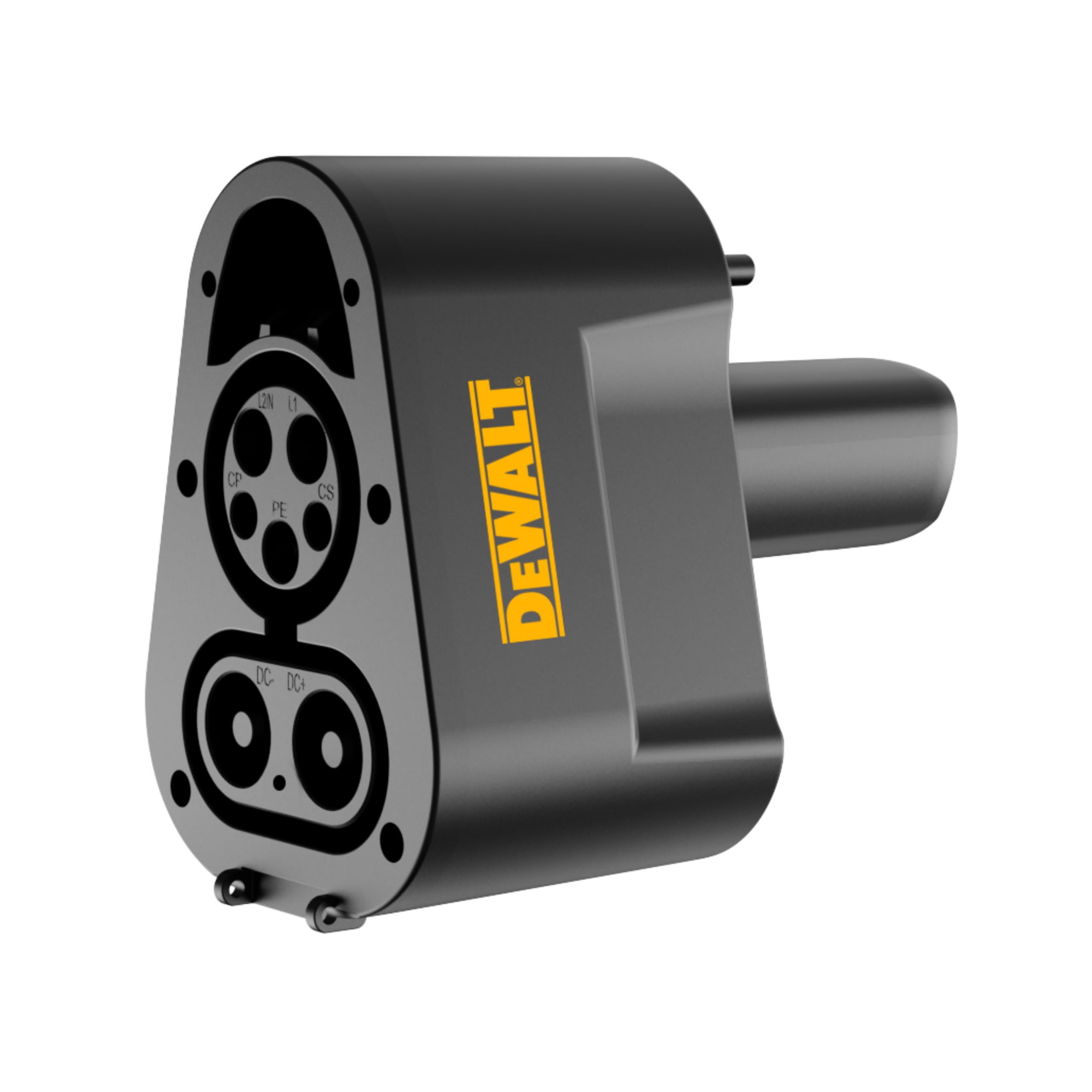
A name you trust from the tool aisle, built for daily non-Tesla Level 3 duty.
DEWALT brings its reputation for rugged tools into the EV charging world with an adapter designed for Tesla Models 3, S, X, and Y from 2021 and newer. It’s rated for 350 A and 1,000 V, which is lower than the 500 A leaders but still plenty for most Tesla charging curves—and the brand’s engineering pedigree is why owners trust it with “insanely high voltage and amps.”
The real-world proof is in the daily-driver reviews: one owner used it for six months straight at a work Level 3 charger with no failures, calling it “sturdy, heavy, maintains fast charging.” That repeated high-load use is exactly what the automotive-grade construction is meant to survive.
It’s IP54 weatherproof and includes a travel bag, backed by a 3-year limited warranty. The recurring gripe is the fit: it can be very tight on the charger handle, and one buyer found it “hard to disconnect” after a session. You’ll want to grip it firmly when unplugging.
Why owners swear by it
- DEWALT’s proven build quality in a 350 A adapter
- No failures after 6 months of daily Level 3 use
- 3-year warranty and 24/7 technical support
The catch
- The tight fit makes it hard to disconnect from the charger
- 350 A rating is lower than the 500 A leaders on this list
Reach for it if: you want a familiar, trusted brand name and plan to charge daily at a work or public Level 3 station.
Pass on it if: you want the absolute highest 500 A headroom or have trouble with tight connections—you’d prefer the Lectron’s smoother fit.
9. Amphenol NACS to CCS1 Adapter
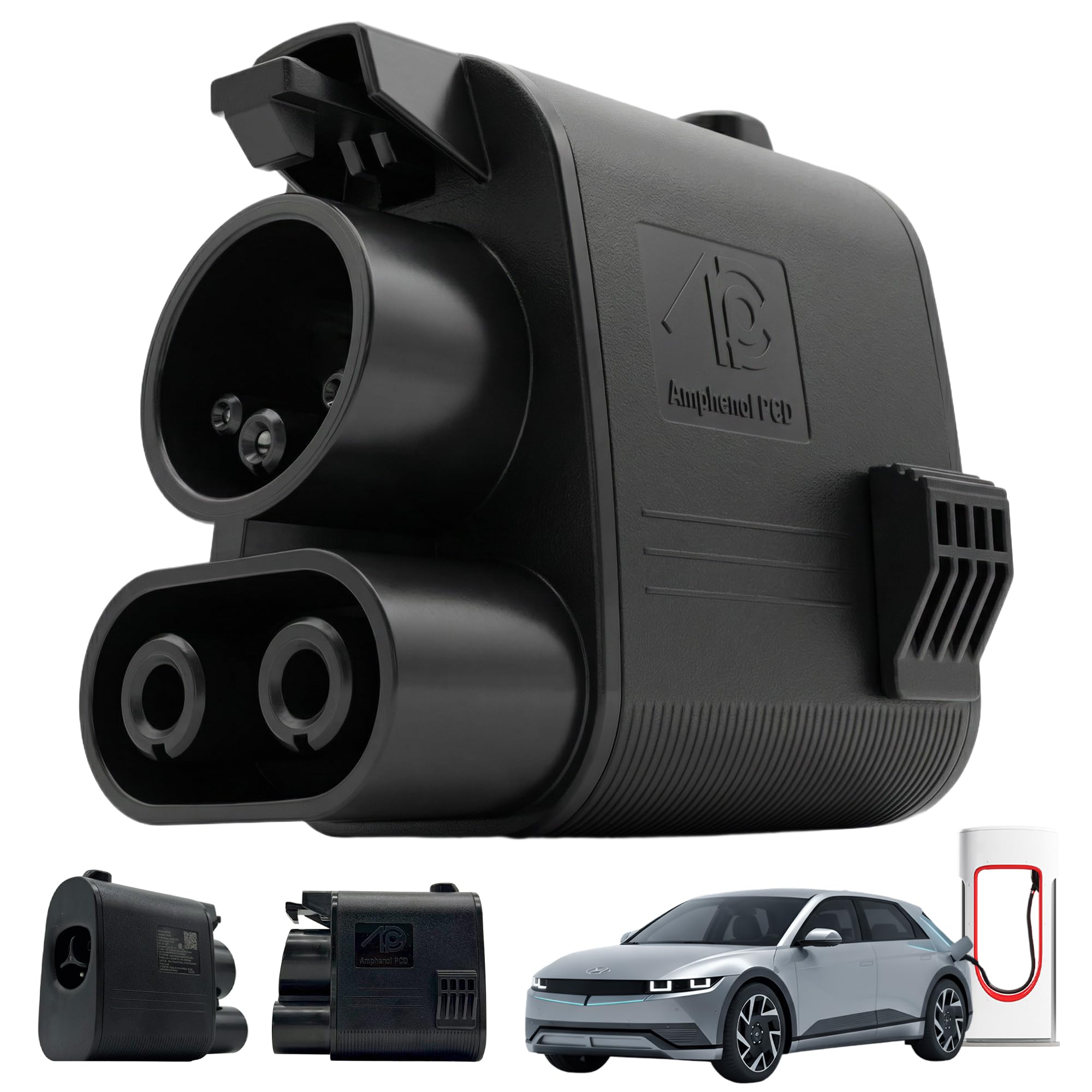
The industrial-grade 600 A giant with the first UL 2252 certification in its class.
This Amphenol is the heavy hitter for non-Tesla EV owners who want maximum certified performance. It’s the first NACS-to-CCS1 adapter to achieve UL 2252 certification, meaning independent testing verified its electrical safety, thermal performance, and mechanical durability under North American standards.
The numbers are the biggest on this list: it’s rated for 600 A and 1,000 V, built to handle 10,000+ charging cycles, and charges up to 150 miles in as little as 15 minutes at V3/V4 Superchargers. The impact-resistant housing withstands 3x more force than standard materials, and the metal latch has an ice-protection cover for all-weather use.
Owners call it “tank-like” and praise the flawless fit with a Polestar 2. The 90+ years of Amphenol connector engineering shows. The honest negatives: it’s the most expensive adapter here, and at 2.66 pounds it’s the heaviest, too. One reviewer noted it working on an off-brand NACS charger but failing at multiple Tesla Superchargers, so compatibility hiccups exist even at this tier.
The safety story: The automatic interlock mechanism secures both NACS and CCS1 connections to prevent accidental disconnection during high-voltage sessions.
Worth it for: road warriors in a Ford, Rivian, GM, Volvo, or Polestar who want the highest certified amperage and the confidence of a UL 2252 badge.
Too much if: you charge mostly at home and only hit a Supercharger occasionally—the premium price and 2.66-pound weight are hard to justify.
Understanding the Specs
UL 2252 and SGS Certification
UL 2252 is the North American safety standard specifically for EV charging connectors and adapters. When an adapter is UL 2252 certified, an independent lab has tested it for electrical safety, thermal performance, and mechanical durability. SGS is a separate testing body that verifies the same kind of compliance. Buying an adapter with this badge means a third party confirmed it won’t overheat or short out under heavy use—a level of assurance cheap no-name adapters don’t offer.
IP Ratings (IP54 vs IP67)
The IP (Ingress Protection) rating tells you how sealed the adapter is against dust and water. The first digit covers solids; the second covers liquids. An IP54 unit is protected from dust and water splashes from any direction, which is fine for normal weather. An IP67 unit is fully dust-tight and can survive being submerged in up to a meter of water for half an hour. For a road-trip adapter, IP67 is the tougher, more low-maintenance choice.
NACS vs CCS1 Connectors
NACS (North American Charging Standard) is the Tesla-style plug, and CCS1 (Combined Charging System) is the standard used by most other automakers in North America. An adapter just converts one plug shape to the other, but the direction matters: a NACS-to-CCS1 adapter lets your CCS1 car use a Tesla Supercharger, while a CCS1-to-NACS adapter lets your Tesla or NACS-port EV use CCS stations like Electrify America. Getting the direction wrong means the adapter simply won’t fit your car.
Amperage and Voltage (A and V)
Amperage (amps, or A) measures the current flowing, and voltage (V) measures the electrical pressure. Together they determine the power delivered. A 500 A / 1,000 V adapter can handle more power than a 350 A unit, which gives it headroom for future cars. But the limiting factor is always your car’s own charging system—the adapter just needs to be rated higher than what your car can draw, so the 500 A models are effectively future-proof for most current EVs.
FAQ
Will a NACS adapter work on my specific EV?
What is the difference between NACS to CCS1 and CCS1 to NACS adapters?
How fast will my car charge with a 500 A adapter?
Is it safe to use a third-party NACS adapter on a Tesla Supercharger?
Will an adapter work with a Cybertruck?
Can I use a NACS adapter for home or Level 2 AC charging?
Why is the adapter stuck on the charger when I try to unplug it?
How do I know my Tesla supports CCS charging before buying a CCS1 adapter?
Does a higher amperage rating mean faster charging for my car?
What happens if the adapter gets too hot during charging?
Final Thoughts: The Verdict
For most buyers, the nacs adapter winner is the Lectron Vortex because it pairs a 500 A / 1,000 V rating with a proven track record across thousands of owner sessions and the widest Supercharger access. If you want certified confidence on a budget, the LENZ NACS to CCS1 gives you UL 2252 safety for less. And for a Tesla owner hitting CCS stations, the Lectron CCS to Tesla is the glove-box essential that open up 12,000+ chargers.
How We Picked
We do not accept paid placement. Every pick is matched to a real buyer and a real use-case; we do not hands-on test units.
Sources & Methodology
Specifications: manufacturer listings and product documentation. Review insights: verified customer reviews, as of August 2026. Pricing: not shown on this page (it changes often); check the current price via the retailer link.
As an Amazon Associate, Trending Car earns from qualifying purchases. This does not affect which products we feature.