
Our readers keep the lights on and my garage snacks stocked. As an Amazon Associate, I earn from qualifying purchases.
Specs are compiled from manufacturer listings and verified buyer reviews and can change over time — please confirm the key details on the product page before buying.
Every rider hits that moment. You twist the throttle on a loose climb, and the rear just scoops out a hole while the bike stays put. The right set of MX tires transforms spin into forward motion instantly. This guide covers eight proven options, from budget-friendly trail tires to pro-level race rubber, so you can pick the one that turns your spin into forward motion.
I’m Min Islam — the founder and writer behind Trending Car. This guide is built by comparing the manufacturers’ published specifications and the patterns across verified customer reviews, so you get each pick’s real strengths and trade-offs instead of marketing spin.
Whether you race on a groomed track or crawl through rocky singletrack, the perfect set of mx tires will transform how your bike hooks up and handles beneath you.
Our Picks at a Glance


How To Choose The Best MX Tires
Picking the wrong tire is the fastest way to hate your ride. The decision depends on terrain, bike weight, and maintenance preference. Here is the breakdown.
Match the Tread to Your Terrain
Soft-terrain tires use tall, widely spaced knobs that dig into loam, sand, or mud to find traction. Intermediate tires have closer-spaced knobs that work across packed dirt and loose soil. Hard-terrain tires feature low, densely packed blocks for hardpack or rocky surfaces. If you ride one type of dirt most of the time, buy a tire built for that condition. If you race on mixed surfaces, an all-around intermediate tire is your safety net.
Know Your Ply Rating
The ply rating tells you how tough the tire carcass is. A 6-ply tire resists punctures from sharp rocks better than a 2-ply, but it also weighs more and feels stiffer on the trail. A lighter 2-ply tire flexes more for better grip on soft ground. Enduro and rocky-trail riders should lean toward a higher ply count. Track riders who want feel and compliance can stick with a lower one.
Check the Load Index and Sizing
The load index (like 51 or 65) is a code that tells you how much weight the tire can safely carry. A higher number means a higher capacity. Heavier four-stroke bikes need a tire with a load index that matches their weight to avoid sidewall damage. The sizes — numbers like 80/100-21 — break down as section width in millimeters, aspect ratio as a percentage, and rim diameter in inches. Always match those last three numbers to your bike’s existing tire or your owner’s manual.
Quick Comparison
| Model | Best For | Terrain | Load Index | Weight | Amazon |
|---|---|---|---|---|---|
| Tusk EMEX T-35 Set★ Best Overall | Complete Front & Rear Value | Soft to Intermediate | 59 | 10 cm Section Width | Amazon |
| Bridgestone M204/M203Lightweight Champ | Lightweight Universal Fit | Soft to Intermediate | 52 | 3.8 lbs | Amazon |
| Dunlop Geomax MX53 FrontHard-Pack Specialist | Hard & Intermediate Front | Hard/Intermediate | 65 | 6.3 lbs | Amazon |
| Kenda K760 Dual/Enduro Rear | DOT-Approved Dual Sport | Varying/Dual Sport | 59 | 10.6 lbs | Amazon |
| Kenda Millville II K785 Front | Sand & Desert Front | Soft/Sand | 51 | 9.2 lbs | Amazon |
| Dunlop Geomax MX33 Rear | Pro-Level Track & Trail | Soft to Intermediate | 63 | 12.3 lbs | Amazon |
| IRC VE-33S Gekkota Rear | Gummy Grip Enduro | Soft / Single Track | 51 | 6 kg | Amazon |
| Pirelli Scorpion MX Extra X Set | Premium Front & Rear Set | Mid-Soft to Mid-Hard | 51 | 25 lbs (Set) | Amazon |
In‑Depth Reviews
1. Tusk EMEX T-35 Soft/Intermediate Terrain Dirt Bike Front and Rear Tire Set
Our pick — over 4.5★ from 400+ verified ratings; the strongest balance of quality and price.
A complete front-and-rear set that delivers big-tire confidence without the big-tire price.
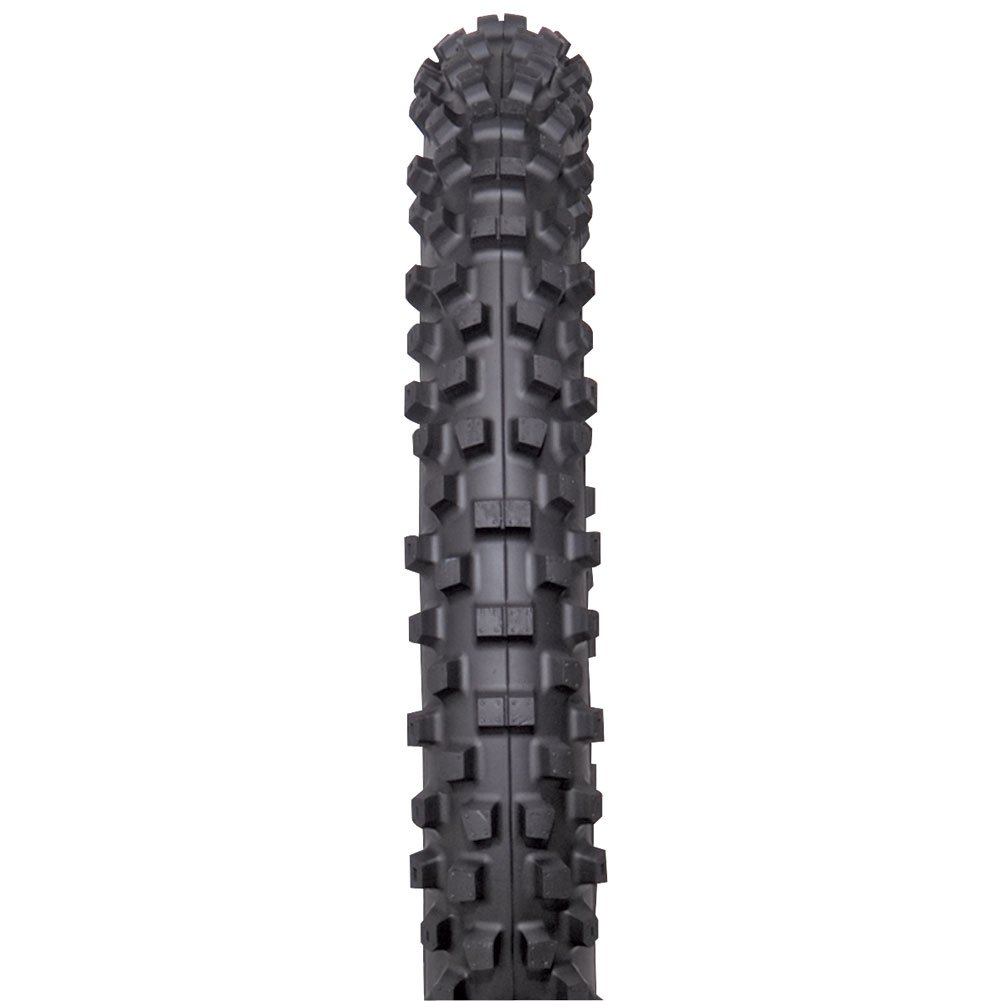
This Tusk set earns a 4.8 rating backed by several hundred owners — the crowd favorite by a clear margin. You get both the front 80/100×21 and rear 100/100×18 tires in one box, which saves the headache of matching different brands. The aggressive deep-tread blocks grab loose dirt, sand, and loam effectively, while the tube-type design (using an inner tube to hold air) makes field repairs straightforward — no need for a specialty shop.
Owners consistently praise the rubber compound for resisting wear despite hard use. One review from a rider who bought a set for his son’s dirtbike noted the tires are still holding up well months later, with no tearing and solid air retention. The section width runs 10 centimeters across the rear, which matches the width of many stock enduro rims perfectly. The bias-ply construction (woven layers of fabric inside the rubber) keeps the sidewall stiff enough to hold a line through corners without folding.
The honest trade-off here is that these are non-directional tread tires (meaning you can mount them either way, but they do not cut into hard-pack as well as directional designs).
What Wins Owners Over
- Complete matching set means zero fitment guesswork
- Stiff sidewall inspires cornering confidence at speed
- Holds air and resists tearing ride after ride
One Thing to Know
- Non-directional tread pattern is less ideal on hard-packed or paved surfaces
Reach for this if: You want a ready-to-mount pair that handles everything from dirt trails to loose sand while staying affordable.
Look elsewhere if: Most of your riding is on hard-packed tracks or asphalt where a directional, hard-terrain tire would bite better.
2. Bridgestone M204/M203 Soft/Intermediate Terrain Tire
At 3.8 pounds, this is the lightest tire in the roundup and an easy win for smaller bikes.
Riders swapping stock tires on light electric bikes like the Sur-Ron or Talaria MX3 repeatedly reach for this Bridgestone. The weight difference matters — reviews mention it is roughly half a pound lighter than the stock tire they pulled off, which cuts unsprung mass (the weight of parts not supported by the suspension) noticeably. The soft-to-intermediate tread digs into loose trails aggressively, and the bias-ply construction (fabric layers in the rubber) keeps installation manageable with some dish soap.
The real-world feedback from owners on modified bikes is consistent: the tire digs in well on soft trails but sits more crowned (curved across the tread face) than stock, meaning some riders with tight fork clearance needed to dish the wheel slightly. Even with that fitment note, the reviews are overwhelmingly positive, with buyers calling it heavy-duty and good quality. One owner put it simply: most riders know you cannot do it all with one tire, but this one is a good all-around choice.
The load index of 52 (meaning it supports less weight than a higher index) means this tire is best matched to lighter bikes — think 125cc trail bikes and electric conversions — rather than full-size 450s. If you ride a heavy four-stroke, the Dunlop Geomax MX53 front tire or MX33 rear tire offer higher load indexes of 65 and 63, respectively.
Why Riders Grab It
- Extremely light at 3.8 pounds reduces rotational mass
- Proven Bridgestone compound grips soft terrain reliably
- Fits a wide range of universal applications from kids bikes to e-motos
Fitment Heads-Up
- Crowned profile may need minor wheel dishing on certain forks
Choose this for: Lightweight e-motos, 125cc bikes, or any build where shedding unsprung weight is the priority.
Skip it for: Full-size 450cc machines that need a higher load index than 52.
3. Dunlop Geomax MX53 Front Tire (70/100-19)
The front tire that gives you slide control when the track turns blue-groove hard.
The MX53 is Dunlop’s answer to hard-packed and intermediate tracks. Its Block-in-a-Block design (a smaller inner knob placed inside the main tread block) creates a progressive biting edge as you lean into corners. The front tire runs a 70/100-19 size with a section width of 7 centimeters, making it noticeably narrower than the Tusk set’s 10-centimeter profile. That narrower footprint helps the tire cut through loose topsoil to find hard ground underneath.
What stands out in owner reports is the versatility across terrain. Riders say it works great in the Eastern Sierra mountains and the high desert of California alike. The load index of 65 (the highest in this lineup) means this front tire comfortably supports heavy four-stroke machines where lighter tires like the Bridgestone M204/M203 with its load index of 52 might struggle. At 6.3 pounds, it is stout without being heavy.
The only real limitation is that this is a front tire only — you will need to pair it with a matching MX53 rear or another Dunlop to get the full system benefit.
Strengths
- Block-in-a-Block design adds progressive cornering slide control
- High load index of 65 suits heavy four-stroke bikes
- Performs across hard-packed and intermediate conditions
Limitation
- Sold as a single front tire, not a set
Ideal for: Riders on heavy bikes who spend most of their time on hard-packed or intermediate tracks and want precise front-end feel.
Think twice if: You need a full front-and-rear set from one order.
4. Kenda K760 Dual/Enduro Rear Motorcycle Bias Tire (100/100-18)

A DOT-legal enduro tire that bridges the gap between trail and tarmac with tall, aggressive knobs.
The K760 is one of the few options here that carries DOT approval (Department of Transportation approval, meaning it meets standards for light road use) — specifically rated 90% dirt and 10% road application. That makes it a natural fit for dual-sport bikes that need to connect trails via pavement. The tall knob pattern digs into varying terrain effectively, and the durable compound is designed to extend tread life across mixed conditions.
Buyers report that it fits Sur Ron Ultra wheels easily and offers noticeably more grip than street-biased tires. One rider called it quiet at higher speeds, which is unusual for an aggressive knobby. The 12-ply rating (the number of fabric layers in the tire) is enormous for a tire of this type, providing serious puncture resistance for rocky enduro courses. However, that ply count also makes it heavy at 10.6 pounds, and some owners note the leading edge of the knobs wears faster than expected on pavement.
The load capacity of 805 pounds is overkill for most dirt bikes, but it means this tire handles loaded adventure bikes without breaking a sweat.
Biggest Perks
- DOT-approved for legal road use between trail sections
- 12-ply carcass shrugs off rocks and sharp debris
- Tall knobs provide strong bite in loose and wet conditions
Trade-Off
- Knob wear accelerates with extended pavement miles
Best for: Dual-sport riders who need one tire that can survive rocky trails and still pass a road-legal inspection.
Not for: Pure track-day riders who want a lightweight, fast-wearing soft-terrain tire.
5. Kenda Millville II K785 Front Tire (80/100-21)
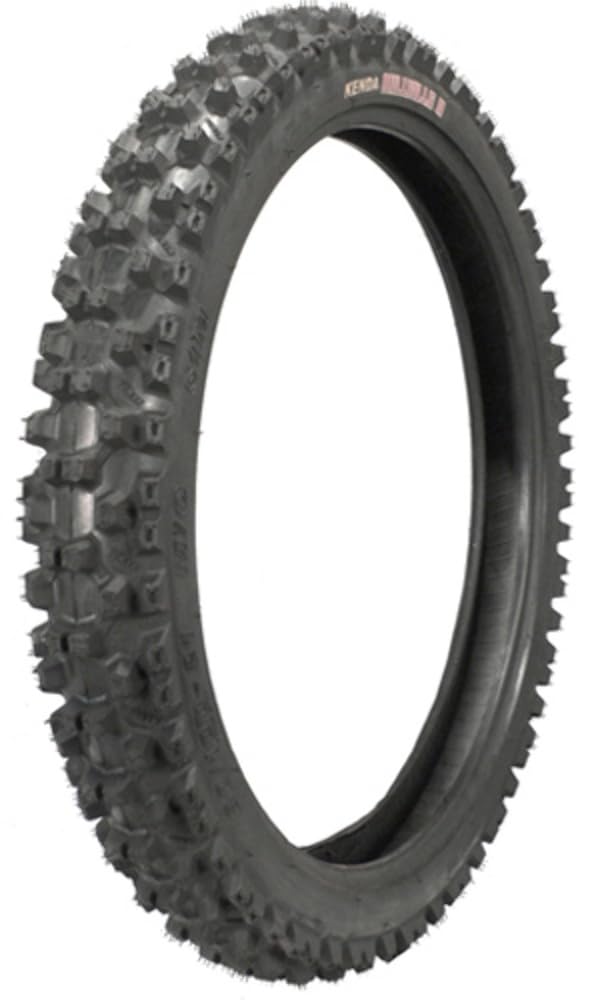
A front tire that floats through sand better than a Michelin T63.
The Millville II K785 is Kenda’s next-generation soft-terrain front tire, and it has carved out a loyal following among desert and sand riders. One owner running it on an XR400R specifically noted that after 300 miles the tread showed minimal wear, and they ran it as low as 5-7 psi on rocky Colorado enduro trails without a single pinch flat (a flat caused when the tube gets pinched between the tire and rim on a hard impact). That kind of durability comes from the stiff carcass construction that resists folding under low pressure.
Riders in Arizona praise the grip across most surfaces, though they note the tire does float slightly in deep sand rather than cutting through. The 80/100-21 size fits 21-inch front rims standard on almost every full-size dirt bike. The load index of 51 is on the lower side, so this is best matched to bikes without extreme front-end weight. At 9.2 pounds, it sits mid-pack for weight but feels planted at speed.
The recurring theme in reviews is that this tire delivers long life for a soft-terrain compound, making it a smart choice for riders who cannot afford to replace a front tire every few weekends.
Why It Stands Out
- Superb wear life for a soft-terrain tire — 300+ miles with minimal wear reported
- Runs low PSI without pinch flats even over sharp rocks
- DOT certified for legal trail-to-trail transfers
Slight Float
- Can feel light in deep sand compared to a dedicated desert paddle
Reach for it if: You ride desert, sand washes, or rocky enduro and want a front tire that lasts.
Think twice if: You only ride hard-packed clay where a lower-profile block works better.
6. Dunlop Geomax MX33 Rear Tire (120/80-19)

Developed with pro Motocross riders, this rear tire sets the standard for soft-to-intermediate grip.
The MX33 is the tire Dunlop built with input from top-level racers, and it shows in the details. The Altered Block-in-a-Block shape on the rear increases the surface area of the interior block while additional tread angles sharpen stability and slide control. Riders report it is phenomenal on loamy MX tracks and still fares well on hard-pack trails, making it a stronger in-between choice than the Bridgestone M204/M203 for riders who track on weekends and trail ride during the week.
At 12.3 pounds, this is a heavy tire — the 6-ply construction (six layers of fabric in the rubber) adds weight for durability. The load index of 63 and 600-pound load capacity mean it is built for full-size 250f and 450f bikes where rear-end grip is critical. One owner who uses it for both track and trail says the MX53 is too hard for track use, but the MX33 nails that middle ground perfectly.
The downside of the higher ply count is that the tire feels stiffer during installation. Plan on letting it sit in the sun or using a warm-water soak before mounting.
Standout Features
- Pro-developed Block-in-a-Block enhances cornering slide control
- Versatile enough for both loamy tracks and hard-pack trails
- 6-ply carcass resists punctures in rocky sections
Mounting Challenge
- Stiff 6-ply sidewall makes initial installation tougher
Grab this if: You ride a full-size four-stroke on mixed track-and-trail days and want pro-level rear-end grip.
Look elsewhere if: You need a lightweight tire for a smaller bike or ride mostly extreme hard-enduro where a gummy compound reigns.
7. IRC VE-33S Gekkota Rear Tire (110/100-18)

The gummy rear tire that clings to rocks and roots like Velcro.
The IRC VE-33S Gekkota is the definition of a gummy tire — a soft compound that molds to the terrain instead of bouncing off it. Owners riding on Pennsylvania slate stone, normally a tire-destroying surface, reported that after 350 miles of hard trail riding the tire showed surprisingly little chunking or knob loss. One Stark Varg owner downsized from a 120/100-18 to this 110/100-18 and found no loss of performance when paired with Tubliss (a system that replaces the inner tube with a high-pressure liner) at around 7 psi.
The 2-ply carcass (two layers of fabric in the rubber) keeps the tire lightweight and flexible, which is exactly what allows the gummy compound to deform over obstacles. The maximum pressure of 60 psi gives you a wide tuning window. Most enduro riders will run it far lower, but the high ceiling means you can bump it up for pavement sections. The load index of 51 keeps this best matched to lighter bikes, though riders on KTM 300s and Stark Vargs report excellent results.
The catch is lifespan — gummy tires wear faster than standard rubber on hard surfaces. Owners acknowledge this trade-off openly, saying the grip is worth it and the tire delivers roughly 400-450 miles of aggressive trail riding before replacement. That is a shorter life than the Tusk EMEX T-35 set, which owners mention holds up for months of hard use.
What Makes It Special
- Gummy compound provides near-unstoppable traction on wet rocks and roots
- Performs brilliantly with Tubliss at low single-digit PSI
- Holds up to sharp, abrasive terrain better than most soft tires
Honest Limitation
- Gummy rubber wears faster on hard-pack and asphalt sections
Perfect for: Hard enduro, single-track, and technical rock gardens where maximum grip matters more than mileage.
Avoid if: You ride mostly hard-pack tracks or need a tire that lasts multiple seasons.
8. Pirelli Scorpion MX Extra X 80/100-21 Front & 110/90-19 Rear Tire Set
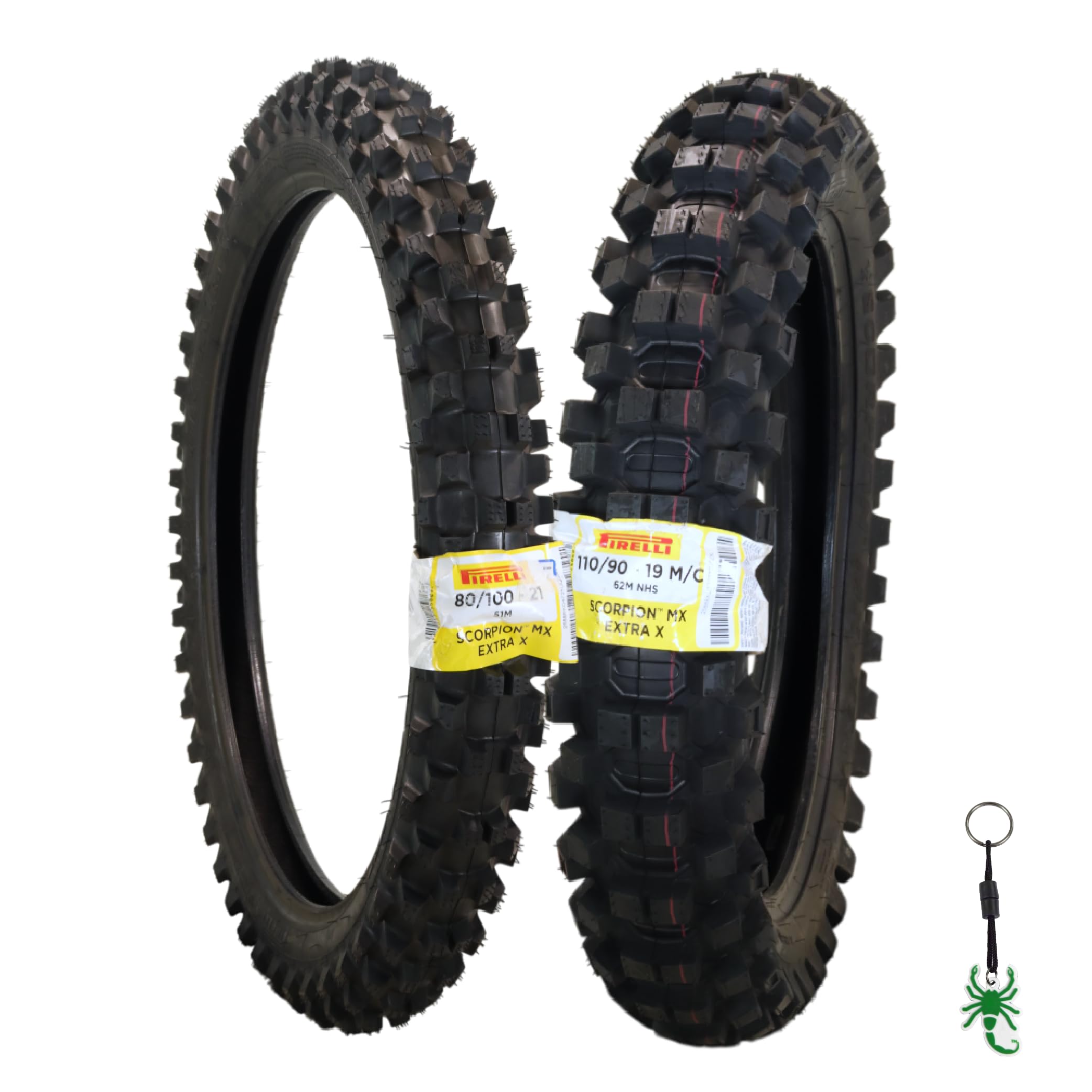
A complete front-and-rear Pirelli set built to withstand an entire championship season.
This Pirelli Scorpion MX Extra X set comes as two tires plus a keychain, and the design philosophy is clear: deliver consistent performance across mid-soft to mid-hard terrain while resisting the block deformation (the knobs folding over under load) that plagues softer compounds. The front tire uses arrow-like blocks for directional accuracy and braking stability, while the rear uses a bridged layout that improves rigidity under heavy throttle. Riders on heavy four-stroke 250s report it held an entire 2024 championship season without needing replacement, which is a strong durability claim from those owners.
The multi-ply carcass (several layers of fabric in the rubber) is designed to balance puncture resistance with flexibility for absorbing jumps and roots. At 25 pounds for the set, these are substantial tires — heavier than the Tusk EMEX T-35 set’s 10 cm section width per tire. The DIY installation can be tough — one owner on a South Texas clay-dirt track recommended paying a shop to mount them — but once seated, the traction on muddy and sandy surfaces delivers. Owners in Florida sand also report easy installation after letting the tires warm in the sun and excellent performance once on the bike.
These are NHS (Not for Highway Service — off-road-only) racing tires, so they are pure off-road only. The maximum pressure of 33 psi is lower than some competitors, which tells you these are designed to run soft from the start.
Big Wins
- Complete matching front-and-rear set with proven race durability
- Bridged rear blocks resist deformation under hard acceleration
- Multi-ply carcass handles jumps and rocky trails without puncturing
One Caveat
- Stiff sidewalls make DIY mounting difficult without warming the tires first
Best for: Motocross racers who want a pre-matched set that can survive a full season of practice and race days.
Skip if: You need a road-legal tire for dual-sport use — these are NHS only.
Understanding the Specs
Load Index
The load index is a two-digit code that tells you how much weight a tire can safely support. For example, an index of 65 means the tire can carry a higher load than an index of 51. Heavier four-stroke bikes need a higher load index to avoid sidewall damage. Always check your bike’s manual or the old tire’s sidewall to match the number.
Ply Rating
The ply rating tells you how many layers of rubber and fabric are in the tire carcass. A 6-ply tire is thicker, stiffer, and more resistant to punctures than a 2-ply tire. The trade-off is weight and ride feel — more plies mean a heavier tire that transmits more vibration. Enduro and rocky-trail riders usually want a higher ply count, while track riders looking for flex and compliance prefer a lower one.
FAQ
What does the tire size 80/100-21 mean?
Can I use a soft-terrain tire on hard-packed ground?
What is the difference between tube-type and tubeless MX tires?
How long should a set of MX tires last?
What does DOT approval mean on a dirt bike tire?
Can I put a front tire on the rear or vice versa?
What does the speed rating M mean on a tire?
Is a higher ply rating always better for trail riding?
What does NHS mean on a tire?
Can I run lower PSI in a tube-type tire for more grip?
Final Thoughts: The Verdict
For most riders, the mx tires pick to start with is the Tusk EMEX T-35 set because it delivers a complete matching front-and-rear pair with excellent quality and durability at a fair value. If you ride hard-packed tracks and want pro-level front-end precision, the Dunlop Geomax MX53 front tire is your best bet. And if you wrestle with wet rocks and technical singletrack, the {“@context”: “https://schema.org”, “@graph”: [{“@type”: “ItemList”, “name”: “8 Best MX Tires”, “url”: “https://trendingcar.com/best-mx-tires/”, “numberOfItems”: 8, “itemListElement”: [{“@type”: “ListItem”, “position”: 1, “name”: “Tusk EMEX T-35 Soft/Intermediate Terrain Dirt Bike Front and Rear Tire Set”, “url”: “https://trendingcar.com/best-mx-tires/#product-1”}, {“@type”: “ListItem”, “position”: 2, “name”: “Bridgestone M204/M203 Soft/Intermediate Terrain Tire”, “url”: “https://trendingcar.com/best-mx-tires/#product-2”}, {“@type”: “ListItem”, “position”: 3, “name”: “Dunlop Geomax MX53 Front Tire (70/100-19)”, “url”: “https://trendingcar.com/best-mx-tires/#product-3”}, {“@type”: “ListItem”, “position”: 4, “name”: “Kenda K760 Dual/Enduro Rear Motorcycle Bias Tire (100/100-18)”, “url”: “https://trendingcar.com/best-mx-tires/#product-4”}, {“@type”: “ListItem”, “position”: 5, “name”: “Kenda Millville II K785 Front Tire (80/100-21)”, “url”: “https://trendingcar.com/best-mx-tires/#product-5”}, {“@type”: “ListItem”, “position”: 6, “name”: “Dunlop Geomax MX33 Rear Tire (120/80-19)”, “url”: “https://trendingcar.com/best-mx-tires/#product-6”}, {“@type”: “ListItem”, “position”: 7, “name”: “IRC VE-33S Gekkota Rear Tire (110/100-18)”, “url”: “https://trendingcar.com/best-mx-tires/#product-7”}, {“@type”: “ListItem”, “position”: 8, “name”: “Pirelli Scorpion MX Extra X 80/100-21 Front & 110/90-19 Rear Tire Set”, “url”: “https://trendingcar.com/best-mx-tires/#product-8”}]}, {“@type”: “Product”, “position”: 1, “name”: “Tusk EMEX T-35 Soft/Intermediate Terrain Dirt Bike Front and Rear Tire Set”, “image”: “https://m.media-amazon.com/images/I/716KGAHvr1L.jpg”, “brand”: {“@type”: “Brand”, “name”: “Tusk”}, “url”: “https://www.amazon.com/dp/B09NX65YVK/?tag=tcarmin-20”, “offers”: {“@type”: “Offer”, “url”: “https://www.amazon.com/dp/B09NX65YVK/?tag=tcarmin-20”}}, {“@type”: “Product”, “position”: 2, “name”: “Bridgestone M204/M203 Soft/Intermediate Terrain Tire”, “image”: “https://m.media-amazon.com/images/I/51drY+USWjL.jpg”, “brand”: {“@type”: “Brand”, “name”: “Bridgestone”}, “url”: “https://www.amazon.com/dp/B005J8X276/?tag=tcarmin-20”, “offers”: {“@type”: “Offer”, “url”: “https://www.amazon.com/dp/B005J8X276/?tag=tcarmin-20”}}, {“@type”: “Product”, “position”: 3, “name”: “Dunlop Geomax MX53 Front Tire (70/100-19)”, “image”: “https://m.media-amazon.com/images/I/61x6syJTD4L.jpg”, “brand”: {“@type”: “Brand”, “name”: “Dunlop”}, “url”: “https://www.amazon.com/dp/B08GM8WP4L/?tag=tcarmin-20”, “offers”: {“@type”: “Offer”, “url”: “https://www.amazon.com/dp/B08GM8WP4L/?tag=tcarmin-20”}}, {“@type”: “Product”, “position”: 4, “name”: “Kenda K760 Dual/Enduro Rear Motorcycle Bias Tire (100/100-18)”, “image”: “https://m.media-amazon.com/images/I/616ltsu+dSL.jpg”, “brand”: {“@type”: “Brand”, “name”: “Kenda”}, “url”: “https://www.amazon.com/dp/B00BUNMF04/?tag=tcarmin-20”, “offers”: {“@type”: “Offer”, “url”: “https://www.amazon.com/dp/B00BUNMF04/?tag=tcarmin-20”}}, {“@type”: “Product”, “position”: 5, “name”: “Kenda Millville II K785 Front Tire (80/100-21)”, “image”: “https://m.media-amazon.com/images/I/416CaqURAiL.jpg”, “brand”: {“@type”: “Brand”, “name”: “Kenda”}, “url”: “https://www.amazon.com/dp/B0068FVMLW/?tag=tcarmin-20”, “offers”: {“@type”: “Offer”, “url”: “https://www.amazon.com/dp/B0068FVMLW/?tag=tcarmin-20”}}, {“@type”: “Product”, “position”: 6, “name”: “Dunlop Geomax MX33 Rear Tire (120/80-19)”, “image”: “https://m.media-amazon.com/images/I/51iFhyXTInL.jpg”, “brand”: {“@type”: “Brand”, “name”: “Dunlop”}, “url”: “https://www.amazon.com/dp/B07DNKWRFJ/?tag=tcarmin-20”, “offers”: {“@type”: “Offer”, “url”: “https://www.amazon.com/dp/B07DNKWRFJ/?tag=tcarmin-20”}}, {“@type”: “Product”, “position”: 7, “name”: “IRC VE-33S Gekkota Rear Tire (110/100-18)”, “image”: “https://m.media-amazon.com/images/I/61HNsr0HWQL.jpg”, “brand”: {“@type”: “Brand”, “name”: “IRC”}, “url”: “https://www.amazon.com/dp/B07CNLRYVF/?tag=tcarmin-20”, “offers”: {“@type”: “Offer”, “url”: “https://www.amazon.com/dp/B07CNLRYVF/?tag=tcarmin-20”}}, {“@type”: “Product”, “position”: 8, “name”: “Pirelli Scorpion MX Extra X 80/100-21 Front & 110/90-19 Rear Tire Set”, “image”: “https://m.media-amazon.com/images/I/711kwQUyfcL.jpg”, “brand”: {“@type”: “Brand”, “name”: “Pirelli”}, “url”: “https://www.amazon.com/dp/B07SGZZXQG/?tag=tcarmin-20”, “offers”: {“@type”: “Offer”, “url”: “https://www.amazon.com/dp/B07SGZZXQG/?tag=tcarmin-20”}}, {“@type”: “FAQPage”, “mainEntity”: [{“@type”: “Question”, “name”: “What does the tire size 80/100-21 mean?”, “acceptedAnswer”: {“@type”: “Answer”, “text”: “The first number (80) is the section width in millimeters. The second number (100) is the aspect ratio — the sidewall height as a percentage of the width. The last number (21) is the rim diameter in inches. Always match the last number to your rim size exactly.”}}, {“@type”: “Question”, “name”: “Can I use a soft-terrain tire on hard-packed ground?”, “acceptedAnswer”: {“@type”: “Answer”, “text”: “You can, but the tall knobs will squirm under cornering load and wear down faster on hard surfaces. A soft-terrain tire is best for loam, sand, or mud. For hard-packed tracks, look for an intermediate or hard-terrain tire with shorter, denser knobs.”}}, {“@type”: “Question”, “name”: “What is the difference between tube-type and tubeless MX tires?”, “acceptedAnswer”: {“@type”: “Answer”, “text”: “Tube-type tires require an inner tube to hold air, which is simpler to repair in the field. Tubeless tires seal against the rim and are lighter, but they need compatible rims and sealant. Most dirt bike rims are designed for tube-type tires.”}}, {“@type”: “Question”, “name”: “How long should a set of MX tires last?”, “acceptedAnswer”: {“@type”: “Answer”, “text”: “That depends on terrain and compound. A standard intermediate tire on mixed trails often lasts a full season. A soft gummy tire may wear out in 400-500 miles on hard ground. Hard-compound tires can last multiple seasons with moderate riding.”}}, {“@type”: “Question”, “name”: “What does DOT approval mean on a dirt bike tire?”, “acceptedAnswer”: {“@type”: “Answer”, “text”: “DOT approval means the tire meets Department of Transportation minimum standards for road use. It has a specific tread depth and rubber compound that is legal for on-road riding. Tires without DOT approval are for off-road or closed-course use only.”}}, {“@type”: “Question”, “name”: “Can I put a front tire on the rear or vice versa?”, “acceptedAnswer”: {“@type”: “Answer”, “text”: “No. Front and rear tires have different carcass constructions, tread patterns, and load ratings. A rear tire is designed to handle acceleration and braking forces. A front tire is built for steering precision. Swapping them is unsafe.”}}, {“@type”: “Question”, “name”: “What does the speed rating M mean on a tire?”, “acceptedAnswer”: {“@type”: “Answer”, “text”: “The speed rating M means the tire is certified for safe operation up to 81 mph (130 km/h). Most motocross and enduro tires carry an M rating because they are designed for off-road speeds, not highway cruising.”}}, {“@type”: “Question”, “name”: “Is a higher ply rating always better for trail riding?”, “acceptedAnswer”: {“@type”: “Answer”, “text”: “Not always. A higher ply rating resists punctures better, but it also makes the tire stiffer and heavier. On rocky enduro trails, the extra protection is worth the weight. On soft loam tracks, the stiffness can reduce traction because the tire cannot conform to the ground as well.”}}, {“@type”: “Question”, “name”: “What does NHS mean on a tire?”, “acceptedAnswer”: {“@type”: “Answer”, “text”: “NHS stands for Not for Highway Service. It means the tire is designed exclusively for closed-course or off-road competition use. NHS tires typically have softer compounds and aggressive tread patterns that are not legal for road use.”}}, {“@type”: “Question”, “name”: “Can I run lower PSI in a tube-type tire for more grip?”, “acceptedAnswer”: {“@type”: “Answer”, “text”: “You can run lower pressure, but below a certain point you risk pinch flats, where the tube gets pinched between the tire and rim on sharp impacts. A tire with a stiffer sidewall or higher ply rating lets you run lower pressure safely. Many enduro riders run 5-7 psi with heavy-duty tubes or Tubliss.”}}]}]}