
Our readers keep the lights on and my garage snacks stocked. As an Amazon Associate, I earn from qualifying purchases.
Specs are compiled from manufacturer listings and verified buyer reviews and can change over time — please confirm the key details on the product page before buying.
Your first crash with a rock or a tree branch will decide if your chest protector is a good investment or a piece of forgotten plastic. The difference between walking away sore and walking away broken is a few millimeters of smartly placed foam and a shell that breathes when you are gasping for air on a climb. This guide breaks down the nine best options for trail riding, motocross, and everything in between — based on real owner feedback and published specs, not marketing fluff.
I’m Min Islam — the founder and writer behind Trending Car. This guide is built by comparing the manufacturers’ published specifications and the patterns across verified customer reviews, so you get each pick’s real strengths and trade-offs instead of marketing spin.
Whether you are an aggressive single-track rider, a weekend dirt jumper, or just someone who wants to protect their ribs after a bad spill, the right mtb chest protection keeps you riding without making you feel like a knight in plastic armor.
Our Picks at a Glance

How To Choose The Best MTB Chest Protection
A chest protector for mountain biking needs to do two things at once: stop a sharp stick or a flying rock at speed, and let your body dump heat so you do not pass out on the next climb. You also need it to stay put when you are hunched over the bars. Here are the three specs that separate the good from the useless.
Shell Material and Impact Protection
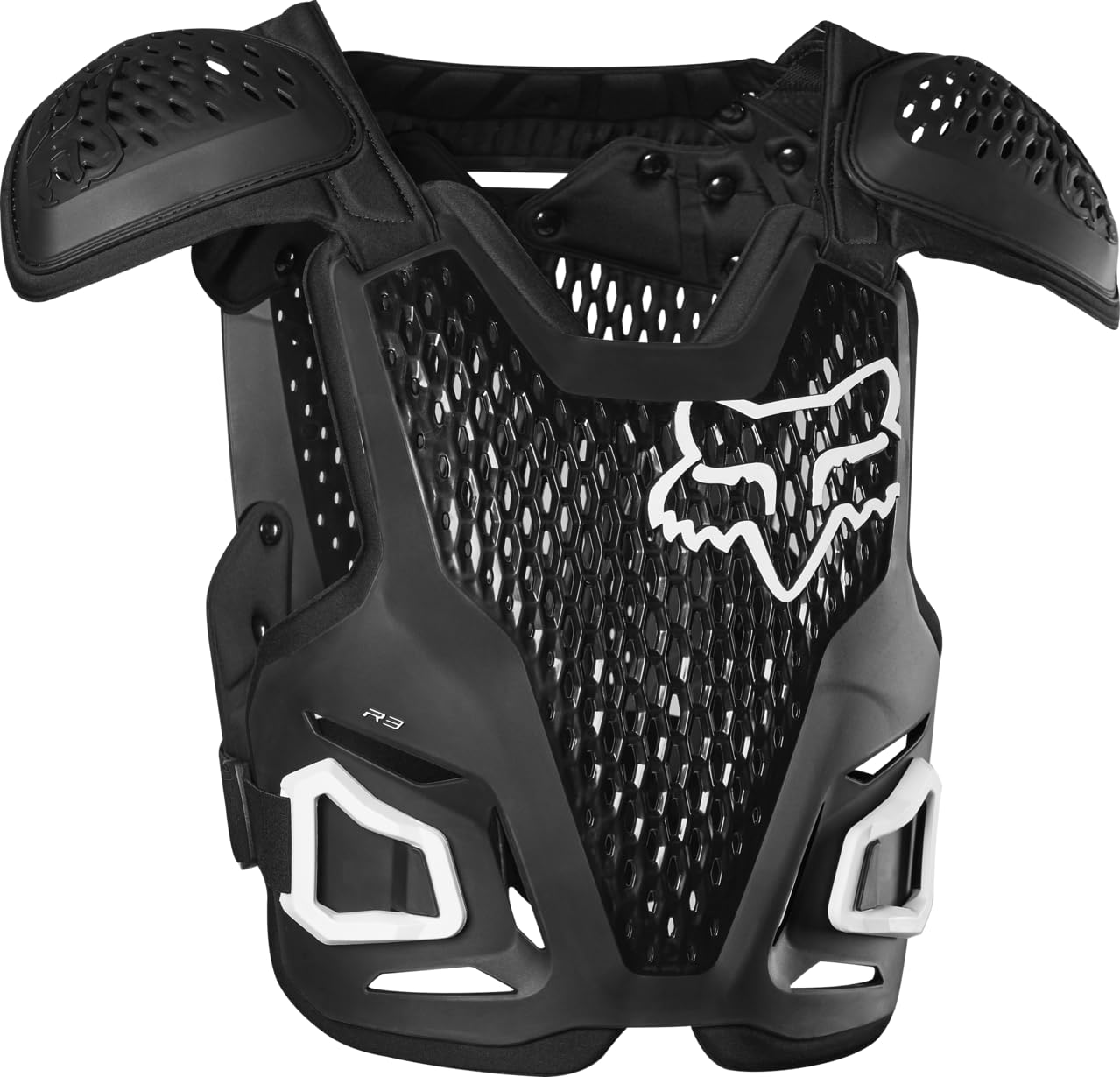
The hard outer layer is your first line of defense. Most budget and mid-range guards use a polypropylene (PP) shell — it is impact-resistant and lightweight, but not as stiff as the polycarbonate or PE blends found on premium models. Underneath that shell, you want EVA foam (ethylene vinyl acetate — the same squishy stuff in running shoe midsoles) for padding. A thicker layer of EVA absorbs more of a hit, but it also traps heat. The crowd favorite on the high-end side is the Fox Racing R3, which carries a CE EN 14021 stone shield certification — a European standard that specifically tests for roost and stone impacts at speed. If you ride rocky trails, that stamp matters.
Ventilation and Weight
An armor vest that turns into a sauna will get left in the car after two rides. Look for a highly perforated shell or ventilated plates that channel air across your chest. The Alpinestars Bionic Action, for example, uses an “all-new Cell Technology” shell drilled with dozens of vent holes. Weight also dictates how long you are willing to wear it. A 1.7-lb protector like the Alpinestars disappears under a jersey; a bulkier jacket-style guard with full arm coverage pushes past 2.5 lbs and feels heavy on a long day. Owners of the lightest picks often describe them as “barely noticeable” — which is exactly what you want.
Fit and Adjustability
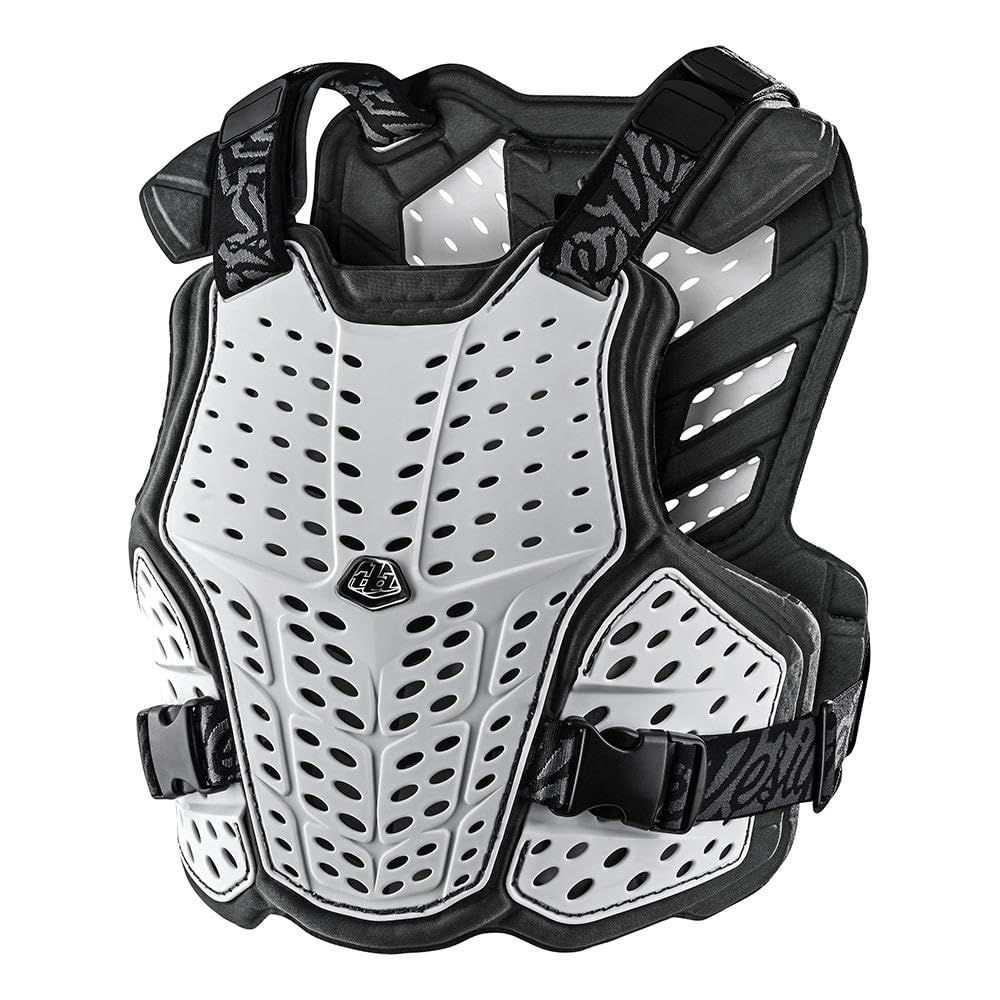
A chest guard that slides around on a downhill run is worse than none at all — it will gap open and let a rock straight through. Adjustable shoulder straps and side elastic bands are the difference between a custom fit and a floppy shell. Some designs, like the Troy Lee Designs Rockfight, use form-fitting side flex plates and fore/aft adjustable shoulder straps. Others rely on wide hook-and-loop waist belts. If you plan to wear a neck brace, check for compatibility; models like the Fox R3 and the Troy Lee Designs explicitly support neck brace clearance. Also consider the length: “front short, back long” designs keep the abdominal area clear when you bend forward (the RIDBIKER vests use this shape), while full-length guards protect the belly but may bunch up when you crouch.
Quick Comparison
| Model | Best For | Weight | Shell Material | Closure | Amazon |
|---|---|---|---|---|---|
| Alpinestars Bionic Action★ Best Overall | All-day trail comfort | 1.7 lbs | Plastic (perforated) | Buckle | Amazon |
| Fox Racing R3 Chest GuardPremium Pick | Serious motocross / Enduro | 1.8 lbs | Polyester (CE EN 14021) | Pull-On | Amazon |
| Troy Lee Designs RockfightTrail Favorite | Lightweight trail confidence | 2.03 lbs (0.92 kg) | PE + PP | Pull-On | Amazon |
| Motorcycle Body Armor Vest (RIDBIKER) | Budget entry-level | 1.4 lbs | PP + EVA | Buckle | Amazon |
| RIDBIKER Reflective Vest | Night riding safety | 1.4 lbs | PP + EVA | Adjustable elastic | Amazon |
| Webetop Dirt Bike Armor | Multi-sport value | 1.5 lbs | EVA foam | Hook & Loop | Amazon |
| WEWAYSTEP Full Armor Jacket | Full upper body coverage | — | PP + EVA | Zipper | Amazon |
| RIDBIKER Full Body Jacket | Lightweight summer jacket | — | PP + EVA (1.5 cm) | Zipper | Amazon |
| EVS Revo 5 Roost Deflector | Under-jersey roost protection | — | Impact shield | Pull-on / Adjustable | Amazon |
In‑Depth Reviews
1. Alpinestars Bionic Action Chest Protector
Our pick — over 4.5★ from 550+ verified ratings; the strongest balance of quality and price.
The featherweight that vanished under my jersey on the first ride.
This is the protector that riders forget they are wearing — and that is the highest compliment you can give armor. The shell uses Alpinestars’ “Cell Technology,” a highly perforated design that dumps heat and keeps air moving across your chest. At 1.7 pounds, the lightest budget vests weigh 1.4 pounds, but the build quality is night and day: the thermoformed padded chassis molds to your ribs, and the flexible side panels adapt to your body shape instead of gaping open when you lean into a turn.
The coverage runs front and back with a removable shoulder pad system, so you can strip weight on hot days or pad up for rocky descents. Owners call it “lightweight, comfortable” and “the perfect size with adjustable fit.” One 58-year-old aggressive MTB rider said it is so “barely noticeable” that he considers it essential after surviving a handlebar-stab injury. For the price-to-quality ratio, this is the single best pick on the list.
Where it lives up to the hype: The breathability is real — riders who bake in other shells report this one stays “airy” even on summer singletrack. The adjustable shoulders and sides mean a teen and a 6-foot adult can both dial in a snug fit.
The honest trade-off: At 24 x 18 x 4 inches, the M/L is generous — smaller frames (under 130 lbs) may find the shoulder cups hang slightly wide. It is also not a full motocross jacket, so elbows and forearms are exposed. For pure MTB trail riding, that is fine; for hard enduro, you might want a jacket-style guard.
Reach for this if: You want a do-it-all chest protector for trail rides, enduro, or bike park laps — something that breathes, fits under a jersey, and actually stays put when you crash.
Look elsewhere if: You need full arm coverage or a neck-brace-integrated system; the Fox R3 or Troy Lee Designs are a better architectural fit.
2. Fox Racing R3 Motocross Dirt Bike Chest Guard
The certified stone shield that a 20mph crash could not crack.
Fox Racing is a household name in motocross, and the R3 carries the lineage with a CE EN 14021 stone shield certification — an official test for roost and debris impact. The ventilated main body shell pushes airflow while blocking rocks, and the low-profile shoulder cups and elastic slide-buckle waist closure keep the whole thing tight to your torso. At 1.8 pounds it is a touch heavier than the Alpinestars, but every ounce serves a structural purpose: buyers report it survived multiple hard crashes, one rider noting it “held up through a few good crashes and it’s still going strong.”
The R3 is also designed to fit a wide variety of neck braces, making it a smarter choice for riders who eventually want a Leatt or Atlas brace system. The adjustable shoulder and waist straps mean a 5’9″ rider and a 6’2″ rider can both find a secure fit. The crowd favorites here are protection (praised most often) and fit — owners emphasize that it stays in place “without discomfort or movement restriction.” The only recurring note is that the shoulder pads look a little goofy on their own, but that is a style gripe, not a safety one.
What riders actually say: “Saved his ribs from being broken (again)” — a spouse of an aggressive mountain e-biker. Another owner calls it “best and cheapest chest plate” after a crash that broke a leg but left the back untouched.
The one thing to check: The L/XL is generous on width; a lean 5’9″ 150-lb rider might find the shell a bit broad across the collarbones. If you are between sizes, go down.
Reach for this if: You ride rocky enduro, motocross, or aggressive trail and want a certified, neck-brace-compatible guard that has proven itself in real crashes.
Look elsewhere if: You prioritize featherlight, forget-it’s-there comfort over hard-core impact certification; the Alpinestars is more comfortable for all-day pedal.
3. Troy Lee Designs Rockfight Chest Protector
The sub-jersey shell that restores confidence after broken ribs.
Troy Lee Designs brings helmet technology to chest protection — advanced integrated EPP (expanded polypropylene, the same foam used in high-end bike helmets) in the chest and spine zones. The result is a featherweight construction that measures just 0.92 kg (about 2.03 lbs) with a streamlined fit that disappears under a jersey. The “Ultra-ventilated protective plates” are coupled with engineered channeled bio-foam that forces laminar airflow across your torso, so you do not bake on the climb.
Fit is the aspect owners praise most. The form-fitting side flex plates and fully adjustable fore/aft shoulder straps let you dial in the coverage, and the removable shoulder pads leave room for a neck brace. Owners who have tested it in real crashes report it “survived many falls without injury or material deterioration.” A Onewheel rider who bought it after breaking ribs and a collarbone says it fits well with no movement restriction and can be worn over a T-shirt in summer heat. The shorter length is the trade-off — it protects either the collarbone area or the lower belly, not both on a tall rider — but for most MTB use, chest and spine coverage is the priority.
What wins riders over: The comfort-to-protection ratio is top-tier. Owners “worried it would feel bulky” but “didn’t notice it at all.” The separate spine and front panels move independently, so no plate shifts when you rotate your torso.
The shortcoming: No shoulder protection for rocky trails; if you regularly huck off drops into rock gardens, the Fox R3 offers more structural coverage up top.
Reach for this if: You want the lightest, most breathable premium chest protector that fits under a jersey and works for trail, enduro, or even e-bike mountain riding.
Think twice if: You want a full shoulder-and-chest shell for downhill park laps; look at the WEWAYSTEP or RIDBIKER full-body jacket options instead.
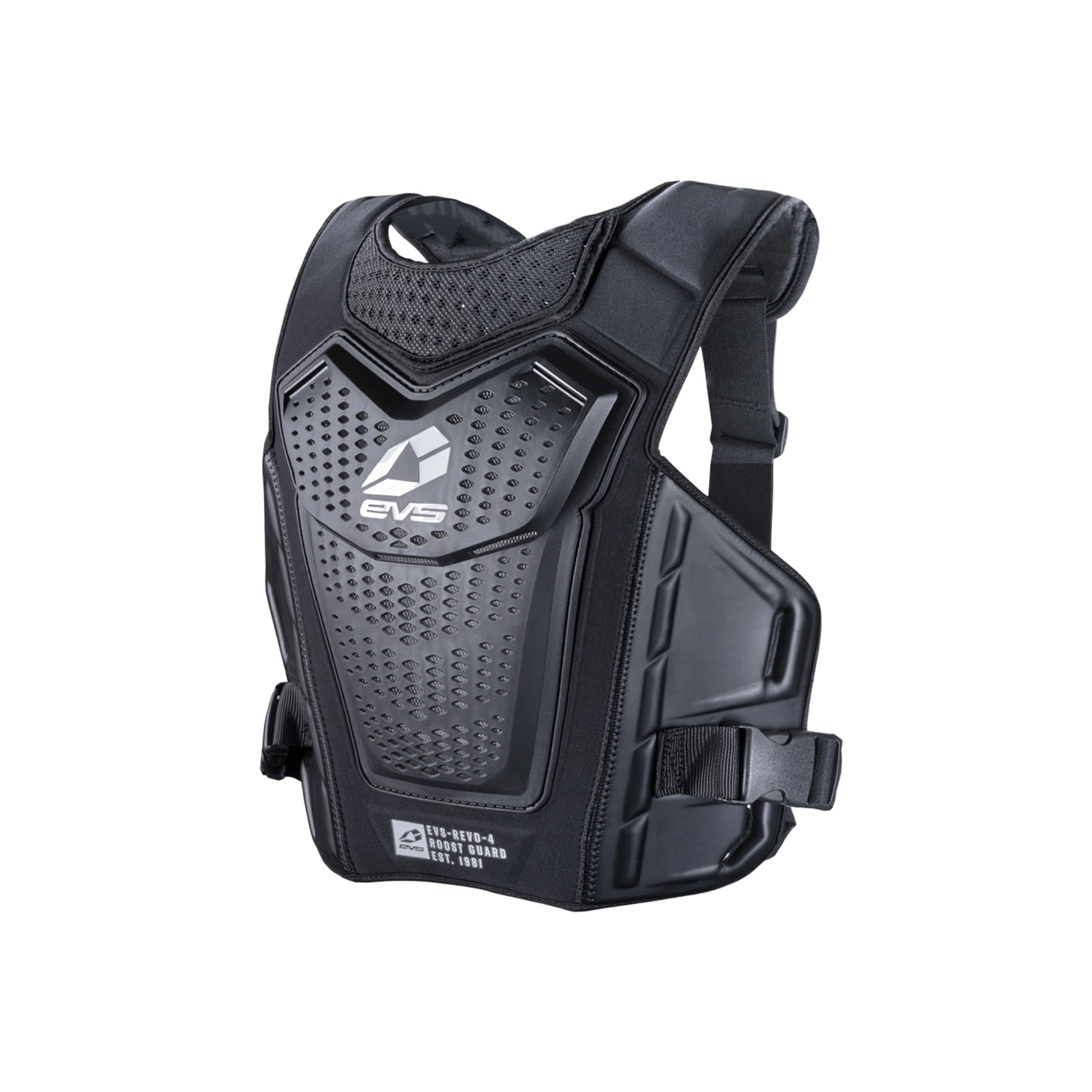
4. EVS Revo 5 Roost Deflector
The lightweight under-jersey deflector for moderate trail riding.
EVS calls this a “roost deflector” — meaning it is designed to block flying dirt and light debris rather than absorb a 20mph tree trunk impact. The Revo 5 uses an impact shield shell with an adjustable fit and ventilated airflow, all packed into a slim profile that fits comfortably under a jersey. Owners who have been in the sport for 30 years call EVS “top quality, super durable and priced well.” One rider reports it protected them through two spills and they are “still able to write reviews.”
This is not for hard enduro or aggressive downhill — the side pads offer limited flank protection, and the shoulder cups flap unless worn under a jersey (they are removable via Velcro). A buyer who returned it cited “no shoulder protection” as the reason. But for moderate to slightly aggressive trail riding, owners find it “light weight and comfortable” with “full range of motion without any discomfort.” The L/XL fits a 5’7″, 170-lb rider well, though the youth size is notably short — skip it for anyone over about 50 lbs.
Perfect for: Cross-country trail riders who want minimal bulk and just need roost and branch deflection, not a full body cast. The breathability is excellent — owners call it “breathes well” and “easy to wash.”
Who it is not for: Anyone hitting jump lines or rock gardens. If you are catching serious air, step up to the Fox R3 or Troy Lee Designs.
Best for: The trail rider who wants a barely-there shield against flying gravel and low-hanging branches without spending premium money.
skip it if: You need a full chest-and-back plate for enduro or motocross speeds.
5. WEWAYSTEP Motorcycle Body Armor Jacket (Chest, Spine, Shoulder, Elbow)

The full-zip armor jacket that survived a 300-lb fall impact.
When you want chest, back, shoulder, elbow, and forearm protection in one zippered package, the WEWAYSTEP jacket delivers. It uses large-area hard PP and EVA thickened pads with “the highest anti-collision rating,” and the back armor module is removable via zipper and buckle for summer riding. The jacket is built from soft, elastic mesh panels that are “lightweight” and “high stretch,” so it does not fight your movement when you are standing on the pedals.
The standout real-world story here comes from an owner who survived a 300-lb fall impact while mountain biking — the jacket did its job. Another 5’11 1/2″, 235-lb rider says it fits “perfectly” with “good adjustability and looks great.” The adjustable shoulder belt runs through the arms and shoulders, keeping the hard armor locked over the key joints. The ventilated mesh is a double-edged sword — it breathes well but the Velcro can fray the mesh over time, and a few owners note that it is still “hot when riding” despite the mesh construction. For the price, though, the coverage-to-value ratio is tough to beat.
What owners love: “Good adjustability and looks great. Really good ventilation. Instills confidence!” Fit and comfort are the top praises, and the price routinely earns “great value” nods.
The catch: The shirt material is very thin — it is not a standalone jacket. You wear it under your jersey. And the Velcro can snag the mesh if you are not careful.
Reach for this if: You want full upper-body protection (ribs, elbows, forearms) for downhill, enduro, or motocross without spending + on a branded race jacket.
Look elsewhere if: You only need chest-and-back coverage — the jacket-style is overkill for cross-country and will make you sweat more than a standalone chest protector.
6. RIDBIKER Motorcycle Jacket Full Body Armor (Chest, Back, Shoulders, Elbows)

The budget jacket that packs 1.5 cm of EVA into every pad.
RIDBIKER’s full-body armor jacket offers a similar feature set to the WEWAYSTEP at the same price point, with a focus on cushioning thickness. The high-impact PP injection molding covers chest, back, shoulders, elbows, and forearms, and the EVA padding sits at a generous 1.5 cm thickness — owners note it provides “great cushioning” and “good shockproof/buffering properties.” The back protector module is independently removable via zippers and snaps, turning it into a lighter summer jacket.
A 64-year-old petite e-biker (5’1″, 105 lbs) used the size Small and found the chest plates great and the thumb holes helpful for keeping sleeves from twisting. After four slow-speed falls the armor prevented any scratches or injuries. The breathability also gets praise: owners say it “breathes well for hot days at the track” and the high-density mesh fabric keeps air moving. The main durability watch: some owners mention the armor breaks down after a year or two of regular use, but that is expected at this price point.
Top takeaway from owners: “Offers great padding and fits nice and tight to keep the pads from sliding around.” Protection is the most praised aspect, followed closely by fit.
Where it cuts corners: The chest plates on the Small sit slightly wide for petite riders, and the right arm forearm armor may need a sleeve twist to align properly. A minor fit nuisance at an entry-level price.
Best for: Riders on a tight budget who need full arm and torso coverage for beginner-to-intermediate off-road riding.
Think twice if: You want a jacket that lasts years of weekly abuse — the premium picks hold up longer against repeated crashes and washing.
7. Webetop Adults Dirt Bike Body Chest Spine Protector Armor Vest for Skiing

The versatile vest that goes from snowboard runs to e-scooter commutes.
Webetop designed this vest for “dirt bike, snowmobile, cross-country mountain bike, cycling, skateboarding, skiing, and more,” and the reviews back up the versatility. One owner bought it for ice hockey (after breaking ribs) and found it “lightweight with good coverage” and highly recommended it after three games. Another wears it on a Rovoron Kullter electric scooter. The EVA foam padding covers chest and spine, while the adjustable shoulder strap and wide hook-and-loop waist belt let you dial in the fit across a wide size range.
Protection is the most-praised aspect by a wide margin — one owner says it “saved their life in a 4wheeler accident.” Another describes it as “good solid body armor.” At 1.5 pounds it is mid-pack for weight, and the breathable fabrics work in all seasons. The catch: several owners find the plastic shell too thin for serious motocross and the padding insufficient against sharp rocks. This is a general-purpose impact vest, not a hard-core enduro shell. If your rides involve high-speed rocky terrain, the Fox R3 or Alpinestars offer stronger impact resistance.
The consensus: “Good quality for a low price. Comfort and adjustability are perfect.” Protection and fit are the top two praising points; durability and quality draw mixed feedback — some call it solid, others note the material feels cheap.
The sizing trap: Measure your chest before buying. Multiple owners flag that the vest runs smaller than expected — if you are between sizes, size up.
Best for: The rider who wants one affordable vest for multiple sports — dirt bike, snowboard, skateboard, and e-scooter — and does not need hard-core MX-level impact protection.
pass on it if: You need a dedicated enduro guard; the shell is too flexible for sharp rock impacts at speed.
8. RIDBIKER Chest Protector Motorcycle — Reflective Vest (Spine Back Protector)

The vest that lights up at night while protecting your back.
RIDBIKER’s reflective model adds high-gloss reflective panels on the front and back, making you visible to car and truck headlights after dark — a genuine safety feature for commuters or after-work riders. The triple-layer construction uses a PP plastic shell for impact resistance, a punched lining for high air permeability, and two layers of EVA padding for comfort. The “front short, back long” design keeps the abdomen clear when you bend into an attack position while extending the U-shaped tailbone protection further down the spine.
Fit and quality are the top two positive aspects, and owners consistently find it “high quality” and “super light weight.” One snowboarder bought it for the slopes and calls it “a high quality piece of equipment” that functions perfectly under a jacket. The reflective element works as advertised — owners who ride at night feel noticeably seen. The main durability hang-up is the Velcro: after repeated use, the hook-and-loop closures wear out faster than the shell itself. And the sizing attracts mixed feedback, with some finding the fit true and others saying it runs small — check the size chart carefully, especially if you plan to layer it over a thick jersey.
What owners like most: “Chest and back protection is a must and this is a high quality piece of equipment.” The reflective design is a genuine differentiator at this price tier.
The real-world trade-off: The Velcro closures are the first thing to go after regular use — treat them gently and avoid machine washing with the straps closed.
Best for: Night riders, commuters, or anyone who wants the confidence of being seen while still getting solid chest and spine protection.
it’s not for you if: You need a high-durability vest that will survive weekly washing and aggressive trail abuse — the reflective panels and Velcro are not built for hardcore enduro.
9. Motorcycle Body Armor Vest Dirt Bike Gear (RIDBIKER) — Chest Protector Motocross Gear

The cheapest vest that still took a fall and did its job.
At the entry-level price point, this RIDBIKER vest gives you the basics: a PP shell with EVA foam padding for chest, back, and spine, a ventilated enclosure that keeps airflow moving, and adjustable elastic sliders at the shoulders and waist. It will not win any beauty contests, but it hits the essential notes. As one buyer put it: “I took a fall while dirt bike trail riding and it did its job.” The vest is lightweight at 1.4 pounds and easy to put on with a simple buckle closure.
Protection and fit are the top two praised aspects — customers note it provides “solid chest and back coverage” and “stays in place” during rides. Note that durability draws mixed feedback, with some owners saying the straps broke after two rides. The side strap connector clip is a known weakness; it snaps off fairly easily but clips back on without tools. If you are on a razor-thin budget and need something to get you through a season of light trail riding, this vest will do it. But if you can stretch the budget, the RIDBIKER Reflective model or the Webetop offer more durable construction for a few dollars more.
What wins people over: “Good chest protector at a good price.” Protection has 23 positive mentions — the most of any aspect — and owners feel genuinely safer wearing it.
The honest trade-off at this price: The side clips are fragile. Reviewers point out they snap off in the first few rides, making the vest feel less secure until you snap them back in. Not a showstopper, but a clear cost-saving point.
Best for: First-time buyers or casual trail riders who need minimal chest and spine protection without spending more than they have to.
Look elsewhere if: You ride aggressively or need a vest that lasts multiple seasons — the clip durability is a weak spot; step up to the Reflective model or the Alpinestars.
Understanding the Specs
Shell Materials: PP vs PE vs EPP
The hard outer shell is your impact barrier. Polypropylene (PP) is the most common budget material — it is impact-resistant and lightweight but flexes more than polycarbonate or polyethylene (PE). Expanded polypropylene (EPP), found in the Troy Lee Designs Rockfight, is the same foam used in high-end bike helmets; it absorbs energy on impact rather than transferring it straight to your ribs. EVA foam (ethylene vinyl acetate) is the soft layer between the hard shell and your body — it provides cushioning and comfort. A thicker EVA layer (like the 1.5 cm pads in the RIDBIKER full-body jacket) absorbs more shock but can retain heat. For trail riding, a PP shell with decent EVA padding is enough; for enduro or motocross, look for PE or EPP in the impact zones.
CE Certification: What “EN 14021” Means
CE EN 14021 is a European standard specifically for stone shields and chest protectors used in off-road motorcycling. It tests the shell against flying debris (roost) at speed — a weighted impactor is dropped onto the guard, and the transmitted force must stay below a set limit. Only the Fox Racing R3 on this list carries that certification. That does not mean the other guards are useless; it just means they were not tested to that specific standard. For everyday MTB trail riding (branches, falls, rocks at moderate speed), a good PP shell with EVA padding is usually sufficient. For motocross tracks or high-speed enduro, a CE-certified guard gives you verified protection.
FAQ
Will a motocross chest protector work for mountain biking?
How should a chest protector fit?
Can I wear a chest protector under my jersey?
What is the difference between a roost deflector and a chest protector?
How do I clean a chest protector?
Do I need neck brace compatibility?
Is a full-body armor jacket better than a standalone chest protector?
How long does a chest protector last?
Final Thoughts: The Verdict
For most riders looking for the mtb chest protection that hits every chord — ventilation, weight, adjustability, and real-world crash protection — the Alpinestars Bionic Action is the winner. It is the protector you will actually wear every ride because you forget it is there. If you want certified impact protection and neck brace compatibility for enduro or motocross speeds, the Fox Racing R3 is the shell that has proven itself against concrete. And for a lightweight premium guard that disappears under a jersey for trail and e-bike riding, the Troy Lee Designs Rockfight brings helmet-grade EPP foam to your torso. The common thread across all three: riders who fell while wearing them walked away — and that is the only spec that really matters.
How We Picked
We do not accept paid placement. Every pick is matched to a real buyer and a real use-case; we do not hands-on test units.
Sources & Methodology
Specifications: manufacturer listings and product documentation. Review insights: verified customer reviews, as of July 2026. Pricing: not shown on this page (it changes often); check the current price via the retailer link.
As an Amazon Associate, Trending Car earns from qualifying purchases. This does not affect which products we feature.