
Our readers keep the lights on and my garage snacks stocked. As an Amazon Associate, I earn from qualifying purchases.
Specs are compiled from manufacturer listings and verified buyer reviews and can change over time — please confirm the key details on the product page before buying.
That rough idle, the hesitation when you twist the throttle, or the hard start on a cool morning — it is often a part wearing out. A fresh set of motorcycle spark plugs is the cheapest tune-up you can do, and the right ones wake up an engine instantly. The challenge is cutting through alloy jargon, gap specs, and knockoffs to find a plug that fits your bike and delivers reliable fire.
I’m Min Islam — the founder and writer behind Trending Car. This guide is built by comparing the manufacturers’ published specifications and the patterns across verified customer reviews, so you get each pick’s real strengths and trade-offs instead of marketing spin.
The crowd favorite — a copper-core 4-pack with a 4.8-star reputation across nearly a thousand owners — leads this list of the best motorcycle spark plugs for reliable starts and smooth running miles.
Our Picks at a Glance

How To Choose The Best Motorcycle Spark Plugs
To get your bike firing right, choose a plug that matches your cylinder head’s thread size and reach, runs at the correct heat range, and lasts the expected miles based on core material. Start by checking your owner’s manual for the OEM part number — that is your safe zone. If you want a performance bump, step up to an iridium plug with the same heat range. If you ride an older air-cooled engine, stick to the standard copper plug and swap it more often to keep the carbon off the electrode.
Core Material — Copper vs. Iridium vs. Double Iridium
Copper-core plugs (like the NGK D8EA) conduct electricity better than any other common material, which gives you a fat, consistent spark. They wear faster — expect 8,000 to 12,000 miles before you need a new set. Iridium plugs (like the NGK CR8EHIX-9) use a tiny, hard-wearing center electrode that can fire more precisely and last 40,000 to 60,000 miles. Double iridium adds an iridium ground electrode, which helps the plug stay clean in high-strung engines. The trade-off is cost: copper is cheap to replace often, while iridium costs more upfront but saves labor over time.
Gap Size and Heat Range
The gap is the distance the spark must jump. A 0.8mm gap (like the CNPAPC dual-iridium plug) gives a focused, snappy spark for high-compression engines. A 0.9mm gap (the BDFHYK plug) burns a little hotter and is common in V-twins and big singles. Heat range is a number you should not guess—use the plug number your manufacturer specifies. Running too cold a plug gums up with carbon. Running too hot risks pre-ignition that can hole a piston. Stick to the number in your manual.
Quick Comparison
| Model | Best For | Core Material | Gap Size | Thread Size | Amazon |
|---|---|---|---|---|---|
| NGK (2120) D8EA★ Best Overall | Best Overall — Daily reliability | Copper | 0.03 in | 12mm | Amazon |
| BDFHYK 4929 IridiumPremium Upgrade | Premium Upgrade — Long life, strong fire | Iridium | 0.9mm | 12mm | Amazon |
| CNPAPC DCPR7EIX | Harley & Sportster — Double iridium | Double Iridium | 0.8mm | 12mm | Amazon |
| SYKRSS DPR8EA9 | Budget 4-Pack — Many bike makes | Iridium | 0.9mm | M10 | Amazon |
| NGK 5531 DPR6EA-9 | Proven Standard — Smooth runner | Nickel | — | — | Amazon |
| NGK CR8EHIX-9 | NGK Iridium — Clean, precise fire | Iridium | 0.9mm | 10mm | Amazon |
In‑Depth Reviews
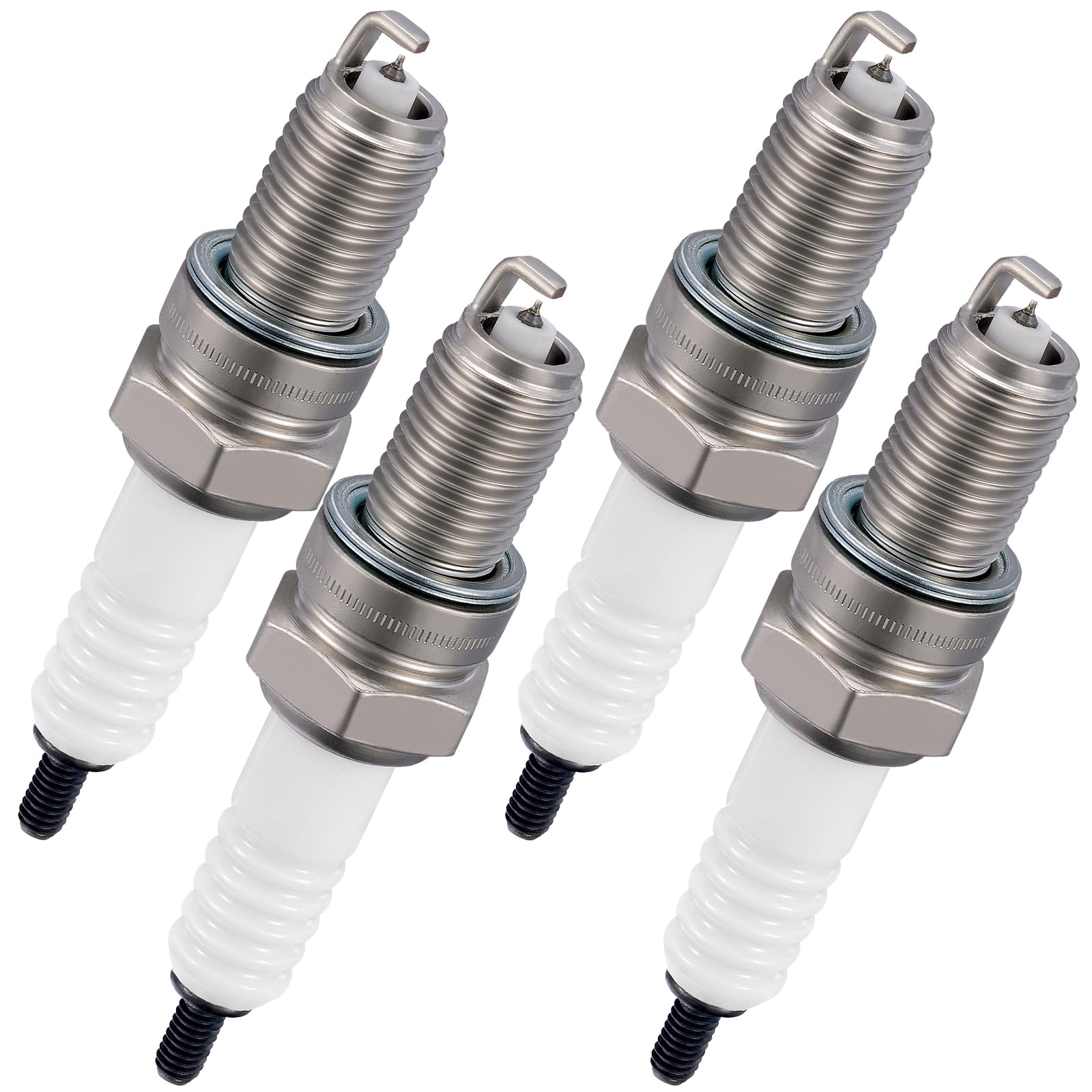
1. NGK (2120) D8EA Spark Plug – Pack of 4
Our pick — over 4.5★ from 800+ verified ratings; the strongest balance of quality and price.
The copper-core classic that riders trust for instant starts and long, knock-free miles.
This is the plug that owners with 30-year-old Japanese bikes — a K100RS, a Big Bear 400, a 1977 Goldwing — call their go-to. The NGK D8EA is a genuine OEM replacement part with a copper core, so you get the best electrical conductivity for a fat spark, but you trade away long service life. Expect to change them more often than an iridium plug. It uses a 12mm thread, so check your engine — it fits a huge range of older Honda, Suzuki, BMW, and Toyota engines, but not all modern bikes.
Buyers report they “still look good after 5 months and a few thousand miles” and deliver a “100% improvement in performance” on a 2001 Big Bear 400. The only mild tension here is that it comes bulk-packed, not in a flash retail box, and the copper electrode wears faster than premium plugs. That is the trade-off for a pack of four that costs about the same as a single specialty plug. It also needs a gap check before install — the 0.03 inch spec is right, but verify it with a feeler gauge anyway.
Why owners swear by it
- Standard OEM construction that delivers consistent fire ride after ride
- Four plugs in one pack — enough for a twin or a four-cylinder, one stop
- Fits with an 8mm socket, no adapter hassle
The honest limits
- Copper wears faster than iridium — plan for more frequent swaps
- Bulk-packed, so inspect for shipping damage when they arrive
The safe bet for most bikes: If you ride a pre-2010 Japanese or European bike that calls for a D8EA, this is the plug to buy — it is the same part the factory used, at a fair price for a 4-pack.
Think twice if: you want a 40,000-mile gap-check — copper will fade much sooner than iridium, so this is not the fit-and-forget choice.
2. BDFHYK 4929 Iridium Spark Plugs Set of 4
A solid iridium swap for cruisers and adventure bikes that want a longer plug interval.
This 4-pack from BDFHYK uses a center electrode made of iridium — a much harder metal than copper — so the plug fires consistently for tens of thousands of miles instead of thousands. The thread size is 12mm, but the hex-to-edge size is a large 17.4mm, so it may require a deeper socket. It is built for a specific batch of Kawasaki, Triumph, Honda, Suzuki, and Yamaha models, and it replaces the DPR8EA9 4929 OE number.
Owners mention it is a “great product and installed on 07 shadow spirit and ran great” with zero issues. The key spec here is the 0.9mm gap — wider than the 0.8mm on the Harley-oriented CNPAPC plug, so it gives a slightly hotter, slower burn that suits mid-displacement twins. The trade-off is that the hex-to-edge size (17.4mm) may require a deeper socket than you keep in your tool roll — check your fitment before you are elbow-deep in a V-twin. It is also a lesser-known brand, so you do not get the decades of race-team backing that NGK carries.
What gets the thumbs up
- Iridium center electrode extends replacement intervals well past copper
- Pre-gapped at 0.9mm — fewer steps in the garage
- Covers a wide compatibility list from a Shadow Spirit to a KLR250
The catch
- Hex size is 17.4mm — it may require a deeper socket than your standard tool roll
- Brand has limited track record next to NGK or Denso
Best for the rider who wants iridium durability at a palatable price: This is a smart upgrade for owners of 90s-2000s Japanese V-twins and singles that call for a DPR8EA9.
Hold off if: you don’t keep a 17.4mm deep socket in your kit — the larger hex may need a special tool.
3. 2Pcs CNPAPC Iridium IX Spark Plugs DCPR7EIX

A double-iridium 2-pack built specifically for Harley Twin Cams and Sportsters.
Where the copper NGK is a generalist, this CNPAPC plug is a specialist — it is designed for the 1999-2016 Harley-Davidson Twin Cam engine and the XL Sportster 883/1200 from 1986 on. It uses double iridium (both the center and ground electrodes are iridium) so the spark stays sharp and the plug resists fouling even when your bike runs rich at idle. The gap is the tighter 0.8mm, which gives a more focused, snappier spark that Twin Cam engines respond well to.
Only two plugs per pack — Harley twins need just two, so it is not a waste. Owners notice “a boost in power and gas mileage” and say they “fire up nicely on a Road King.” However, the threading is where the small sample of reviews flags caution: the compatibility notes that some owners had trouble with thread alignment. Treat the install gently, hand-start the plug, and do not force it. The singe-count sales page also means you pay about the same for a 2-pack as the NGK copper pack costs for four plugs.
What stands out
- Double iridium construction for extreme wear resistance in high-compression engines
- Tight 0.8mm gap cleans up throttle response on late-model Harleys
- Customers note fuel mileage improvements with steady riding
The reality check
- Some reviewers point out thread-install issues — go slow, do not cross-thread
- Two-pack only; for a four-cylinder bike you need two orders
For the Harley owner who wants a long-life upgrade: If you ride a Twin Cam or Sportster, this is a drop-in iridium swap that costs less than the OEM-branded iridium set.
Look elsewhere if: you ride a metric four-cylinder, or you want a plug with a gentler install reputation — the thread feedback is enough to make a cautious mechanic go with NGK.
4. SYKRSS DPR8EA9 Iridium Spark Plugs 4 Pack
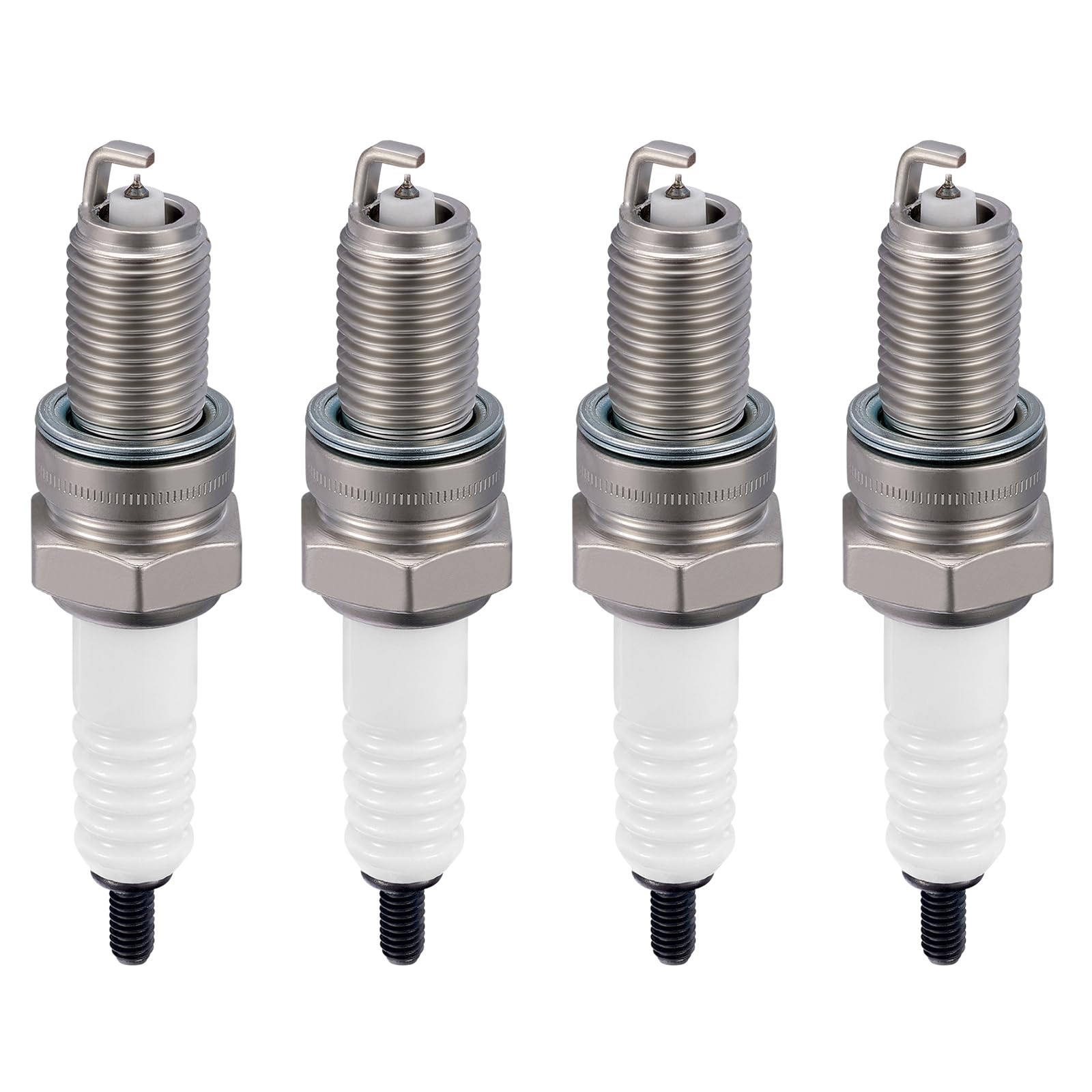
An iridium 4-pack that undercuts the major brands on price per plug.
It uses a 0.9mm pre-gapped gap and an M10 thread size, so it is physically different from the 12mm and 17.4mm thread plugs on this list. Check your fitment carefully. The compatibility list mirrors the BDFHYK set (Kawasaki, Suzuki, Honda, Yamaha, Triumph), so it works on the same broad range of 90s-2000s bikes.
The experience is split. Some owners install it on a VTX1300 and report “still running strong” after 6 months, while others have had a bad plug in the pack. The Amazon read of reviews flags that “the performance receives mixed feedback” — the same set works great on one bike and fails on another. The plugs also carry no branding on the shell, which annoys some buyers. For the price of one fancy iridium plug you get four here, so a single dead unit still leaves you ahead on cost, but the risk is the hassle of diagnosis when your bike misses.
The strong points
- Four iridium plugs at a per-unit cost that beats name-brand competitors
- Pre-gapped and drop-in for the DPR8EA9 cross-reference engines
- Many owners get months of smooth riding with no issues
The honest risks
- Mixed performance reports — some packs have a plug that does not fire
- No brand markings or retail packaging, which makes buyers cautious
For the bargain-hunting rider who stocks spares: If your bike cross-references DPR8EA9 and you want a full set of iridium plugs for one low price, this is it.
skip it if: you want the confidence of a consistent, brand-backed spark — the defect rate is higher here than NGK, so it is best carried as a backup, not your only set for a long trip.
5. NGK 5531 PK4 Spark Plugs (DPR6EA-9)
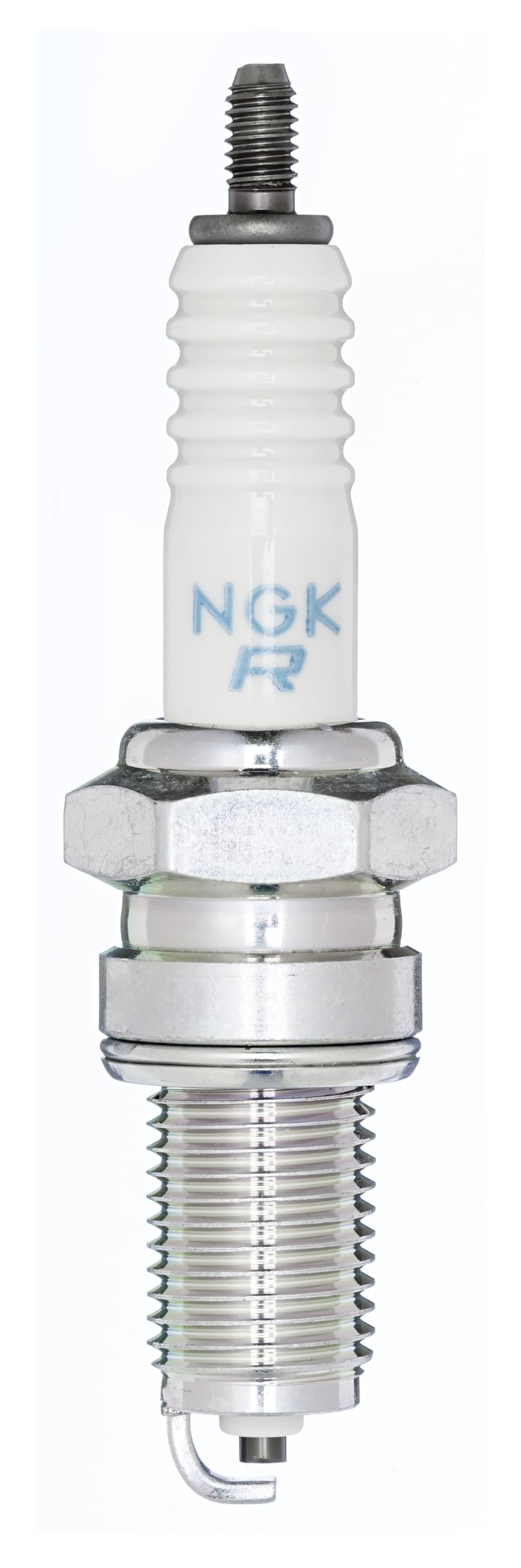
Nickel-core NGK plugs that make a four-cylinder run buttery smooth right after install.
This is the lesser-known brother to the D8EA. The NGK 5531 uses a nickel-alloy center electrode rather than copper, so it sits between copper and iridium in both lifespan and cost. It is not as electrically conductive as copper, but it lasts longer in moderate-duty engines. The DPR6EA-9 code indicates a different heat range than the D8EA — the “6” is a hotter plug than the “8”, so it resists fouling better in engines that run at lower cylinder temps. It is listed as compatible with car and truck applications, but owners on motorcycles confirm it is a perfect fit for many bikes and even small engines.
The review data is nearly all positive — owners note their bikes “run smoother” right after the swap, and the fit is easy with little gap adjustment needed. One owner used them on a pontoon boat as well. The data does not include a gap size or thread dimensions, so you should verify against your service manual. The biggest downside is the lack of wide motorcycle-specific marketing — NGK makes it, but you are on your own to confirm your bike uses the DPR6EA-9 heat range.
The reliable highlights
- Genuine NGK manufacturing and quality control
- Nickel core offers a middle-ground lifespan between copper and iridium
- Owners across bikes, boats, and ATVs report smooth, instant starts
The gray areas
- Not as widely known as the D8EA, so finding your bike in the compatibility list takes some research
- No specific gap or thread specs listed in the data — verify before you buy
For the owner who knows their heat range: This is a smart, mid-priced NGK 4-pack for anyone who has confirmed DPR6EA-9 is their bike’s callout.
Pass if: you are not sure what “6” means in the heat-range number — stick to the NGK D8EA or your manual’s exact part number to avoid a mismatch.
6. 4 New NGK Iridium IX CR8EHIX-9 Spark Plugs # 3797

The iridium upgrade from a brand motorcyclists trust without a second thought.
This is the full NGK Iridium IX experience — a genuine NGK plug with the 0.9mm gap, a 10mm thread, and the Iridium IX series’ reputation for fast idle and crisp throttle. The data shows it as a favorite among Honda Magna owners (both a 1996 3rd gen and a 1998 750) and ST1100 riders, who report “quicker startup, smoother idle, cleaner throttle response” and that “quality seems nice.” One critical service point from an owner: do not use anti-seize compound on these plugs. The torque spec changes and you risk breaking the head or over-stretching the shell.
At 4.7 stars, the enthusiasm is high. The CR8EHIX-9 is an iridium plug, so you pay a premium, but you get the full OE packaging, NGK’s manufacturing warranty, and a pack of four — enough for most four-cylinder bikes. The thread size is 10mm, which is narrower than the 12mm standard, so compatibility is not universal. If your bike calls for the CR8EHIX-9 cross-reference, this is a buy-it-once and forget-it solution. The only friction is the cost per plug: it is the highest-priced set on this list by a clear margin.
Why riders pay more
- Genuine NGK Iridium IX series — the same plug used in high-performance OEM applications
- Ready-to-install with correct 0.9mm gap from the start, no adjustment needed
- Reviews cite a transformed riding experience on Magnas and other Honda V-4s
The honest trade-offs
- Highest price per set of any plug in this guide
- Small 10mm thread limits it to specific engine families — not a universal fit
The buy-once, ride-years pick: If your bike calls for the CR8EHIX-9, this is the gold standard that gives you iridium longevity and NGK quality in one box.
pass on it if: your engine uses a 12mm or larger thread plug — this 10mm will not thread in safely.
Understanding the Specs
Thread Size and Reach
Thread size is the diameter of the plug where it screws into your cylinder head. A 12mm plug (NGK D8EA, CNPAPC DCPR7EIX) is the most common on motorcycles from the 80s to the 2010s. The 17.4mm plug (BDFHYK 4929) is much wider — it belongs to a specific cross-reference family. The 10mm plug (NGK CR8EHIX-9) is narrower and found on some Honda V-4s and modern compacts. Reach is the length of the threaded section — too short and the spark sits in the wrong part of the chamber, too long and the piston can hit it. Always match your owner’s manual part number exactly.
Gap Size — 0.8mm vs. 0.9mm
The gap is the distance the electricity must jump from the center electrode to the ground strap. A 0.8mm gap (found on the CNPAPC double-iridium plug) gives a short, hot, focused spark that suits high-compression engines like the Harley Twin Cam. A 0.9mm gap (found on the BDFHYK, the SYKRSS, and the NGK CR8EHIX-9 plugs) produces a slightly longer, broader spark that burns well in middle-compression, larger-displacement motors. The wrong gap can cause misfires, hesitation, or a weak idle. Most plugs ship pre-gapped today, but verify with a gap tool before install — a plug that took a drop on the shelf can have a closed gap.
FAQ
How often should I change motorcycle spark plugs?
Can I use an iridium plug if my bike came with copper plugs?
What does the heat range number mean in D8EA or DPR6EA-9?
What is the difference between 12mm, 17.4mm, and 10mm thread sizes?
Can I use car spark plugs in my motorcycle?
Do I need to gap a spark plug that says pre-gapped?
Is double iridium better than standard iridium?
What does DPR8EA9 4929 mean for spark plug compatibility?
My bike is a 1970s model — will modern NGK plugs work?
What is the best spark plug for a 1998 Honda Magna 750?
Final Thoughts: The Verdict
For most riders, the strongest choice among the motorcycle spark plugs is the NGK D8EA 4-pack — it delivers OEM-grade copper reliability at a price that makes regular changes painless, backed by the highest owner satisfaction in this lineup. If you want an iridium upgrade and ride a common Japanese or European twin, the BDFHYK 4929 4-pack gives you long life and a strong fire without the brand premium. And if you pilot a Harley Twin Cam or Sportster, the CNPAPC DCPR7EIX 2-pack is the purpose-built double-iridium pick that owners say returns noticeable throttle and mileage gains — just treat the install with care on those threads.
How We Picked
We do not accept paid placement. Every pick is matched to a real buyer and a real use-case; we do not hands-on test units.
Sources & Methodology
Specifications: manufacturer listings and product documentation. Review insights: verified customer reviews, as of July 2026. Pricing: not shown on this page (it changes often); check the current price via the retailer link.
As an Amazon Associate, Trending Car earns from qualifying purchases. This does not affect which products we feature.