
Our readers keep the lights on and my garage snacks stocked. As an Amazon Associate, I earn from qualifying purchases.
Specs are compiled from manufacturer listings and verified buyer reviews and can change over time — please confirm the key details on the product page before buying.
You need a glove that fits so well you forget it’s on—because a bunching or slipping glove distracts you at 30 mph. The real challenge for beginners is sizing: get it wrong and you waste money on a pair that’s too tight or too loose. Here are nine solid options, judged by how they fit, breathe, and protect during your first season.
I’m Min Islam — the founder and writer behind Trending Car. This guide is built by comparing the manufacturers’ published specifications and the patterns across verified customer reviews, so you get each pick’s real strengths and trade-offs instead of marketing spin.
Your first pair needs to handle three jobs at once: shield your knuckles in a slide, keep your hands cool on a hot afternoon, and still let you tap your phone at a gas station. The right motorcycle gloves for beginners balance all three without breaking your budget or forcing a painful break-in period.
Our Picks at a Glance


How To Choose The Best Motorcycle Gloves for Beginners
Before you click buy, stop and measure your hand. Wrap a tape measure around your dominant hand at the widest point across your palm, just below the knuckles, and write that number down in inches. That single measurement is the difference between a glove that feels like a second skin and one that makes your fingers go numb on the highway.
Fit Is Everything — and Leather Stretches
A glove that is snug at the store will break in and mold to your hand, but a glove that is genuinely too small will never stop squeezing. Nearly every leather pair on this list arrives stiff and tight, then softens after a few rides. The trick is to buy for the finger length first — your fingertips should reach the end of the glove without curling — and accept that the palm will stretch a little. If you are between sizes, most owners recommend sizing up, especially for wide hands.
Protection You Can Actually Feel
Protect your knuckles with a hard shell, not just padded fabric. Carbon fiber and PVC shells absorb impact energy in a slide, while TPU (thermoplastic polyurethane) palm sliders let your hand skid instead of catching and twisting. Your natural instinct to brace with an open hand makes palm reinforcement among the most important zones to protect.
Ventilation Beats Warmth for New Riders
If you are learning to ride, you are likely riding in fair weather, so breathability matters more than insulation. Perforated leather and mesh panels let air flow over your hands and stop the sweaty-palm death grip that ruins control. Consider winter gloves only if you plan to commute in cold rain, not for your first few months of weekend rides.
Quick Comparison
| Model | Best For | Palm Material | Knuckle Armor | Weight | Amazon |
|---|---|---|---|---|---|
| Alpinestars SMX-2 Air Carbon V2★ Best Overall | All-season comfort | Full-Grain Leather | Carbon | — | Amazon |
| Saints of Speed Knuckle1Best Value | Budget summer riding | Leather | Soft-hard rubber | — | Amazon |
| Milwaukee Leather MG7514Classic Style Pick | Classic cruiser style | Gel-padded leather | Protective shell | 7.04 oz | Amazon |
| ILM DN01 Goatskin | Thick leather value | Goatskin | Hard shell PVC | 5.29 oz | Amazon |
| J.A.G. Carbon Fiber | Aggressive sport look | Genuine leather | Carbon microfiber | 9.17 oz | Amazon |
| Harssidanzar KM045 | Long-cuff coverage | Goatskin | Carbon fiber | 12.7 oz | Amazon |
| ScorpionEXO Vortex Air | Hot-weather breathability | Goatskin + mesh | Carbon fiber | — | Amazon |
| Alpinestars Copper | Light urban commuting | Synthetic suede | Hard knuckle, spandex | 6.7 oz | Amazon |
| KEMIMOTO KMF1109 | Maximum protection features | Goat + cow leather | Carbon fiber + ESA | 15.17 oz | Amazon |
In‑Depth Reviews
1. Alpinestars SMX-2 Air Carbon V2 Gloves
Our pick — over 4.5★ from 900+ verified ratings; the strongest balance of quality and price.
The carbon-knuckle benchmark that survives your first season and the next ten
Experienced riders recommend this 4.6-star crowd favorite with 900+ ratings to beginners. The shell mixes full-grain leather with 3D mesh across the fingers and back of the hand, so you get abrasion resistance where you need it and airflow exactly where your hands heat up on a summer ride. The pre-curved finger construction means the gloves arrive shaped like a hand already on the throttle, which cuts down the break-in stiffness that plagues cheaper leather pairs.
The carbon knuckle guard is backed by thick EVA foam that absorbs impacts without digging into your hand. After about 100 miles, buyers report no stitching wear or loosening—a durability check beginners should demand. The glove uses a hook-and-loop closure, and the touchscreen support works best when you tap with the fingertip at the leather-stitching junction rather than the flat pad.
The honest catch is fit and stiffness. The gloves run snug from the start; riders with 8-inch hands fit medium perfectly, but those between sizes wished they sized up. They stretch with patience, so give them a few rides before judging. This is the pricier end of the list, but the leather quality and protection justify the cost for riders who want one pair that lasts.
vented carbon protection
- Carbon knuckles backed by EVA foam pad don’t rub or dig in
- 3D mesh on fingers and thumb keeps hands cool in hot weather
- Pre-curved fingers mean less fatigue on the controls
stiff initial feel
- Runs snug at first, needs several rides to stretch
- Touchscreen works only with firm fingertip pressure
- Not built for winter riding
track-day pick: you want one well-built pair that will carry you from learner to confident rider.
daily comfort: your budget is tight or your hands are wide and you refuse to wait out a break-in.
2. Saints of Speed Motorcycle Gloves
Proof that a beginner’s first pair doesn’t need to cost a fortune
If you are just dipping a toe into riding and want to spend less, this is the glove to beat. The leather palm is perforated to push air through, and the soft-hard knuckle protectors absorb impact while leaving your fingers free to move — a balance of flexibility and safety that suits a nervous new rider. The design keeps the cost low without skimping on the two zones that matter most in a fall: the palm and the knuckles.
The knuckle protection—a hard rubber that feels durable, not bulky plastic—is what everyone raves about. The fit runs a little tight at first but breaks in well, and the lightweight build keeps your hands cool on warm-weather rides. The touchscreen fingertips work for some riders and not others, so treat that as a bonus rather than a reason to buy.
Durability is the weak spot to watch. A portion of owners found the material wears faster than premium leather, and the gloves are not built for cold-weather riding. But as a first pair to learn on, the low investment makes it an easy decision, and the satisfaction guarantee backs the purchase.
casual rides: you want a low-risk way to learn what you actually need from a glove.
Your money is better spent elsewhere if: you plan to ride every day and need a pair that will last for years.
3. Milwaukee Leather MG7514 Gel Palm Gloves
Buttery-soft brown leather that looks right at home on a classic cruiser
Milwaukee Leather has built riding apparel since 1991, and this glove shows that heritage in the hand feel. The brown leather is described as “supple,” which for a new rider means no painful multi-week break-in before your first real ride. The gel palm padding adds comfort on long stretches, and the protective knuckle shell covers the back of your hand against the first impact you hope never happens.
What wins people over is the quality and comfort, with the glove earning praise for its soft yet durable leather and true-to-size fit. The touchscreen fingertips work, but owners mention they require more pressure than you normally use on a phone — a minor annoyance you will adapt to. Sizing runs snug, and the 7.04-ounce glove is short-wristed and thin, so it is strictly a warm-weather pick.
The recurring complaint is the knuckle armor feels narrow and can press uncomfortably on wider hands, so this is not the choice for riders with broad palms. The leather also runs thin according to some owners, which is the trade-off for that soft, flexible feel. For cruiser-style riders who value looks and immediate comfort over maximum armor, it is a solid mid-range pick.
touring comfort: warm-weather cruises where style and soft leather matter more than track-level armor.
hot weather: you have wide hands or need a glove that handles cold morning commutes.
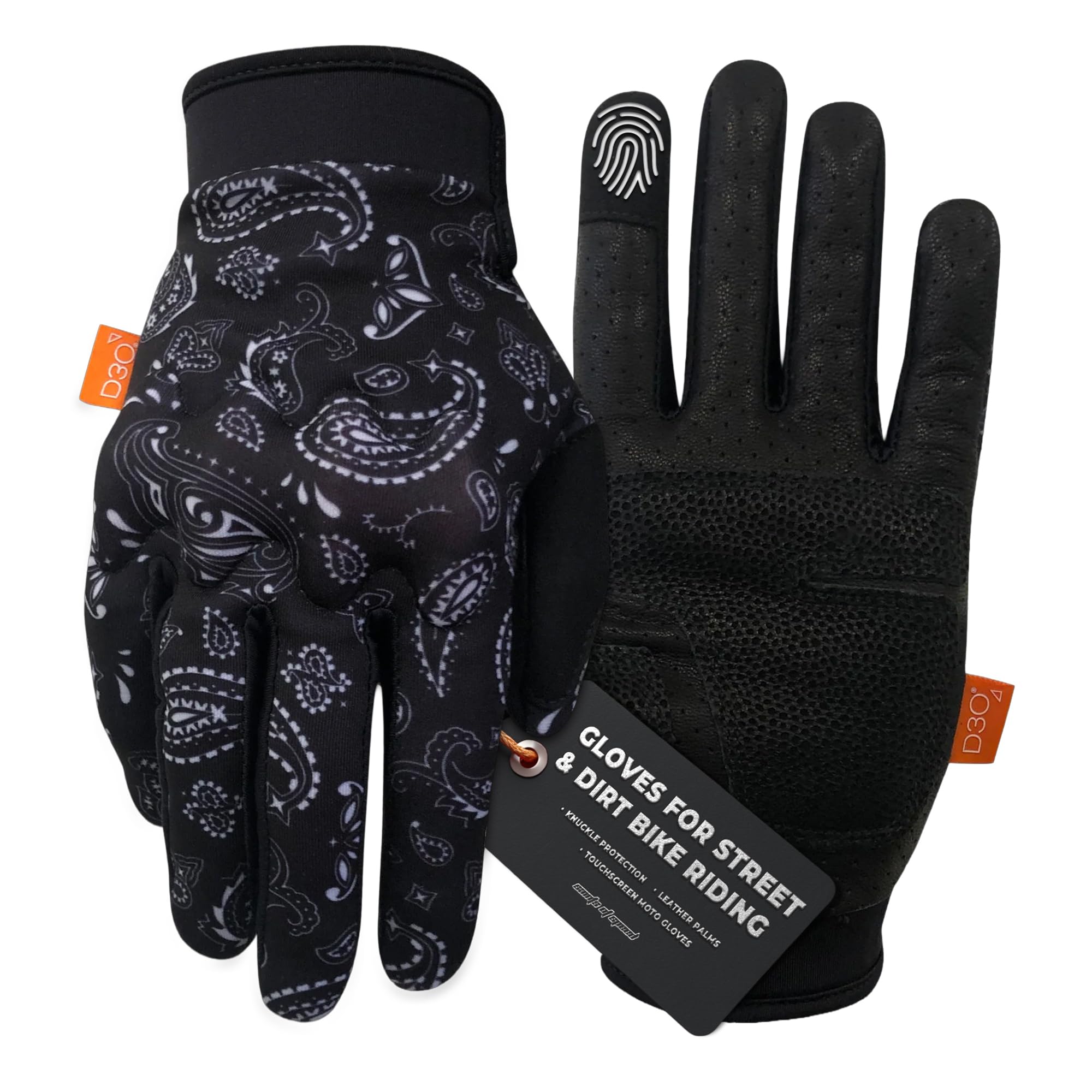
4. ILM Goatskin Leather Racing Gloves DN01

Noticeably thicker goatskin than gloves twice the price
The first thing owners mention about the ILM DN01 is the leather thickness, which beats leather found on more expensive name-brand pairs. That extra hide means real abrasion resistance in a slide and a glove that feels substantial on your hand. The hard-shell PVC knuckle provides the protection you want as a beginner, and the item weight of 150 grams keeps it light enough for all-day wear.
The stretch lips at the fingers and back hand let the glove expand with your hand as weather or blood pressure changes, and the elastic wrist strap works with the Velcro closure for a custom tightness. Perforated leather keeps air moving on warm days, and the touchscreen thumb and forefinger work with light pressure — a feature that actually functions, unlike on many rivals. The 4.4-star score across nearly 1,000 ratings makes it a proven crowd choice.
The catch is sizing, and it is a big one: the brand tells you outright the gloves run smaller than regular, so order one size up. Even then, some riders found the pinky finger ran long. The plastic knuckle shell also feels less substantial than steel or carbon on premium gloves. For the price, the thick leather and solid protection make it one of the best value-per-dollar picks on this list.
sport riding: riders who want thick protective leather without paying premium-brand money.
wide hands: anyone who refuses to order a size up or needs a glove for freezing weather.
5. J.A.G. Leather Carbon Fiber Gloves

Aggressive carbon-fiber looks with TPU sliders that protect where you brace
The J.A.G. glove earns its spot for beginners who want the full sport look. Its carbon microfiber knuckle guards provide hard impact resistance, and TPU finger protectors and palm sliders cover the spots you’ll hit in a low-side slide. Genuine leather with anti-slip palm padding keeps a firm grip on the bars.
The touchscreen feature is the standout here, with owners reporting it works very well and quickly, opening a phone with no fuss. The double-stitched leather feels sturdy and likely to outlast synthetic-material rivals, and the adjustable Velcro straps plus a high wrist cover add a sense of security. The glove weighs 0.26 kg and is built for motocross, road racing, adventure riding, and even climbing or skating.
Fit is the mixed bag. Some riders found a large fits perfectly, while others say the gloves run too big, and a few noted the thumbs run long. If you have big hands, the advice is to size up. You are paying a bit more than entry-level for the carbon look and TPU sliders, but for the protection package, it is a fair trade.
crash safety: you want sport-bike styling and real palm-slider protection at a mid-range price.
flexible feel: you have narrow hands that are easily swamped by a roomy fit.
6. Harssidanzar Leather Motorcycle Touch Gloves KM045

A 30-centimeter cuff that tucks under your jacket like a proper racing glove
This is the glove for the beginner who wants race-style coverage. The total length of about 11.8 inches, or 30 cm, lets the glove reach up toward your forearm, so it slides under a jacket sleeve and stays put. The genuine goatskin is soft, flexible, and lightweight, and the elastic wrist strap with hook closure keeps it from falling off mid-ride.
What owners highlight is the comfort and the way every finger fits perfectly, with the cuff accommodating jacket sleeves without bunching. The abrasion-resistant TPR and carbon fiber knuckle design protects your hand, joints, and side cuff, and the palm pad increases grip on the handlebars for safer control. The leather stays supple even after getting wet, which is a durability point many rivals miss.
The trade-off is that these are not waterproof, and your hands will get cold after a couple of hours below 50°F. Sizing runs small enough that one owner who normally wears large switched to a medium for a perfect fit, so pay attention to the size chart. Weighing 0.36 kg, it is a heavier glove than most, but the extended cuff and full protection make the weight worthwhile.
urban use: you want max coverage and a gauntlet-style cuff that tucks into your jacket.
precision work: you only ride in cold rain or you prefer a short, lightweight commuter glove.
7. ScorpionEXO Vortex Air Gloves
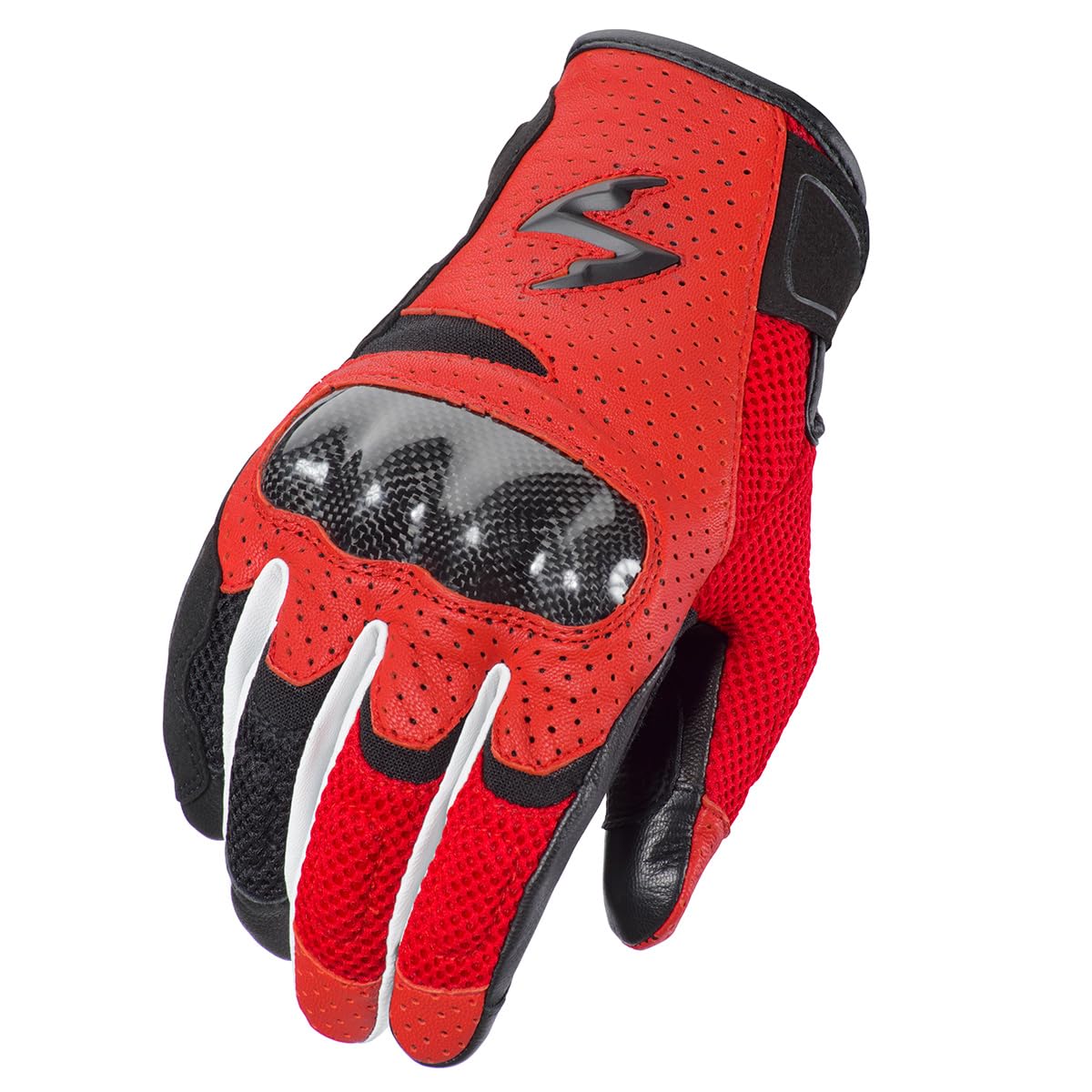
Engineered airflow that keeps your hands dry when the pavement radiates heat
ScorpionEXO built the Vortex Air around one idea: airflow. The premium goatskin leather is paired with high-flow polyester mesh and perforated leather so air moves over your hand on hot days, while the reinforced palm and carbon fiber knuckles keep protection intact. The result is a glove that genuinely breathes without compromising safety — exactly what a summer learner needs.
The pre-curved finger construction reduces rider fatigue, and the stretch panels at the knuckles give you dexterity for the controls. Digital embossed reinforcement on the palm and thumb provides superior grip, and the reinforced sidewall adds abrasion resistance. One owner’s durability test is telling: after 2 years of daily riding, the gloves still hold up and look nearly new, which is remarkable for a breathable summer glove.
The fit runs snug—several owners say almost too small—so size up if you’re between sizes. Touchscreen fingertips work but need pressure, and the gloves aren’t waterproof. The 1-year warranty adds confidence. If you hate sweaty palms, this is the most comfortable hot-weather option here.
summer rides: you ride in hot climates and want maximum airflow with proven durability.
cold mornings: you need a glove for cold mornings or you want reliable touchscreen response.
8. Alpinestars Men’s Copper Riding Glove

Featherweight urban styling for the rider who commutes and wants zero bulk
The Copper is Alpinestars’ answer for the city rider who wants a short, lightweight glove that disappears on the hand. The hard knuckle is covered by stretch spandex, so you get impact protection without the bulky shell, and the full synthetic suede palm lasts longer than you would expect from a textile glove. Accordion paneling on the backhand gives your fingers flexibility for constant throttle and brake work in traffic.
At 0.19 kg, it is one of the lightest gloves here, and owners love that it breathes and stays cool in hot summer months, with one calling it perfect for Florida summer riding. The hook-and-loop wrist closure keeps it secure, and the touchscreen works well on a phone. It is the glove you forget you are wearing.
The honest limits: this is a thin glove with minimal protection—better than bare hands but not for aggressive riding. One owner reported a mark on their thumb that hurt after long rides, and a rare complaint mentioned seams ripping after 10 rides. For a beginner commuting in warm weather, the comfort and low weight are tough to top, but expect to upgrade when you push harder.
city commuting: daily warm-weather commutes where lightweight comfort beats track armor.
highway speed: you plan to ride aggressively or need serious palm-slider protection.
9. KEMIMOTO CE-Certified Leather Gloves
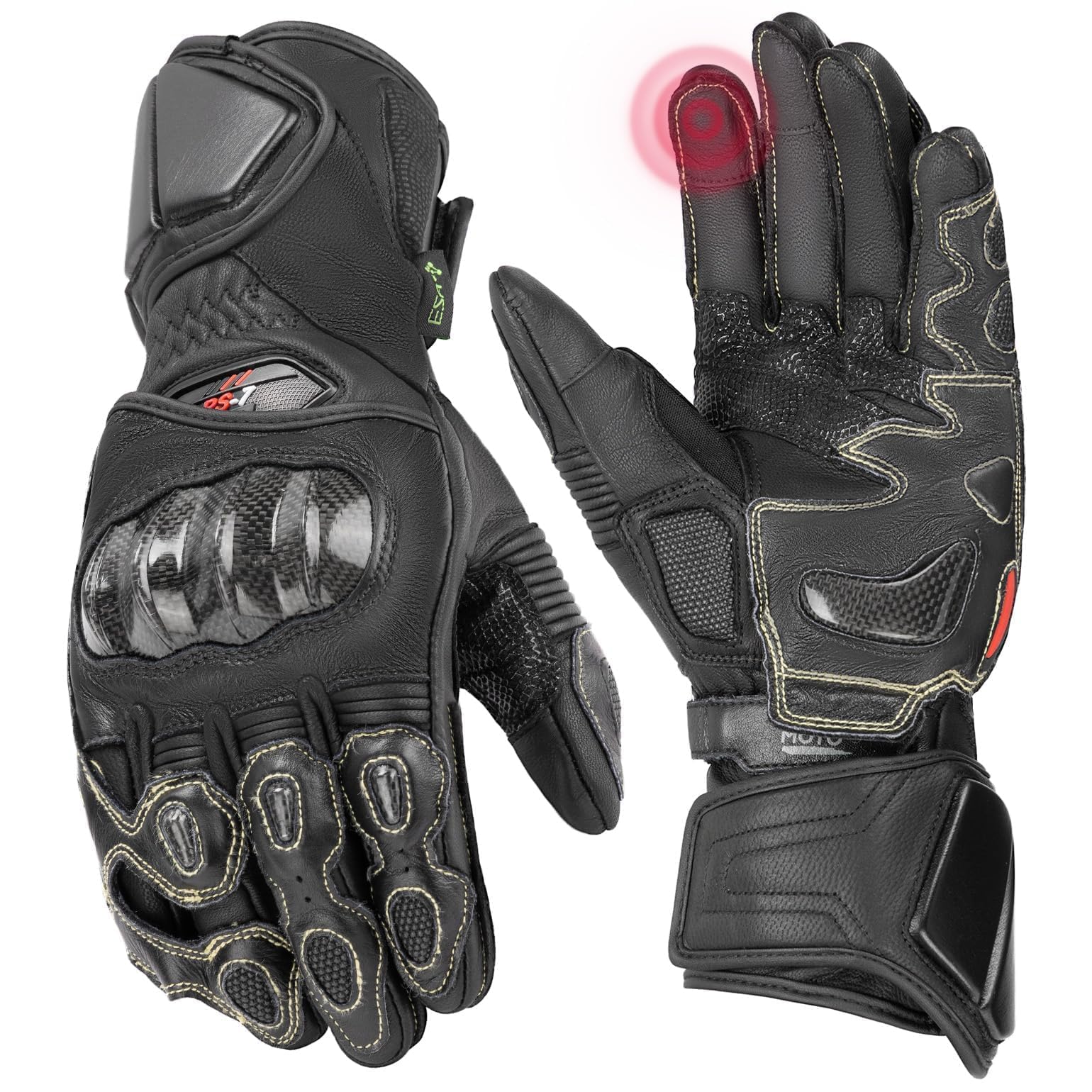
A full safety feature list — Kevlar stitching, carbon knuckles, and a joined pinky
This is the most feature-dense glove on the list, and it earns the premium price. Built from 61% goat leather combined with cow leather, it uses Kevlar thread throughout for exceptional resistance to wear and tear. The carbon fiber shell in the joint areas pairs with ESA impact-absorption padding in key zones, so your entire hand gets cushioned protection rather than just the knuckles.
The safety details are what riders notice first. The joined pinky finger keeps that outer digit tethered to its neighbor so it cannot hyperextend in a slide, a feature riders with 14 years of experience call the best they have owned. The anti-slip palm design improves grip and control, and the three-finger touchscreen lets you operate a phone without pulling a glove off. Owners confirm the touchscreen works perfectly and the gloves hold up with daily use.
The downsides are quality-control related. Some units arrive with poor stitching and loose threads that look likely to unravel, and at least one owner received a pair with the pinky tether cut in half, compromising a key safety feature. The gloves are stiff initially but break in to a snug, comfortable fit. For the protection package at this price, it is a strong choice for a beginner who plans to ride seriously.
value armor: you want near-track-level protection and safety features as a new rider.
premium comfort: you dislike checking seams on arrival — inspect yours before the first ride.
Understanding the Specs
Knuckle Armor: Carbon vs. PVC vs. TPU
This is the hard shell over your knuckles that takes the first hit in a slide. Carbon fiber is the premium choice — lightweight, strong, and found on the Alpinestars and ScorpionEXO pairs. Hard-shell PVC on the ILM glove is thicker and heavier but protective. Soft-hard rubber and TPU options, like on the Saints of Speed and J.A.G. gloves, let your fingers move more freely while still absorbing impact. Any of these beats a glove with no armor at all.
Palm Protection: Where You Brace
Your natural instinct in a fall is to put your hand out, so the palm matters as much as the knuckles. TPU palm sliders, like those on the J.A.G. glove, let your hand skid along the asphalt instead of catching and twisting your wrist. Gel palms, like on the Milwaukee Leather, add comfort for long rides rather than slide protection. Full-grain leather palms on the Alpinestars provide the classic abrasion resistance riders have trusted for decades.
Ventilation: Perforated Leather and Mesh
Hot hands make you grip harder, and that is dangerous. Perforated leather has tiny holes punched through to let air in, while mesh panels like the 3D mesh on the Alpinestars or the high-flow mesh on the ScorpionEXO actively move air across your skin. If you ride in warm weather, these features stop the sweaty-palm death grip before it starts.
Touchscreen Fingertips
Conductive material woven into the fingertips lets you use a phone without removing a glove. It is a convenience, not a safety feature — you should still stop before answering a call. Performance varies widely: some gloves, like the KEMIMOTO and J.A.G., work with light pressure, while others require a firm tap at a specific spot. If phone use matters to you, check recent reviews before buying.
FAQ
How tight should new motorcycle gloves fit?
Should beginners buy leather or textile gloves?
Will my gloves work with a touchscreen phone?
Do motorcycle gloves need to be waterproof?
How do I measure my hand for the right glove size?
Is a hard knuckle protector really necessary for beginners?
Are expensive gloves worth it for a new rider?
What is the difference between gauntlet and short-cuff gloves?
Why do my new gloves feel so stiff and tight?
Final Thoughts: The Verdict
For most people, the motorcycle gloves for beginners winner is the Alpinestars SMX-2 Air Carbon V2 because it combines proven carbon knuckle protection, 3D mesh cooling, and full-grain leather that survives a first season and beyond. If you want maximum airflow and durability in hot weather, grab the ScorpionEXO Vortex Air. And for the beginner who wants the most complete safety feature list, the KEMIMOTO CE-certified gloves are the one to reach for.
How We Picked
We do not accept paid placement. Every pick is matched to a real buyer and a real use-case; we do not hands-on test units.
Sources & Methodology
Specifications: manufacturer listings and product documentation. Review insights: verified customer reviews, as of July 2026. Pricing: not shown on this page (it changes often); check the current price via the retailer link.
As an Amazon Associate, Trending Car earns from qualifying purchases. This does not affect which products we feature.