
Our readers keep the lights on and my garage snacks stocked. As an Amazon Associate, I earn from qualifying purchases.
Specs are compiled from manufacturer listings and verified buyer reviews and can change over time — please confirm the key details on the product page before buying.
The right riding kit separates a comfortable, protected ride from a miserable, risky one. You need gear that offers real impact protection, breathes in summer heat, and fits snugly enough to stay put in a crash. This guide evaluates CE-rated armor, breathable mesh, and durable leather to find gear that delivers on protection, comfort, and fit.
I’m Min Islam — the founder and writer behind Trending Car. This guide is built by comparing the manufacturers’ published specifications and the patterns across verified customer reviews, so you get each pick’s real strengths and trade-offs instead of marketing spin.
From ventilated summer gloves to premium full-face helmets, these are the choices worth your time when you’re shopping for the best motorcycle gear for your next ride.
Our Picks at a Glance


How To Choose The Best Motorcycle Gear
Match your gear’s protection level to your specific riding style and conditions. A commuter sitting in city traffic needs different armor placement than a weekend canyon carver, and a summer rider needs airflow that a winter tourer would hate. Identify your primary riding environment first, then use this guide to make informed choices on armor, materials, and helmets.
Armor: CE Ratings and What They Mean
The armor in your jacket is your primary impact defense. CE-approved armor comes in different levels — Level 1 is standard protection, while Level 2 armor absorbs more impact energy. Many jackets ship with removable CE armor in the shoulders and elbows, and some add a back pad slot as an upgrade. If you plan to ride aggressively, look for gear where the armor sits snugly against your body, not shifting around inside the sleeve.
Materials: Mesh, Textile, and Leather
The shell material dictates breathability and abrasion resistance. Full-grain leather is the classic choice, offering maximum durability and a premium feel, but it runs heavy and warm. Mesh jackets boost airflow for hot summer days, sacrificing some abrasion resistance for cooling. Textile jackets with materials like 1000D Cordura and 600D nylon strike a balance, using denser fabric on impact zones and mesh panels where you need airflow. Your climate should drive this call.
Helmets: Shell, Fit, and Visors
A helmet is your most critical safety purchase, and its shell material determines weight, impact absorption, and price. Polycarbonate composite shells are lightweight and affordable, while fiberglass and EPS foam layups offer premium dampening. Look for a snug fit — a helmet should be tight when new because the liner breaks in. Modular flip-up helmets let you lift the chin bar for air and conversation at stops, and an integrated sun visor removes the need for sunglasses on bright days.
Quick Comparison
| Model | Best For | Protection | Ventilation | Weight | Amazon |
|---|---|---|---|---|---|
| Alpinestars SMX-2 Gloves★ Best Overall | Summer Riding | Carbon Knuckle | Breathable 3D Mesh | Lightweight | Amazon |
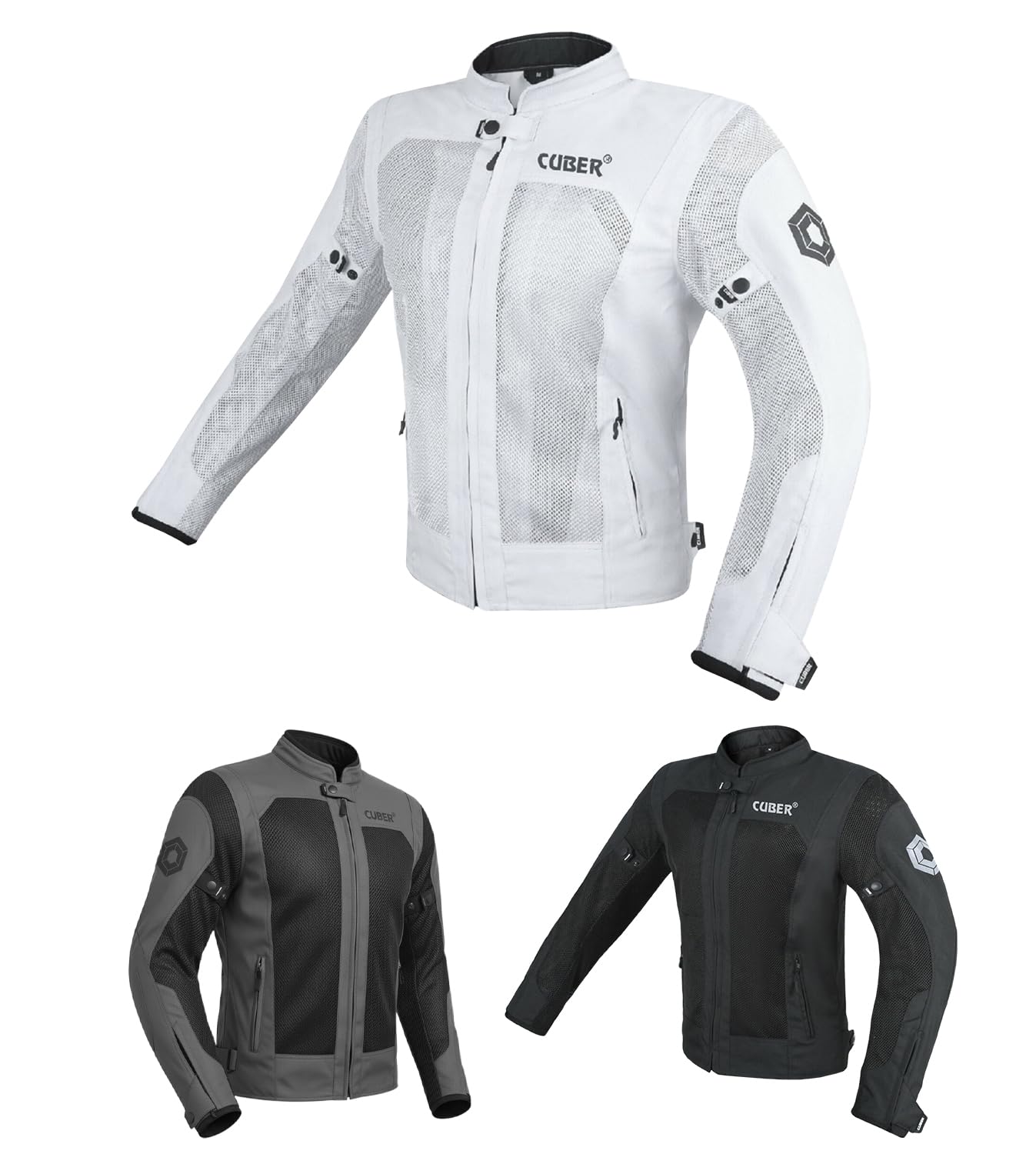
| CUBER Mesh JacketBest Value | Hot Weather | 5x CE Armor | Full Mesh | Lightweight | Amazon |
| Milwaukee Flannel ShirtCasual Rider Pick | Casual Protection | CE Armor + Aramid | Under Arm Vents | 4.5 to 5 lbs | Amazon |
| ILM Modular Helmet | Value Modular | DOT ABS Shell | Vented EPS | 1750 g | Amazon |
| Vance Flannel Shirt | Waterproof Storage | CE Armor + Kevlar | Chest & Back Vents | 4 lbs | Amazon |
| Milwaukee Textile Jacket | All-Season Versatility | Padded + Reflective | 6 Zippered Vents | 4.2 lbs | Amazon |
| Jackets 4 Bikes Buffalo | Premium Leather | 5x CE Armor | 4 Zippered Vents | Heavyweight | Amazon |
| HJC C91 Modular | Modular Upgrade | DOT Polycarbonate | Advanced Channeling | 3.5 lbs | Amazon |
| Shoei RF-1400 | Premium Full-Face | DOT, SNELL | Advanced Shell | 3.6 lbs | Amazon |
In‑Depth Reviews
1. Alpinestars SMX-2 Air Carbon V2 Gloves
Our pick — over 4.5★ from 900+ verified ratings; the strongest balance of quality and price.
The summer glove that keeps your hands cool without sacrificing knuckle armor.
Your hands hit the pavement first in a slide, so the knuckle guard here is the feature to notice — Alpinestars’ carbon knuckle protection sits over a full-grain leather and 3D mesh shell built for airflow. The microfiber and PU grip insert on the palm and thumb means your hands stay planted on the grips, while the ergonomic stretch insert between palm and thumb stops bunching on long throttle holds.
Owners consistently praise the build quality and comfort, noting the stitching holds up well after hundreds of miles. The glove runs tight at first, more so if you’re between sizes, but it stretches to a true-to-size fit after break-in. The one recurring shortfall is the touchscreen fingertip, which riders find unreliable on modern phones — treat it as a bonus, not a promise.
These are strictly warm-weather gloves; riders in southern climates describe them as perfect for spring, summer, and fall, but they offer no warmth for winter riding. At about 100 miles in, buyers report the gloves holding up with no significant signs of wear, making the 4.6-star crowd favorite across 900+ ratings feel well earned for the price.
What Riders Love
- Breathable 3D mesh keeps hands cool on hot days
- Carbon knuckle guard adds real impact protection
- Stretches out to a comfortable true-to-size fit
Where They Fall Short
- Touchscreen fingertip often fails on modern phones
- No warmth for cold-weather riding
Reach for these if: you ride in warm weather and want ventilated leather gloves with solid knuckle protection that break in nicely.
Look elsewhere if: you rely on glove touchscreen controls or ride in cold temperatures.
2. CUBER Motorcycle Breathable Mesh Jacket
A mesh jacket that earns its keep on 90-degree days without emptying your wallet.
When the thermometer hits 90 degrees, this jacket’s full mesh exterior on the front and back is the difference between a ride and a sauna session. It ships with five removable CE-approved armor pads — two elbows, two shoulders, and one back — and while the foam pads are Level 1, the shell itself uses 1000D Cordura fabric on impact areas with 600D on the regular panels for real durability.
The look is what wins people over here, and the high-visibility reflective logos on the front, back, and arms give you 360-degree striking visibility at night. Fit is the second most-praised attribute — owners consistently say to order one size up, with a 46-inch chest slotting into an XXL, and the 10 adjustment points let you fine-tune the fit. You also get a pants-connecting zipper, a discreet phone pocket, and hand-warmer pockets for practical daily use.
The honest trade-off is longevity — the mesh interior snags easily, with one owner reporting holes after 1.5 months, and the front pockets feel cheap. The outer shell holds up well, and the advanced airflow system earns constant praise for keeping you cool even in tropical climates. If you ride hot and want a protective shell that breathes, this is the value champion of the list.
The Case For It
- Excellent airflow keeps you cool to 90 degrees
- Full set of CE armor in shoulders, elbows, back
- Reflective logos boost night visibility
The Honest Catch
- Mesh interior snags and can tear quickly
- Order a size up for proper fit
Pick this if: you need maximum airflow for summer riding and want full CE armor at an entry-level price.
Think twice if: you expect the liner to survive years of hard use.
3. Milwaukee Leather Armored Biker Shirt
A flannel shirt that hides serious armor behind a laid-back plaid look.
This shirt looks like something you’d wear to a barbecue, but the 90% cotton and 10% genuine Aramid fiber by Dupont shell with reinforced stitching in high-impact areas makes it a legitimate riding layer. The removable CE armor sits on the shoulders and elbows, and while the back pad is sold separately, the built-in slot lets you add spine protection when you want it.
The fit is the most-praised attribute — owners stress that the sizing runs true if you follow the chart, and that going too large is the common mistake. The dual front closure gives you snap buttons over a hidden zipper, and the under-arm vents with zipper openings add breathability on warm rides. You also get two front chest pockets with snap closures, dual inside conceal-and-carry pockets, and an action back shoulder panel for flexibility while reaching the bars.
The weight is the real trade-off — some describe it as a medium-weight jacket, while others find it heavier than expected, and sizing runs tight for bigger builds. The genuine YKK zippers are built for longevity, and the mesh liner keeps it wearable in warm or fall seasons. For riders who want protection without looking like they just left the track, this shirt delivers a genre-defying balance of style and safety.
Best in its lane: the concealed carry pockets with retention bands and the Aramid-reinforced cotton shell make this the smart choice for casual riders who also carry.
Worth noting: the back armor is an extra-cost add-on, and the heavier fabric runs warm when the mercury climbs.
4. ILM Modular Full Face Helmet 159

A modular helmet that flips up for air and drops down a sun visor at a budget price.
The flip-up chin bar is the whole point here — it meets or exceeds DOT safety standards while letting you lift the front for air, conversation, or a drink at a stop without removing the whole helmet. The lightweight ABS shell pairs with a high-density fully vented EPS liner, and the ventilation opening system moves air in and out to keep you comfortable on long rides.
Comfort is a standout, with the fit getting the most owner attention. The integrated inner dark sun visor is the feature riders rave about, easily controlled with a switch so you can drop it in a tunnel or when the sun dips behind clouds without fumbling for sunglasses. The clear outer visor offers a wide field of view, the chin strap uses a quick-release buckle for easy on and off, and the removable washable liner and cheek pads keep it fresh.
The visibility has mixed feedback — the visor offers great clarity, but it tends to fog up, and while the aerodynamic design cuts wind noise, some riders still report significant noise at speed. The fit also runs mixed, with some owners finding it snug and others needing to size up. For a DOT-certified modular with a built-in sun visor, it’s a hard value to beat, holding its own against much pricier name-brand units.
Why it wins: the flip-down sun visor and quick-release buckle deliver modular convenience at an entry-level price.
The trade-off: expect some visor fogging and wind noise — the price buys function, not silence.
5. Vance Leathers Armored Flannel Shirt
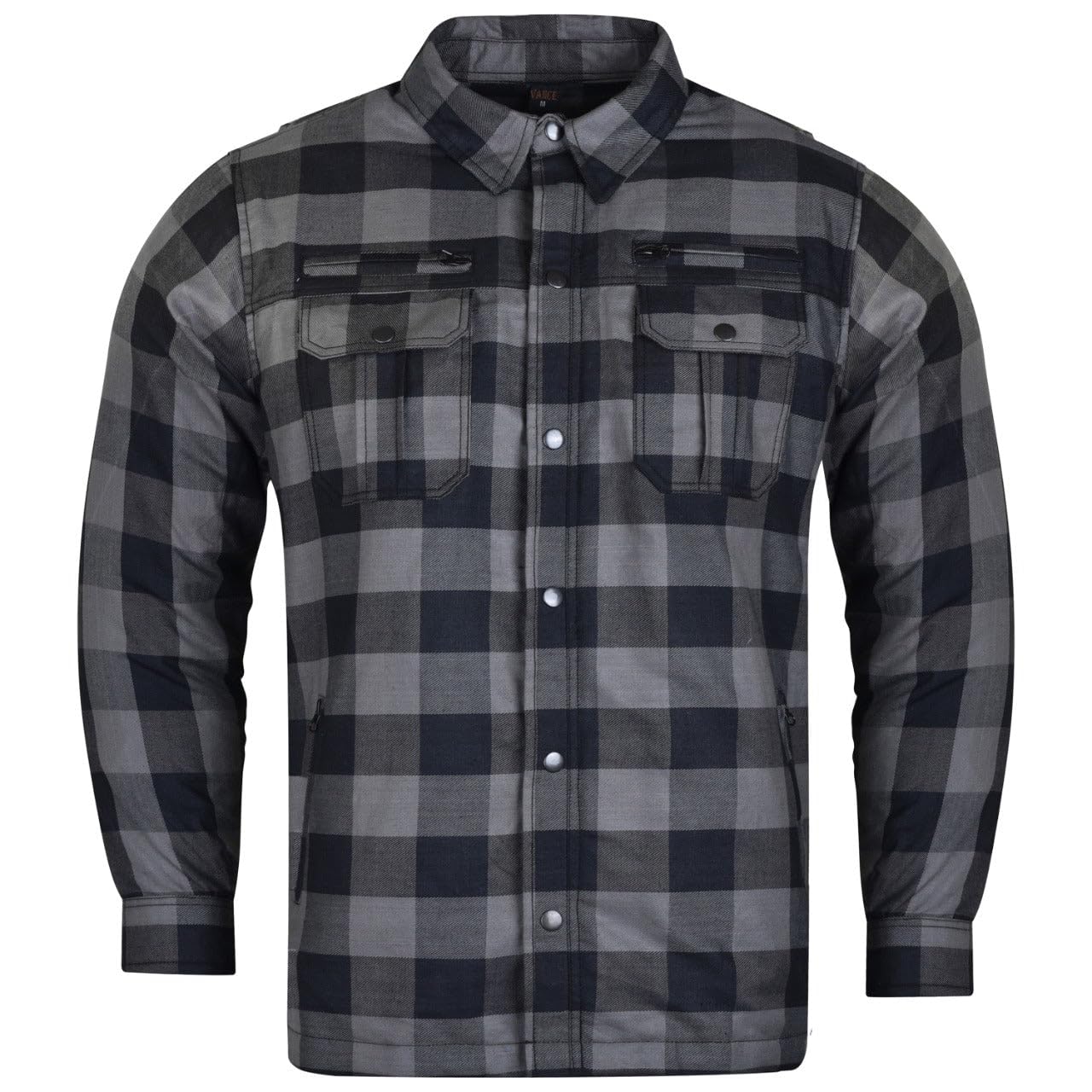
A checkered flannel that survived a real slide with minimal damage.
The proof here is in the crash test — this shirt survived a 15 mph slide across 10-12 yards of pavement with zero pain and minimal flannel damage, which is exactly the abrasion resistance you want from a riding layer. The 90% cotton and 10% DuPont and Kevlar fiber reinforcement on the high-impact areas is what makes that possible, paired with CE-approved armor at the shoulders and elbows.
The ventilation system cuts through the air with chest and back vent pockets, and the waterproof zipper closure with snap buttons keeps your gear dry in a downpour. The multiple storage options include waterproof zipper pockets, inner pockets, and snap-close outer pockets — and the fixed mesh lining keeps it breathable on warm rides. Owners consistently note it blocks wind wonderfully, with one commuting to work in 54-degree weather and staying comfortable.
The honest critiques are the fit and the quality control. It runs small — a buyer at 5-foot-8 and 230 pounds found an XL tight, and the sleeves run long. One owner reported the neck mesh stitches unraveling after the first wash, so the QC varies. But the proven slide protection, waterproof storage, and versatile look make it a compelling choice for riders who want protection that doesn’t scream motorcycle gear.
Standout trait: real-world slide protection backed by a Kevlar-reinforced shell.
Before you buy: order one to two sizes up, and be ready for some variation in stitching quality.
6. Milwaukee Leather MPM1730 Textile Jacket

A textile jacket that stretches from summer to winter with one zip-out liner.
The 1300D nylon shell is the backbone here — a durable textile that’s noticeably lighter than leather while still offering real abrasion resistance, and the reflective skull embroidery across the chest, arms, and back makes you visible from a distance in the dark. The ventilation system is the standout: two chest, two arm, and two back vents, all with zipper closures, give you maximum temperature control across the seasons.
Owners consistently praise the impeccable stitching and true-to-size fit. The full-sleeve zip-out liner is the key to its all-season versatility — with the liner in, riders stay warm enough in a t-shirt above freezing, and with it out, the six vents handle summer heat. You also get dual inside conceal-and-carry pockets, two lower zipper pockets, two chest zipper pockets, and a padded collar for added comfort.
The build quality earns genuine shock — one owner’s reaction sums it up: they’d expect to pay twice as much for a jacket of this quality. The trade-off is that it runs small, so sizing up is recommended, especially if you want room for layers. The reflective skull artwork is subtle up close but striking at night, and the genuine YKK zippers are built to last, making this the most versatile jacket in the lineup.
Why It Stands Out
- Zip-out liner makes it a true four-season jacket
- Six zippered vents for serious temperature control
- High-quality stitching and YKK zippers
Before You Commit
- Runs small — size up for comfort with layers
- Outer pocket material feels thin in places
Best for: riders who want one jacket that works year-round and value reflective visibility after dark.
Not ideal if: you’re between sizes and expect a roomy American cut — order up.
7. Jackets 4 Bikes Commuter Buffalo Leather Jacket
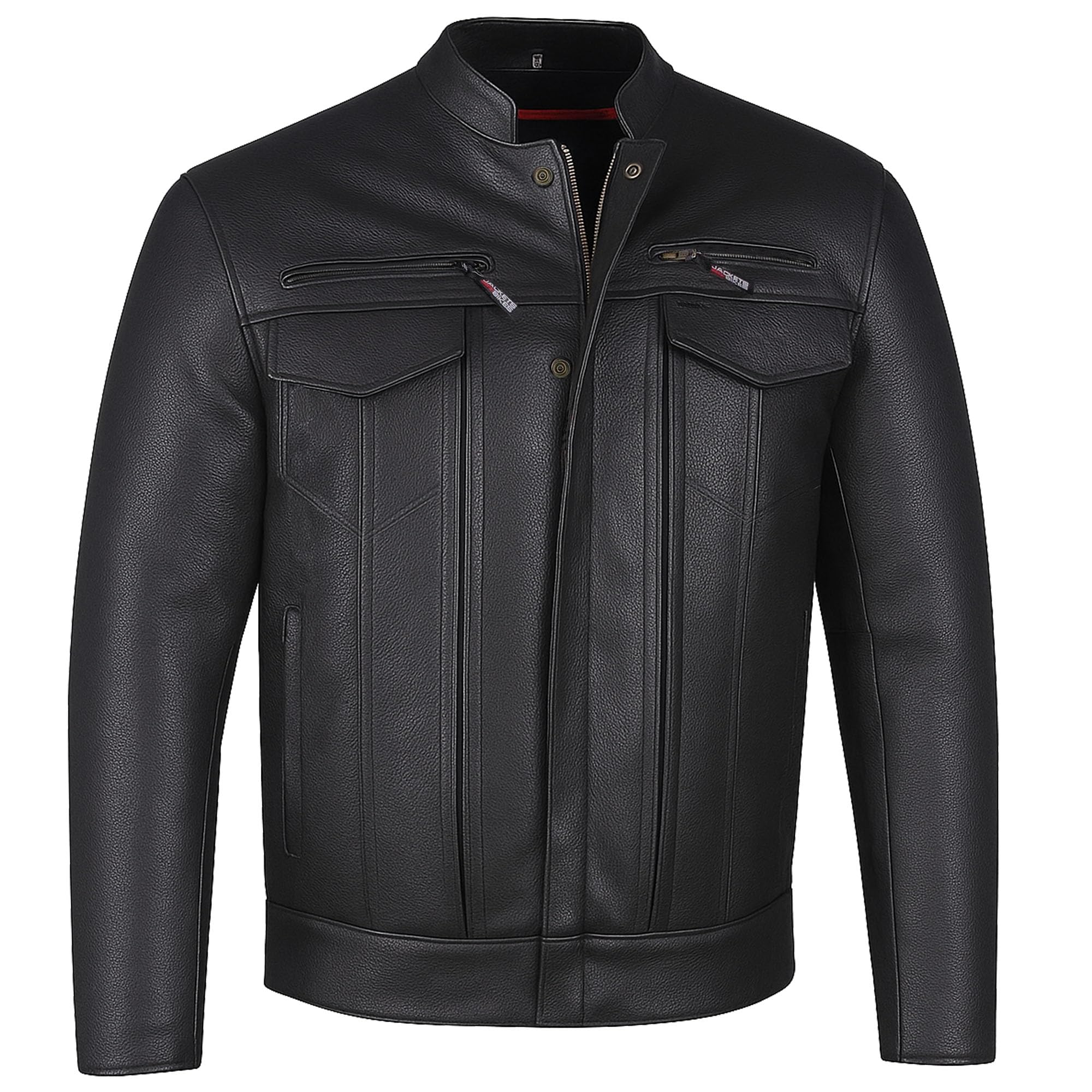
Thick buffalo leather that’s been crash-tested at 14 mph and came out on top.
The 1.2 to 1.3 mm premium natural buffalo leather is the whole story here — it’s the thickest, most durable shell in this lineup, and it’s proven itself by surviving a 14 mph scooter crash while protecting the rider’s upper body. The leather is heavy, and it’s supposed to be; that weight is your abrasion protection, built to last a lifetime against normal wear and tear.
The protection goes beyond the hide — 5PC removable CE armor comes pre-installed at the shoulders, elbows, and back. The massive single back panel is designed for patches and customization, and the eight utility pockets — four exterior and four interior — include two secure interior pockets and a phone pocket that one owner says fits a handheld gaming console. The removable thermal quilted liner keeps you warm in low temperatures, and the four ventilation zippers, two on the chest and two on the back, open up for maximum airflow in summer.
The quality is the most-praised attribute, with owners noting the stitching is clean and well done, rivaling brands that cost far more. The fit is the second-most-praised, accommodating a sweatshirt underneath, though the leather runs heavy and needs break-in — expect some squeaking and stiffness before it molds to you. The recurring complaint is the zippers, which some find weak and prone to pulling open, but at this price point for genuine buffalo leather with CE armor, the value is undeniable.
The Heavyweight Case
- Genuine 1.2-1.3 mm buffalo leather for max abrasion resistance
- 5-piece CE armor pre-installed
- 8 utility pockets including a phone pocket
The Trade-Off
- Heavy and squeaky until broken in
- Zippers can pull open over time
Reach for this if: you want genuine leather protection with proven crash performance and don’t mind the weight.
Look elsewhere if: you want a light, casual layer — this is a serious riding jacket, not a fashion piece.
8. HJC C91 Solid Modular Helmet

A modular helmet with premium features at a price that undercuts the big names.
The DOT-approved polycarbonate composite shell meets FMVSS 218 standards, giving you top-level protection from energy absorption to penetration resistance without the premium price tag of European brands. The HJ-17 shield offers 99% UV protection and uses a RapidFire Shield Replacement System, so you can swap shields on the side of the road without tools.
The integrated black dark smoke sun visor is the feature riders can’t stop using — it deploys quickly with a sliding system, eliminating the need for sunglasses even for riders with sensitive eyes. The Advanced Channeling Ventilation System pushes air front-to-back to expel heat and humidity, and the moisture-wicking, quick-drying liner keeps you comfortable on long rides. The removable and washable cheek and crown pads make maintenance easy, and the glasses grooves add comfort for eyewear users.
The fit runs small, which is the main thing to know — owners mention needing to size up from their measurements, with some going two sizes larger. It’s also heavier than some past helmets and somewhat noisy on the highway, though better than an open-face. The speaker pockets and Smart HJC readiness make it compatible with 10B or 20B Bluetooth systems, and for the price, owners consistently call it the best bargain in the modular category.
Why it’s a winner: the integrated sun visor and tool-free shield system deliver premium modular features at a mid-range price.
The catch: definitely size up, and expect some highway noise compared to pricier full-face helmets.
9. Shoei RF-1400 Full Face Helmet

The quietest, most comfortable full-face helmet money can buy, and it rides like it.
This is the flagship of premium full-face helmets, holding DOT, FMVSS 218, and SNELL certifications — the SNELL nod being the key for riders who track their bikes or want the highest independent safety standard. The compact, lightweight fiberglass and EPS shell design keeps it feathery, and the advanced aerodynamics and air-tight shield system dramatically reduce wind and road noise compared to any helmet you’ve ridden before.
The noise reduction is the defining trait — owners describe it as the quietest Shoei yet, filtering high-frequency noise so well that ears don’t ring after long highway rides at 80 mph. The ventilation system keeps you cool even in the sun, and the included accessories — a Pinlock EVO lens, breath guard, chin curtain, and helmet bag — make it ready for touring straight from the start. The emergency release system lets medical personnel remove cheek pads from an injured rider, a safety detail you hope you never need but appreciate having.
The fit is tight from the start, and that’s by design — owners consistently advise wearing it for 20 minutes at a time, a few sessions, until it molds to your face. The cheek pads can run tight even on larger sizes, and the visor button takes getting used to, but the break-in reward is a helmet that fits like it was custom-made. The glasses-friendly design, Bluetooth speaker pockets, and world-class build quality justify the premium price for riders who spend serious hours in the saddle.
The defining spec: SNELL approval plus a compact, lightweight shell makes this the safest and most comfortable pick in the lineup.
Expect this: a tight initial fit that breaks in beautifully — give it several short wear sessions before judging the size.
Understanding the Specs
CE Armor Levels
CE armor is the pad that absorbs impact energy at your shoulders, elbows, and back. Level 1 armor is the standard protection found in most jackets, while Level 2 absorbs more energy on impact. The key is that armor must sit snugly against your body — if it shifts around inside the sleeve, it won’t be over the joint when you need it. Many jackets ship with removable pads so you can upgrade to a denser set later.
Shell Materials
The outer shell decides your abrasion resistance and your comfort in the heat. Full-grain leather is the most durable and abrasion-resistant but runs heavy and warm. Textile shells like 1000D Cordura and 600D nylon offer a balance of durability and lighter weight, often with mesh panels for airflow. Mesh jackets prioritize maximum cooling for hot weather, trading some abrasion resistance for breathability. Match the shell to your climate and riding style.
Helmet Certifications
Helmet safety standards tell you what level of testing the shell passed. DOT and FMVSS 218 are the minimum U.S. legal standards for road use, testing energy absorption, penetration resistance, and chin strap security. SNELL is a stricter independent standard that requires higher impact absorption, often favored by track riders. A helmet that meets or exceeds DOT standards is road-legal, but SNELL approval signals a higher tier of protection.
Ventilation Systems
Ventilation controls your body temperature more than any other feature. Look for zippered vents on the chest, arms, and back of jackets to channel airflow — more vents mean better temperature control across seasons. Helmets use channeling systems that push air through the EPS liner, front to back, to expel heat and humidity, with removable liners for airflow direction control. An integrated sun visor adds practicality for riders who want visual comfort without separate sunglasses.
FAQ
How should motorcycle gear fit for maximum protection?
What is the difference between CE Level 1 and Level 2 armor?
Is a modular flip-up helmet as safe as a full-face helmet?
How do I know which helmet size to buy?
Can I wear a flannel shirt as motorcycle gear?
What does a G-sensor do in motorcycle gear?
How does the touchscreen compatibility work in riding gloves?
What is the difference between a mesh jacket and a textile jacket?
How do I care for a full-grain leather riding jacket?
Why is a helmet’s shell material important?
Final Thoughts: The Verdict
For most riders, the motorcycle gear winner is the pair of Alpinestars SMX-2 Air Carbon V2 Gloves because they deliver the best balance of summer comfort and real carbon knuckle protection, backed by the strongest owner consensus for quality and fit. If you need a full-coverage shell that breathes in the heat, the CUBER mesh jacket with its five-piece CE armor is the value pick that keeps you cool to 90 degrees. And for riders who want maximum protection with a proven crash record, the Jackets 4 Bikes buffalo leather jacket is the genuine hide option that’s been tested in a real slide and held up — the crowd favorite at 4.6 stars across 500-plus owners makes the choice easier.
How We Picked
We do not accept paid placement. Every pick is matched to a real buyer and a real use-case; we do not hands-on test units.
Sources & Methodology
Specifications: manufacturer listings and product documentation. Review insights: verified customer reviews, as of August 2026. Pricing: not shown on this page (it changes often); check the current price via the retailer link.
As an Amazon Associate, Trending Car earns from qualifying purchases. This does not affect which products we feature.