
Our readers keep the lights on and my garage snacks stocked. As an Amazon Associate, I earn from qualifying purchases.
Specs are compiled from manufacturer listings and verified buyer reviews and can change over time — please confirm the key details on the product page before buying.
Your truck deserves oil that keeps it starting strong and running smooth, not one that leaves you with a diesel rattle at idle and worry about internal wear. The right oil acts like cheap insurance for your engine., and choosing it depends on viscosity (how thick it is at different temperatures), the additives package (chemicals that reduce wear and clean), and how honest the brand is about real-world performance. Here are nine top-tier jugs, what they actually do for your rig, and which one deserves a spot in your garage.
I’m Min Islam — the founder and writer behind Trending Car. This guide is built by comparing the manufacturers’ published specifications and the patterns across verified customer reviews, so you get each pick’s real strengths and trade-offs instead of marketing spin.
Whether you drive a diesel workhorse or a gas half-ton, choosing the best motor oil for trucks protects your engine under load, heat, and long drain intervals.
Our Picks at a Glance


How To Choose The Best Motor Oil for Trucks
Before you grab any jug, know your truck’s two basic needs: the viscosity grade (the number like 5W-30 or 15W-40) and the API service category (the letters that tell you which engines the oil is certified for). Get those two right and you have narrowed the field to a handful of solid options.
Match the Viscosity Grade to Your Engine
The number before the “W” (which stands for winter) tells you how the oil flows in cold weather — lower means easier cold starts. The number after the “W” is the oil’s thickness at operating temperature, so a 15W-40 stays thicker when hot than a 5W-30. Your owner’s manual lists the grade your engine needs; a diesel work truck often calls for 15W-40, while a modern gas half-ton typically runs 5W-30.
Synthetic vs. Conventional vs. Blend
Full synthetic oils are engineered for extreme heat and cold, resist breaking down under heavy loads, and generally allow longer intervals between changes. Conventional oil is the cheaper baseline, while a synthetic blend (like a 5W-30 blend) mixes the two for a middle ground. If you tow or haul regularly, most truck owners lean toward full synthetic for the added protection.
Check the API Service Category
Look for the API donut on the back label. For modern diesel trucks, CK-4 is the current premium standard — it helps control wear, deposits, and oil breakdown while meeting low-emission requirements. Gas engines use categories like SN or SP. If the jug lists an older category, it might not provide the protection your newer engine expects.
Quick Comparison
| Model | Best For | Viscosity | Volume | Flash Point | Amazon |
|---|---|---|---|---|---|
| Motorcraft XO5W305Q3SP★ Best Overall | Ford gas trucks needing OEM spec | 5W-30 | 5 Quarts | 446 °F | Amazon |
| Mobil 1 Truck & SUV 5W-30Top Performer | Towing and hauling gas trucks | 5W-30 | 5 Quarts | — | Amazon |
| Mobil 1 Advanced 15W-50Heavy Weight Champ | High-heat and heavy-weight engines | 15W-50 | 5 Quarts | 232 °C | Amazon |
| Valvoline Heavy Duty 15W-40 | Diesel engines with severe-duty specs | 15W-40 | 1 Gallon | 437 °F | Amazon |
| Delo 400 XSP 5W-40 | Sub-zero cold starts in diesel engines | 5W-40 | 1 Gallon | — | Amazon |
| Schaeffer SynShield 15W-40 | Diesel owners chasing quiet, smooth idle | 15W-40 | 1 Gallon | — | Amazon |
| Schaeffer SynShield OTR Plus 5W-40 | Long drain intervals and cold weather | 5W-40 | 1 Gallon | — | Amazon |
| Motorcraft XO5W30QSP 5W-30 | Cost-conscious DIY Ford owners | 5W-30 | 12 Quarts | — | Amazon |
| Royal Purple 05154 15W-40 | Diesel durability and fuel economy | 15W-40 | 5 Gallons | — | Amazon |
In‑Depth Reviews
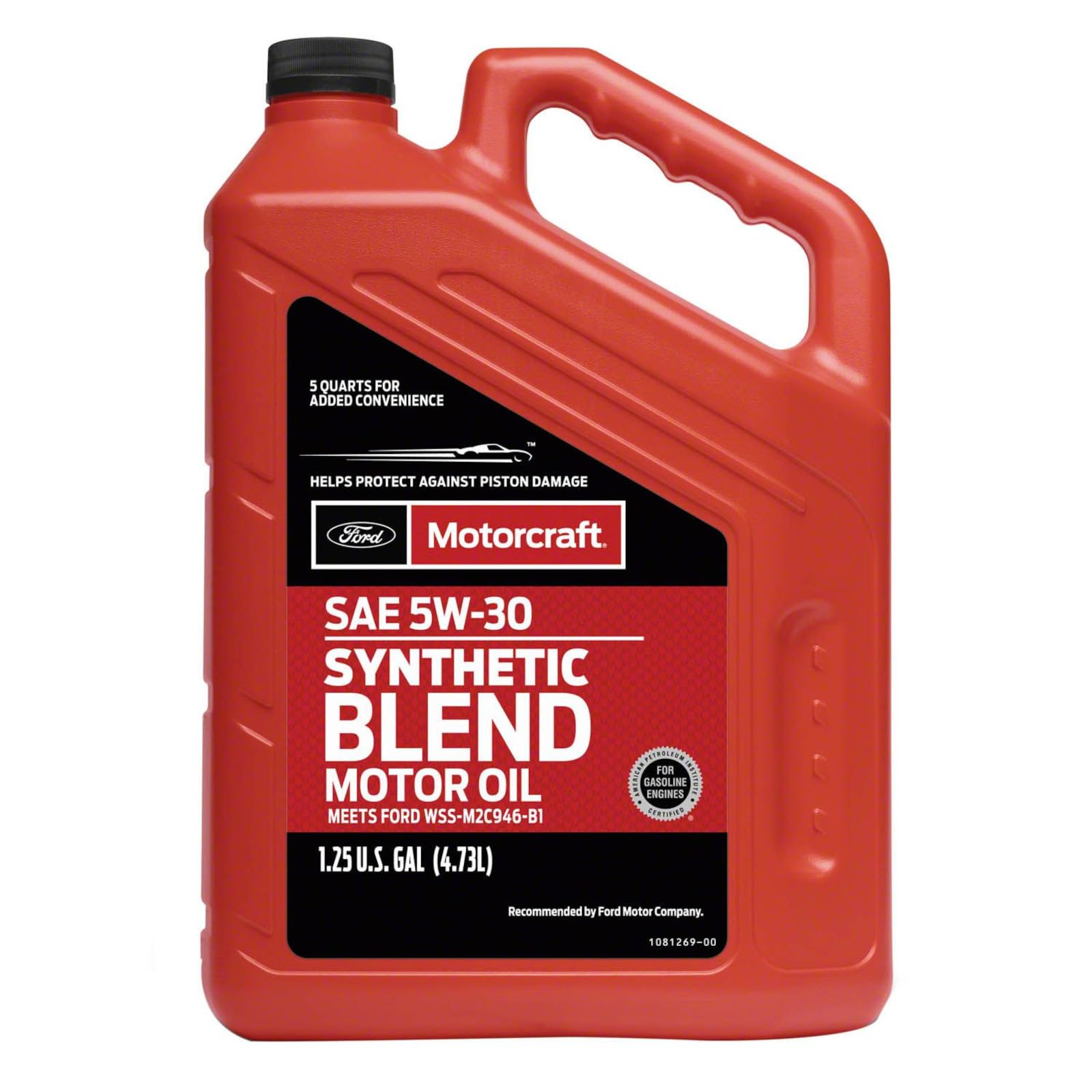
1. Motorcraft XO5W305Q3SP 5W-30
Our pick — over 4.5★ from 750+ verified ratings; the strongest balance of quality and price.
The factory-fill favorite that Ford owners swear by for a quieter, smoother daily drive.
If you drive a Ford gas truck, this is the oil the dealer’s service bay reaches for — and the crowd favorite here holds a 4.9-star rating across roughly 750 owners. It is the correct OEM spec for engines like the 2.7 EcoBoost, which matters if you want factory-grade protection and zero warranty headaches. Buyers report their trucks “run smooth with no issues” and that the engine feels noticeably quieter after the change.
This jug gives you 5 quarts of 5W-30 with a flash point of 446 °F — meaning it resists igniting even under hard acceleration heat, so your turbo stays protected when you’re merging onto the highway loaded down. The oil quality earns the biggest share of owner praise by far, and the value-for-money comments run a close second. It pours easily and is a trusted brand for Ford vehicles.
Compared to the premium-priced full synthetics below, the Motorcraft is a conventional-style oil, so you swap it more often than a synthetic. That is the honest trade-off for OEM-level performance at a mid-range price.
Why owners pick it
- Correct OEM spec for Ford EcoBoost engines
- High 446 °F flash point shrugs off heat
- Quieter engine feel reported repeatedly
The trade-off
- Not a full synthetic, so shorter drain intervals
- Best suited to Ford vehicles, not universal
Grab this if: you own a Ford gas truck and want the exact spec the factory recommends with zero guesswork.
Think twice if: you run a diesel or want a full synthetic with extended drain intervals.
2. Mobil 1 Truck & SUV Full Synthetic 5W-30
The towing-tested synthetic built for trucks that earn their keep under load.
This is the pick for gas truck owners who regularly hook up a trailer or load the bed to capacity. Mobil 1 formulated it specifically for hardworking trucks and SUVs, and it protects critical engine parts for up to 10,000 miles between changes. The signature Triple Action Formula targets engine protection, cleanliness, and performance, and it shrugs off internal heat up to 500 degrees F while still flowing in cold down to -40 degrees F.
The quality feedback is the loudest voice in the room, with value-for-money comments right behind. Long-haul owners mention spotless valvetrains even past 165,000 miles — “Best oil; 20 yrs/165k mi, clean valvetrain, no CEL,” as buyers put it. That kind of track record earns trust for a 5-quart jug that disappears quickly on a pickup with a big sump.
One honest note: oil consumption gets mixed feedback, so a few owners find their engine uses a little extra between changes. It is a minor quibble against an otherwise outstanding protection story.
Built for the hard stuff
- 10,000-mile protection between oil changes
- Heat resistance to 500 °F and cold flow to -40 °F
- Triple Action Formula for wear and cleanliness
Worth knowing
- Heavy tow duty may still need 5,000-mile changes
- Some owners note extra oil consumption
Reach for this if: you tow, haul, or drive in extreme temperatures and want a synthetic that handles both ends of the thermometer.
Look elsewhere if: you are on a strict budget and change oil frequently anyway.
3. Mobil 1 Advanced Full Synthetic 15W-50
The thick, heat-proof synthetic for engines that demand a heavier weight blend.
This is the specialist of the lineup — a 15W-50 full synthetic for vehicles that explicitly require a heavy-weight blend, not a daily-driver gas pickup. It is built to guard against the five factors that damage engines over time, with a flash point of 232 °C so it stands up to brutal heat without breaking down. Owners also call out the extra cleaning additives that keep the engine running strong.
Buyers consistently praise the oil quality, and value-for-money chatter follows close behind. Beyond trucks, owners run it in tractors and other heavy equipment, calling it “great synthetic oil for vehicles that require a heavy weight blend.” The 5-quart jug fits a full change on most pickups, so you won’t have leftover bottles cluttering the shelf.
The catch is fit: this is a vehicle-specific formulation, so it only belongs in engines whose manuals call for a 15W-50. Run it in a truck that wants 5W-30 and you risk thick, sluggish flow at cold starts.
High-heat specialist: A 232 °C flash point and cleaning additives make it ideal for engines that run hot and need a thick film.
Fit first: Only use this if your owner’s manual demands 15W-50 — it is not a universal truck oil.
Pick this for: high-performance or high-mileage engines specced for a heavy-weight blend.
Not for: modern gas trucks that call for a thin 5W-30 or 0W-20.
4. Valvoline Heavy Duty Full Synthetic 15W-40
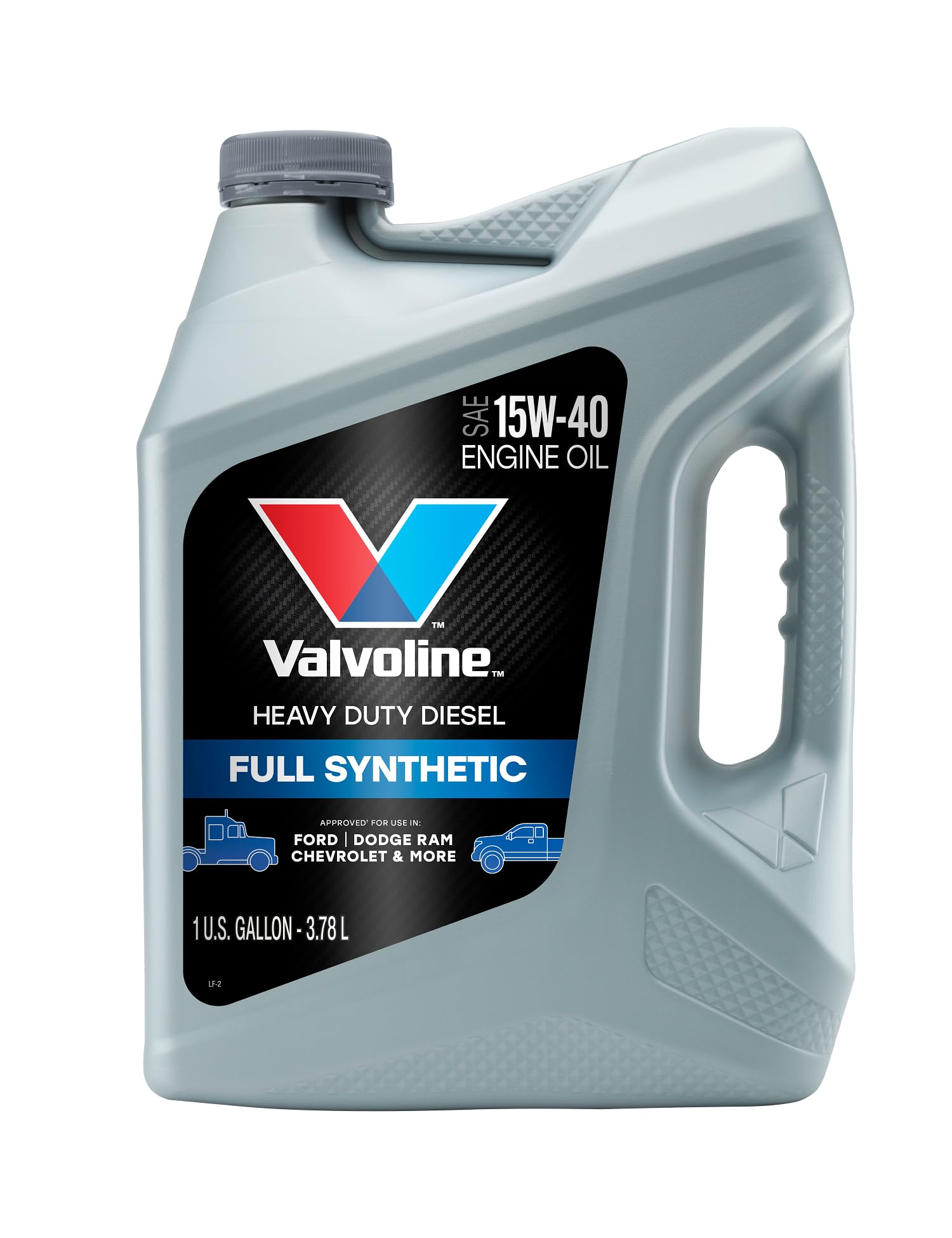
The diesel-grade synthetic that cuts valvetrain wear while meeting today’s strict emission specs.
Diesel truck owners get a formula with real test data behind it. Valvoline’s full synthetic cuts valvetrain wear in a Cummins ISB test and extends oil life in a Volvo T-13 test. The CK-4 certification means it controls wear, deposits, and breakdown while still satisfying low-emission requirements on modern diesels.
It meets or exceeds a long list of factory specs — from Cummins CES 20086 and Ford WSS-M2C171-F1 to Volvo VDS-4.5 and Caterpillar ECF-3 — so it covers most of the heavy-duty market in one jug. Owners repeatedly land on “good price and a good product,” and the flash point of 437 °F keeps it stable under sustained highway heat.
On the delivery side, a few buyers mention jugs arriving loose in an oversized box with no padding. The oil itself is never the complaint — the packaging around it sometimes is.
Proven protectant: reduced valvetrain wear in a Cummins ISB test and longer oil life in a Volvo T-13 test.
Spec coverage: CK-4 certified and approved for Cummins, Ford, Volvo, Mack, Detroit Diesel, and Caterpillar.
Choose this if: you run a modern diesel that demands CK-4 protection and want factory-spec coverage in a single gallon.
Know this: shipping packaging can be hit-or-miss, so inspect your jug on arrival.
5. Delo 400 XSP Heavy Duty Synthetic 5W-40

The sub-zero specialist that gets diesel engines cranking when the mercury plummets.
If your truck lives where winters bite hard, the 5W-40 weight here is your friend — the thinner cold-flow number means easier cranking at dawn. Chevron designed the XSP line to promote consistent cold engine starting in sub-zero temperatures for both gasoline and diesel engines. Owners confirm it: a 7.3L diesel that used to fight the cold now fires up without complaint.
Quality is the most-praised feature by a wide margin, with value-for-money running second. The gallon jug comes from a US-based manufacturer, and the feedback stretches beyond trucks — a 10HP generator ran 30°F cooler and a sport bike saw buttery-smooth clutch engagement without any slip. That versatility makes it a solid shelf staple if you own multiple machines.
The shade here is price — it sits at the higher end of the gallon-jug range, and one owner simply calls it “expensive.” You pay for the cold-weather performance and the quality reputation.
Cold-weather weapon
- 5W-40 flows easily for sub-zero starts
- Works in both gas and diesel engines
- Quality and smoothness widely praised
The cost of cold
- Premium price for a gallon jug
- Needs warm-up time before smooth shifting in some uses
Best for: northern-climate diesel owners who need reliable starts in deep cold without sacrificing protection.
Skip if: your truck never sees freezing temperatures and you want to save a few dollars.
6. Schaeffer SynShield 15W-40 Diesel Engine Oil

The friction-modified formula that silences the diesel tick and idle rattle.
Diesel owners rave about this jug because it silences the valvetrain clatter. Schaeffer packs it with micron moly (a fine solid lubricant) and a friction modifier, and the results show up immediately: a 2002 Duramax at 145K miles lost its diesel tick at idle and acceleration, gained 5 psi of oil pressure, and ran “quieter than new.” A 7.3L Powerstroke got easier starts and a quieter turbo.
The oil quality is the single most-discussed positive, with noise level and fuel performance also getting strong mentions. One owner measured about 2 more mpg after switching., and another praised the wear reduction across a fleet of tractors and trucks dating from 1950 to 2016. The durability story is strong too — Customers note a reduction in engine wear under testing.
The honest catch is price and drain strategy. This is a premium gallon, and one long-haul owner recommends changing oil and filter every 4,000 miles (not 10,000) if you want your diesel to see 500K+ miles. You pay more per change, but the protection and quiet are the payoff.
Rattle killer: Friction-modified with micron moly, it eliminates diesel tick and raises oil pressure at idle.
Durability play: Reviewers point out less wear and even ~2 mpg gains, but it demands a premium price per gallon.
Reach for this if: your diesel’s valvetrain tick drives you crazy and you want measurable wear protection.
Pass if: you stick to a strict budget or prefer the lowest-cost-per-mile formula.
7. Schaeffer SynShield OTR Plus Full Synthetic 5W-40

The 5W-40 full synthetic that keeps fuel economy without sacrificing a mile of durability.
High-mileage diesel drivers and those who hate frequent oil changes will find a kindred spirit here. Schaeffer’s OTR Plus 5W-40 maintains fuel economy while withstanding higher heat ranges than conventional oils, and it delivers superior soot-busting, deposit-dispersing performance to keep the engine clean. One owner runs it to 20,000 miles and oil testing still comes back good — a remarkable number for any diesel.
The oil quality gets the most praise, with performance a strong second. Owners of 6.0 Power Strokes, L5P Duramax, and 6.7 Cummins all report smoother operation and better responsiveness — one 2020 Power Stroke owner says the truck feels like it has more power. An oil analysis at 5,000 miles still showed no change needed, making it ideal for long drain intervals.
The trade-off is the price tag — it is the most expensive gallon in this lineup, and value-for-money feedback runs mixed. The cold-weather startability and the sheer durability are what justify the premium.
Built for the long haul
- Oil testing still good at 20,000 miles
- Superior soot busting and deposit control
- Full synthetic 5W-40 for cold starts
Premium cost
- Most expensive gallon in this guide
- Value for money draws mixed feedback
Best for: serious diesel owners who want maximum drain intervals and don’t blink at a premium price.
Not for: budget-conscious buyers changing oil every 3,000 miles anyway.
8. Motorcraft XO5W30QSP 5W-30 Synthetic Blend — 12 Quart Case

The bulk-case blend that makes DIY oil changes radically cheaper than the shop.
This is the math-savvy pick for Ford owners who change their own oil. A 12-quart case of Motorcraft’s 5W-30 synthetic blend means you can do two full oil changes from a single order — and owners crunch the numbers enthusiastically. For roughly the price of one mechanic’s oil change, you handle two changes yourself once you own the supplies.
It is the correct OEM oil for Ford trucks like the 2016 F-150, and using it keeps warranty coverage intact because it is literally the same oil the dealer pours. Value for money is the most-praised aspect, followed closely by quality. One EcoBoost Mustang owner confirms strong performance over several months of use, and the blend splits the difference between conventional cost and synthetic protection.
The limit here is that a synthetic blend is not a full synthetic — so if you want the extreme-heat resistance or the longest possible drain intervals, the pure synthetics above go further. For a driver who changes oil on a normal schedule, this case is pure convenience.
Two-change case: 12 quarts covers two full oil changes on most pickups in a single delivery.
Warranty-safe: This is the exact OEM oil Ford dealers use, so your paperwork stays clean.
Grab this if: you DIY your oil changes and want OEM-correct oil at a per-change cost that beats the shop.
Look past it if: you demand full synthetic protection for heavy towing or extreme heat.
9. Royal Purple 05154 High Performance Synthetic 15W-40 — 5 Gallon

The bulk synthetic that promises better wear protection and a quieter, smoother diesel.
Royal Purple is a name that carries weight among diesel owners, and this 15W-40 full synthetic in a 5-gallon jug is the bulk buy for trucks that burn through oil fast. The manufacturer pitches better wear protection, increased fuel efficiency, and improved compatibility with ethanol-blended fuels — plus protection for the expensive catalytic emission system. The 18-pound jug means multiple changes from one order.
The quality feedback is the loudest in this entire guide — far more owners single out quality here than on any other product. Value for money and performance are the next most-discussed positives, with durability and fuel performance close behind. Shoppers say smoother, faster-running engines at lower RPMs, noise reduction, and One owner measured a 2 mpg bump in gas mileage. A 2005 Duramax owner calls it “little pricy but well worth the price.”
The honest catch is front-loaded cost: a 5-gallon purchase is a big upfront outlay even if the per-quart math works out. One note also warns about checking your jug’s seal on arrival, as a damaged container would spoil the value quickly.
Bulk protection
- 5 gallons covers multiple oil changes
- Better wear protection and fuel efficiency claims
- Noise reduction and smooth operation widely reported
Big commitment
- High upfront cost for the bulk jug
- Heavier to handle and store than single gallons
Choose this if: you own a diesel, change oil often, and want a proven synthetic in bulk with a strong quality reputation.
Think twice if: you only need one change and don’t want to store 18 pounds of oil.
Understanding the Specs
Viscosity Grade
The “W” number (like the 5 in 5W-30) is the cold-start rating — lower means the oil thins out faster in freezing weather. The number after the W (like the 30) is the thickness at full operating temperature. A 15W-40 stays thicker when hot than a 5W-30, which is why heavy-duty diesel workhorses often call for it, while modern gas trucks run the thinner 5W-30 for better fuel economy.
Flash Point
This is the temperature where oil vapors can ignite — in plain terms, how much heat the oil can take before it starts breaking down. A higher flash point (like 446 °F on the Motorcraft or 437 °F on the Valvoline) means the oil holds its protective film longer under hard towing, turbo boost, or stop-and-go summer traffic. It is a strong clue about how well an oil resists thermal breakdown.
FAQ
What viscosity oil should I use in my truck?
What does the CK-4 rating mean on diesel oil?
Is full synthetic oil worth the extra cost for a truck?
How long can I go between oil changes with synthetic oil?
Can I use diesel oil in a gas truck engine?
Why does my truck’s engine sound quieter with certain oils?
What is the difference between 5W-30 and 15W-40?
How many quarts does a truck oil change usually take?
Final Thoughts: The Verdict
For most Ford gas truck owners, the motor oil for trucks winner is the Motorcraft XO5W305Q3SP because it is the correct OEM spec with a 446 °F flash point and the highest owner satisfaction in this lineup. If you tow and haul in extreme conditions, grab the Mobil 1 Truck & SUV for its 10,000-mile protection and 500 °F heat resistance. And for diesel owners chasing a quieter idle and real wear reduction, the Schaeffer SynShield 15W-40 is the one to reach for.
How We Picked
We do not accept paid placement. Every pick is matched to a real buyer and a real use-case; we do not hands-on test units.
Sources & Methodology
Specifications: manufacturer listings and product documentation. Review insights: verified customer reviews, as of July 2026. Pricing: not shown on this page (it changes often); check the current price via the retailer link.
As an Amazon Associate, Trending Car earns from qualifying purchases. This does not affect which products we feature.