
Our readers keep the lights on and my garage snacks stocked. As an Amazon Associate, I earn from qualifying purchases.
Specs are compiled from manufacturer listings and verified buyer reviews and can change over time — please confirm the key details on the product page before buying.
Choosing the right oil is the single most important decision you make for your engine’s long-term health, and the wrong viscosity can mean premature wear on your most expensive component. This guide breaks down the best-performing full synthetics and high-mileage blends on the market, focusing on real-world protection, cold-start behavior, and value per quart. You will learn exactly what the numbers on the jug mean and which formula suits your driving habits, whether you are towing, commuting, or nursing an older engine past 200,000 miles.
I’m Min Islam — the founder and writer behind Trending Car. This guide is built by comparing the manufacturers’ published specifications and the patterns across verified customer reviews, so you get each pick’s real strengths and trade-offs instead of marketing spin.
We’ve analyzed the crowd favorites to find the most reliable motor oil for cars that keeps engines running smoother and cleaner across every season.
Our Picks at a Glance
How To Choose The Best Motor Oil for Cars
Before you buy, you need to match the oil to your engine’s specific needs. The most important rule is to follow the viscosity grade (like 5W-30 or 0W-20) printed in your owner’s manual — deviating from that spec can lead to poor lubrication and increased wear.
Match the Viscosity to Your Climate and Engine
The first number (like the “5W” in 5W-30) refers to winter flow, meaning how easily the oil pumps in cold temperatures. The second number (the “30”) is the thickness at high operating temperatures. A 0W-20 oil is thinner at startup, which makes cold starts easier on the engine and can improve fuel economy, while a 5W-30 is slightly thicker for engines that run hotter.
Decode the Certification Stamps
Look for the API “SP” and ILSAC “GF-7A” ratings on the bottle. These are the latest industry standards that guarantee the oil meets modern requirements for deposit control and wear protection, especially crucial for turbocharged engines that run under high stress. Oils meeting these specs also often carry automaker approvals like GM dexos1 Gen 3 or Ford WSS-M2C961-A1.
Quick Comparison
| Model | Best For | Viscosity | Volume | Key Additive | Amazon |
|---|---|---|---|---|---|
| Valvoline Advanced 5W-30★ Best Overall | Everyday Full Synthetic | 5W-30 | 5 Quarts | Wear & Heat | Amazon |
| Havoline High Mileage 5W-30High-Mileage Hero | High-Mileage Engines | 5W-30 | 6 Quarts | Seal Conditioners | Amazon |
| Quaker State 5W-20Budget Champion | Budget-Friendly Protection | 5W-20 | 5 Quarts | Sludge Defense | Amazon |
| Mobil 1 Truck & SUV 0W-20 | Towing & Heavy Loads | 0W-20 | 5 Quarts | Deposit Control | Amazon |
| Mobil 1 Truck & SUV 5W-30 | Heavy-Duty Pickups | 5W-30 | 5 Quarts | Oxidation Control | Amazon |
| Valvoline Advanced 0W-20 | Fuel Economy Focus | 0W-20 | 4.7 Liters | Low-Temp Flow | Amazon |
| Castrol EDGE 0W-20 | Extended Drain Intervals | 0W-20 | 5 Quarts | Stress Resistance | Amazon |
| Pennzoil High Mileage 5W-30 | Worn Engines, 75K+ Miles | 5W-30 | 6 Quarts | Leak Stop | Amazon |
| Motorcraft 5W-30 | Ford & Lincoln Engines | 5W-30 | 5 Quarts | OEM Formula | Amazon |
In‑Depth Reviews
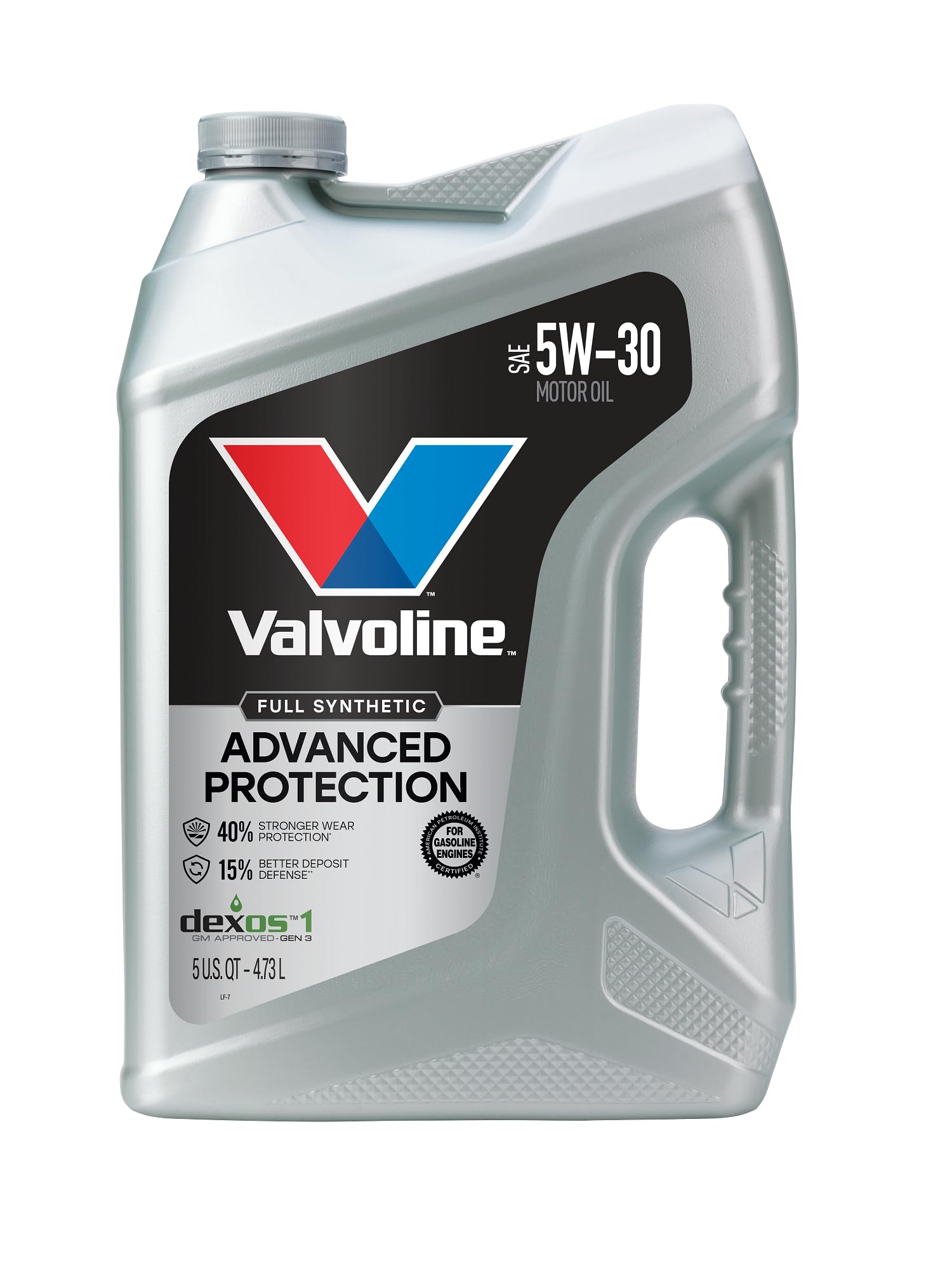
1. Valvoline Advanced Full Synthetic SAE 5W-30 Motor Oil 5 QT
Our pick — over 4.5★ from 13,500+ verified ratings; the strongest balance of quality and price.
The crowd favorite that balances wear protection with everyday affordability for nearly any car or light truck.
The defining strength here is the chemistry. Valvoline claims 40% stronger wear protection than industry standards, reducing friction and improving fuel economy. It also offers up to 2.5X better heat protection against sludge and 15% better deposit defense for cleaner internals.
With a flash point of 394 °F, this oil stays stable under severe thermal loads, making it a safe pick for turbocharged engines that need consistent viscosity. The 5-quart jug is a convenient size for most passenger cars, and the pour spout design keeps messes to a minimum during a DIY change.
The chemistry meets modern standards, confirmed by its ILSAC GF-7A and API SP ratings, plus OEM approvals like Ford WSS-M2C961-A1 and GM dexos1 Gen 3. Buyers report the engine runs noticeably quieter and smoother after the swap, and the acceleration feels more responsive — a consistent theme across thousands of owners. Some note that for older, lower-stress engines, a conventional oil would suffice, but for modern turbos, this is the protection level you want.
Why It Wins
- 40% stronger wear protection than industry standards
- Meets latest ILSAC GF-7A and API SP specs
- Smooth pour with a 5-quart jug for easy DIY
Who Should Pass
- Older engines with high mileage may benefit more from seal conditioners
- Slightly more expensive than conventional blends
The everyday pick: Ideal for modern cars and trucks needing full synthetic protection without overpaying.
Consider alternatives: If your engine has over 100,000 miles, a high-mileage formula with seal swell agents might serve you better.
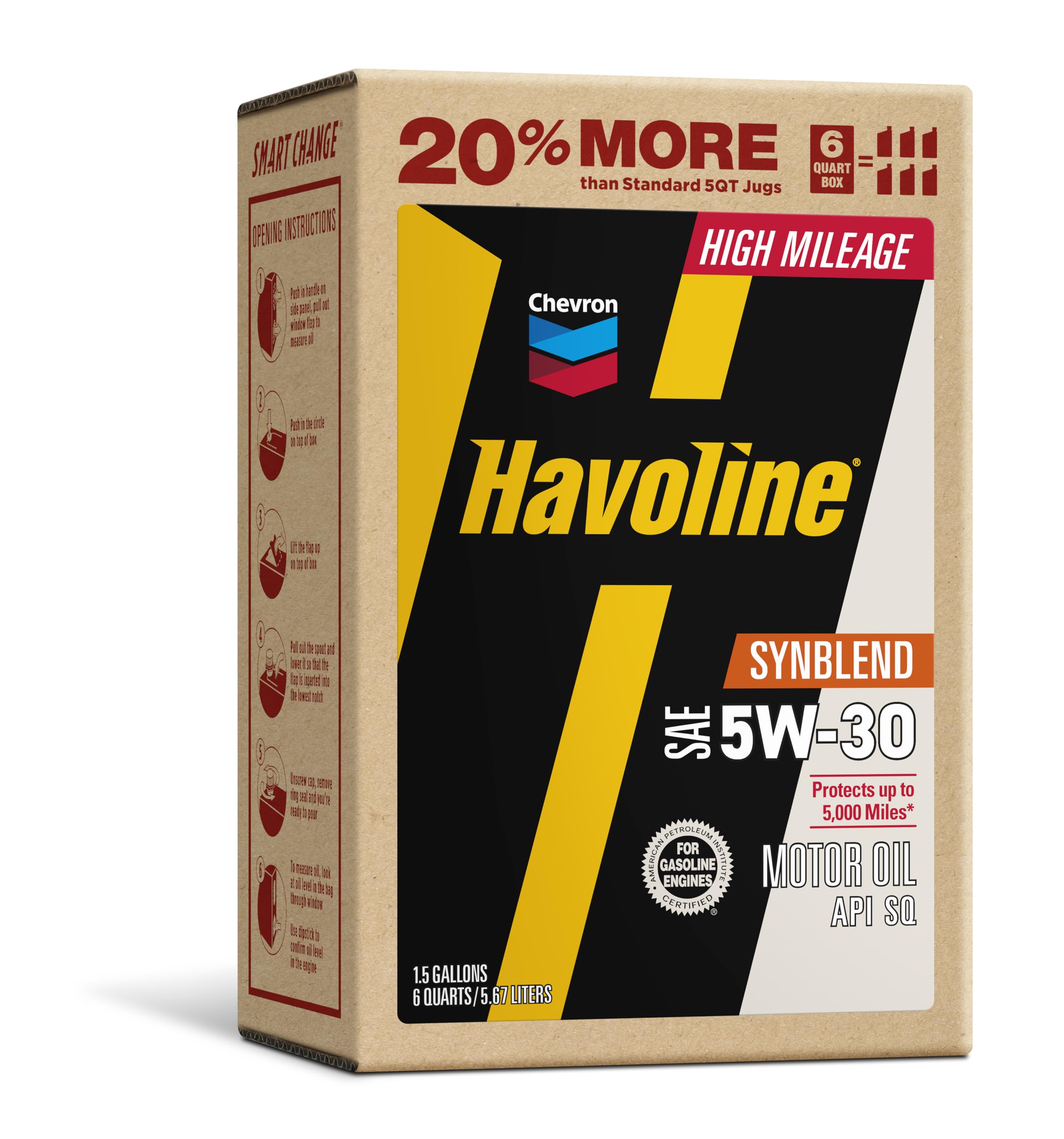
2. Havoline Motor Oil 5w30 High Mileage Synthetic Technology Smart Change
The 6-quart box that rescues worn engines with seal conditioners and quieter cold starts.
The high-mileage formula is engineered to help reduce leaks and prevent oil consumption, which are the two biggest headaches for aging engines.
The bag-in-box packaging is a real differentiator. The pouch pours mess-free without the drips that plague traditional bottles, and the box is durable enough to survive shipping without leaks. For a 280k-mile Tahoe or Yukon, owners mention the seal conditioners are effective — the engine runs quieter and smoother on cold starts with zero oil consumption between changes.
This oil helps reduce sludge and deposit buildup, and it cuts evaporative oil loss at high temperatures compared to conventional oils. It works for high-mileage and newer cars, including high-revving and turbocharged engines that specify ILSAC GF-6 or API SP. If you are topping off an oil-leaking older car, the 6-quart box is ideal for frequent top-offs without constant reordering.
Quiet Confidence: The seal conditioners reduce leaks and oil consumption, letting high-mileage engines run smoother for longer.
Value Play: At 6 quarts, you get more oil per box, making it a budget-smart choice for large-capacity engines.
Reach for this if: You drive a high-mileage truck or SUV that needs leak reduction and smoother cold starts.
Look elsewhere if: Your newer car takes a 5-quart fill and you prefer the premium feel of a national full-synthetic brand.
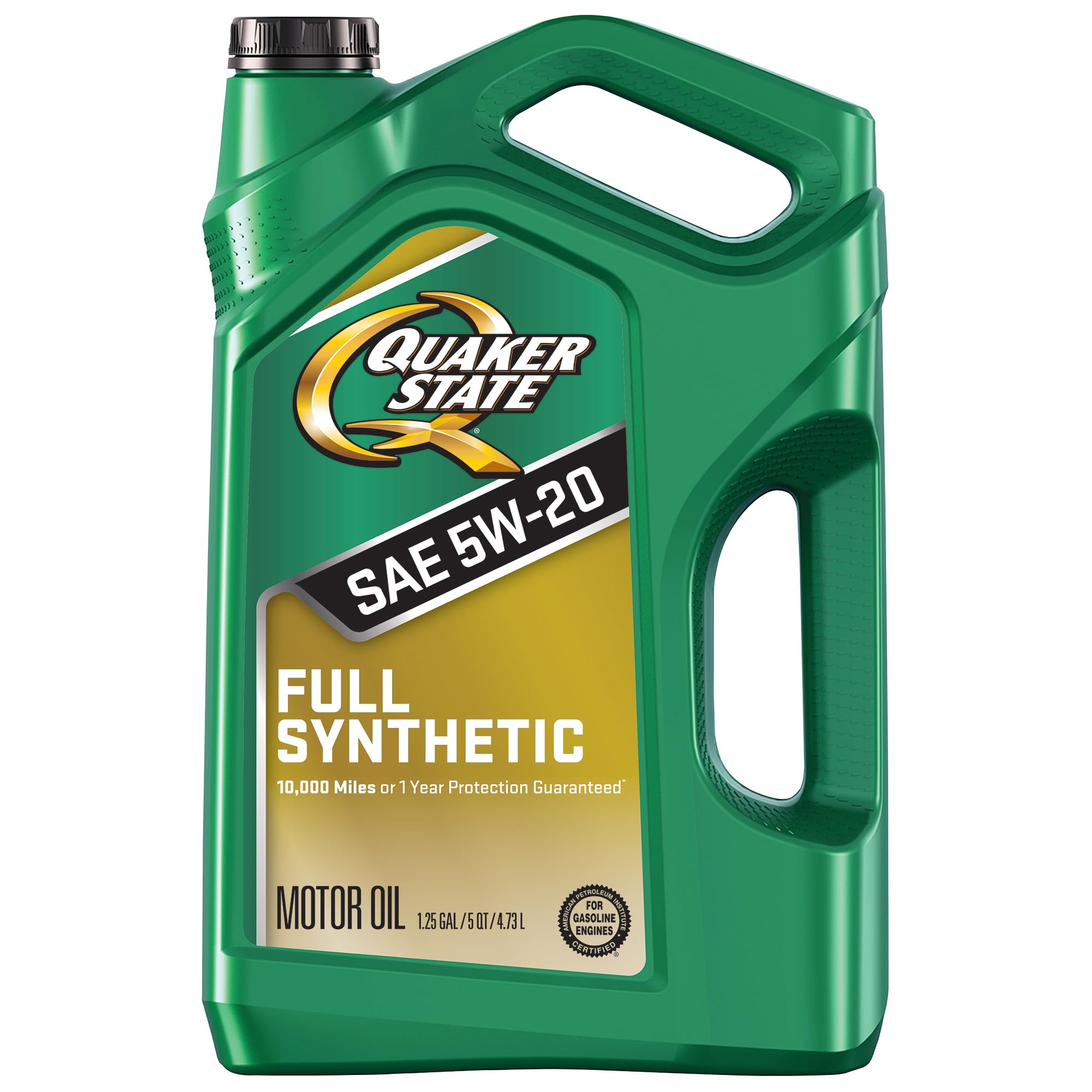
3. Quaker State Full Synthetic 5W-20 Motor Oil, 5-Quart
A wallet-friendly full synthetic that brings quiet smoothness and solid sludge defense to everyday commuters.
The oil quality is the most-praised aspect, and at this price point it undercuts the big-name brands while still meeting the latest API SP-Resource Conserving and ILSAC GF-6A standards. The 5W-20 grade is ideal for modern turbocharged engines and high-performance vehicles like sports cars and SUVs, where reduced friction helps boost horsepower.
According to Pennzoil, this oil is designed to deliver more power with less friction, and it provides excellent protection against sludge formation based on Sequence IIIH and VH tests. The high oxidation resistance keeps the oil fresher for longer, which means you can trust it between standard change intervals without worrying about premature breakdown.
You get a quieter, smoother ride in a 2019 Sonata after switching to this oil — customers note it feels like a new car. The clear measuring gauge on the handle helps you avoid overfilling, a real convenience. One owner did find the cap leaking in transit, so inspect the bottle before pouring. Quaker State backs it with a 10-year/300,000-mile warranty, but only with exclusive use of their oil.
The Value Case
- Significantly cheaper than premium brands
- Meets API SP and ILSAC GF-6A latest standards
- Warranty up to 10 years or 300,000 miles
Shipping Note
- Cap can leak during shipping — check the seal on arrival
- Not ideal for extreme heat or heavy towing loads
Smart budget pick: Best for daily drivers and hybrid owners who want full synthetic protection without the premium markup.
skip it if: You regularly tow heavy loads or race your car — a heavier-duty formula is the safer choice.
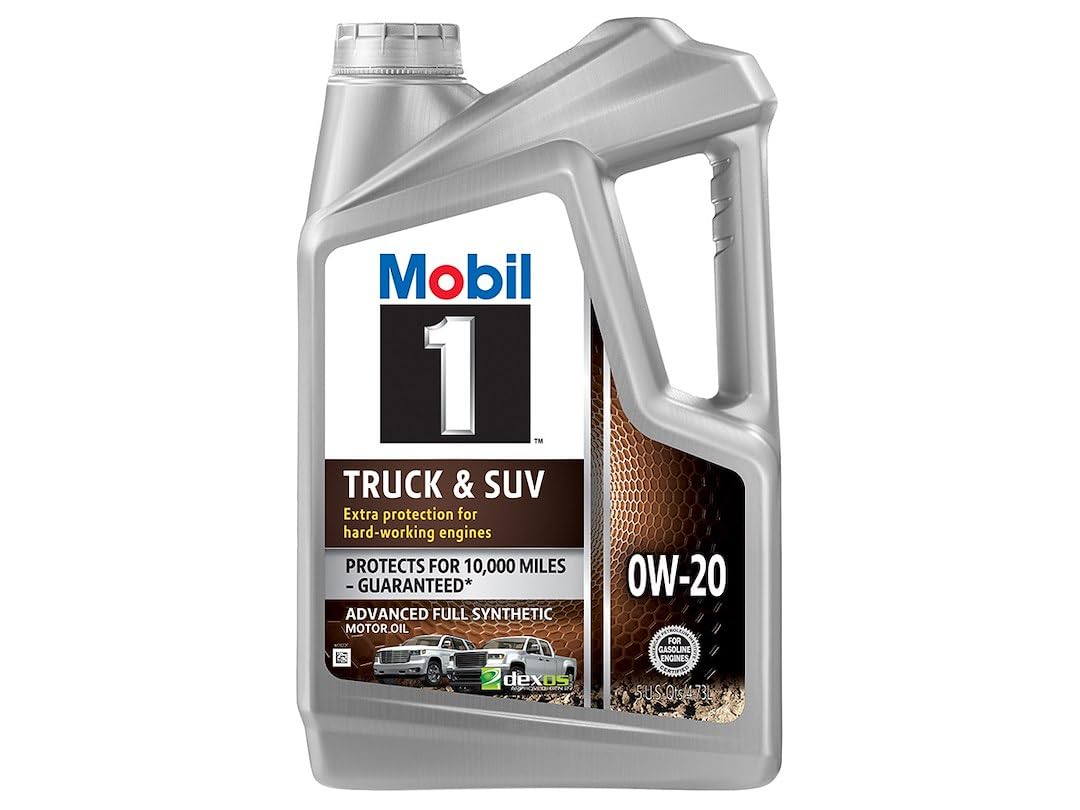
4. Mobil 1 Truck & SUV Full Synthetic Motor Oil 0W-20, 5 Quart
The 0W-20 formulated for trucks that tow, haul, and face brutal heat without breaking a sweat.
What wins people over is the value for money — the formula is built specifically for hardworking trucks and SUVs operating in tough conditions like towing and hauling. Mobil 1’s Triple Action Formula delivers engine protection, cleanliness, and proven performance, with additives that prevent deposit formation on critical parts.
The thermal range is the standout spec: it protects internal engine heat up to 500 degrees F and flows at temperatures down to -40 degrees F. That wide window means your engine stays protected whether you are crossing a desert or starting up in a deep freeze. The thin 0W-20 grade also helps with fuel economy at startup, a real benefit for daily drivers.
Reviewers point out better acceleration and performance than original GM dealership oil, with the engine running smoothly and no issues between changes. The 5-quart bottle is the standard passenger-car size, making it a drop-in replacement for most modern trucks and SUVs that specify 0W-20.
Cold-Start Expert: Flows easily at -40 degrees F, reducing metal-to-metal contact when engines wear the most.
Heavy Loads: The towing-tested formula holds viscosity so your engine stays protected under load.
Grab this for: Modern trucks and SUVs that tow occasionally and need a thin oil for fuel economy.
Think twice if: Your owner’s manual specifies a thicker 5W-30 — never swap viscosity without checking.
5. Mobil 1 Truck & SUV Full Synthetic Motor Oil 5W-30, 5 Quart

The thicker 5W-30 twin that seasoned mechanics trust for full-size pickups and extreme towing.
Buyers praise its flawless performance in warm temperatures and proven reliability at 432K miles in some trucks. The 5W-30 grade is the traditional heavy-duty choice, offering slightly thicker high-temperature protection than the 0W-20 sibling, which is why so many full-size truck owners prefer it.
It offers the same 10,000-mile protection between oil changes, controlling oxidation to prevent oil breakdown while maintaining viscosity. The wide-spout bottle is a small but welcome detail — it pours cleanly into the fill hole without a funnel, and the handle makes it easy to tip the heavy jug.
Shoppers say quieter, smoother engine operation immediately after the swap, even in trucks used for heavy towing, with clean oil after 3,000 miles and no leaks or burning. A 30-year motorcycle mechanic notes the valve train looks new at 165k miles, praising it for preventing engine failures compared to cheap synthetics. It meets GM and Ford backing for the specifications that matter.
Built for Work
- 10,000-mile protection between changes
- Holds up in warmer temperatures and heavy towing
- Easy-pour wide-spout bottle
Trade-Offs
- Thicker grade may slightly reduce fuel economy vs 0W-20
- Premium price for the brand name
The mechanic’s choice: For full-size pickups and SUVs that haul, tow, or run high mileage, this is the protection standard.
Not for: Small economy cars that spec a 0W-20 — stick to the manual’s recommended grade.
6. Valvoline Advanced Full Synthetic SAE 0W-20 Motor Oil 5 QT
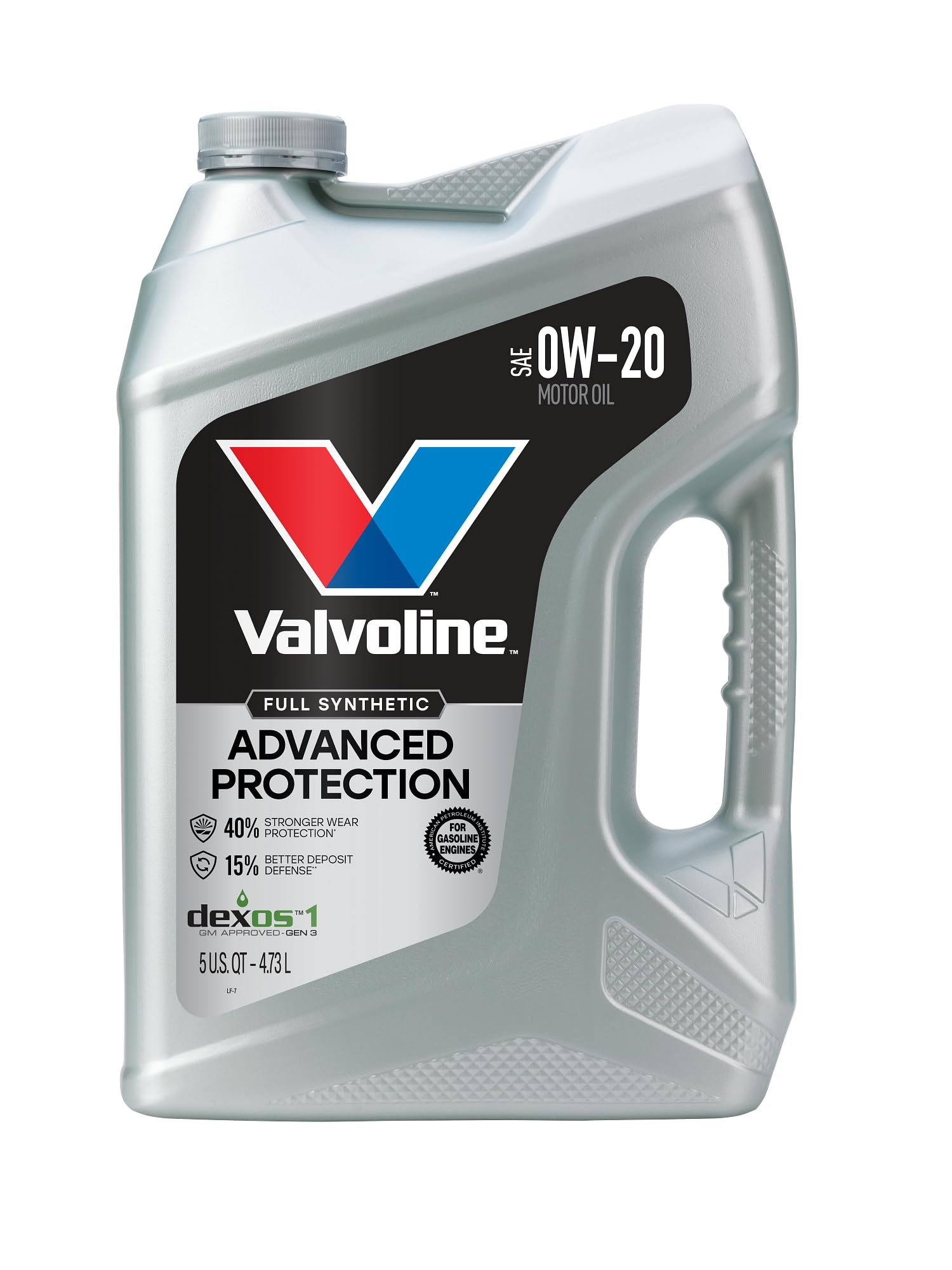
The thin 0W-20 that shaves miles per gallon and protects modern engines on every cold start.
The dominant theme in owner feedback is quality, and the 0W-20 viscosity grade is engineered for maximum fuel efficiency. Buyers report 2-3 mpg better fuel economy after switching, adding up over a year of driving. The thinner oil reduces drag on moving parts, helping the engine work less at startup.
It delivers the same core chemistry as the 5W-30 version — 40% stronger wear protection and 15% better deposit defense versus industry standards. The flash point is 200 °C, indicating excellent thermal stability for an oil this thin, and it meets Ford WSS-M2C962-A1, Chrysler MS-13340, and GM dexos1 Gen 3 specifications.
A 2019 BRZ owner reports it works particularly well for that platform, and a 2500 GMC Duramax driver swears by it as the only oil they use. The low-temperature flow is excellent, reducing metal-to-metal contact during cold starts when most engine wear occurs. For anyone driving a modern car that specs 0W-20, this is the value-forward choice.
Mileage Booster: The 0W-20 grade improves fuel economy by reducing engine drag at startup.
Proven Formula: Same wear and deposit protection as the 5W-30 sibling, backed by ILSAC GF-7A and API SQ specs.
Choose this if: Your car specifies 0W-20 and you want the fuel economy benefit without sacrificing protection.
Steer clear if: Your engine calls for a thicker 5W-30 — the thin grade is not a universal substitute.
7. Castrol EDGE 0W-20 Advanced Full Synthetic Motor Oil, 5 Quarts

The stress-tested 0W-20 that claims 3X stronger film and up to 20,000 miles between changes.
The quality is the most-praised aspect, and Castrol claims 3X stronger viscosity breakdown resistance and 10X better high-stress performance than leading full synthetics. The headline 20,000-mile drain interval cuts maintenance frequency, though real-world conditions may warrant shorter intervals.
For aluminum block engines, which dissipate heat differently, the 0W-20 grade provides excellent protection. It flows quickly at startup to reach critical components faster, and it holds up well on long trips, as owners mention. The formula exceeds API SQ/SP/SN PLUS/SN and ILSAC GF-7, with GM dexos1 Gen 3 approval and Ford WSS-M2C962-A1 compliance.
Customers note it works especially well for Mazdas and other vehicles with aluminum block engines, and it holds up well on long highway trips. One common tip from owners: shops often charge 5x more for the same 0W-20 oil, making the DIY route with this jug a significant money-saver. It also meets Chrysler MS 6395 requirements, broadening its fit across American and Japanese makes.
The Long Haul
- Up to 20,000 miles between changes (or one year)
- 3X stronger film than leading full synthetic
- Works well with aluminum block engines
Reality Check
- 20K-mile claim assumes ideal driving conditions
- Premium price for the extended-drain rating
Ideal for: Daily commuters who want to stretch oil change intervals and aluminum-block engine owners.
Consider others: If you do mostly short trips or severe-duty driving, more frequent changes with a standard full synthetic may be safer.
8. Pennzoil High Mileage 5W-30 Motor Oil, 1 Quart (6 Pack)
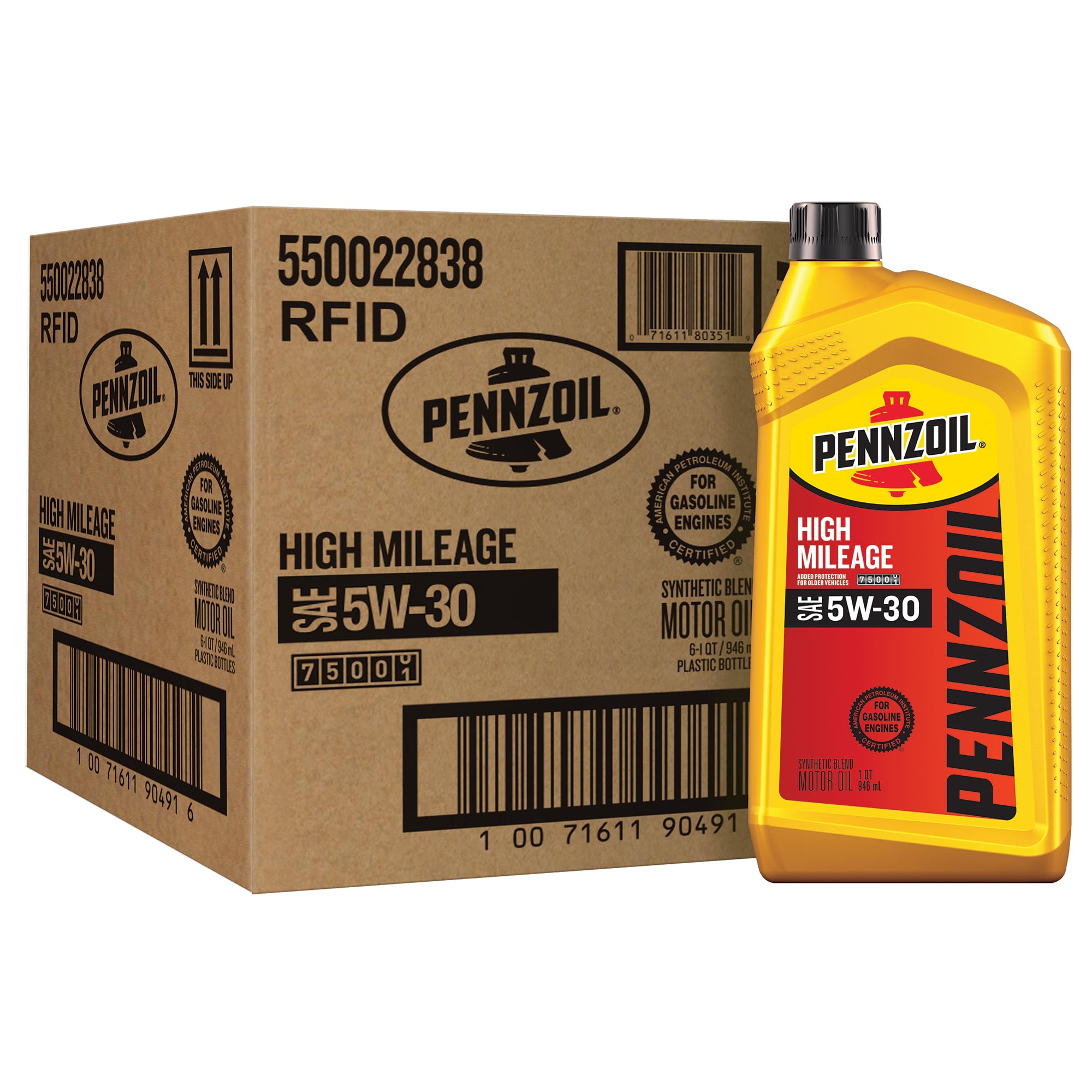
The six-pack that helps worn engines stop leaking and run smoother past the 75,000-mile mark.
The value for money is what makes this pack stand out — you get six 1-quart bottles, a total of 192 fluid ounces, which covers most cars and small trucks with room to spare for top-offs. The high-mileage synthetic blend is specially formulated to help stop leaks and reduce oil consumption in worn engines, which is the #1 concern for older vehicles.
Recommended for vehicles with more than 75,000 miles, this oil helps prevent sludge and other damaging deposits while providing proven wear protection for engine parts. The individual quart bottles are great for topping off between changes without committing to a heavy 5-quart jug, and they’re easier to store in tight garage spaces.
Buyers with a 230,000-mile Ford Explorer report the motor runs great with the swap, and the formula cleans up the engine nicely. It’s also suitable for modern turbocharged engines where low-speed pre-ignition protection is required, which is a surprisingly advanced feature for a high-mileage blend.
The Top-Off Advantage
- Six 1-quart bottles for flexible topping off
- Leak-stop formula for engines over 75K miles
- Protects modern turbocharged engines
Consider This
- Synthetic blend, not full synthetic
- Quart bottles require more pours for a full change
Perfect for: High-mileage cars and trucks that burn or leak oil and need a cost-effective top-off solution.
Not the pick: If you prefer the ultimate protection of a full synthetic for a newer engine.
9. MOTORCRAFT – Oil – Engine (XO5W305Q3SP)
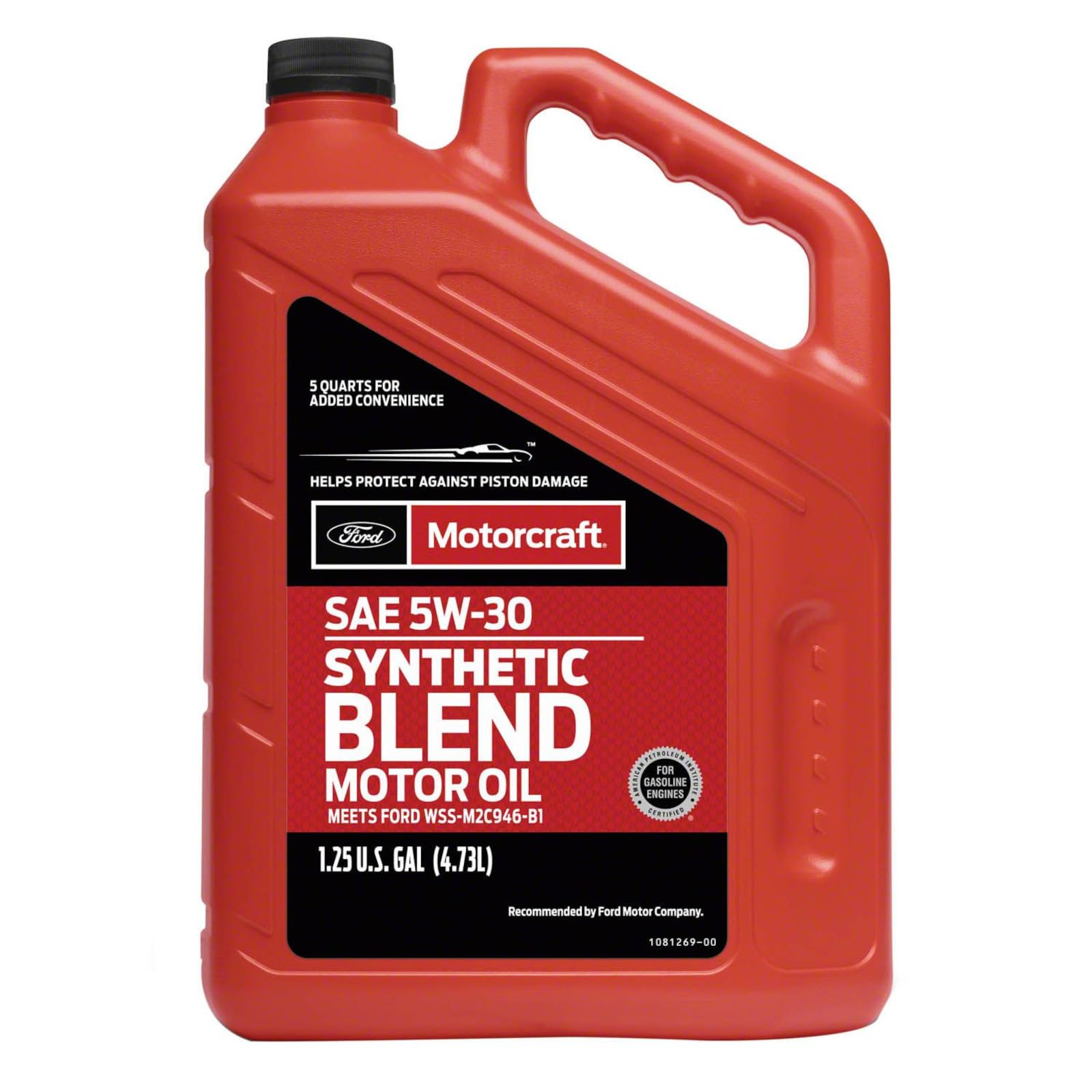
The factory-fill favorite for Fords and Lincolns, trusted to keep EcoBoost engines running quiet.
The oil quality is the most-discussed aspect, with buyers calling it the best choice for Ford engines. Motorcraft is the OE (original equipment) brand for Ford and Lincoln, so this 5W-30 is the exact specification many of those engines were designed around. If you’re particular about the oil in your vehicle, this is the safe bet that keeps the engine feeling factory-fresh.
With a flash point of 446 °F, this oil offers excellent thermal stability, resisting breakdown even in turbocharged engines that run hot. The 5-quart jug covers most Ford sedans, trucks, and SUVs, and the pour design is clean and easy to handle. It’s recommended for cars, SUVs, trucks, and vans, giving it broad compatibility across the Ford lineup.
Reviewers point out their trucks run smooth with no issues, the engine feels quieter, and the 2.7 EcoBoost specifically gets the right protection. The main sentiment is simple: this is the right oil for the engine, and it avoids the hassle of dealing with crowded auto parts stores. Ford and Lincoln owners who want the exact factory spec without a dealership markup will appreciate this jug.
Factory Confidence: This is the brand Ford engineers designed their engines around, ensuring exact spec compliance.
Turbo Safe: The 446 °F flash point protects EcoBoost engines from thermal breakdown.
For Ford loyalists: If you drive a Ford or Lincoln with a 2.7 EcoBoost or similar engine, this is the exact oil to use.
Skip it: If you drive a non-Ford vehicle, other full synthetics may offer better value for your specific engine.
Understanding the Specs
Viscosity Grade (5W-30 vs 0W-20)
To pick the right oil, understand the label: the number before the “W” (winter) tells you how thin it is when cold — a lower number like 0W flows better at freezing temperatures, so your engine starts easier. The number after the dash is the thickness at 212 °F. Thicker oils (5W-30) keep a stronger film for heavy loads and high heat, while thinner oils (0W-20) cut engine drag, improving fuel economy. Always match the grade in your owner’s manual.
API and ILSAC Certifications
The API “SP” and ILSAC “GF-7A” stamps are the current industry standards that tell you the oil meets the latest performance requirements. These certifications guarantee the oil controls deposits, resists wear, and protects turbocharged engines against issues like low-speed pre-ignition. Newer certifications are backward compatible, meaning an API SP oil can replace an older API SN spec.
Flash Point
The flash point is the temperature at which the oil vaporizes enough to ignite in the presence of a flame. A higher flash point (like 446 °F) means the oil is more thermally stable and less likely to burn off at high temperatures. This matters for turbocharged engines and hot climates where the oil runs hotter and can evaporate, leading to consumption and deposits.
High-Mileage Additives
High-mileage oils contain seal conditioners that swell aged rubber seals to prevent leaks and reduce oil consumption. They are specifically designed for engines with over 75,000 miles, where worn seals and deposits are common. A full synthetic formula offers the best protection, but a synthetic blend high-mileage oil like Pennzoil provides a cost-effective middle ground for older engines.
FAQ
Can I switch from 5W-30 to 0W-20 to get better fuel economy?
What is the difference between full synthetic and synthetic blend motor oil?
How often should I change my oil if I use full synthetic?
Is high-mileage oil worth it for a car with 100,000 miles?
What does API SP certification mean for my engine?
Will using the wrong viscosity oil void my car’s warranty?
Is it okay to mix different brands of the same viscosity motor oil?
How do I know if my car needs 5W-30 or 0W-20?
Final Thoughts: The Verdict
If you want one dependable pick, the motor oil for cars winner is the Valvoline Advanced 5W-30 because it offers the best combination of modern wear protection, thermal stability, and everyday value. If you want a high-mileage blend with seal conditioners for an older engine, grab the Havoline High Mileage. And for towing and heavy loads, the Mobil 1 Truck & SUV 5W-30 is the one to reach for.
How We Picked
We do not accept paid placement. Every pick is matched to a real buyer and a real use-case; we do not hands-on test units.
Sources & Methodology
Specifications: manufacturer listings and product documentation. Review insights: verified customer reviews, as of August 2026. Pricing: not shown on this page (it changes often); check the current price via the retailer link.
As an Amazon Associate, Trending Car earns from qualifying purchases. This does not affect which products we feature.