
Our readers keep the lights on and my garage snacks stocked. As an Amazon Associate, I earn from qualifying purchases.
Specs are compiled from manufacturer listings and verified buyer reviews and can change over time — please confirm the key details on the product page before buying.
Your stick shift crunches into second on a cold morning, or the shifter feels like it’s moving through gravel. That grinding is your synchronizers wearing away, and the right gear oil is the cheapest insurance you can buy. This guide breaks down the fluids that owners swear by for buttery shifts, longer synchro life, and quieter gearboxes.
I’m Min Islam — the founder and writer behind Trending Car. This guide is built by comparing the manufacturers’ published specifications and the patterns across verified customer reviews, so you get each pick’s real strengths and trade-offs instead of marketing spin.
We focus on the manual transmission fluid options that fix grinding, notchiness, and cold-weather stiffness without breaking your budget.
Our Picks at a Glance


How To Choose The Best Manual Transmission Fluid
The right fluid keeps your gearbox cool, lubricated, and shifting cleanly. The wrong one can make it noisy, notchy, or even destroy the synchronizers that let you shift without grinding. Here is what actually matters when you are comparing bottles.
Match the GL rating to your gearbox
The GL rating tells you the additive package inside the oil. GL-4 fluids are formulated to protect brass and yellow-metal synchronizers found in most manual transmissions. GL-5 oils carry high levels of reactive sulfur additives for extreme-pressure protection in differentials, but those same additives can corrode brass synchros over time. If your car calls for GL-4, do not substitute a GL-5.
Pick the right viscosity for your climate
The first number in a grade like 75W-85 tells you how the oil flows in cold weather. A 75W fluid stays thin enough to circulate on a freezing morning, which is why it shifts smoothly before the engine warms up. Thicker oils like 80W-90 offer more protection under heavy load but can feel sluggish when cold. Check your owner’s manual for the exact spec your transmission was designed around.
Know if you need friction modifiers
Limited-slip differentials use clutch packs that need a specific amount of friction to engage. A fluid with friction modifiers stops those clutches from chattering or grabbing. Standard manual transmissions and open differentials do not need these additives, and in some cases a friction-modified fluid can make shifts feel too slick. If your vehicle has a limited-slip rear end, look for a fluid explicitly rated for LS applications.
Quick Comparison
| Model | Best For | Viscosity | GL Rating | Volume | Amazon |
|---|---|---|---|---|---|
| Lucas Oil 10121★ Best Overall | Limited-slip diffs & gear noise | 75W-140 | — | 1 Quart | Amazon |
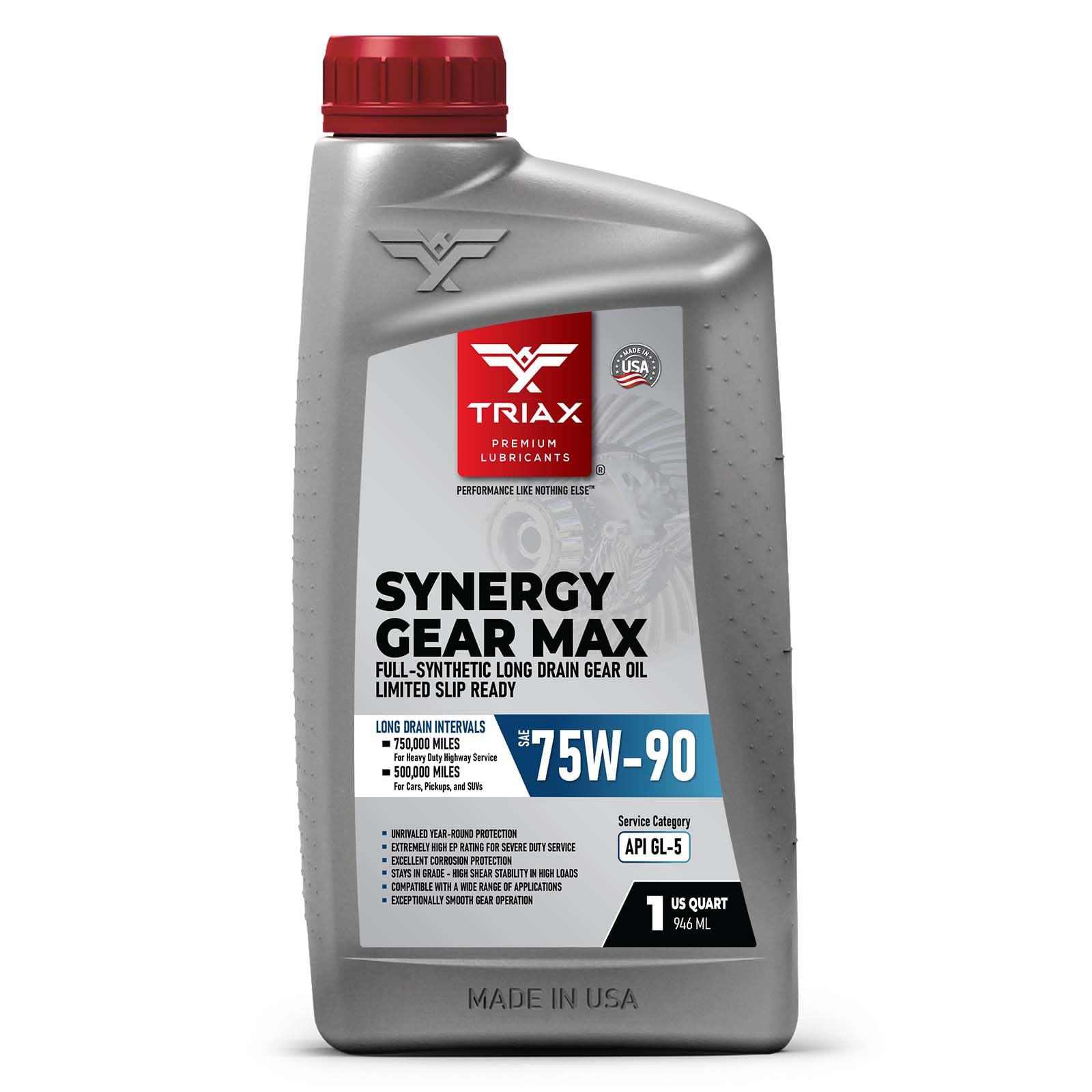
| Triax Synergy Gear MaxBest Value | Ultra-long drain intervals | 75W-90 | GL-5 | 1 Quart | Amazon |
| Red Line MT-85Top Performer | Nissan, Mitsubishi, Hyundai | 75W-85 | GL-4 | 1 Quart | Amazon |
| Honda Hypoid HGO-1 | Honda AWD transfer cases | 75W-85 | GL-5 | 1 Quart | Amazon |
| Motul Gear 300 | Track days & Subaru STI | 75W-90 | — | 1 Liter | Amazon |
| RAVENOL MTF-3 | Toyota transfer cases | 75W | GL-5 | 1 Liter | Amazon |
| ACDelco Synchromesh | Honda & Acura 6-speeds | — | GL-4 | 1 Quart | Amazon |
| Ford XT-M5-QS | Mazda Miata & Ford MTX-75 | — | GL-4 | 1 Quart | Amazon |
| Red Line MTL | BMW, Land Rover, Dodge trucks | 75W-80 | GL-4 | 1 Gallon | Amazon |
In-Depth Reviews
1. Lucas Oil 10121 SAE 75W-140 Synthetic Gear Oil
Our pick — over 4.5★ from 800+ verified ratings; the strongest balance of quality and price.
The crowd favorite that silences gear noise and handles brutal heat.
The single biggest win here is noise reduction. Owners pour this into differentials and gearboxes and report that whines and rumbles simply disappear, with the fluid’s slickness standing up to high temperatures without breaking down. The 75W-140 viscosity is on the thicker end, which means serious protection for rear ends and transmissions working under heavy load.
It shines brightest in limited-slip differentials, where buyers report it works particularly well in a Ford Ranger rear end and quiets things down in a 2002 F150 with factory limited slip. That heavy-duty reputation carries over to motorcycles too, with Harley Davidson Fatboy owners using it in their transmissions without complaint. If your gearbox whines or your diff chatters, this is the bottle to try.
At a 1-quart size weighing 2 pounds, it is a straightforward pour-in fluid that needs no mixing. The only thing to keep in mind is that the thick 75W-140 grade is built for heat and load, not necessarily for freezing cold starts where a thinner oil would circulate faster.
What owners love
- Kills gear noise and whine in differentials
- Maintains lubricity under high temperatures
- Praised for quality and value in equal measure
- Works in limited-slip rear ends and Harley transmissions
Keep in mind
- Thick 75W-140 grade not ideal for extreme cold
- Synthetic blend rather than full synthetic
Reach for this if: you want one fluid that quietens gear noise, handles heat, and works in both differentials and motorcycle transmissions.
Look elsewhere if: you need a thin cold-weather fluid for a standard passenger-car manual gearbox.
2. Triax Synergy Gear Max 75W-90 GL-5
A full synthetic that promises 500,000-mile drain intervals without the premium price.
The headline number here is the drain interval. Triax claims this PAO and ester formulation lasts up to 500,000 miles for heavy-duty trucks and passenger cars, and 750,000 miles for Class 8 highway trucks. That is not a typo — the maker backs a nearly shearless oil that holds up under extreme conditions where cheaper fluids would thin out.
In real-world use, owners mention it quiets rear ends and smooths gear transitions, with one Tundra owner noting the rear end is quiet and smooth after installation. The 75W-90 GL-5 rating makes it a solid choice for hypoid and ring gears, differentials, limited-slip units, and manual transmissions alike. It also carries a flash point of 222 °C, meaning it resists vaporizing under high heat.
That extreme drain claim is the reason this bottle earns its place. For anyone who services a truck, tows regularly, or simply wants to change gear oil less often, this is the value play.
Why it stands out
- Up to 500,000-mile drain interval claim
- Nearly shearless so it resists breakdown
- Quiet, smooth operation in rear differentials
- Pours easily thanks to a controlled-fill bottle
The trade-off
- GL-5 rating not safe for brass synchros
- Best suited to diffs and trucks, not delicate gearboxes
Best for: truck owners and anyone who wants to stretch the time between gear oil changes without sacrificing protection.
Not for: classic cars with brass synchronizers that require a GL-4 fluid.
3. Red Line 50504 MT-85 Manual Transmission 75W85 GL-4
The fix for grinding gears that customers note as an 80% improvement in shifting.
Shifting smoothness is the defining trait here, and the numbers back it up hard. On a 350Z, reviewers note no transmission noise, and a Genesis Coupe owner found it eliminated 1st-2nd and 2nd-3rd gear grinding entirely. This is a fluid that turns a notchy, crunchy gearbox into one that feels brand new.
The secret is the GL-4 formulation, which deliberately lacks the reactive sulfurs found in most GL-5 oils. That makes it safe for brass synchronizers — the soft metal rings that wear out when the wrong oil corrodes them. Red Line recommends it for GL-1, GL-3, and GL-4 applications, plus most special synchromesh fluids, and it is a known fit for Nissan 350Z and 370Z, Mitsubishi Evolution, Hyundai, Kia, and Quaife synchro transmissions.
The 75W-85 viscosity keeps it flowing in cold weather, which is why an Altima Coupe owner reports it cured brutal cold-weather downshift resistance. The polyol ester base is a premium synthetic that justifies its price tag, with owners calling the improved drivability worth every extra dollar.
The big wins
- Safe for brass synchronizers, unlike GL-5
- Excellent cold-weather performance
- Long synchro life with balanced friction control
Before you buy
- Premium price for a 1-quart bottle
- Some owners note value opinions vary
Pick this for: a Nissan, Mitsubishi, or Hyundai that grinds on the 1-2 shift and needs a GL-4 that protects brass synchros.
skip it if: you drive a truck or differential that specifically calls for GL-5 extreme-pressure protection.
4. Genuine Honda 08200-9014 Hypoid Gear Oil HGO-1 GL-5 75W-85

The exact Honda factory fill for AWD transfer cases, no guesswork.
Sometimes the smartest choice is the one stamped with the carmaker’s logo. This is genuine Honda factory fluid, not an aftermarket substitute, and it is the exact fit listed for the front differential of 2021-2026 Honda Passport, 2021-2025 Pilot, and 2021-2025 Ridgeline AWD models equipped with a separate transfer case. A Ridgeline owner confirms it is the correct gear lube for the front diff.
The 75W-85 GL-5 formulation with a mineral and synthetic blend is engineered for hypoid gears, which is the load-bearing gear design used in differentials. Owners consistently reach for OEM fluid for reliability and long-term durability, with one noting it is hard to find online at a good price and that Amazon made it easiest.
The one gripe is packaging, not the fluid itself. The plastic jug dispenses fine but some owners wish it came in a bag-style container so they would not need a separate pump. That is a minor annoyance against the certainty of putting the exact right fluid in your Honda.
Exact-match confidence: this is the literal factory part, so you never second-guess whether you bought the right spec for your Honda AWD transfer case.
Dispensing nitpick: the jug works, but a transfer pump makes the job much cleaner.
5. Motul Gear 300 75W90 100% Synthetic Gear Oil
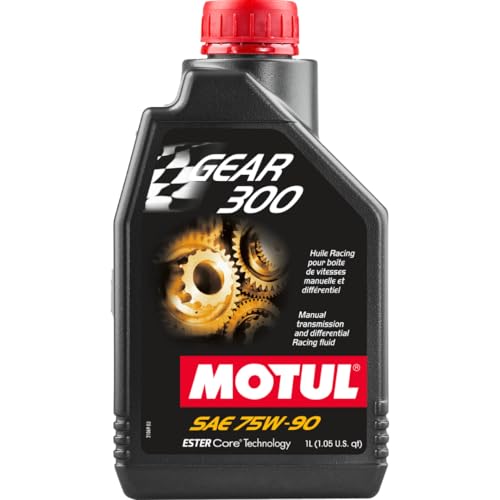
A pure synthetic that erases rear-diff jerk and turns on smoothness.
This is the fluid for people who feel every mechanical nuance. A Subaru Impreza 2.5RS owner reports smoother shifts and zero gear grinding, while an STI owner simply calls it a great product. It even eliminates low-speed rear diff jerk and turning power delay, which is exactly the kind of subtle annoyance that drives enthusiasts crazy.
The key detail is what is not in it — no friction modifiers for limited-slip. That makes it ideal for open differentials, where those additives are unnecessary, and it is smoother than a popular competitor’s 75W-90 according to owners who made the switch. The 100% synthetic base with a 75W-90 viscosity is built for performance cars and track use.
There is one practical quirk: the bottle is incompatible with a PLEWS 55001 pump, so you will need to hold the bottle or use a different tool to fill. Owners also note it needs 1-2 minutes of warm-up for optimal feel on cold days. Pricey, but as one buyer put it, worth it.
Smoothness first: this is a friction-free formulation for open diffs, not a limited-slip chatter fix.
Plan your fill: the bottle shape resists standard pumps, and cold starts need a brief warm-up.
6. RAVENOL J1C1003 MTF-3 SAE 75W Full Syn Gear Oil

The API GL-5 certified drop-in replacement for Toyota transfer case fluid.
If you own a Toyota 4Runner or Tacoma, you know the dealer fluid comes with a painful price tag. Buyers report this Ravenol is an API GL-5 certified direct replacement for Toyota’s transfer case fluid that costs significantly less, and it does exactly what it is supposed to do. A 2014 Tundra owner confirmed it is the correct 75W synthetic for the Borg-Warner transfer case.
The Full Syn formulation provides a pressure-stable lubricating film even at high oil temperatures, and it is compatible with brass synchronizers and soft metals. The 75W viscosity is the thin grade that shifts well in cold weather, which a 4Runner owner verified, noting cold-weather shifts are good. It is also rated for rear differentials, front differentials, manual transmissions, and transfer cases.
One feature owners rave about is the built-in fill spout on the bottle, which makes dispensing easy with zero spill. That simple design choice saves you from buying a separate pump and makes this among the most user-friendly bottles on this list.
Built-in spout bonus: no pump needed, no mess, and the thin 75W flows easily into transfer cases.
Beyond Toyota: the GL-5 rating opens it up to differentials and transfer cases across brands.
7. ACDelco GM Original Equipment 10-4014 Synchromesh Transmission Fluid
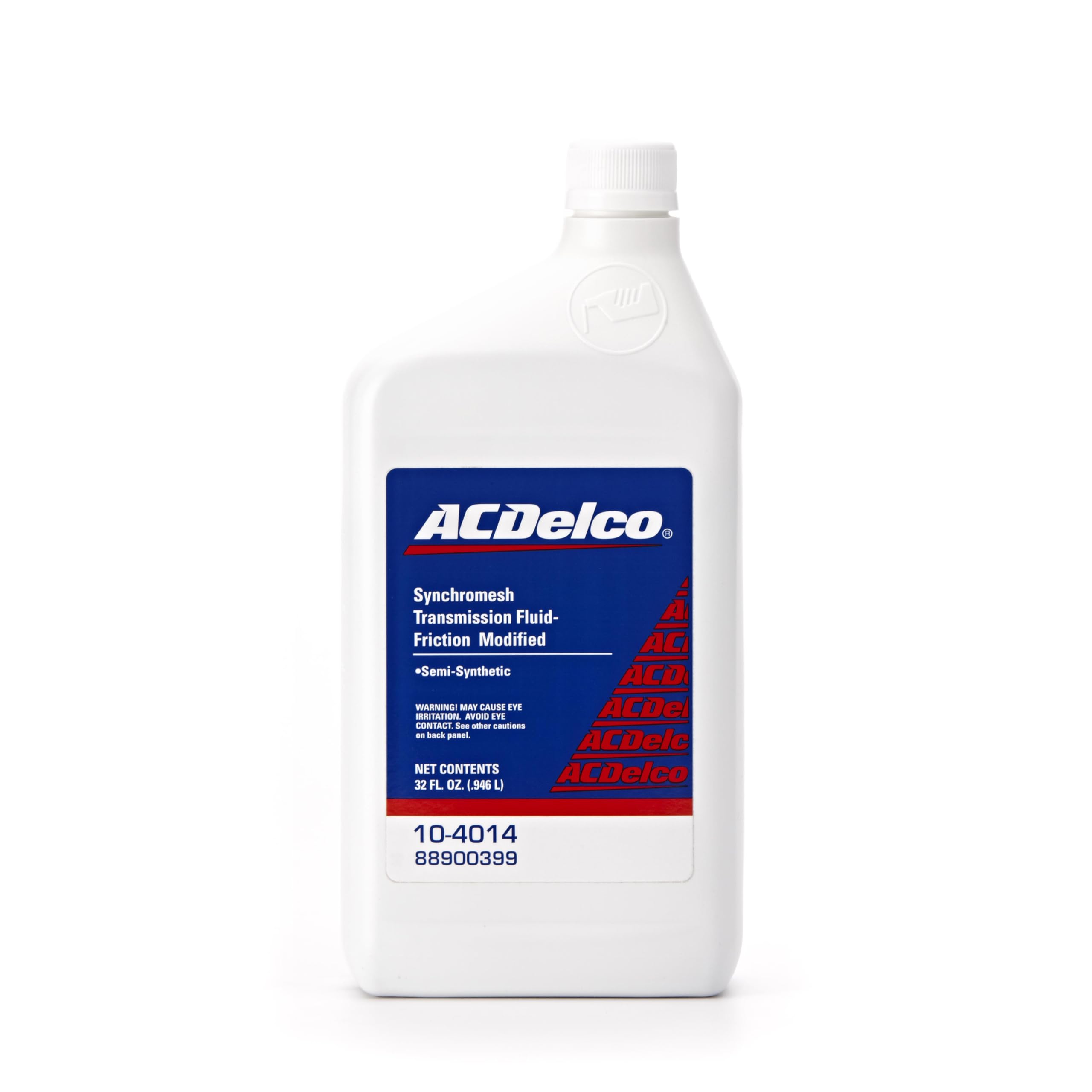
The crossover fix that cures Honda third-gear pop-out better than the OEM fluid.
Here is a plot twist: a General Motors fluid that Honda and Acura owners swear by. Two Acura TL owners with 3rd gear pop-out issues — a 2005 base and a 2008 Type-S — found that OEM Honda fluid did not help, but this fluid fixed both immediately and the fix held for 12,000 miles on the 2005. One owner put it bluntly: if you own a 90s Honda, this is a must.
It is highly friction modified, which is exactly what reduces overall transmission component wear and makes synchronizers engage cleanly. The all-climate formulation handles temperatures from -40 degrees Fahrenheit (-40 degrees Celsius) up to 300 degrees Fahrenheit (149 degrees Celsius), so it flows on the coldest mornings and holds up in summer heat. It minimizes sludge and varnish deposits for a cleaner transmission.
A 2000 VW Jetta TDI owner found it shifted smoothly cold and warm with no grinding after 600 miles, and a 2003 S10 owner said it cured a clunky 1-2 shift in the NV1500. It is thicker than VW’s G070 spec, which is precisely why it worked where the thinner fluid failed in hot traffic.
What makes it special
- Fixes Honda 6-speed third-gear pop-out
- All-climate from -40°F to 300°F
- Highly friction modified for clean synchro engagement
- Works across Honda, Acura, VW, and GM trucks
Know the limits
- Grind relief results vary by transmission
- GL-4 spec means not for extreme-pressure diff use
Reach for this if: your Honda or Acura 6-speed pops out of third gear or feels notchy — this is the fix owners trust.
Think twice if: your vehicle calls for a standard GL-5 differential oil rather than a synchromesh-rated GL-4.
8. Ford Genuine XT-M5-QS Full Synthetic Manual Transmission Fluid

Nicknamed Unicorn Tears for good reason — the gold standard for Miata gearboxes.
Ask any Mazda Miata owner what fluid they run and this is the answer. The fans call it Unicorn Tears because it is hard to find and works like magic. A 1991 Miata and 2017 Mazda 3 owner reports immediate buttery smooth cold shifts, no grinding, and plus a fix for 1st gear refusal at stops. It eliminated a loud whirring and vibration in a MazdaSpeed 3 transaxle at 114,000 miles.
The synthetic base oils and performance additives improve gear shifting at all ambient temperatures, and the fluid meets Ford’s fill-for-life requirements thanks to excellent thermal, oxidative, and shear stability. That means you can leave it in for the life of the transmission in many applications, with one owner reporting it still going strong after tens of thousands of miles. It is rated for 1995-2011 MTX-75 and IB5 transmissions, plus older rear-wheel-drive units calling for GL-3 and GL-4 oils.
The catch is price — owners consistently note it costs more per quart than general-purpose gear oils, and a Miata needs about 3 quarts for a full fill. But the consensus is that the shift quality improvement is worth it, with one owner calling it the very best fluid for a ZX2 and Miatas alike.
The magic
- Buttery smooth cold shifts with no grinding
- Fill-for-life thermal and shear stability
- Fixes 1st gear refusal in Miatas
- Eliminates transaxle whirring and vibration
The reality
- Premium price per quart, and Miatas need about 3
- Won’t fix a physically worn transmission
Best for: Miata and Ford owners who want the single best shift feel their gearbox can deliver.
Not for: budget builds where any GL-4 will do the job without the premium price.
9. Red Line 50205 SAE 75W80 API GL-4 Manual Transmission Lubricant (MTL)

The gallon jug that solves worn synchro grinding for a long list of vehicles.
This is the bulk buy that owners with multiple cars or a thirsty truck appreciate. The 1-gallon jug holds 128 fluid ounces, which covers several transmission fills or one heavy-duty truck that needs a lot of fluid. A 2000 F250 ZF5 owner reports it zeroed out synchro grinding into 2nd and 3rd gear, and a Honda/Acura owner found it works better than a competitor’s MTF.
The 75W-80 GL-4 formulation is thinner than a typical gear oil, which makes cold-weather shifting noticeably smoother — exactly what owners praise most. It is safe for brass synchronizers because it lacks the reactive sulfurs found in most GL-5 oils, and Red Line recommends it for BMW, Honda/Acura, Ford Focus, late-model Mini Cooper, Land Rover, Mitsubishi, and Dodge & Jeep NV1500, NV3500, NV3550, and NV5600 truck transmissions.
For Land Rover fans, a specialist shop reports it works great in Defender, Discovery, and Range Rover transfer cases from 1987 onward. The main note from owners is that it is thicker than some alternatives and can feel too slick for certain differentials, but for manual transmissions and transaxles, it delivers that smooth-as-butter shift feel without the per-quart premium of smaller bottles.
Bulk economy: the gallon format makes this the smart buy if you service multiple vehicles or one large truck.
Versatility win: covers everything from BMW to Land Rover to Dodge truck transmissions in one jug.
Understanding the Specs
GL-4 vs GL-5
The GL rating defines the additive package. GL-4 fluids protect brass and yellow-metal synchronizers found in most manual transmissions, which is why they are the safe choice for gearboxes. GL-5 fluids carry heavy sulfur-based extreme-pressure additives for differentials, but those additives can corrode brass over time. Always match the rating your owner’s manual specifies.
Viscosity Grade
A grade like 75W-90 tells you flow at cold and operating temperatures. The first number (75W) is the cold-weather flow — lower means thinner in freezing conditions, so it shifts easier on cold mornings. The second number (90) is the hot operating thickness — higher means more protection under heavy load. Thicker oils protect more but feel sluggish when cold.
FAQ
Can I use GL-5 gear oil in a manual transmission that calls for GL-4?
What is the difference between 75W-90 and 75W-85 transmission fluid?
How often should I change my manual transmission fluid?
Why does my transmission grind when shifting into second gear?
What does friction modified mean in transmission fluid?
Is full synthetic transmission fluid worth the extra cost?
How much transmission fluid does a typical manual transmission need?
Can I use manual transmission fluid in my differential?
What causes a notchy or stiff shifter in cold weather?
Why is the Red Line MT-85 recommended over the MT-90 for some cars?
Final Thoughts: The Verdict
For most buyers, the manual transmission fluid winner is the Lucas Oil 10121 because it is the highest-rated pick on this list — sitting at a 4.9-star average with a huge base of owners who praise its quality above all else. If you want buttery shifts and brass-synchro safety in a Japanese or European gearbox, grab the Red Line MT-85. And for the value-driven truck owner who hates changing gear oil, the Triax Synergy Gear Max is the one to reach for.
How We Picked
We do not accept paid placement. Every pick is matched to a real buyer and a real use-case; we do not hands-on test units.
Sources & Methodology
Specifications: manufacturer listings and product documentation. Review insights: verified customer reviews, as of August 2026. Pricing: not shown on this page (it changes often); check the current price via the retailer link.
As an Amazon Associate, Trending Car earns from qualifying purchases. This does not affect which products we feature.