
Our readers keep the lights on and my garage snacks stocked. As an Amazon Associate, I earn from qualifying purchases.
Specs are compiled from manufacturer listings and verified buyer reviews and can change over time — please confirm the key details on the product page before buying.
Picking an LS intake means choosing between a sheet-metal unit that can handle serious boost and a composite manifold that keeps intake air temperatures low. Each design shifts where your power band hits and how much fabrication work you will face during the swap.
This guide compares manufacturer specs and verified customer reviews to highlight each intake’s real strengths and trade-offs.
Whether you are building a boosted daily driver or a high-rpm track car, every option here suits a different goal — read on to find the right ls intake for your specific engine build and budget.
Our Picks at a Glance


How To Choose The Best LS Intake
The intake manifold is the second-biggest airflow restriction on an LS engine, after the camshaft. A mismatched intake chokes top-end power or sacrifices low-end torque. Here are the three decisions that narrow every choice down to the right intake for your build.
Cathedral Port vs. Rectangular Port Heads
Early LS engines (LS1, LS2, LS6) use cathedral-port cylinder heads with a vertical divider and a D-shaped opening. Later engines (LS3, L76, L92) switched to a rectangular port. An intake designed for one port shape will not seal correctly on the other, causing a massive air leak at the gasket. Always match the intake manifold to your exact cylinder head casting number — a rectangular-port intake on cathedral heads leaves a step that kills flow velocity and costs power across the entire RPM range.
Fabricated Aluminum vs. Composite Polymer
Sheet-metal intakes (TIG-welded T6061 aluminum) handle high boost pressure without flexing, but they transfer engine heat directly into the incoming air charge, raising intake air temperatures (IAT). Composite intakes, like the FAST LSXr, use an advanced polymer that insulates the air charge from engine heat, keeping IATs lower for consistent power. The trade-off: composite intakes cost more and are harder to repair if cracked, while cheaper fabricated units often need port matching and gasket rework right from the start.
Runner Length and Plenum Volume
Longer runners (like a hi-ram style) shift the power band higher in the RPM range, often above 3,500 RPM, making them ideal for track cars that rarely see stop-and-go traffic. Shorter, low-profile intakes keep the power band lower for better street manners. Plenum volume determines how much air is stored between throttle events — a larger plenum feeds high-RPM cylinder filling at the cost of slower throttle response at low speeds. A hi-ram intake with a 92mm bore is built for engines that live above 3,500 RPM, while a stock-height fabricated intake with a 102mm bore suits a street-driven boosted setup that needs immediate throttle response from idle.
Quick Comparison
| Model | Best For | Weight | Inlet Size | Height | Amazon |
|---|---|---|---|---|---|
| POSENG (92mm)★ Best Overall | Budget Boost | 17.11 lb | 92mm | — | Amazon |
| FAST LSXr 102mmAlso Great | Best Overall | 19.45 lb | 102mm | ~10″ | Amazon |
| A-Team PerformancePremium Value | Premium Value | 21.8 lb | 102mm | Low Profile | Amazon |
| HTRACING (102mm) | Tall Runner Kit | 20.2 lb | 102mm | 210mm | Amazon |
| JGhyperX Hi-Ram | High RPM Power | 30.2 lb | 92mm | 12.32″ | Amazon |
| YIUIY Low Profile | Hood Clearance | 18.48 lb | 92mm | 180mm | Amazon |
| TEMSONE 92mm | Complete Kit | — | 92mm | — | Amazon |
| Htostar Racing | Tall Runner | 20.2 lb | 102mm | 210mm | Amazon |
In‑Depth Reviews
1. POSENG Intake Manifold for LS Cathedral Port Heads (Black 92mm)
Our pick — over 4★ from 100+ verified ratings; the strongest balance of quality and price.
The lightest cathedral-port intake in this guide at 17.11 pounds — and the most affordable 92mm fabricated option.
POSENG’s intake is the budget entry point for cathedral-port LS builds that want a fabricated T6061 manifold without spending mid-range money. At 17.11 pounds it is 18% lighter than the 20.2-pound Htostar tall-runner unit, and the 92mm opening matches the standard truck throttle body size for easier parts matching. The 3mm thick aluminum is TIG-welded and the manufacturer says it holds up to 30 pounds of boost — a claim that several buyers put to the test.
One buyer who ran the intake on a boosted engine gave it a “8/10 for a boosted engine” rating after passing an 18 psi pressure test and noted the anodizing was perfect. The package includes the manifold, gaskets, hardware, fuel rails, and a fuel crossover line, so you get a complete fuel-delivery setup. The fuel rail stands may need drilling for aftermarket injectors, but the builder called it “good value vs. pricey alternatives.”
The risks: the 92mm opening is 11% smaller than the 102mm units above, which will cap airflow on high-horsepower builds. One reviewer noted it is “not recommended for NA engines” because the square-port runner flares to cathedral port, reducing naturally aspirated power. Another buyer reported that injectors did not fit properly and O-rings broke, causing gas leaks from the bottom and top of the intake holes. A C5 Corvette owner confirmed it does not fit without cutting the cowl, so check chassis clearance before buying.
Where it excels
- At 17.11 pounds it is the lightest cathedral-port fabricated intake — 3 pounds lighter than the closest competitor
- Passed an 18 psi pressure test per a verified buyer review, confirming boost-ready welds
- Complete kit with fuel rails, gaskets, and crossover line saves sourcing individual parts
Where it falls short
- The 92mm opening is 11% smaller than the 102mm intakes — will choke a high-horsepower forced-induction build above ~600 hp
- Several reviewers point out injector fitment issues, with O-rings breaking and fuel leaking from injector holes
- Not a direct fit for C5 Corvette without cutting the cowl
- One experienced builder advises against it for naturally aspirated applications due to the port mismatch reducing power
The starting point for a budget boost build: If you are building a mild boosted cathedral-port LS on a tight budget and want a lightweight fabricated manifold that includes fuel rails, the POSENG is a proven starting point — just plan for injector work.
Spend more if you want a 102mm bore: The 92mm opening will become the restriction faster than the manifold itself can flow, so a 102mm option like the HTRACING kit is a better choice if you plan to push past 500 wheel horsepower.
2. FAST LSXr 102mm Intake Manifold (146302B)
The polymer intake that runs cooler than any aluminum piece and moves the power band without killing low-end torque.
This is the intake that serious LS builders reach for when they want a documented power gain without switching to a sheet-metal box. The FAST uses an advanced polymer material that makes it lighter than aluminum at 19.45 pounds and, more importantly, it runs much cooler — the polymer does not soak up engine heat the way a TIG-welded T6061 manifold does, so your intake air temperature stays lower on hot laps. The modular, removable runner design lets you take it apart for porting if you ever build a bigger motor later.
The 102mm opening feeds cathedral-port heads (LS1, LS2, LS6) and reviewers on a 2006 Pontiac GTO report a noticeable power gain in third and fourth gear after a DIY bolt-on that only required drilling the MAF hole. Buyers also note that this intake works well with a 92mm throttle body and a velocity ring, and one owner tested it to 20 psi of boost with no leaks. A C6 Corvette owner saw an immediate difference with a simple tune.
The catch: the LSXr does not come with port gaskets, and you need to drill and tap a hole for the MAP sensor and extend the harness. One buyer who ran the FAST 92mm before this one says the 102mm version adds airflow “all the way through the RPM range.” This is a vehicle-specific fit, not a universal swap manifold, so expect some modification but nothing a weekend mechanic cannot handle.
Why it runs ahead
- Composite material resists heat soak, keeping intake air much cooler than aluminum — and at 19.45 lb it is lighter than every sheet-metal option here
- Longer runners and a larger air inlet than stock deliver added horsepower while maintaining low-RPM torque
- C.A.R.B. approved (No. D-279-8) so it passes smog checks in regulated states
- Modular removable runners mean you can port it on a bench without trashing the whole manifold
What takes a little work
- No port gaskets or MAP sensor included — you will spend extra on small parts
- Requires drilling the intake for the MAP sensor and extending the harness on most swaps
- At the premium end of the price spectrum, it costs more than all but one option here
The proven performer: This is the intake for the LS builder who wants documented power gains from a name brand without heat soak, and who is willing to spend a little extra on miscellaneous parts and a weekend of careful installation.
Stick with a budget piece if: you are building a boosted track car that already has a standalone ECU and you need the cheapest way to flow air — the FAST’s composite advantage matters most on street-driven cars where heat soak kills power in traffic.
3. A-Team Performance Sheet Metal LS Swap Upper Intake Manifold
A low-profile fabricated intake that clears a stock hood and comes with a 102mm throttle body ready to bolt on.
A-Team Performance built this for the LS swapper who needs a wide 102mm opening without raising the hood line. The manifold uses 3mm thick T6061 sheet aluminum with TIG-welded fabrication — the same material thickness as the mid-range options but with a 15-degree throttle body opening designed to clear tight engine bays. The low-profile design is the key feature here: reviewers confirm it fits under a stock Mustang hood, solving the single biggest clearance problem in Fox-body LS swaps.
Unlike many fabricated intakes that ship as a bare manifold, the A-Team unit includes the 102mm EFI throttle body, so you do not have to source one separately. The package comes with gaskets, hardware, fuel rails, and the crossover line — a complete bundle that saves the headache of matching parts from different manufacturers. Buyers consistently note the “very nice finish” and “great quality” in reviews, with a 4.8 out of 5 rating across 23 reviews, making this the highest-rated intake in the lineup by average score.
The trade-off: this is a universal-fit part, not a vehicle-specific replacement. You will need to fabricate a throttle cable bracket, and the universal nature means the fuel rail brackets may need tweaking depending on your injector height. One buyer called it “perfection” — but expect to spend an hour fitting brackets rather than a simple bolt-on.
What makes it a top pick
- Includes a 102mm throttle body with TPS and IAC — a complete air-entry package that saves + over buying separate
- Low profile clears stock hoods on swap cars like Fox-body Mustangs, per verified buyer reports
- 3mm T6061 aluminum with TIG welding resists flex under high boost
- The highest average customer rating in this guide at 4.8 out of 5
What to plan for
- Universal fit means you will spend time fabricating a throttle cable bracket and aligning fuel rails — not a direct OEM replacement
- At 21.8 pounds it is slightly heavier than the FAST composite manifold
- No instructions included, so professional installation or a solid DIY understanding is needed
Grab this for a clean swap: If you need a low-profile fabricated intake that includes the throttle body and clears a stock hood, the A-Team is the most complete package at its tier — no second sourcing required.
Choose the FAST instead if: heat soak is your enemy. The A-Team’s aluminum construction pulls engine heat into the charge, while the FAST polymer keeps air temps down for consistent power in hot weather.
4. For LS Intake Manifold Compatible with LS1 LS2 LS6 (102mm by Htostar Racing)

A 210mm tall fabricated manifold that gives cathedral-port engines room to breathe at high RPM.
Htostar Racing’s tall-runner intake stands 210mm high — that is 17% taller than the 180mm low-profile options in this guide — and uses that extra plenum volume to feed air at higher engine speeds. The 102mm opening matches the FAST intake’s bore size, but this one is a T6061 sheet-metal piece designed for drive-by-cable LS engines only (not drive-by-wire). The added height gives the engine a more aggressive look under the hood, as several buyer photos confirm.
Buyers report that the intake “looks amazing” and that installation is straightforward if you use the correct EV1 injectors. One reviewer who bought it for a Box Chevy swap said it makes the engine look aggressive. The kit includes vacuum ports at 1/4 NPT and 1/8 NPT with plugs and a rear M12 x 1.25 MAP port for a 10 MAP sensor.
The main limitation: you will need to modify fuel rail brackets if you run short truck injectors, and the passenger-side fuel rail has been reported to leak from both the top and bottom in some units. One reviewer called it “cheap for a reason” after the fuel rail leaked, while another who expected modifications noted it saves compared to a Holley unit. The 20.2-pound weight is close to the A-Team’s 21.8 pounds, so you do not gain a weight advantage — you gain runner height for top-end power.
The tall-air advantage
- 210mm height and 102mm opening feed high-RPM cathedral-port builds better than a low-profile unit — stands 17% taller than the 180mm low-profile options
- T6061 aluminum with 1/8″ thickness resists boost flex, and the drive-by-cable compatibility matches early LS swaps perfectly
- Multiple buyers confirm it looks aggressive under the hood and saves significant cost vs. name-brand options
What needs attention
- Passenger fuel rail has leaked in some units, requiring replacement or repair — one buyer had to modify brackets to stop injectors from pulling out
- Does not fit truck injectors without trimming and re-drilling fuel rail brackets
- Requires a fabricated bracket for the drive-by-cable throttle body — no mount included
- Rated 3.9 out of 5 across 145 reviews, making it the lowest average score among the premium-tier picks
For the budget high-RPM builder: If you want a tall plenum intake for a cathedral-port LS and you are comfortable modifying fuel rails and brackets, the Htostar saves serious cash over a Holley while giving you a 102mm opening.
Skip it for a daily driver: The fuel leak reports and required modifications make this a better fit for a dedicated project car where you expect to fabricate parts — not a turn-key daily.
5. JGhyperX 300-116 LS Hi-Ram EFI Intake Manifold (Rectangular Port, 92mm)
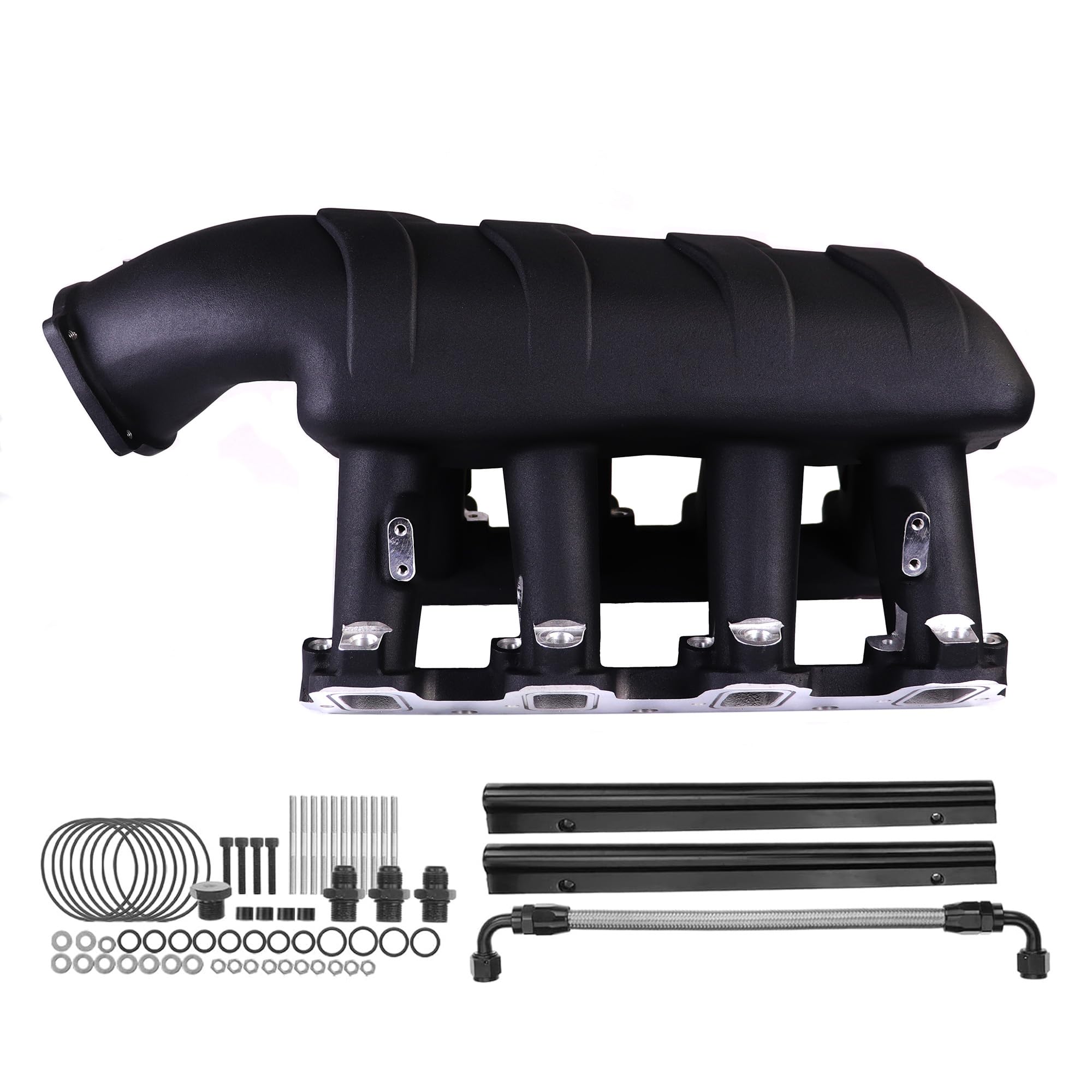
A hi-ram intake designed for rectangular-port LS3 heads that lives between 3,500 and 8,000 RPM.
The JGhyperX hi-ram is built for a completely different use case than the cathedral-port options above — this one fits rectangular-port cylinder heads from the LS3, L76, L92, and L99 family. The front and rear height is 12.32 inches with a 92mm bore, and the longitudinal plenum design feeds air through long runners that shift the power band up to the 3,500-8,000 RPM range. This is not a street cruiser intake; it is for a track car that sees sustained high RPM.
At 30.2 pounds, this is the heaviest manifold in the guide — the 92mm throttle body opening keeps it narrow, but the sheer size of the plenum and runners adds mass. Owners mention that a quick port and polish with a sanding roll cleans up the casting flash in each runner, and one reviewer who compared it to a name-brand LSX HR said “Chi-Ram FTW” after getting a perfect fit with no leaks. The fuel rail kit includes -8 AN O-ring fittings for high-flow injectors.
The issues: multiple customers note that the fuel rail holes do not align with the screws, causing gas leaks. One buyer had to switch to a different hi-ram after the fuel rails leaked. You will also need to drill and tap for an IAT sensor, and the tall height requires cutting the firewall in a fifth-gen Camaro. The fuel rail kit needs near LS3 injectors to seal properly — LS2 injectors require top hats, and stock LS3 injectors are too short for the rail mounting tabs.
Why it pulls hard up top
- Designed for rectangular-port heads (LS3, L76, L92, L99) — one of the few affordable hi-ram options for these cylinder heads
- Longitudinal plenum and long runners feed the 3,500-8,000 RPM range effectively, making it a track-day weapon
- Fuel rails machined for -8 AN O-ring fittings handle high-flow injector setups
- One reviewer confirmed no leaks and perfect fit after a careful install with correct injectors
The hi-ram hurdles
- At 30.2 pounds it is the heaviest intake in this guide — 60% heavier than the FAST polymer unit
- Fuel rail alignment issues and leaks reported by multiple buyers — expect to spend time getting the rails to seal
- Requires cutting the firewall in many chassis (fifth-gen Camaro, for example) due to the 12.32″ height
- Needs an IAT sensor hole drilled and tapped, and fuel injector top hats for anything but near-LS3 injectors
Track-day choice for rectangular-port LS owners: If you are building a high-RPM LS3-powered track car and want a hi-ram without spending +, the JGhyperX delivers the runner length and plenum volume for sustained top-end power.
Stick with a cathedral-port intake if: your engine has cathedral heads (LS1/LS2/LS6) — the rectangular-port runners will never seal correctly, and the hi-ram’s power band is wasted on street-driven builds that stay below 3,500 RPM.
6. YIUIY For LS Intake Manifold Low Profile Cathedral Port 92mm (Silver)

A 180mm low-profile intake that matches stock LS height — built for swaps that need to close the hood.
The YIUIY intake is built for the clearance-conscious LS swapper. At 180mm tall, it is the same height as a stock LS intake, making it a direct fit under factory hoods in most chassis — including a Fox-body Mustang swap, which one buyer confirmed with a “good fit for foxbody with stock hood” review. The 92mm opening is smaller than the premium 102mm units, but for a street-driven swap that needs to keep the stock hood line, the height is the deciding factor.
The manifold uses 1/8″-thick T6061 sheet aluminum with TIG-welded fabrication, and the package includes gaskets, fuel rails, fuel crossover line, and mounting accessories. At 18.48 pounds, it splits the difference between the lightest (POSENG at 17.11 lb) and the heaviest fabricated units. Buyers running a 5.3 LM7 into a ’64 Bel Air confirmed it works well after shortening the fuel rail brackets to clear truck injectors and adding 3/4″ spacers on a 2002 Camaro water pump to fix throttle body interference.
The issues reported: some units arrived scratched, and one buyer mentioned that the gaskets did not fit the intake runners and the welds leaked. The throttle body opening was mismatched on one unit, making it incompatible with a 102mm throttle body — a predictable fit issue since the intake is designed for 92mm. The intake sits high enough in some applications that you may still need hood modifications, contradicting the “low profile” claim in certain chassis. One reviewer called it “a waste of money” after the leaks.
Fits where others do not
- At 180mm tall it matches stock LS intake height — clears Fox-body Mustang hoods and other tight swap chassis
- Complete kit with fuel rails, crossover line, and gaskets saves sourcing parts
- Several buyers confirm a “great fit” for Bel Air and Fox-body swaps with minimal modification
The low-profile trade-offs
- Some units arrived with scratches, poor gasket fit, and leaking welds — quality varies between batches
- The 92mm throttle body opening is fixed; you cannot step up to a 102mm without replacing the whole manifold
- Still may require hood modifications in some chassis despite “low profile” claim — buyer reports differ
- One verified buyer called it a waste of money after dealing with leak issues and unhelpful customer service
For the tight-clearance swap: If you are LS-swapping a chassis with limited hood clearance and need an intake that matches stock height, the YIUIY is the right dimension — just inspect the unit immediately for weld quality before installing.
Skip it for boosted builds: The 92mm opening and reported weld leaks make this a risky choice for forced induction. If you plan to boost the engine, the POSENG unit is a better budget option with confirmed 18 psi pressure test results.
7. TEMSONE 92MM Intake Manifold Sheet Metal Fabricated EFI with Fuel Rails and Throttle Body
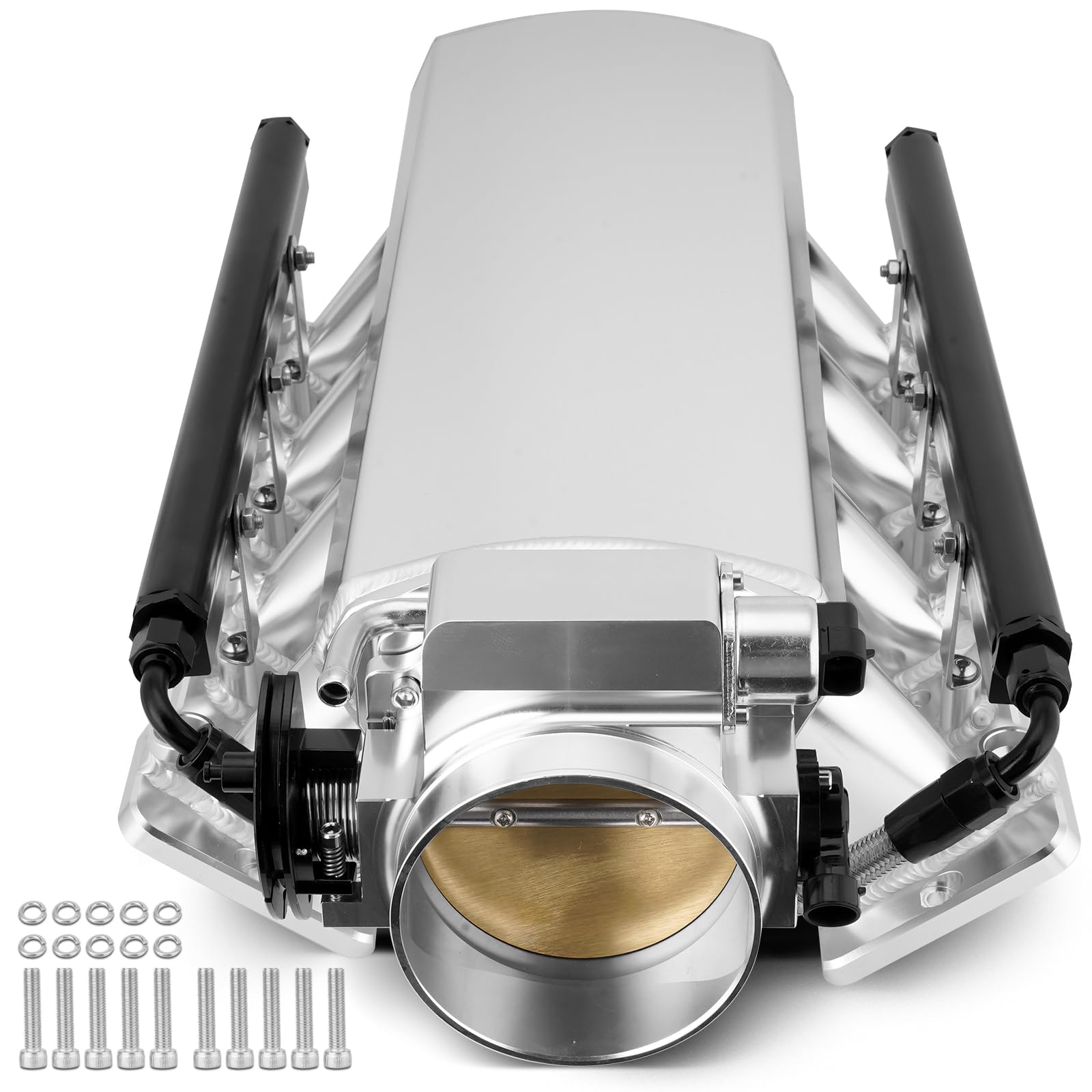
A complete air-delivery system with a 92mm throttle body included — and the fuel rail brackets that most owners end up modifying.
TEMSONE’s kit is the only sub- option here that bundles a 92mm throttle body with the intake manifold, including the throttle position sensor (TPS) and idle air control (IAC) sensor already installed. That saves you the cost and hassle of matching a throttle body size to the intake opening — the 92mm bore on the throttle body matches the 92mm intake opening exactly. The manifold itself is fabricated from 3mm T6061 aluminum with a silver finish and includes a MAP port at the rear.
Buyers consistently praise the “great looking and good value” combination. One reviewer who compared it to a truck manifold said “much better looking than the truck manifold” and confirmed the construction and finish are solid. The package includes gaskets, hardware, two fuel rails, and fuel crossover lines, making it a complete swap-in kit for cathedral-port LS engines.
The catch: the fuel rail brackets are too tall for GM injectors. One owner reported the brackets were undrilled for factory injectors, requiring drilling or switching to Ford injectors which were a better fit. The MAP sensor mount was too large for a standard sensor on one unit, and the intake was incompatible with the factory alternator location on that same build — requiring an alternator relocation kit. Another buyer said the only problem was “fitting the fuel rail with some injectors height,” confirming the injector height issue is the single most common complaint.
What makes it a good value
- Includes a 92mm throttle body with TPS and IAC already installed — saves – vs. buying separately
- Complete kit with gaskets, fuel rails, crossover lines, and all hardware
- Buyers confirm “great looking” finish and construction quality at a competitive price point
The injector fitment problem
- Fuel rail brackets are too tall for most GM injectors — requires drilling or switching to Ford-style injectors
- MAP sensor mount on some units is too large for standard MAP sensors
- One customer observed the intake was incompatible with the factory alternator location, requiring a relocation kit
- Not a direct factory replacement; expect to modify fuel rail bracket alignment
The bundle deal for a complete swap: If you need an intake, throttle body, and fuel rails in one box and you are willing to drill new holes in the fuel rail brackets for injectors, the TEMSONE delivers a clean-looking setup at a bundle price.
Choose a simpler option if: you want a turn-key bolt-on with no bracket modification. The A-Team Performance unit includes a throttle body with fewer fitment issues for standard GM injectors.
8. HTRACING Intake Manifold Compatible with Chevy 4.8 5.3 6.0 6.2 LS (102mm Throttle Body Kit)

A 102mm complete kit with throttle body for cathedral-port builds — but expect to fabricate your own throttle cable mount.
HTRACING’s kit brings the 102mm bore size that boost builders need while including the throttle body, TPS sensor, gaskets, fuel rails, and fuel crossover line in one package. The manifold uses 3mm thick T6061 aluminum with TIG welding, claimed to hold up to 30 pounds of boost. This is the same manufacturer (POSENG) as product 1, but with a 102mm opening instead of 92mm, making it a better match for engines that will see forced induction or higher RPM airflow demands.
Buyers who got a clean unit say it “fits perfect and bolted right up” when paired with a low-profile valley cover. One reviewer called it “a perfect price” after a smooth installation. The inclusion of the throttle body and TPS saves the step of sourcing a 102mm unit separately, and the 102mm opening is a significant upgrade over the 92mm options — flowing more air at lower pressure drop for the same throttle position.
The problems: the kit comes with no instructions, which one buyer called out as a major frustration. There is “no mount for the throttle cable” — you must fabricate one. The fuel rail mounts are “poorly engineered” and stock LS injectors are too short for the rail brackets. One user highlighted the fuel line arrived with a cut, causing gas to leak immediately, and the manifold had scratches from the start. The 102mm opening is for drive-by-cable engines only; drive-by-wire setups require a different throttle body configuration.
The 102mm advantage
- 102mm bore is a genuine airflow upgrade over 92mm units — better for boosted builds that need to reduce inlet restriction
- Complete kit with throttle body, TPS, fuel rails, and gaskets saves sourcing individual parts
- 3mm T6061 aluminum construction with TIG welding is the same boost-capable design as the top-tier units
The missing details
- No throttle cable bracket included — you must fabricate one from scratch
- Fuel rail mounts are poorly engineered per multiple buyers, and stock injectors are too short for the included brackets
- No instructions in the box; one shopper added a cut fuel line that leaked immediately
- Drive-by-cable only; not compatible with drive-by-wire throttle bodies without modification
The 102mm option if you can fabricate: If you need a 102mm intake with a throttle body included and you are comfortable building your own throttle cable bracket and modifying fuel rail mounts, the HTRACING delivers the bore size boost builders need at a much lower price than the FAST.
Spend for the A-Team if: you want a low-profile design and do not want to fabricate a throttle cable bracket — the A-Team’s 15-degree opening and included throttle body are a more complete package for a similar outlay.
9. HTRACING Intake Manifold Compatible with Chevy 4.8 5.3 6.0 6.2 LS (102mm Throttle Body Kit)
A 102mm complete kit with throttle body for cathedral-port builds — but expect to fabricate your own throttle cable mount.
HTRACING’s kit brings the 102mm bore size that boost builders need while including the throttle body, TPS sensor, gaskets, fuel rails, and fuel crossover line in one package. The manifold uses 3mm thick T6061 aluminum with TIG welding, claimed to hold up to 30 pounds of boost. This is the same manufacturer (POSENG) as product 1, but with a 102mm opening instead of 92mm, making it a better match for engines that will see forced induction or higher RPM airflow demands.
Buyers who got a clean unit say it “fits perfect and bolted right up” when paired with a low-profile valley cover. One reviewer called it “a perfect price” after a smooth installation. The inclusion of the throttle body and TPS saves the step of sourcing a 102mm unit separately, and the 102mm opening is a significant upgrade over the 92mm options — flowing more air at lower pressure drop for the same throttle position.
The problems: the kit comes with no instructions, which one buyer called out as a major frustration. There is “no mount for the throttle cable” — you must fabricate one. The fuel rail mounts are “poorly engineered” and stock LS injectors are too short for the rail brackets. One user highlighted the fuel line arrived with a cut, causing gas to leak immediately, and the manifold had scratches from the start. The 102mm opening is for drive-by-cable engines only; drive-by-wire setups require a different throttle body configuration.
The 102mm advantage
- 102mm bore is a genuine airflow upgrade over 92mm units — better for boosted builds that need to reduce inlet restriction
- Complete kit with throttle body, TPS, fuel rails, and gaskets saves sourcing individual parts
- 3mm T6061 aluminum construction with TIG welding is the same boost-capable design as the top-tier units
The missing details
- No throttle cable bracket included — you must fabricate one from scratch
- Fuel rail mounts are poorly engineered per multiple buyers, and stock injectors are too short for the included brackets
- No instructions in the box; one shopper added a cut fuel line that leaked immediately
- Drive-by-cable only; not compatible with drive-by-wire throttle bodies without modification
The 102mm option if you can fabricate: If you need a 102mm intake with a throttle body included and you are comfortable building your own throttle cable bracket and modifying fuel rail mounts, the HTRACING delivers the bore size boost builders need at a much lower price than the FAST.
Spend for the A-Team if: you want a low-profile design and do not want to fabricate a throttle cable bracket — the A-Team’s 15-degree opening and included throttle body are a more complete package for a similar outlay.