
Our readers keep the lights on and my garage snacks stocked. As an Amazon Associate, I earn from qualifying purchases.
Specs are compiled from manufacturer listings and verified buyer reviews and can change over time — please confirm the key details on the product page before buying.
A subwoofer is the single piece of gear that turns a flat stereo into a room-filling experience. The problem is that many good ones cost as much as a small used car. The good news is that you do not need to spend that kind of money to feel the floor shake during a movie or to hear the low-end thump in your favorite track. This guide digs into the ten best performers that keep the budget in check without cheating you on deep, clean bass.
I’m Min Islam — the founder and writer behind Trending Car. This guide is built by comparing the manufacturers’ published specifications and the patterns across verified customer reviews, so you get each pick’s real strengths and trade-offs instead of marketing spin.
Whether you are upgrading a small desktop system or rounding out a home theater, these picks deliver genuine low-end punch for the money. Read on for the low cost subwoofer that fits your room, your gear, and your expectations.
Our Picks at a Glance


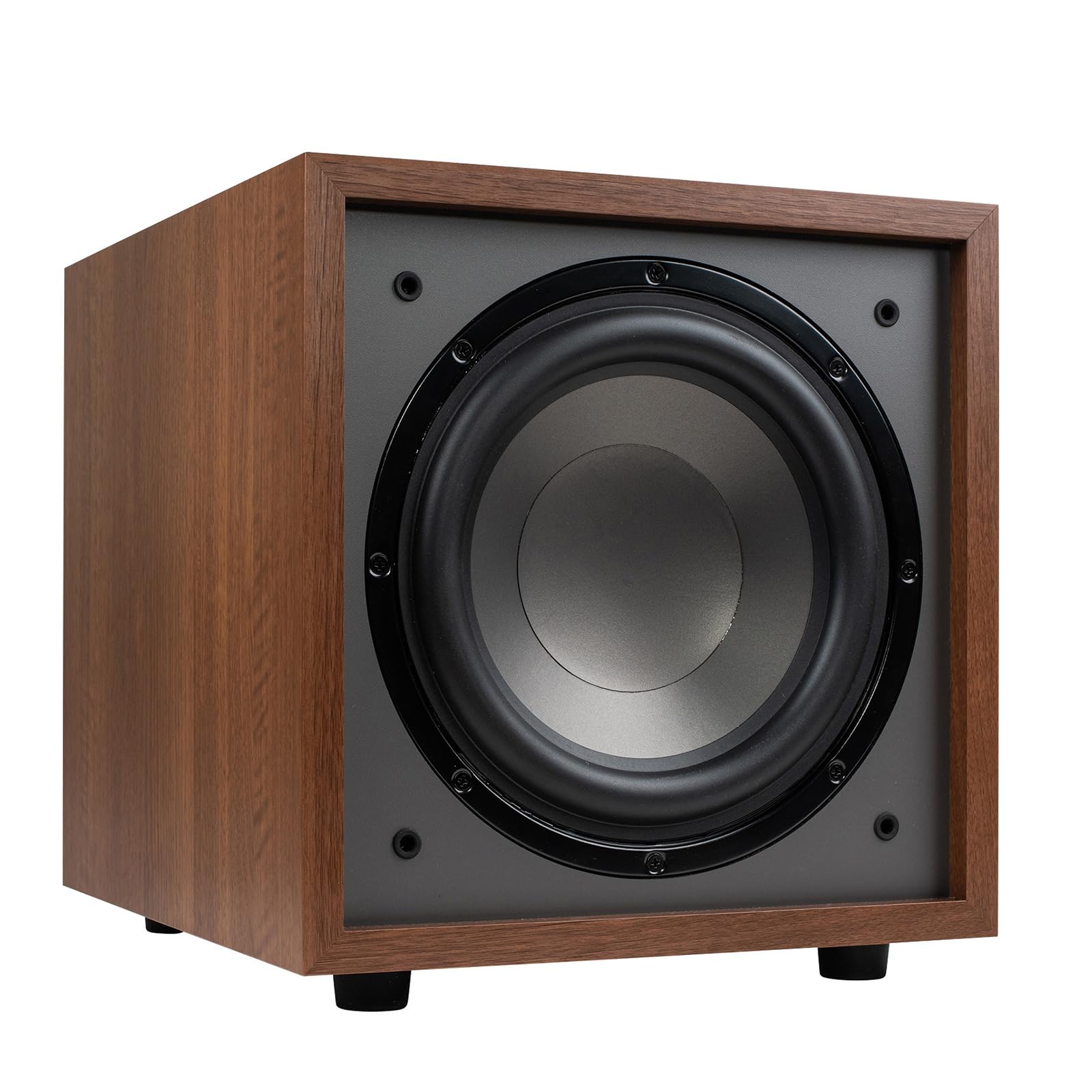
How To Choose The Best Low Cost Subwoofer
Picking a subwoofer on a tight budget means you have to prioritize what matters most. You cannot get everything at a bargain price, but you can get the one or two things that make the biggest difference in your room. Keep these three factors in mind as you compare options.
Driver Size and Power
The driver (the big round speaker cone inside the box) determines how much air the subwoofer can move. A 12-inch driver pushes much more air than a 6.5-inch driver, which translates to deeper, more physical bass. More watts from the amplifier give you more headroom before the sound distorts. For a small room or desk setup, an 8-inch or 10-inch driver with 150 to 200 watts is plenty. For a medium to large living room, a 12-inch driver with 200 watts or more is worth the stretch.
Connectivity and Setup
Check what your receiver or soundbar has on the back. A standard RCA subwoofer output (sometimes labeled LFE) is the simplest connection — just plug in one cable and you are done. If your gear lacks a dedicated subwoofer output, look for a model with high-level speaker inputs and outputs, which let you connect the subwoofer between your amplifier and speakers. Controls like a low-pass filter and a phase switch help blend the subwoofer’s sound with your main speakers so the bass sounds like it is coming from everywhere, not just from the box in the corner.
Quick Comparison
| Model | Best For | Driver Size | Power (Peak) | Frequency Response | Amazon |
|---|---|---|---|---|---|
| Klipsch Synergy Black Label Sub-120★ Best Overall | The crowd-pleasing powerhouse | 12 inches | 400 W | — | Amazon |
| Rockville Rock Shaker 12Top Performer | Room-shaking 12-inch bass | 12 inches | 800 W | — | Amazon |
| Dayton Audio Classic CS1000Best Value | Accuracy and warranty for music lovers | 10 inches | 180 W | 28 Hz | Amazon |
| Fluance DB10 | Clean bass for music and movies | 10 inches | — | 38 Hz | Amazon |
| Klipsch Reference R-8SW | Compact sub for small apartments | 8 inches | 150 W | — | Amazon |
| Edifier T5s | Desktop and small-room refinement | 8 inches | 70 W RMS | 35 Hz | Amazon |
| Jamo Studio Series S 810 | Style and a tight, less boomy sound | 10 inches | 150 W | — | Amazon |
| Rockville Rock Shaker 10 | Cheapest way to add a lot of low end | 10 inches | 600 W | 20 Hz | Amazon |
| BESTISAN Powered Subwoofer (Side Firing) | Compact bass for apartments and decks | 6.5 inches | — | 35 Hz – 200 Hz | Amazon |
| Bestisan Powered Subwoofer | Entry-level upgrade for a soundbar | 6.5 inches | — | — | Amazon |
In‑Depth Reviews
1. Klipsch Synergy Black Label Sub-120
Our pick — over 4.5★ from 800+ verified ratings; the strongest balance of quality and price.
The floor-shaking 12-inch that rewrites what budget bass can feel like.
This Klipsch is the top dog here for a clear reason — a 12-inch front-firing driver powered by 200 watts continuous and 400 watts dynamic power. That combination means it can rumble a mid-sized room at a gain setting of just 1 out of 10, a level of easy authority that smaller subs simply cannot match. The spun copper Cerametallic woofer is a visual signature, but what matters is that it plays clean and deep without breaking a sweat.
Buyers consistently mention how this sub changes their entire surround system, delivering low-end booms that can literally shake pictures off the wall. The sound quality is praised the most, followed closely by value for money. It is a large ported cabinet — 21.3 inches tall — so it needs floor space, and it does not include connection wires in the box. But if you have the room, this is the one that satisfies without pushing into audiophile pricing.
The big catch is that this is not an apartment-friendly sub. It demands space for the bass to develop. In a small or shared living situation, the sheer output may be too much, and the low excursion can cause distortion if you push the volume hard. For anyone with a dedicated media room or a decent-sized living room, this is the single best low cost subwoofer on the list.
What wins everyone over
- 12-inch driver with 400W dynamic power delivers house-shaking bass at low gain
- Spun copper Cerametallic woofer and sturdy build feel premium for the price
- Adjustable volume and low-pass filter make integration easy
The honest trade-offs
- Large cabinet demands floor space and a big room to breathe
- Connection wires not included
- Low excursion can distort at very high volume levels
Reach for this if: You have a medium to large room and want authoritative, chest-thumping bass without spending a fortune on premium gear.
Look elsewhere if: You live in an apartment or your setup lives in a small den where the bass would overpower the space.
2. Rockville Rock Shaker 12
A 12-inch brute that rocks the house without wrecking your budget.
For those who want the biggest possible driver at a low price, the Rock Shaker 12 delivers 800 watts of peak power through a 12-inch woofer inside an MDF enclosure. The amplifier is a Class D design, which keeps heat and power consumption down while producing deep, clean bass that buyers report is powerful without distortion. It includes RCA and speaker-level inputs, plus a phase switch and adjustable crossover from 50 Hz to 150 Hz, giving you the flexibility to match almost any home audio system.
Sound quality is the top praise by a wide margin, and owners consistently say it “rocks the house.” The value for money and overall quality are also frequently highlighted. The MDF cabinet has a black laminate finish, and while the build is solid, a few owners noted minor finish imperfections like bubbles. The bass is clean and deep enough for movies and gaming, and it integrates easily via a simple RCA connection.
One honest downside is that some units shipped with loose internal wiring that caused a buzz at around 151 Hz, and the cabinet finish is not flawless. These are quality-control variations rather than a design flaw. If you get a good unit, and most buyers do, this subwoofer delivers truly impressive output for its price.
Where it shines
- 800W peak Class D amplifier drives a 12-inch woofer for room-filling bass
- Adjustable crossover (50-150 Hz) and phase switch for smooth system integration
- RCA and speaker-level inputs suit most receivers and amplifiers
The fine print
- Occasional build quality issues like loose internal wiring or imperfect laminate finish
- Large footprint may not suit tight spaces
- Pop on signal cut-off reported by a few owners
Grab this for: Getting the biggest 12-inch driver and highest peak power on the list without paying a premium, ideal for a living room theater setup.
skip it if: You want a flawless cabinet finish from the start or prefer a smaller, more discreet subwoofer.
3. Dayton Audio Classic CS1000
Tight, accurate bass with a class-leading warranty that backs it up.
The Dayton Audio Classic CS1000 takes a different path from the high-power crowd. It uses a 10-inch driver driven by a 180-watt Class D amplifier, and the focus is on clean, non-bloated low-end rather than sheer volume. The frequency response extends down to 28 Hz, which is genuinely deep for a subwoofer at this price. The rigid, braced MDF cabinet keeps resonance low, so the bass stays tight and defined rather than muddy.
Buyers praise the sound quality more than anything else, noting that it produces a larger soundstage and room-filling warmth. The value for money is the second most-mentioned strength. The CS1000 also comes with a 5-year warranty, which is unusually long for budget audio gear and signals confidence in the build. Connectivity includes stereo RCA, LFE, and speaker-level inputs, plus an auto-on feature that works reliably.
The included grille cloth feels flimsy, and owners mention the bass can sound slightly boomy if you do not dial it in carefully. This subwoofer rewards careful placement and crossover adjustment. If you love music and want a sub that blends smoothly with a stereo pair instead of just shaking the room, this is the standout option over the [Other Pick].
Why it stands out
- 10-inch driver reaches down to 28 Hz for deep, accurate bass extension
- 5-year warranty is the longest on the list, backed by a respected audio brand
- Braced MDF cabinet and Class D amp deliver clean, tight low-end
What to watch
- Grille cloth feels flimsy compared to the solid cabinet
- Requires careful placement and tuning to avoid slight boominess
- 180W peak power is lower than the 12-inch options
Ideal for: The music enthusiast who needs clean, accurate sub-bass for a stereo system and values a rock-solid warranty.
Not for you if: You want maximum room-shaking output for action movies; the 12-inch subs hit harder.
4. Fluance DB10

A meticulously built 10-inch sub that pairs precision with home-theater muscle.
The Fluance DB10 uses a 10-inch long-throw driver in a ported MDF cabinet, and the design goal is clear: deliver deep, precise bass for both music and cinema. The front-firing port is a thoughtful touch that lets you place it closer to a wall without choking the airflow. An auto power-on feature detects the signal from your audio source, saving energy while keeping the sub ready. The build quality is excellent, with double-boxed packaging that buyers consistently say arrives without a scratch.
Sound quality is the most praised aspect, with owners describing the bass as punchy and the output as “crazy loud even on lower volumes.” The value for money and overall quality are close behind. The Fluance hits well between 80 Hz and 45 Hz, trailing off below that, which is accurate to its advertised 38 Hz response. A break-in period of about 15 hours is recommended for the driver to loosen up and reach full performance.
Some owners find the 10-inch driver underpowered compared to older, larger subs they have used, particularly for heavy music. This sub works best in an office or a small to medium living room. If your space is large or you are a bass head, you might find yourself wanting more.
Key strengths
- 10-inch long-throw driver delivers punchy, precise bass for music and movies
- Front ported design allows wall placement without compromising sound
- Auto power-on and excellent packaging ensure a low-maintenance experience
Considerations
- Bass trails off below 45 Hz; not the deepest 10-inch on the list
- Requires a 15-hour break-in period for the driver to perform at its best
- Some listeners may find it underpowered for very large rooms
Perfect for: A desktop or small room setup where build quality and controlled, punchy bass matter more than sheer output.
Better options exist if: Your room is over 250 square feet and you want foundation-shaking low-end.
5. Klipsch Reference R-8SW

Big brand sound in a footprint that slides into a small apartment.
The Klipsch Reference R-8SW proves that an 8-inch subwoofer can do more than just tickle the low-end. It uses a spun copper IMG woofer and an all-digital amplifier to produce 150 watts of peak power, and the down-firing driver means the sound radiates into the floor for a more diffuse, room-filling effect. The compact size makes it an easy addition to a desktop system or a small surround setup without dominating the space.
Buyers love that this subwoofer makes their stereo come alive while remaining neighbor-friendly. It is described as great for small apartments, where the adjustable bass lets you dial in enough thump for movies and music without shaking the walls. The sound quality is clean and punchy for its size, though it lacks the sub-30 Hz extension of larger drivers. Setup is straightforward with a standard RCA or LFE connection.
The recurring complaint is a popping sound when the subwoofer is turned off, which some owners find annoying. It is not a performance issue, just a quirk of the design. For anyone in a tight space who still wants the Klipsch sound signature, this is the smart pick.
Why it fits
- Compact down-firing design fits easily into small rooms and apartments
- 150W peak power is enough for clean, punchy bass without annoying neighbors
- Easy RCA/LFE setup with a simple control interface
Small drawbacks
- Pops when powered off, a known quirk that bothers some owners
- Not intended for very large rooms or extreme deep bass
- Requires a separate subwoofer cable for connectivity
Reach for this if: You live in an apartment or have a small desk setup and want a trustworthy brand without the booming footprint.
Look elsewhere if: Your room is large or you need the deepest possible bass extension for home theater.
6. Edifier T5s
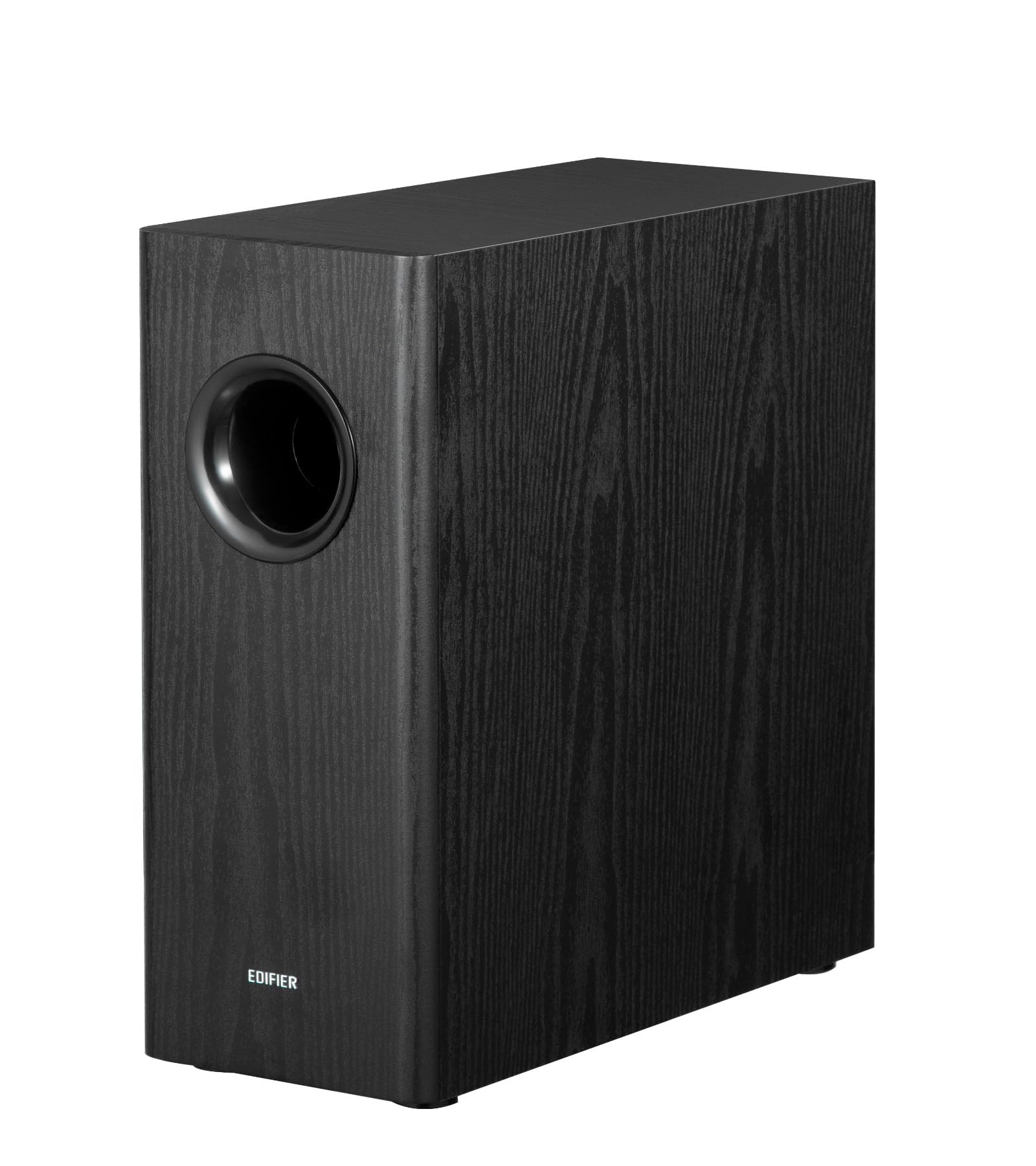
A compact 8-inch sub that brings precise, deep bass to desktop systems.
The Edifier T5s is built for the desktop crowd. It features an 8-inch long-throw woofer with a 70W RMS Class D amplifier, and it reaches down to 35 Hz. That is genuinely deep for an 8-inch driver, and it is loud enough to fill a small to medium room without straining. The slim, vertical cabinet with a wood grain finish and low-profile grille is designed to blend into a home office or living space without shouting for attention.
Buyers consistently call the sound quality outstanding, noting that the bass is defined and powerful, with many saying they barely need to turn the volume up to feel the thump. The build quality is the second most-praised aspect. The T5s offers precision controls including a low-pass filter adjustable from 30 Hz to 160 Hz and a phase selector (0 or 180 degrees), which makes it easy to integrate with desktop speakers like Edifier’s own R1280T series. It uses RCA connections, with both signal in and signal out to daisy-chain to powered speakers.
The biggest limitation is that it is really designed for small rooms. The 70W RMS output is plenty for a desk or a den, but it will struggle to pressurize a large living room. Also, the auto-standby kicks in after 15 minutes of inactivity, which is great for energy savings but can be disruptive if you are listening to content with quiet passages.
What it does best
- 8-inch long-throw woofer reaches 35 Hz for deep desktop bass
- Adjustable low-pass filter and phase selector for precise integration
- Compact, attractive cabinet suits a desktop or small living room
Keep in mind
- 70W RMS power is limited to small and medium rooms
- Auto-standby activates after 15 minutes, which can cut out quiet content
- Compatibility is best with Edifier speakers; other setups may need extra cabling
Ideal for: Anyone building or upgrading a desktop audio system who wants clean, deep bass in a small footprint.
Not the best choice if: Your room is larger than a typical home office or you need high output for a home theater.
7. Jamo Studio Series S 810

A sleek 10-inch sub that favors tight, musical bass over boomy rumble.
The Jamo S 810 takes a refined approach. It uses a 10-inch polyfiber woofer with a 150W bottom-mounted Class D amplifier and a slot port design. The result is a subwoofer that delivers a tight, less boomy response compared to many budget competitors. Owners describe it as a good music-only sub that fits small spaces without overwhelming the room. It is part of the Klipsch-owned Jamo line, so the engineering pedigree is solid, even at the budget end.
Sound quality is the most praised feature, and the appearance and build quality also get strong marks. The sub is designed to work well in a 12×10 foot office, where it adds the missing low-end without becoming muddy at higher volumes. The controls are mounted on the bottom, which keeps the look clean but makes adjustments a bit less convenient. The included cable is thin, and the grille pins are fragile, so careful handling is advised.
The honest limitation is that the bass gets dull at higher volumes and has a steep drop-off below 40 Hz. This is not a sub for those who want subsonic rumble. It fills the 40-100 Hz range effectively, making it ideal for music and casual movie watching in a smaller space, not for chest-thumping theater performance.
What makes it different
- 10-inch polyfiber woofer with 150W Class D amp delivers tight, musical bass
- Slim, attractive design with a slot port for cleaner low-end
- Excellent for small rooms and music-focused listening
Things to note
- Bass drops off steeply below 40 Hz; not for deep home theater rumble
- Controls are bottom-mounted, making adjustments a hassle
- Flimsy included cable and fragile grille pins
Best for: The person who listens to a lot of music and wants a compact sub that adds clean low-end without dominating the room visually or sonically.
pass on it if: Your priority is deep, physical home theater bass that shakes the room.
8. Rockville Rock Shaker 10

The cheapest way to add serious, chest-thumping low-end to any system.
The Rockville Rock Shaker 10 is a straight-ahead value play. It packs a 10-inch woofer with 600W peak power (300W RMS) driven by a built-in Class D amplifier, all inside a MDF enclosure. The result is chest-thumping bass that can shake a room at just 50% gain. Owners say it is powerful enough for large spaces and that the 600W peak feels even stronger than the number suggests. The adjustable crossover, volume, and phase controls give you flexibility to tune it to your space.
Sound quality is the most praised aspect by a huge margin, with over 200 owners mentioning it. The value for money is the second most-discussed strength. Buyers describe it as a great way to add a lot of low-end for very little money. Connectivity is flexible, with RCA line inputs and outputs plus high-level speaker inputs and outputs, so it works with most receivers and amplifiers.
The main compromise is that the bass is described as slightly loose compared to more expensive subs. The crossover control is a shelf filter rather than a true crossover, which can cause some muddiness in the upper bass. Build quality and reliability receive mixed feedback, with some owners reporting issues over time. It is a solid entry-level sub for those who prioritize raw output over refinement.
Where it wins
- 600W peak power drives a 10-inch woofer for genuine chest-thumping bass
- Adjustable crossover, volume, and phase controls for flexible tuning
- RCA and high-level inputs ensure compatibility with any setup
The trade-off
- Bass is slightly loose and less controlled than pricier options
- Crossover control is a shelf filter, not a true low-pass, causing potential muddiness
- Mixed feedback on long-term reliability and build quality
Grab this for: The maximum low-end output per dollar. Ideal for a garage, large living room, or gaming setup on a tight budget.
Look elsewhere if: You want tight, musical bass for critical listening or need a sub with proven long-term reliability.
9. BESTISAN Powered Subwoofer (Side Firing)

A pint-sized sub that packs enough punch for an apartment or a deck.
If space is the number one constraint, this BESTISAN model squeezes a 6.5-inch side-firing driver into a compact bass-reflex cabinet with a bottom port. The frequency response runs from 35 Hz to 200 Hz, and the side-firing design helps distribute the bass evenly in a small room. It is designed to pair easily with a soundbar or bookshelf speakers via RCA, 3.5mm AUX, LFE, or high-level speaker inputs.
Buyers consistently praise the sound quality for its size, calling the bass tight and surprisingly sturdy for a 10-inch enclosure. The compact size and easy setup are also frequent compliments. Owners say it is just right for a small porch or deck, adding enough boom for music without overpowering the space. The connectivity is genuinely flexible, making it easy to integrate into most existing systems.
The most common frustration is an auto shut-off feature that kicks in after about 15 minutes of silence and does not reliably re-activate when audio resumes. This forces the user to manually power cycle the unit. Also, the 6.5-inch driver is simply not going to produce the deep, physical impact of a larger sub. It is a honest trade-off for the footprint.
Why it works
- 6.5-inch side-firing woofer delivers surprising bass extension for its tiny size
- Universal connectivity (RCA, AUX, LFE, speaker level) fits any system
- Compact enough to fit on a shelf, under a desk, or on a small deck
What to watch
- Auto shut-off engages after 15 minutes and may not auto-reactivate
- Limited deep bass extension; not for room-shaking home theater
- Some units have a disabled auto shut-off switch despite manual claims
Best for: Apartment dwellers, desktop users, or anyone adding a touch of low-end to a soundbar in a tiny space.
Not for: Those after deep, physical bass output for a living room theater setup.
10. Bestisan Powered Subwoofer

The smallest and most affordable way to get a bass upgrade for your bookshelf speakers.
At this price point, the Bestisan subwoofer is an entry-level gateway. It uses a 6.5-inch dynamic driver inside a compact ABS enclosure, and it is designed to be as simple as possible to integrate. The idea is straightforward: plug the included cable from your receiver’s subwoofer output into the LFE input, and you have instant low-end reinforcement. It is barely larger than a shoebox, so it slides into tight spaces without a second thought.
Sound quality gets the most praise, and owners say the size and impressive sound are the main reasons they bought it. The bass is described as sufficient for adding richness to a soundbar or a pair of Edifier bookshelf speakers in a small room. Setup is genuinely easy, and the compact ABS build feels solid enough for the price. The value for money is widely acknowledged.
The catch is that performance and build quality receive mixed feedback. An unlucky minority report units that stop working, and the bass output is not powerful enough for anyone wanting to feel the pressure in their chest. It is best understood as a gentle upgrade for a basic 2.0 system, not a foundation for a serious home theater. For the price, it is a fair starting point, but expectations need to match the small size and low cost.
Strong points
- Very compact and easy to place in tight spaces or a desktop
- Simple setup with included cable; works with any receiver with a sub out
- Adds noticeable low-end richness to basic bookshelf speakers
Honest limits
- Bass output is modest; not for room-shaking home theater
- Mixed reports on build quality and long-term reliability
- Some units received lack expected optical and Bluetooth connections
Reach for this if: You are on an extremely tight budget and just want a taste of low-end for a desktop or small bedroom system.
Step up instead if: You plan to use this as a permanent home theater sub or need reliable bass for years without hassle.
Understanding the Specs
Driver Size and Types
The driver is the part of the subwoofer that moves air to produce bass. A larger driver (like a 12-inch) pushes more air and can reach lower frequencies with more authority than a smaller one (like a 6.5-inch). In general, go for the largest driver your space and budget allow. A front-firing driver fires sound directly at you, which can feel more directional. A down-firing driver pushes the sound into the floor, which tends to spread the bass more evenly around the room but can be muffled by thick carpet.
Amplifier Power
Amplifier power is measured in watts, and it dictates how loudly the subwoofer can play before the sound distorts. You will see two numbers: peak power (the maximum short burst) and continuous or RMS power (the sustained output). RMS is the more honest measure. A 200W RMS amplifier is enough to pressurize a medium-sized living room. For a small desk setup, 70W RMS is often plenty. More power gives you headroom, meaning the bass stays clean even during loud action scenes.
Frequency Response
This spec tells you how low the subwoofer can go. Human hearing starts to feel bass as a physical sensation below about 40 Hz. A subwoofer that reaches 35 Hz or below will produce the deep, tactile rumble you feel in action movies. A sub that only reaches 50 Hz will add warmth and punch but not that deep foundation. The lower the number, the deeper the bass. Always look for the lowest end of the frequency range.
Connectivity and Controls
The most common connection is an RCA cable from your receiver’s subwoofer or LFE (Low-Frequency Effects) output. If your receiver lacks one, look for a sub with high-level speaker inputs and outputs, which let you connect it between your amplifier and speakers. Useful controls include a low-pass filter (which decides how high the sub plays, blending it with your speakers) and a phase switch (0 or 180 degrees) that helps the subwoofer’s sound wave match your main speakers for smooth integration.
FAQ
Will a low cost subwoofer work with my existing soundbar or receiver?
What size subwoofer driver do I need for my room?
Can I connect a subwoofer if my receiver has no subwoofer output?
What does the low-pass filter or crossover control do?
Will a low cost subwoofer work with a turntable setup?
What is the difference between a front-firing and a down-firing subwoofer?
How do I prevent a subwoofer from sounding muddy or boomy?
What does the phase switch on a subwoofer do?
Can I use a cheap subwoofer in a car?
Is a budget subwoofer worth upgrading from a basic soundbar?
Final Thoughts: The Verdict
For most buyers, the low cost subwoofer winner is the Klipsch Synergy Black Label Sub-120 because it combines a 12-inch driver with a crowd-pleasing reputation for shaking rooms while staying affordable. If you want accuracy and a 5-year warranty in a smaller package, grab the Dayton Audio Classic CS1000. And for the absolute best bang for the buck when raw power is the priority, the Rockville Rock Shaker 10 is the one to reach for.
How We Picked
We do not accept paid placement. Every pick is matched to a real buyer and a real use-case; we do not hands-on test units.
Sources & Methodology
Specifications: manufacturer listings and product documentation. Review insights: verified customer reviews, as of July 2026. Pricing: not shown on this page (it changes often); check the current price via the retailer link.
As an Amazon Associate, Trending Car earns from qualifying purchases. This does not affect which products we feature.