
Our readers keep the lights on and my garage snacks stocked. As an Amazon Associate, I earn from qualifying purchases.
Specs are compiled from manufacturer listings and verified buyer reviews and can change over time — please confirm the key details on the product page before buying.
The real challenge with a low cost car seat is not finding one under a certain price — it is finding one that still protects your child well and fits your actual car without frustration. A cheap price tag means nothing if the harness is a hassle to adjust every single morning or if the seat is too bulky to squeeze three-across in a sedan. This guide cuts through the confusing labels and weight limits to show you exactly which budget-friendly seats deliver real safety, real ease of installation, and real room to grow without breaking your wallet.
I’m Min Islam — the founder and writer behind Trending Car. This guide is built by comparing the manufacturers’ published specifications and the patterns across verified customer reviews, so you get each pick’s real strengths and trade-offs instead of marketing spin.
Whether you are buying for a newborn who needs an infant seat or a toddler ready to move up, choosing the best low cost car seat means knowing which weight limits and growth stages a model truly covers — and which safety features come standard at this price level.
Our Picks at a Glance
How To Choose The Best Low Cost Car Seat
Every car seat must meet the same federal safety standards, so paying more does not always mean a safer seat. What changes between price tiers is convenience, adjustability, and how long the seat fits your child. Here is what to check before you click “buy.”
Weight Limits and Growth Stages
The most important number on any car seat is the maximum rear-facing weight limit. Pediatricians recommend keeping children rear-facing until at least age two, so a seat with a 40-pound or 50-pound rear-facing limit will serve you much longer than one that stops at 30 pounds. The forward-facing limit and the eventual booster range determine whether you will need to buy another seat down the road.
Harness Adjustment Simplicity
A no-rethread harness (where the headrest and harness move up together in one motion) saves you a lot of frustration. On cheaper seats you often have to manually unthread the straps and rethread them at a higher slot every time your child grows. That takes several minutes and requires reading the manual each time. A one-motion system makes daily life much easier.
Car Fit and Width
A car seat that does not fit your vehicle is useless no matter how cheap it is. Measure the width of your back seat and compare it to the seat’s total width. Seats narrower than 19 inches are much easier to install three-across. Also check whether the seat is foldable or lightweight if you plan to move it between cars regularly.
Quick Comparison
| Model | Best For | Weight Range | Growth Stages | Key Feature | Amazon |
|---|---|---|---|---|---|
| Graco Extend2Fit★ Best Overall | Longest rear-facing use | 4-65 lb | 3-in-1 | 5″ extension panel | Amazon |
| Safety 1st Grow and Go 2-in-1 | Booster-stage portability | 40-100 lb | 2-in-1 | 19″ wide slim design | Amazon |
| Baby Trend EZ-Lift PRO | Lightweight infant carrier | Infant to ~1 year | Infant only | Plush cushioning | Amazon |
| Baby Trend Hybrid SI 3-in-1 | Side-impact on a budget | Toddler to booster | 3-in-1 | Side-impact design | Amazon |
In‑Depth Reviews
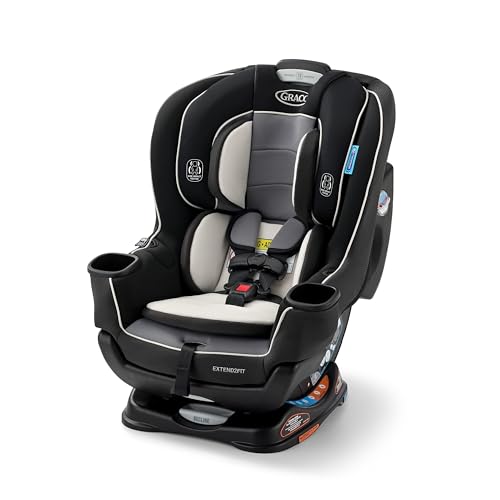
1. Graco Extend2Fit Convertible Car Seat
Our pick — over 4.5★ from 56,500+ verified ratings; the strongest balance of quality and price.
The car seat that lets your tall toddler ride rear-facing longer without kicking the seatback.
What makes the Extend2Fit stand out in the budget category is the 4-position adjustable extension panel that gives your child up to 5 extra inches of legroom while rear-facing. Most low cost car seats force you to turn your child forward-facing once their legs touch the back seat, but this design lets you keep them in the safest position — rear-facing — up to a 50-pound weight limit. The seat then converts to forward-facing harness mode (26.5 to 65 pounds) and later to a booster, making it a true long-term buy.
The No-Rethread Simply Safe Adjust Harness System means the headrest and harness move together in one smooth motion when your child grows, which buyers report is “easy to adjust” and a major time-saver. Side and frontal impact protection is built in through the Graco ProtectPlus system, engineered to newer testing standards rather than just the minimum federal requirement. The trade-off is bulk: the seat is noticeably larger than the slim-profile Safety 1st booster, so it takes up more room in a compact car’s back seat.
One buyer called it “the best purchase for my little boy,” praising the comfortable padding and the built-in cup holders as a welcome bonus. If you want a single seat that covers rear-facing through booster stages with industry-leading legroom, this is the one to beat in the mid-range price tier.
What makes it worth the stretch
- 5 inches of extra rear-facing legroom keeps kids safer longer
- No-rethread harness adjusts in one motion
- Covers rear-facing (4-50 lb) through booster stages
Where you will feel the size
- Bulky shape can be tight in small sedans
- Higher upfront price than basic entry-level convertible seats
Best for families who: want a single convertible seat that keeps a tall toddler rear-facing until 50 pounds, with easy harness adjustment.
Look elsewhere if: you only need a lightweight booster for an older child and want the most portable option.
2. Safety 1st Grow and Go 2-in-1 Booster Car Seat

The ultra-lightweight booster that swaps between cars without breaking a sweat.
This seat is not a convertible for infants — it starts at 40 pounds as a high-back belt-positioning booster and converts to a backless booster up to 100 pounds and 57 inches tall. What makes it special for the price is the ComfortWing design: as you raise the headrest, the backrest wings expand outward up to 19 inches total width, so the seat literally widens as your child grows. The narrow base makes it a strong pick if you need to fit three seats across a back row.
Owners mention it is “lightweight yet sturdy” and “easy to move between cars,” which matches the foldable, portable build. The seat pad is machine-washable and dryer-safe, and the two cup holders are dishwasher-safe and removable — practical touches that make daily cleaning much easier. Unlike the Graco Extend2Fit, this is not a full convertible, so you will need an infant seat or a separate convertible for the baby years. But if your child is already in the booster stage, the Safety 1st saves you space, weight, and money compared to bulkier multi-stage seats.
One reviewer noted it is “perfect for Grandma Mobile” because it is easy to tuck in the back of the car when not in daily use. The 10-position adjustable headrest keeps the fit fine-tuned as your child grows. This is a smart value pick for families who need a dedicated booster that does not eat up cargo space.
Portability plus expandability: At under 19 inches wide with a foldable design, it is the most car-friendly booster for multi-vehicle households — but only works for kids already past the harness stage (40+ pounds).
Grab this for: older kids who need a comfortable, easy-to-move booster that widens as they grow; especially good for grandparents’ cars or carpools.
skip it if: your child still needs a 5-point harness or a rear-facing seat — this booster does not have those modes.
3. Baby Trend EZ-Lift PRO Infant Car Seat

A lightweight infant seat with plush cushioning that makes the newborn months noticeably easier.
Unlike the other seats on this list, the EZ-Lift PRO is an infant-only carrier with a handle — you carry the baby in the seat, click it into a base in the car, and lift it out without waking a sleeping newborn. The “lightweight premium carry” design is the main selling point: buyers confirm it is “not too heavy” to carry with a baby inside, which matters for parents who move the seat between a car and a stroller or into stores regularly. The plush infant cushioning and adjustable harness support help the seat fit a newborn snugly and then adjust as the baby grows through the first year.
The seat is 100% polyester with a removable newborn insert, and customers note it includes “soft, cushioned fabric” that feels much plusher than what you expect at this price tier. One buyer mentioned “this car seat has been great” and praised how easy it is to change strap positions. The trade-off is that this seat does not convert to anything else — once your baby outgrows it (most infants around 12-18 months), you will need to buy a separate convertible or booster seat. It is also a dedicated infant carrier rather than a multi-stage seat, so it serves a specific early window rather than years of use.
A reviewer noted the seat is “affordable” and “sturdy” with a “stable and solid build” during installation. If you want a budget-friendly infant carrier that is genuinely lightweight and comfortable for a newborn, this is the one.
Early-stage specialist: The most comfortable newborn-specific option at a low price, but it is a one-stage seat — you will need a second purchase for the toddler years.
Pick this for: parents of newborns who want an affordable, lightweight infant carrier with plush padding and easy handle transport.
Look elsewhere if: you want a seat that will last from infancy through the booster stage without buying a second one.
4. Baby Trend Hybrid SI 3-in-1 Combination Booster Seat

A 3-in-1 booster with side-impact design that fits smaller budgets and tighter cars.
The Hybrid SI is a harness-to-booster combination seat, meaning it starts with a 5-point harness for toddlers, then converts to a high-back belt-positioning booster, and finally to a backless booster. This three-stage approach means you do not have to buy another seat as your child grows. The side-impact focused design is a concrete safety feature at a price point where many seats just meet the basic standard. Dual cup holders and an adjustable headrest round out the package.
Reviewers point out the seat is “easy to install” and “sturdy,” and one noted the “3-in-1 design grows with child” while praising the adjustable 5-point harness. However, there is a real catch: one owner reported the straps are “too short for tall 4-year-old and chubby younger child,” with difficulty buckling the harness at the bottom. The seat also does not fit every vehicle well — a buyer mentioned it did not work well in a Jeep Wrangler but fit perfectly in a Kia Sorento. The slim design got compliments from parents with long-legged kids who appreciated the extra foot room.
Unlike the Graco Extend2Fit, this seat does not have a rear-facing mode, so it is for children already ready to face forward. Compared to the Safety 1st 2-in-1, the Hybrid SI adds a harness stage (for toddlers roughly 2 years and up) before the booster mode, making it a better fit for younger children making the transition from a convertible seat. The cup holders are a hit: buyers call them the “favorite feature.”
What you get at this price
- Full three-stage growth (harness to high-back to backless booster)
- Dual cup holders that kids love
- Slim build works well in medium-sized sedans
The real trade-off
- Harness straps may be too short for taller or heavier toddlers
- Vehicle fit is inconsistent — test it in your car before buying if possible
Reach for this if: your toddler is ready for a forward-facing harness seat and you want a budget-friendly 3-in-1 that will grow into booster mode.
Think twice if: your child is tall or chunky for their age, or if you drive a vehicle with unusually shaped seats like a Wrangler.
Understanding the Specs
Rear-Facing Weight Limit
This is the maximum weight your child can reach while riding backward in the seat. The higher this number, the longer you can keep your child in the safest crash position. A seat with a 50-pound rear-facing limit (like the Graco Extend2Fit) buys you years of extra protection compared to a seat that caps at 30 or 35 pounds. Pediatricians recommend rear-facing until at least age two, so a higher limit here matters a lot for newborns and younger toddlers.
Growth Stages: 2-in-1 vs 3-in-1
A 2-in-1 car seat typically goes from high-back booster to backless booster — it skips the harness stage and the rear-facing stage. A 3-in-1 seat adds the forward-facing harness mode (for toddlers before they are ready for a booster) and sometimes a rear-facing mode as well. Make sure you match the stage count to your child’s current age and size: a 3-in-1 saves more money over time if you are buying for a toddler, while a 2-in-1 is perfect for a child already past the harness phase.
FAQ
Can I use a booster seat for a 3-year-old?
How long can my child stay rear-facing in a low cost car seat?
Will a cheap car seat fit in a small sedan?
What is the difference between side-impact protection and standard safety?
Can I wash the car seat cover and harness straps?
How often should I replace a car seat?
Is it safe to buy a used car seat?
Do cheap car seats have cup holders?
What weight does a child need to be for a backless booster?
Can I install a cheap car seat without a base?
Final Thoughts: The Verdict
For most families shopping on a budget, the overall winner for a low cost car seat is the Graco Extend2Fit because it combines a 50-pound rear-facing limit, a generous 5-inch legroom extension panel, and an easy no-rethread harness at a mid-range price that covers years of use. If you need a lightweight, foldable booster that is easy to swap between cars, grab the Safety 1st Grow and Go 2-in-1. And for a newborn infant seat that is genuinely comfortable and light to carry, the standout is the Baby Trend EZ-Lift PRO.
How We Picked
We do not accept paid placement. Every pick is matched to a real buyer and a real use-case; we do not hands-on test units.
Sources & Methodology
Specifications: manufacturer listings and product documentation. Review insights: verified customer reviews, as of July 2026. Pricing: not shown on this page (it changes often); check the current price via the retailer link.
As an Amazon Associate, Trending Car earns from qualifying purchases. This does not affect which products we feature.