
Our readers keep the lights on and my garage snacks stocked. As an Amazon Associate, I earn from qualifying purchases.
Specs are compiled from manufacturer listings and verified buyer reviews and can change over time — please confirm the key details on the product page before buying.
A kid’s kick scooter has one job — to be ridden hard, left out in the rain, crashed into curbs, and still roll smoothly the next day. The problem is most scooters either wobble after a month or weigh so much your child can’t carry it up the porch steps. This guide skips the hype and walks you through nine scooters built for real pavement, from the first push to the last brake stop.
I’m Min Islam — the founder and writer behind Trending Car. This guide is built by comparing the manufacturers’ published specifications and the patterns across verified customer reviews, so you get each pick’s real strengths and trade-offs instead of marketing spin.
Whether your child is just learning to lean or already carving turns, the very best kick scooter for kids balances durability with a ride that feels easy for young legs.
Our Picks at a Glance


How To Choose The Best Kick Scooter for Kids
A scooter your child outgrows in six months is not a bargain — it is a trip back to the store. The right scooter matches your child’s age, weight, and riding style with a frame that withstands daily use.
Wheel setup: two wheels vs. three wheels
Three wheels give younger or wobbly riders a wider base that resists tipping during turns. A three-wheel design also lets you steer by leaning your torso left or right — called lean-to-steer — which builds balance naturally without asking a beginner to rotate handlebars. Two wheels, by contrast, are lighter and faster for kids who already ride with confidence, but they demand better coordination.
Handlebar adjustability and frame weight
An adjustable T-bar handlebar lets the scooter stretch taller as your child grows. Look for at least four height settings so the scooter fits a three-year-old one year and a seven-year-old the next. Frame weight matters because your child will carry the scooter up stairs and into the car. A 4.6-pound aluminum scooter is manageable for a kindergartner; anything above 8 pounds becomes a parent-lift job.
Brake type and deck surface
A rear foot brake is the standard — your child steps on the rear fender to slow down. It is simple and child-intuitive. The deck should be wide and covered with an anti-slip surface so feet stay planted even on bumpy pavement. A deck that is too narrow or slick invites slips the moment the pavement gets damp.
Quick Comparison
| Model | Best For | Wheels | Handlebar Height | Weight Capacity | Amazon |
|---|---|---|---|---|---|
| Razor A Kick Scooter★ Best Overall | Overall winner | 2 (urethane) | 23.6 Inches | — | Amazon |
| Lifemaster 3 Wheel with SeatSit & Stand | Toddlers who sit | 3 (LED PU) | 34 Inches | 110 lbs (stand) / 44 lbs (seat) | Amazon |
| Lifemaster 3-Wheel LightsLight Show | Best light show | 3 (PU) | 26.77″ – 33.86″ | 150 lbs | Amazon |
| ChromeWheels Deluxe | Older kids (3-12) | 3 (LED PU) | 25″ – 34.5″ | 132 lbs | Amazon |
| TONBUX 3 Wheel | No-assembly convenience | 3 (LED PU) | 24.5″ – 34″ | — | Amazon |
| JOVA ZIFFY Light-Up | 20 LED modes | 3 (PU) | 25.5″ – 32.6″ | 110 lbs | Amazon |
| New-Bounce GoScoot MAX | Handlebar lock for beginners | 3 (PU) | 23″ – 30″ | — | Amazon |
| Aosom Youth Scooter | Big kids & teens | 2 (inflatable) | 35.5″ – 37.75″ | 220 lbs | Amazon |
| Micro Kickboard Maxi LED | Premium long-term pick | 3 (LED PU) | 24 Inches | 110 lbs | Amazon |
In‑Depth Reviews
1. Razor A Kick Scooter for Kids
Our pick — over 4.5★ from 33,500+ verified ratings; the strongest balance of quality and price.
The classic two-wheel scooter that has survived parking lots, gravel paths, and sibling tug-of-wars.
The Razor A is the crowd favorite — 4.8 stars across more than 33,000 owners — and the reason is simple: the aluminum construction weighs only 4.6 pounds, so a five-year-old can lift it into the car without help. The handlebar height sits at 23.6 inches, which is a full 44% taller than some three-wheel competitors, giving your child room to grow without hitting the next size-up. It folds quickly via Razor’s original folding mechanism, making it a natural fit for trunk-storage life. The urethane wheels and rear-fender brake keep things smooth and low-maintenance, and the foam grip is comfortable even on long afternoon rides.
The trade-off is that this is a two-wheel scooter, so it expects a child who already has some balance. Beginners under age four may find the lean-to-steer three-wheelers easier. The folding mechanism also has a hang-up — the swinging bottom part can smack a foot or shin when you carry it folded, as buyers report. Still, the quality across 839 positive mentions is the loudest signal here. This is the scooter that takes a beating and rolls on.
Why parents love it
- Ultralight 4.6-pound aluminum frame — easy for a kid to carry
- Folds quickly for storage, no tools required
- Adjustable handlebar lets the scooter grow with your child
One thing to watch
- Two wheels require some balance — not ideal for total beginners
- Lower part of the folding frame can swing into your shin when carrying
Best for kids 5+: This is the lightweight, foldable, two-wheel scooter for a child who already cruises and wants to go faster.
Think twice if your child is under 4: A three-wheel lean-to-steer model will feel more stable for first-time riders.
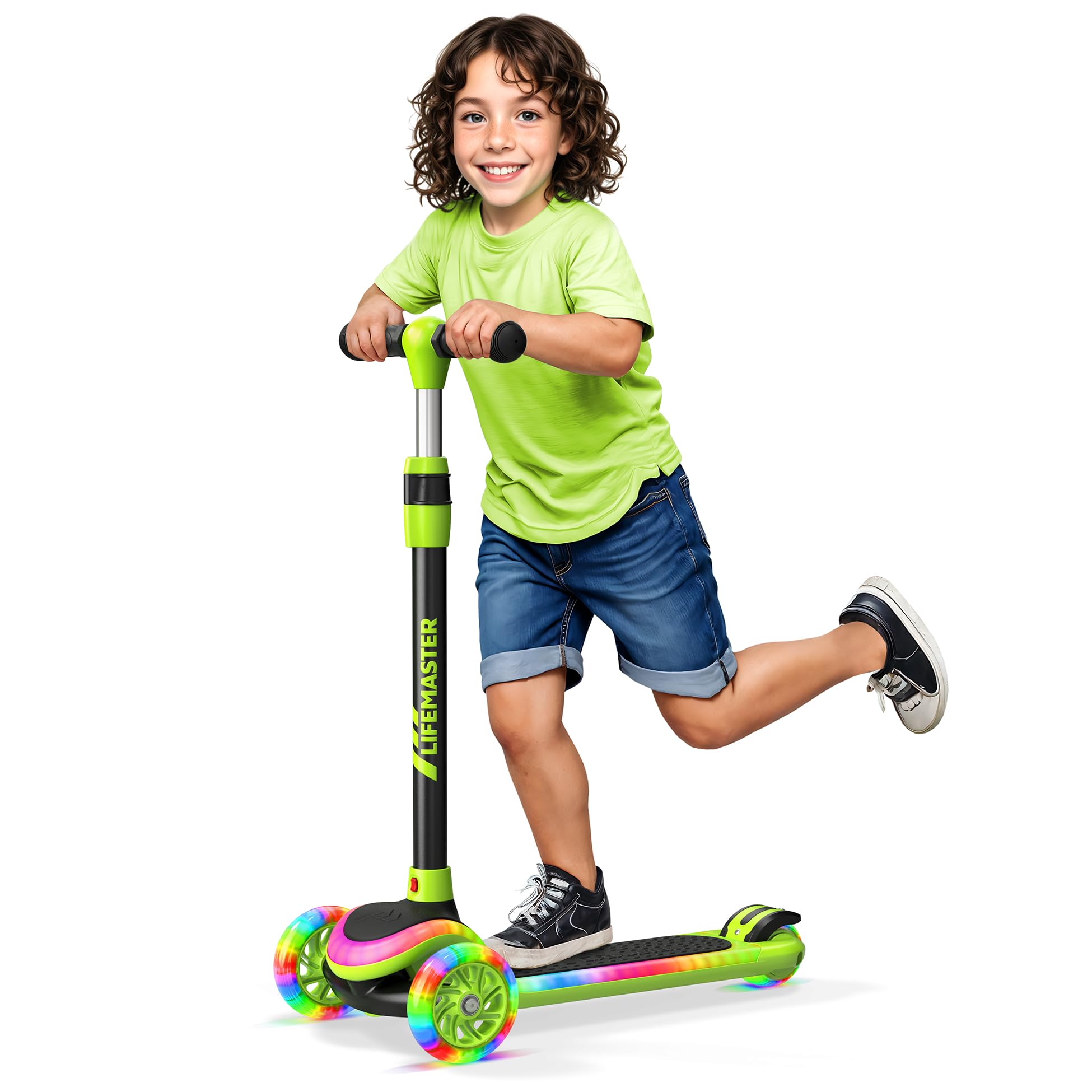
2. Lifemaster 3 Wheel Scooter with Foldable Seat
A three-wheeler that switches from classic standing to sitting mode in seconds.
This Lifemaster scooter covers two ground realities: toddlers who still tire their legs halfway down the block, and parents who want a single scooter that transitions from age two upward. The fold-out seat supports up to 44 pounds, so a young rider can sit, rest feet on the footrest, and keep rolling. When they are ready to stand, the three-wheel lean-to-steer setup makes balancing intuitive. The T-bar handlebar adjusts to three different heights — 27.87″, 31″, and 34.1″ — meaning it stretches taller than the Razor A, though the handlebar height of 34 inches is a solid fit for growing kids. The lightweight folding frame collapses to just 23.6″ x 11.6″ x 9.3″, which fits neatly in a sedan trunk.
The LED wheels flicker on with motion (no batteries needed) and kids love them — the lighting and seat are the two most-praised features in the reviews. That said, the durability gets mixed feedback from 52 owners, with some noting the folding handle can be a bit stiff. If your child is all-in on standing-only riding, a simpler two-wheeler may feel more direct. But as a first scooter for a toddler who still asks to be carried, the seat is a standout. As buyers put it: “My 5 yr old grandson absolutely loves everythingaboutit!”
Why the seat matters: It lets a toddler scoot without standing the whole time — great for longer walks when little legs give out. The trade-off is that the folding mechanism for the seat can be a little hard to operate at first.
Reach for this if you have a toddler: The sit-stand flexibility and 34-inch handlebar height make this the best transition scooter for kids ages 2 and up.
Look elsewhere if your child is over 5 and wants speed: They will outgrow the seated mode quickly and may prefer a lighter two-wheel model.
3. Lifemaster 3-Wheel Kids Scooter with Multi-Color Lights
Deck and wheels both light up, turning every sidewalk into a moving light display.
Most scooters only light the wheels — this Lifemaster puts multi-color flashing LEDs on the deck too, so the whole scooter glows from below. That visibility is a real safety edge for evening rides, and it makes the scooter hard to miss. The three-wheel design and ABEC-7 bearings (the ball bearings inside the wheels that reduce friction) deliver a smooth glide, even over rough pavement. The T-bar handlebar adjusts to five different heights, ranging from 26.77″ to 33.86″, which lets it fit a wide age gap. The weight limit stands at 150 lbs, which is the highest in this lineup, so heavier or older kids can ride without worry. The scooter weighs just 5.95 pounds, making it relatively easy to carry.
The lighting gets the highest praise — 31 owners call it out as the best feature. The stability from the wide anti-slip deck also gets consistent applause. On the downside, the frame is 30% steel and 70% plastic, so while it is sturdy, it does not have the all-aluminum feel of the premium picks. One owner noted it is “perfect for my 3-year-old” and praised the quality and lights. If your child is drawn to everything that flashes and glows, this is the one.
Best for night-time riders: The deck-and-wheel lights improve visibility after sunset. The 150-pound capacity means this scooter can serve a child for many years.
Grab this if your kid loves lights: The dual deck-and-wheel LED system is the brightest in the lineup.
skip it if you prefer a full aluminum frame: The steel-and-plastic build is durable but lighter on premium feel than all-metal competitors.
4. ChromeWheels Deluxe Kick Scooter 3 Wheel

A foldable three-wheel scooter that adjusts from 25 to 34.5 inches, spanning ages 3 to 12 in one build.
The ChromeWheels Deluxe bridges the biggest age gap in this list — the adjustable handlebar stretches from 25 inches to 34.5 inches, with four different height settings, so it works for a preschooler and a pre-teen. The frame is aluminum alloy with durable nylon composites, keeping weight at 6 pounds. The three-wheel lean-to-steer design lets kids steer by shifting their weight, which builds coordination without them thinking about it. The rear brake is an easy-access step brake that stops quickly. The LED wheels light up as the wheels roll (magnetic steel powers them, no batteries), and the deck has a strong anti-slip surface.
Owners praise the quality and ease of use, with many noting it comes mostly pre-assembled. “Great quality for the price. Easy to put together and very stable,” is a common take in the review pages. The foldable design also makes it travel-friendly. The caution is that some owners found the frame bends near the ground at the middle handlebar setting when used aggressively — this scooter is best for mild gliding and smooth sidewalks, not off-road bumps. But for a parent who wants one scooter that covers a six-year span, this is the practical buy.
Why the wide adjustability matters: You will not need a new scooter when your child grows an inch. The 34.5-inch top setting fits most 12-year-olds comfortably.
Best for families with multiple kids: The handlebar range covers ages 3 through 12 so siblings of different heights can share it.
Not for heavy off-road use: Stick to smooth pavement — the frame is not built for aggressive bumps at the middle height setting.
5. TONBUX Kids Scooter, 3 Wheel Light Up

Comes fully assembled — unfold the T-bar and your child rides instantly.
The TONBUX eliminates the biggest annoyance of kids scooters: the box of tools and the half-hour build. It arrives ready to ride: just unfold the T-bar and go. The handlebar adjusts from 24.5 to 34 inches, fitting kids ages 3 to 12, with a new stem double-lock system that is more secure than the old-style collar clamp. The three motion-activated LED wheels light up as the child glides, with no batteries required. The deck is 5 inches wide and reinforced with a double-layer anti-slip surface, giving young feet a solid platform. The 45mm widened rear wheel and brake provide extra grip for controlled stops.
The lean-to-steer design is a big hit — 43 owners single out the stability as a standout feature. One owner noted that their 5.5-year-old loves it and “it stays in the car and goes everywhere with us.” The only real caveat is that some very young first-time riders (age 3 to 4) find the lean-to-steer takes a few sessions to master. But for a parent who wants a scooter from the start and onto the sidewalk in 10 seconds, this is the one.
Best for impatient kids (and parents): No assembly means no delay. The double-lock stem also adds safety compared to older clamp designs.
Reach for this if you value instant setup: Unfold and go — the easiest scooter on the list to start using.
Consider another pick if your child is 3 and never scooted: The lean-to-steer learning curve is steeper than a simple two-wheeler for the youngest beginners.
6. JOVA ZIFFY Light-Up Toddler Scooter
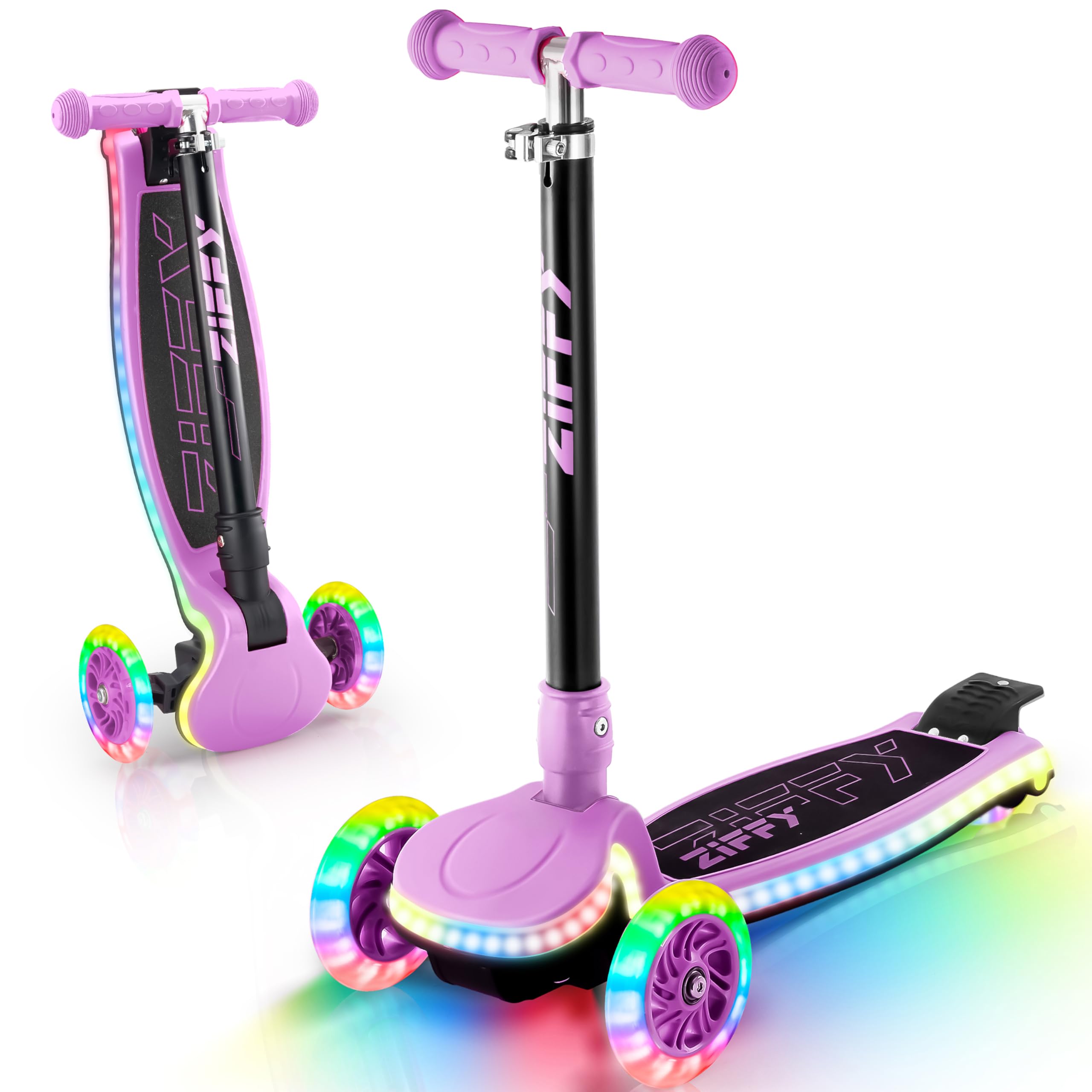
Twenty different LED patterns on the deck and wheels — more light modes than any other scooter here.
Ziffy’s light scooter is built for the child who wants to stand out. The deck features extended side LED strips with 20 dynamic light modes, so every push produces a different pattern. That is not just show — it makes the rider visible from a distance in low light. The aluminum frame is lightweight and folds in one step, with no assembly required. The handlebar adjusts to four heights (25.5, 29.1, 31.1, and 32.6 inches), so it spans ages 3 to 8. The rubberized aluminum handlebars give a secure grip, and the extra-wide deck offers stable footing. The weight limit is 110 lbs.
Owners call the quality and durability the top features. “The lights will make your gift #1,” one parent wrote. The steering gets mixed notes — some children take to the lean-to-steer quickly, while others need a few tries. A small number of owners reported that the LED lights stopped working after a while, so the reliability is something to keep an eye on. But for pure visual fun that also improves safety, this Ziffy is tough to beat.
The biggest draw: 20 LED modes on the deck and wheels create a light show that kids find irresistible and parents appreciate for visibility.
Best for kids who love flash and fun: The 20 LED modes are class-leading in this list.
Watch for: A handful of owners noted the lights can stop working over time — treat the electronics gently.
7. New-Bounce GoScoot MAX 3 Wheel Scooter
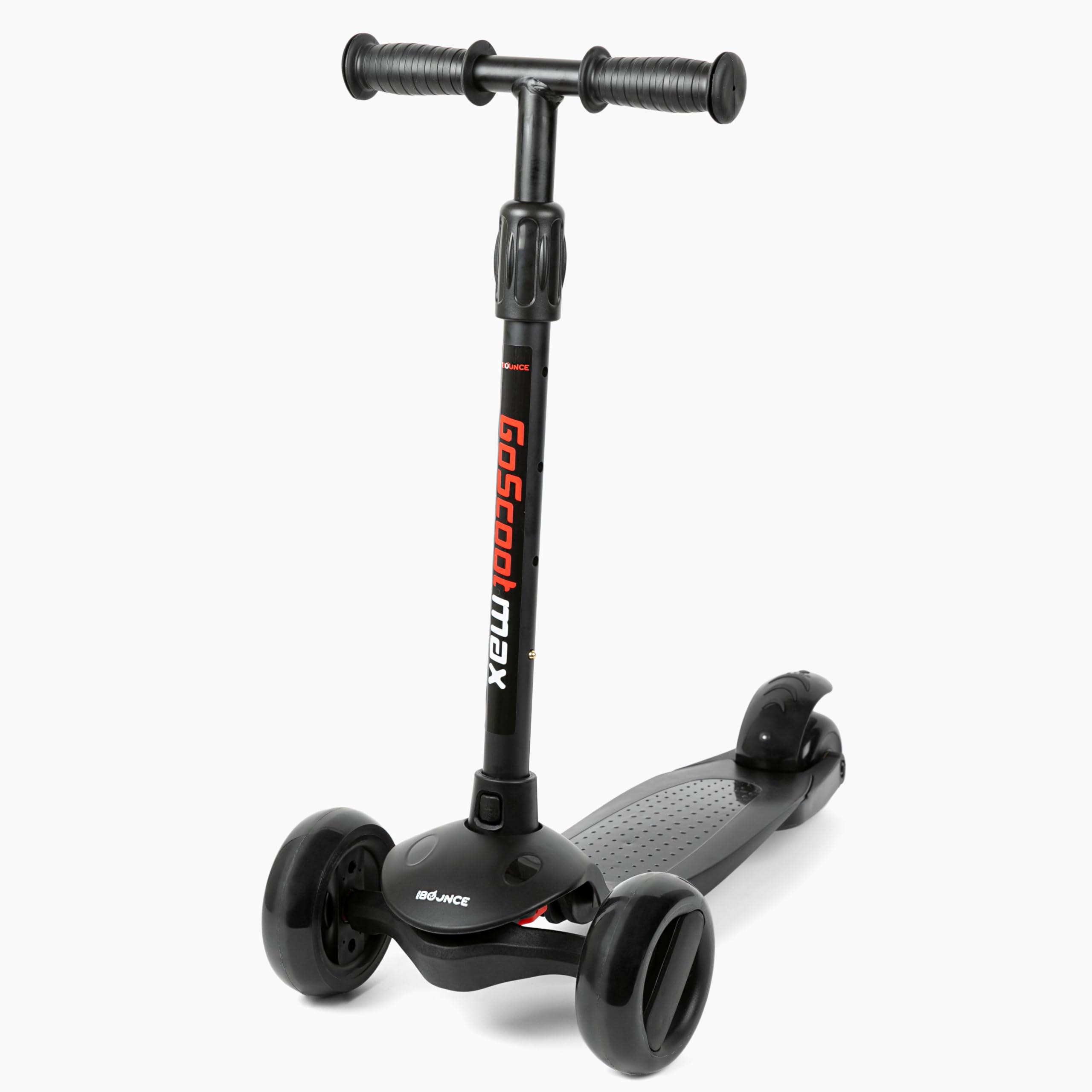
A three-wheel scooter that lets you lock the handlebar for younger riders — no turning until they are ready.
The GoScoot MAX solves a real beginner problem: when a toddler first stands on a scooter, they often twist the handlebars wildly and tip over. New-Bounce added a locking feature for the handlebar, so you can keep it straight while your child learns to balance and push. Once they have the rhythm, you open up it and the lean-to-steer mechanism takes over. The three wheels have ABEC-7 bearings and extra-wide PU wheels for a smooth ride, and the low-profile deck makes it easy for small feet to step on and off. The handlebar adjusts from 23 inches to 30 inches, covering ages 3 to 10. The rear foot brake is large and reliable for quick stops.
The aluminum alloy frame and nylon composites keep it lightweight — one owner called it “lightweight and easy to fold and manipulate.” The company also impressed a buyer who had a cracked piece replaced instantly. The only feedback that comes up is that the maneuverability does not suit every child immediately; some find the lean-to-steer takes practice. But for a parent who wants to ease a nervous toddler into scooting without fear, the lockable handlebar is a genuinely thoughtful feature.
The differentiator: A lockable handlebar gives beginners total stability while they learn to push. Most scooters assume a child already knows how to steer.
Ideal for cautious toddlers: The handlebar lock removes the tipping risk while they build confidence.
Not for kids over 30 pounds who already scoot: They will outgrow the beginner feature and may prefer a lighter, faster two-wheeler.
8. Aosom Youth Scooter with Inflatable Tires

A youth scooter with inflatable tires and dual brakes that carries up to 220 pounds — including a parent.
Most kids scooters are built for small bodies. The Aosom is the outlier: its inflatable slip-resistant tires roll over cracks and bumps that would stop a urethane-wheeled scooter cold. The steel frame is stable, the aluminum alloy wheels are wear-resistant, and the dual braking system (front and rear handbrakes) gives real stopping power — like a bicycle brake, not a foot pedal. The handlebar adjusts from 35.5 to 37.75 inches, so it fits kids 5 and up, plus teens and even adults. The kickstand keeps the scooter upright when parked, and a carry strap is included. The overall dimensions are 54.75″L x 22.75″W x 37.75″H, which is by far the largest scooter here.
Owners love the size and ride quality. One parent said their son “rides around feeling like a boss on this thing” and called it the best buy ever. Another noted a 47-year-old at 170 lbs enjoyed riding it. The assembly is the pain point — 52 owners mention it, with mixed feedback. The instructions can be unclear, and the fork orientation and brake cables need attention. If you are handy with tools, it is a 10-minute build. If not, budget 30 minutes. But for a big kid or teen who wants a real ride, this is the pick.
Why the inflatable tires matter: They absorb sidewalk cracks and gravel, giving a smooth ride that urethane wheels cannot match.
Best for kids 8 and up: The 220-pound limit, dual brakes, and large tires make this a long-term scooter that even a parent can ride.
Not for quick setup: Assembly requires patience and some mechanical sense — not a gift you unwrap and hand to a child.
9. Micro Kickboard Maxi LED 3-Wheel Scooter

A Swiss-engineered three-wheeler that rolls farther, quieter, and more stable than mass-market alternatives.
The Micro Kickboard Maxi LED is the premium option, and it earns the price tag with real engineering. The anodized aluminum T-bar and durable polyurethane deck are built to ASTM safety standards, and the scooter comes with a 2-year manufacturer’s warranty. The three-wheel lean-to-steer design provides enhanced stability while letting older kids carve and curve naturally — the bearings roll so smoothly that the scooter coasts noticeably farther than cheaper models. The motion-activated LED wheels require no batteries and stay bright on every push. The adjustable T-bar grows with your child (ages 5 to 12), and the slip-resistant grip footplate keeps feet planted. The weight limit is 110 lbs.
The ride quality and lighting get the most praise — owners say the LEDs are bright enough to serve as a safety feature at night. “Rolls farther, more easily, quietly, and stable than other brands,” one reviewer noted. The durability gets consistently high marks too, with the scooter surviving years of active play. The reliability did draw some negative feedback — a few owners said the LED function on one wheel stopped working — and the handle adjustability only offers fully extended or fully down settings, not a middle ground. But for a parent who wants to buy one scooter that will last through elementary school, the Maxi LED is the final word.
The long-run value: The 2-year warranty, Swiss design, and replaceable parts make this the scooter you buy once and hand down. Owners confirm it holds up for years.
Invest in this if you want one scooter for the long haul: The build quality and customer support justify the premium — and kids love the lights.
pass on it if you are on a tight budget: The upfront cost is high, and the limited handlebar adjustment (fully up or fully down) may not suit every child perfectly.
Understanding the Specs
Wheel Material and Bearings
The wheels material determines how much vibration your child feels on pavement. Urethane PU wheels are the standard — they roll quietly and last a long time on sidewalks. Inflatable rubber tires (like the Aosom) absorb bumps better but need pumping and are heavier. The bearings inside the wheels are rated by an ABEC scale; ABEC-7 bearings spin faster and smoother than cheaper ABEC-3 or ABEC-5, which means a longer glide with less effort.
Lean-to-Steer vs. Traditional Steering
A lean-to-steer scooter makes the rider shift their body weight left or right to turn. That helps young children develop balance and coordination naturally because they never have to twist handlebars. Traditional steering (a standard rotating fork) is what you see on most two-wheel scooters — it responds faster but expects a child who already knows how to counterbalance a turn.
FAQ
What age is a kick scooter recommended for?
How do I know what handlebar height my child needs?
Are LED light-up wheels worth the extra cost?
Which is safer, a two-wheel or three-wheel scooter?
How much weight can a typical kids kick scooter hold?
Can a kick scooter handle bumps and cracks in the sidewalk?
How long do the LED lights last on a kids scooter?
What maintenance does a kids kick scooter need?
Is a foldable scooter less sturdy than a non-folding one?
What is the difference between a kick scooter and a pro scooter for kids?
Final Thoughts: The Verdict
For most people, the ultimate kick scooter for kids is the Razor A Kick Scooter because it has the highest overall rating, thousands of real owners, and a lightweight aluminum frame that folds instantly. If you need a three-wheel scooter for a toddler, the Lifemaster with foldable seat gives you sit-and-stand flexibility. And for the family that wants to buy once and be done, the Swiss-engineered Micro Kickboard Maxi LED offers the best long-term build quality and customer support.
How We Picked
We do not accept paid placement. Every pick is matched to a real buyer and a real use-case; we do not hands-on test units.
Sources & Methodology
Specifications: manufacturer listings and product documentation. Review insights: verified customer reviews, as of July 2026. Pricing: not shown on this page (it changes often); check the current price via the retailer link.
As an Amazon Associate, Trending Car earns from qualifying purchases. This does not affect which products we feature.