
Our readers keep the lights on and my garage snacks stocked. As an Amazon Associate, I earn from qualifying purchases.
Specs are compiled from manufacturer listings and verified buyer reviews and can change over time — please confirm the key details on the product page before buying.
If road noise, rattling doors, or echo-heavy rooms are driving you crazy, the right sound-deadening material can turn your car or room into a calm space. Know if you need to stop vibration (heavy butyl mats) or absorb echo (thick foam and fiber panels). Here are nine options, each explained by what it physically does, so you can match one to your project without overpaying.
I’m Min Islam — the founder and writer behind Trending Car. This guide is built by comparing the manufacturers’ published specifications and the patterns across verified customer reviews, so you get each pick’s real strengths and trade-offs instead of marketing spin.
Whether you’re silencing a car door, a home studio, or a noisy office wall, this roundup of the insulation for sound deadening breaks down each material’s thickness, coverage, and real-world performance so you can buy with confidence.
Our Picks at a Glance


How To Choose The Best Insulation for Sound Deadening
Sound deadening isn’t one material — it’s a family of them. Your pick hinges on whether you’re fighting vibrations, echo, or outside noise.
Damping vs. Absorption: Two Different Jobs
Butyl mats are heavy, rubber-like sheets that stick directly to metal panels. They stop the panel itself from vibrating, which kills rattles and road noise. Foam and fiber panels do the opposite — they soak up sound waves in the air, which kills echo and reverb. Most thorough jobs use both.
Thickness Matters More Than You Think
For car doors, a 120 mil (0.12 inches) butyl mat is a solid baseline, while a 200 mil (0.2 inches) composite adds heat blocking. For walls, a 2-inch fiber panel absorbs far more than a 1-inch foam sheet. Thicker material means more mass to stop sound — check the spec before you buy.
Quick Comparison
| Model | Best For | Thickness | Coverage | Install | Amazon |
|---|---|---|---|---|---|
| Siless Max 120 mil★ Best Overall | Car doors & floors | 0.12 in | 30 sq ft | Self-adhesive | Amazon |
| BXI Closed Cell FoamVersatile Value | Windows & vents | 1 in | 10.4 sq ft | Self-adhesive | Amazon |
| Siless Hybrid 3in1Top Performer | Full vehicle coverage | 0.2 in | 25 sq ft | Peel-and-place | Amazon |
| ATS Acoustics Panel | Home studios & theaters | 2 in | 8 sq ft | Hardware included | Amazon |
| UMIACOUSTICS Panels | Game rooms & offices | 0.4 in | ~1100 sq in | Adhesive or nails | Amazon |
| TONOR Wood Slatwall | Modern living spaces | 0.39 in | 31 sq ft | Screws or adhesive | Amazon |
| TONOR Dual-Layer | Recording studios | 0.72 in | ~1104 sq in | Peel-and-stick | Amazon |
| Soon Global Art Panels | Feature walls & ceilings | — | 6 panels | Adhesive squares | Amazon |
| NeatiEase Wood Slat | Large accent walls | — | 33 sq ft | Screws or superglue | Amazon |
In‑Depth Reviews
1. Siless Max 120 mil (3mm) 30 sqft Car Sound Deadening Mat
Our pick — over 4.5★ from 750+ verified ratings; the strongest balance of quality and price.
The 30-square-foot butyl mat that turns tinny car doors into solid slabs of quiet.
At 120 mil (0.12 inches) thick, this mat is the crowd favorite for a reason: it’s built to damp vibration where it lives — on the metal itself. Owners describe the result as a Ford Ranger’s tinny door noise simply disappearing, and a Civic feeling closer to a Lexus after treatment. The aluminum-facing surface doubles as a heat shield, so your door panels also stay cooler.
Installation is genuinely simple. The “peel and place” approach means you trim with scissors, peel the backing, and hand-roll it down — no spray adhesive or paint needed. Buyers report the material “cuts very easily to any shape needed or wanted with scissors, sticks well, and molds in to place well.” A roller isn’t included, but it’s worth having one to seat the mat firmly.
At 0.12 inches, it’s the baseline thickness for serious car sound deadening — and you can feel the mass difference. The main trade-off: it dampens vibration, not echo, so for full coverage you’ll pair it with a foam or fiber layer for interiors. For doors, floors, and back walls, this is the one people reach for first.
What Owners Love
- Effectively quiets doors and reduces road noise, per multiple builds.
- Aluminum layer adds heat dissipation — a bonus on top of deadening.
- Easy to cut and mold into place with just scissors.
The Trade-Offs
- No roller included — you’ll want one for proper adhesion.
- Best installed when temperatures are warmer for easier flexibility.
Grab it for: anyone damping a car door, floor, or back wall who wants proven vibration control without a premium price tag.
Think twice if: you’re treating a room for echo — you need fiber panels, not a butyl mat.
2. BXI Soundproofing Closed Cell Foam — 8 Pack
A one-inch eggcrate foam that tames windows, vents, and even tool cases with aggressive stick.
This foam is a different tool entirely — it absorbs sound energy rather than stopping vibration. At 1 inch thick with a closed-cell structure, it’s built to cut echo and reverb, and it doubles as a thermal and vapor barrier that shrugs off moisture. The 8-pack covers 10.4 square feet, and each panel weighs just 0.21 pounds, so it’s easy to handle and cut.
You will see it most often on windows, where owners mention it “reduced traffic/train noise” significantly and “made it enough to use around 2 window units.” It also works on vents and doors. The self-adhesive backing is aggressive — some found the backing plastic tough to peel and noted it could tear foam at corners if rushed. Give it a moment and you’ll be fine.
The standout quality is versatility: because it’s flexible, waterproof, and lightweight, it works indoors or out. The catch is honesty about expectations — as the product admits, it doesn’t make a space 100% soundproof. It does, however, knock the sharp edge off most noise, which is what most rooms actually need.
Real-world check: buyers consistently praise how much quieter windows and vents become, plus the bonus of a near-blackout effect when panels are placed over glass.
Fit note: this is for echo and air-borne noise, not for rattling metal panels — that’s the butyl mat’s job.
3. Siless Hybrid 3in1 200 mil 25 sqft Car Sound Deadening Mat
The three-layer composite that kills vibration, heat, and low-frequency drone in one pass.
This is the heavyweight of the car setups — 200 mil (0.2 inches) thick with a three-layer build: butyl mastic, PE foam, and a mass-loaded butyl membrane. That stack tackles three problems at once: panel vibration, exhaust heat, and low-frequency road noise.
The noise-level results are what win people over most — owners note a dramatic cut in rain and road noise, and one pro installer described a Bronco build where panel resonance all but vanished. It cuts easily with scissors and conforms well, though in hot weather the adhesive gets extra tacky; chilling the material first makes the backing easier to remove.
Compared to the Siless Max at 0.12 inches, this is the thicker, more complete solution. The trade-off is that it’s stickier and heavier, making it slightly more demanding to handle. For a full vehicle treatment where you want one material to cover damping, heat, and sound, this composite is the top choice.
Owners Praise
- Reduces rain and road noise — the #1 aspect mentioned positively.
- Kills low-frequency exhaust and road drone thanks to the 3-layer build.
- Soft, flexible, and easy to cut with scissors.
Watch For
- Adhesive gets very tacky in hot weather — cool it first.
- Only 25 sq ft per box, so large vehicles need multiple packs.
Choose this when: you want one material that handles vibration, heat, and low-frequency drone without buying separate layers.
skip it if: you only need to quiet a door or two — the 30 sq ft Siless Max is the lighter, cheaper play.
4. ATS Acoustics Sound Absorbing Acoustic Panel 24″ x 48″ x 2″

A 2-inch fiber panel with a perfect NRC 1.0 rating — the gold standard for home studios.
This is the panel that acoustics people actually put in studios. The NRC (Noise Reduction Coefficient) rating is a clean 1.0 out of 1, meaning it absorbs essentially all sound that hits it rather than bouncing it back. Inside is a mineral wool core wrapped in 100% jute burlap, with a solid wood frame and full wood back.
At 24 x 48 x 2 inches, each panel is a substantial 8.3 pounds and covers 8 square feet. Owners use them as ceiling clouds and wall panels, and the feedback is consistent: they dramatically change the room tone and cut echo in half compared to foam. The included mounting template and hardware make installation straightforward, though the size and weight mean a helper is wise.
The one honest complaint is the fabric feel — some find the fuzzy burlap less refined up close — but from a listening position, customers note it looks “stunning.” If you’re setting up a home theater or recording space where real absorption matters more than decor, this panel is the professional-grade choice.
The verdict: this beats foam panels and tiles for true absorption — owners note a dramatic acoustic improvement in home theaters and studios.
Keep in mind: the 8.3-pound panels need proper mounting, and the jute fabric is a texture you’ll want to see first.
5. UMIACOUSTICS Acoustic Panels — 6 Pack, 47.2″ x 23.6″
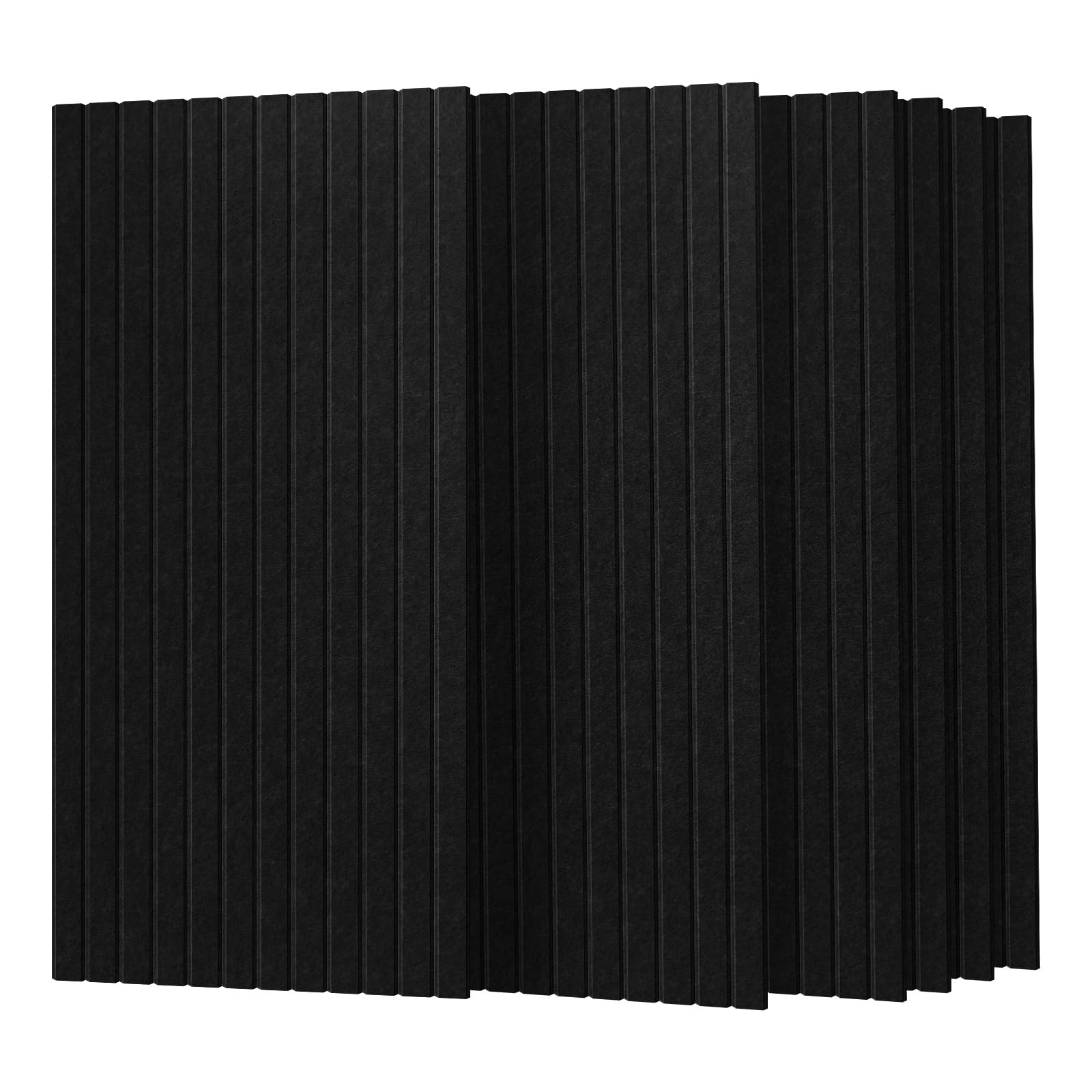
Slim 0.4-inch polyester sheets that make home offices look sharp while they swallow echo.
These panels fill a specific niche: they clean up a room’s acoustics without the visual weight of thick fiber slabs. The 100% polyester fiber material is 0.4 inches thick, and the 6-pack covers roughly 1,100 square inches — enough for a decent accent wall or a podcast corner. Appearance is the thing owners single out most, with many noting how these make a home office stand out.
The installation is flexible — construction glue, nails, or 3M double-sided tape all work. Reviewers point out success with 18-gauge brad nails and even velcro command strips on sheetrock, with panels holding strong for months. The acoustic result is what you’d expect from a thin panel: it reduces echo and “slightly muffles sound,” but it’s not soundproofing.
The trade-off is the material itself. The black felt can shed a bit of dust and, in rare cases, cause splinters when cut. But for a budget-friendly way to make a small room sound — and look — noticeably better, this is a solid pick. It’s the kind of product where owners say “would definitely recommend.”
What Impresses
- Visual appeal is the most-praised feature — makes offices and game rooms pop.
- Easy to install with glue, nails, or tape.
- Effectively removes echo from small rooms, per owners.
Know Before Buying
- 0.4-inch thickness limits how much sound it truly stops.
- Black felt can shed dust and needs careful cutting.
Best for: home offices, game rooms, and podcast setups where looks matter as much as echo control.
Not for: anyone expecting serious sound isolation between rooms — that needs the 2-inch ATS panels.
6. TONOR Wood Slatwall Panels — 4 Pack, Walnut
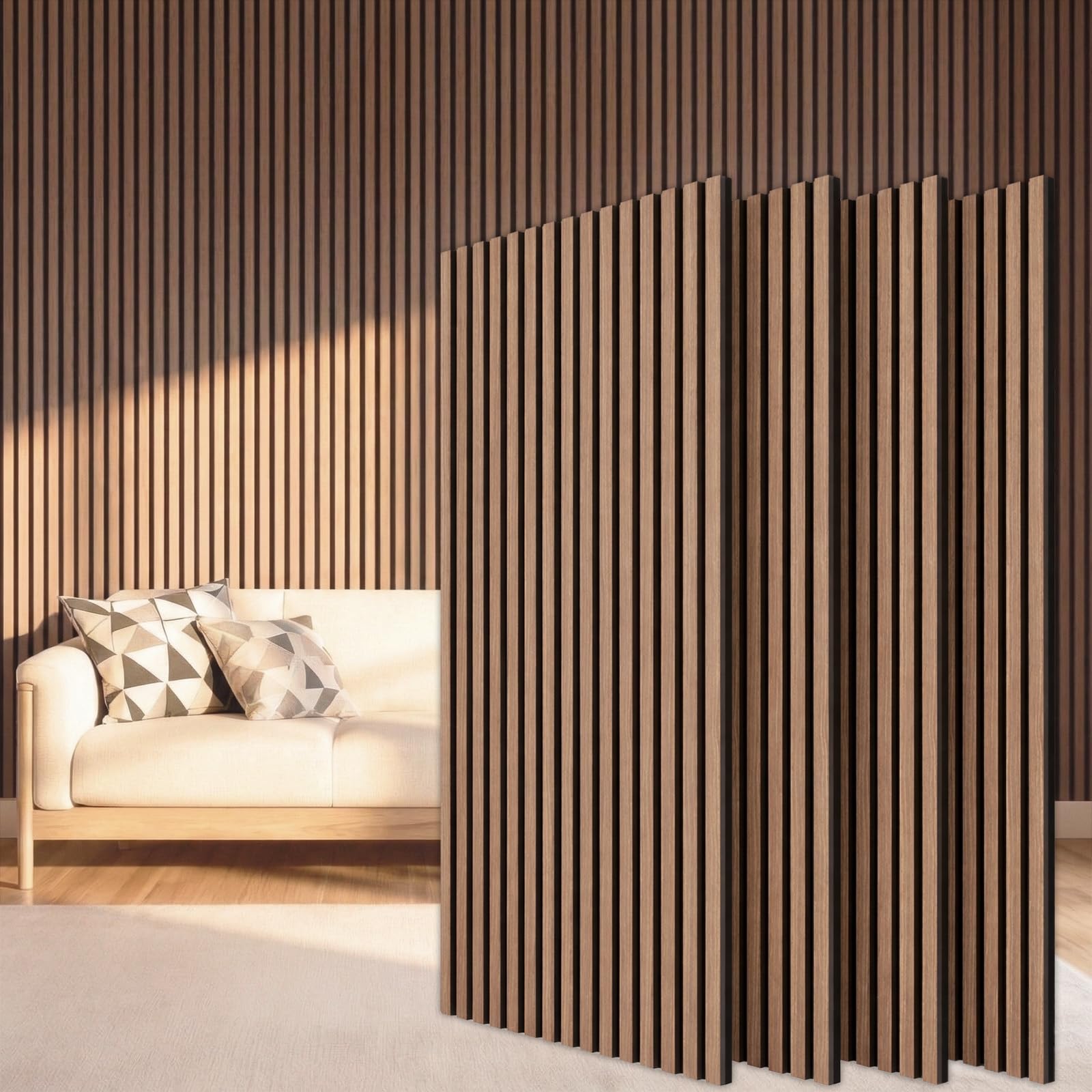
Walnut slat panels that transform a room’s look first and tune its acoustics second.
These panels are decor that happens to help with sound. Each 47.2 x 23.6-inch panel combines high-density polyester fiber with a medium-density fiberboard core and solid wood veneer. The 4-pack covers 31 square feet — enough for a proper feature wall. Appearance is what owners rave about most, with the walnut finish described as adding a “modern, elegant, high-end look” to entertainment areas and even nail studios.
Installation is flexible: adhesive or screws, with all necessary hardware included. The kit ships with screws, and owners note the panels pair beautifully with a TV stand for a custom-built look at a fraction of the cost. On the acoustic side, they “reduce echo and improve acoustics,” though owners are quick to note it’s not heavy-duty soundproofing.
The honest caveats: some batches had a strong initial smell that required airing out, and the color can read slightly different in person. The felt backing can also need a careful trim between slats for a perfect gap. If you want a space to look dramatically better while gently taming echo, this is the pick.
Owner consensus: an “easy install, durable, premium feel” that transforms the whole vibe of a room.
The catch: visual transformation is the headline — acoustic results are secondary and modest, so manage expectations.
7. TONOR Dual-Layer Thickened Acoustic Wall Panels — 4 Pack

A 0.72-inch peel-and-stick panel that noticeably quiets doors and walls without a single screw.
This is the thickest self-adhesive panel here — 0.72 inches of dual-layer polyester fiber with the classic ribbed look. The noise reduction is the most-discussed aspect, with owners reporting a 30-50% reduction in vibration noise and significant damping of washer, dryer, and furnace sounds. In a guitar studio, it’s been described as genuinely effective.
The installation is the easiest on this list: peel the backing, stick it to the wall, done. No tape, no hardware. Owners have placed these on interior doors to keep music from disturbing neighbors and on large walls to cut stereo and movie reverb. The panels lie flat and can be repositioned with a single tack if needed.
The deep-material trade-off is that while it reduces noise, it’s not professional-grade isolation — one owner noted full 95% coverage gets you the best results. It’s also 0.72 inches, so it’s bulkier than the slim UMIACOUSTICS panels but more effective. For a fast, no-fuss way to make a room noticeably quieter, this wins.
Why People Choose It
- Noise level reduction is the #1 praised aspect — real, noticeable quiet.
- True peel-and-stick install, cuttable with a knife.
- Tough, durable material that stays in place.
Consider First
- Best results come from near-complete wall coverage.
- Not a replacement for professional studio isolation.
Reach for this if: you want maximum noise reduction with the least installation effort — peel, stick, done.
Look elsewhere if: you need a decorative wood finish rather than a felt-textured panel.
8. Soon Global Acoustical Wall Panels — 6-Piece Timber Spiral
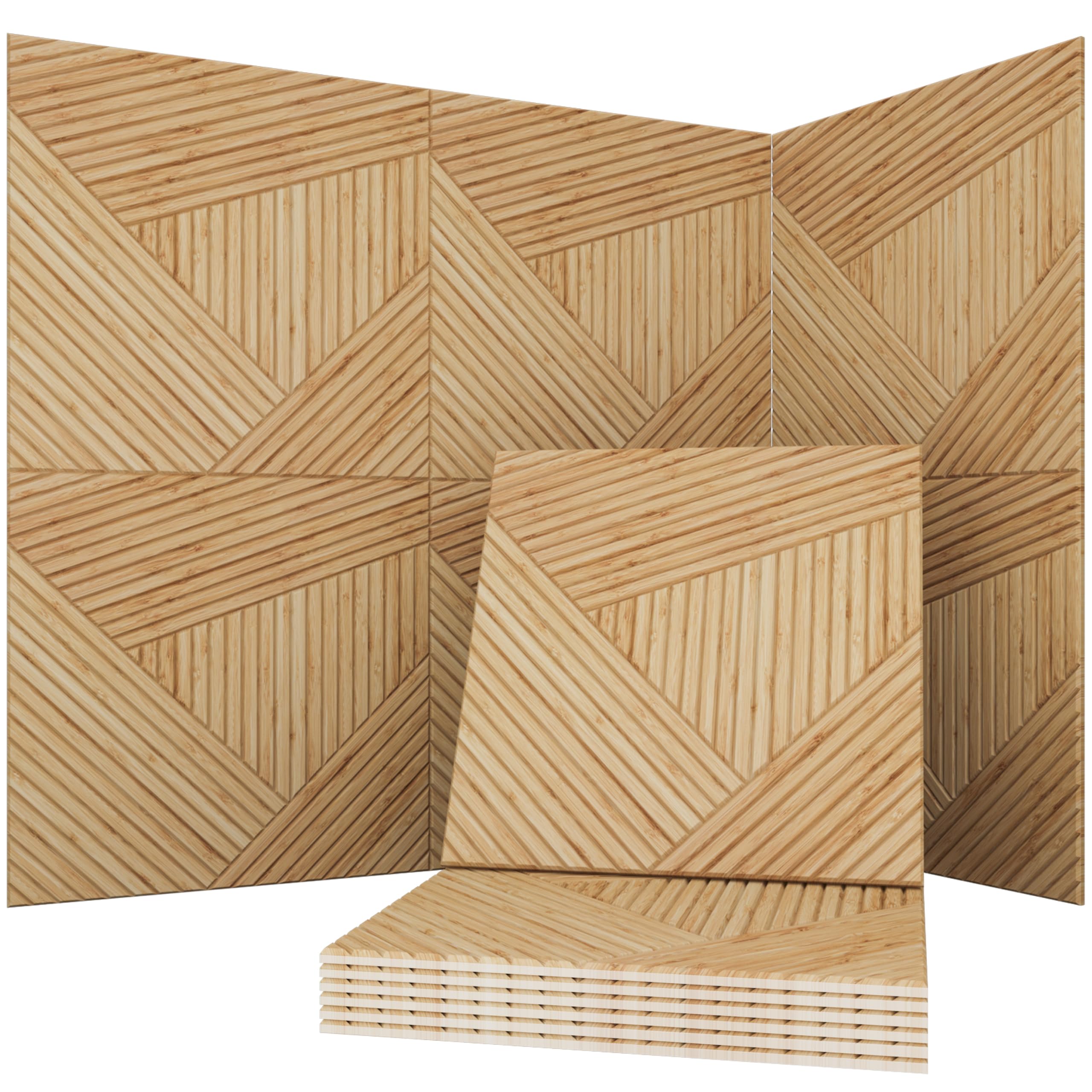
A timber-spiral art panel that hangs like a picture but absorbs echo like a pro panel.
These 23.62 x 23.62-inch panels are designed to be seen. The continuous grooves and realistic wood-texture print flow across panels to create a unified, art-like feature wall. Appearance is the runaway most-praised aspect — owners describe the modern pattern as looking “incredible” and note the panels “look like art” while blocking sounds.
Installation is tool-free: each 6-pack includes 30 transparent double-sided adhesive squares, and the panels can be arranged in any configuration. Shoppers say the adhesive “is still holding on” after a week, and one carpenter-skeptic household was converted after seeing the finished accent wall. The high-density polyester fiber does genuine work, with one owner reporting it removed echoes in a high-ceiling bedroom.
The trade-offs are minor but real. The colors may appear less vivid than the listing photos, and cutting the material requires a very strong utility knife — you must go slow and use the tip to poke through. For budget-friendly acoustic art that does double duty, this is a winner.
Why it’s different: most panels are utilitarian; these read as intentional decor while still cutting echo.
The fine print: expect toned-down colors versus photos, and plan for patient cutting if you need custom shapes.
9. NeatiEase Wood Slat Wall Panels — 4-Piece, 96″ x 12.6″

Floor-to-ceiling slats that make a room look professionally renovated while absorbing sound.
These 96 x 12.6-inch panels are the longest here, designed for full walls. The 4-piece set covers about 33 square feet, and the materials — MDF and high-density polyester fiber — are sourced from certified sustainable sources with low TVOC levels. Quality is the most-praised aspect, with owners describing a “modern luxury look” that transformed apartments and saved them from expensive renovations.
Installation can be done with screws or superglue, mounted horizontally or vertically. Owners have used them for mirror frames, bedroom accent walls, and full room treatments, consistently praising the sturdy build and realistic wood veneer. One reviewer used drywall screws to handle uneven walls, noting the panels are easy to work with.
The honest caveats: cutting produces dust and you should avoid the staple rows that can ruin blades, and some batches arrive with a smell that airs out. The black color is a specific aesthetic — make sure it fits your space. For a premium-looking, genuinely acoustic wall at a fraction of custom millwork, this is the final answer.
Owners Highlight
- Quality is the top-praised aspect — “very high end” look.
- Easy to cut and install with screws or superglue.
- Helps with sound while transforming the whole room’s feel.
What To Expect
- Cutting is dusty — do it outside.
- Watch for staple rows when trimming; they can ruin blades.
Choose this for: a full accent wall where you want premium visual transformation plus genuine acoustic benefit.
Pass on it if: you’re on a tight budget or need a smaller, more decorative panel — the TONOR Walnut set is the lighter play.
Understanding the Specs
Thickness: Mils, Inches, and What They Mean
Car sound deadening is measured in mils (1 mil = 0.001 inches). A 120 mil (0.12-inch) mat is the standard for doors and floors, while a 200 mil (0.2-inch) composite adds heat blocking. For wall panels, thickness jumps to inches — a 2-inch fiber panel absorbs far more than a 0.4-inch sheet. The rule: more mass means more sound stopped.
NRC: How Much Sound Gets Absorbed
NRC (Noise Reduction Coefficient) is a rating from 0 to 1. A panel rated NRC 1.0 absorbs nearly all sound that hits it, while thin foam might absorb less. The ATS Acoustics panel hits a perfect 1.0 — meaning it’s a true absorber, not just a dampener. Butyl mats don’t carry an NRC rating because their job is stopping vibration, not absorbing sound waves.
FAQ
What is the difference between sound deadening and sound absorbing?
Will butyl car mats work on my home walls?
How much sound deadening do I need for a car door?
Does self-adhesive foam really stick to walls permanently?
What does the NRC 1.0 rating on the ATS panel actually mean?
Are wood slat panels actually good for soundproofing?
Is 0.4-inch thick foam worth buying?
Will eggcrate foam block sound from my neighbor?
Final Thoughts: The Verdict
For most people, the insulation for sound deadening winner is the Siless Max 120 mil — a proven, easy-to-install butyl mat that owners trust to quiet car doors and floors, with a 4.8-star average across 700+ verified reviews. If you want maximum car coverage in one pass, the Siless Hybrid 3in1 adds 3-layer heat and sound control. And for a home studio or theater where absorption matters most, the ATS Acoustics Panel with its NRC 1.0 rating is the one to reach for. Match the material to the job, and you’ll get the quiet you’re after.
How We Picked
We do not accept paid placement. Every pick is matched to a real buyer and a real use-case; we do not hands-on test units.
Sources & Methodology
Specifications: manufacturer listings and product documentation. Review insights: verified customer reviews, as of August 2026. Pricing: not shown on this page (it changes often); check the current price via the retailer link.
As an Amazon Associate, Trending Car earns from qualifying purchases. This does not affect which products we feature.