
Our readers keep the lights on and my garage snacks stocked. As an Amazon Associate, I earn from qualifying purchases.
Specs are compiled from manufacturer listings and verified buyer reviews and can change over time — please confirm the key details on the product page before buying.
Your RV walls are thin metal, and they bake in the sun all day. The right insulation for rv walls stops that heat from turning your camper into an oven and keeps you warm when the temperature drops.
I’m Min Islam — the founder and writer behind Trending Car. This guide is built by comparing the manufacturers’ published specifications and the patterns across verified customer reviews, so you get each pick’s real strengths and trade-offs instead of marketing spin.
Your choice depends on thickness, R-value (a measure of how well the material resists heat flow), and how easily the material handles curved surfaces and tight cavities.
Our Picks at a Glance

How To Choose The Best Insulation for RV Walls
RV walls are thin, curved, and full of metal studs that vibrate constantly. Your insulation needs to be flexible, moisture-proof, and easy to cut without making a dusty mess. These three factors matter most.
Foam Core vs. Fiber vs. Bubble Wrap
Fiberglass batts (thick blankets of glass fibers) are cheap but they trap moisture and irritate your skin. Bubble wrap reflects some heat but offers almost no real R-value. Closed-cell polyethylene foam core (a dense, durable foam), sandwiched between reflective aluminum foil, is the best fit for RVs: you can cut it clean, it blocks radiant heat, and it seals out humidity.
Thickness and R-Value
Thicker material usually gives you a higher R-value, but your RV wall cavities are shallow. Products around 5 mm to 10 mm thick (between ¼ and ⅜ of an inch) fit inside standard stud bays. Some high-performance materials like polyester batting reach R-5.45 per inch — useful for deeper wall sections.
Vapor and Moisture Barrier
An RV goes through huge temperature swings. Without a vapor barrier (a material that stops moisture from moving through the wall), condensation can form inside the insulation, soak the wood framing, and cause rot or mildew. A foil-faced foam core acts as both a thermal reflector and a vapor seal in one layer.
Quick Comparison
| Model | Best For | Thickness | R-Value | Key Feature | Amazon |
|---|---|---|---|---|---|
| SmartSHIELD 5mm (24″ x 25′)★ Best Overall | High R-value and extra coverage | 5 mm | Up to 15.67 (one layer) | Reflects 97% of radiant energy | Amazon |
| SEALTECH 10mm Ultra Heavy DutyAlso Great | Max heat blocking in tight spots | 10 mm | 95% radiant reflection | Dropped temp from 158°F to 92°F | Amazon |
| SEALTECH 5mm (36″ x 40′) | Year-round RV climate control | 5 mm | 95% radiant reflection | Lightweight yet durable | Amazon |
| 3M Thinsulate SM600L | Deep cavity insulation + sound control | 1.65 inches (44 mm) | 5.45 per inch | Moisture-resistant polyester | Amazon |
| VEVOR 3.2 mm (48″ x 100′) | Large panels (roofs, full walls) | 3.2 mm | 95% heat reflection | Tear and puncture resistant | Amazon |
| Miuwauer 3mm (16″ x 50′) | Budget window and camper patchwork | 3 mm | 95% radiant reflection | Immediate radiant heat reduction | Amazon |
In‑Depth Reviews
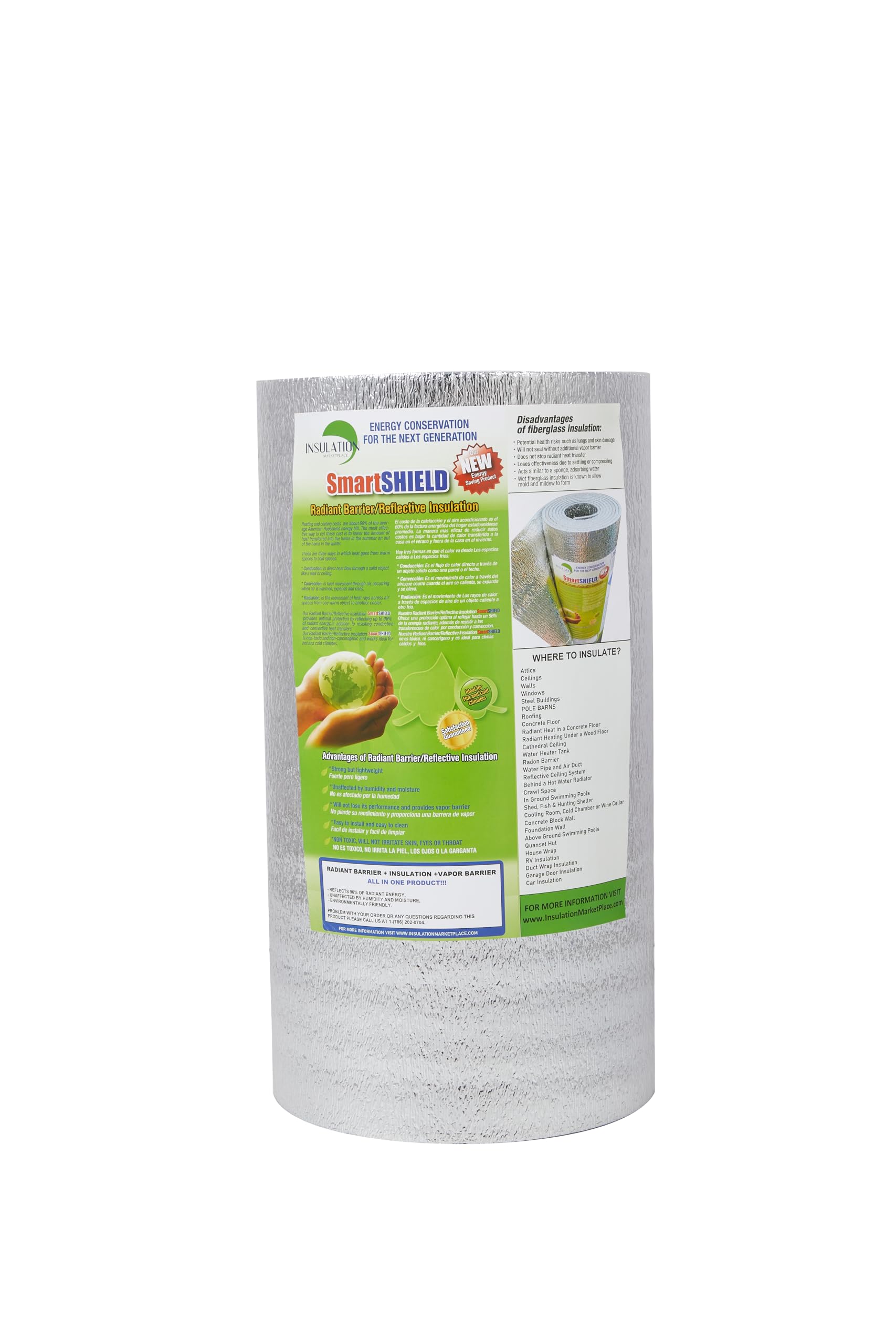
1. SmartSHIELD -5mm Foam Core Reflective Insulation Roll (24″ x 25′)
Our pick — over 4.5★ from 800+ verified ratings; the strongest balance of quality and price.
Reflects 97% of radiant energy and offers the highest R-value in this roundup at a single layer.
SmartSHIELD uses 5 mm closed-cell polyethylene foam (a dense, durable foam, not the thin bubble-wrap kind) sandwiched between pure aluminum on both sides. The maker claims it reflects 97% of radiant energy — an edge over the 95% figure most competitors list. Its R-value reaches up to 15.67 with one layer (21.10 with two layers), which is the highest single-layer R-value in a foam core barrier this thin.
Owners mention real energy savings: one owner calculated they were saving about 9.75 gallons of oil per month after installing this on their ductwork, saying it paid for itself in roughly three months. The 24-inch width is manageable for one person, and the foam cuts neatly with scissors. It is also Class A / Class 1 fire rated and non-toxic, so you can handle it without gloves or a respirator.
The trade-off: this roll is 25 feet long, which is shorter than the 40- or 50-foot rolls from SEALTECH. For a large Class A motorhome you might need multiple rolls.
What stands out
- Reflects 97% of radiant energy — best in this group
- R-value up to 15.67 in a single 5 mm layer
- Fire rated Class A / Class 1 and non-toxic
What holds it back
- 25-foot roll length means more purchases for large van conversions
- 24-inch width requires more seams on full wall sections
Grab this for: the best R-value per layer — a strong choice if you want to boost thermal resistance in thin RV walls.
skip it if: you are covering a large conversion and want fewer seams; the 36-inch SEALTECH rolls are faster to install.
2. SEALTECH Ultra Heavy Duty 10mm Reflective Insulation Roll
The thickest foam-core pick that turns a scorching RV shell into a livable space.
This SEALTECH roll is 10 mm thick. That stops heat from blasting through your thin RV walls. The material reflects 95% of radiant energy (infrared heat), so your air conditioner works less on a July afternoon.
Buyers report dramatic results: one owner who double-insulated their ceiling said the temperature dropped from 158°F down to 92°F. The 10 mm thickness fits flush into stationary window sills and cuts easily with a utility knife. Unlike thinner rolls, this one feels substantial and holds its shape inside wall cavities without sagging.
The main trade-off is that the 8-inch-wide format is designed more for panel-by-panel application (RV windows, garage doors) rather than covering wide open wall expanses. You will need adhesive for opening windows since it is a rigid foam core that does not bend into moving frames on its own.
Why it leads
- Thickest foam core at 10 mm — blocks more radiant heat in one layer
- Commercial-grade construction that is non-toxic and fire retardant
- Proven temperature drop (158°F down to 92°F) in real RV installations
Where it is limited
- Narrow 8-inch width means more cuts for large wall sections
- Stiff foam does not bend around opening windows without adhesive
- Pricier per square foot than thinner alternatives
Reach for this when: your main enemy is intense sun and you want the thickest single-layer defense that fits inside standard RV wall cavities.
Look elsewhere if: you need to cover wide open walls in one strip — the narrower width makes that tedious.
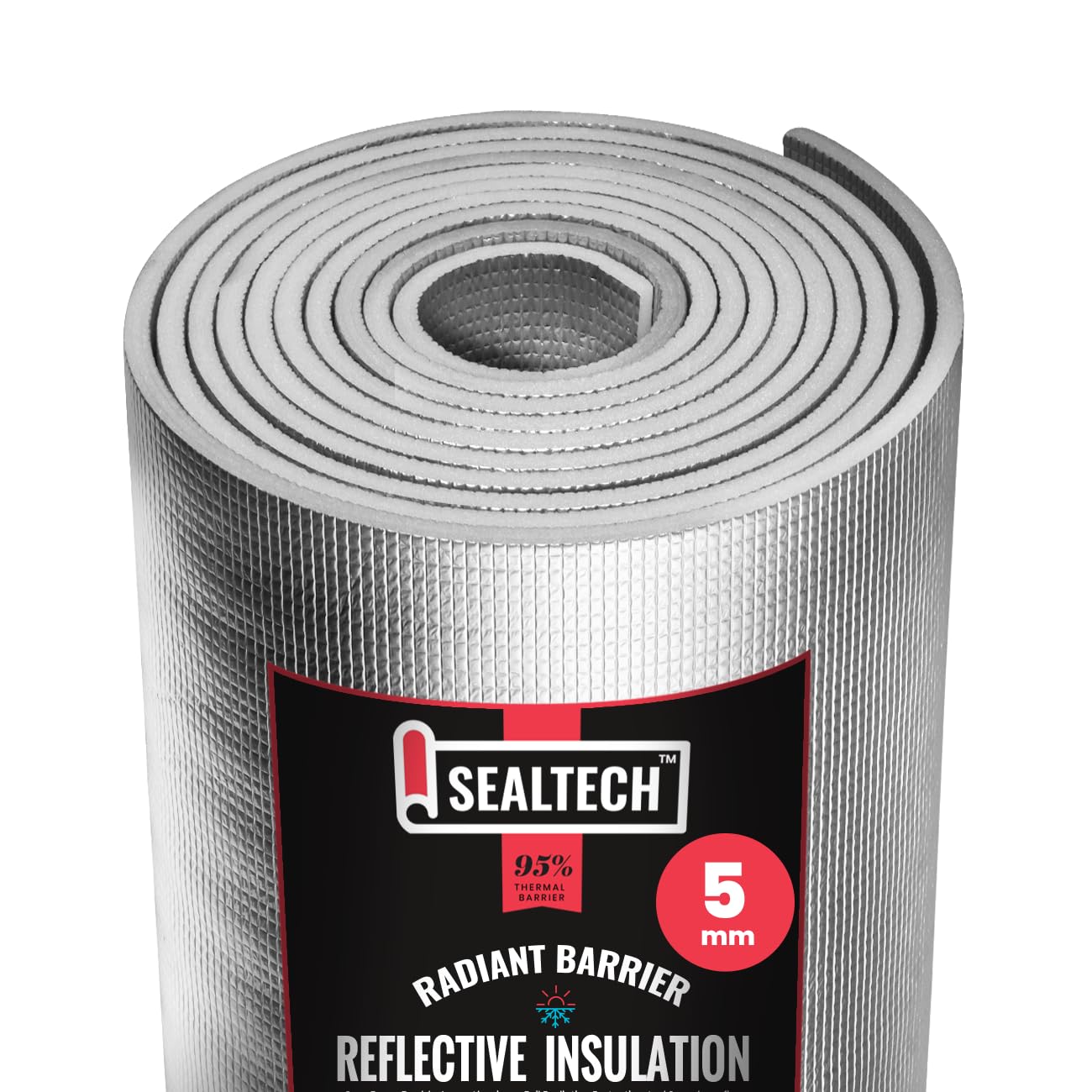
3. SEALTECH 5mm Reflective Insulation Roll (36″ x 40′)
The same commercial-grade quality as the 10mm pick, but with wider coverage that suits full wall panels.
At 5 mm, this roll balances the heat blocking of the 10 mm with the flexibility you need for curved RV walls and roof panels. The 36-inch width means you cover large sections with fewer seams — ideal for the broad sidewalls of a travel trailer or class B van. It reflects 95% of radiant heat just like the thicker version, so your AC or furnace does not fight solar gain all day.
One reviewer who installed it in their travel trailer said it “worked great this entire summer” and was “extremely helpful keeping the heat out.” The material is lightweight at 5.5 pounds for the full roll, and it cuts cleanly with scissors. Buyers also highlight the sound-dampening benefit, which quiets road noise on the highway.
The strong suit
- Wide 36-inch roll covers large wall sections with fewer cuts
- Same 95% radiant reflection as the thicker SEALTECH option
- Lightweight enough (5.5 lbs per roll) for one-person installation
The catch
- 5 mm is less heat-resistant than the 10 mm variant in extreme desert sun
- Not as pliable as thinner 3 mm for wrapping around complex curves
Ideal for: full-size wall panels and roof sections where you want commercial-grade quality without the labor of many small strips.
Pass on it: if your main concern is blocking the most intense direct sun — step up to the 10 mm.
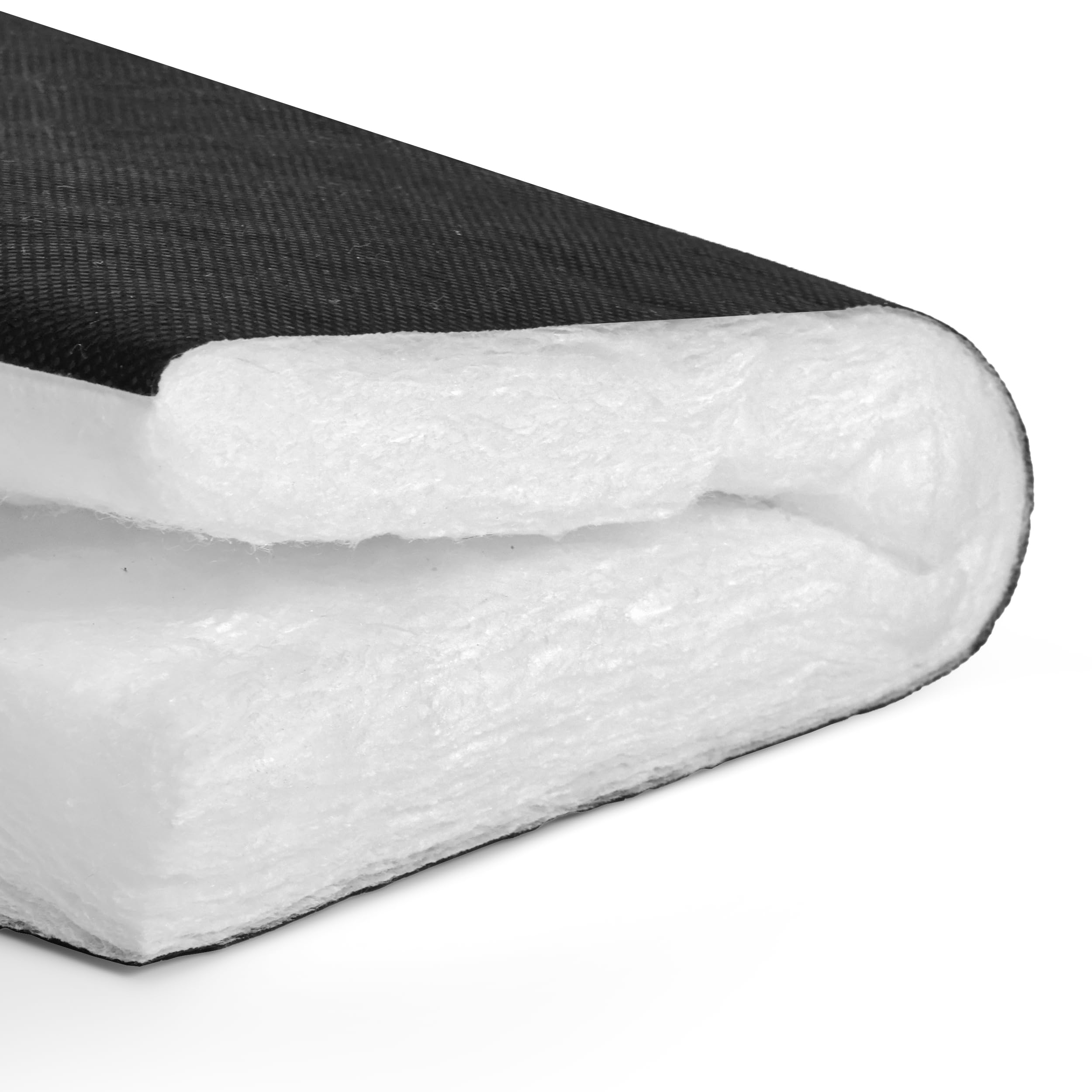
4. 3M Thinsulate SM600L Automotive Camper Van Insulation
The high-loft polyester alternative that handles moisture better than any foam or fiberglass.
Unlike every other product in this list, the 3M Thinsulate SM600L is not a reflective radiant barrier. It is a thick, 1.65-inch polyester batting designed specifically for vehicle cavities. With an R-value of 5.45 per inch, it fills deep wall studs that a thin foam sheet would leave half-empty. The material is hydrophobic (it does not absorb water), so it resists the condensation that plagues metal RV walls without needing a separate vapor barrier.
One reviewer who camped in 10°F mountains in Alaska said the insulation helped keep their camper van warm enough that they could not sleep under covers — and they noted the road noise reduction was a bonus. Unlike fiberglass, the Thinsulate fibers do not itch, and you do not need a respirator. It glues in place with a spray adhesive like 3M 90.
The downside: at around 44 mm (1.65 inches) thick, it takes up more cavity space than a 5 or 10 mm foam sheet. That makes it a poor choice for thin wall pockets or window inserts.
The advantage
- R-5.45 per inch — strong thermal resistance in deep cavities
- Hydrophobic fibers resist moisture and odors naturally
- No itch, no respirator needed, easy to cut and shape
The limitation
- 1.65 inches is too thick for shallow stud bays or window panels
- Requires spray adhesive (not peel-and-stick) for installation
Best suited for: van conversions with standard-depth wall and roof cavities where moisture resistance and sound dampening matter as much as thermal performance.
Not for: thin RV walls or anyone wanting a radiant barrier — this is a different tool entirely.
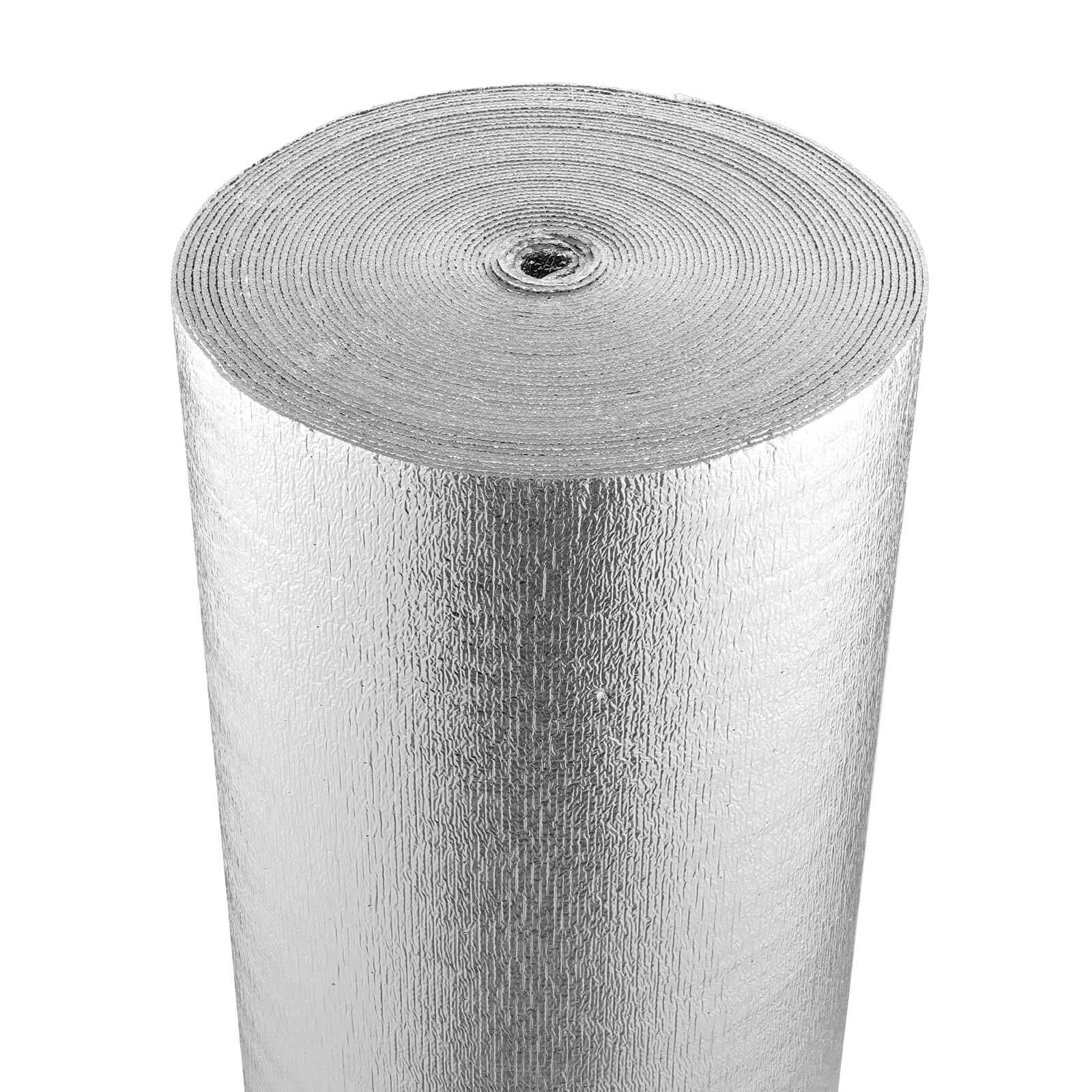
5. VEVOR 3.2 mm Double Reflective Insulation Roll (48″ x 100′)
A massive 100-foot roll built for covering entire RV roofs in a single afternoon.
At 48 inches wide and 100 feet long, this VEVOR roll is the largest in this guide. You can cover a full roof or a long wall section with far fewer cuts than any 16- or 24-inch roll. The 3.2 mm thickness is on the thinner side, which makes it flexible enough to conform to curved RV roof panels and tight corners. The double-sided aluminum foil reflects over 95% of solar heat, and the EPE (expanded polyethylene) foam core adds a vapor barrier that keeps moisture from building up inside the wall.
Buyers have used it successfully on garage doors and metal shops, with one noting it “worked great on our metal shop” for stopping both radiant cold and heat. The material is tear and puncture resistant despite being lightweight — the full roll weighs only 8.38 pounds.
The trade-off is that at 3.2 mm, it offers less thermal resistance per layer than the 5 mm or 10 mm SEALTECH options. In extreme desert heat you might want to double it up or use a thicker product for primary wall insulation.
The biggest plus
- Massive 48″ x 100′ roll minimizes seams and installation time
- Flexible EPE foam conforms to curved RV roofs and corners
- Tear and puncture resistant for long-term durability
The main trade-off
- 3.2 mm thickness provides less thermal resistance per layer than thicker picks
- Some customers note the adhesive could be stronger for sticking to metal surfaces
Go with this if: you are insulating a large RV roof or wall in one go and want to keep the operation simple.
Choose something thicker if: your main priority is maximum heat blocking in a single layer.
6. Miuwauer 3mm Reflective Insulation Roll (16″ x 50′)
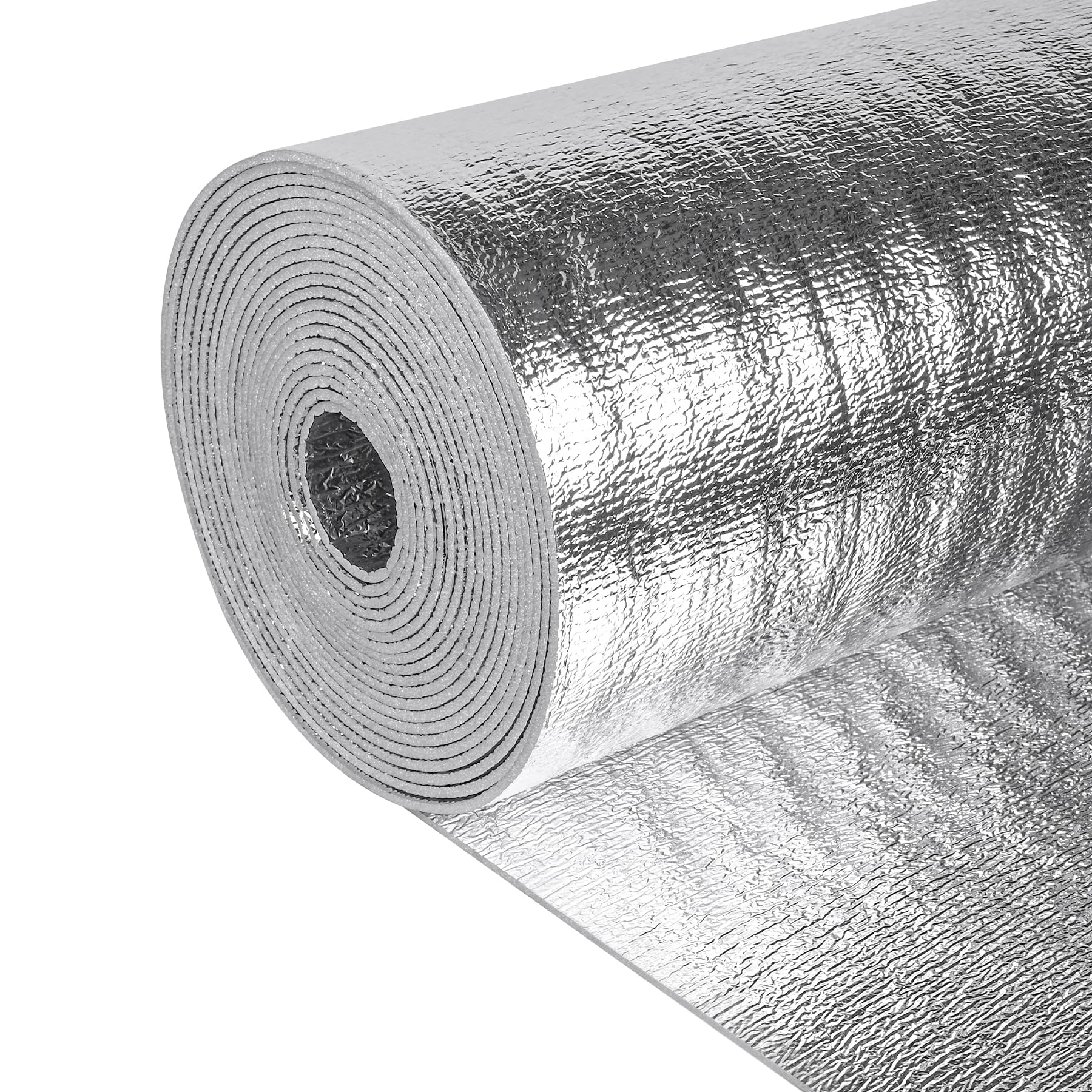
A lightweight 3mm roll that buyers are grabbing for camper windows and smaller patch jobs.
At 3 mm, this is the thinnest and most affordable option here, but it serves a specific role well. The 16-inch width matches RV window openings perfectly — you cut squares to fit each pane without much waste. The double-sided aluminum foil reflects 95% of radiant energy, and the closed-cell foam core blocks moisture. One reviewer noted they cut it to size for their camper and it “keeps the camper dark for mornings and cooler at the heat of the day.”
Another buyer noted “immediate radiant heat reduction on garage door panels,” confirming that even this thin barrier makes a noticeable difference on surfaces that bake in direct sun. The material is non-toxic, so you do not need a respirator or gloves to handle it.
The catch is that 3 mm offers less thermal resistance than the thicker alternatives. For full wall insulation in a four-season RV, you would need to layer it or pair it with another product. It is best viewed as a targeted solution for windows, small panels, or budget-conscious builds.
Why it works
- 16-inch width is ideal for RV window panels — fast to cut and fit
- Immediate radiant heat reduction reported by multiple buyers
- Non-toxic and easy to cut with scissors — no special tools needed
Where it falls short
- 3 mm is the thinnest option — limited thermal resistance alone
- Narrow width means more seams on large wall or roof sections
Pick this for: a cheap, fast fix for RV windows, pet houses, pipes, or any spot that needs a quick radiant barrier.
Skip it for: full wall insulation in a van or trailer that experiences extreme winters — the thicker options will serve you better.
Understanding the Specs
R-Value
R-value measures how well a material resists heat flow. Higher numbers mean better insulation. For RV walls, you want as much R-value as you can fit into a shallow cavity. Foam core radiant barriers typically achieve R-values between R-4 and R-15 depending on thickness and air gaps, while a thick polyester batting like the 3M Thinsulate hits roughly R-5.45 per inch of thickness. Do not confuse R-value with radiant reflectivity — a foil surface that bounces back heat does not stop conductive heat loss through the foam itself.
Radiant Barrier vs. Vapor Barrier
A radiant barrier (the shiny aluminum layer) reflects infrared heat away from the RV, which keeps the interior cooler in summer. A vapor barrier stops moisture from passing through the insulation and condensing inside the wall cavity — that prevents mold and rot. Most foil-faced foam core products serve as both in one layer, which is why they dominate RV wall insulation over fiberglass batts that absorb moisture.
FAQ
Can I use reflective foam core insulation in all seasons, or is it only for summer heat?
How do I cut reflective foam core insulation for RV windows?
What is the difference between 3 mm, 5 mm, and 10 mm insulation for RVs?
Will this type of insulation prevent condensation inside my camper van?
Can I use reflective insulation as a sound deadener for RV road noise?
What is the R-value of reflective insulation compared to traditional fiberglass?
Do I need an air gap in front of the reflective insulation for it to work?
How long does a foam core radiant barrier last inside an RV?
Final Thoughts: The Verdict
For most RV owners, the insulation for rv walls winner is the SEALTECH 10mm Ultra Heavy Duty because its 10 mm foam core delivers proven heat reduction (from 158°F down to 92°F in one real-world installation) in a single layer that fits standard wall cavities. If you want the highest R-value per inch, the SmartSHIELD 5mm reflects 97% of radiant energy with an R-value up to 15.67. And for deep-cavity van conversions where moisture resistance and sound dampening are critical, the standout is the 3M Thinsulate SM600L.
How We Picked
We do not accept paid placement. Every pick is matched to a real buyer and a real use-case; we do not hands-on test units.
Sources & Methodology
Specifications: manufacturer listings and product documentation. Review insights: verified customer reviews, as of July 2026. Pricing: not shown on this page (it changes often); check the current price via the retailer link.
As an Amazon Associate, Trending Car earns from qualifying purchases. This does not affect which products we feature.