
Our readers keep the lights on and my garage snacks stocked. As an Amazon Associate, I earn from qualifying purchases.
Specs are compiled from manufacturer listings and verified buyer reviews and can change over time — please confirm the key details on the product page before buying.
If your driveway has started collecting dark spots or you’re topping off the dipstick between changes, the right high-mileage oil can be the cheapest fix for minor leaks you never considered. High-mileage oils use special seal conditioners that can plump up dried-out gaskets and cut those annoying leaks, and this guide breaks down the five best options by what they actually do for your engine.
I’m Min Islam — the founder and writer behind Trending Car. This guide is built by comparing the manufacturers’ published specifications and the patterns across verified customer reviews, so you get each pick’s real strengths and trade-offs instead of marketing spin.
We dig into viscosity grades, seal-conditioner tech, and real owner results to find the undisputed kings of high mileage oil for leaks, so you can stop chasing drips and start driving with confidence.
Our Picks at a Glance

How To Choose The Best High Mileage Oil for Leaks
Picking the right leak-fighting oil isn’t about grabbing the most expensive jug on the shelf. It’s about matching the oil’s additives and thickness to your engine’s specific age, mileage, and the type of leak you’re dealing with. Here’s what actually matters when matching oil to your engine’s age and leak type.
Seal Conditioners: The Leak Fixers
Seal conditioners are chemical additives that work on your engine’s rubber gaskets and seals from the inside. Over time, heat and age dry out these seals, causing them to shrink and harden, which opens up gaps for oil to escape. A good high-mileage oil uses these conditioners to soften and swell the seals back to size, which helps reduce leaks and oil consumption without tearing the engine apart.
Viscosity: Thick or Thin?
Viscosity is simply how thick the oil is, and it’s labeled like 5W-30 or 20W-50. The first number (with the W for winter) tells you how it flows in the cold, and the second number is its thickness at full operating temperature. Your car’s manual is the only reliable authority on what viscosity to use, but a thicker oil can sometimes mask a heavy leak in a very old, worn engine where a thinner one would slip right through.
Synthetic vs. Synthetic Blend
Full synthetic oils are engineered for maximum performance, extreme temperature protection, and long drain intervals. Synthetic blends mix conventional oil with a portion of synthetic, offering better protection than plain conventional oil at a more budget-friendly price. For a high-mileage engine, either works, but the choice depends on whether you prioritize maximum longevity (full synthetic) or solid protection at a lower cost (blend).
Quick Comparison
| Model | Best For | Viscosity | Oil Type | Drain Interval | Amazon |
|---|---|---|---|---|---|
| Mobil 1 High Mileage 5W-30★ Best Overall | Maximum Protection & Longevity | 5W-30 | Full Synthetic | Up to 10,000 miles | Amazon |
| Castrol GTX HM 10W-40Mid-Weight Workhorse | Versatile Mid-Weight Option | 10W-40 | Synthetic Blend | — | Amazon |
| Valvoline MaxLife 150K 5W-30 | Extreme High-Mileage (150K+) | 5W-30 | Full Synthetic | — | Amazon |
| Mobil 1 EP High Mileage 5W-20 | Ultra-Long 20K Mile Protection | 5W-20 | Full Synthetic | Up to 20,000 miles | Amazon |
In‑Depth Reviews
1. Mobil 1 High Mileage Full Synthetic Motor Oil 5W-30
Our pick — over 4.5★ from 10,000+ verified ratings; the strongest balance of quality and price.
The crowd-champion synthetic that pairs leak-fighting additives with elite full-synthetic wear protection for daily drivers.
This is the oil that wins people over with its sheer polish and proven performance — it’s a full synthetic built for engines past the 75,000-mile mark, and the crowd favorite here holds a stellar 4.9-star score from over 10,000 owners. The heart of it is Mobil 1’s Triple Action Formula, which pairs engine performance, protection, and cleanliness so your older motor keeps running strong without buildup holding it back.
For the leak question specifically, it’s designed to protect seals while also preventing damaging deposits and sludge buildup that can worsen existing issues. Buyers report it delivers outstanding value, with some saying it improved fuel efficiency by 3-4 MPG and noting it works especially well in older GM vehicles. The engine heat protection is a standout too — it guards internal parts up to 500 degrees F while still flowing in cold down to -30 degrees F, so it’s a year-round workhorse.
It’s engineered to let you stretch oil changes up to 10,000 miles between services, which cuts both shop time and cost for high-mileage owners. The container holds 160 fluid ounces across 5 quarts, and the clear fill marker on the side makes a 3.75-quart change easy to gauge without guesswork. If you want one oil that covers protection, cleanliness, and leak management in a single pour, this is the benchmark.
Why Owners Stick With It
- Full synthetic formula excels in extreme heat (up to 500°F) and cold (down to -30°F)
- Triple Action Formula delivers performance, protection, and cleanliness in one
- Meets ILSAC GF-6 for low-speed pre-ignition and timing chain wear protection
- Ratings page is a masterclass in trust — 4.9 stars from a massive owner base
What To Weigh First
- Full synthetic price sits at the premium end of the high-mileage spectrum
- 5W-30 is a versatile grade, but some engines may spec a different viscosity
The benchmark pick: Choose this if you want a single full-synthetic oil that handles seal protection, extreme temperatures, and long 10,000-mile drain intervals for a 75K+ mile engine.
Look elsewhere if: Your budget is tight and your engine doesn’t need the extreme cold-flow or heat resistance of a premium full synthetic.
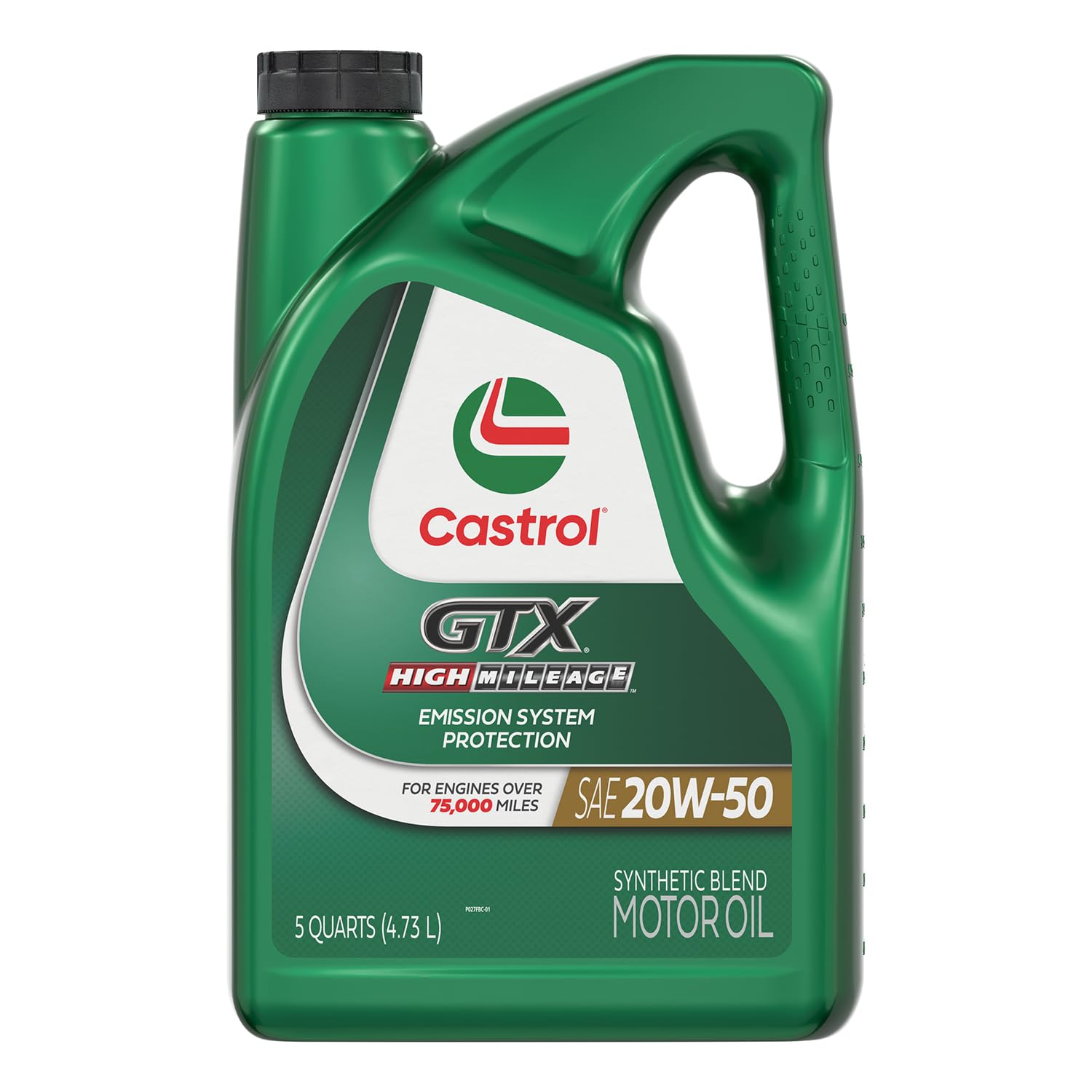
2. Castrol GTX High Mileage 20W-50
The thick 20W-50 blend that marries leak-fighting seal conditioners with heavy-duty protection for older engines.
This 20W-50 synthetic blend is engineered for older engines that need a thicker oil to maintain film strength and reduce leaks. It shares the key leak-fighting tech — seal conditioners to help reduce leaks, Phosphorus Replacement Technology for emission system life, and advanced additives to prevent engine wear — all in a 160-fluid-ounce (5-quart) bottle.
It meets API SP/SN PLUS/SN/SM. Reviewers point out engines running like new, with one logging over 160,000 miles on Castrol oils with complete satisfaction — the “quality oil at a great price, not the cheap no brand oil” sentiment runs strong through the reviews.
It does carry a noted trade-off: while many report no leaks, some mention issues with leakage, so results will vary by how worn your seals actually are. Still, the balance of proven blend tech, broad OEM compatibility, and a price point that undercuts the full synthetics makes it the smart middle-ground pick for a high-mileage family car. Long-time users simply say they’ve relied on Castrol across many vehicles with nothing but satisfaction.
Why it earns a spot: A 20W-50 synthetic blend that covers leak reduction with API SP approval at a price that respects your wallet.
The honest caveat: Leak results split owners evenly — it works for many, but badly shrunk seals may need a dedicated conditioner or a full synthetic instead.
Pick it for: A 75K+ mile engine that requires 20W-50 for maximum film strength and leak reduction, with proven Castrol blend protection at a value price.
skip it if: You’re chasing maximum drain intervals or extreme-temperature resilience — a full synthetic handles both better.
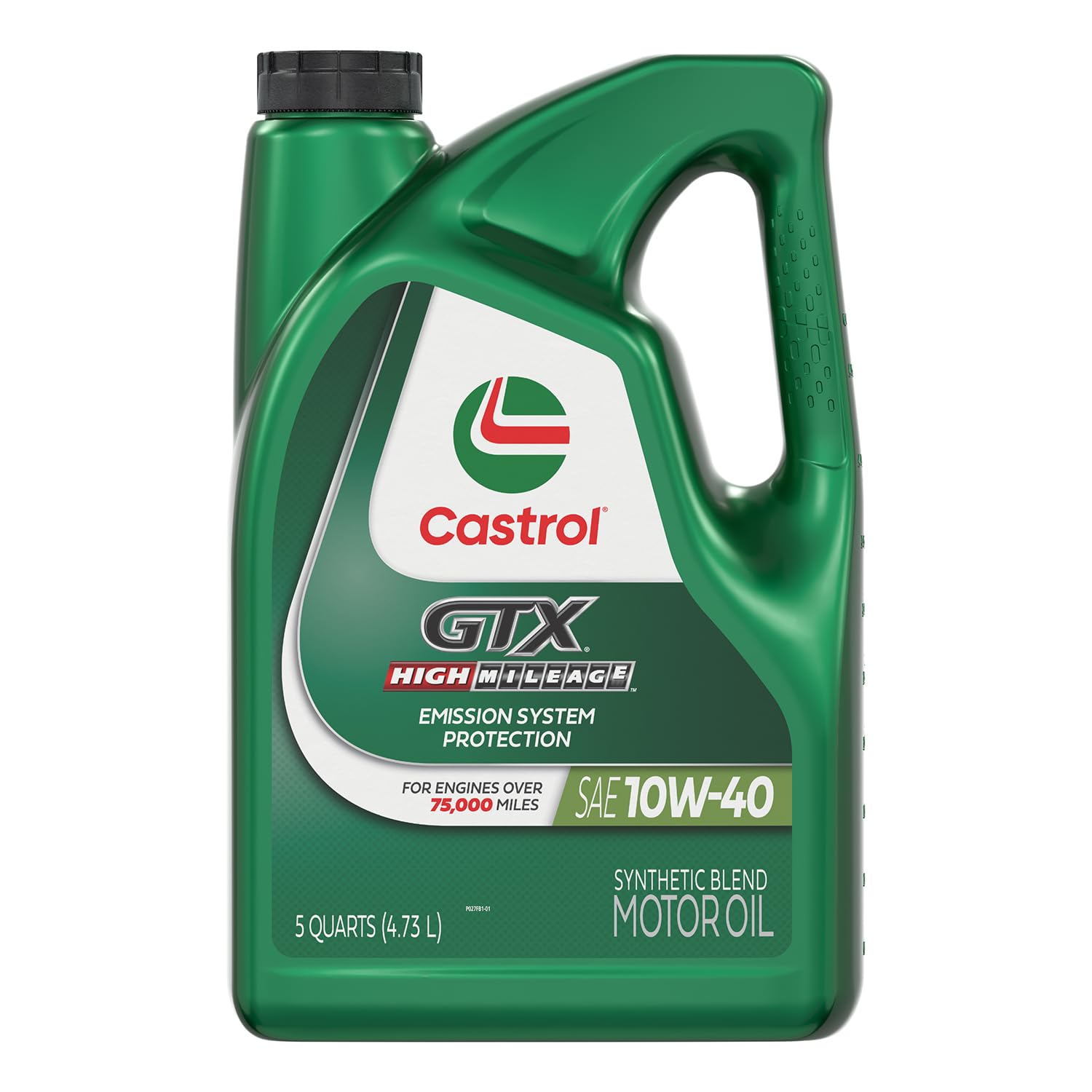
3. Castrol GTX High Mileage 10W-40
The versatile 10W-40 blend that slots between thin synthetics and heavy 20W-50 for engines that want a middle path.
Castrol’s 10W-40 sits in the just-right zone for high-mileage engines that need more body than a 5W-30 but don’t require the extreme thickness of a 20W-50. It’s a synthetic blend packing the same core leak-fighting package — seal conditioners to help reduce leaks, Phosphorus Replacement Technology for emission system life, and superior dispersancy that fights sludge buildup.
Owners are fiercely loyal here — one long-running account of a Pontiac Grand Prix pushing 220,000 miles on this exact oil while still running great, with “doesn’t sludge up” and “no varnish” notes appearing across reviews. It also gets specific praise for smaller engines, with one owner calling it the best oil for GY6 engines (a common scooter and small-engine type), making it a flexible choice for both cars and power equipment.
Quality and value dominate the most-discussed aspects, with performance close behind, and owners appreciate how well it lubricates in high-mileage vehicles. The 10W-40 grade gives you a touch more high-temperature film strength than a 5W-30, which can help quieter a motor that’s starting to show its age. If your engine manual allows 10W-40 and you want a balance of leak-fighting and wear protection, this is a strong, proven middle pick.
What Makes It Click
- 10W-40 viscosity offers extra high-temp film strength over thinner grades
- Seal conditioners and sludge-fighting dispersants in a proven blend
- Track record includes a 220K-mile Pontiac running without issues
- Flexible enough for cars and smaller GY6 engines
Watch This
- 10W-40 isn’t recommended for engines designed strictly for 5W-30/0W-20
- Some owners note it’s a synthetic blend, not a full synthetic
Ideal for: High-mileage engines where the manual permits 10W-40 and you want a middle-weight blend that fights leaks and sludge without the cost of a full synthetic.
Not for: Modern engines that mandate thin, fuel-efficient grades — stick to their spec instead.
4. Valvoline High Mileage 150K with MaxLife Plus Technology 5W-30 Motor Oil
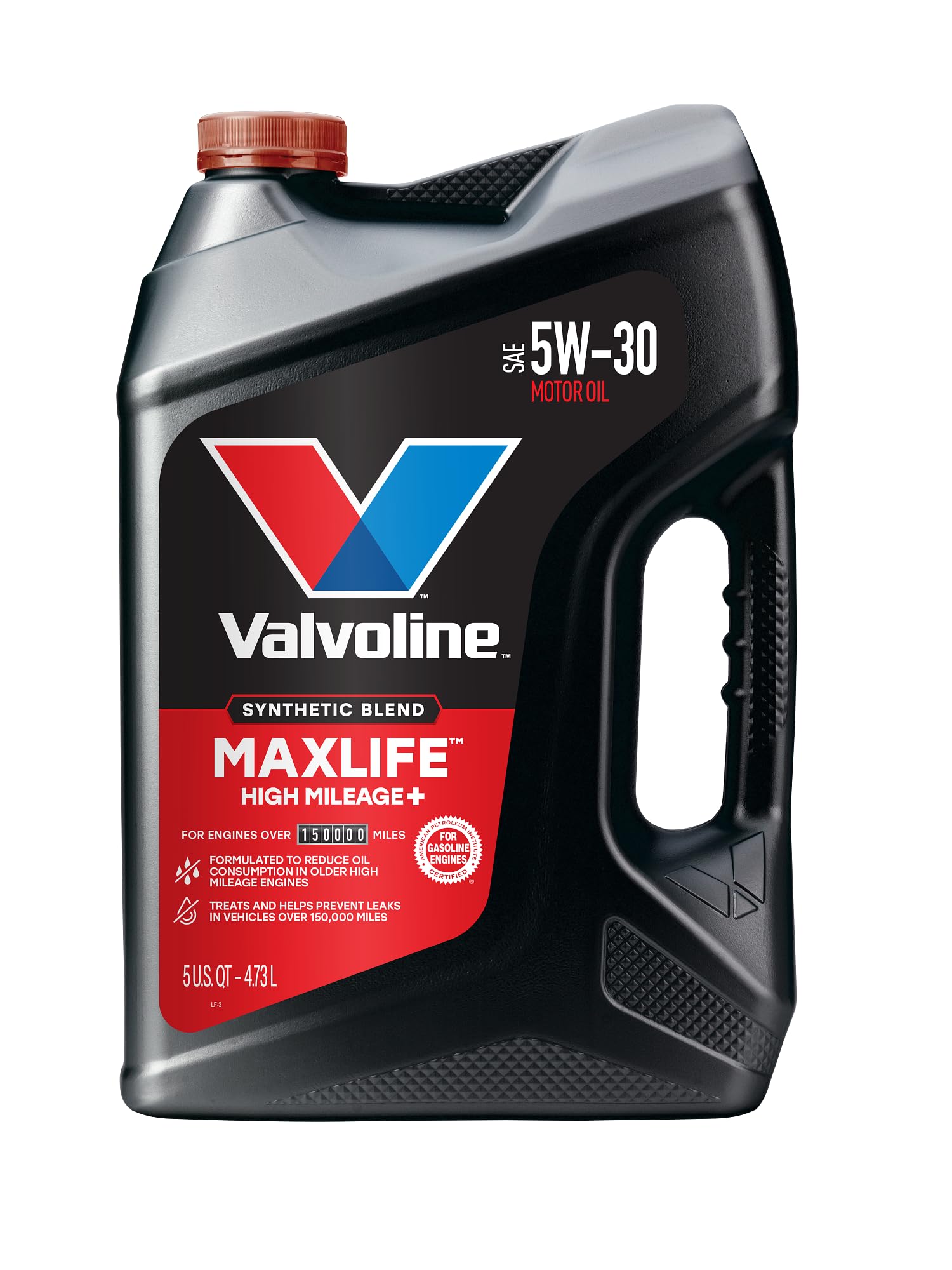
The dedicated 150K-mile formula that owners say “just stops the leak” with premium seal conditioners and strong wear defense.
This Valvoline is built for a very specific crowd: engines with over 150,000 miles, and it doesn’t hide that focus. It uses premium seal conditioners specifically to help prevent oil leaks and reduce oil consumption in older high-mileage engines — and the owner feedback is remarkably direct, with one simple review reading “Good oil. Stopped leak,” and another recommending it for any car with 150K miles or more that suffers from oil consumption.
The spec sheet backs up the claims with measurable numbers: it delivers 10% better wear protection than industry standards and 15% stronger sludge defense, plus anti-wear Moly Additive Protection that coats metallic parts to reduce friction. It also carries a 394 °F flash point, meaning it can withstand serious heat before igniting, which is valuable for stressed older engines.
This oil carries among the most current spec lists in this lineup — it meets or exceeds ILSAC GF-7A, API SQ, API SP, API SN with SN PLUS, Resource Conserving, Ford WSS-M2C971-A1, and Chrysler MS-13340 (the latest standards for modern engines). Owners with a 2002 Dodge Ram 1500 and a 2006 Chevy Silverado 1500 both report strong results. If your engine is genuinely past 150K and you want a formula engineered specifically for that reality, this is the most targeted pick here.
Its Strongest Suits
- Formulated specifically for engines with over 150,000 miles
- 10% better wear protection and 15% stronger sludge defense vs industry standards
- Direct owner reports of leaks stopping after the switch
- Meets the latest ILSAC GF-7A and API SQ specs
Keep In Mind
- Premium pricing for the most advanced spec list in this group
- No official drain interval claimed, unlike the Mobil 1 and Castrol EDGE picks
Reach for it if: Your vehicle is genuinely past 150,000 miles and you want the most targeted seal-conditioner formula plus the latest API SQ certification to stop leaks and oil consumption.
Consider a cheaper blend if: Your engine is under 150K and you don’t need the most current spec sheet.
5. Mobil 1 Extended Performance High Mileage 5W-20

The absolute longest-interval full synthetic here, stretching 20,000 miles between changes with elite heat and cold defense.
Want to touch the drain plug as rarely as possible? Mobil 1’s Extended Performance High Mileage is rated for up to 20,000 miles between oil changes — double the standard Mobil 1 High Mileage and beating even the Castrol EDGE’s 15,000-mile claim. For a 75K+ mile engine, this is the definitive answer.
It uses the upgraded Triple Action+ Formula, which adds power to the standard performance, protection, and cleanliness package. The thermal envelope is the widest here: internal heat protection up to 500 degrees F and low-temperature protection down to -40 degrees F, which is 10 degrees colder than the standard Mobil 1 pick. It meets ILSAC GF-6 standards for low-speed pre-ignition and timing chain wear protection while keeping the engine clean and improving fuel economy.
Buyers report engines running “like a top” at 150,000 miles, and one notes both their cars are over 150K and “run like new” thanks to this product. The 5W-20 grade makes it ideal for modern engines that spec thin oil, and the full-synthetic base helps prevent the deposits and sludge that accelerate wear in older motors. If you want the longest possible interval paired with the widest temperature protection, no other pick here matches it.
Why It Leads On Interval
- 20,000-mile drain interval — the longest in this entire lineup
- Protects from 500°F heat down to -40°F cold, the widest range here
- Triple Action+ Formula adds power to protection and cleanliness
- Meets ILSAC GF-6 for LSPI and timing chain wear protection
Consider This
- Leak results are mixed in feedback — seal conditioners help, but badly worn seals need more
- Premium full-synthetic pricing and 5W-20 grade limit it to compatible engines
The long-haul king: Choose this if you want the absolute longest 20,000-mile interval, widest temperature protection, and full-synthetic leak defense for a 75K+ mile engine.
pass on it if: Your engine isn’t built for 5W-20 or you prefer cheaper, more frequent changes to spot problems early.
Understanding the Specs
Viscosity Grade (The “5W-30” Numbers)
This is the single most important spec to get right. The number before the W stands for winter and shows how thin the oil is when cold, so a 5W flows easily on a freezing morning. The number after the W shows thickness at full operating temperature — a 20W-50 is much thicker when hot than a 5W-30. Always follow your owner’s manual first; a thicker oil can mask a leak in a very worn engine but can hurt fuel economy and cold starts if the engine wasn’t designed for it.
Seal Conditioners
These are chemical additives that soften and swell the rubber gaskets and seals inside your engine. As engines age past roughly 75,000 miles, heat dries out these seals and they shrink, opening gaps where oil escapes. Seal conditioners work from the inside to plump them back up, which is the core mechanism behind high-mileage oils reducing leaks and oil consumption. They’re preventive and restorative, not a miracle fix for a seal that’s already cracked.
FAQ
How does high mileage oil stop leaks?
What is the difference between 5W-30 and 20W-50?
Will high mileage oil fix a bad rear main seal leak?
Is synthetic blend oil better than conventional for a leaky engine?
Can I switch from conventional to full synthetic on a high-mileage engine?
How many miles can I drive between oil changes with these?
Why does my engine burn oil even with high mileage oil?
Is it worth paying more for a full synthetic high mileage oil?
Final Thoughts: The Verdict
For most people, the high mileage oil for leaks winner is the Mobil 1 High Mileage 5W-30 because it pairs elite full-synthetic protection with genuine seal care and the trust of over 10,000 owners. If you want the longest stretch between services, grab the Mobil 1 Extended Performance 5W-20 with its 20,000-mile rating. And for a proven thick-blend fix on a truly old engine, the Castrol GTX 20W-50 is the one to reach for.
How We Picked
We do not accept paid placement. Every pick is matched to a real buyer and a real use-case; we do not hands-on test units.
Sources & Methodology
Specifications: manufacturer listings and product documentation. Review insights: verified customer reviews, as of August 2026. Pricing: not shown on this page (it changes often); check the current price via the retailer link.
As an Amazon Associate, Trending Car earns from qualifying purchases. This does not affect which products we feature.