
Our readers keep the lights on and my garage snacks stocked. As an Amazon Associate, I earn from qualifying purchases.
Specs are compiled from manufacturer listings and verified buyer reviews and can change over time — please confirm the key details on the product page before buying.
You want your subwoofer to hit deep and clean, not rattle and hum. The head unit is what sends the signal, and it needs two things: enough preamp voltage to keep noise out, and crossover controls to send only the low bass to your amp. The Pioneer DEH-S6220BS does both better than anything else here, with per-output level control and an expandable 31-band EQ. This guide compares nine head units on preamp voltage (the signal strength sent to your amp), EQ depth, and real owner reports, so you know exactly which one makes your sub sound best.
I’m Min Islam — the founder and writer behind Trending Car. This guide is built by comparing the manufacturers’ published specifications and the patterns across verified customer reviews, so you get each pick’s real strengths and trade-offs instead of marketing spin.
To find the right head unit for subs, you need to understand three things: the voltage on your RCA preouts, the flexibility of your built-in crossover (the filter that splits frequencies), and how cleanly the unit handles the signal at high volume.
Our Picks at a Glance

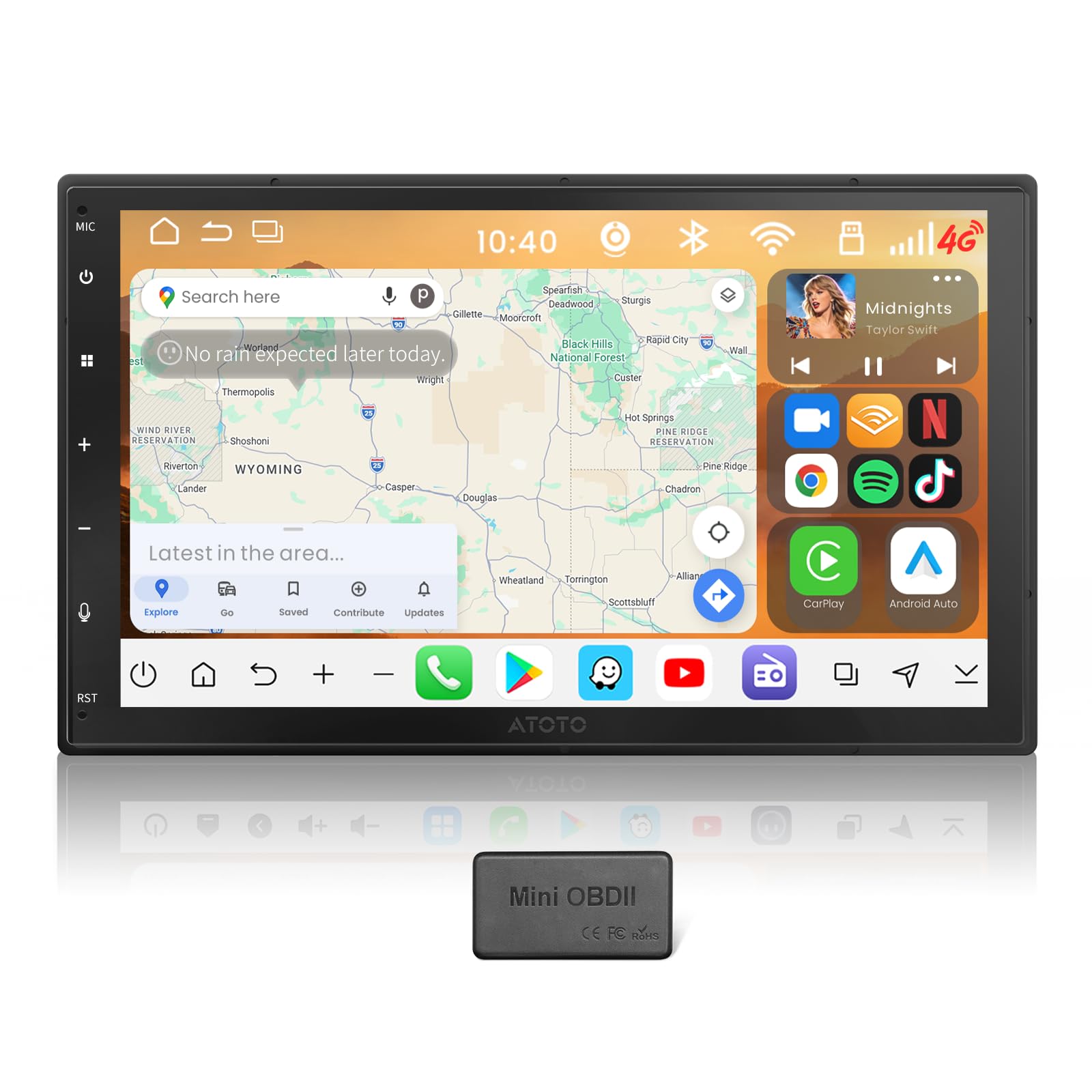

How To Choose The Best Head Unit for Subs
Picking a head unit that makes your subwoofer sound its best is different from picking one for everyday music. You are looking for specific tools — preamp voltage, crossover routing, and EQ depth — that keep the low end tight and the noise out.
Preamp Output Voltage
This is the signal strength sent to your external amplifier. A higher voltage (4V, 5V) overrides electrical noise from the car’s alternator and wiring, meaning you get a blacker background between notes. A lower voltage (2V) can work but you may hear a faint hiss at idle.
Subwoofer Crossover & Slope
The crossover tells the head unit which frequencies go to the sub and which go to the main speakers. A dedicated subwoofer output with a low-pass filter (LPF) and selectable slope (12dB or 24dB per octave) lets you dial in the overlap so your sub plays only the deep bass, not midrange mud.
EQ Depth & Time Alignment
A multi-band EQ (13-band, 31-band) lets you carve out problem frequencies in the cabin and boost the sub-bass region. Time alignment delays certain speakers so all the sound arrives at your ears at the same instant, which tightens the kick drum and makes the bass feel locked to the beat.
Quick Comparison
| Model | Best For | Preamp Voltage | EQ Bands | Sub Outputs | Amazon |
|---|---|---|---|---|---|
| Pioneer DEH-S6220BS★ Best Overall | Total sub control | Hi-Volt (est. 4V) | 13-band + app 31-band | 1 (9-7-1-8-6-0-2-1-0) | Amazon |
| ATOTO S8LBest Value | The pro tuner’s playground | 3V | 32-band | 1 | Amazon |
| PLZ MP-928WSubwoofer Specialist | Dual-sub setups | — | 10-band DSP | 2 | Amazon |
| Kissound KS9702 | The budget smartphone deck | — | 10-band DSP | 1 | Amazon |
| Sony DSXM55BT | Marine / outdoor bass | 2V | EQ5 + Mega Bass | 1 | Amazon |
| KENWOOD KMR-M332BT | Rugged boating / off-road | 2.5V | EQ + Time Alignment | 1 | Amazon |
| SJOYBRING W021 (No Dash Cam) | Wireless CarPlay with two subs | — | DSP | 2 | Amazon |
| SJOYBRING W021 (With Dash Cam) | All-in-one multimedia + subs | — | DSP | 2 | Amazon |
| Sony XAV-AX3200 | The clean, simple CarPlay sub route | 2V | EQ5 | 1 | Amazon |
In‑Depth Reviews
1. Pioneer DEH-S6220BS
Our pick — 4.5★ from 600+ verified ratings; the strongest balance of quality and price.
The tuner’s choice for squeezing every dB out of a subwoofer channel.
This Pioneer CD receiver earns its spot at the top by giving you individual control over the sub channel’s level, frequency, and slope (the steepness of the filter). That means you can set the low-pass filter (LPF — which lets only deep bass through) for your sub completely independently from your front and rear speakers. The high-voltage preouts (estimated 4V — the signal strength to your amp) keep the signal clean, and owners confirm they hear no noise at high volume. The 13-band EQ built into the unit pairs with a free app that open up a 31-band EQ, giving you surgical control over the sub-bass region around 20-60Hz. Reviewers running both four-channel and mono amps note the independent routing makes tuning simple. The custom LED backlight matches factory green lighting, so it looks stock at night.
The glossy screen is nearly invisible in direct sunlight, and the companion app is clunky. But as owners put it: “the app doesn’t work great but you don’t need it.” All the tuning is done through the physical interface on the deck itself.
Sub‑woofer masterclass: The DEH-S6220BS gives you per-output level, frequency, and slope control on its RCA preouts, so your sub gets exactly the signal it needs regardless of your amp setup.
The honest trade‑off: The face is glossy and angled upward, which washes out the display in bright daylight; you will rely on memory for track info when the sun is high.
Reach for this deck if: you run separate amps for your sub and main speakers and you want independent low-pass and high-pass filters with slope control.
2. ATOTO S8L
A full Android tablet that doubles as a pro‑level subwoofer processor.
The ATOTO S8L stands out for its 32-band EQ, which gives you more precise frequency control than the 13-band on the Pioneer DEH-S6220BS. You can route mids to the dash, tweeters to the sails, and dedicate a full channel to your sub, then dial in the crossover slope and time alignment (a feature that delays sound from certain speakers so bass hits your seat before the mids reach your ears). The 3V RCA preouts give you a cleaner signal than the standard 2V, and the optical S/PDIF output lets you send a pure digital stream to a high-end DSP (digital signal processor) or amp. Buyers report that the DSP pumps “more bass to their subwoofer” than the factory unit it replaced. The built-in 4G LTE keeps the unit online without hogging your phone’s Wi-Fi, which is useful for streaming bass-heavy test tones. Wireless CarPlay and Android Auto are standard, and the 550-nit QLED screen stays bright enough to see maps in direct sunlight. Some owners note that the glossy protector causes glare. One trade-off: the factory USB port in some cars is not compatible, so you may need an adapter.
Why the basshead loves it
- 32-band EQ offers surgical sub-bass tuning.
- 3V preouts keep noise floor low.
- 5.1-channel assignable routing for complex systems.
- Optical S/PDIF output for external DSP.
The catch
- Setup requires a SIM card for full internet independence.
- Glossy screen protector can flare up in direct sunlight.
Best for: anyone running a multi-amp system with a separated DSP who wants a giant, bright screen and the flexibility of a full Android OS.
Look elsewhere if: you just want plug-and-play subwoofer control with no learning curve.
3. PLZ MP-928W
Built for the basshead who demands two sub channels.
The PLZ MP-928W gives you two dedicated subwoofer RCA outputs, unlike most head units that offer only one. That is a real advantage if you run dual subs or want a left and right low-end channel. The 10-band EQ includes a specific 50Hz bass control, which owners mention is “excellent for complex setups” that combine eight main speakers with a sub. The 240W total power (4 x 60W peak) is enough for basic speakers, but the real value is in the clarity of the preamp signal. Reviewers who paired this deck with aftermarket amplifiers say the sound is “cleaner and stronger” than their old setup. Wireless CarPlay and Android Auto connect quickly, and the 1280 x 720 QLED screen is bright enough for daytime navigation. The DSP chipset allows per-channel tuning, making it possible to time-align the sub with the front stage. The recurring owner insight is that the volume is not loud enough when pushing factory speakers alone — the unit is designed to feed an external amplifier and sub, not to drive them directly.
Dual‑sub architecture: Two separate subwoofer RCA outputs let you drive dual subs or a left/right low-end stage without a Y‑splitter.
The limitation: The internal 240W rating is modest; this deck really shines when you add an outboard amp and sub.
Reach for this if: you plan a twin-subwoofer setup and want independent low-frequency routing.
4. Sony XAV-AX3200
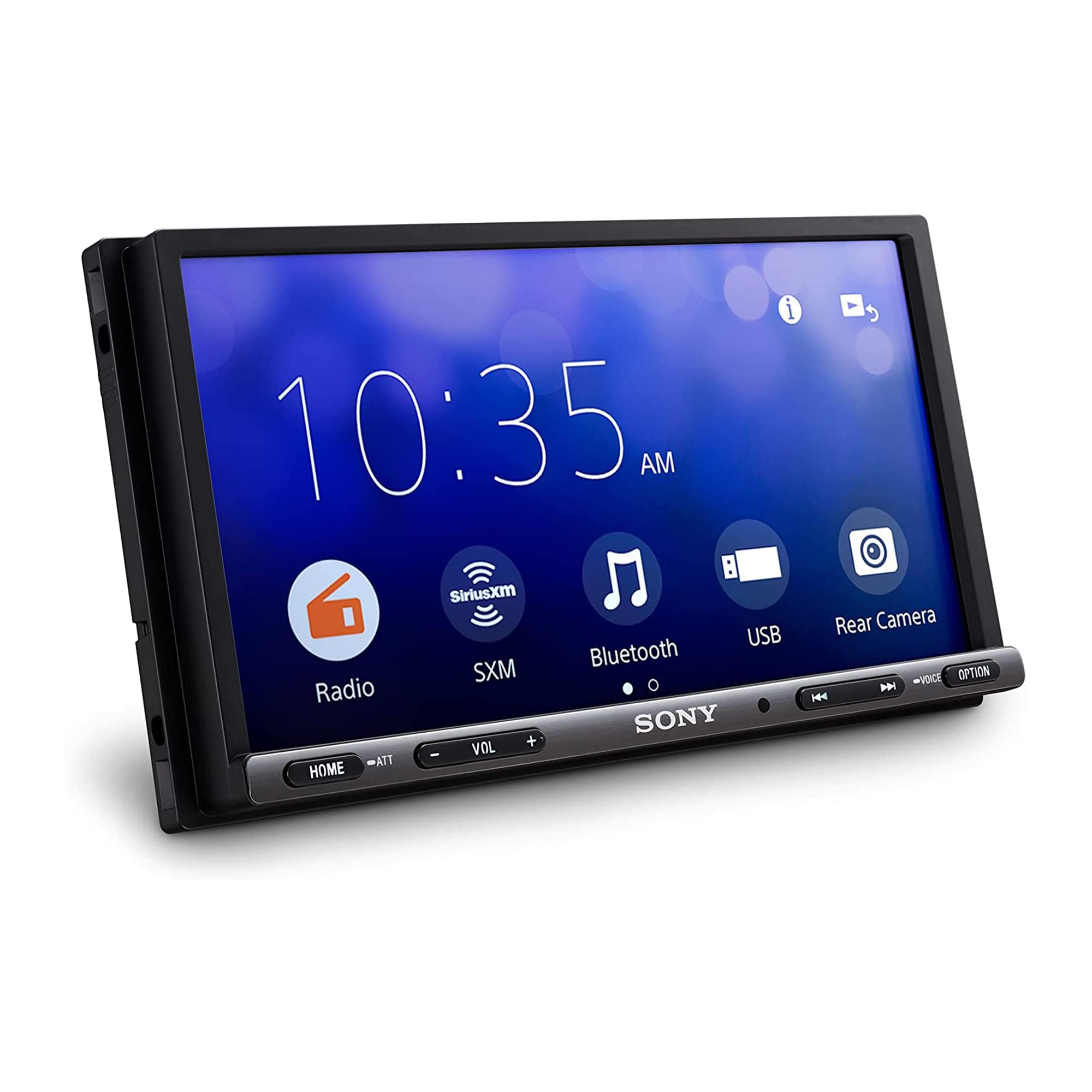
A no‑nonsense Sony that just works, especially when you add an amp.
The Sony XAV-AX3200 is the benchmark for a clean, reliable CarPlay-based head unit that also handles subwoofer duty well. It offers gold-plated 2V front, rear, and subwoofer preamp outputs. While 2V is less immune to noise than the 4V in the Pioneer DEH-S6220BS, customers note that the signal is clean enough that “no gain adjustment needed” when connecting a sub amp. A compact rear chassis makes installation in tight dashes straightforward — one owner put it in a first-gen Chevy Trailblazer and praised the sound with just a simple sub amp. The interface is resistive touch (it uses pressure instead of a capacitive sensor), which feels less responsive but works better with gloves or in cold weather. The display is not as bright as no-name Android decks, and some owners find it dim in direct sunlight. For a premium-brand entry that offers a solid sub preout without the frills of a full Android OS, this Sony fits perfectly.
The Sony advantage
- Gold-plated 2V sub preout with clean signal.
- Compact chassis fits tight dashes.
- Factory reliability and intuitive UI.
What holds it back
- Low 2V preouts can pick up noise in noisy cars.
- Screen brightness is lower than cheap android decks.
Best for: the buyer who wants a no-hassle CarPlay deck with a clean sub output and is willing to pay a premium for a trusted name.
5. Sony DSXM55BT
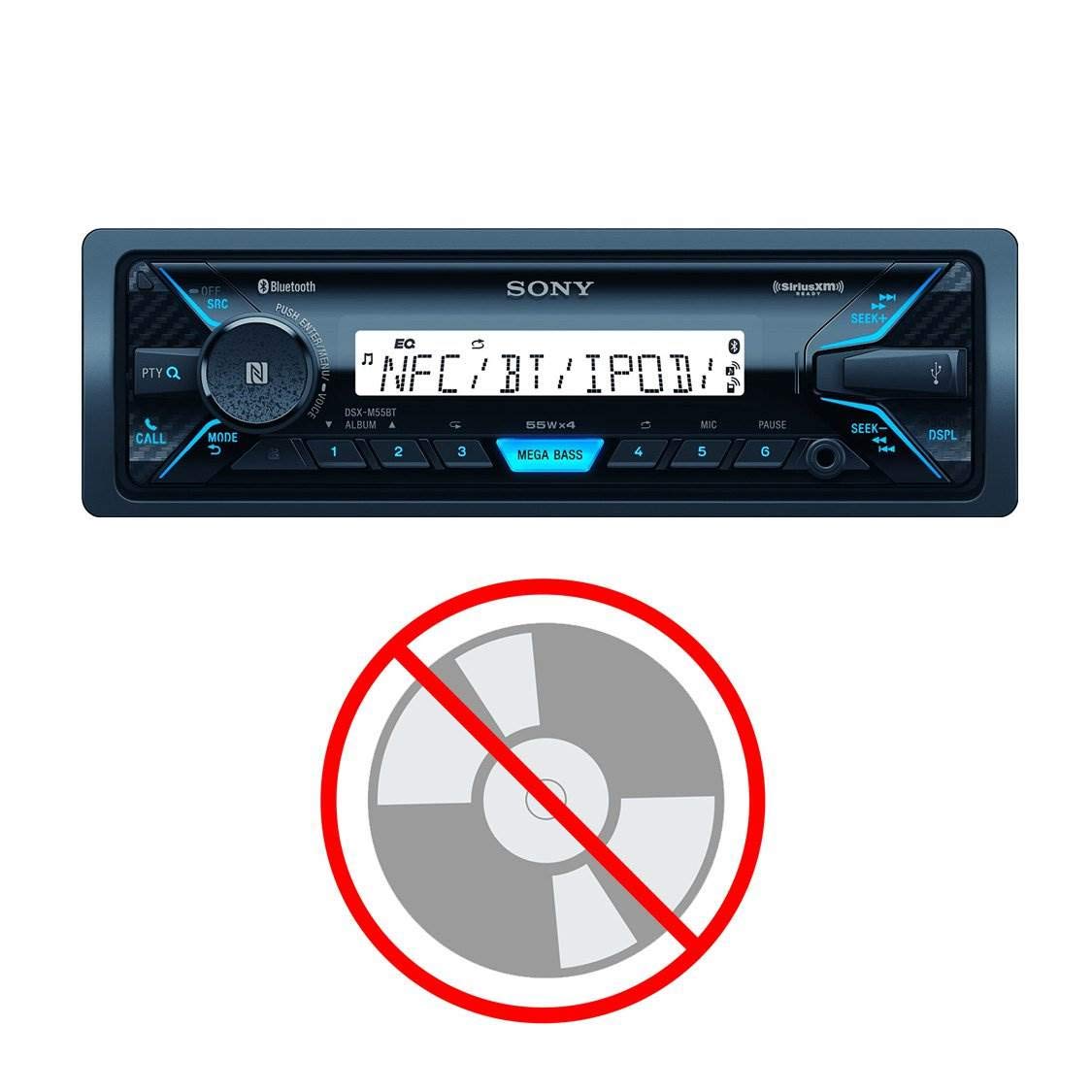
A shallow‑mount marine deck that still offers sub preouts.
The Sony DSXM55BT is purpose-built for boats, Jeeps, and other vehicles that face salt spray and rain. Sony says its waterproof conformal coating protects the circuit board. It offers 2V rear and sub RCA preamp outputs, a low-pass filter crossover, and Mega Bass boost — enough to drive a single subwoofer in an open-air environment. The shallow chassis makes installation easy in tight marine dashboards. Reviewers point out that after two full seasons on a Yamaha SX192 boat, the Bluetooth connection remains stable and the sound is “plenty of power” for four JBL speakers. The unit is also SiriusXM ready. Sound quality is a recurring positive theme, though the built-in EQ is limited to five bands and a simple Mega Bass on/off. The display is easy to read in direct sunlight. The most common negative is reliability: some shoppers say corrosion and failure after a few months, while one owner drove one for seven years in a Toyota Corolla without a single issue. The reviews are polarized — treat this deck as ideal for a protected marine environment with a filter cap, but less reliable in a daily-driver car.
Marine‑grade sub feeding: The waterproof conformal coating and 2‑volt sub preout let you run a sub in a boat or Jeep without worrying about moisture.
Not for daily drivers: Mixed reliability reports from car use; this unit thrives in boats and off-road rigs.
Reach for this if: you need a subwoofer signal in a wet or splash-prone environment like a boat, side-by-side, or convertible.
6. Kissound KS9702

Packs wireless CarPlay, DSP, and a sub output for under your daily budget.
The Kissound KS9702 includes a dedicated subwoofer RCA output and a 10-band EQ with built-in DSP (digital signal processor — a chip that shapes sound electronically), so you can tune the low-end without an external processor. Wireless Apple CarPlay and Android Auto connect automatically when the car starts. The 7-inch IPS touchscreen is responsive enough that owners compare it to Pioneer units costing three times as much. The 240W peak power (4 x 60W) is enough to drive basic speakers, but the real draw for sub users is the clean subwoofer preout. Buyers report excellent sound quality with a sub amp, and the built-in dual microphones handle clear hands-free calls at highway speeds. The included 8-LED backup camera is a nice bonus, though the cable is limited to 19.7 feet. The notable flaw: no AM radio reception at all — so if you listen to AM talk or sports, skip this deck.
Smartphone‑era sub control
- Wireless CarPlay and Android Auto for easy integration.
- Built-in DSP with 10-band EQ for sub tuning.
- Dedicated subwoofer RCA output.
The compromise
- No AM radio reception at all.
- Backup camera cable is only 19.7 ft.
Best for: the budget‑conscious listener who wants wireless smartphone mirroring, a sub output, and DSP tuning — and does not miss AM radio.
7. SJOYBRING W021 (No Dash Cam)

A QLED‑screen deck with separate RCA channels for two subwoofers.
The SJOYBRING W021 (non-dash-cam version) offers 4.2-channel audio output, which means you get four full-range RCA outputs (front L/R, rear L/R) plus two separate subwoofer outputs. That is a rare feature at this price point and makes the unit ideal for a system with two subwoofers, or a single sub with a dedicated left/right low-level feed. The 7-inch QLED display runs 1280 x 720 resolution and supports 1080P video playback. Wireless CarPlay and Android Auto connect quickly, and owners driving older vehicles like a 2008 Jeep Wrangler or a 2006 Nissan Xterra confirm the installation is straightforward once you pick up the correct dash kit and harness. The built-in 4.2-channel DSP with independent Bluetooth module keeps the sub signal clean. The screen glare is a known issue in direct sunlight. Some owners note that the backup camera has minimal glitches and that the custom logo upload process is slow. For the price, the dual-sub outputs and responsive touchscreen make it a strong contender for the budget basshead.
Independent sub channels: Two separate subwoofer outputs give you flexibility for dual‑sub and left/right low‑end routing without Y‑splitters.
Light levels: The QLED screen is bright at night but suffers from glare during the day — a shade or anti‑glare film helps.
Reach for this if: you plan to run two subwoofers with independent low-level feeds and want a modern QLED screen for maps and music.
8. SJOYBRING W021 (With Dash Cam)

The same dual‑sub outputs plus a dash cam to catch road evidence.
This variant of the SJOYBRING W021 adds a built-in dash cam that records 1280 x 720P video with a 170-degree wide-angle lens — useful for catching incidents. Like its sibling, it offers 4.2-channel audio output with two separate subwoofer RCA outputs, and it uses the same 1280 x 720 QLED display. The dash cam automatically saves loop recordings, though it requires a Class 10 or higher microSD card (up to 64GB). Owners praise the “excellent price-to-feature ratio” and note that the physical volume knob makes operation much easier while driving compared to all-touch interfaces. The custom boot logo service from the manufacturer earns repeated praise. The dash cam does not record audio inside the cabin, and the front camera controls are only accessible from the device screen. The backup camera included in the box has a few seconds delay, which some owners find mildly annoying. For subwoofer performance, the DSP with dual outputs gives you the same flexibility as the non-cam version, making this the ideal all-in-one deck for buyers who want a dash cam and sub control in one unit.
Why it pulls double duty
- Two subwoofer outputs for dual‑sub systems.
- Built-in 720P dash cam with 170° wide-angle lens.
- Physical volume knob for safer interaction.
What to know
- Dash cam requires separate 64GB microSD card.
- Backup camera has a slight display delay.
Best for: the basshead who also wants a dash cam and a single-purchase modern multimedia upgrade.
9. KENWOOD KMR-M332BT

A marine‑proof Kenwood with 2.5V sub preouts and FLAC playback.
The Kenwood KMR-M332BT is built for extreme environments — salt spray, direct sunlight, rain, and rough weather. A conformal-coated circuit board resists moisture damage, and the high-contrast white-on-black display stays readable in full sunlight. You get 2.5V rear/subwoofer preamp outputs, a step above the typical 2V on marine decks, giving a cleaner signal to your amp than the Sony DSXM55BT. The deck supports FLAC file playback for audiophile-quality source material, and the on-screen EQ and digital time alignment let you tune the sub stage for an open boat or a noisy off-road cab. Owners who replaced an older Sony marine unit call this a “huge step up” with noticeably better sound and a fast Bluetooth connection. The display uses high-contrast black characters on a white background, so it is readable even with direct sun over your shoulder. The main gripe: a small number of owners mention the unit can fail with a “protect, send for service” error after about 18 months. Use this deck in a well-ventilated, covered environment and it will serve reliably.
Weather‑ready signal: The 2.5V preouts and conformal‑coated board let you run a sub in a boat, convertible, or off-road vehicle without worrying about moisture or direct sun.
Long‑term caution: A handful of customers note a “protect” error after 18 months; treat this as a rugged marine unit, not a daily‑driver deck.
Look elsewhere if: you need a daily‑driver head unit with a long warranty; this one is built for harsh environments where splash resistance matters most.
Understanding the Specs
Preamp Output Voltage
The voltage your head unit sends to your amp. A higher number (4V or 5V) means the signal is strong enough to overwhelm electrical noise from your car’s alternator and other electronics. A 2V signal can still work fine in a quiet car, but you may hear a faint hiss at idle if your system is sensitive.
Subwoofer Crossover & Slope
The crossover determines which frequencies go to your sub and which go to your main speakers. A low-pass filter (LPF) lets only deep bass through. The slope (measured in dB per octave) controls how aggressively the filter cuts — a 24dB slope cuts sharply, so your sub never plays midrange, while a 12dB slope blends more naturally.
EQ Bands
The number of frequency bands you can adjust. A 13-band or 31-band EQ gives you precise control over the sub-bass region (20-60Hz) and the midbass (60-200Hz). A basic 5-band EQ offers less control but is easier to use for a quick bass boost.
Time Alignment
A feature that delays sound from certain speakers so all frequencies arrive at your ears at the same moment. For subwoofer systems, time alignment makes the kick drum feel locked to the beat rather than sounding disconnected from the front speakers.