
Our readers keep the lights on and my garage snacks stocked. As an Amazon Associate, I earn from qualifying purchases.
Specs are compiled from manufacturer listings and verified buyer reviews and can change over time — please confirm the key details on the product page before buying.
White smoke from your tailpipe or coolant puddles under the engine usually means a head gasket leak, and the repair bill can run into the thousands. That is why many drivers try a pour-in sealer first — but which one actually works? No liquid can replace a machined gasket, but the right formula can buy you months or years of driving. You need to match the sealer to your leak size and engine type.
I’m Min Islam — the founder and writer behind Trending Car. This guide is built by comparing the manufacturers’ published specifications and the patterns across verified customer reviews, so you get each pick’s real strengths and trade-offs instead of marketing spin.
From permanent metallic blends to ceramic formulas, here is the breakdown of the top head gasket sealer options you can pour yourself. The best choice depends on whether your engine is aluminum or cast iron, how severe the leak is, and whether you can tolerate a product that requires a clean, flushed system to work.
Our Picks at a Glance

How To Choose The Best Head Gasket Sealer
Before you pour anything into your radiator, you need to know what kind of engine you have and how serious the leak is. A head gasket sealer is a temporary or semi-permanent patch, not a miracle cure, and matching the wrong formula to your situation is the most common way people end up disappointed.
Match the formula to your leak size
Small pinhole leaks and hairline cracks respond well to metallic and ceramic particle sealers, which circulate through the cooling system and lodge into the gap. Larger failures, like a visibly blown gasket with major coolant loss, need a heavy-duty fiber-based product that builds a multi-layer patch — but even those have limits, and a badly warped head will defeat any liquid.
Know your engine material
Aluminum heads and blocks expand and contract at different rates than cast iron, which can change how a sealer holds. Check the label: some formulas are explicitly safe for both aluminum and cast iron, while others are built with a specific metal in mind. Pouring the wrong one into an aluminum engine can cause more harm than the leak itself.
Understand the prep work
The single biggest difference between products is whether they require a drained, flushed system before use. Some pour-and-go formulas are designed for a busy driver who wants a quick patch, but they may not bond as strongly. Premium options often demand a clean system and a specific drive cycle after pouring, which matters if you want a genuine shot at a lasting repair.
Quick Comparison
| Model | Best For | Formula Type | Size | Prep Needed | Amazon |
|---|---|---|---|---|---|
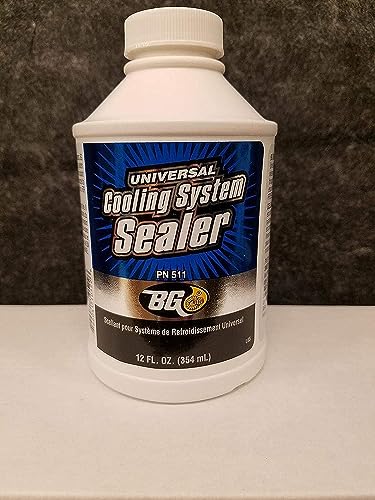
| BG Universal Cooling System Sealer★ Best Overall | Small head gasket leaks on modern engines | Silicone-based liquid | 12 fl oz | Pour-and-go | Amazon |
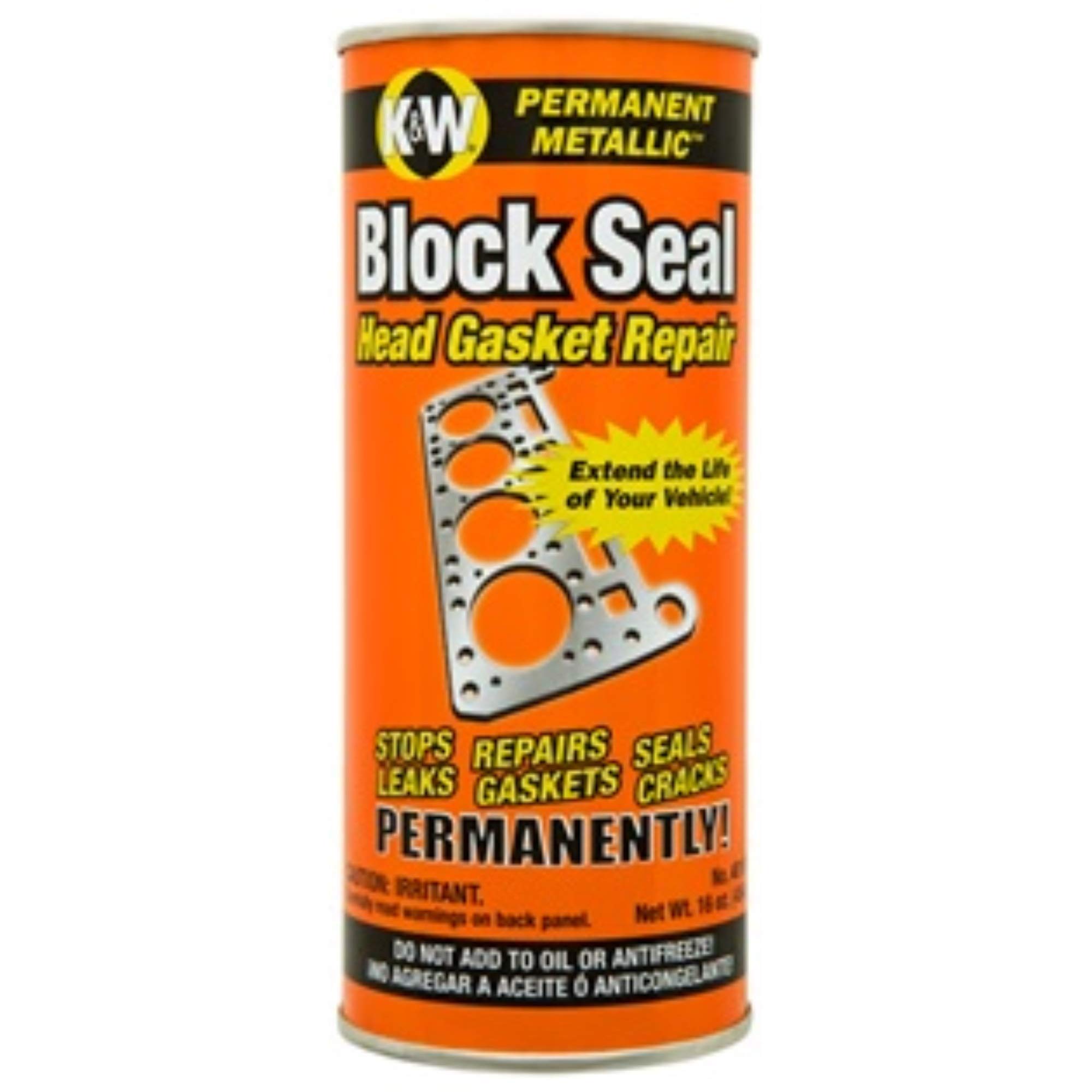
| K&W 401016 Block SealBest Value | Permanent metallic sealing of small cracks | Metallic molecular | 16 oz | Drain & flush | Amazon |
| Irontite All Weather SealMost Versatile | Multi-material compatibility and prevention | Permanent chemical sealant | 16 oz | Pour-and-go | Amazon |
| K-Seal ST9501 | Fast coolant leak fixes with no setup | Multi-purpose pour-and-go | 472ml | None | Amazon |
| Moroso 35500 Ceramic Engine Seal | Racers and enthusiasts running water only | Ceramic suspension | 1 Pint | Thorough clean, no antifreeze | Amazon |
| Irontite Ceramic Motor Seal | Rust-prone cooling systems needing corrosion protection | Ceramic coating | 16 oz | Clean system | Amazon |
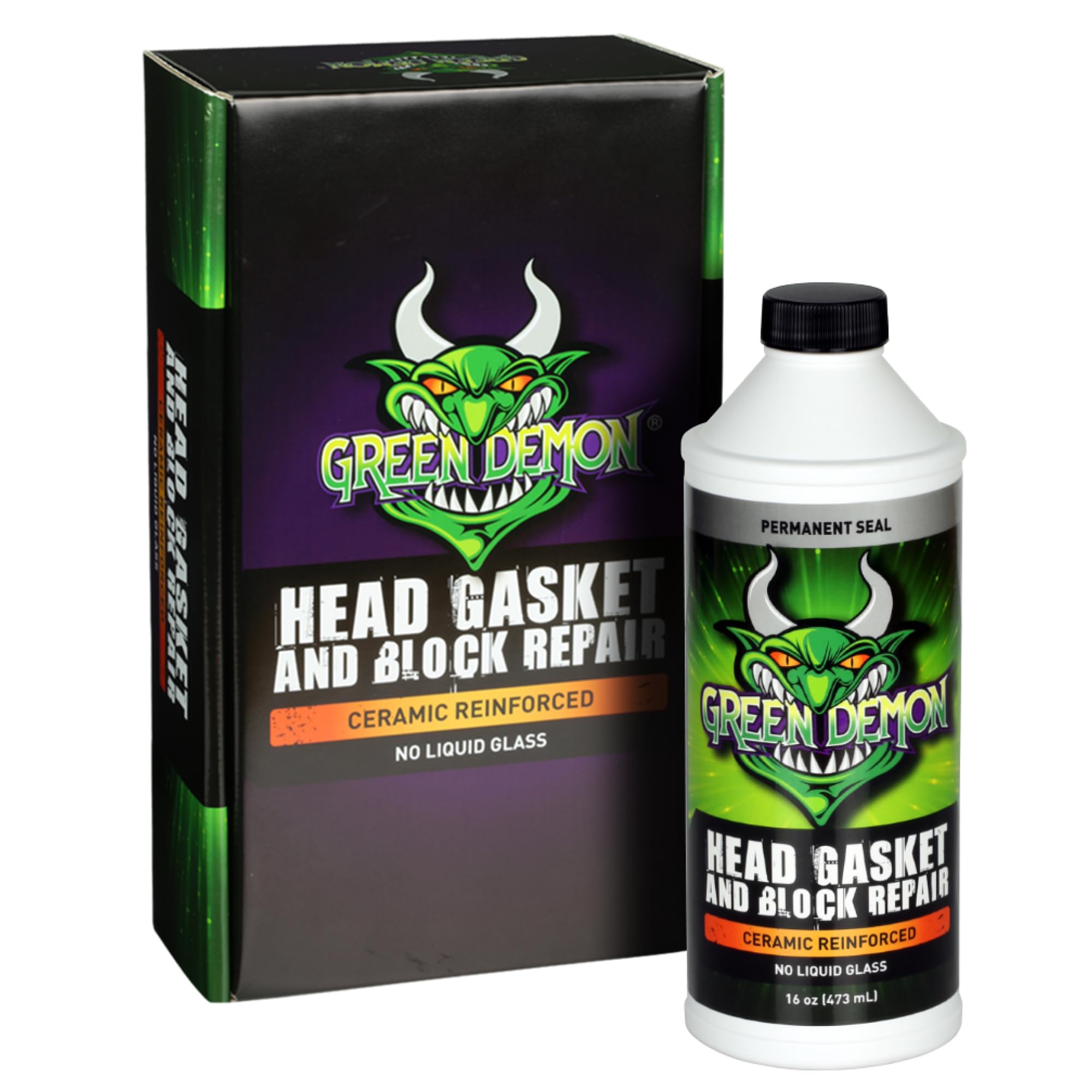
| Green Demon Head Gasket Sealer | Quick one-application DIY repair | Ceramic reinforced | 16 oz | None | Amazon |
| K&W 401224 FiberLock | Larger holes and heavy-duty repairs | Fiber nanotechnology | 32 fl oz | Pour-in | Amazon |
| Steel Seal Blown Head Gasket Fix | 8-cylinder engines with blown gaskets | Proprietary chemical | 8 Cylinder formula | Full flush, thermostat removal | Amazon |
In‑Depth Reviews
1. BG Universal Cooling System Sealer
Our pick — over 4.5★ from 100+ verified ratings; the strongest balance of quality and price.
The crowd favorite that quietly stops small leaks without a full system flush.
The thing everyone raves about with this BG sealer is its sealing performance — owners single it out more than any other trait — and the stories back it up. A slow coolant leak that had a mechanic stumped slowed drastically after a pour, to the point where no antifreeze was needed for 8 weeks instead of every 2. Another impressive report is a Subaru head gasket leak that held at 120 mph with no overheating or bubbles for 3 years since the first bottle.
It works on the right kind of leak, which is the key caveat. A 2.7 Ecoboost with a cracked exhaust manifold cooling jacket was fixed the same day after a 1-hour drive, but this is a sealer for small leaks, not catastrophic failures. The 12 fl oz bottle is a silicone-based liquid that repairs leaks, prevents overheating, and extends cooling system life, and it is safe for the metal, plastic, and rubber parts it touches inside your engine.
Where this one beats the metallic options is convenience. Unlike the K&W Block Seal that demands a drained system, this is a pour-and-go product that fits a real driver’s day. The recurring experience is consistent: the leak slows dramatically and top-ups shrink from a full container to just cups.
Why owners stick with it
- Sealing performance is the most praised trait in the reviews
- 12 fl oz pour-and-go bottle needs no draining
- Safe on metal, plastic, and rubber components
- Real reports of leaks holding for years
Where it falls short
- Mixed results on leak closure — some owners saw no effect
- Only suited to small leaks, not a blown gasket
- Heavier than some rivals at 12.8 ounces
Reach for this if: you have a confirmed small coolant or head gasket leak and want a no-flush, pour-and-go fix backed by strong owner results.
Look elsewhere if: your engine is losing large amounts of coolant fast — this is a patch for pinholes, not a replacement for a blown gasket.
2. K&W 401016 Block Seal Permanent Metallic™ Block & Radiator Seal – 16 Oz
A metallic molecular seal that is built to be as strong as steel.
If you want a sealer that treats the job like a real repair rather than a band-aid, this K&W makes a permanent molecular seal that the maker says is as strong as steel. It seals cracks and holes in cast iron and aluminum engine blocks, head gaskets, freeze plugs, and radiators, and it is designed for all water-cooled diesel and gasoline vehicles. Its professional-grade formula exceeds ASTM D6107, the standard for cooling-system leak sealing.
The instructions matter here — drain or flush the system, mix it with water, and drive about 500 miles. On a 2005 Tacoma, the leak stopped at roughly 75 miles into that drive. Quality is what owners praise most about this bottle, and the 16 oz size gives you a solid amount of product for the money.
But there is a real honesty note: functionality gets mixed reviews. Some owners say it truly works, while others found the product arrived hardened in the can, which points to a shelf-life problem on delivery. It is also not the pick for catastrophic gasket failures — one owner noted their head gaskets were simply too far gone to seal this way. At 1.15 pounds and 5.87 x 2.31 x 2.13 inches, it is also a notably larger footprint than the K-Seal option, which is 2 x 4 x 6 inches — a 2.9x dimensional gap.
Solid metal sealing: this is the value pick for a driver who will follow the multi-step flush-and-drive process to get a steel-strong molecular patch.
The honest limit: check the can on arrival — some units ship already solidified, and badly warped heads will defeat it regardless.
Best suited to: budget-conscious owners with small, confirmed leaks who are willing to drain, flush, and drive 500 miles for a metallic bond.
Not for: anyone who wants a quick pour-and-go fix, or whose gasket failure is severe enough that no liquid will hold.
3. Irontite All Weather Seal, Blue, 16 oz
The formula that plays nice with every coolant type on the shelf.
What sets the Irontite All Weather Seal apart is its compatibility: it works with traditional antifreeze, waterless antifreeze, and various proprietary coolant types, so you do not have to drain your system to switch. Safe for aluminum, cast iron, steel, and plastic, it suits everything from daily drivers to commercial trucks.
The functionality is the most praised aspect of this bottle, and the real-world results are vivid. One owner flushed out another sealer that had clogged a heater core, and after the heater core leaked again, a pour of Irontite stopped the leak in 5 minutes while keeping the heat working. Another reported it worked well sealing a head gasket leak on a cracked Vortec head, stopping coolant loss at 100k miles.
The catch is the leakage aspect, which is mixed: while many say it stops leaks effectively, some report issues with water mixing into the oil afterward. The bottle is also heavier than the K&W at 1 pound versus 1.21 pounds for the K-Seal — about a 21% difference that barely matters in practice. Activation happens with heat and air when the cooling system reaches operating temperature, so a short high-RPM drive after pouring helps it set.
Broad compatibility: the pick if you run an unusual coolant type or own multiple vehicles and want one sealer that works across all of them.
The honest caveat: a minority of owners see oil and water mix after use, so keep an eye on your oil consistency in the weeks after the pour.
Reach for this if: you want a heat-activated sealer that works with any antifreeze and is gentle on aluminum, cast iron, and plastic alike.
Think twice if: you are on a tight budget or want a product with zero reports of oil contamination — the leakage feedback is genuinely split.
4. Coolant Leak Repair, ST9501 472ml Multi-Purpose Formula Stops Leaks

The easiest pour-in that targets everything from the radiator to the water pump.
This K-Seal ST9501 is the definition of pour-and-go: no draining, no flushing, no special drive cycle. You pour the 472ml formula into the radiator and it works to stop leaks in the radiator, head gasket, block, water pump housing, heater core, and freeze plug alike. Owners describe it as very easy to use, and several report it stopped their radiator leak within a couple of days of the pour.
It is also a genuinely money-saving fix — one owner said it “saved me a lot of money” and praised how fast it works. The compact bottle at 2 x 4 x 6 inches is far smaller than the K&W Block Seal’s 5.87 x 2.31 x 2.13 inches framing, a 2.9x gap in footprint that makes it easy to store in a trunk or garage.
The honest weak spot is water pumps specifically. One owner mixed two containers in an empty recovery bottle and reported it did nothing to stop a small leak in a water pump, calling it a complete rip-off. That points to the real limitation: this formula shines on radiator and gasket leaks, but a failing water pump seal is a different beast that may need mechanical replacement.
True ease of use: the fastest, simplest fix on this list for a radiator or head gasket leak when you have ten minutes and no tools.
Not a water pump cure: buyers report it leaves a pump seal leak unresolved — that is the one job this pour-and-go formula does not handle.
Best for: drivers who want a no-prep, multi-target sealer that stops radiator and gasket leaks quickly without any special steps.
skip it if: your confirmed leak is in the water pump housing — owners mention it will not seal that specific component.
5. Moroso 35500 Ceramic Engine Seal – 1 Pint, Plastic Bottle

The ceramic seal Moroso calls the best chemical sealer you can buy.
This is the specialist’s choice, and the label is blunt about it: “The best Chemical Sealer you can buy to stop cooling system leaks.” It works equally well in aluminum or cast-iron blocks, which makes it flexible across engine builds, and the packaging is confident in the extreme — if it doesn’t stop the leaks, the maker says to find yourself a welder. The 1-pint bottle is a ceramic suspension that owners describe in glowing terms, with one calling it “magic.”
The real-world results are strong. A 1979 MG Midget with steam pouring from the exhaust saw the steam stop within 15 minutes after a flush-heater-bypass-and-water setup. A Kia Sorento that was overheating from a leak had no problems again for a full year after the pour. And a V8 with a bad head gasket leak showed no water in the oil during an oil change a month later.
Here is the deal-breaker catch: this product does not work with antifreeze, and the cooling system must be thoroughly clean before use. That means you need to run water only, which is fine for track cars and weekend projects but impractical for a daily driver in cold climates. The effectiveness is also mixed — customers note it worked one time and not the next, so it is not a guaranteed one-shot fix even when used perfectly.
Ceramic sealing power: this is the pick for enthusiasts running water-cooled motors who want a sealer that handles aluminum and cast iron alike.
The serious trade-off: no antifreeze, a mandatory clean system, and mixed effectiveness reports mean it is not for daily drivers or impatient owners.
Reach for this if: you have a project car, race vehicle, or warm-climate daily that runs water and you want the strongest ceramic seal available.
Look elsewhere if: you rely on antifreeze for cold weather — the label is explicit that this formula cannot be used with it.
6. Irontite Ceramic Motor Seal – Engine Cooling System Sealer

A ceramic coating that fights rust while it seals your leaks.
This Irontite formula does more than patch a hole — the ceramic coating seals leaks in head gaskets, radiators, intake gaskets, and other components while also protecting against rust and corrosion. The maker claims it boosts cooling performance by up to 10 percent, cutting overheating risk. Engine enthusiasts have trusted this formula for over 50 years.
The owner verdict is enthusiastic: “Seals most anything I’ve come across, has to be a serious crack in block or head not to seal.” That is the standard the product holds itself to, and it mostly delivers. The key instruction repeated across reviews is that the cooling system must be super clean — all rust gone — before the pour, or the ceramic coating will not bond properly.
That prep requirement is the catch. A 2-star reviewer who flushed and used it as directed saw the engine consume a quart of coolant a week, likely because the gasket was too far gone for any liquid to help. At 1.63 pounds, this is one of the heavier bottles here, but the 16 oz of ceramic formula is a premium-tier product in both price and claimed durability, with the high-temperature resistance meant to last.
Dual-action protection: the pick if you want a sealer that also prevents corrosion and improves cooling efficiency, not just stops a leak.
The prep burden: a dirty, rusty system will defeat this product — owners who skipped the deep clean were the ones left disappointed.
Best for: owners of older vehicles with some rust in the cooling system who are willing to do a thorough flush to get a long-lasting ceramic seal.
Not for: anyone who wants a quick pour without prep, or whose gasket is already destroyed beyond a liquid’s ability to bridge it.
7. Green Demon Head Gasket and Block Repair | Ceramic Reinforced
A ceramic-reinforced one-shot fix that needs no flushing or draining.
Green Demon sells itself on simplicity and speed: shake the 16 oz bottle, pour it into the radiator cap, and the maker says the magic takes effect in a few minutes. No engine flushing or draining is required, which makes this among the most accessible DIY fixes on the list. The ceramic formula flows through the cooling system, and particles combine into a mesh that cures to form a permanent sealed bond.
The success stories are genuinely impressive. A 2002 Buick LeSabre with intermittent hesitation and an erratic idle ran smoothly after just half a bottle. More dramatically, a cracked head on a 2012 Pontiac GT had its misfire, coolant loss, and white smoke all stop after a single pour, with the engine running normally afterward. The maker offers a 100% money-back or replacement guarantee.
The honest reality is that functionality is mixed at best. For every success there is a report of a 2001 Oldsmobile Intrigue where a 15-minute use failed to fix overheating, or a user who followed every instruction and tweak only to say it “about blew up motor.” The leakage aspect is also negative in the reviews, and the maker itself warns that if you see bubbles or it isn’t sealing, the system may be over-pressurized. This is a product with real upside and real inconsistency.
Maximum convenience: the fastest one-application DIY repair here when you want zero prep and a chance at a permanent fix.
Inconsistent results: owners are split — some get a flawless seal, others report no effect or worse, so treat it as a gamble with a money-back guarantee.
Reach for this if: you need a no-flush, no-drain solution and want the backing of a money-back guarantee for your DIY gamble.
Look elsewhere if: you are dealing with a severe over-pressurized system — the maker’s own warning flags that scenario as one this sealer cannot fix.
8. K&W 401224 FiberLock Head Gasket & Block Repair – 32 Fl Oz

The heavy-duty fiber formula built to seal larger holes in 30 minutes or less.
When a leak is too big for metallic or ceramic particles, this K&W FiberLock steps up with military-strength fibers that weave into a multi-layer patch over cracks. The maker claims it seals larger holes with less fluid loss than rivals, permanently repairing leaks in 30 minutes or less. The pour-in formula works without draining your cooling system, and the 32 fl oz bottle is the biggest capacity here, giving you more product per purchase.
The real-world tests are exactly what you want from a heavy-duty product. A blown head gasket on a 1995 Honda Civic 1.5L showed no overheating, white smoke, or oil and coolant mixing after 4 days of 36-mile commutes. A hairline crack in a 2010 Jeep Grand Cherokee 5.7 Hemi held for 1 year and 7,000 miles with no coolant loss. Even a 2006 PT Cruiser with a cracked head ran fine for months after the repair, though the radiator did clog completely.
Precision is the price of this power. Owners stress that exact dosage matters — about one-third of the bottle — along with proper 50/50 coolant and a working water pump and thermostat. The formula is clumpy out of the bottle but smooths out, and misuse risks clogging your heater core or radiator. One owner with a 2006 Honda Civic saw leaks stop immediately but overheating set in a week later, requiring a 40-minute flush and heater core hose unclamping.
Serious sealing capability: the pick for a genuinely blown gasket or larger crack where smaller-particle products simply will not hold.
The precision demand: exact dosing and a healthy cooling system are mandatory — dumping the whole bottle risks a clogged radiator, as reviewers point out.
Best for: drivers with a confirmed larger leak who will carefully follow the one-third-bottle dosage and monitor the system after the pour.
Not for: casual users who want a set-and-forget fix — FiberLock punishes imprecise dosing with clogs.
9. Steel Seal Blown Head Gasket Fix Repair Sealer – 8 Cylinder

The shop-grade pour-in fix trusted by repair shops for 8-cylinder engines.
This shop-grade formula, used by thousands of repair shops, targets 8-cylinder engines exclusively. It permanently seals a crack in the head gasket, and the results reflect the higher stakes. A Toyota 4.7L V8 with 225k miles and a bubbling, pressurized head gasket leak ran for 1.5 months and 1,500 miles with no coolant loss and stable temperature after the process. A 1999 Ford F-150 that faced a ~ engine replacement was saved entirely.
The procedure is involved but proven. Shoppers say the need to bypass the heater core, remove the thermostat, run with water plus two bottles, idle for an hour, then drive. One daily-driven van sealed on the first try and held for thousands of miles with no water loss — “more expensive than cheap fixes but it works good first time.”
The durability feedback is mixed, and at this price point that matters. One owner with a 63 Ford saw no effect at all and a white film left over the engine when coolant leaked everywhere. Another followed instructions only to get heavy smoke during use and persistent smoke afterward. This is a product that can genuinely save a V8 from the scrapyard, but it demands the full process and still comes with no guarantee of success on every engine. At 2.66 pounds, it is also the heaviest bottle here, a physical sign of the formula’s density.
Why it is the heavy hitter
- Sealed a Toyota 4.7L V8 for 1,500 miles with no coolant loss
- Saved a Ford F-150 from a replacement
- Held on a daily-driven van for thousands of miles
- Used by repair shops nationwide
The real risks
- Mixed durability — some buyers report no effect at all
- Demands a full flush, thermostat removal, and idle procedure
- One report of heavy smoke during use
Reach for this if: you drive an 8-cylinder with a blown head gasket and are willing to do the full multi-step procedure for a real chance to save the engine.
pass on it if: your leak is small or you want a simple pour — this is the most expensive and most involved option by a wide margin, and it still has mixed results.
Understanding the Specs
Formula chemistry matters
Head gasket sealers work through different particles. Metallic formulas like the K&W Block Seal create a molecular bond that can be as strong as steel, ideal for cast iron and aluminum cracks. Ceramic formulas like the Moroso and Irontite Ceramic coat the cooling system interior, sealing porous areas while also fighting rust. Fiber-based products like the FiberLock weave a physical multi-layer patch, making them the best choice for larger holes that particles alone cannot bridge.
Prep is the hidden variable
The single biggest factor in whether a sealer works is how clean your system is. Ceramic and metallic products generally demand a drained and flushed system so their particles can bond directly to the metal. Pour-and-go options like the BG and K-Seal skip that step for convenience but may not hold as strongly. Read the label before you buy: a product that requires a clean system will fail silently if you skip the flush.
FAQ
Can a head gasket sealer really fix a blown head gasket permanently?
How long does a head gasket sealer take to work?
Will a head gasket sealer clog my heater core or radiator?
Can I use a head gasket sealer with antifreeze in the system?
Will a sealer work on an aluminum engine block?
How do I know if the sealer actually worked?
Is it better to use a head gasket sealer or replace the gasket?
What is the difference between metallic, ceramic, and fiber sealers?
Final Thoughts: The Verdict
For most buyers, the head gasket sealer winner is the BG Universal Cooling System Sealer because it combines a pour-and-go formula with the strongest owner results for small leaks — the crowd favorite at 4.6 stars across 100+ owners. If you want a metallic bond that can be as strong as steel and you are willing to flush and drive 500 miles, grab the K&W Block Seal. And for a blown 8-cylinder engine facing a costly replacement, the Steel Seal is the serious last-resort pour-in that has genuinely saved engines from the scrapyard.
How We Picked
We do not accept paid placement. Every pick is matched to a real buyer and a real use-case; we do not hands-on test units.
Sources & Methodology
Specifications: manufacturer listings and product documentation. Review insights: verified customer reviews, as of August 2026. Pricing: not shown on this page (it changes often); check the current price via the retailer link.
As an Amazon Associate, Trending Car earns from qualifying purchases. This does not affect which products we feature.