
Our readers keep the lights on and my garage snacks stocked. As an Amazon Associate, I earn from qualifying purchases.
Specs are compiled from manufacturer listings and verified buyer reviews and can change over time — please confirm the key details on the product page before buying.
Painting a fence, a piece of furniture, or a whole room with a brush or roller is slow, tiring work, and it often leaves streaks and uneven coats that you have to live with or redo. A good handheld spray painter changes that completely — it lays down a smooth, even finish in a fraction of the time, so you can finish your project in an afternoon instead of a weekend. The trick is picking the right one for the kind of paint or stain you plan to use.
I’m Min Islam — the founder and writer behind Trending Car. This guide is built by comparing the manufacturers’ published specifications and the patterns across verified customer reviews, so you get each pick’s real strengths and trade-offs instead of marketing spin.
This guide breaks down each model’s real-world performance so you can choose with confidence.
Our Picks at a Glance


How To Choose The Best Handheld Spray Painter
Picking the right spray painter depends on matching the tool to your typical project size and the materials you use most. The three factors that really separate a good day of painting from a frustrating one are the power source, the nozzle system, and how long it takes to clean up.
Corded vs. Cordless
A corded spray painter gives you unlimited run time and typically stronger, more consistent air pressure — great for big jobs like staining a whole deck or painting multiple rooms. A cordless model frees you from extension cords and outlets, which is a huge help for fences, sheds, and outdoor projects where power is far away, but you need to keep spare batteries charged and watch the paint container size to avoid running out mid-project.
Nozzle Sizes and Spray Patterns
Thicker materials like latex paint need a larger nozzle opening (2.0mm to 3.0mm) to flow without clogging, while thinner stains and sealers work best with a smaller nozzle (1.0mm to 1.8mm) for a finer mist. Most good sprayers include three or four interchangeable nozzles and let you switch between horizontal, vertical, and circular spray patterns, so you can cover a wide fence panel quickly or do a tight corner on a cabinet door.
Cleanup and Maintenance
Every spray painter needs cleaning right after use — paint left to dry inside the nozzle and tube will ruin the spray pattern and clog the tool permanently. Look for models with few removable parts that rinse clean under running water, and check whether the nozzle is a replaceable part or a fixed component that is harder to clear. A clean sprayer lasts years; a neglected one fails in weeks.
Quick Comparison
| Model | Best For | Power Source | Max Flow Rate | Included Nozzles | Amazon |
|---|---|---|---|---|---|
| Wagner Control Spray 250★ Best Overall | Large outdoor staining jobs | Corded Electric | 800 ml cup | 1 nozzle, 3 patterns | Amazon |
| Graco TrueCoat 360 VSPTop Performer | Unthinned paint, pro-level finish | Corded Electric | 1500 PSI max | 4 spray tips | Amazon |
| Wagner Control Painter 520008 | Medium projects, stains & thinned paints | Corded Electric | 1.5 qt hopper | 1 nozzle, horizontal/vertical | Amazon |
| PULENDY DL05S | All-in-one cordless kit with battery | Battery Powered | 1400 ml container | 3 brass nozzles | Amazon |
| DTEZTECH Cordless | Dewalt 20V battery users | Battery Powered | 1600 ml/min | 4 copper nozzles | Amazon |
| Histely (for Ryobi) | Ryobi 18V battery users | Battery Powered | 1000 ml container | 4 brass tips | Amazon |
| Tilswall Dreamer400 | Budget-friendly entry-level use | Corded Electric | — | 3 nozzle sizes | Amazon |
In-Depth Reviews
1. Wagner Control Spray 250
Our pick — over 4★ from 450+ verified ratings; the strongest balance of quality and price.
The corded workhorse that chews through fence staining faster than any alternative in its class.
If your project is measured in hundreds of linear feet of fence or decking, this is the spray painter you want in your hand. The Wagner Control Spray 250 holds an 800 ml cup that customers note is enough to stain an 8′ x 10′ area in less than 2 minutes — and at 3 pounds, it stays comfortable even after an hour of continuous use. It gives you three adjustable spray patterns (horizontal fan, vertical fan, and narrow round), plus a stain adjustment dial that minimizes overspray and runs, which is exactly what you need for even coverage on uneven wood surfaces.
Reviewers point out it is “excellent for large jobs (2000 sq ft fence)” and that it lays down an even coat with minimal waste. The main real-world complaint is that the handle gets extremely hot during extended use — a few reviewers strongly suggest wearing leather gloves. Cleanup is straightforward at 8 minutes or less with removable parts, but the nozzle can clog if you use polymerizing paints without thinning them. It comes with one nozzle and a simple instruction guide, so you are not paying for extra tips you might never use. For big outdoor staining jobs, it beats brush-and-roller work by a massive margin.
Fast stain coverage: The 800 ml cup and adjustable spray width let you cover an 8′ x 10′ area in under 2 minutes with even, low-waste coverage.
Overheating tendency: The handle can get very hot after extended spraying — wear leather gloves if you plan to run it for more than 30 minutes straight.
Deck staining: you have a fence, deck, or shed that needs staining fast, and you want a lightweight, easy-to-clean corded sprayer that handles thick work without tiring you out.
Detail work: you need to spray oil-based paints regularly or you want a tool with multiple interchangeable nozzle sizes.
2. Graco 26D283 TrueCoat 360 Variable Speed Paint Sprayer
The pro-level handheld that sprays unthinned paint straight from the can with zero fuss.
This is the sprayer for anyone who has ever wasted time thinning paint to a watery consistency just to get it through a nozzle. The Graco TrueCoat 360 uses a stainless steel piston pump that generates up to 1500 PSI of pressure, so you can spray latex paint, stain, or sealer without adding a drop of water — and it still lays down a smooth, professional finish. The variable speed dial lets you slow the flow for detailed cabinet work or open it up for broad wall coverage, giving you fine control that cheaper fixed-speed models simply lack.
Buyers report that it handles thick, unthinned paint flawlessly at all angles and produces a finish that rivals a factory paint job on kitchen cabinets. The trade-off is cleanup: the nozzle is not removable, so flushing oil-based paints or lacquers through it is a detailed process, and some owners mention the paint cup leaks when spraying downward. It comes with 4 spray tips, FlexLiner bags, and a storage bag, making it a complete kit, but the 32-ounce container means frequent refills on larger jobs. For a DIYer who wants one tool that can do everything from furniture to whole rooms without compromise, this is the pick.
Variable speed precision: The variable speed control and stainless pump let you spray unthinned paint evenly, so your results look like a pro job without the prep work.
Tip clogging risk: Cleaning out oil-based materials is a hassle, and the cup can leak when you tilt the gun downward for horizontal work.
Fine finish projects: you want a handheld that handles straight-from-the-can latex and stain with no thinning, variable speed for total control, and professional results on furniture and walls.
Thick paints: you spray mostly oil-based paints or lacquers, or you need a tool that cleans up in under ten minutes.
3. PULENDY Cordless Paint Sprayer DL05S
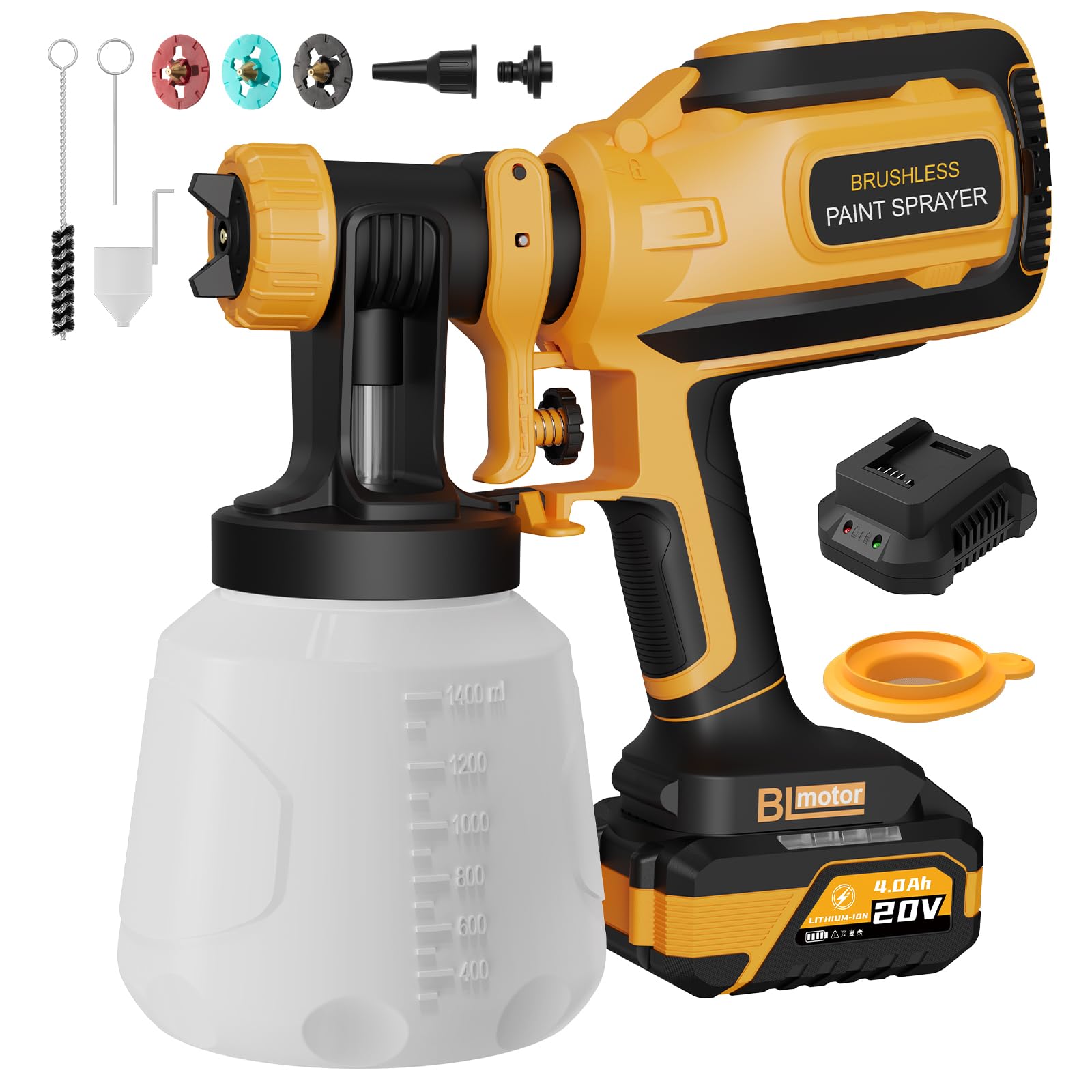
The rare cordless kit that includes a battery and charger right in the box, so you start spraying immediately.
Most cordless spray painters expect you to supply your own power tool batteries, which can add hidden cost if you are not already invested in a specific platform. The PULENDY DL05S breaks that pattern by including a 20V 4.0Ah battery and charger, making it a true out-of-the-box solution for anyone who does not own a collection of cordless tools. It packs a 1400 ml container — 1400 ml versus the 800 ml cup on the Wagner Control Spray 250 — which means fewer refill stops when you are covering cabinets, doors, or fences.
At 5.94″ x 11.81″, it is compact enough for tight spaces, and the brushless motor delivers consistent flow without the power fade you get from brushed motors. The three brass nozzles (1.0mm, 1.5mm, 2.0mm) cover the range from thin sealers to thicker latex, and the three spray patterns switch easily. Shoppers say that it saves “loads of time, frustration and effort” and that cleanup is simple, though one reviewer noted the instruction booklet is weak and recommends watching a “How to Use A HVLP Paint Sprayer” video for best results. It is a complete package that skips the hassle of battery hunting.
Cordless convenience
- Includes a 20V 4.0Ah battery and charger — no extra purchase needed to start spraying.
- The 1400 ml container reduces refills on big jobs.
- Low-voltage and overload protection built in to protect the battery from damage.
Battery life short
- The included instruction manual is sparse; plan to watch a setup video for best results.
- With a full 1400 ml container of paint, the sprayer is noticeably heavy for smaller hands or extended overhead work.
Small touch-ups: you want a truly self-contained cordless sprayer with a battery included, a large container for fewer refills, and reliable brushless motor performance.
Large areas: you already own Dewalt or Ryobi batteries and prefer a cordless model that uses your existing ecosystem to save space.
4. Wagner Spraytech 520008 Control Painter HVLP

The corded HVLP specialist that flies through medium-sized projects with adjustable material flow and spray width.
Wagner claims its Control Painter applies coatings “5X faster than a brush,” and the numbers back it up: it can cover an 8′ x 10′ area in less than 2 minutes. The 1.5-quart hopper holds significantly more paint than the 800 ml cup on the Control Spray 250, which means fewer refills on jobs like basement walls, garage ceilings, or medium-sized furniture sets. The key feature here is the material flow control knob combined with adjustable spray width, which lets you dial in the exact paint volume for the surface — thick on rough wood, light on smooth trim.
Buyers report it works “flawlessly” with oil-based stains and saved one reviewer in labor on a 460-foot privacy fence. The cleanup is straightforward with a few removable parts, taking about 20 minutes. Some buyers mention the hopper is heavy when full, and on rough surfaces like bare concrete it may need multiple passes, using more paint. Unlike the Graco TrueCoat 360, this model requires thinning of thicker paints (a 2:1 mix of paint to water is mentioned in reviews), so it is best suited to stains and thinned latex. It is a strong middle-ground pick for homeowners who want corded reliability and a larger hopper.
Easy cleanup
- Sprays an 8′ x 10′ area in under 2 minutes — 5X faster than a brush or roller, according to the brand.
- The material flow control and spray width adjustments let you fine-tune coverage for different surface textures.
- Lightweight and comfortable for extended use on walls, fences, and sheds.
Low pressure output
- Requires thinning of thicker latex paints — not a “spray straight from the can” tool.
- The hopper is heavy when full, which can tire your arm during long ceiling or overhead work.
Thin varnishes: you have medium-sized projects like a shed, garage, or basement walls and want a lightweight corded sprayer with adjustable flow and a large hopper.
Latex paints: you need to spray unthinned latex paint straight from the can or prefer the unlimited runtime of a cordless model.
5. DTEZTECH Cordless Paint Sprayer for Dewalt 20V Battery
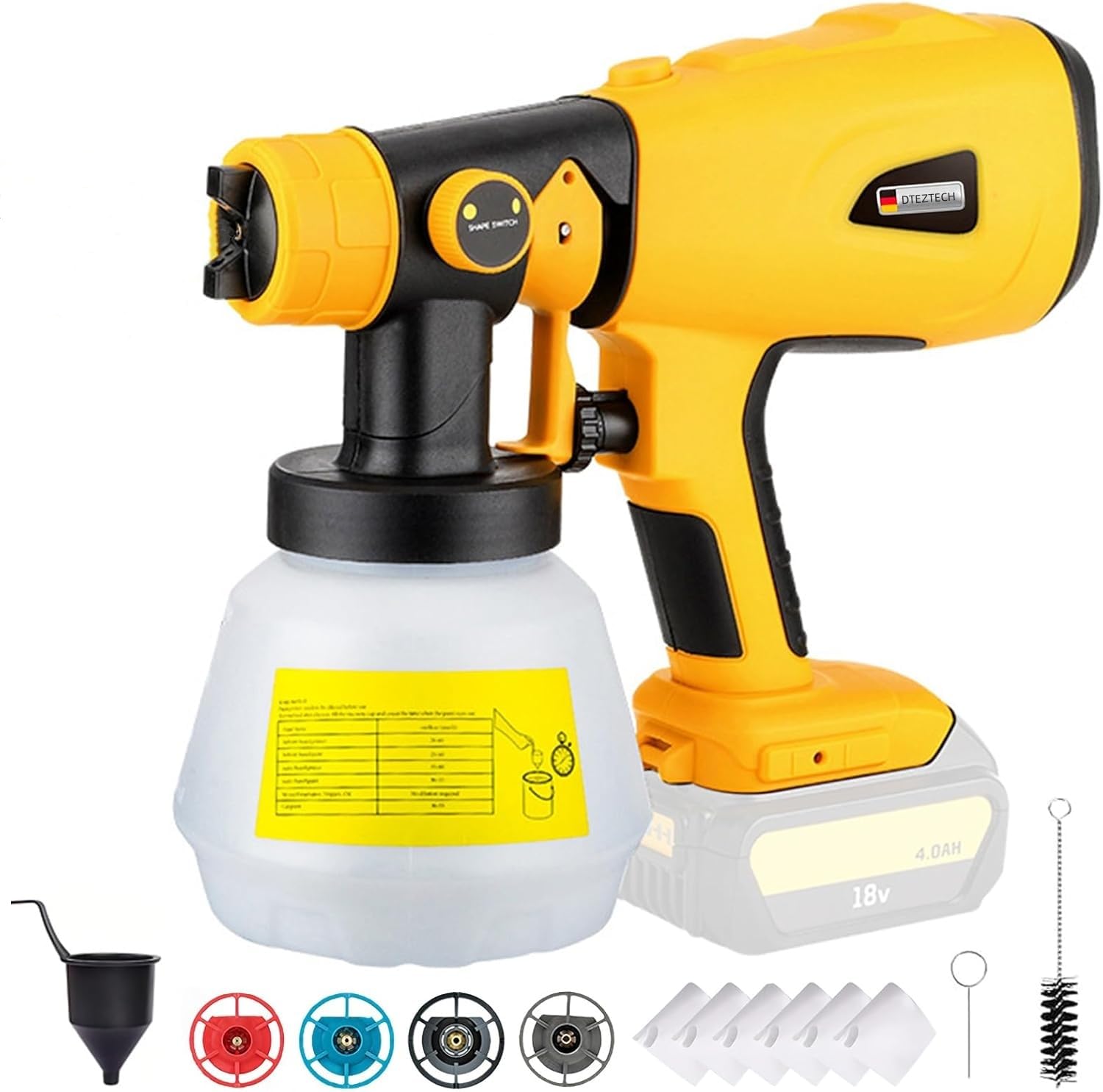
The cordless beast for Dewalt fans that pushes paint at 1600 ml per minute through a power-hungry brushless motor.
If you already own Dewalt 20V Max batteries, this sprayer slides right into your tool ecosystem with no extra charger to buy. The 200W brushless motor delivers a maximum flow rate of 1600 ml per minute — the highest listed flow rate in this roundup — which means it can cover large surfaces fast. You get four copper nozzles (1.0mm, 1.8mm, 2.5mm, 3.0mm) plus three adjustable spray patterns, giving you the widest range of material handling from thin stains to thick latex without switching tools.
One buyer reports that it “performs as well as the Wagner Flexio 2500 at 1/3 the price,” which is a strong vote of confidence at this price tier. Owners mention that it works excellently for deck staining and even painting a truck roof, with easy 5-10 minute cleanup. The catch is weight — one buyer mentioned their wife found it heavy after 5 minutes of use, and battery life depends heavily on your battery capacity: a 4Ah battery lasts about two tank fills before slowing, while a 6Ah battery can last all day with intermittent use. The low-voltage protection chip automatically cuts power to prevent battery damage, which is a smart touch.
Dewalt battery compatible
- 1600 ml/min flow rate is the highest here, meaning faster coverage on big fence and deck projects.
- Four copper nozzle sizes (1.0mm to 3.0mm) handle everything from thin stain to thick latex paint.
- Low-voltage protection chip preserves your Dewalt 20V batteries from being fully drained.
Plastic nozzle fragility
- Heavy enough that some users find it fatiguing after 5 minutes of continuous spraying.
- Battery not included — you need to supply your own Dewalt 20V battery, and a 4Ah battery lasts roughly two tank fills before power drops.
DIY furniture: you already have Dewalt 20V batteries and want a powerful cordless sprayer with the widest nozzle range and fastest flow rate for big outdoor projects.
Heavy use: you need an all-in-one kit with a battery included, or you have smaller hands and prefer a lighter tool for long spraying sessions.
6. Histely Cordless Paint Sprayer for Ryobi One+ 18V Battery
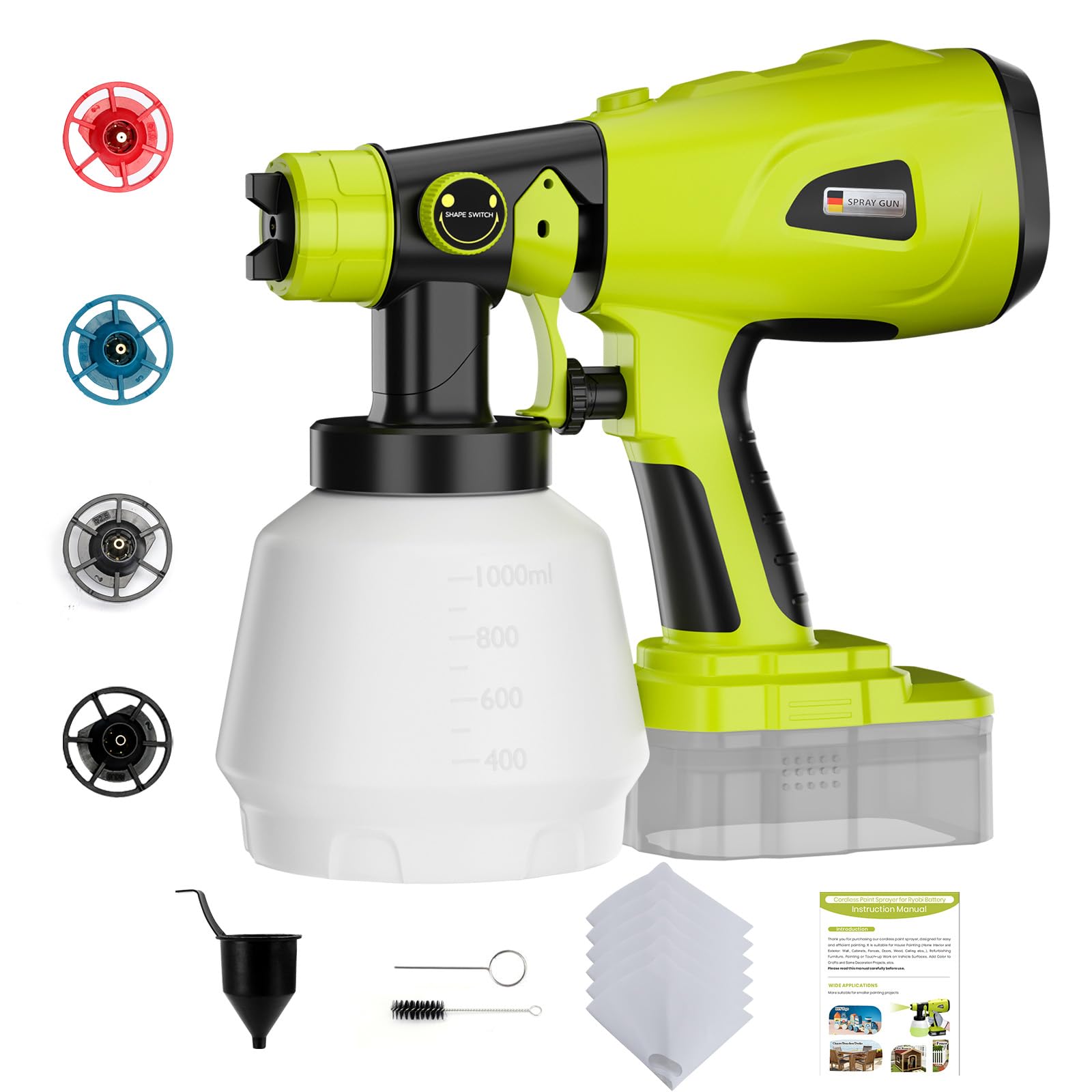
The lightweight cordless option for Ryobi owners that weighs only 1.3 pounds and comes with four brass nozzles.
At just 1.3 pounds, this is the lightest spray painter in the lineup, which makes a real difference when you are working overhead on cabinets or ceilings or spending an afternoon on a fence. It uses the Ryobi One+ 18V battery platform (battery not included) and fits batteries like the P100, P102, and larger capacity packs. The 1000 ml container is a good middle-ground size — bigger than the Wagner Control Spray 250’s 800 ml cup but smaller than the 1400 ml tank on the PULENDY — and the four brass tip sizes (1.0mm, 1.8mm, 2.5mm, 3.0mm) cover the same range as the DTEZTECH for DIY toy painting up through thick fence stain.
Customers note it works “great and easy to use” on a 5′ x 70′ cinder wall, using 2-3 4Ah Ryobi batteries for the whole job, and that it stained a wooden privacy fence in under 2.5 hours with uniform spray. One reviewer notes that the included paint strainers are poor quality (“like toilet paper”) and recommends buying a metal strainer or using pantyhose instead. The sprayer includes adhesive masking tape and a viscosity cup, which are helpful extras for beginners. For Ryobi tool owners who want a dedicated sprayer that barely adds weight to their kit, this is the natural fit.
Lightweight design
- At 1.3 pounds, it is the lightest sprayer here — ideal for overhead work and long fence jobs without arm fatigue.
- Four brass nozzle sizes (1.0mm to 3.0mm) cover the full range from fine finishing to thick latex.
- Low-voltage protection system helps keep your Ryobi batteries safe from deep discharge.
Limited power
- The included paint strainers are very poor quality — plan to buy a metal strainer separately.
- Thinner paints and stains work best; thicker latex needs careful thinning to avoid clogs.
Quick projects: you already own Ryobi One+ 18V batteries and want the lightest possible cordless sprayer for quick fence, cabinet, and door projects.
Thick coatings: you need a sprayer that handles unthinned latex straight from the can, or you prefer a corded tool with unlimited runtime.
7. Tilswall Paint Sprayer Dreamer400 Ultra-Light Electric
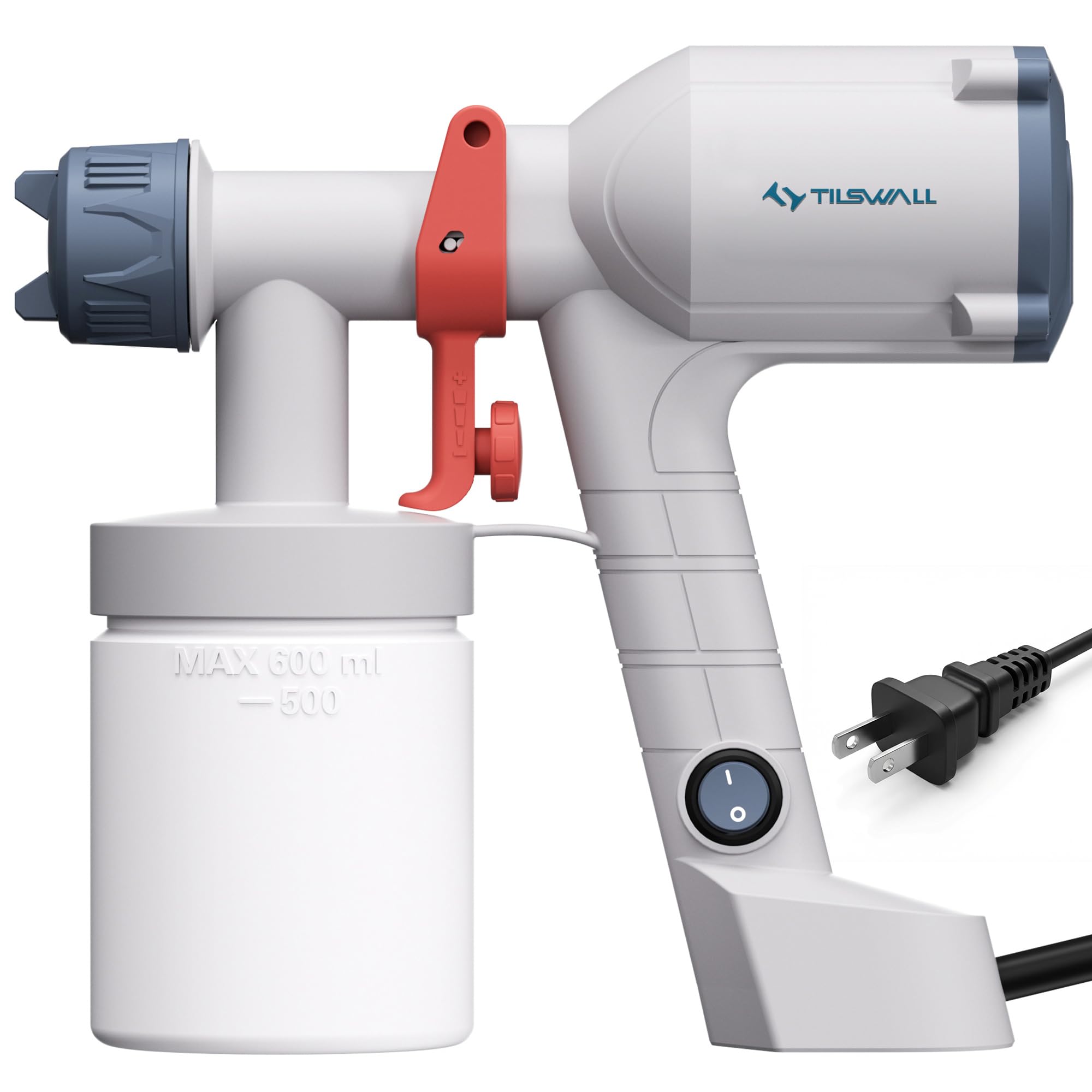
The ultra-budget entry-level sprayer that gets the job done once you learn the thinning ratio.
If you are tackling your first real painting project and want to try a spray painter without investing much, the Tilswall Dreamer400 keeps the entry cost low while still giving you three nozzle sizes (1.3mm, 1.8mm, 2.6mm) and three spray patterns (vertical, horizontal, circular). It is marketed as suitable for beginners, and the ultra-light body makes it easy to handle even for someone who has never held a spray gun before. The important note in the specs is that you must dilute the paint before use and follow the recommended viscosity guidelines to avoid splatter.
One buyer gave a balanced review: “For the price point, it did what I needed,” but noted it gets very hot during use. Another reviewer was less forgiving, saying the spray pattern is “all over the place” and that it “spits out big wet droplets that dry into a bumpy orange-peel mess” — so this is definitely a tool that requires patience with thinning and a test spray on cardboard. Unlike the Wagner Control Spray 250, which works well straight from the start for large staining jobs, the Tilswall demands more setup attention. Cleanup is simple if done within 15 minutes after use, and the included 5 filter papers and cleaning kit help keep it running. It is a functional entry point, not a finish-quality tool.
Budget friendly
- Three nozzle sizes (1.3mm, 1.8mm, 2.6mm) give you flexibility across thin stains and thicker latex.
- Ultra-light design and simple trigger operation make it very accessible for first-time sprayer users.
- Includes a full cleaning kit with filter papers, cleaning needle, and brush.
Spray pattern uneven
- Inconsistent spray pattern with some units spitting droplets instead of a fine mist, requiring careful thinning and practice.
- The handle gets very hot during extended use, similar to the Wagner Control Spray 250, but without the same build quality.
Beginner use: you are on a tight budget and want to experiment with spray painting on rough outdoor projects like fences or sheds where finish perfection is not critical.
Professional jobs: you need a reliable spray pattern for furniture, cabinets, or any project where a smooth professional finish matters — the more consistent options start higher up in price.
Understanding the Specs
HVLP Technology
HVLP stands for High Volume, Low Pressure. It means the sprayer pushes a large volume of air at a relatively low pressure, which atomizes the paint into a fine mist without blasting overspray everywhere. The result is a smooth, even coat with less waste and better control than older high-pressure systems. Most handheld spray painters in this guide use HVLP, and the key difference is how well they atomize (break up) the paint — a good HVLP sprayer gives you a consistent mist; a poor one spits droplets that dry into an orange-peel texture.
Nozzle Size and Spray Pattern
The nozzle size (measured in millimeters) determines what kind of paint you can spray without clogging. Thin stains and sealers work well with a 1.0mm to 1.8mm nozzle, while thicker latex paint needs a 2.0mm to 3.0mm opening to flow freely. The spray pattern — horizontal fan, vertical fan, or circular — lets you match the spray shape to the surface: a horizontal fan for fence boards, a vertical fan for narrow trim, and a circular pattern for tight corners. Having at least three nozzle options and three pattern options gives you the flexibility to move between different projects without buying extra parts.
FAQ
Do I need to thin paint for a handheld spray painter?
How long does it take to clean a handheld spray painter?
Can I use a cordless spray painter for an entire house?
What is the difference between a handheld spray painter and a stationary airless sprayer?
Can I spray oil-based paint through these handheld sprayers?
How do I prevent clogging in a handheld spray painter?
Is a handheld spray painter better than a roller for fences?
What size nozzle should I use for latex paint?
Can I use a handheld spray painter for staining a deck?
How long does a handheld spray painter last with proper care?
Final Thoughts: The Verdict
For the majority of shoppers, the best handheld spray painter winner is the Wagner Control Spray 250 because it combines corded reliability, a lightweight