
Our readers keep the lights on and my garage snacks stocked. As an Amazon Associate, I earn from qualifying purchases.
Specs are compiled from manufacturer listings and verified buyer reviews and can change over time — please confirm the key details on the product page before buying.
When a trailer, a fleet truck, or a personal vehicle vanishes from sight, you need a device that tells you exactly where it is — not one that runs out of power or hides behind a confusing monthly contract. The core choice is power source and update frequency — whether you’re tracking an RV or a teen driver.
I’m Min Islam — the founder and writer behind Trending Car. This guide is built by comparing the manufacturers’ published specifications and the patterns across verified customer reviews, so you get each pick’s real strengths and trade-offs instead of marketing spin.
if you need a set-and-forget battery unit or a hardwired monitor, these reviews help you find the right gps asset tracker by matching its power source and alert style to your real-world use.
Our Picks at a Glance

How To Choose The Best GPS Asset Tracker
Choosing a tracker depends on its power source and the alerts you need.
Power Source: Battery vs. Hardwired vs. OBD
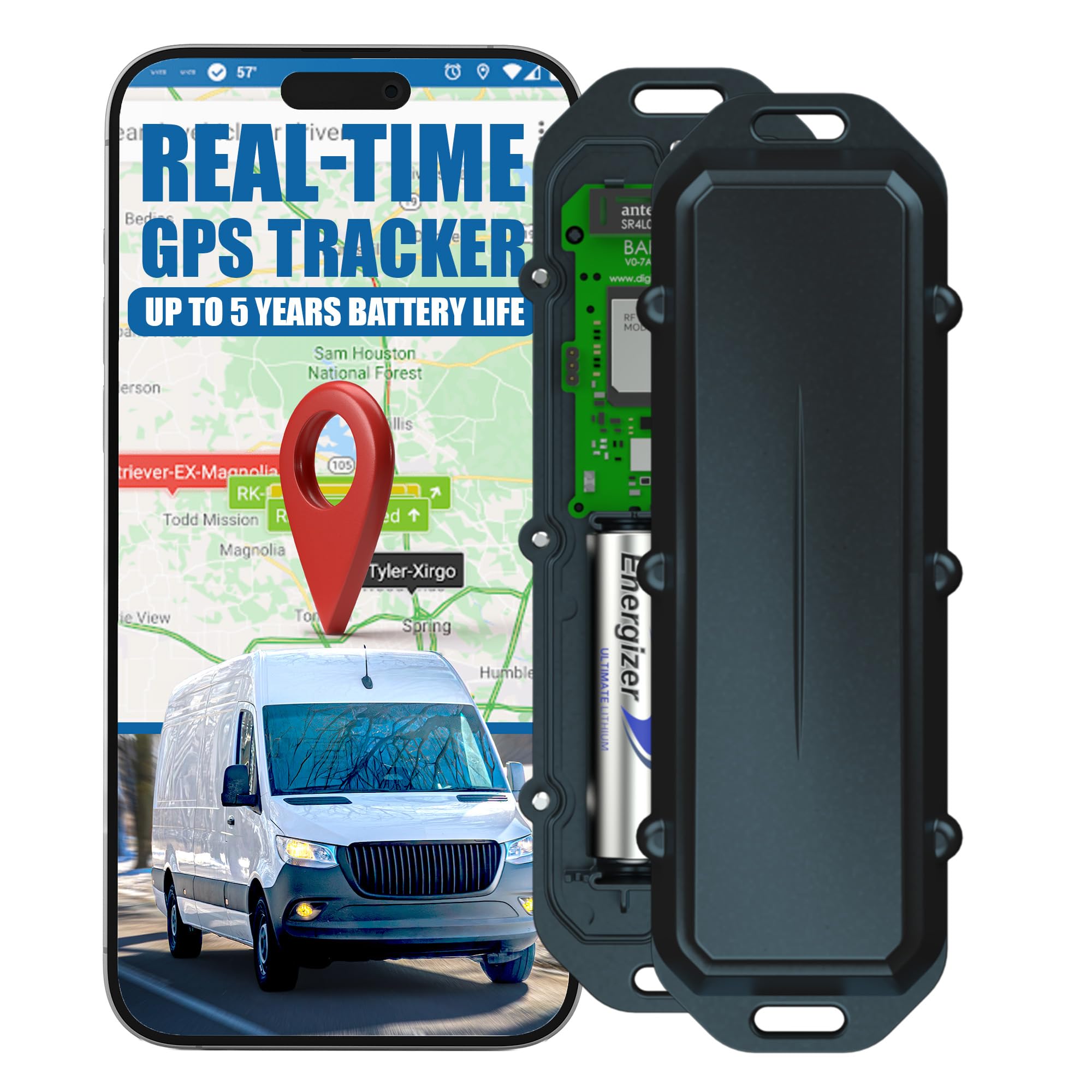
Battery-powered trackers (like the Lonestar Oyster3) can last years on lithium cells, making them perfect for trailers or equipment that sits idle. Hardwired units (like the Optimus GV75MG) run off the vehicle’s 12V system so you never charge them, but installation takes a bit of wiring expertise. OBD plug-in trackers (like the Moto Watchdog) simply slot into your car’s diagnostic port, though some vehicles leave the port powered even when off, which can drain your starter battery.
Update Interval: How Often It Reports
An update every 5 seconds (like the Mini PRO II LTE) helps catch a thief mid-theft, but it burns through data and battery fast. A 30-second update (like the VITALGLOW unit) is a solid middle ground for daily driving. If you only need to know where a parked trailer is once an hour, a 60-minute update can stretch battery life to years.
Subscription or No Subscription
Several trackers now offer no-monthly-fee plans (VITALGLOW and Moto Watchdog) — you pay once and use the SIM card for life. Others like the Cube Pro and Barra GPS charge a monthly fee for the cellular data plan. A no-subscription tracker can be cheaper than a monthly plan after two years.
Quick Comparison
| Model | Best For | Power Type | Update Interval | Battery Life | Amazon |
|---|---|---|---|---|---|
| Mini PRO II LTE★ Best Overall | Fleet management & anti-theft | Hardwired | As fast as 5 seconds | 6 hours (backup) | Amazon |
| Lonestar Barra GPSLong-Life Champ | Long-term parked asset | Replaceable battery | Every 5 min (motion) | Up to 8 years | Amazon |
| Optimus GV75MG | Boat, motorcycle, or machinery | Hardwired | Every 30 seconds | 6 days (backup) | Amazon |
| Cube Pro GPS | All-purpose vehicle tracking | Rechargeable battery | Real-time | Up to 12 months | Amazon |
| VITALGLOW GPS Tracker | Budget one-time purchase | Rechargeable battery | Every 30 seconds | Up to 20 days | Amazon |
| Moto Watchdog OBD | Plug-and-play car tracking | OBD (vehicle power) | Real-time | No battery needed | Amazon |
| Lonestar Oyster3 | Trailers, RVs, and boats | Replaceable battery | Customizable | Up to 10 years | Amazon |
In‑Depth Reviews
1. Mini PRO II LTE 4G GPS Tracker
Our pick — 4.5★ from 550+ verified ratings; the strongest balance of quality and price.
A hardwired guard that can kill your engine from anywhere in the world.
You get real-time location and route tracking using both GPS and GSM antennas (cellular tech for sending data), so it works for fleet management and anti-theft security. The standout feature here is the remote ignition cutoff — a hardwired relay system that lets you disable the vehicle from your phone. Buyers report the backup battery “will hold up for weeks on internal battery” if the main power is cut, which is exactly the scenario a thief creates.
At 3.4 x 0.5 x 2.2 inches and just 1.76 oz, the case is easy to tuck away inside a door panel or under a seat. The weather-resistant build handles rain and snow. Unlike the Lonestar Oyster3 or the Barra GPS that run on disposable cells, this one needs a hardwire install — but in return you get update intervals as fast as every 5 seconds, far quicker than the 30-second or 5-minute updates on other picks.
The TrackmateGPS app supports customizable geofences (virtual perimeters that send alerts when crossed) and route history. It does require a cellular data plan (SIM included), but multiple plan tiers let you choose update speed. One reviewer who runs a driving school put it simply: “I don’t know how i survived without it.”
Why It’s the Top Pick
- Remote killswitch disables the vehicle instantly from your phone
- Update intervals as fast as 5 seconds for near-live tracking
- Backup battery lasts 6 hours if main power is disconnected
The Installation Reality
- Hardwired — not a DIY plug-and-play for everyone
- Requires a monthly data plan for cellular service
- Internal battery only 6 hours of continuous use on backup
Ideal for: Fleet managers and owners who want the ultimate anti-theft tool — a hardwired tracker that can remotely stop the engine mid-theft.
A Consideration: If you hate wiring or need a tracker for a parked asset without a constant 12V source, the Lonestar Oyster3’s battery design is simpler.
2. Lonestar Tracking Barra GPS
Single-charge battery life measured in years — not days.
For a parked trailer or boat, avoid a tracker that dies every few weeks. The Barra GPS uses two user-replaceable AA-type batteries and claims up to 8 years with daily updates, 3 years with movement-based tracking, and 2 years with hourly updates. Owners mention it as a “set-and-forget” device with up to 5 years of real-world battery life.
It uses multi-GNSS satellite tracking (GPS, GLONASS, Galileo, BeiDou — more satellite networks than the Mini PRO II’s GPS-only setup) and falls back to cell tower positioning when the sky is blocked. The housing is IP68 waterproof and IK07 impact-rated, meaning it handles dust, submersion, and drops. One owner noted “the device is larger than iPhone 15 Pro Max,” which makes discreet hide-and-seek harder than with the 3.4-inch Mini PRO II or the Oyster3.
Alerts cover geofence breaches, tip detection, impact events, and tampering. It ships with two batteries and has a low-cost subscription plan (not subscription-free like the VITALGLOW or Moto Watchdog). The 5.9 x 2 x 0.8-inch size and 4G/5G coverage in the US, Canada, and Mexico make it a sturdy long-haul companion for any asset that sits still for months.
Why It Stands Out
- User-replaceable batteries — up to 8 years of life with daily updates
- IP68 and IK07 rated: waterproof, dustproof, and impact-resistant
- Works on 4G and 5G networks with multi-GNSS precision
Its Shortcomings
- Large size — harder to hide than compact stick-on trackers
- Requires a monthly subscription; not a no-fee device
- GPS signal struggles when surrounded by metal (e.g., inside a truck body)
Smart pick if: you own a trailer, boat, or RV that sits idle for months — you want to drop it on and leave it until the battery alert tells you it’s time for a swap.
Avoid it if: you need a tracker small enough to slip into a glove box or under a plastic trim panel.
3. Optimus GV75MG Waterproof Wired GPS Tracker

A tiny hardwired tracker that punches far above its weight for accuracy.
Reviewers call this unit “tiny, battery lasts 6 days off main power, accurate to 3ft” — and that combination of small size, backup battery, and pinpoint accuracy makes it a steal. The Optimus GV75MG hardwires into a 12V system (positive and negative wires) and costs per month, which is lower than the Cube Pro’s /mo plan and the Oyster3’s /mo plan. It reports every 30 seconds and on every turn, with an upgrade to 10-second reporting if you need faster updates.
The IP67 waterproof rating means it survives rain, hose-downs, and splashes — ideal for boats, ATVs, and utility vehicles. It ships with a SIM card and data plan for the USA already active, so activation is minimal. Unlike the Moto Watchdog OBD which just plugs in, this one requires a 2-wire connection and the manual warns you to seek professional help if unsure — a reasonable caution since a bad wire can drain your battery or cause a short.
Backup battery life of 6 days (as noted in a review) is shorter than the Mini PRO II’s claimed “weeks,” but for a wired unit, six days is plenty to bridge a power cut. The Optimus app sends email and text alerts for movement, speeding, geofence entry/exit, and power disconnect, plus stores 1 year of tracking history.
The Draws
- Remarkably accurate — reviewers consistently note 3–15ft precision
- Low monthly cost at /mo with no contract
- Waterproof and small enough to hide in tight spaces
The Trade-Offs
- Hardwired installation — not for those who dislike electrical work
- Backup battery lasts 6 days, not weeks like the Mini PRO II
- Bare wires need soldering for marine terminals, per one buyer
Buy this when: you want an affordable, highly accurate wired tracker for a motorcycle, boat, or piece of machinery — and you don’t mind a one-time wire splice.
skip it if: you need a plug-and-play solution or a tracker for an asset that has no constant 12V power source.
4. Cube Pro GPS Tracker
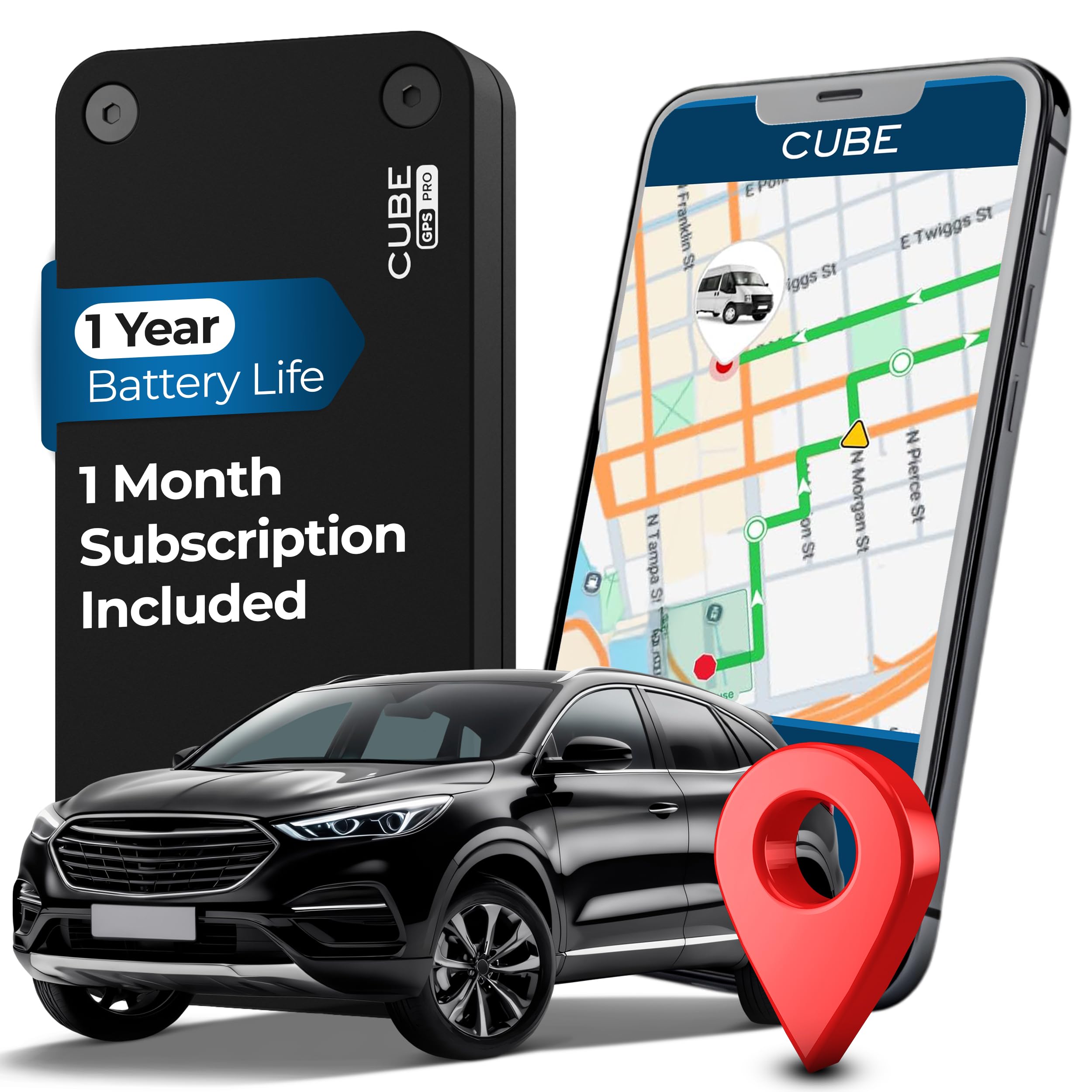
A year of run time on one charge, with a magnet strong enough to hold onto any metal surface.
The Cube Pro packs a 6000mAh battery that the manufacturer says delivers up to 12 months of continuous use, and reviewers back that up: “the battery last forever.” It attaches magnetically to any metal surface with what buyers call “super strong” magnets, so you can stick it under a car seat, inside a trailer frame, or on a metal container within minutes. The IP67 build keeps out dust and water.
It updates in real time through the Cube Tracker app on iOS and Android, and you can set geofences and receive instant movement alerts. A built-in 100dB ringer helps you find the tracker itself if it gets buried in a cargo area. Unlike the hardwired Mini PRO II or Optimus, the Cube Pro needs recharging after about a year — you plug it in via USB-C for a few hours. One reviewer noted “harder to hide large model” since it measures 5.5 x 2.75 x 1 inches and weighs 8 oz, chunkier than the 1.76-oz Mini PRO II.
The subscription runs per month with annual billing or month-to-month, with no cancellation fees. It stores up to 5 years of location history, which beats the Optimus’s 1-year history. If you need a tracker that works on boats, trucks, or trailers without any wiring, the magnetic mount and long charge cycle make the Cube Pro a solid middle ground between disposable-battery units and hardwired systems.
What Works
- Up to 12 months on a single charge with a large 6000mAh cell
- Strong magnetic mount — sticks and stays on any metal surface
- IP67 waterproof + loud 100dB ringer for retrieval
What Doesn’t
- Larger and heavier than many other trackers at 8 oz
- Requires a subscription at /mo (annual) — not a one-time buy
- You have to remember to recharge it roughly once a year
Go for the Cube if: you want a no-wire, long-lasting magnetic tracker for a car or truck that you can recharge annually — and you value the extra features like the built-in ringer.
Another option: If you prefer a disposable battery that lasts multiple years instead of a rechargeable one, the Lonestar Oyster3 fits better.
5. VITALGLOW GPS Tracker – No Monthly Fee
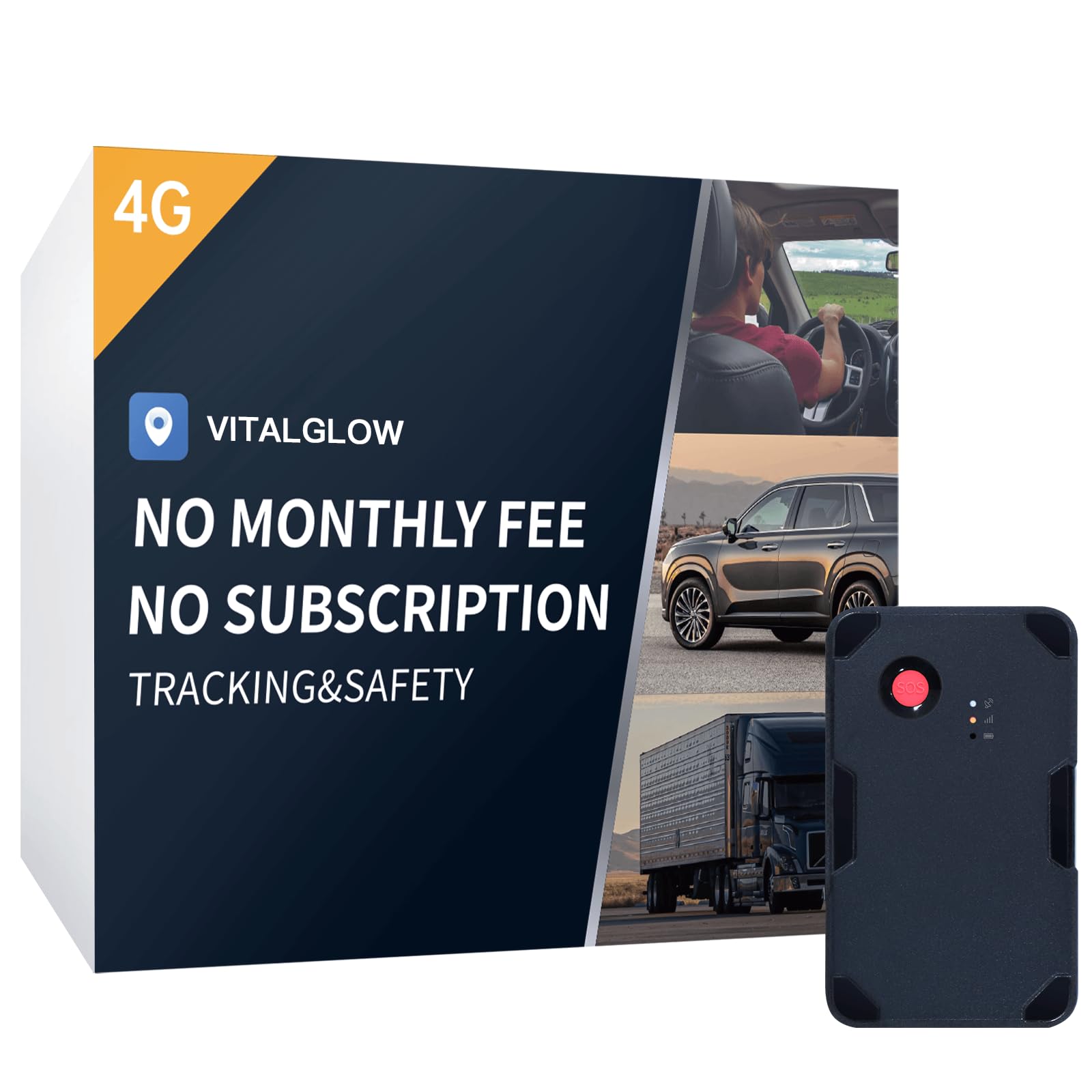
One upfront payment — zero monthly fees — and a battery that lasts 20 days per charge.
This tracker has no recurring bills. The VITALGLOW unit advertises no subscription, activation, or hidden fees ever — you pay once and the 4G SIM card works from the start. It updates every 30 seconds (slower than the Mini PRO II’s 5-second burst, but plenty for daily driving awareness) and works in 170+ countries including the US, Canada, and Mexico.
The 3000mAh battery claims up to 20 days per charge, and one reviewer confirmed “14-day battery” with real-world use. A USB-C port handles the recharging in a few hours. It attaches magnetically and measures just 2.9 x 1.7 x 0.8 inches, which is more pocket-friendly than the Cube Pro’s 5.5-inch body. The app includes geofencing and speed alerts, though a reviewer noted “no push notifications for geofence/low battery” — you have to open the app to see alerts rather than getting pinged on your phone.
For comparisons: at 20 days of battery, the VITALGLOW needs charging far more often than the Cube Pro (12 months) or the Lonestar Oyster3 (up to 10 years), but its zero-monthly-fee model means it beats the Cube and Optimus on long-term cost. If you are tracking a personal car you drive daily and want to avoid a subscription, this is the most direct path.
Why It Saves Money
- No monthly subscription — one price, done
- Compact at 2.9 x 1.7 x 0.8 inches with strong magnets
- Works in 170+ countries with no roaming charges
Where It Falls Short
- Battery life measured in days, not months — needs frequent charging
- No push notifications for geofence or low-battery alerts
- 30-second updates are slower than the competition’s real-time tracking
Choose this if: you have one car you drive regularly and you want a tracker that costs nothing after the initial purchase — no subscription, no surprises.
Look elsewhere if: your asset sits parked for weeks at a time and you don’t want to charge a device every three weeks.
6. Moto Watchdog OBD GPS Tracker
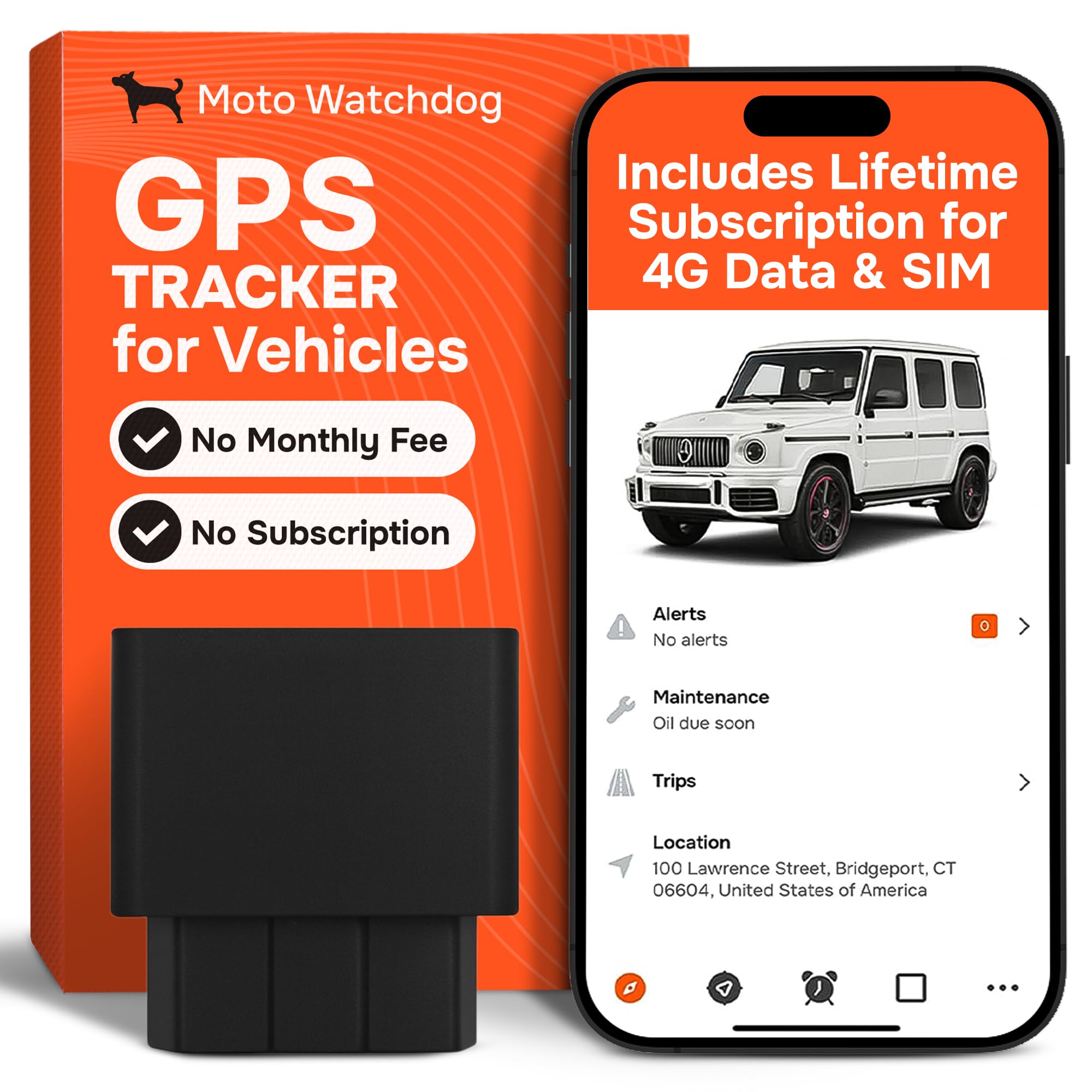
Plug it into your car’s diagnostic port and never think about charging again.
The Moto Watchdog plugs into the OBD-II port and draws power from the car — no wiring needed. No wiring, no batteries, no magnetic mounts. It works with iOS 18+, Android 10+, and a web/desktop dashboard. Customers note it is “100% subscription free” and “no one can beat the prices” for a zero-monthly-fee tracker.
It offers real-time tracking, speed monitoring, route history, and geofencing through the app. Unlike hardwired trackers such as the Mini PRO II, this one goes to sleep minutes after the ignition turns off, so it does not drain your car’s starter battery. The device does not track fuel level or read engine diagnostic codes (it is purely a location device) — the Maker offers an OBD+ model if you need those extras. One fleet owner noted it is “a great mid-level tracker” and bought more for their fleet after testing one.
One concern: some cars keep the OBD port powered even when the ignition is off, which could drain the vehicle battery over weeks. The device goes to sleep, but if the port itself stays live, the tracker’s own circuitry still draws a tiny current. For daily drivers this is a non-issue; for a car that sits for months, a battery-powered unit like the Lonestar Barra GPS is safer. That said, for a no-hassle, no-subscription car tracker you install in 3 minutes, the Moto Watchdog is the cleanest option.
Ease of Use
- Plug and play — installs in 3 minutes with no tools
- No battery to charge — runs off the vehicle’s own power
- Zero monthly fees — one purchase, and you are set
Limitations
- Limited to vehicles with an OBD-II port — not for trailers, boats, or machinery
- Does not track fuel level or read engine diagnostic trouble codes
- Some vehicles may keep the OBD port powered, creating a minor battery drain risk
Perfect for: anyone who wants a dead-simple, no-subscription tracker for their daily driver — plug it in and open the app.
Not for: non-vehicular assets (trailers, boats, RVs) or vehicles that sit unused for months at a time.
7. Lonestar Tracking Oyster3 Hidden GPS Tracker
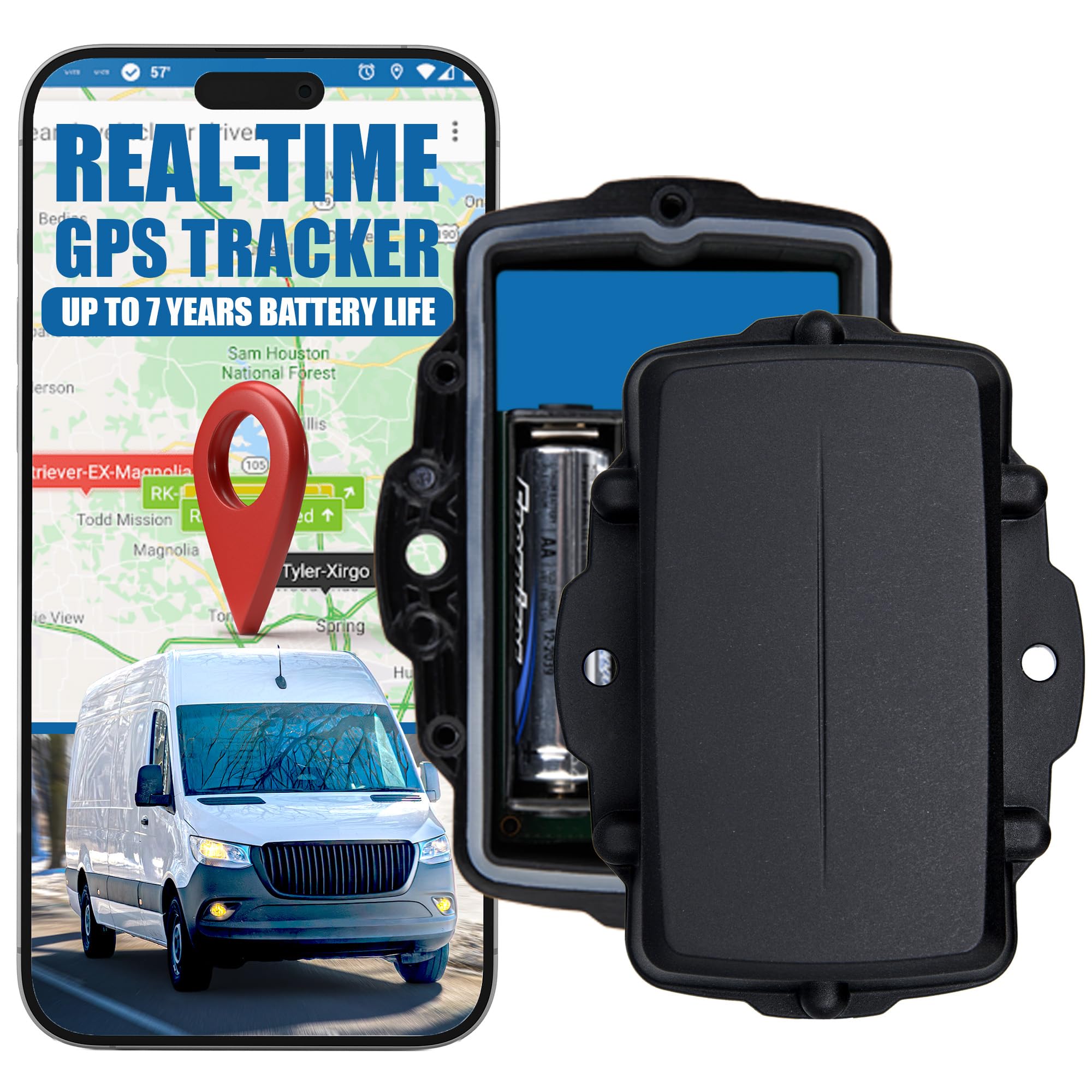
Tuck it into a trailer and forget it for nearly a decade.
The Oyster3 runs on three AA lithium batteries and the manufacturer claims up to 10 years with once-daily updates — 7 years with movement-based tracking, and 2.8 years if you drive 2 hours daily. One reviewer who has owned it for two years reported the batteries last 9–10 months with 5-minute updates and extensive driving, which is a massive gap from the 10-year ideal, but still multi-year life when you dial down the update frequency. The key advantage: batteries are user-replaceable at any store, unlike the Cube Pro which needs a full recharge cycle.
It uses multi-GNSS precision (GPS, GLONASS, Galileo, BeiDou) and connects via AT&T Cat-M1 and NB-IoT networks in the USA, plus LTE-M worldwide. The IP67 waterproof rating and wire-free design let you mount it with screws, bolts, or zip ties inside a trailer, RV, or boat without drilling holes for power. The Oyster3 is larger than the Mini PRO II at 5.39 x 2.83 x 1.18 inches, but the lack of wires makes installation far simpler — you just place it and set up the app.
Alerts include movement, geofence breaches, tampering, and theft recovery mode. The subscription is /month or /year with the first month free. For comparison, the Barra GPS from the same brand has a similar concept but with larger batteries and an IP68 rating, while the Oyster3 is slightly more compact and IP67. If you have a trailer or RV that sits for seasons at a time, the Oyster3’s battery life potential in low-update mode is class-leading among non-disposable-battery trackers.
what separates it
- Up to 10 years on user-replaceable AA lithium batteries
- Wire-free, IP67 waterproof, and easy to mount with zip ties or bolts
- AES-256 encryption (bank-level security) for location data
Where It Struggles
- Real-world battery life depends heavily on update frequency and driving — far less than 10 years for active use
- Monthly subscription required at /mo or /year
- App interface can be confusing across iOS, Android, and web, per some reviews
Best suited for: long-term tracking of trailers, RVs, and boats that stay parked for months — set the update interval to once daily and change batteries every couple of years.
Consider the Barra GPS instead if: you need a tougher IP68 rating and even larger battery capacity for an asset that lives outdoors in harsh conditions.
Understanding the Specs
Update Interval (Polling Rate)
This is how often the tracker sends its location to the server. A 5-second update (Mini PRO II) is ideal for real-time theft tracking because you see movement almost instantly. A 30-second or 5-minute update saves battery and data — fine for knowing where your parked trailer is, but useless if you are trying to follow a stolen car in real time. Most apps let you change the interval; faster burns more battery and data, slower extends both.
Battery Life vs. Power Source
Battery-powered trackers (Barra GPS, Oyster3, VITALGLOW) use either disposable lithium cells or rechargeable packs. “Up to 8 years” is measured with very infrequent updates (once daily) and ideal conditions — real driving cuts that time dramatically. Hardwired (Mini PRO II, Optimus) and OBD (Moto Watchdog) units pull power from the vehicle, so you never charge them, but they need the vehicle to have power. If the main battery is disconnected, internal backup batteries (typically measured in hours or weeks) keep the tracker going temporarily.
FAQ
What is the difference between a GPS tracker and a cellular tracker?
Where is the best place to hide a GPS tracker in a car?
Do GPS asset trackers need a monthly subscription?
How long does the battery last on a GPS tracker?
Can I use these trackers internationally?
Why does my GPS tracker show a different location than where the vehicle is?
What is geofencing and why does it matter?
Can a thief find and disable my GPS tracker?
What does IP67 or IP68 mean for a tracker?
Final Thoughts: The Verdict
For the majority of shoppers, the {“@context”: “https://schema.org”, “@graph”: [{“@type”: “ItemList”, “name”: “7 Best GPS Asset Tracker”, “url”: “https://trendingcar.com/best-gps-asset-tracker/”, “numberOfItems”: 7, “itemListElement”: [{“@type”: “ListItem”, “position”: 1, “name”: “Mini PRO II LTE 4G GPS Tracker”, “url”: “https://trendingcar.com/best-gps-asset-tracker/#product-1”}, {“@type”: “ListItem”, “position”: 2, “name”: “Lonestar Tracking Barra GPS”, “url”: “https://trendingcar.com/best-gps-asset-tracker/#product-2”}, {“@type”: “ListItem”, “position”: 3, “name”: “Optimus GV75MG Waterproof Wired GPS Tracker”, “url”: “https://trendingcar.com/best-gps-asset-tracker/#product-3”}, {“@type”: “ListItem”, “position”: 4, “name”: “Cube Pro GPS Tracker”, “url”: “https://trendingcar.com/best-gps-asset-tracker/#product-4”}, {“@type”: “ListItem”, “position”: 5, “name”: “VITALGLOW GPS Tracker – No Monthly Fee”, “url”: “https://trendingcar.com/best-gps-asset-tracker/#product-5”}, {“@type”: “ListItem”, “position”: 6, “name”: “Moto Watchdog OBD GPS Tracker”, “url”: “https://trendingcar.com/best-gps-asset-tracker/#product-6”}, {“@type”: “ListItem”, “position”: 7, “name”: “Lonestar Tracking Oyster3 Hidden GPS Tracker”, “url”: “https://trendingcar.com/best-gps-asset-tracker/#product-7”}]}, {“@type”: “Product”, “position”: 1, “name”: “Mini PRO II LTE 4G GPS Tracker”, “image”: “https://m.media-amazon.com/images/I/61yZ3tc7NkL.jpg”, “brand”: {“@type”: “Brand”, “name”: “Mini”}, “url”: “https://www.amazon.com/dp/B07S2YXFHP/?tag=tcarmin-20”, “offers”: {“@type”: “Offer”, “url”: “https://www.amazon.com/dp/B07S2YXFHP/?tag=tcarmin-20”}}, {“@type”: “Product”, “position”: 2, “name”: “Lonestar Tracking Barra GPS”, “image”: “https://m.media-amazon.com/images/I/815glFKajdL.jpg”, “brand”: {“@type”: “Brand”, “name”: “Lonestar”}, “url”: “https://www.amazon.com/dp/B0CJJVQDWR/?tag=tcarmin-20”, “offers”: {“@type”: “Offer”, “url”: “https://www.amazon.com/dp/B0CJJVQDWR/?tag=tcarmin-20”}}, {“@type”: “Product”, “position”: 3, “name”: “Optimus GV75MG Waterproof Wired GPS Tracker”, “image”: “https://m.media-amazon.com/images/I/61NHn9+RRPL.jpg”, “brand”: {“@type”: “Brand”, “name”: “Optimus”}, “url”: “https://www.amazon.com/dp/B089J75Q29/?tag=tcarmin-20”, “offers”: {“@type”: “Offer”, “url”: “https://www.amazon.com/dp/B089J75Q29/?tag=tcarmin-20”}}, {“@type”: “Product”, “position”: 4, “name”: “Cube Pro GPS Tracker”, “image”: “https://m.media-amazon.com/images/I/811elegW2ML.jpg”, “brand”: {“@type”: “Brand”, “name”: “Cube”}, “url”: “https://www.amazon.com/dp/B0CR7VJLX3/?tag=tcarmin-20”, “offers”: {“@type”: “Offer”, “url”: “https://www.amazon.com/dp/B0CR7VJLX3/?tag=tcarmin-20”}}, {“@type”: “Product”, “position”: 5, “name”: “VITALGLOW GPS Tracker – No Monthly Fee”, “image”: “https://m.media-amazon.com/images/I/61cBO7muPFL.jpg”, “brand”: {“@type”: “Brand”, “name”: “VITALGLOW”}, “url”: “https://www.amazon.com/dp/B0D99VHXSK/?tag=tcarmin-20”, “offers”: {“@type”: “Offer”, “url”: “https://www.amazon.com/dp/B0D99VHXSK/?tag=tcarmin-20”}}, {“@type”: “Product”, “position”: 6, “name”: “Moto Watchdog OBD GPS Tracker”, “image”: “https://m.media-amazon.com/images/I/81HphxKrYwL.jpg”, “brand”: {“@type”: “Brand”, “name”: “Moto”}, “url”: “https://www.amazon.com/dp/B0CX9HPQ8K/?tag=tcarmin-20”, “offers”: {“@type”: “Offer”, “url”: “https://www.amazon.com/dp/B0CX9HPQ8K/?tag=tcarmin-20”}}, {“@type”: “Product”, “position”: 7, “name”: “Lonestar Tracking Oyster3 Hidden GPS Tracker”, “image”: “https://m.media-amazon.com/images/I/81EOgVScBNL.jpg”, “brand”: {“@type”: “Brand”, “name”: “Lonestar”}, “url”: “https://www.amazon.com/dp/B07X8B5627/?tag=tcarmin-20”, “offers”: {“@type”: “Offer”, “url”: “https://www.amazon.com/dp/B07X8B5627/?tag=tcarmin-20”}}, {“@type”: “FAQPage”, “mainEntity”: [{“@type”: “Question”, “name”: “What is the difference between a GPS tracker and a cellular tracker?”, “acceptedAnswer”: {“@type”: “Answer”, “text”: “A GPS tracker uses satellite signals from the Global Positioning System (and often GLONASS, Galileo, or BeiDou) to determine its location. It then sends that location to your phone using a cellular network (4G or 5G) — like how your phone sends a text message. Without cellular service, the tracker stores the location data and uploads it when it reconnects. All the trackers in this guide combine GPS for positioning and cellular for communication.”}}, {“@type”: “Question”, “name”: “Where is the best place to hide a GPS tracker in a car?”, “acceptedAnswer”: {“@type”: “Answer”, “text”: “Common hiding spots include under a seat (secured with magnets or zip ties), inside a door panel, behind the glovebox, under the dashboard trim, or inside the center console. The Mini PRO II and Optimus GV75MG are small enough for these spots. Avoid placing the tracker inside a metal enclosure (like a truck body) because metal blocks the GPS signal — the Barra GPS reviewer specifically warned about this. Always test the signal before finalizing the mount location.”}}, {“@type”: “Question”, “name”: “Do GPS asset trackers need a monthly subscription?”, “acceptedAnswer”: {“@type”: “Answer”, “text”: “Most trackers require a monthly or annual subscription for the cellular data plan that transmits the location to your phone. Exceptions like the VITALGLOW GPS and Moto Watchdog OBD include the SIM card and cellular service for life with no recurring fee. Trackers from Lonestar (Barra, Oyster3), Optimus, and Cube all charge a monthly subscription (typically –20/month) that covers network access. Always check whether the price you see includes the first month or is just the hardware cost.”}}, {“@type”: “Question”, “name”: “How long does the battery last on a GPS tracker?”, “acceptedAnswer”: {“@type”: “Answer”, “text”: “It varies enormously by update frequency and usage. The Lonestar Oyster3 claims up to 10 years with once-daily updates, but real-world testing by one owner showed 9–10 months with 5-minute updates and 17,000 miles of driving. The Cube Pro promises up to 12 months on a single charge with its 6000mAh battery. Rechargeable units like the VITALGLOW last about 20 days. Hardwired units have no battery anxiety because they run off the vehicle — but their backup batteries typically last only hours or days if the main power is cut.”}}, {“@type”: “Question”, “name”: “Can I use these trackers internationally?”, “acceptedAnswer”: {“@type”: “Answer”, “text”: “Some trackers support global coverage. The VITALGLOW GPS works in 170+ countries including the US, Canada, and Mexico with no extra charges. The Lonestar Barra GPS and Oyster3 cover the US, Canada, and Mexico on 4G/5G networks. The Moto Watchdog OBD was reported to work in Southeast Asia. The Mini PRO II LTE and Optimus GV75MG are designed for US networks only. If you travel internationally, verify the specific bands the tracker supports versus the cellular bands in your destination country.”}}, {“@type”: “Question”, “name”: “Why does my GPS tracker show a different location than where the vehicle is?”, “acceptedAnswer”: {“@type”: “Answer”, “text”: “GPS accuracy can vary from 3 feet to about 30 feet depending on satellite visibility, weather, and nearby buildings. The Optimus GV75MG reviewers report accuracy “within 5-15ft in power saver” and as close as 3 feet. In dense cities or inside parking garages, the tracker may use cell-tower triangulation instead, which is less precise — often within a few hundred feet. Metal enclosures (truck bodies, shipping containers) can block the GPS signal entirely, as noted by a Barra GPS owner.”}}, {“@type”: “Question”, “name”: “What is geofencing and why does it matter?”, “acceptedAnswer”: {“@type”: “Answer”, “text”: “Geofencing lets you draw a virtual fence on a map inside the app — for example, around your home or job site. When the tracked asset enters or leaves that zone, the app sends you an alert. This is useful for knowing when a teen driver leaves school, a delivery truck arrives at a warehouse, or a trailer is moved from a storage lot. Every tracker in this guide except the most basic tiers offers geofencing alerts.”}}, {“@type”: “Question”, “name”: “Can a thief find and disable my GPS tracker?”, “acceptedAnswer”: {“@type”: “Answer”, “text”: “A determined thief can find a poorly hidden tracker, which is why concealment matters. The Mini PRO II LTE has a remote killswitch that can disable the vehicle’s ignition even if the tracker itself is found. The Lonestar trackers (Barra, Oyster3) send tamper alerts if the device is removed or the housing is opened. Professional thieves sometimes use GPS jammers that block the signal, but many modern trackers store location data locally and upload it as soon as the jammer is turned off — the Barra GPS has onboard flash memory for exactly this purpose.”}}, {“@type”: “Question”, “name”: “What does IP67 or IP68 mean for a tracker?”, “acceptedAnswer”: {“@type”: “Answer”, “text”: “It is an international standard for water and dust resistance. The first digit (6) means the device is fully dust-tight. The second digit indicates water protection: IP67 means it can survive submersion in up to 1 meter of water for 30 minutes. IP68 means it can handle deeper submersion (typically 1.5 meters or more) for longer periods. The Barra GPS has IP68, the Oyster3 and Optimus GV75MG are IP67, and the Mini PRO II is weather-resistant but not fully waterproof. If your tracker will be on a boat or exposed to heavy rain, look for IP67 or higher.”}}]}]}