
Our readers keep the lights on and my garage snacks stocked. As an Amazon Associate, I earn from qualifying purchases.
Specs are compiled from manufacturer listings and verified buyer reviews and can change over time — please confirm the key details on the product page before buying.
A fuel regulator that can’t hold steady pressure is like a leaky bucket — your engine either starves for fuel or gets flooded, and you spend every drive wondering what’s wrong. A faulty fuel regulator can ruin idle quality, throttle response, and power delivery. per verified buyer reviews regulators for real-world pressure consistency across carbureted and EFI builds.
I’m Min Islam — the founder and writer behind Trending Car. This guide is built by comparing the manufacturers’ published specifications and the patterns across verified customer reviews, so you get each pick’s real strengths and trade-offs instead of marketing spin.
Every regulator here has been vetted for real-world consistency, from a compact EFI unit that supports 1000 horsepower to a direct-fit OEM replacement for a Chevy Silverado, so you can choose the best fuel regulator with confidence and get your build right the first time.
Our Picks at a Glance

How To Choose The Best Fuel Regulator
Choosing the right fuel regulator is straightforward when you match pressure range and system type. You just need to match the pressure range to your engine type, choose the right style for your fuel system (return or returnless), and buy from a brand with a track record of not leaking. Here is what matters most.
Match the Pressure Range to Your Engine
Carbureted engines typically live between 4.5 and 9 PSI — too much pressure blows past the needle and seat, flooding the bowls. EFI systems need much higher pressure, usually 40 to 70 PSI, because the injectors rely on a consistent pressure differential to spray the correct amount of fuel. A regulator that covers 30-70 PSI works for most EFI builds, but a dedicated carburetor regulator like the Quick Fuel 30-803QFT is preset for the low range. Using the wrong range starves the engine or drowns it.
Bypass vs Dead-Head: Know Your Fuel System
A bypass-style return regulator sends excess fuel back to the tank, keeping the fuel cool and preventing vapor lock. This is the standard for EFI systems and high-horsepower builds. A dead-head regulator blocks flow entirely once pressure is reached, which is simpler and cheaper but can cause fuel to heat up in the rail. Most modern performance builds use a bypass regulator because it maintains steady pressure regardless of fuel demand.
Leak-Free Construction and Sealing
Fuel leaks are the top complaint; most stem from poor thread sealing or a rough regulator sealing surface. Units with machined billet aluminum bodies and anodized finishes tend to seal better than cast parts with painted surfaces. Owners consistently report that using Teflon tape or thread sealant on all NPT ports (not AN fittings) is mandatory, even on premium regulators. A regulator with a reputation for leaking from the housing — rather than the threads — should be avoided even at a tempting price.
Quick Comparison
| Model | Best For | Pressure Range | Horsepower Support | Weight | Amazon |
|---|---|---|---|---|---|
| Aeromotive 13129★ Best Overall | High-horsepower EFI builds | 40-75 PSI | 1000 HP | 10.1 oz | Amazon |
| Quick Fuel 30-803QFTCarburetor Champion | Carbureted gas engines | 4.5-9 PSI | 600 HP | — | Amazon |
| ACDelco Gold 217-3299 | GM truck OE replacement | 45-50 PSI | — | 1.76 oz | Amazon |
| EVIL ENERGY Regulator | Budget EFI swaps | 30-70 PSI | — | — | Amazon |
| YESHMA EFI Kit | Universal EFI installations | 0-100 PSI | — | 2.75 lb | Amazon |
| Mr. Gasket 9710 | Carbureted classics and small engines | — | — | 8 oz | Amazon |
| Standard Motor PR113T | Chevy TBI replacement | — | — | 7.2 oz | Amazon |
In-Depth Reviews
1. Aeromotive EFI Fuel Pressure Regulator – Adjustable 40-75 PSI – 13129
Our pick — over 4.5★ from 400+ verified ratings; the strongest balance of quality and price.
The gold standard for EFI builds needing reliable pressure at high horsepower.
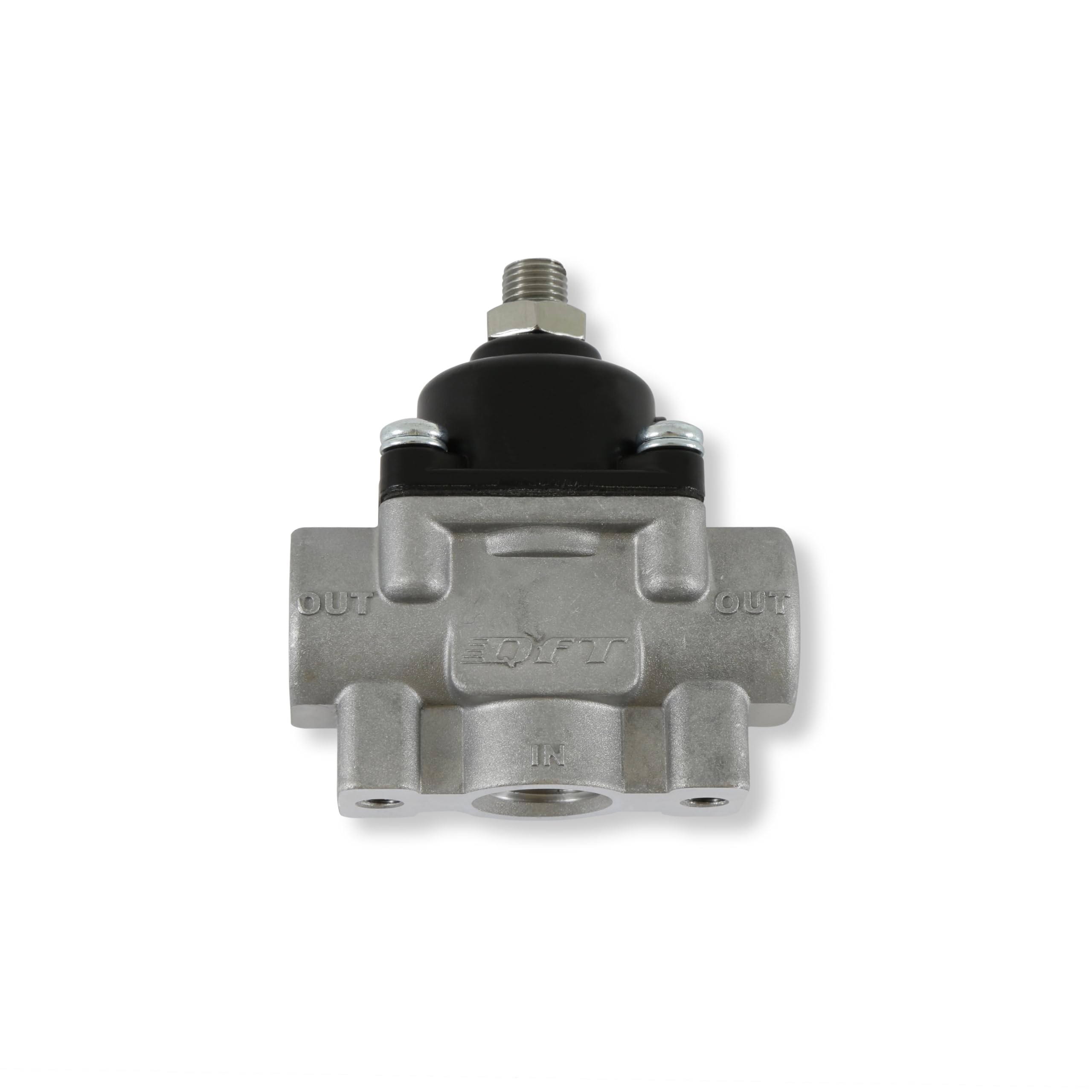
The Aeromotive 13129 is the regulator that keeps showing up under the hoods of high-end builds, and for a good reason — it handles fuel pumps up to 1000 HP with a steady adjustable range of 40-75 PSI. The compact body uses two ORB-06 inlet ports and one ORB-06 return port, which makes routing fuel lines in tight engine bays much cleaner than bulkier units. It also includes a dedicated 1/8-inch NPT port for a fuel pressure gauge, so you can monitor pressure at a glance without splicing into a line. The vacuum port provides a 1:1 boost reference, meaning fuel pressure rises in lockstep with boost pressure — a critical feature for forced-induction engines that keeps the injector differential constant under load.
Owners put this regulator through its paces on demanding applications. One buyer reports using it to maintain proper fuel pressure on a 1997 F250 7.3 Powerstroke, noting it holds a constant 65 PSI at the engine. The quality is the most-praised aspect of this unit, with owners calling it the only regulator to run. The recurring gripe is leakage — a handful of units have arrived with sealing issues from the housing, not the threads, though the overwhelming majority of buyers report zero leaks.
The crowd favorite — 4.6 stars across 400+ ratings — gives this the highest combined score in the list, and it deserves the top spot for any EFI build north of 700 horsepower.
What wins owners over
- Holds steady pressure at high flow; owners mention constant 65 PSI on diesel EFI swaps
- Boost-reference port is built-in, saving you the cost of a separate vacuum regulator
- Machined aluminum body with track-proven sealing when threads are prepped correctly
The trade-offs
- Heavier than standard replacement units at 10.1 ounces
- A minority of units have had housing leakage, so inspect the sealing surface on arrival
- Premium price point is not necessary for a 400 HP street carburetor setup
Reach for it if: You are building an EFI system that needs to hold 40-75 PSI reliably at 1000 horsepower levels.
Look elsewhere if: You only need a regulator for a sub-600 HP carbureted engine — the Quick Fuel will do the same job for less expense.
2. Quick Fuel 30-803QFT Fuel Pressure Regulator
The set-and-forget pick for carbureted engines needing a simple 6.5 PSI supply.
The Quick Fuel 30-803QFT is about as straightforward as a fuel regulator gets — it operates in the 4.5 to 9 PSI range and supports 4-barrel gas engines up to 600 HP, which covers the vast majority of street-driven V8s with a Holley or Edelbrock carburetor. It comes preset at 7 PSI from the factory, but customers note the included instructions specify 6.5 PSI, and the actual unit they received was set below 6 PSI. That is actually a good thing, because most carburetors want between 5.5 and 6.5 PSI, and it is easier to turn the adjustment screw up than to bleed pressure off. The body includes a 1/8-inch NPT port for manifold vacuum reference, and it uses a 0.250-inch restriction to dampen pressure spikes — a small detail that prevents the needle and seat from getting blasted open on hard acceleration.
Owners rave about how easy this is to live with. One buyer put it simply: “It’s super simple to install and it is perfectly set to 6.5 PSI right from the start.” The recurring advice from buyers is to use Teflon tape on all threaded connections, including AN fittings, because even this well-regarded unit will seep fuel without it. The top-discussed aspect is functionality, with owners praising how it solves fuel flooding problems instantly. At 4.6 stars across 223 ratings, it ties the Aeromotive for the highest rating on the list, but its 600 HP ceiling means it is out of its depth on a big-boost EFI build.
The single caveat: verify the factory pressure setting with your own gauge before bolting it on, because the advertised and actual set point have varied between units.
What makes it so easy
- Drops right in for any 4-barrel carburetor — preset at 6.5-7 PSI from the factory
- Compact aluminum body at 5.8 x 3.6 inches fits tight engine bays without rerouting lines
- Includes mounting bracket and vacuum reference port for boosted carb applications
The small catch
- Limited to 600 HP; a high-horsepower build needs the Aeromotive’s 1000 HP capacity
- Factory set point varies — one owner found his unit set below 6 PSI despite the advertised 7 PSI claim
- Teflon tape on AN fittings is mandatory; the threads will leak fuel without it
Grab this if: You have a carbureted engine up to 600 HP and want a regulator that arrives nearly ready to run.
skip it if: You are building an EFI system — this unit’s 9 PSI max is far below the 40+ PSI your injectors need.
3. ACDelco Gold 217-3299 (19236428) Fuel Injection Pressure Regulator
The direct-fit fix for GM trucks that crank twice before starting.
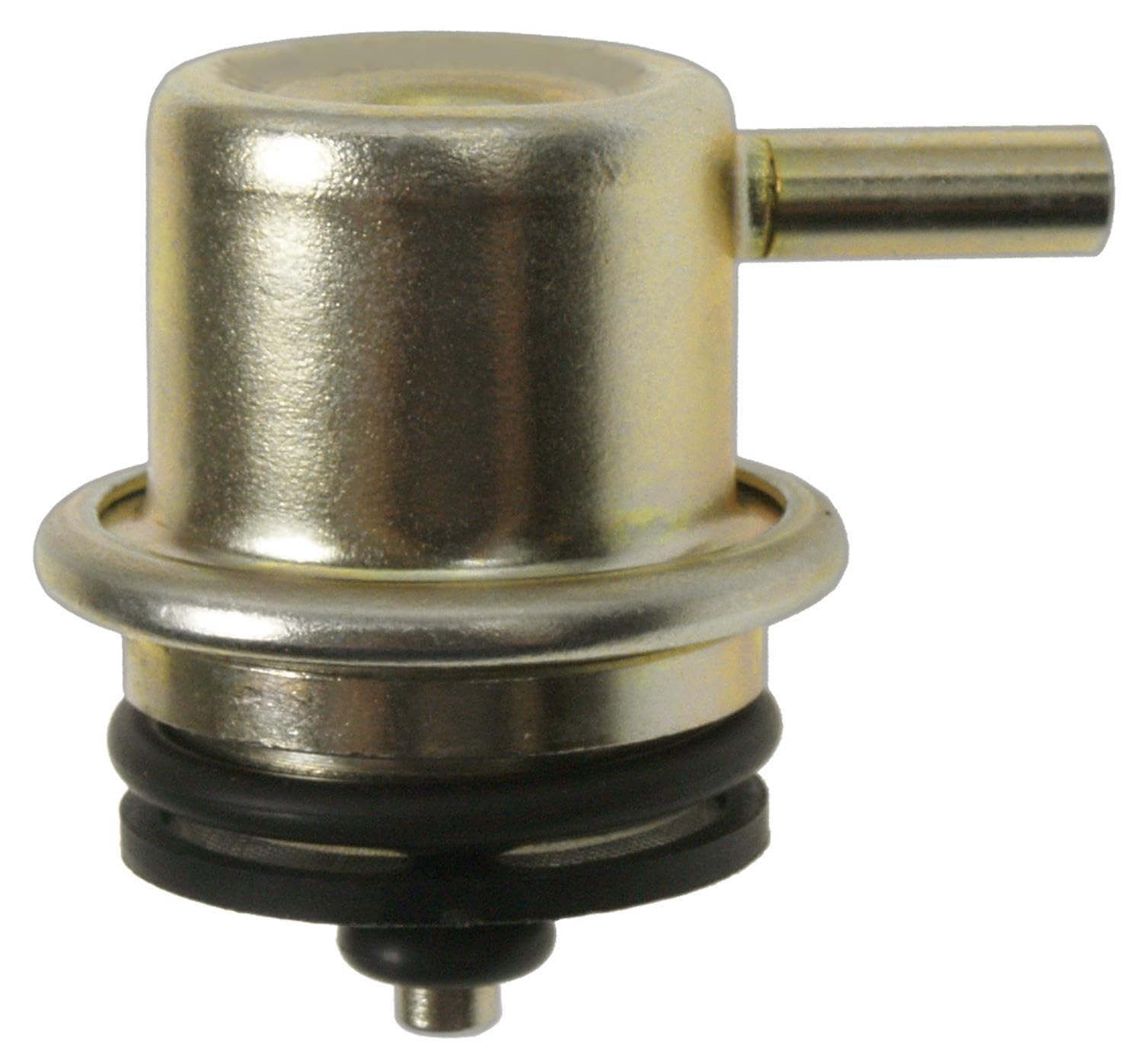
The ACDelco Gold 217-3299 is an OEM-grade replacement for GM trucks with the 4.8L, 5.3L, and 6.0L LS-based engines, and it solves one specific and very common symptom: the engine cranks twice before starting because fuel pressure bleeds down overnight. At just 1.76 ounces and 3.6 x 2.2 x 1.7 inches, it is a fraction of the size of the Aeromotive or EVIL ENERGY regulators, because it is not an adjustable performance part — it is a direct factory-fit component that drops onto the fuel rail. Owners consistently report that it replaces the factory part in about 15 minutes and fixes the warm-start hesitation immediately. One owner noted an “amazing difference” in how the engine runs after the swap.
The big caveat is that this regulator is set for 45-50 PSI, which works perfectly for most GM LS trucks, but is insufficient for the 7.4L Vortec 454 which needs 60 PSI. One buyer found this out the hard way — the part fit but the engine lost power under load and on hills. If you have a big-block Chevy truck, you need a different regulator entirely. For the 5.3L and 6.0L crowd, however, this is the most reliable fix available. The most-praised aspects are performance and quality, with owners noting zero weird noises after installation — just a clean first-start every time.
Why owners trust it
- 15-minute swap solves the warm-start hesitancy on 4.8L/5.3L/6.0L GM trucks
- OEM-grade quality at 4.3 stars across 157 ratings — owners call it “exact replacement”
- Minimal weight at 1.76 ounces; smaller than most aftermarket adjustable units
Who it does not fit
- Wrong for the 7.4L Vortec 454 — that engine requires a 60 PSI regulator
- Not adjustable; you get the factory pressure setting and cannot tune it
- Exclusive to GM LS fuel rails; no use on Ford, Mopar, or universal EFI systems
Best for: Anyone with a 1999-2007 GM truck or SUV that needs a factory-perfect replacement that works the first time.
Not for: Tuners who need adjustability — this is a fixed-pressure, drop-in part, not a tuning tool.
4. EVIL ENERGY Fuel Pressure Regulator 6AN EFI Bypass Return Adjustable (30-70PSI), Red
A capable EFI regulator for LS swaps and Sniper builds on a budget.
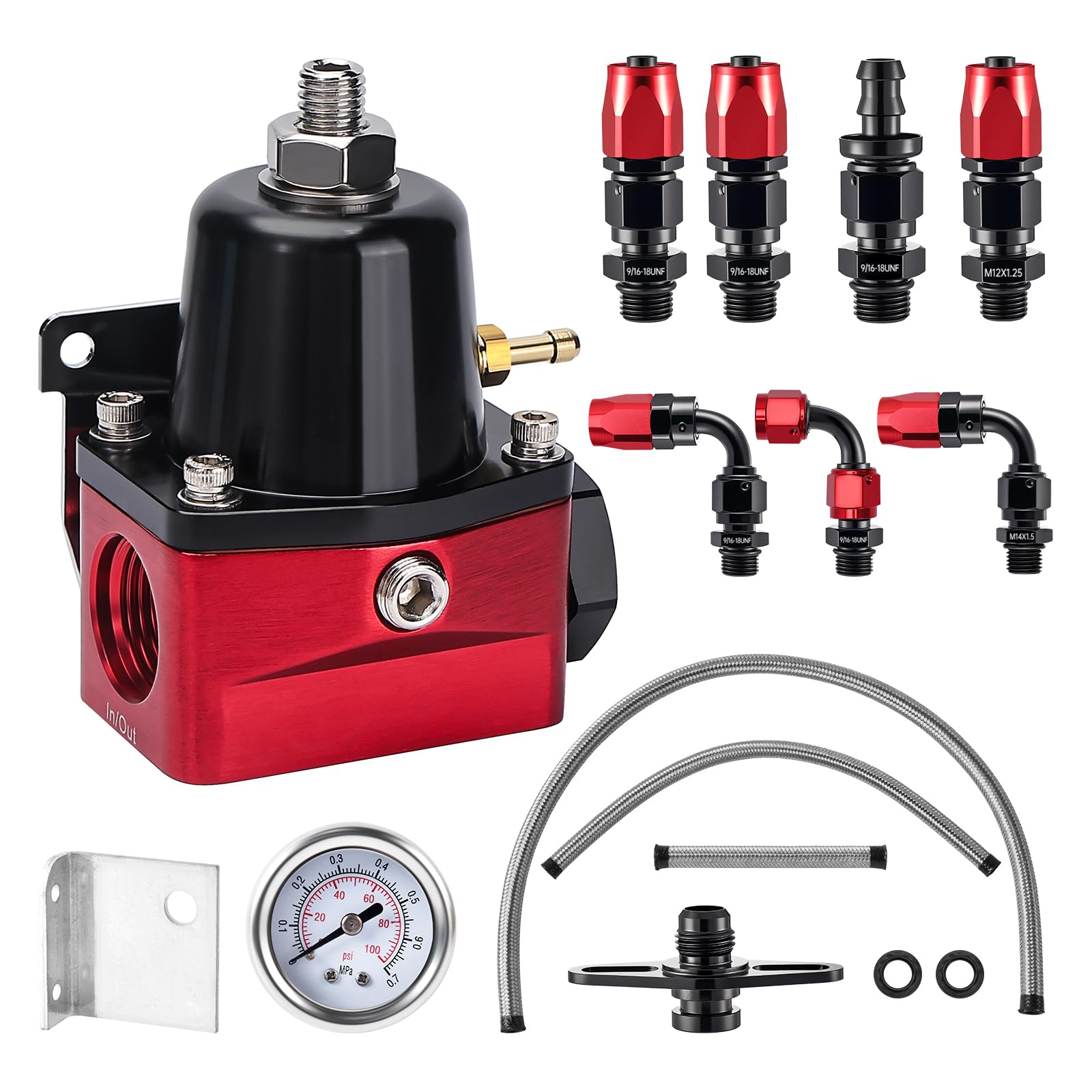
The EVIL ENERGY regulator brings adjustable 30 to 70 PSI, a pressure gauge, and a full hardware kit at a price point that undercuts most name-brand EFI regulators by a significant margin. It is a bypass return-style unit, meaning it sends excess fuel back to the tank, which helps prevent vapor lock in hot-running engines. The kit includes a bracket, AN fittings, and two M12x1.25 and M14x1.5 adapters specifically for fuel rail use. One important note from the manufacturer: do not install those M fittings on the regulator itself — they are for the fuel rail only, and doing otherwise will cause guaranteed leaks. Owners have reported good results on LS swaps and with Holley Sniper EFI systems, with one buyer describing it as “low-maintenance” on a 1971 F100.
The included pressure gauge is the weak point — one owner describes the needle as bouncing between 20 and 60 PSI, calling it “junk.” That is a common complaint, and the easy fix is to swap in a known-good aftermarket gauge. The pressure itself holds steady once set correctly. The unit is compatible with E85 and alcohol, but not diesel fuel, and the manufacturer warns that nylon braided line does not work with E85 — you need stainless steel braided line for ethanol blends. With 4.4 stars across 608 ratings, it has the second-highest review count on this list, indicating wide adoption and generally positive experiences for the price.
Where it shines
- Full hardware bundle includes bracket, gauge, AN fittings, and fuel rail adapters — no extra shopping needed
- Adjustable 30-70 PSI covers most non-boosted EFI applications
- Bypass return design runs cooler than dead-head regulators on long drives
The honest limits
- The bundled pressure gauge is unreliable — reviewers point out erratic needle bounce
- Not recommended for builds over 500 HP, especially with ethanol fuel
- M fittings must be used only on the fuel rail; installing them on the regulator causes leaks
Good for: A mid-range EFI swap where the budget needs to stay tight and you can supply your own gauge.
Pass on it if: You need a single part that works without fussing over included gauges — the Aeromotive is a better investment for the same time saved.
5. YESHMA EFI Fuel Pressure Regulator Kit 0-100psi with Gauge
A complete EFI regulator kit that gets you running for less than most regulators alone.
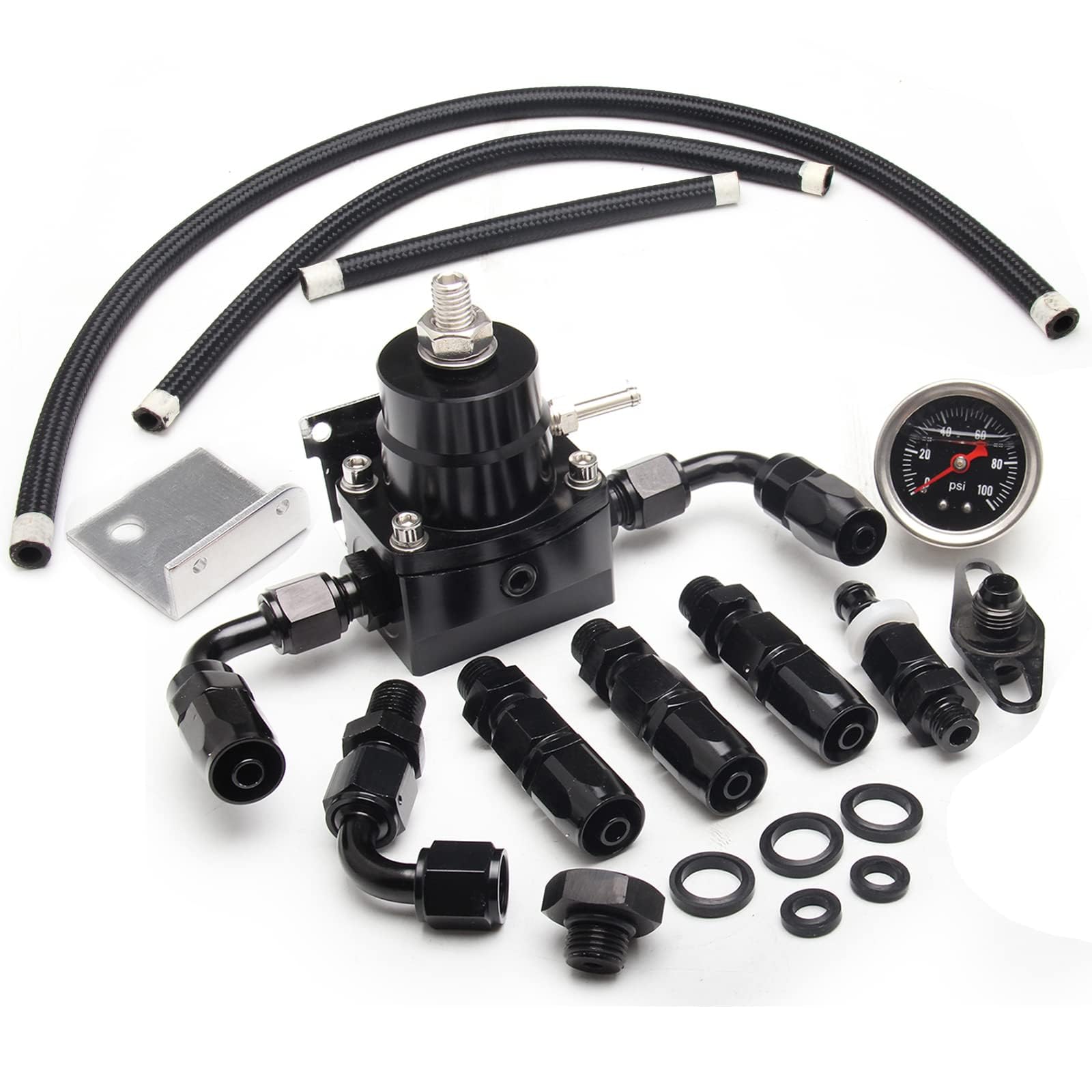
The YESHMA kit is the most comprehensive package on this list — you get the regulator, a pressure gauge, three 6AN stainless steel braided fuel lines, a fuel rail adapter, a bracket, and a full set of straight and 90-degree AN adapters, all in one box. The regulator body is machined aluminum and the hoses use 304 stainless steel braiding over CPE synthetic rubber. The adjustable range is 0 to 100 PSI on the gauge, but the regulator itself is tunable from 30 to 70 PSI, covering most naturally aspirated and lightly boosted EFI applications. The branded price point is significantly below the Aeromotive, making this tempting for a budget-conscious first EFI build.
The catch is reliability at the low end and occasional manufacturing defects. Shoppers say that the regulator struggles to hold steady pressure below 50 PSI, which is a problem for engines that want a precise 43.5 PSI at idle. Fuel pressure control is the most-mentioned negative aspect, with 23 owners noting inconsistencies. One reviewer noted a brand-new unit leaking from the housing despite proper assembly by an experienced mechanic — he diagnosed it as a machining defect and replaced it with an Aeromotive. However, more than half of the positive reviews note that careful assembly with thread sealant on all ports yields a leak-free, functioning system. The kit also lacks installation instructions, so this is not a grab-and-go part for a first-timer.
What the kit includes
- Complete pair of 6AN stainless braided fuel lines included — no separate hose purchase needed
- Wide adjustment range covers from idle pressure up to light boosted applications
- Machined aluminum body with a full set of AN adapters for flexible routing
The rough edges
- Pressure regulation is inconsistent below 50 PSI, which affects idle quality on some builds
- No installation instructions included — professional help is strongly recommended
- Leakage from the regulator housing has been reported on a small number of units
Consider it if: You want a complete kit with hoses and fittings and are experienced enough to troubleshoot a finicky low-pressure idle.
Avoid if: You need a regulator that works perfectly at 43 PSI right from the start — the EVIL ENERGY unit is more predictable at that pressure.
6. Mr. Gasket 9710 Fuel Pressure Regulator, Chrome

A chrome-plated fix for carbureted classics that need a compact, adjustable pressure solution.
The Mr. Gasket 9710 is a staple of the hot-rodding world, and it has been around long enough to earn a reputation both for its utility and its quirks. At 8 ounces and roughly 5.5 inches long, it is one of the more compact regulators on this list, which is exactly what you need when you are shoehorning it onto a 1968 Firebird or a Jonway yy250t scooter — yes, owners have done both. The chrome finish looks right at home on a vintage engine bay. It is adjustable, and you can dial in fuel pressure by turning the hex screw on top, though the adjustment range is narrow and the markings are not precise. One owner noted that after some fiddling, he got his 1968 Firebird’s carburetor a steady 6 PSI, solving his fuel flow problem.
The mixed feedback centers on accuracy and adjustability. Some buyers report that the gauge reading does not match the actual fuel pressure, and the adjustment screw offers limited fine-tuning. The kit includes barb fittings but no mounting bracket or thread tape, and the 1/8 NPT fittings have been described as having poor thread engagement. Leakage is the most-mentioned negative aspect, with eight owners flagging leaks at the threads. That said, with functionality being the top praise (38 owners mention it positively), the vast majority find it works fine once properly sealed and adjusted. The build quality is decent for the price, though it is a cast body rather than billet-machined, so the sealing surface is less consistent than the Aeromotive.
The appeal
- Chrome finish matches vintage engine bays better than raw aluminum or black anodized regulators
- Compact size fits tight spaces — owners have used it on scooters, mowers, and classic Firebirds
- Simple adjustment screw lets you dial in pressure without tools
Where it slips
- No mounting bracket included; you will need to find your own way to secure it
- Poor thread engagement on the 1/8 NPT ports can lead to stubborn leaks
- Accuracy and adjustability are mediocre — not for precision fuel tuning
Reach for this if: You need a small, chrome regulator to finish a classic car or small-engine project on a reasonable budget.
Pass on it if: You want a regulator you can bolt on without messing with thread tape and aftermarket brackets — the Quick Fuel is more complete from the start.
7. Standard Motor Products PR113T Fuel Pressure Regulator

The exact factory fix for early-90s Chevy trucks that just want to run like they did in 1994.
The Standard Motor Products PR113T is a fixed-pressure, non-adjustable replacement regulator designed specifically for 1988-1995 Chevrolet and GMC trucks with the 5.7L TBI engine — think C1500, K1500, and Suburbans from that era. It weighs 7.2 ounces and measures 3.9 x 3.4 x 3.9 inches, making it a direct-fit part that bolts onto the throttle body with no modifications. The unit is manufactured in the United States and comes from Standard Motor Products, a well-known supplier of OEM-grade replacement parts. One owner reported that his unit lasted just under four years before starting to fail, and he called it a “perfect fit and function” that exceeded his expectations for the price. A Chevy pickup owner with a 5.7L engine called it a “perfect replacement.”
The clarity around fitment is the best part of this regulator — it is not a universal part, so there is no guessing about pressure settings or adapter fittings. It either fits your year and engine combination or it does not. Functionality is the top-praised aspect, with 11 owners mentioning it positively. It also holds a 4.5-star average across 173 ratings, making it one of the strongest-rated parts on the list. The only real downside is its narrow application — if you do not drive a 1990s Chevy truck with a 5.7L TBI, this regulator cannot help you. It also has no adjustability, so if your truck needs a different pressure than factory spec, you need a different solution.
What stands out
- Direct factory replacement for 1988-1995 Chevy 5.7L TBI engines — 15-minute install, no modifications
- Made in the USA with 11 owners praising its functionality
- Reported to last nearly four years in daily use before replacement is needed
Strict limits
- Only works on specific GM TBI applications; not universal for any other engine
- Fixed pressure — no tuning or adjustment for performance builds
- At 7.2 ounces it is lighter than the Aeromotive, but the application range is much narrower
Perfect for: Owners of early-90s Chevy trucks with the 5.7L TBI engine who want an exact factory replacement that bolts on without guesswork.
Skip it: Everyone else — this part is so vehicle-specific that it serves no purpose outside its narrow application window.
Understanding the Specs
Pressure Range (PSI)
The most critical spec on a fuel regulator is the pressure range it can reliably hold, measured in PSI (pounds per square inch). Carbureted engines live in a low-pressure world — typically 4.5 to 9 PSI — because carburetors use a float and needle valve that can be forced open by excessive pressure. EFI systems need much higher pressure, usually 40 to 70 PSI, because the injectors open and close rapidly and rely on a consistent pressure differential to meter fuel accurately. A mismatch here is the most common mistake: using a carburetor regulator on an EFI system starves the injectors, while using an EFI regulator on a carburetor floods the engine.
Bypass vs Dead-Head Design
A bypass-style regulator (also called a return-style regulator) sends excess fuel back to the tank through a return line, which keeps fuel flowing and cool — important for high-horsepower builds and hot climates. A dead-head regulator blocks flow once target pressure is reached, which is simpler but allows fuel to heat up in the rail, increasing the risk of vapor lock. Most performance regulators on this list are bypass style. The trade-off is that a return-style system requires an additional fuel line running from the regulator to the tank, which adds complexity to the install.
FAQ
What PSI should my fuel regulator be set to for a carbureted engine?
Can I use a carbureted regulator on an EFI engine?
What is the difference between a bypass regulator and a dead-head regulator?
How do I stop my fuel regulator from leaking at the threads?
Will the ACDelco Gold 217-3299 fit my 7.4L Vortec 454?
Is the EVIL ENERGY regulator compatible with E85 fuel?
How do I adjust the pressure on the Mr. Gasket 9710?
Does the YESHMA EFI kit include installation instructions?
Final Thoughts: The Verdict
If you want one dependable pick, the best fuel regulator overall is the Aeromotive 13129 because it handles the widest horsepower range — up to 1000 HP — with a steady 40-75 PSI adjustable range and a boost reference port that forced-induction builders need. If you are working with a carbureted engine and want a regulator that arrives ready to bolt on, the Quick Fuel 30-803QFT is a better fit. And for anyone doing a direct replacement on a GM LS truck, the ACDelco Gold 217-3299 solves the warm-start problem in 15 minutes with zero guesswork.
How We Picked
We do not accept paid placement. Every pick is matched to a real buyer and a real use-case; we do not hands-on test units.
Sources & Methodology
Specifications: manufacturer listings and product documentation. Review insights: verified customer reviews, as of July 2026. Pricing: not shown on this page (it changes often); check the current price via the retailer link.
As an Amazon Associate, Trending Car earns from qualifying purchases. This does not affect which products we feature.