
Our readers keep the lights on and my garage snacks stocked. As an Amazon Associate, I earn from qualifying purchases.
Specs are compiled from manufacturer listings and verified buyer reviews and can change over time — please confirm the key details on the product page before buying.
If you drive an older engine, swapping the carburetor for electronic fuel injection (EFI, which uses sensors and a computer to deliver fuel precisely) is the biggest upgrade you can make—you get instant cold starts and steady fuel pressure under load. But choosing the right system means deciding between gas or diesel, a self-tuning brain (a computer that adjusts fuel mix automatically), and a pump that matches your horsepower goals. Here are the top fuel injection systems, ranked by what they actually do for your driving experience.
I’m Min Islam — the founder and writer behind Trending Car. This guide is built by comparing the manufacturers’ published specifications and the patterns across verified customer reviews, so you get each pick’s real strengths and trade-offs instead of marketing spin.
The right fuel injection system transforms how your engine idles, accelerates, and starts, and this breakdown helps you match the best one to your build.
Our Picks at a Glance
How To Choose The Best Fuel Injection System
Before you buy, you need to know what fuel your engine burns, how much power you are chasing, and whether your fuel tank can host the pump. Gas and diesel systems are not interchangeable, and a pump that flows too little will starve your engine at wide-open throttle.
Match the Flow Rate to Your Horsepower Goal
The pump’s flow rate, measured in liters per hour (LPH) or gallons per hour (GPH), is the number that sets your power ceiling. A 200 LPH pump supports up to 450 HP on a forced-induction EFI engine, while a 140 GPH diesel system handles up to 700 HP. Choose a pump with headroom above your current build so you are not swapping it out after your next upgrade.
Choose Between Self-Tuning and Manual Tuning
Some systems read your engine’s sensors and adjust the fuel map automatically, which means you bolt it on, start it, and drive. Others require you to tune them with a laptop or a handheld controller. For a daily driver or a first-time builder, a self-tuning unit removes the steepest learning curve.
Know Your Fuel Delivery Method
Return-style systems send excess fuel back to the tank, which keeps the fuel cooler and pressure steady—so your engine runs consistently even in hot weather. Returnless systems use a single line and let the pump adjust pressure on its own, which simplifies installation. Before choosing, measure your tank depth and decide if you’re willing to cut a new hanger (the metal bracket that holds the pump), because that determines whether an in-tank pump fits your setup.
Quick Comparison
| Model | Best For | Flow Rate | Fuel Type | Weight | Amazon |
|---|---|---|---|---|---|
| MSD Atomic 2900★ Best Overall | Carb-to-EFI Conversions | Self-Tuning System | Gasoline | 15.5 pounds | Amazon |
| Aeromotive Phantom 200 | Custom In-Tank Builds | 200 LPH | Gasoline, E85 | 3.8 pounds | Amazon |
| FASS TS D08 165G | Dodge Cummins Diesel Trucks | 165 GPH | Diesel | — | Amazon |
| FASS TSF14180F140G | Ford Powerstroke Diesel Trucks | 140 GPH | Diesel | 31 pounds | Amazon |
In‑Depth Reviews
1. MSD Atomic 2900 EFI Fuel Injection Master Kit
Our pick — over 4★ from 40+ verified ratings; the strongest balance of quality and price.
The self-tuning EFI kit that ditches the laptop and brings carb-fed engines into the digital age.
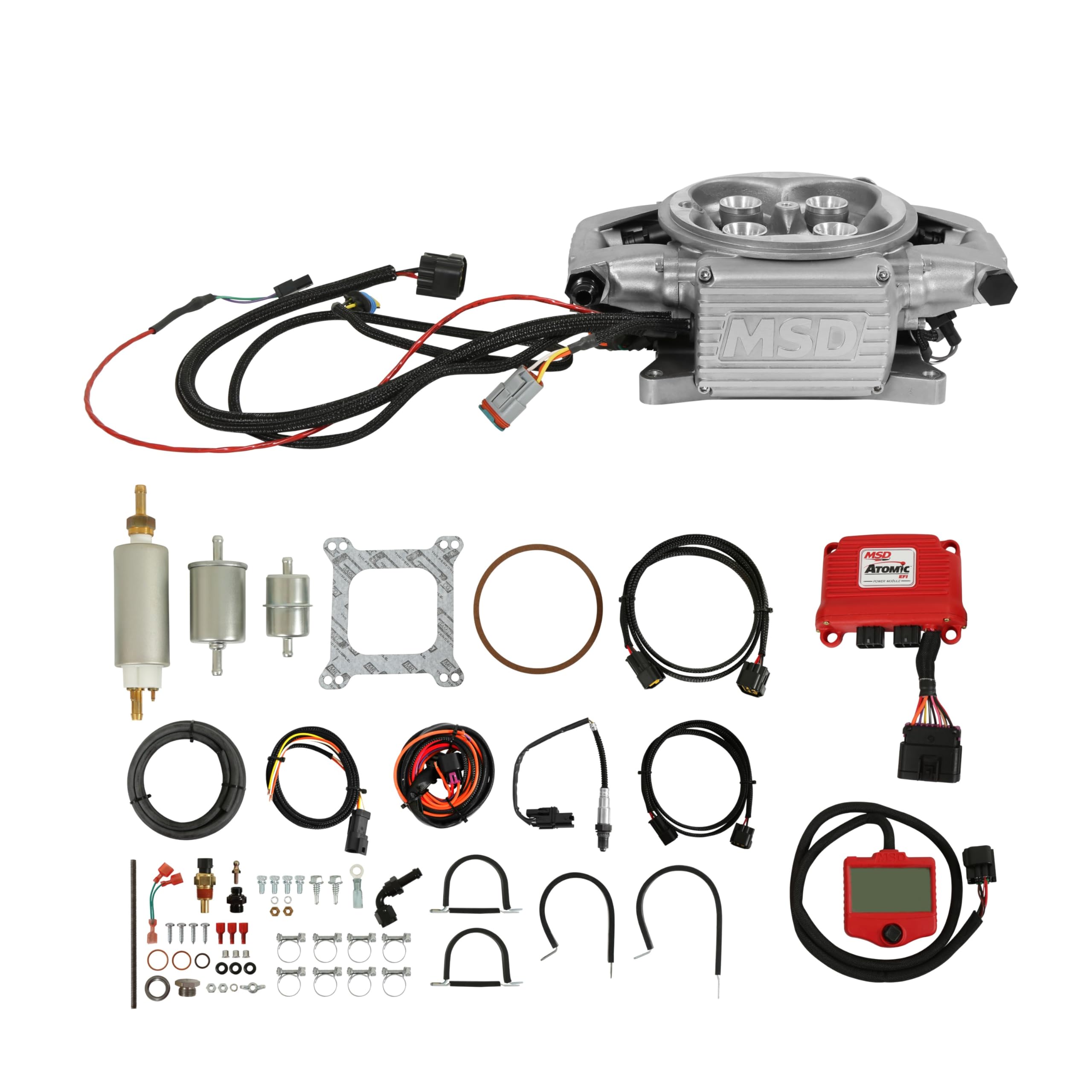
The handheld tuner lets you adjust the system from the driver’s seat, skipping the laptop entirely. The master kit includes the fuel pump, so everything you need for the swap arrives in one box. Buyers report a perfect idle and sharp throttle response with no bogging, even on a 355ci engine running 11:1 compression.
For a Ford shop or a home builder tired of carburetor cold-start rituals, the system works with a distributor and runs happily on a single fuel line with no return needed. The self-tuning brain adjusts the fuel map as you drive, earning it the Best Overall spot. At 21.2 x 10.2 x 9 inches, the kit is compact enough to fit most engine bays without major surgery.
The system is CARB approved, which matters if you live in a state with strict emissions rules. A returnless fuel system has criteria it must meet, and one owner found that above 80°F the setup needed an extra pressure regulator. Mount the ECM inside the cabin rather than the engine bay, since summer heat can cause it to overheat.
Why it converts so well
- Handheld self-tuning means no laptop tuning sessions
- Fuel pump included, so it is a complete kit
- Single fuel line with no return simplifies the install
The trade-offs to plan for
- Returnless claims have conditions above 80°F
- Mount the ECM in the cabin, not the engine bay
The verdict: This is the pick for anyone swapping a carburetor for dependable, self-adjusting fuel delivery.
Think twice if: You are chasing a forced-induction build needing a custom return-style setup, or you want manufacturer tech support.
2. Aeromotive Phantom 200 In-Tank Fuel Pump System
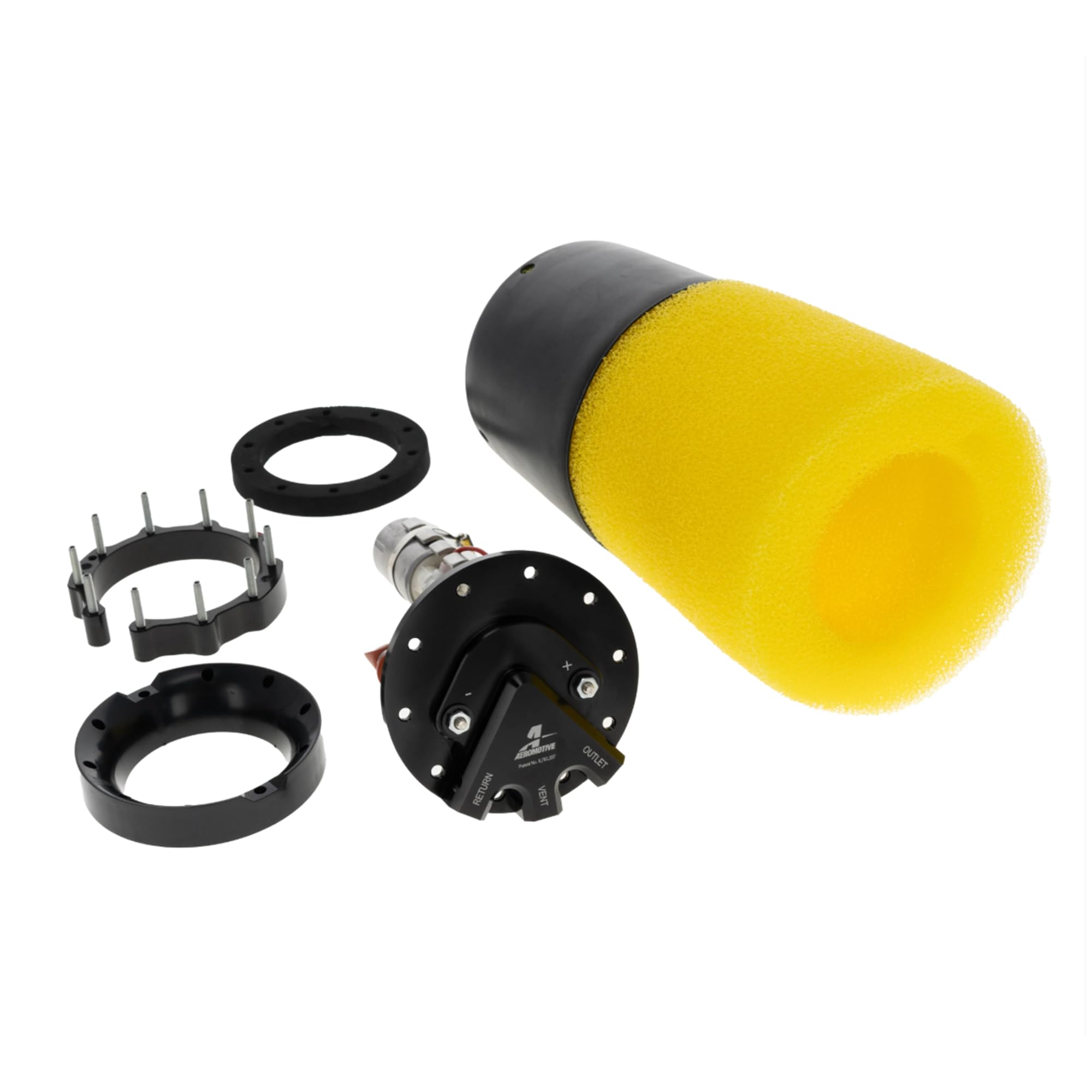
A featherweight universal in-tank pump that turns almost any 6 to 11 inch deep tank into a high-flow fuel source.
At 3.8 pounds, this kit is much lighter than a 31-pound diesel system, which makes it a natural fit for custom builds where every pound counts. The universal hanger assembly cuts to fit most factory steel, aluminum, or plastic tanks, so you avoid welding a sump or installing a fuel cell. This works for EFI or carbureted return-style systems.
The 200 LPH pump supports up to 450 HP on a forced-induction EFI engine, 600 HP on a naturally aspirated EFI build, or 750 HP on a carbureted naturally aspirated motor. A fuel-resistant internal baffle controls slosh and keeps the pump submerged at low fuel levels, which means steady delivery even when you are running near empty. It runs on gasoline or E85.
The complete kit includes three ORB-06 ports for supply, return, and vent, plus the pre-pump filter, mounting bracket, retainer ring, gasket, and internal basket. Owners praise the build quality, clear instructions, and quiet pump operation. The one installation caution is to avoid over-torquing the bolts, since that can interfere with the ground.
What makes it flexible
- Cut-to-fit hanger works across many tank types
- Baffle keeps the pump submerged at low fuel
- Runs on gasoline and E85
The catch
- Requires a return-style fuel system
- You must cut the hanger to fit your tank depth
Reach for it if: You are building a custom or retrofit car and want a universal pump that adapts to your existing tank.
Look elsewhere if: You need a returnless setup or a complete EFI brain, since this is purely a fuel delivery kit.
3. FASS TS D08 165G Titanium Signature Series

A titanium-bodied diesel lift pump built to protect injectors and support up to 900 horsepower.
The whole point of this system is protecting your diesel injectors, which are expensive to replace. It pulls fuel through a filtration setup that extends injector life while also improving cold-weather performance, a real benefit for trucks that sit overnight in freezing temperatures. The titanium body resists corrosion and the system supports up to 900hp.
This is a vehicle-specific kit for the Dodge 5.9L Cummins from 1998.5 through 2004.5. Owners on a 99 Cummins 24v replaced a 15-year-old FASS unit with this one, expecting another 15+ years of service, and others report no lag after installation. The inlet connection is a 1/2 inch barb fitting.
The catch is that you need a draw straw or sump, which is sold separately — a detail one owner forgot until the kit arrived. Also, FASS does not honor the warranty for units purchased on Amazon, so if that matters to you, order direct from the manufacturer instead. It is a metal-bodied system, so expect a solid, heavy install.
Built for longevity: The titanium build and injector protection are the headline reasons Cummins owners pick this over a stock pump.
Plan the full kit: Budget for a draw straw or sump, and confirm warranty coverage before you buy.
4. FASS TSF14180F140G Titanium Signature Series
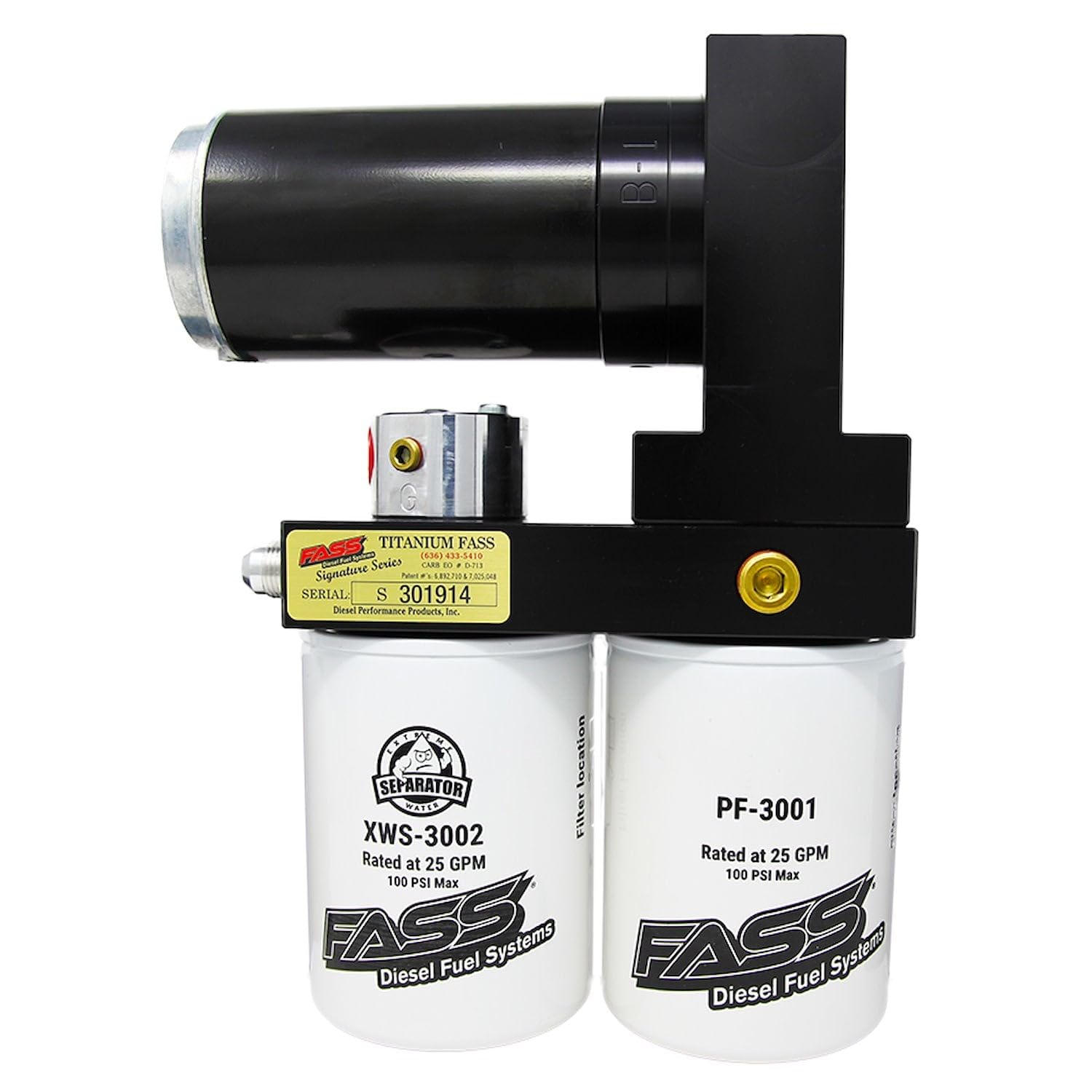
A heavy-duty aluminum diesel system for Ford Powerstroke trucks that scrubs water, air, and debris from the fuel.
This system is specific to the Ford 7.3L and 6.0L Powerstroke engines from 1999 through 2007. It removes water, air, and debris from diesel fuel before it reaches your injectors, which is the core job of a lift pump. The aluminum body keeps the weight at 31 pounds, and the system supports up to 700hp.
The 140 GPH flow is matched to these Powerstroke engines, and owners mention the truck runs great and starts faster after install. The kit includes a Limited Lifetime Warranty, a stronger promise than most aftermarket fuel parts carry. The NPT connector type is the standard thread for this kind of install.
The main concern in reviews is after-sales support, with a couple of owners saying customer service is hard to reach. Most buyers find the install straightforward and the material quality good, but the limited feedback on longevity means this is a pick for someone comfortable with aftermarket diesel parts.
Worth it for: Powerstroke owners who want water separation and injector protection in one bolt-on system.
Keep in mind: A handful of buyers hit dead ends with customer service, so verify support channels before purchase.
Understanding the Specs
Flow Rate (LPH and GPH)
This is the pump’s throughput, measured in liters per hour (LPH) for gas systems and gallons per hour (GPH) for diesel systems. It sets your horsepower ceiling — a 200 LPH pump supports up to 450 HP on a forced-induction EFI engine, while a 140 GPH diesel system handles up to 700 HP. Pick a pump with headroom above your current power level so you are not upgrading again next season.
Return-Style vs. Returnless
Return-style systems route excess fuel back to the tank, which helps cool the pump and stabilize pressure — the Aeromotive Phantom 200 is built for these. Returnless systems run a single line and modulate pressure at the pump, like the MSD Atomic 2900. Your tank, your pump location, and your horsepower goals determine which one you need.
FAQ
Will the MSD Atomic 2900 work with my existing distributor?
Do I need a return fuel line for the Aeromotive Phantom 200?
What tanks fit the Aeromotive Phantom 200?
How much horsepower can a 200 LPH fuel pump support?
Is the FASS TS D08 165G a direct fit for my Dodge Cummins?
Does the FASS diesel system come with a warranty if bought on Amazon?
What does the FASS 140 GPH system filter out of diesel fuel?
Can I use the MSD Atomic 2900 without a laptop?
Final Thoughts: The Verdict
For the majority of shoppers, the fuel injection system winner is the MSD Atomic 2900 because it packages self-tuning, a fuel pump, and handheld control into one kit that makes carb-to-EFI conversion genuinely simple. If you want a versatile in-tank pump for a custom build, grab the Aeromotive Phantom 200. And for diesel truck owners, the FASS TS D08 165G is the one to reach for if you drive a Dodge Cummins.
How We Picked
We do not accept paid placement. Every pick is matched to a real buyer and a real use-case; we do not hands-on test units.
Sources & Methodology
Specifications: manufacturer listings and product documentation. Review insights: verified customer reviews, as of August 2026. Pricing: not shown on this page (it changes often); check the current price via the retailer link.
As an Amazon Associate, Trending Car earns from qualifying purchases. This does not affect which products we feature.