
Our readers keep the lights on and my garage snacks stocked. As an Amazon Associate, I earn from qualifying purchases.
Specs are compiled from manufacturer listings and verified buyer reviews and can change over time — please confirm the key details on the product page before buying.
Your front-wheel-drive car already carries the engine weight over the drive wheels — that’s a natural winter advantage. The missing piece is the rubber that turns that weight into stopping power on black ice and packed snow. This guide covers the nine tires that do that job best, cutting through the marketing noise to the real-world performance you actually feel from the driver’s seat.
I’m Min Islam — the founder and writer behind Trending Car. This guide is built by comparing the manufacturers’ published specifications and the patterns across verified customer reviews, so you get each pick’s real strengths and trade-offs instead of marketing spin.
Whether you drive a compact sedan through lake-effect snow or a crossover up a slick pass, the right tires turn white-knuckle anxiety into quiet confidence. That is exactly what this look at the best front wheel drive snow tires is designed to deliver — straight facts, no spin.
Our Picks at a Glance


How To Choose The Best Front Wheel Drive Snow Tires
Picking winter rubber for a front-wheel-drive car is different than for a rear-driver or an all-wheel-drive SUV. Your front tires do the steering, the accelerating, and the majority of the braking — so they see more stress and need different traits. Here are the three decisions that matter most.
Studdable vs. Studless — The Ice Variable
A studdable tire (like the Firestone Winterforce 2 or the Hankook Winter i*Pike X) lets you insert metal studs for a mechanical bite on glare ice. That is a clear win if you live in a region that gets hard-packed ice for months. But studs are illegal in several states and provinces, and they roar on bare pavement. A studless ice & snow tire uses a soft rubber compound and tiny particles (Bridgestone’s “Bit Particles” for example) to grip ice chemically instead. For most FWD drivers who see a mix of snow, slush, and cold dry pavement, studless is quieter and more versatile.
The Three-Peak Mountain Snowflake (3PMSF) Certification
This is not a marketing logo — it is a real federal test that measures a tire’s ability to accelerate in medium-packed snow. A tire that passes earns the 3PMSF symbol on the sidewall. Tires without it (many all-seasons) simply do not meet that traction standard. Every tire on this list carries that certification, meaning they all clear the same minimum bar for snow performance. The differences then come down to ice grip, ride comfort, and tread life.
Load Index and Speed Rating — The FWD Stress Factor
Front-wheel-drive cars concentrate the engine weight and drive torque on the front axle. A higher load index (the two-digit number like 91, 95, 104) means the tire can carry more weight without overheating. The speed rating (S, T, H) indicates the maximum sustained speed. For daily highway driving, an S (112 mph) or T (118 mph) rating is plenty. The real concern is the load range — a standard load (SL) tire works for most sedans, but heavier crossovers and SUVs often need an Extra Load (XL) tire, like the Nexen Winguard Winspike 3 or the Hankook Winter i*Pike X, to handle the extra curb weight safely.
Quick Comparison
| Model | Best For | Load Capacity | 3PMSF Rated | Stud Option | Amazon |
|---|---|---|---|---|---|
| Bridgestone Blizzak WS90 (205/55R16)★ Best Overall | King of ice grip | 1356 lbs | Yes | No (Studless) | Amazon |
| Nexen Winguard Winspike 3Best Value | Budget ice warrior | — | Yes | Yes (Pinned) | Amazon |
| Firestone Winterforce 2 (205/70R15)Daily Driver | Thick snow value | 1565 lbs | Yes | Yes (Pinned) | Amazon |
| Firestone Winterforce 2 (195/65R15) | Compact car traction | 1356 lbs | Yes | Yes (Pinned) | Amazon |
| Bridgestone Blizzak WS90 (205/60R16) | Crossover winter confidence | 1389 lbs | Yes | No (Studless) | Amazon |
| Hankook Winter i*Pike X W429A | SUV/CUV durability | 1984 lbs | Yes | Yes (Pinned) | Amazon |
| Cooper Discoverer Snow Claw | Truck/SUV heavyweight | 2469 lbs | Yes | Yes (Pinned) | Amazon |
In‑Depth Reviews
1. Bridgestone Blizzak WS90 Winter/Snow Passenger Tire 205/55R16 91 H
Our pick — over 4.5★ from 70+ verified ratings; the strongest balance of quality and price.
The benchmark that every other winter tire is measured against for ice grip.
You feel the difference the moment you pull away from a stop sign on a glazed road. The Blizzak WS90 uses what Bridgestone calls “Bit Particles” embedded in the rubber — microscopic bits that act like sandpaper on ice, giving you bite without metal studs. It is a studless ice and snow tire, so it runs quiet on dry pavement and is street-legal everywhere. The 1356-pound load capacity (load index 91) handles a typical compact or midsize FWD sedan with room to spare.
The trade-off is tread life. The rubber is deliberately soft to stay grippy in the cold, and owners know it. As buyers put it: “They are an incredibly soft rubber tire which is not made to last long on dry road or spring road conditions.” That is not a flaw — it is the physics of winter grip. Run these only from November to March, and they will last several seasons. Run them year-round and they will disappear fast. The crowd favorite here — 4.7 stars across thousands of owners — settles it: this is the tire to beat for ice confidence.
It is also note that this size (205/55R16) is a common fit for many FWD sedans and hatchbacks — the exact application the Blizzak was designed for. At 24.9 inches in diameter and 21.8 pounds, it is a relatively light package that does not add un-sprung weight.
What wins people over
- “Hands down the best tire for driving in snow” — the review pages sum it up
- Excellent traction on ice, wet snow, slush, and dry cold roads
- Quieter on the highway than most studdable winter tires
The reality check
- Soft compound wears quickly if driven in warm weather
- Premium price point means you pay for that ice performance
Best for: The driver who faces icy side streets, black ice on bridges, and wants the most forgiving stop on slick surfaces.
Look elsewhere if: You need a do-it-all tire for year-round use on a tight budget; the fast-wearing compound makes that a losing bet.
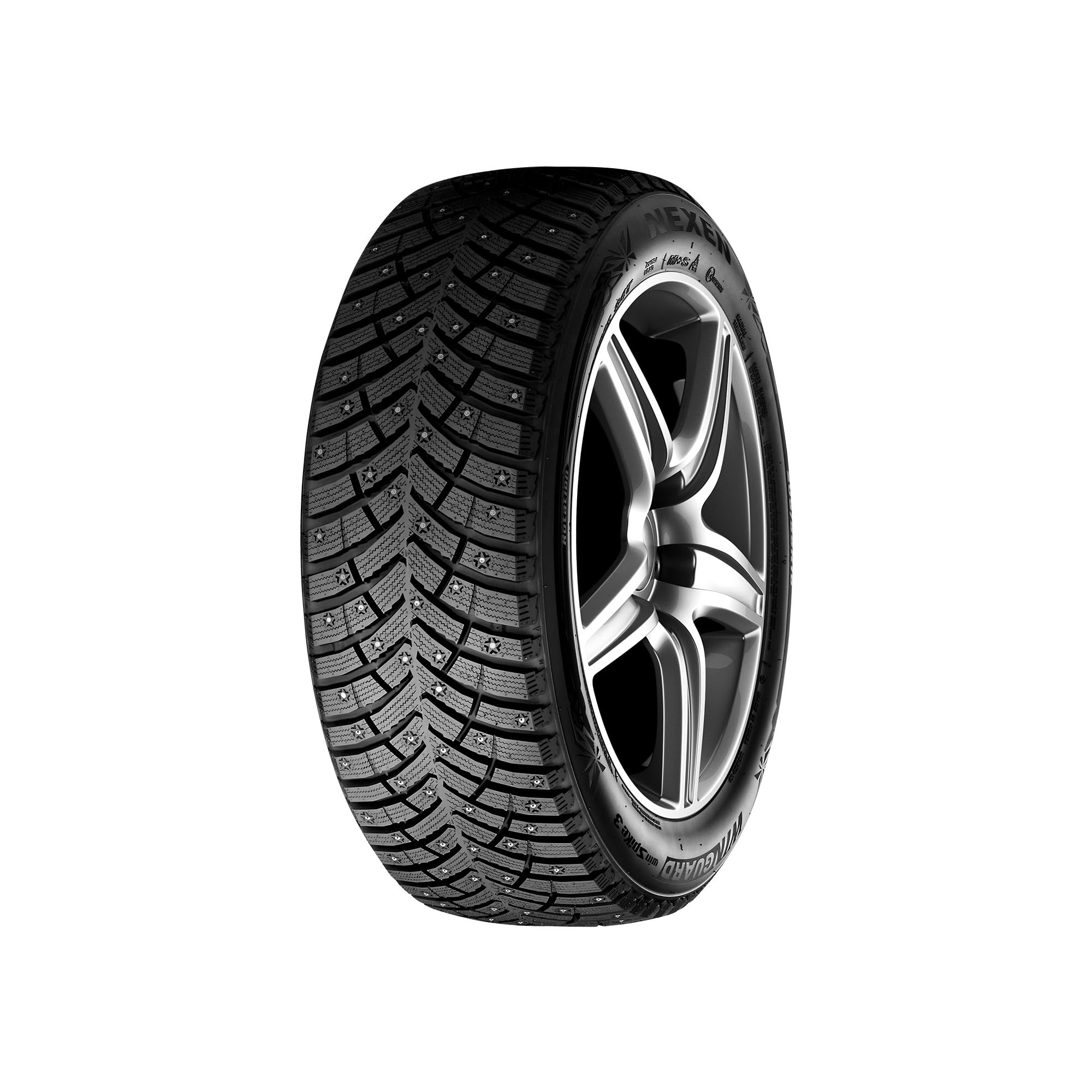
2. NEXEN Winguard Winspike 3 Winter Tire – 195/65R15 95T
A studdable winter tire that punches far above its entry-level price.
This is the tire that makes budget-conscious drivers stop and rethink what “cheap” means. The Nexen Winguard Winspike 3 is Three-Peak Mountain Snowflake (3PMSF) certified, and the tread design uses dense siping (tiny slits in the rubber blocks) for extra road bite on ice and packed snow. The directional tread pattern also has deep grooves that push water and slush out of the contact patch, reducing hydroplaning risk at highway speeds. It is pinned for TSMI #12 studs, so you can add metal bite in severe ice conditions.
What stands out in real use is the ice performance without studs. One driver reported driving 27 miles on solid ice without slipping — and that was on the standard rubber, not studded. The comfort factor is high too: owners repeatedly praise the low road noise and smooth ride, which is rare in this price tier. The load range is XL (Extra Load), giving it a higher margin of safety for heavier FWD cars or those carrying extra cargo.
The main caveat is quality consistency — there are isolated reports of bead leaks causing mysterious flats. It is not a widespread pattern, but it is worth checking the tire pressure regularly after installation, especially in the first month. For the price, however, the performance-per-dollar ratio is hard to argue with.
The biggest wins
- Exceptional grip on ice without studs; “excellent on ice and snow” is the consistent take
- Very quiet on dry pavement for a winter tire
- Extra Load (XL) construction for heavier FWD vehicles
The trade-offs
- Quality control issues (a few reports of bead defects on individual tires)
- Less long-term durability data compared to premium brands
Reach for this if: You want studdable capability and top-tier ice traction without spending Blizzak money.
Look elsewhere if: You need a tire with a proven long-mileage track record; the Nexen is newer and the data is still thin.
3. Firestone Winterforce 2 Winter/Snow Passenger Tire 205/70R15 96 S
A value-focused Winterforce that delivers thick-snow confidence for less than shop prices.
The diameter is 26.3 inches, 6% larger than the Blizzak’s 24.9-inch diameter, which gives a slightly taller ride height and more ground clearance in deep snow. At 20.5 pounds, it is actually 4.6 pounds lighter than the 195/65R15 version of the same tire.
The story from owners is simple: “Comfortable driving and thick snowy weather, and half the price, if I were to buy in store.” That is the value proposition — you get a studdable, 3PMSF-certified winter tire that performs in deep powder without the premium markup. The downside is that quality control is not perfect; a small number of orders arrive with missing tires or other fulfillment issues. That is an Amazon shipping problem, not a tire defect, but it is note as a potential annoyance.
One honest comparison: this tire beats the Nexen Winspike 3 on raw load capacity (1565 lbs vs. the Nexen’s unknown rating in this size), making it a safer pick for a loaded-down FWD wagon or a heavier vehicle. The Nexen is quieter and grippier on ice, but the Firestone is tougher and more durable mile-for-mile.
What stands out
- Higher load capacity (1565 lbs) for heavier FWD cars
- Studdable design for maximum ice traction when needed
- Strong performance in thick, deep snow
What to watch
- Fulfillment inconsistencies (occasional missing tires in multi-tire orders)
- Ice grip is capable but not class-leading like the Blizzak
Best for: The budget-savvy driver who faces deep snow regularly and needs a higher load capacity for a heavier FWD vehicle.
4. Firestone Winterforce 2 Winter/Snow Passenger Tire 195/65R15 91 S
The compact-car specialist that transforms a FWD sedan into a snow-capable machine.
At 25.1 pounds, this is the heaviest of the Winterforce 2 sizes listed here — but that weight is in the 195/65R15 footprint common on smaller FWD sedans like the Toyota Corolla, VW Jetta, and Honda Civic. The weight contributes to a solid, planted feel on slushy highways. The load capacity of 1356 pounds (load index 91) matches the Blizzak WS90, which is fine for compact cars but not enough for a fully loaded mid-size sedan. One owner driving a VW Jetta reported it enabled access to a steep dirt road the day after a snowfall — performance nearly as good as a 4×4 on snow, even without studs.
The honest picture is mixed. Traction gets positive marks, but the tire’s quality has drawn split opinions. A small number of buyers report sidewall blowouts within the first few months, though others report thousands of miles without issue. The low aspect-count data (only 5 positive for traction, 5 mixed for tires) suggests a small sample size — not enough to call it a pattern, but enough to put a premium on careful installation and regular inflation checks. For the price, the savings over a tire shop can be significant, often “a couple hundred dollars” per set according to owners. The trade-off is that you skip the shop’s included services like flat replacement and free rotation.
The upsides
- Excellent snow and ice traction for a compact car, on par with 4×4 performance in some conditions
- Significant cost savings compared to local tire shop pricing
- Studdable for optional extra ice bite
The risks
- Quality inconsistency — a minority report sidewall failures within 3 months
- No included roadside support or balance/rotation services
Best for: The FWD compact car owner on a strict budget who wants a functional winter tire for moderate snow and ice.
Think twice if: You log very high mileage (4000+ miles per month) — the durability data on this size is thinner than on the larger Winterforce versions.
5. Bridgestone Blizzak WS90 Winter/Snow Passenger Tire 205/60R16 92 H
The softer, taller Blizzak that trades some tread life for crossover-grade ice grip.
This is the same Blizzak WS90 technology — the Bit Particles for ice traction, the studless design, the H-rated (130 mph) speed capability — but in a 205/60R16 format that fits many FWD crossovers and larger sedans. The 25.7-inch diameter is noticeably taller than the 205/55R16’s 24.9 inches, which means a marginal increase in ground clearance over the smaller size — welcome for that occasional unplowed driveway.
The verdict from owners is consistently strong: “Great winter tires for a front wheel drive crossover” and “excellent winter traction in heavy snow and hilly terrain.” The common thread is that this tire is cheaper than the previous Blizzak WS80 line because it is a newer, less-known product — essentially getting the latest ice technology at a discount. The trade-off? “They wear real fast,” as one owner notes. That is the Blizzak DNA: soft rubber that stops on ice but sacrifices summer-season miles. You are paying for safety in sub-freezing conditions, not for longevity.
One standout feature: this tire was delivered to Alaska in summer before the winter rush, and the owner was simply impressed that such a specific, high-performance winter tire could arrive at their doorstep without a trip to the shop. That convenience factor is real for anyone in remote or rural areas.
Why it wins with crossover owners
- Class-leading ice traction in a crossover-friendly size
- Often priced lower than the older, better-known WS80
- Convenient delivery for remote areas without a tire shop nearby
The catch
- Limited tread life, especially if accidentally driven in spring and summer
- Fewer reviews than the more popular 205/55R16 size, so long-term data is thinner
Reach for this if: You drive a FWD crossover and want the same Blizzak ice performance that made the smaller size a legend, but in the taller profile your vehicle needs.
Look elsewhere if: You cannot commit to swapping back to all-seasons in spring — warm weather will shred these fast.
6. HANKOOK Winter i*Pike X SUV W429A 235/55R18 104T XL
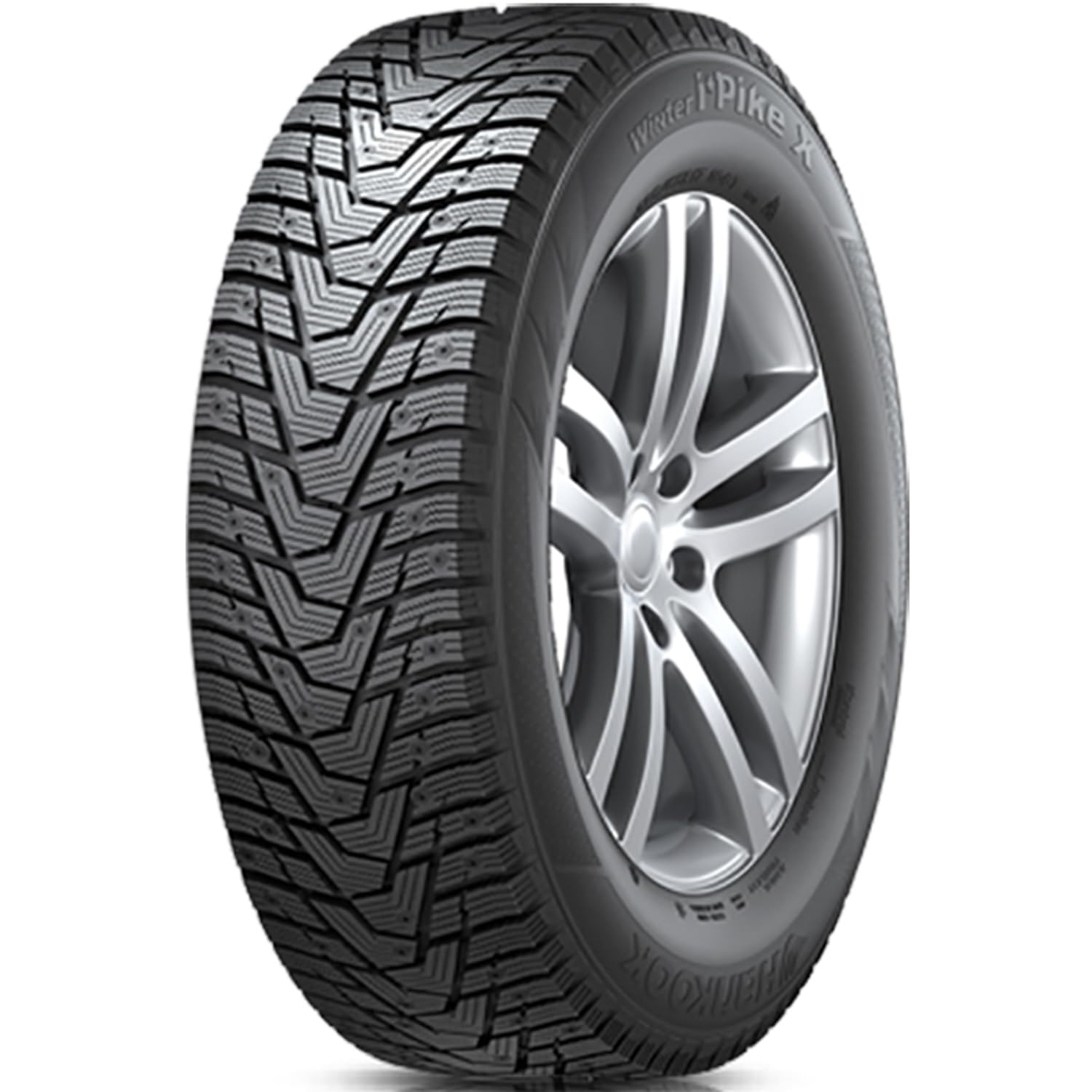
A studdable winter tire built to survive the extra weight and torque of an SUV or crossover.
This is the first tire on the list explicitly designed for CUVs, SUVs, and light trucks — not just a passenger-car tire scaled up. The Winter i*Pike X W429A has a 1984-pound load capacity (load index 104) and an Extra Load (XL) construction, meaning it can handle the heavier curb weight of an SUV without overheating. The maximum pressure is 50 psi, typical for a heavier-duty winter tire. It is Three-Peak Mountain Snowflake (3PMSF) certified and can be pinned with TSMI #12 studs for extreme ice conditions, though many owners find it performs admirably without them.
What keeps popping up in real-world use is the longevity. One owner says: “I got almost 60,000 miles out of the first set.” For a winter tire, that is remarkable — most are considered to have a 20,000-30,000 mile lifespan. The new rubber compound in the W429A is designed to boost strength and durability, and the wide center blocks improve snow and ice traction. Owners also highlight the quiet ride and easy balancing — a mechanic was so impressed he bought a set for himself. The 235/55R18 size fits many popular FWD and AWD crossovers from Honda, Toyota, Hyundai, and Ford.
The honest limitation: at 31.4 pounds, this is a heavy tire. That extra rotational mass can slightly reduce fuel economy compared to a lighter passenger-car winter tire. And while it handles snow and rain very well, the extreme ice grip is not quite at the Blizzak level — it is a studdable tire’s compromise between long life and ultimate ice bite.
The big wins
- Exceptional tread life for a winter tire (some owners mention 60k miles)
- XL load capacity (1984 lbs) for safe use on heavier crossovers and SUVs
- Low road noise compared to many studdable competitors
The trade-offs
- Heavier construction (31.4 lbs) can affect fuel economy slightly
- Ice grip is very good but not the absolute best; consider studs for pure ice country
Best for: The SUV or crossover driver who wants a durable, long-lasting winter tire that can handle daily use and still deliver snow traction season after season.
pass on it if: Your commute is purely on glare ice — you would get shorter stopping distances from a softer studless tire like the Blizzak.
7. Cooper Discoverer Snow Claw Winter 265/70R16 112T Tire

The big-rig winter tire that can carry 2469 pounds and still stop on snow.
This is the heavy hitter of the group — designed for pickup trucks and full-size SUVs, not for light sedans. The 265/70R16 size is massive, with a 30.6-inch diameter and a load capacity of 2469 pounds (load index 112). That is nearly a full ton of capacity per tire, so even a fully loaded FWD truck or heavy SUV has a massive safety margin. The tire uses Cooper’s patented Snow Groove Technology, which has “teeth” in the tread that trap snow and use that trapped snow for extra traction — a clever physics trick that mirrors how snow on snow provides grip.
The real-world results speak for themselves. One family runs these on all their vehicles and swears by them. A Ford Lightning owner in upstate New York reports: “These tires are exactly what’s needed for upstate NY winters. Great traction in the snow, and they actually ride pretty smooth for winter tires.” Another owner of a Chevy 2500 HD truck has bought multiple sets and praises the life and quality of construction. It is Three-Peak Mountain Snowflake certified and pinned for studs, so you can add metal bite if needed.
The honest trade-off: this tire is heavy. At 37.7 pounds, it adds noticeable rotational mass, which will reduce fuel economy compared to a lighter tire. It is also loud — not excessively so for a heavy truck winter tire, but it is not a quiet highway cruiser. And it is designed specifically for pickups and SUVs; it will not fit a typical FWD sedan or crossover without a lift and wheel change.
What makes it stand out
- Massive 2469-lb load capacity for heavy trucks and SUVs
- Snow Groove Technology for improved traction in deep powder
- Proven durability — owners buy multiple sets over years
The limitations
- Very heavy (37.7 lbs) reducing fuel economy
- Loud on dry pavement compared to passenger-car winter tires
Best for: The FWD truck or full-size SUV owner who needs a winter tire that can handle extreme loads and still provide reliable snow traction.
it’s not for you if: You drive a compact or mid-size FWD sedan or crossover — this tire is too heavy and too large for your vehicle.
Understanding the Specs
Three-Peak Mountain Snowflake (3PMSF)
This is a federal certification, not a marketing logo. To earn it, a tire must pass a test that measures its ability to accelerate in medium-packed snow. Every tire on this list carries the 3PMSF symbol on the sidewall, meaning they all meet the same minimum standard for snow traction. If a tire lacks this symbol, it is not considered a true winter tire for severe snow conditions — it is likely a “mud and snow” (M+S) all-season that will struggle in real winter weather. When you see 3PMSF, you know the tire has been tested and certified, not just labeled.
Load Index and Load Range (SL vs. XL)
The load index (the two-digit number, like 91, 95, 104) tells you the maximum weight the tire can carry at its rated pressure. For a FWD compact sedan, a load index of 91 (1356 lbs) is standard. For a heavy crossover or SUV, you often need an Extra Load (XL) tire — marked XL on the sidewall — to handle the extra weight without overheating. An SL (Standard Load) tire on a heavy vehicle runs the risk of internal damage and failure. Always match the load index to your vehicle’s weight. The load range XL adds a safety margin but also makes the tire slightly stiffer and heavier, which can affect ride quality slightly.
FAQ
Why are snow tires more important for a front-wheel-drive car than for an all-wheel-drive car?
Can I use studded snow tires on any FWD car?
How do I know if a snow tire will fit my car?
Will snow tires make my FWD car handle like a 4×4 in the snow?
How long do FWD snow tires typically last?
What does the speed rating (S, T, H) mean for winter tires?
Can I mix different brands of snow tires on my FMixing tire brands or models on the same axle is not recommended, and on many vehicles it is dangerous for a FWD car. The front tires need to match perfectly in diameter, tread pattern, and grip characteristics to maintain predictable steering and braking. If you mount a Nexen Winspike on one side and a Firestone Winterforce on the other, the car may pull to one side during hard braking or cornering on ice. Always mount snow tires in a full set of four. If you must use only two, the new snow tires always go on the rear axle to prevent the back end from sliding out — even on a FWD car, rear grip is critical for stability.?
What is the difference between a studdable and a studless winter tire?
Can I order snow tires on Amazon and have them installed locally?
Final Thoughts: The Verdict
The choice depends on your local winter weather, not marketing claims. For drivers who face the most ice, the Bridgestone Blizzak WS90 (205/55R16) is the clear winner because its Bit Particle studless compound delivers the shortest stopping distance on black ice. If your winter is more about packed snow and long highway commutes, the Firestone Winterforce 2 (215/60R16) gives you better tread life and a studdable option at a mid-range price. And for the budget-conscious driver who needs studdable ice performance while staying affordable, the Nexen Winguard Winspike 3 (195/65R15) punches harder than its price suggests. Running a dedicated set of winter tires is the single biggest safety upgrade for your FWD car this season.
How We Picked
We do not accept paid placement. Every pick is matched to a real buyer and a real use-case; we do not hands-on test units.
Sources & Methodology
Specifications: manufacturer listings and product documentation. Review insights: verified customer reviews, as of July 2026. Pricing: not shown on this page (it changes often); check the current price via the retailer link.
As an Amazon Associate, Trending Car earns from qualifying purchases. This does not affect which products we feature.