
Our readers keep the lights on and my garage snacks stocked. As an Amazon Associate, I earn from qualifying purchases.
Specs are compiled from manufacturer listings and verified buyer reviews and can change over time — please confirm the key details on the product page before buying.
Freeride bikes are the machines you trust when the trail drops away, the rocks get loose, and the only way out is down. The wrong bike turns a blue-square descent into a white-knuckle gamble — the right one makes you feel like you’re cheating., from a budget-friendly first bike to a race-ready carbon rocket.
I’m Min Islam — the founder and writer behind Trending Car. This guide is built by comparing the manufacturers’ published specifications and the patterns across verified customer reviews, so you get each pick’s real strengths and trade-offs instead of marketing spin.
if you need a rugged full-suspension workhorse or a lightweight carbon race bike, this breakdown of the best freeride bikes will help you match the right bike to your terrain and your budget.
Our Picks at a Glance

How To Choose The Best Freeride Bikes
Picking a freeride bike is about matching the bike’s build to the kind of riding you actually do. A bike perfect for flowy singletrack will feel sketchy on a rock-strewn chute, and a downhill sled will be a chore to pedal up. Here are the three big decisions you need to get right before you click buy.
Suspension Type: Full vs. Hardtail
Full-suspension bikes have a shock in the back as well as the front fork. That rear squish keeps your rear tire glued to the ground on bumpy descents and soaks up roots and rocks that would kick a hardtail sideways. A hardtail (front suspension only) is lighter and cheaper and climbs more efficiently, but it demands better line choice when things get rough. For serious freeride terrain, most riders prefer full suspension for the control and comfort.
Frame Material: Aluminum vs. Carbon Fiber
Aluminum frames are durable and affordable — the Schwinn Traxion and Eastern Alpaka use it to keep prices down while staying stiff enough for trail riding. Carbon fiber frames, like the one on the SAVADECK Titan, are lighter and damp trail vibration better, which means less fatigue over a long day. The trade-off is cost: carbon bikes cost significantly more, and a crash that dents an aluminum frame might crack carbon.
Brakes: Mechanical vs. Hydraulic Disc
Both stop you, but the feel is different. Mechanical disc brakes (like on the Schwinn Traxion) use a cable to squeeze the caliper — they are simple to adjust and cheap to fix, but they require a stronger hand squeeze. Hydraulic disc brakes (like the four-piston set on the SAVADECK Titan) use fluid pressure, so you get more stopping power with one finger. On long, steep descents, hydraulics resist brake fade better and give you more modulated control.
Quick Comparison
| Model | Best For | Speeds | Brakes | Frame | Amazon |
|---|---|---|---|---|---|
| Schwinn Traxion★ Best Overall | Best Overall Value | 24-Speed | Mechanical Disc | Aluminum | Amazon |
| Eastern Bikes Alpaka | Lightweight Performer | 9-Speed | Hydraulic Disc | Aluminum | Amazon |
| SAVADECK Titan 612 | Premium Trail Machine | 12-Speed | 4-Piston Hydraulic Disc | Carbon Fiber | Amazon |
| Canyon Spectral 27.5 AL 5 | Gravity Full-Suspension | 12-Speed | Disc (Shimano M6120) | Aluminum | Amazon |
In‑Depth Reviews
1. Schwinn Traxion Mountain Bike
Our pick — over 4★ from 500+ verified ratings; the strongest balance of quality and price.
The full-suspension workhorse that punches well above its price tag on real trails.
The Schwinn Traxion brings a lightweight aluminum frame and a 24-speed Shimano drivetrain (trigger shifters, front and rear derailleurs) to a price point that usually gets you a heavy steel hardtail. The full-suspension setup — including a high-performance suspension fork — absorbs rough terrain and impacts effectively, making chattery descents noticeably smoother. The 29-inch wheels with 2.25-inch wide knobby tires roll over obstacles rather than into them, and the extra-wide double-wall alloy rims keep the whole thing light without sacrificing strength.
Mechanical disc brakes front and rear deliver dependable stopping power in any weather, though they require a bit more hand strength than hydraulics. The assembly is about 80% complete from the start — expect roughly 30 minutes with basic tools, and owners note that a quick derailleur and brake tune-up is common. A recurring observation from riders is that the front fork occasionally ships misaligned, so double-check it before your first ride. After 18 months of regular use, one owner reports it is “holding up well with zero issues,” which is strong testimony for a bike at this tier.
Why riders keep coming back
- Full suspension and 29-inch wheels smooth out rocky, root-filled terrain.
- 24 speeds give you the range to climb steep hills and still have top-end on flats.
- Aluminum frame keeps it noticeably lighter than steel options at this price.
The honest trade-offs
- Mechanical disc brakes lack the one-finger confidence of hydraulics on long descents.
- Non-adjustable front fork limits tuning for heavier or more aggressive riders.
- Some assembly fine-tuning (cable routing, derailleur) is almost always needed.
Reach for it if: A budget-friendly, go-anywhere full-suspension bike is your priority and you are comfortable with basic post-purchase adjustments.
Think twice if: Hardcore technical descents or hydraulic-exclusive braking are non-negotiable for your riding style.
2. Eastern Bikes Alpaka 29″ Mountain Bike

A feathery 9-speed rig with true hydraulic brakes that feels more expensive than it is.
You get fewer parts to break on the trail with the Eastern Bikes Alpaka, which uses a simpler 9-speed drivetrain instead of a complex 24-speed setup. The frame is ultra-light hydroformed 6061 aluminum, and the bike rolls on 29-inch by 2.2-inch tires. what separates it in this price band is the dual hydraulic disc brakes — the same brake technology found on bikes costing hundreds more — giving you confident, modulated stopping power with a light squeeze.
The front suspension fork offers 130mm of travel, and sealed bearing hubs front and rear add a welcome durability touch. Assembly is a mixed bag: the included instructions are generic and thin on photos, but riders who have worked through the setup report a bike that rides and shifts smoothly. The brand backs the frame with a 5-year warranty and one year on other parts. On the trail, owners describe it as excellent on rugged, rocky, rooty terrain and quiet enough to hear the freewheel hum. One hard-charger reports “daily 20+ mile rides, no mechanical issues.”
What wins people over
- Hydraulic disc brakes provide strong, one-finger stopping power on steep descents.
- Ultra-light 6061 aluminum frame makes climbing and maneuvering easier.
- Simple 9-speed drivetrain means less maintenance and fewer trail-side surprises.
The honest trade-offs
- Generic, confusing assembly instructions can make the first build frustrating.
- A small number of buyers report mechanical issues like leaking brakes or loosening cranks.
- No front derailleur limits your gear range on very steep climbs compared to a 2x system.
Grab this for: The rider who wants hydraulic brakes and a lightweight frame without paying carbon-fiber prices.
Skip if: You are not feeling confident tinkering with assembly and tuning — this bike demands some patience on setup day.
3. SAVADECK Titan 612 Carbon Fiber Mountain Bike
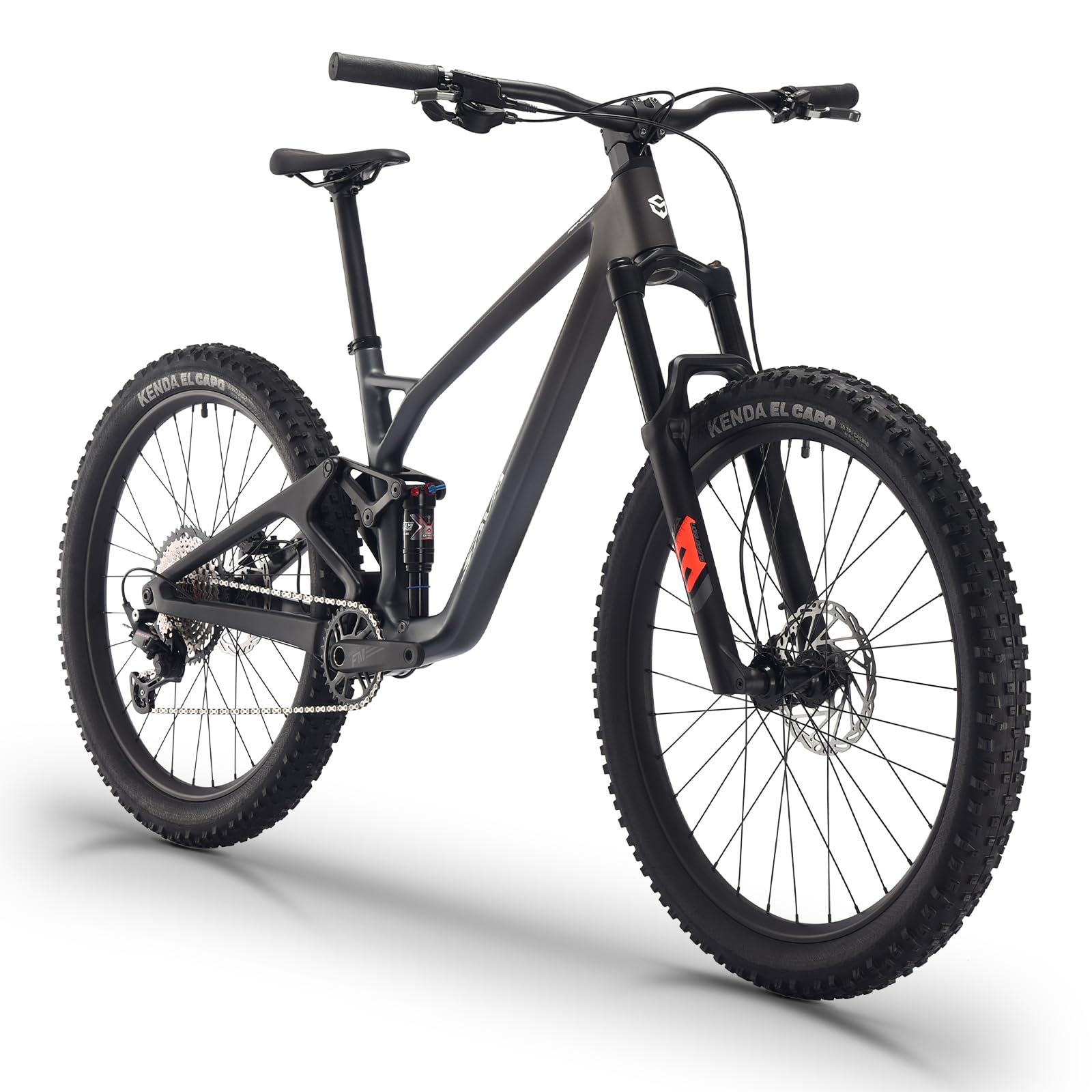
A carbon-fibre trail slayer with a dual-link suspension that makes technical climbing feel easy.
The SAVADECK Titan 612 is built around a lightweight full-suspension carbon fiber frame with a reinforced rear triangle and a dual-link suspension system. That dual-link design pairs with a DNM air shock that includes a three-stage lockout — so you can lock the suspension stiff for climbing, open it up for descents, or set it to a middle mode for all-around trail riding. The Shimano DEORE M6100 12-speed groupset gives you a wide gear range that keeps you spinning on steep singletrack and having top-end speed on flats, and the shifts are crisp and positive.
Braking comes from four-piston hydraulic disc brakes, meaning four pistons in each caliper squeeze the rotor instead of two — a serious upgrade for riders who ride brakes hard on long, steep descents without worrying about fade. The bike rolls on 2.4-inch Continental all-terrain tires that, according to the maker, deliver 15% better roll efficiency than standard treads. The internal cable routing is not just cosmetic — it keeps cables clean of mud and debris. One rider noted the frame runs slightly large, so shorter riders should size down carefully. Despite a small sample of reviews, the consistent feedback is that the bike rides smooth and handles exceptionally well once set up properly.
Performance highlights
- Dual-link suspension with DNM air shock gives you a lockout for climbing and full squish for descending.
- Four-piston hydraulic brakes offer serious stopping power and heat dissipation on long downhills.
- Shimano 12-speed drivetrain delivers crisp shifting across a massive gear range.
The honest trade-offs
- Frame sizing runs large — riders under 5’4″ will struggle with fit.
- Carbon fiber demands careful handling; a hard crash can crack the frame.
- Customer support experiences are inconsistent, with a few reports of incorrect parts initially shipped.
Best suited for: The aggressive trail rider who wants modern geometry, premium suspension adjustability, and a lightweight carbon chassis.
Not ideal for: Shorter riders or anyone looking for a turn-key experience with zero potential post-purchase communication.
4. Canyon Spectral 27.5 AL 5
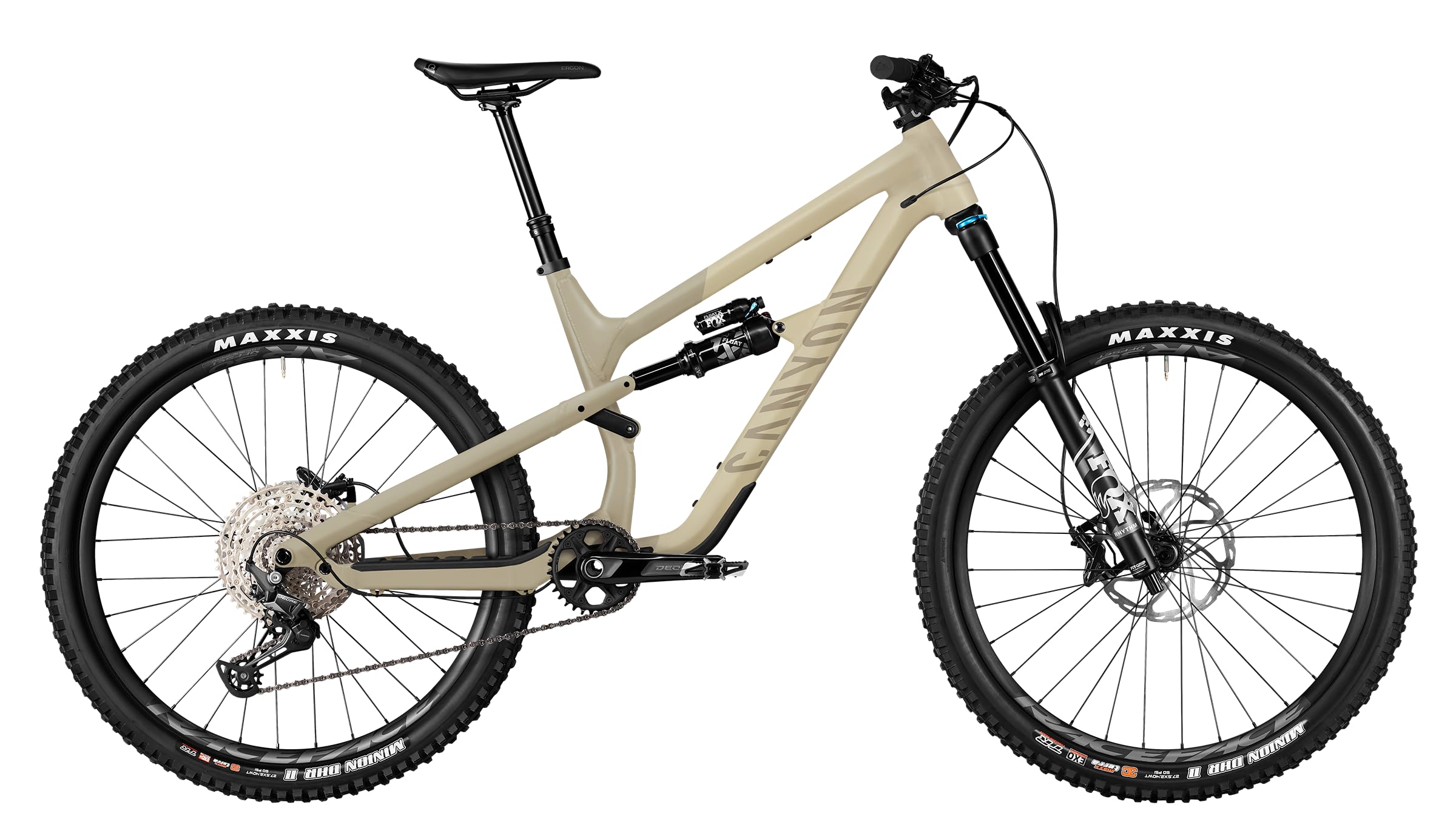
A long-travel alloy full-suspension bike with a 160mm FOX 36 fork, built to charge technical descents and soak up drops.
The Canyon Spectral 27.5 AL 5 is a proper gravity bike built to charge through technical trails and send bigger lines with confidence. Its high-performance aluminum frame pairs a responsive, nimble feel with the strength to take repeated hits. Front and rear, a FOX suspension system — a 160mm FOX 36 Rhythm GRIP fork and a FOX Performance shock — delivers plush, controlled travel that keeps the wheels tracking through rocks, roots, and landings.
The drivetrain is a 12-speed Shimano Deore, giving a wide gear range for grinding back up between runs. Powerful Shimano M6120 four-piston disc brakes haul you down on steep descents, and the bike rolls on tubeless-ready wheels with a dropper seatpost that drops the saddle out of the way for descending. Owners rate it 4.2 stars and praise the confidence-inspiring suspension and component spec for the money. As with any direct-order bike, give it a thorough pre-ride inspection and set the suspension sag to your weight before the first descent.
Where it shines
- 160mm FOX 36 fork and FOX rear shock soak up drops, rocks, and hard landings.
- Four-piston Shimano brakes and a dropper post keep steep descents in control.
- 12-speed Shimano Deore drivetrain gives a wide range for climbing back up.
The honest trade-offs
- At 150mm+ of travel it is heavier and less efficient on long climbs than a lightweight bike.
- Direct-order delivery means you set suspension sag and check bolts yourself.
- A smaller review count than mass-market bikes, so less long-term feedback.
Ideal for: The gravity-focused rider who wants a capable full-suspension bike for technical descents, drops, and all-mountain trails.
Look elsewhere if: You mostly race cross-country or log big climbing miles, where a lighter short-travel bike is more efficient.
Understanding the Specs
Full Suspension vs. Hardtail
Full suspension (like on the Schwinn Traxion and SAVADECK Titan) uses both a front fork and a rear shock, which keeps the rear tire glued to the trail over bumps and roots. Hardtail bikes (like the Eastern Alpaka) have only front suspension. A hardtail is lighter and more efficient for climbing and sprinting, but on rough descents it transfers every rock and root straight to your spine. If your riding is mostly smooth to moderate trails, a hardtail is faster. If you chase rocky, technical descents, full suspension gives you control and comfort.
Mechanical vs. Hydraulic Disc Brakes
Both are disc brakes, but they deliver power differently. Mechanical disc brakes use a cable to pull the brake pads against the rotor. They are inexpensive, easy to work on, and perfectly capable, but they require more hand strength to slow you down. Hydraulic disc brakes use a sealed fluid system — when you squeeze the lever, fluid pushes the pads. The result is stronger, more precise stopping power with just one or two fingers, and they resist fading when you brake hard on a long downhill. The four-piston brakes on the SAVADECK Titan double the number of pistons pushing the pads, giving you even more bite and heat management.
FAQ
What size freeride bike do I need?
Is a full-suspension bike worth the extra cost for a beginner?
How long does a carbon fiber bike frame last?
What does 12-speed mean on a mountain bike?
Can I use a freeride bike on paved roads?
How much maintenance does a full-suspension bike need?
What is the difference between hydraulic and mechanical disc brakes?
Are 29-inch wheels better than 27.5-inch for freeride?
How hard is it to assemble a bike bought online?
Can I upgrade the components on these bikes later?
Final Thoughts: The Verdict
For most riders, the best freeride bikes pick is the Schwinn Traxion because it delivers a full-suspension, 29-inch-wheel experience at a price that leaves room for gear and upgrades. If you want hydraulic brakes and a lighter frame from the start, the Eastern Bikes Alpaka is the one to reach for. And for the rider chasing technical descents and drops on full suspension, the Canyon Spectral 27.5 AL 5 is the gravity choice.
How We Picked
We do not accept paid placement. Every pick is matched to a real buyer and a real use-case; we do not hands-on test units.
Sources & Methodology
Specifications: manufacturer listings and product documentation. Review insights: verified customer reviews, as of July 2026. Pricing: not shown on this page (it changes often); check the current price via the retailer link.
As an Amazon Associate, Trending Car earns from qualifying purchases. This does not affect which products we feature.