
Our readers keep the lights on and my garage snacks stocked. As an Amazon Associate, I earn from qualifying purchases.
Specs are compiled from manufacturer listings and verified buyer reviews and can change over time — please confirm the key details on the product page before buying.
That orange horseshoe-shaped TPMS light on your Ford Escape’s dash is a nagging reminder that at least one tire is running low. Sometimes it is a slow leak, other times a dead sensor battery — but either way, you want it fixed without paying dealership prices. This guide walks you through six pre-programmed 315MHz sensor sets, all confirmed to fit the Ford Escape, so you can shop with confidence.
I’m Min Islam — the founder and writer behind Trending Car. This guide is built by comparing the manufacturers’ published specifications and the patterns across verified customer reviews, so you get each pick’s real strengths and trade-offs instead of marketing spin.
We match you with the best ford escape tire pressure sensor for your budget by weighing battery life claims, measurement accuracy, and real customer feedback on installation and durability.
Quick Picks
- Marsflex TPMS Sensor — Best Overall
- A-Premium TPMS Sensor — Certified Quality
- AMICAREP TPMS Sensor — Tightest Tolerance
- CDWTPS TPMS Sensor — Wide Fitment
- GEARMEISTER TPMS Sensor — Warranty Leader
- RENECTIV TPMS Sensor — Newer Model Fit
How To Choose The Best Ford Escape Tire Pressure Sensor
Ford Escape tire pressure sensors are small electronic modules that live inside each wheel, measuring air pressure and temperature, then broadcasting a 315MHz signal to your car’s computer. When a sensor’s battery dies or it gets damaged during a tire change, the dash light turns on. Choosing the right replacement means checking three things: fitment, frequency, and whether it comes pre-programmed.
Frequency — Why 315MHz Is The Only Number That Matters
A TPMS sensor (the full name for the tire pressure monitor) sends data on a specific radio frequency. Ford Escape models from 2009 through 2019 all use 315MHz sensors. Buying a 433MHz set by mistake — which some newer Fords use — means the sensor will physically fit in the wheel but your car will never see the signal. Always confirm the frequency on the product page says 315MHz before you hit buy.
Pre-Programmed vs. Programmable — Which Saves You The Headache
Pre-programmed sensors ship ready to pair with your specific vehicle — you install them, then run a relearn procedure (like honking the horn or pressing the brake pedal in a sequence) to sync them. Programmable sensors require a separate tool to copy the sensor IDs from your old ones. For a DIY install, pre-programmed is simpler. Just keep in mind that “pre-programmed” does not mean plug-and-play — you still need to trigger the car’s relearn mode.
Battery Life — The 5-8 Year Claim Vs. Reality
Every sensor in this list advertises a 5-8 year battery lifespan, and the batteries are sealed inside the unit — you cannot replace just the battery. Real-world reports from owners show that cheaper sensors sometimes fail within weeks or months, likely from poor battery connections or early cell drain. When reviewing customer feedback, look for patterns of long-term reliability rather than just the printed claim.
Measurement Accuracy — How Wrong Is Too Wrong
A sensor that reads 2-3 PSI off is annoying but safe. Some budget sensors in the data report a wider error margin, causing the TPMS light to stay on even when tires are properly inflated. The best picks advertise a ±1.5 PSI or ±2% accuracy, which keeps readings close enough to your pressure gauge that the light behaves normally.
Quick Comparison
| Model | Best For | Measurement Accuracy | Included Components | Item Weight | Amazon |
|---|---|---|---|---|---|
| Marsflex TPMS Sensor | Precise ±2% accuracy | ±2% | 4 sensors, 1 manual | — | Amazon |
| A-Premium TPMS Sensor | Certified quality with aluminum valve | ±0.06 Bar | 4 sensors, 4 color boxes, 1 manual | 0.16 kg | Amazon |
| AMICAREP TPMS Sensor | Tightest ±1.5 PSI accuracy | ±1.5 psi | 4 sensors | 0.35 lbs | Amazon |
| CDWTPS TPMS Sensor | Wide Ford & Lincoln fitment | — | 4 sensors | 5.3 oz | Amazon |
| GEARMEISTER TPMS Sensor | 2-year warranty, 20-80 PSI range | ±2% | 9L3Z1A189A | — | Amazon |
| RENECTIV TPMS Sensor | Newer Escape (2020-2024) fitment | — | 4 sensors | — | Amazon |
In‑Depth Reviews
1. Marsflex TPMS Sensor
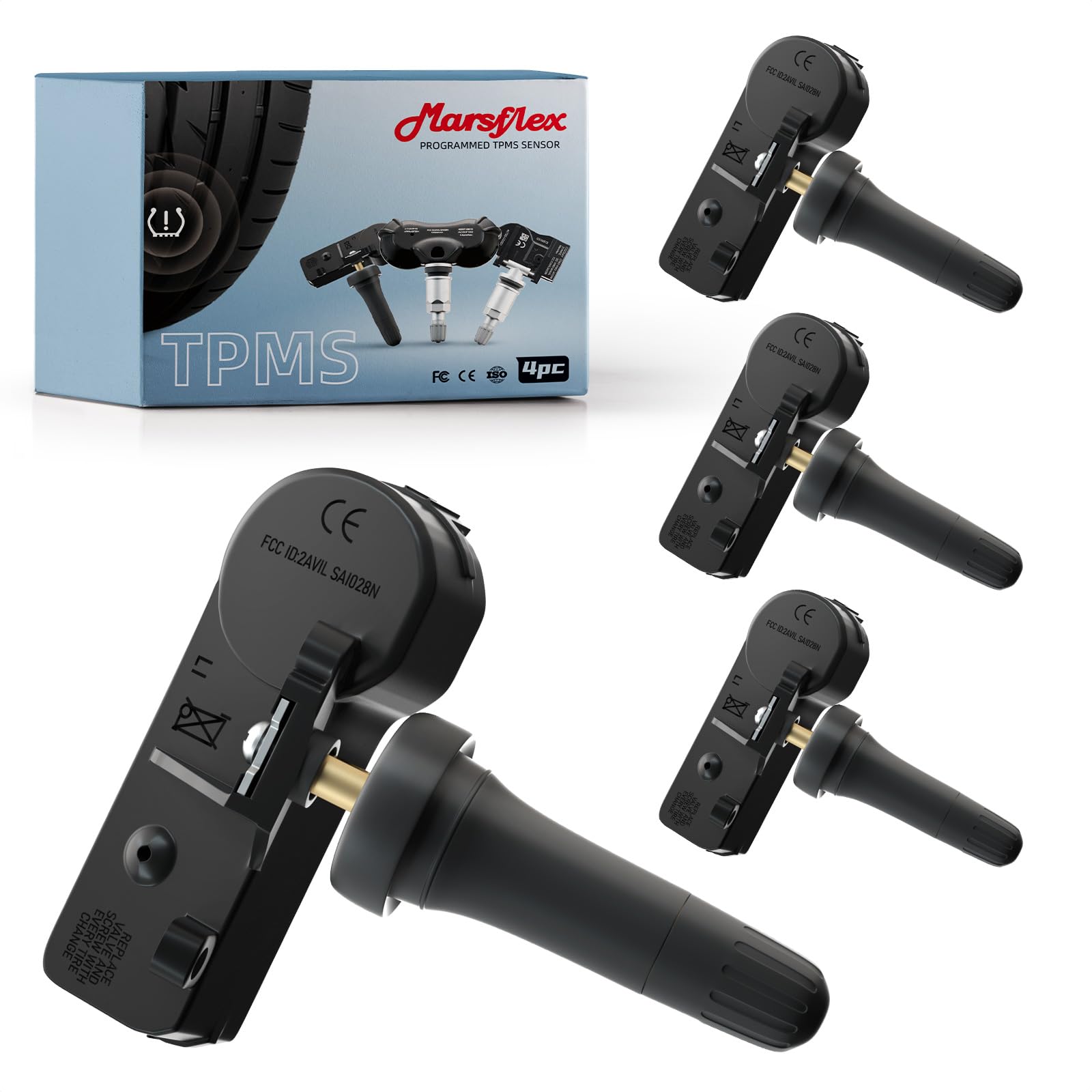
The one with ±2% measurement accuracy and a true 1-second digital response for precise tire data.
This Marsflex set is pre-programmed and covers a wide range of Ford vehicles including the 2009–2019 Escape, 2009–2014 F-150, and 2010–2016 Fusion. The sensor’s ±2% measurement accuracy means the pressure your dashboard shows stays very close to what a handheld gauge reads — buyers report very few false TPMS light issues compared to less precise sensors. The included CR2032B battery and chip handle temperatures from -40°C to +125°C, which is important if you live where winters dip well below freezing.
However, owners mention a real concern with the valve stem quality. One owner reported that on a 300+ mile trip, the valve stem failed, leaking air; another also failed on the return trip, causing a flat tire. This is a recurring complaint, so you may want to have a tire shop inspect the valve stems during installation. The set also comes with a 1-year service guarantee from Marsflex, which helps if you hit an early failure.
Why It Stands Out
- ±2% measurement accuracy for trustworthy psi readings
- 1-second digital response time, so the dash updates quickly
- Wide application — covers Escape 2009-2019, F-150, Fusion, and many Ford/Lincoln models
The Catch
- Two valve stem failures reported within 400 miles on one trip, causing air leaks
- Some users needed a cheap relearn tool to complete the sensor pairing
Stick with it if: your main concern is getting accurate pressure readings fast — the ±2% accuracy and 1-second response are the best raw specs in this group.
But watch out for: the valve stem quality. Consider having a shop inspect or reinforce them during installation.
2. A-Premium TPMS Sensor
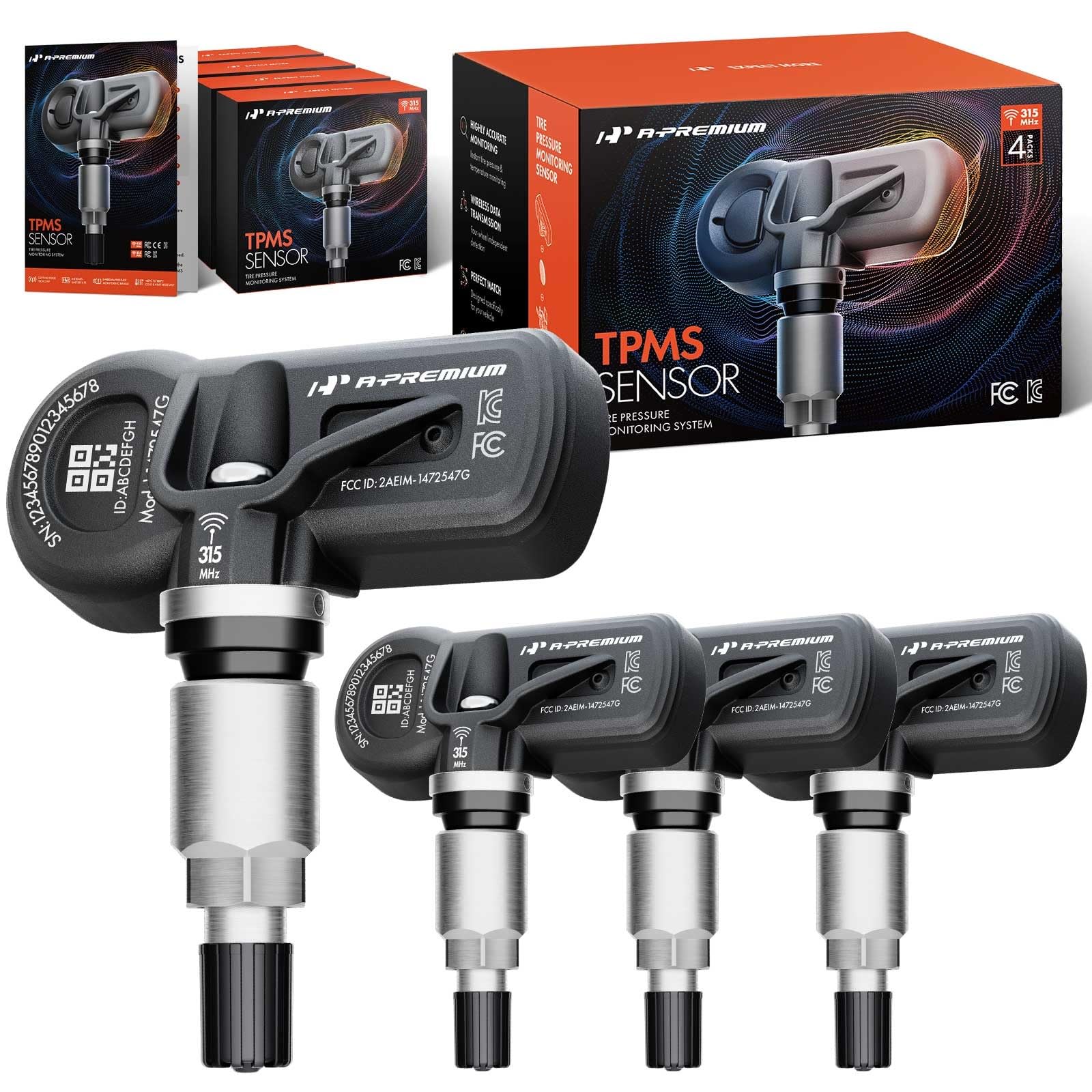
The only set with FCC and IC certification plus an aluminum valve stem that beats OEM rubber.
A-Premium brings something the rest of the field does not: FCC and IC certification, meaning the radio has passed interference and safety testing. The sensor uses a high-precision NXP chip and is tested to SAE J2657 standards inside the factory. Where many competitors use plastic or rubber valve stems, this set uses an upgraded aluminum valve that resists cracking and corrosion. The measuring range goes from 0 to 130.53 PSI (0~900 KPa), which covers everything from passenger car tires to heavy loads.
You can program these sensors yourself using the hazard light and air release method — no special tool needed, according to reviewers on a 2016 F-150. One owner of a 2022 Ford Maverick said the aluminum necks are “better than OEM rubber ones.” The catch: one verified report says all sensors stopped working after one week and would not reprogram, though the same user flagged a potential frequency mismatch for their specific Expedition model. A-Premium provides a 2-year guarantee, which is double what most competitors offer.
Quality Highlights
- FCC and IC certified — tested for interference and safety
- Aluminum valve stem, more durable than OEM rubber
- 2-year guarantee, longest warranty in this comparison
Before You Buy
- One instance of total sensor failure after 1 week (possible model-specific frequency issue)
- Weighs 0.16 kg — heavier than some rivals, but the aluminum valve accounts for that
Grab these if: certified testing and a tougher aluminum valve stem matter more than saving a few dollars — the 2-year warranty backs it up.
Check twice if: your Ford Expedition model year is listed but uses 433 MHz — verify the frequency in your owner’s manual.
3. AMICAREP TPMS Sensor
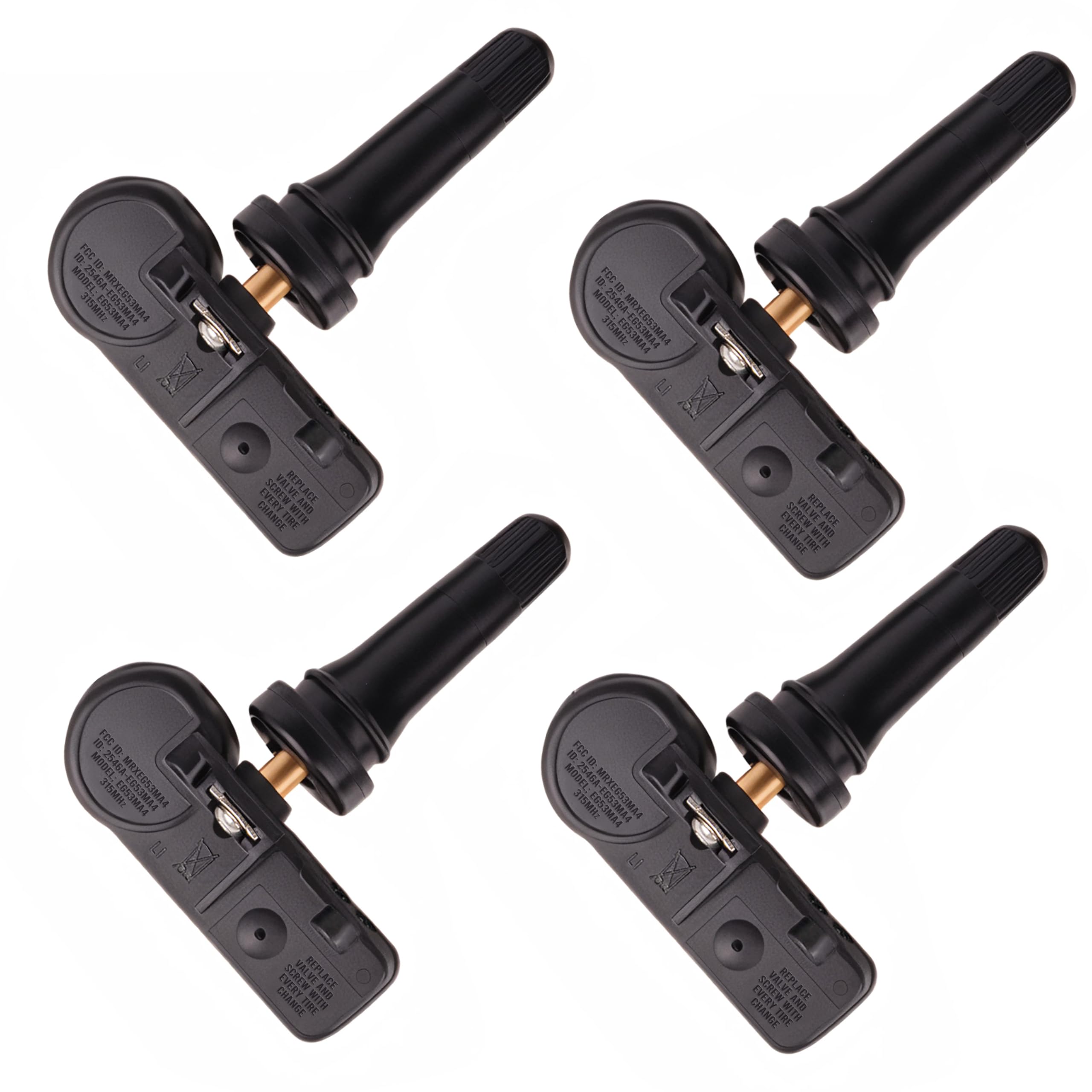
The one with the tightest ±1.5 PSI measurement tolerance and a 0-150 PSI range for serious accuracy.
AMICAREP claims the best measurement accuracy in the group at ±1.5 PSI, which beats the ±2% spec others use. Over a typical 35 PSI reading, ±1.5 PSI means the dash might show 33.5 or 36.5 at worst — you will barely notice the difference. The measuring range of 0 to 150 PSI also covers light truck tires if you tow or carry heavy loads. The sensors use a flange mount design that pops directly into the wheel valve hole without adapter rings.
Customers note very strong satisfaction. One owner of a 2009 Mazda Tribute (platform sibling to the Escape) said the sensors “connected automatically with no special tools required” and noted the price was “unbeatable compared to per sensor at tire shops.” Another reviewer called it “the beautiful sound of silence” now that the TPMS warning bell on startup was gone. The only negative review came from an owner whose sensor failed after two months and would not relearn — AMICAREP offers a 12-month replacement or refund in that scenario, which is standard but not industry-leading.
Accuracy First
- ±1.5 PSI — the tightest tolerance in this roundup
- 0-150 PSI measuring range, suitable for passenger vehicles and light trucks
- Many users report instant pairing with no special tools
Keep In Mind
- One report of complete sensor failure after 2 months
- Weighs 0.35 lbs — slightly heavier than some all-plastic designs
Choose this for: the most accurate pressure readings possible in this price range — ±1.5 PSI is noticeably tighter than ±2% on a typical tire.
Be aware: early failure is rare but documented; the 12-month warranty covers replacement.
4. CDWTPS TPMS Sensor
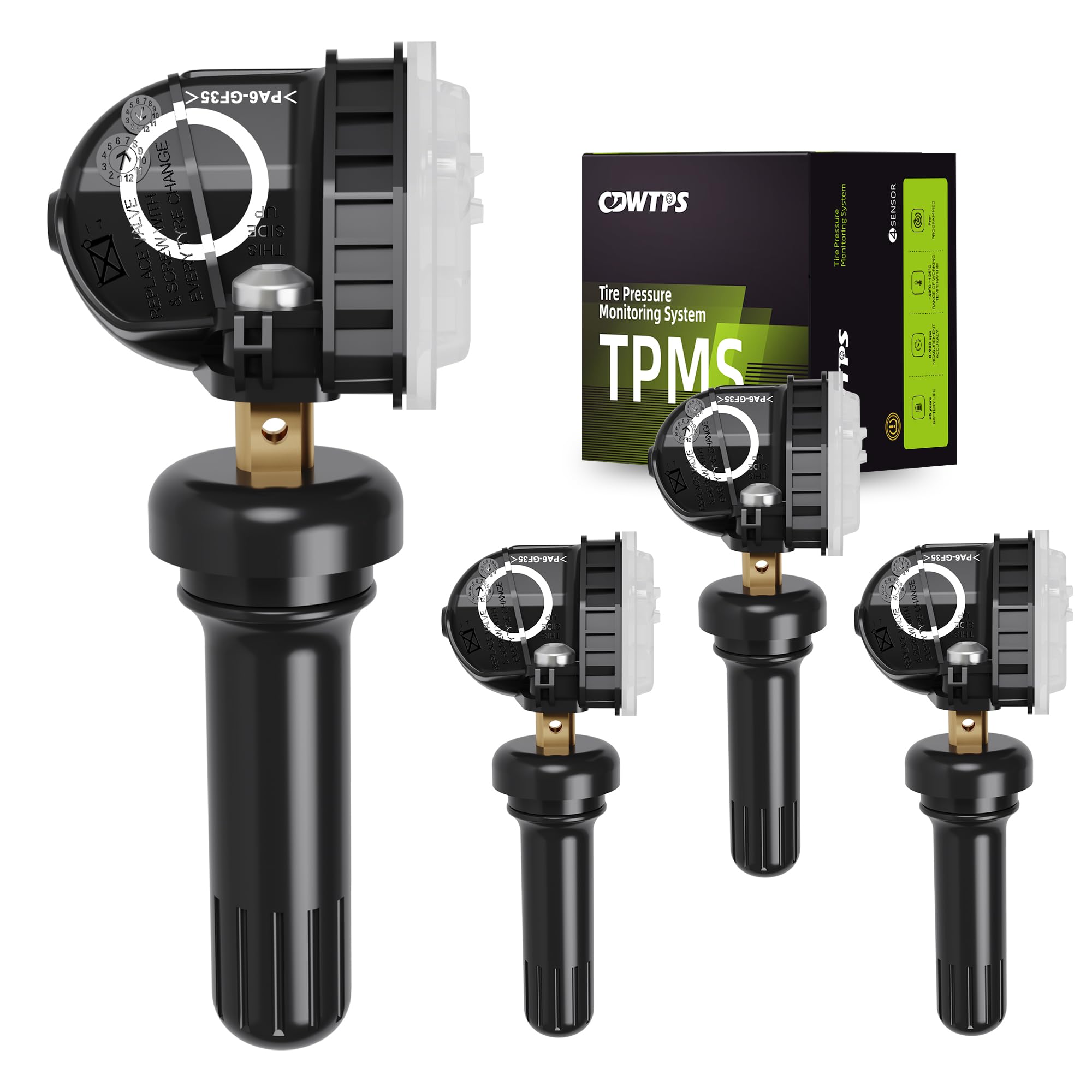
A lightweight 5.3 oz set covering newer Escape 2020-2024 and Bronco Sport models you might not expect.
CDWTPS steps beyond the 2009-2019 Escape window and covers 2020-2024 Escape and Bronco Sport as well — handy if you have a newer Ford or are buying sensors that could transfer to a future vehicle. The sensor set weighs only 5.3 oz, making it one of the lightest in the group, which reduces unsprung weight on your wheel (a tiny benefit for ride comfort). OEM replacement numbers include F2GZ1A189A, FR3Z1A189A, and HC3Z1A189A, so compatibility checking is straightforward.
Reviewers point out excellent value — one owner was quoted per sensor at a local shop and bought this 4-pack for under, calling it “a fraction of the tire shop price.” Another said the sensors worked perfectly for a 2018 F-150 with a cheap training tool. That said, one detailed review noted the update frequency is slower than OEM, causing 2 PSI discrepancies between wheels, which can be distracting and the reviewer said it implies poor battery life. Also, one reviewer noted zero successful activation on a 2020 F-150.
Why It Fits
- Light — 5.3 oz per set, minimal added wheel weight
- Broader compatibility includes 2020-2024 models
- Rave reviews on value — way cheaper than shop quotes
Watch The Update Speed
- Slower update than OEM, leading to 2 PSI discrepancies between wheels per one review
- One total failure to activate on a 2020 F-150
Pick this for: a newer Ford (2020+ Escape, Bronco Sport) where you want OEM-like fit on a budget — just verify your year is in the list.
But note: the slower update frequency may annoy drivers who expect instant, matched readings.
5. GEARMEISTER TPMS Sensor
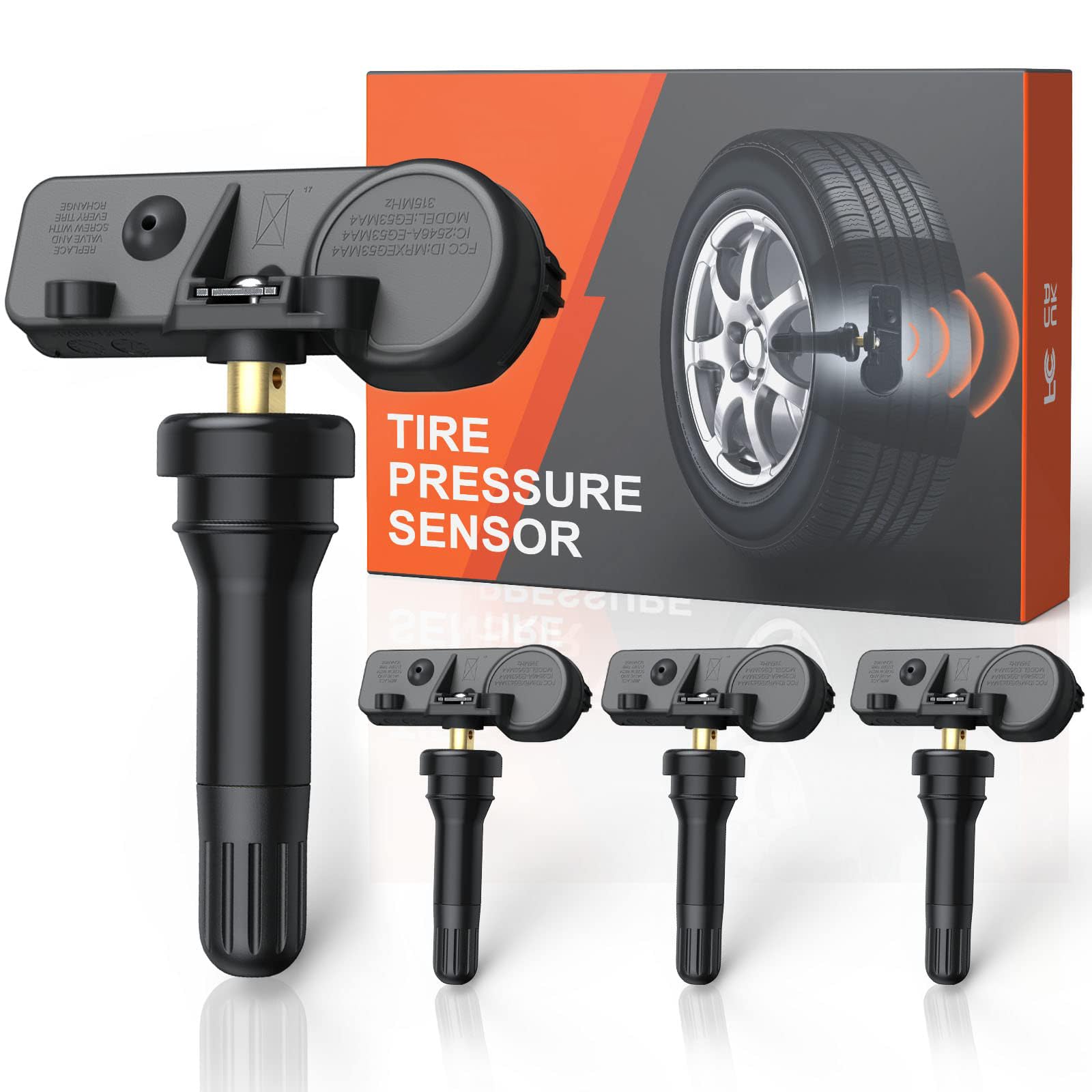
Backed by a rare 2-year warranty and a ±2% accuracy that keeps the Escape light off.
GEARMEISTER pairs its pre-programmed sensors with a 2-year warranty, which matches the A-Premium set and beats the 1-year coverage most others offer. The measurement accuracy is ±2%, and the measuring range is 20 to 80 PSI — fine for Ford Escape tires (typically 32-38 PSI) but narrower than the 0-150 PSI range on the AMICAREP. The sensor fits Ford Escape 2009-2019, along with a wide list including F-150, Fusion, Explorer, and Lincoln models.
One Lincoln MKZ owner reported the sensors “worked fine” after six months using a programming tool, and a 2012 Ford Explorer XLT owner said the warning light turned off two days after driving. However, one critical review warns of inaccuracy: under-reports pressure, requiring over-inflating tires by about 5 lbs to turn off the TPMS light. The seller recommends checking that your scan tool can detect the sensor before starting installation — a smart precaution given the mixed reports.
confidence
- 2-year warranty — tied for longest in this group
- ±2% accuracy; owners of Lincoln and Ford models report zero dash lights after proper install
- Includes a wide compatibility list spanning 2009-2019 Escape and beyond
Warning Zone
- One verified report of under-reporting pressure by ~5 PSI
- No paper instructions included per one owner
Grab this set if: warranty length is your deciding factor — 2 years of coverage beats the competition.
Stay cautious if: you do not own a scan tool or OBD diagnostic tool to verify the sensor ID before install; the maker warns against starting without one.
6. RENECTIV TPMS Sensor
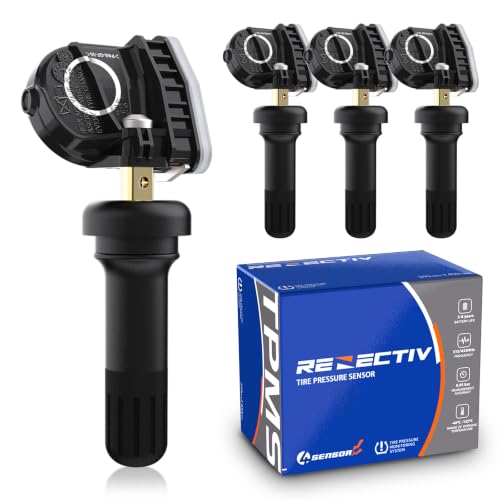
A 2020-2024 Escape pick with a high-performance CR2032 battery and 900kpa chip for rigorous conditions.
RENECTIV specifically targets newer Ford models including the 2020-2024 Escape, which is useful if your Escape is a 2020 or newer. It also covers Bronco, Edge, Expedition, and F-150 from 2014 onward. The sensor uses a 900kpa chip and a CR2032 battery rated for 5-8 years, handling -40°C to 125°C. Pre-programmed for direct fit, it still needs activation via a scan tool after installation.
One 2018 F-150 owner confirmed successful installation using the brake pedal and ignition cycling method, calling it “flawless.” Another reviewer said they were told off-brands never work, but these programmed and worked perfectly — though they could not speak to longevity. On the downside, one buyer mentioned a sensor failed after only 4 weeks, leaving the TPMS light on indefinitely. Another buyer with a 2015 F-150 said the sensors were not compatible, and the return window had closed, though the seller later offered a full refund.
Modern Compatibility
- Specifically fits 2020-2024 Escape and many newer Ford models
- Pre-programmed; shoppers say easy pairing via simple brake/ignition method
- High-temperature tolerance up to 125°C for hot climates
Watch For
- One report of sensor failure at 4 weeks
- Instructions printed online differ from box; verify before installation
Best suited for: Escape 2020-2024 owners who want pre-programmed sensors without visiting the dealer.
Be careful if: your vehicle is a 2015 F-150 — at least one buyer found it incompatible despite the listed fitment.
Understanding the Specs
Measurement Accuracy (±1.5 PSI vs. ±2%)
This spec tells you how far off the sensor’s reading can be from the actual tire pressure. A sensor with ±1.5 PSI will show between 33.5 and 36.5 PSI when your tire is at 35 PSI. The ±2% spec varies with pressure: at 35 PSI that is ±0.7 PSI, but at 80 PSI it is ±1.6 PSI. For a Ford Escape running 32-38 PSI, both are fine, but tighter tolerance means fewer false dashboard warnings.
Battery Life (5-8 Years vs. Real-World Failures)
Every sensor here claims a 5-8 year lifespan, but the battery is sealed inside the unit. Real owner reports show some budget sensors fail in weeks or months due to poor cell connections. The higher-priced sets with aluminum valves and certified chips tend to have fewer early failures. You can extend sensor life by avoiding high-pressure car washes that blast water directly at the valve stem.
FAQ
Will these sensors fit my 2012 Ford Escape?
Do I need to program these sensors myself?
How long does a TPMS sensor battery last?
Can I install these sensors myself without a tire machine?
What is the difference between 315MHz and 433MHz sensors?
Why does my TPMS light stay on after installing new sensors?
Can I use a Ford Escape sensor on a Lincoln MKX?
What does “pre-programmed” mean for TPMS sensors?
How do I know the sensor is reading the correct pressure?
Is a 2-year warranty worth paying extra for?
Final Thoughts: The Verdict
For most Ford Escape owners, the best ford escape tire pressure sensor is the Marsflex TPMS Sensor because it combines the tightest measurement accuracy with a fast response time and broad vehicle fitment, all at a reasonable price. If certified quality and a durable aluminum valve stem matter most to you, grab the A-Premium TPMS Sensor. And for the most accurate pressure readings possible in this group, the AMICAREP TPMS Sensor with its ±1.5 PSI tolerance is the standout.
How We Picked
We do not accept paid placement. Every pick is matched to a real buyer and a real use-case; we do not hands-on test units.
Sources & Methodology
Specifications: manufacturer listings and product documentation. Review insights: verified customer reviews, as of July 2026. Pricing: not shown on this page (it changes often); check the current price via the retailer link.
As an Amazon Associate, Trending Car earns from qualifying purchases. This does not affect which products we feature.