
Our readers keep the lights on and my garage snacks stocked. As an Amazon Associate, I earn from qualifying purchases.
Specs are compiled from manufacturer listings and verified buyer reviews and can change over time — please confirm the key details on the product page before buying.
Nothing ages a vehicle’s cabin faster than a drooping, stained, or torn headliner. You came here because you need fabric that is at least 60 inches wide to cover a full roof panel in one smooth piece, and you want to avoid the YouTube horror stories of fabric that wrinkles permanently on the first hot day. This guide cuts through the noise on exactly that: the best extra-wide vehicle headlining fabric, with the real specs and real owner outcomes you need to get a factory-smooth finish the first time.
I’m Min Islam — the founder and writer behind Trending Car. This guide is built by comparing the manufacturers’ published specifications and the patterns across verified customer reviews, so you get each pick’s real strengths and trade-offs instead of marketing spin.
The single best entry point for most DIYers is a mid-priced suede with a forgiving foam backing; This guide compares the data to find the best extra-wide vehicle headlining fabric that delivers professional results without the premium price tag.
Our Picks at a Glance


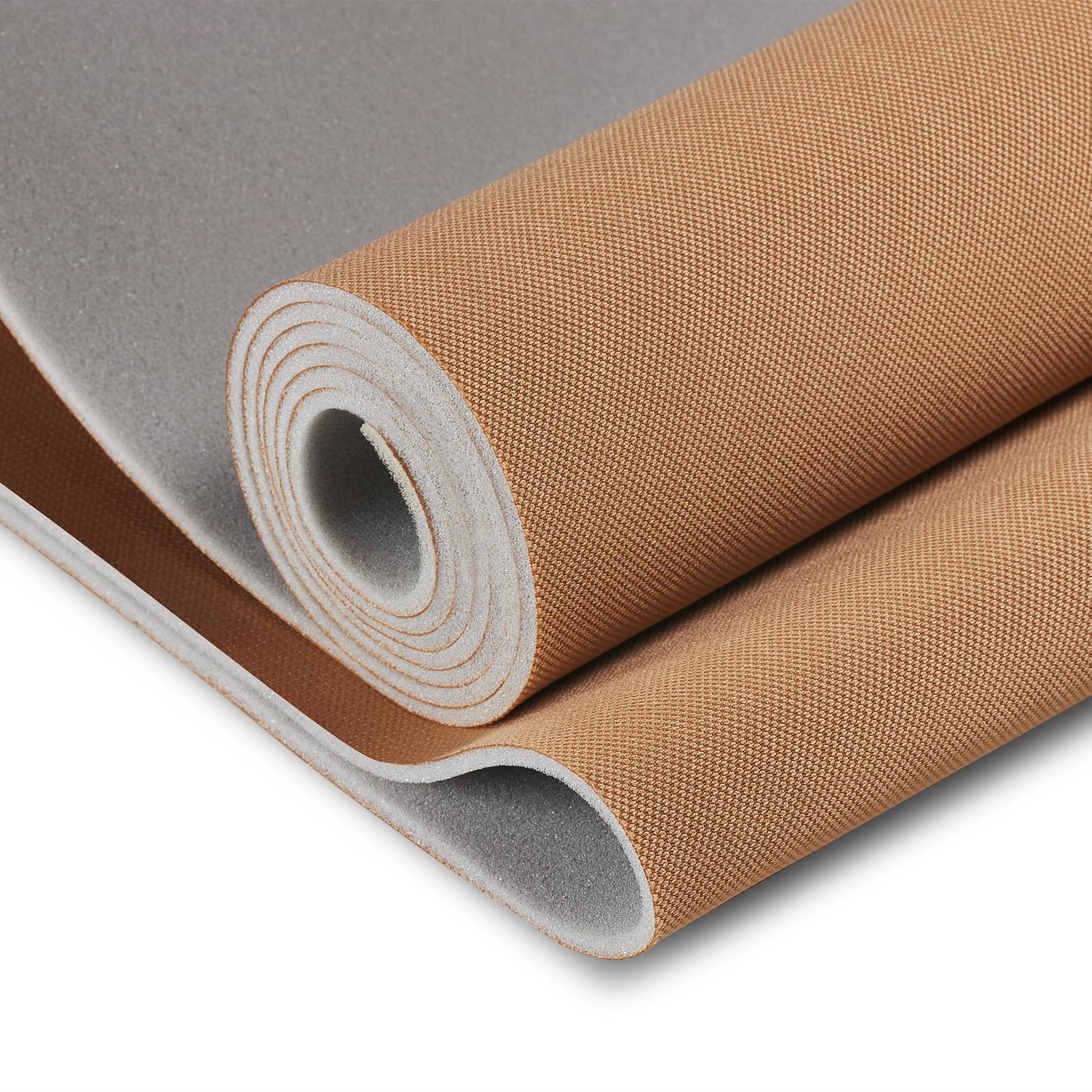
How To Choose The Best Extra-Wide Vehicle Headlining Fabric
Buying the wrong headliner fabric usually means fighting wrinkles, poor adhesion, or a color that does not match your interior. Focus on these three factors before you click add-to-cart.
Width and Length: Measure Your Roof Panel First
All the picks here are 60 inches wide to cover most car and truck roofs without a seam. The length you need depends on your vehicle — measure from the windshield header to the rear cargo area and add about six inches for trimming. A full-size SUV or extended-cab pickup needs 96 inches or more, while a compact car can get away with 79 inches.
Foam Backing: Thickness Dictates How It Installs
The foam layer on the back of the fabric serves two jobs: it hides minor imperfections in the old roof board, and it gives the material a bit of stretch so you can wrap it around curves without puckering. A 1/9-inch or 1/8-inch foam is standard for most cars, while a 3/16-inch foam feels plusher and muffles road noise better. Thicker foam is more forgiving for beginners, but it can create binding issues around sunroof openings.
Delivery Method: Folded vs. Tubed
This is the single most common complaint in owner reviews. Fabric shipped in a flat cardboard envelope arrives folded in a tight rectangle, leaving crease lines that can be tough to erase on dark suede. Fabric shipped rolled in a tube arrives flat and ready to lay down. If you value a wrinkle-free start, prioritize brands that use tube packaging.
Quick Comparison
| Model | Best For | Length | Foam Backing | Weight | Amazon |
|---|---|---|---|---|---|
| MOTUKA 79″ Suede★ Best Overall | Compact cars & first-time DIYers | 79 inches | 3/16 inch | 3.3 lb | Amazon |
| Babnecl 122″ SuedePremium Pick | Long beds & no-crease installation | 122 inches | 1/9 inch | 2.79 lb | Amazon |
| Hiksuky 97″ MeshMost Versatile | Mid-size sedans & trucks | 97 inches | 1/9 inch | 2.55 lb | Amazon |
| Pangda 98″ Suede Kit | Starlight headliner installations | 98 inches | 1/9 inch | 3.09 lb | Amazon |
| TuhooMall 96″ Suede | Budget-friendly pick for wagons | 96 inches | Not listed | 2.29 lb | Amazon |
| SARANDAVE 108″ Beige | Full-size SUVs & RVs | 108 inches | 3/16 inch | Not listed | Amazon |
| Kefly 96″ Light Gray | Light-colored interior restorations | 96 inches | 1/9 inch | 2.7 lb | Amazon |
| otoez 144″ Polyester | Large vans & multiple-vehicle projects | 144 inches | 1/8 inch | 2 lb | Amazon |
In‑Depth Reviews
1. MOTUKA 79″ x 60″ Black Suede Headliner Fabric
Our pick — over 4.5★ from 650+ verified ratings; the strongest balance of quality and price.
The crowd favorite that glued three different headliners without sagging for two years straight.
This micro-suede has a 3/16-inch foam backing (3/16-inch versus the standard 1/9-inch layer on budget rolls), so it hides dents in your old roof board and absorbs road noise while you drive. At 79 inches long and 60 inches wide, it fits compact sedans and midsize trucks — owners have used it on a Jeep, a Lincoln, and a Chevy. Buyers report the result looks “nearly identical” to the factory headliner in a 2024 Hyundai Santa Fe Calligraphy, according to one reviewer.
The fabric ships folded, not rolled, so you will find creases when it arrives. Owners consistently say laying it flat in the sun for a few hours, or using a heat gun during installation, erases those lines. The MOTUKA’s 79-inch length compared to the 98-inch Pangda option, so measure your roof first if you have a full-size vehicle. Use a quality contact cement (like 3M Headliner Adhesive) and cut the fabric half an inch wider than the board so the edges tuck under trim — this material stays tight even in summer heat.
The wrap-up: A balanced combination of soft feel, forgiving foam thickness, and proven long-term hold. The only trade-off is the folded packaging, but owners agree the creases are temporary with a little heat.
Reach for this if: You are doing a first-time headliner swap on a compact to midsize vehicle and want the highest owner-satisfaction rate on the list. It is the most-reviewed option here with strong consensus on ease of use.
Look elsewhere if: Your roof panel needs more than 79 inches of material — a full-size SUV or extended-cab pickup needs the longer 97-inch or 108-inch rolls below.
2. Babnecl 122″ L × 60″ W Suede Headliner Fabric
The suede that arrives flat in a tube — no grief with permanent creases.
At 122 inches long, this is the longest 60-inch-wide suede on the list, giving you one piece for a full-size SUV bed or an extended-cab pickup roof. Unlike the MOTUKA and most others, Babnecl ships the fabric rolled in a stout tube, so it lands flat and smooth — you skip the hour-long wrestling match with deep fold lines. The 1/9-inch foam backing (about as thick as three stacked credit cards) is standard, and owners describe the suede texture as easy to work with on medium-radius curves.
Owners mention that even with a few small creases from handling during installation, the end result is barely noticeable. Performance after several months remains strong, with no sagging reported. The trade-offs: tight corners around a sunroof frame require patience (the fabric does not stretch much), and the thinner foam will not mask heavily damaged roof boards as well as the 3/16-inch foam on the MOTUKA or SARANDAVE options.
Where it wins
- Tube packaging eliminates the crease problem from the start
- 122-inch length covers full-size roofs in one uncut piece
- Soft suede texture lays down smoothly on broad panels
What to watch
- Thinner foam backing offers less forgiveness for a damaged roof board
- Tight-radius curves need careful handling to avoid puckering
Best for: Anyone covering a long roof panel who wants to start the job with wrinkle-free fabric straight from the tube.
skip it if: Your original roof board has deep gouges or a rough surface — you will want the thicker 3/16-inch foam of the MOTUKA or SARANDAVE options.
3. Hiksuky 97″ L × 60″ W Mesh Headliner Fabric
The brown mesh that blends into a factory-matched interior without screaming “aftermarket.”
You get a 97-inch by 60-inch sheet in tube packaging, so the material arrives flat and crease-free — a major advantage over the folded competitors. The mesh texture (a woven look, not a fuzzy suede nap) mimics an OEM feel, and owners say it is a near-perfect match for factory headliners on a 2003 Pontiac Bonneville and a BMW. The 1/9-inch foam backing is standard, and the fabric cuts cleanly without fraying. One owner reports it is “still holding strong” after two years — a durability claim common among reviewers.
The mesh face is less forgiving in tight corners than suede. Applying it to a high-curvature roof requires slow work with clothespins to hold edges while the adhesive cures. The brown color suits tan or camel interiors; it will not work for gray or black cabins. Compared to the black suede of the MOTUKA, this option trades softness for a factory-correct look in beige interiors.
Bottom line: If you need a brown headliner that looks like it came from the factory, this is your best bet. The tube packaging is a genuine time-saver.
Grab it for: Restoring a brown or beige interior to an original-equipment appearance with no wrestling against creases.
Pass on it for: Dark gray or black interiors — the mesh comes in brown only, so you will need one of the black suede options below.
4. Pangda 98″ x 60″ Suede Headliner Fabric Kit
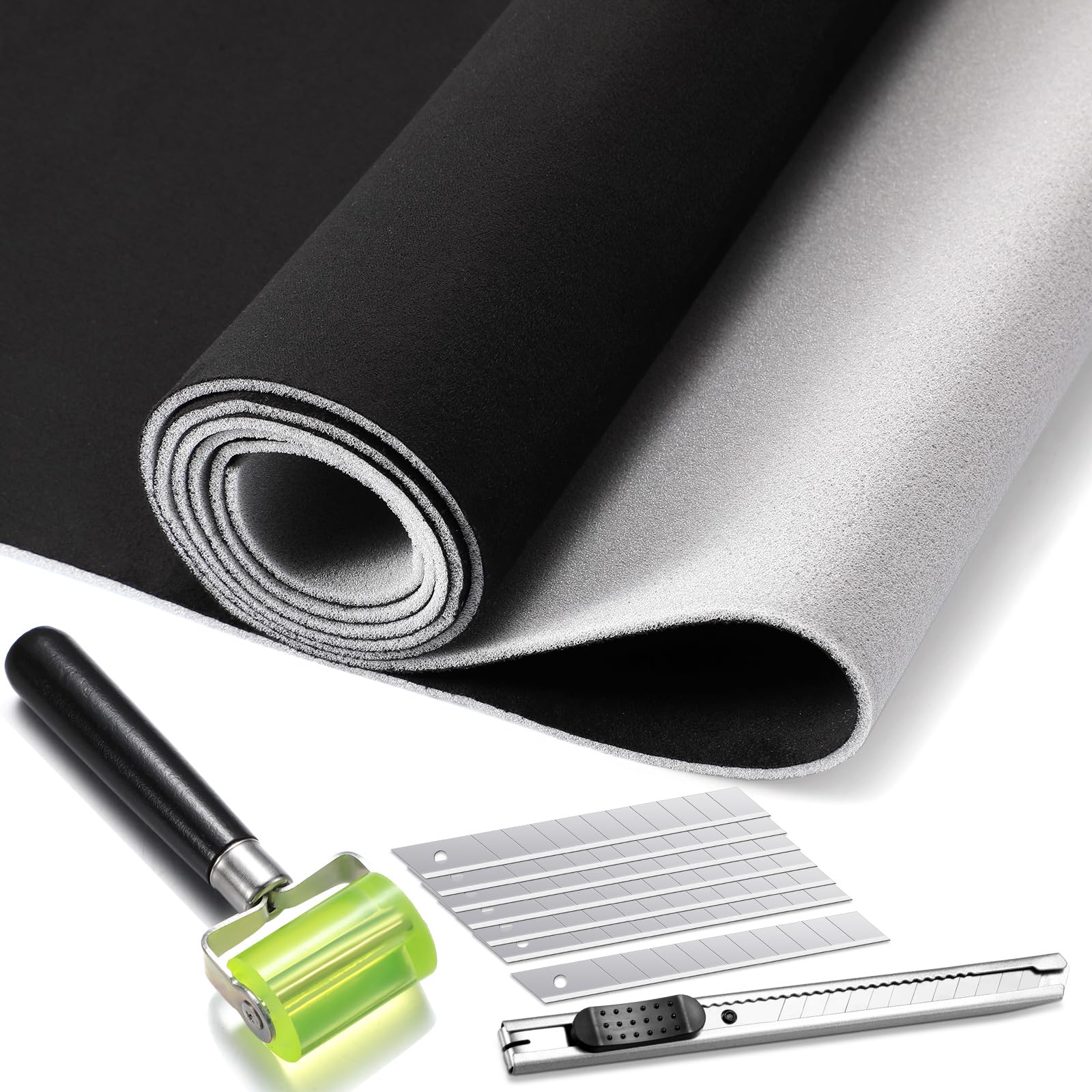
Handled 1,100 fiber-optic starlights in a Range Rover — proof this suede takes the heat.
This is the only kit that bundles a rubber seam roller, a utility knife, and 10 replacement blades with the fabric, so you save a trip to the hardware store. The suede is 98 inches long and 60 inches wide, built from synthetic suede with a 1/9-inch foam backing. One owner installed it in an L320 Range Rover and punched over 1,100 individual starlight fibers through the material — the fabric held firm with no tearing around the holes, according to the review.
At 3.09 pounds, it is heavier than the 2.55-pound Hiksuky option, reflecting the dense foam and suede layup. The downside: it ships folded, and several customers note the fold marks are tough to fully eliminate even with steam and sun. Use a fabric steamer on low and a quality 3M headliner adhesive, as cheaper glues can fail in high heat. Unlike the Babnecl which arrives in a tube, this fabric demands extra work to get it flat.
Why you might love it
- Comes with installation tools — roller, knife, and spare blades
- Proven to handle dense starlight installations without tearing
- Thick, plush suede gives a luxury-cabin feel
Why you might hesitate
- Shipping folds create stubborn creases that require careful steaming
- Heavier than other options, so adhesive choice matters
Choose this if: You plan a custom starlight headliner or want a complete toolkit with your fabric purchase.
Think twice if: You are not prepared to steam or heat-set the fold lines — the creases are real, and some owners found them permanent.
5. TuhooMall 96″ x 60″ Suede Headliner Fabric
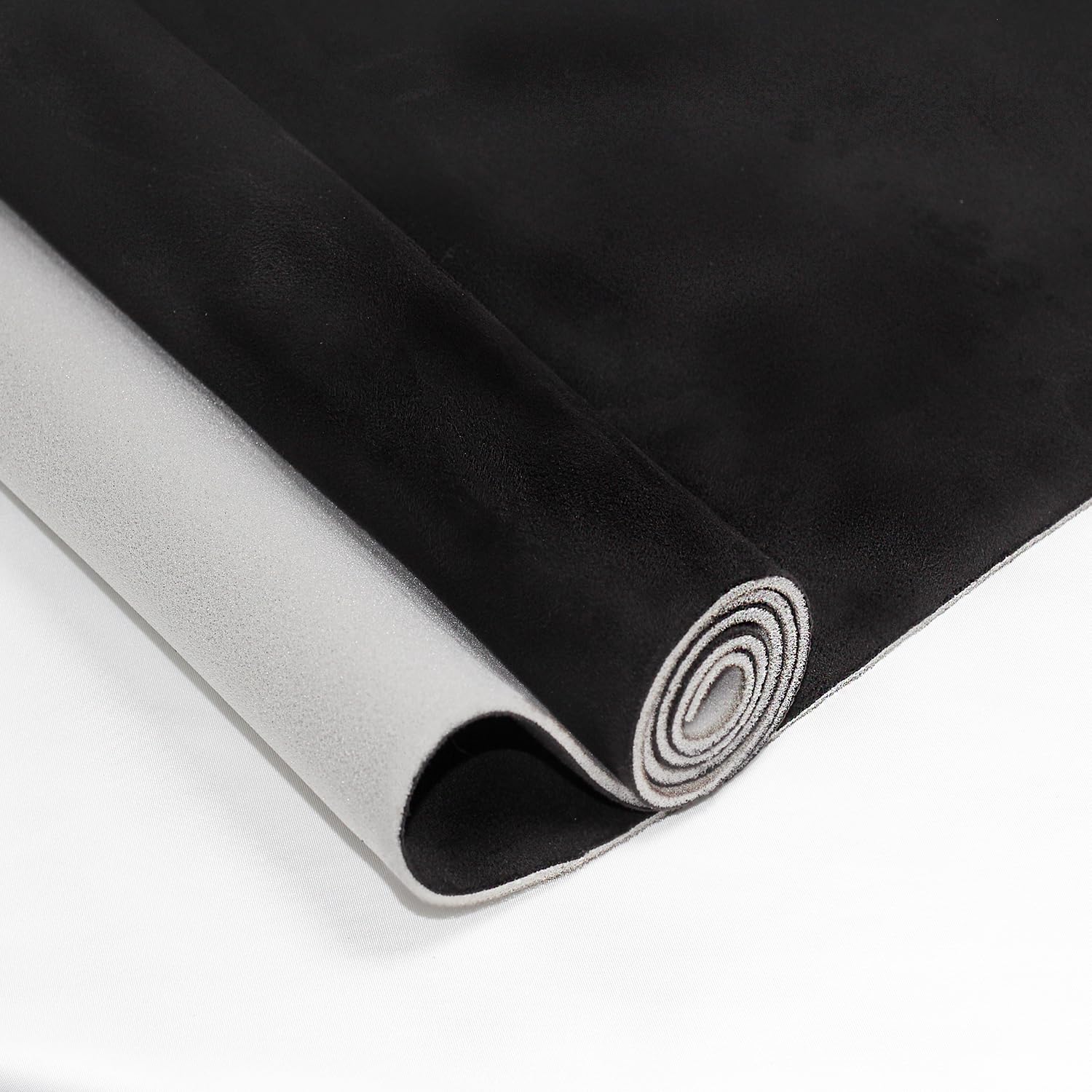
The lightest suede here, but owners praise its premium feel for a budget-friendly price.
At 2.29 pounds, this is the lightest suede option — noticeably easier to hold overhead in a tight cabin. The 96-inch length covers most wagon and full-size car roofs; one owner used it in a 1991 Nissan Sentra with excellent results. The suede surface is soft and stain-resistant, and the fabric stretches enough to follow moderate curves without fighting back. Owners rate quality and material as the top strengths.
The biggest complaint: it ships folded, leaving creases. Owners found that stretching the fabric taut during installation — not ironing or steaming — removed the wrinkles completely. Color accuracy gets mixed feedback, so order a swatch first if you need an exact match. Compared to the 3.3-pound MOTUKA, this is the budget-friendly weight-saver, but you lose the thicker foam backing (the foam thickness is not listed) and the proven owner consensus.
The trade-off: You save weight and money, but you must be willing to stretch out fold marks during the install. The material itself is soft and high-quality for the price.
Best for: A budget-conscious restore on a standard-size vehicle where you are comfortable smoothing creases by hand during application.
Not ideal for: A picky color match — the shade variance is worth checking before you commit.
6. SARANDAVE 60″ x 108″ Beige Headliner Fabric

The beige fabric that matches factory headliners so well, owners say it looks like it never left the dealership.
This is one of the few 60-inch-wide options in beige, and at 108 inches long, it fits full-size SUVs, crew-cab pickups, and even RVs. The 3/16-inch foam backing matches the MOTUKA’s thickness, so you get the same sound absorption and soft touch. Owners consistently call the color a perfect match for OEM beige interiors — the second most-praised aspect after material quality. The fabric cuts cleanly and works with standard headliner adhesive.
The packaging is the main friction: it arrives folded, and creasing gets mixed feedback — some reviewers point out no issues after laying it flat, while others found the creases stubborn. At its heavier weight, the material can feel unwieldy when working overhead alone. For a beige interior restoration on a large vehicle, it stands as the strongest candidate on the list, beating the Hiksuky mesh if you prefer a suede finish.
Strong points
- 108-inch length covers longest roof panels without splicing
- Factory-matched beige color praised by dozens of owners
- Thick foam backing dampens road noise noticeably
Downsides
- Folded packaging means dealing with set-in creases
- Heavier material can be awkward for a solo installer
Grab it for: A large SUV or truck with a beige interior that needs a spot-on color match and extra noise deadening.
Pass on it for: Any roof shorter than 80 inches — you will waste material, and the 79-inch MOTUKA is cheaper for compact jobs.
7. Kefly 96″ L × 60″ W Light Gray Suede Headliner Fabric
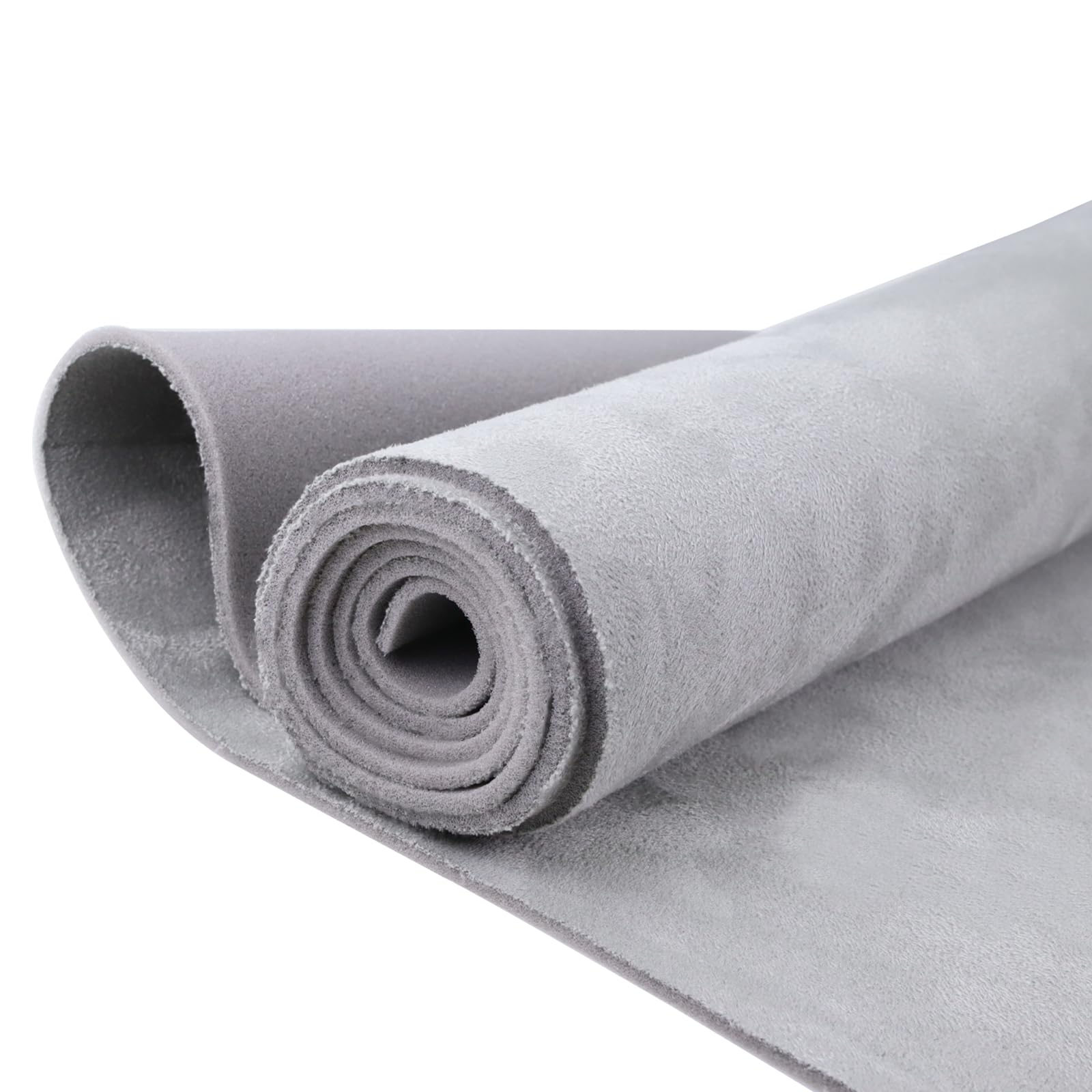
The light gray suede that makes starlights pop at night while keeping the cabin airy during the day.
If a black headliner feels too dark but beige is too warm, this light gray suede hits a versatile middle ground. The 96-inch length and 60-inch width fit most sedans and smaller SUVs, and the suede has a flame-retardant property (a safety benefit, though not legally required for passenger vehicles). Owners who installed it in a 1997 Ford F-150 and a 2013 Volkswagen Jetta report a modern, upscale look. The 1/9-inch foam backing resists warping and sagging after installation.
The creasing issue is real: it ships folded, and a significant number of owners found the creases difficult or impossible to remove with heat and steam. The material itself gets consistent praise for quality and appearance, but the packaging gamble is bigger than with the tube-shipped Babnecl. The gray color is darker than some product photos suggest, so manage expectations if you need a very pale shade.
The honest take: Great suede quality and a nice alternative color, but the packing creases are a bigger problem on this dark-gray face than on black. Be ready to stretch aggressively during install or choose a tube-shipped option.
Ideal for: A mid-size vehicle where you want a light-colored suede ceiling that reflects starlights and feels more open.
pass on it if: You have zero patience for crease removal — the 60-inch-wide light gray market is thin, but the tube-shipped Hiksuky is a less risky alternative in brown.
8. otoez 60″ x 144″ Polyester Headliner Fabric

The twelve-foot roll that covers a van roof or a whole weekend of headliner projects.
At 144 inches long, this is the longest continuous 60-inch-wide fabric on the list. It is 100% polyester with a 1/8-inch foam backing, giving it a flat knit finish unlike the suede options. One owner found it too thick for a 2010 Jaguar XF sunroof area, causing rubbing issues — a caveat if your car has a complex sunroof cassette. For most vehicles without that, the thickness provides a quality feel and easy cleaning. The fabric is fade-resistant and weighs only 2 pounds despite its length, making it lighter than the 3.3-pound MOTUKA.
The material quality is the top-rated aspect, but creasing from folded shipping is the most-cited negative. The manufacturer recommends laying it out or using a steam iron to remove creases. One owner documented a full install on a 2004 Chevy Silverado with Permatex adhesive, getting a factory-fresh result. The 30-day warranty is shorter than competitors, and adhesion requires heavy cross-spray coats.
Key advantages
- 144-inch length handles longest roof panels and van interiors
- Very lightweight at 2 pounds for such a large sheet
- Fade-resistant 100% polyester face
Key caveats
- Unusually thick material can interfere with sunroof mechanisms
- Creases from shipping require effort to flatten
- 30-day warranty is shorter than some competitors
Reach for this if: You are covering a long cargo van, a boat interior, or doing multiple vehicle headliners from one continuous piece.
Hold off if: Your car has a complex sunroof cassette — the thickness may cause binding issues that the thinner suede options avoid.
Understanding the Specs
Foam Backing Thickness
The foam layer on the back of your headliner fabric is measured in fractions of an inch. A 1/9-inch or 1/8-inch layer is the standard for most factory headliners — it gives enough padding to smooth over minor roof-board dents without adding bulk. A 3/16-inch layer is noticeably thicker and gives a plusher feel while absorbing more road noise, which is why the MOTUKA and SARANDAVE options use it. The trade-off is that thicker foam can make the fabric harder to mold around tight curves like sunroof frames or dome-light cutouts.
Folded vs. Tube Packaging
How the fabric ships affects your first hour of installation more than any other factor. Folded packaging means the material is compressed into a small rectangle, which saves on shipping costs but leaves deep crease lines. On black suede faces, those lines can be stubborn — shoppers say using steam, sun heat, and aggressive stretching to remove them. Tube packaging keeps the fabric rolled flat, so it arrives smooth and ready to cut. Of the eight products here, only the Hiksuky and Babnecl options use tube packaging, which is why creasing is a non-issue for those owners.
FAQ
How do I remove creases from folded headliner fabric?
What adhesive works best for extra-wide headliner fabric?
Will 60-inch wide fabric fit my SUV roof?
Can I use headliner fabric on door panels and sun visors?
How do I measure the right length for my headliner?
Is suede headliner harder to install than mesh or polyester?
Does the fabric need to be flame-retardant for a vehicle headliner?
How long does a DIY headliner fabric installation last?
Can I use this fabric for a boat or RV ceiling?
What does “1/9 inch foam” actually look like in real life?
Final Thoughts: The Verdict
Across the board, the best extra-wide vehicle headlining fabric winner is the MOTUKA 79-inch Suede because it pairs a forgiving 3/16-inch foam with outstanding owner consensus — it is the most-reviewed option here and carries the highest satisfaction for a straightforward install. If you want tube packaging and a longer run for a full-size vehicle, grab the Babnecl 122-inch Suede. And for a beige interior restoration in a large SUV, the SARANDAVE 108-inch is the one to reach for.
How We Picked
We do not accept paid placement. Every pick is matched to a real buyer and a real use-case; we do not hands-on test units.
Sources & Methodology
Specifications: manufacturer listings and product documentation. Review insights: verified customer reviews, as of July 2026. Pricing: not shown on this page (it changes often); check the current price via the retailer link.
As an Amazon Associate, Trending Car earns from qualifying purchases. This does not affect which products we feature.