
Our readers keep the lights on and my garage snacks stocked. As an Amazon Associate, I earn from qualifying purchases.
Specs are compiled from manufacturer listings and verified buyer reviews and can change over time — please confirm the key details on the product page before buying.
If your bike’s gearbox feels notchier than it should, or the clutch drags on a hot day, the liquid inside the engine is usually the culprit. This guide cuts through the chemical jargon to show you the best engine oil for wet clutch systems — the kind where the clutch plates bathe in the same oil that lubricates your engine. We focus only on oils certified JASO MA or MA2, the rating that guarantees your clutch won’t slip.
I’m Min Islam — the founder and writer behind Trending Car. This guide is built by comparing the manufacturers’ published specifications and the patterns across verified customer reviews, so you get each pick’s real strengths and trade-offs instead of marketing spin.
Choosing the wrong oil can turn crisp shifts into a mushy, slipping mess, so we’ve matched every pick to the riding style it suits best. This is our researched rundown of the engine oil for wet clutch that owners trust across thousands of miles.
Our Picks at a Glance

How To Choose The Right Engine Oil for Wet Clutch
The number one mistake is reaching for a standard car oil off the shelf. That stuff is packed with friction modifiers to make an automatic transmission shift gently — but in a wet clutch, those friction modifiers stop your clutch plates from biting, causing slip and wear. You need an oil designed for the job.
Check the JASO Rating, Not Just the Viscosity
JASO MA and MA2 are the industry stamps that confirm an oil is safe for a shared engine-and-clutch setup. Without that stamp, you run a real risk of the clutch slipping under hard acceleration.
Decide Between Mineral, Synthetic Blend, and Full Synthetic
Mineral oils are the budget baseline and protect fine for standard commuting. A synthetic blend adds some heat resistance. Full synthetic, especially the ester-based types, keeps its protective film at extreme temperatures and high RPMs, which is what track riders and aggressive street riders need.
Quick Comparison
| Model | Best For | Viscosity | JASO Rating | Volume | Amazon |
|---|---|---|---|---|---|
| Liqui Moly 4T Street★ Best Overall | All-Round Synthetic Performance | 10W-40 | Wet Clutch Safe | 4000 ml | Amazon |
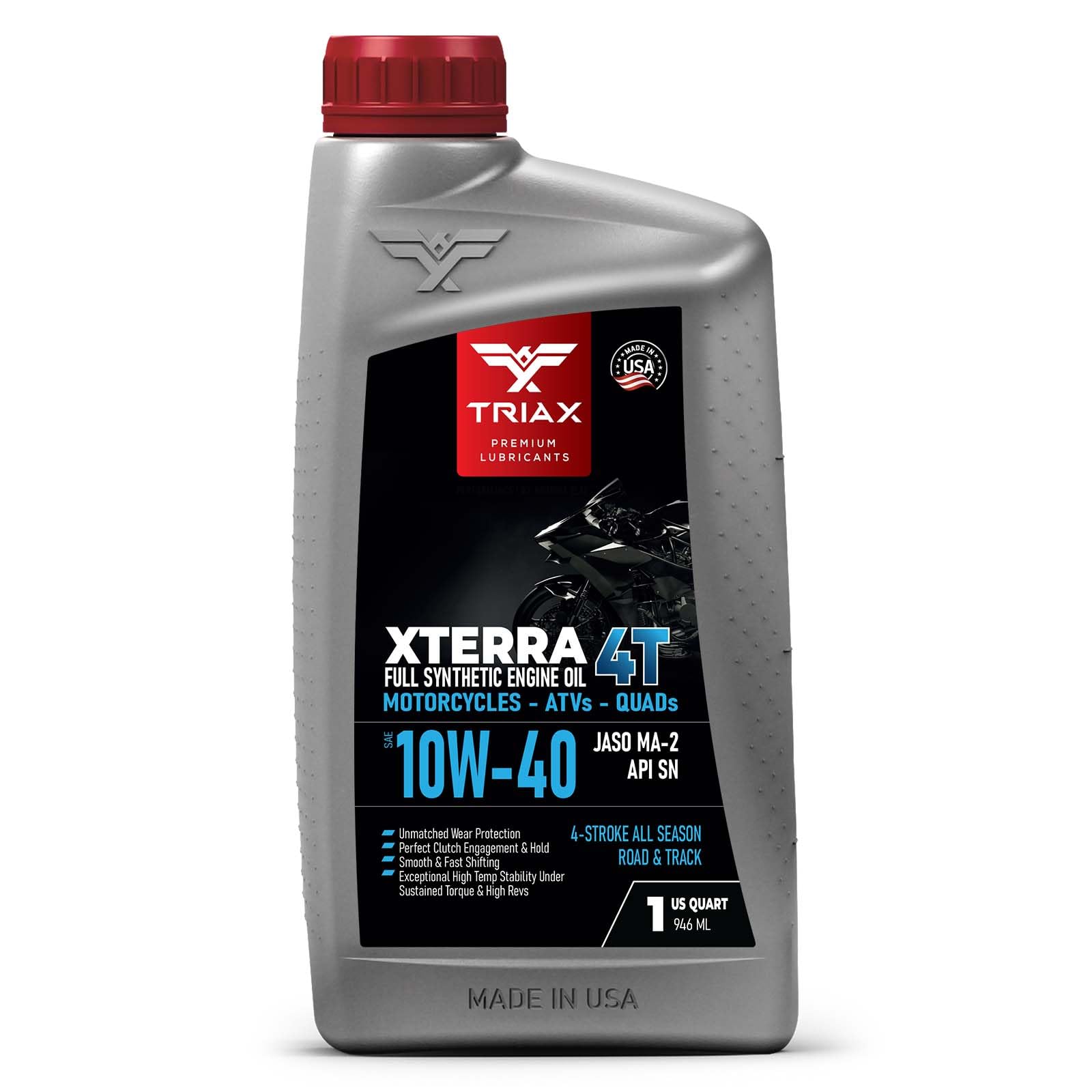
| TRIAX XTerra 4TTop Value Race Pick | Race-Ready Value | 10W-40 | Exceeds JASO MA-2 | 1 Quart | Amazon |
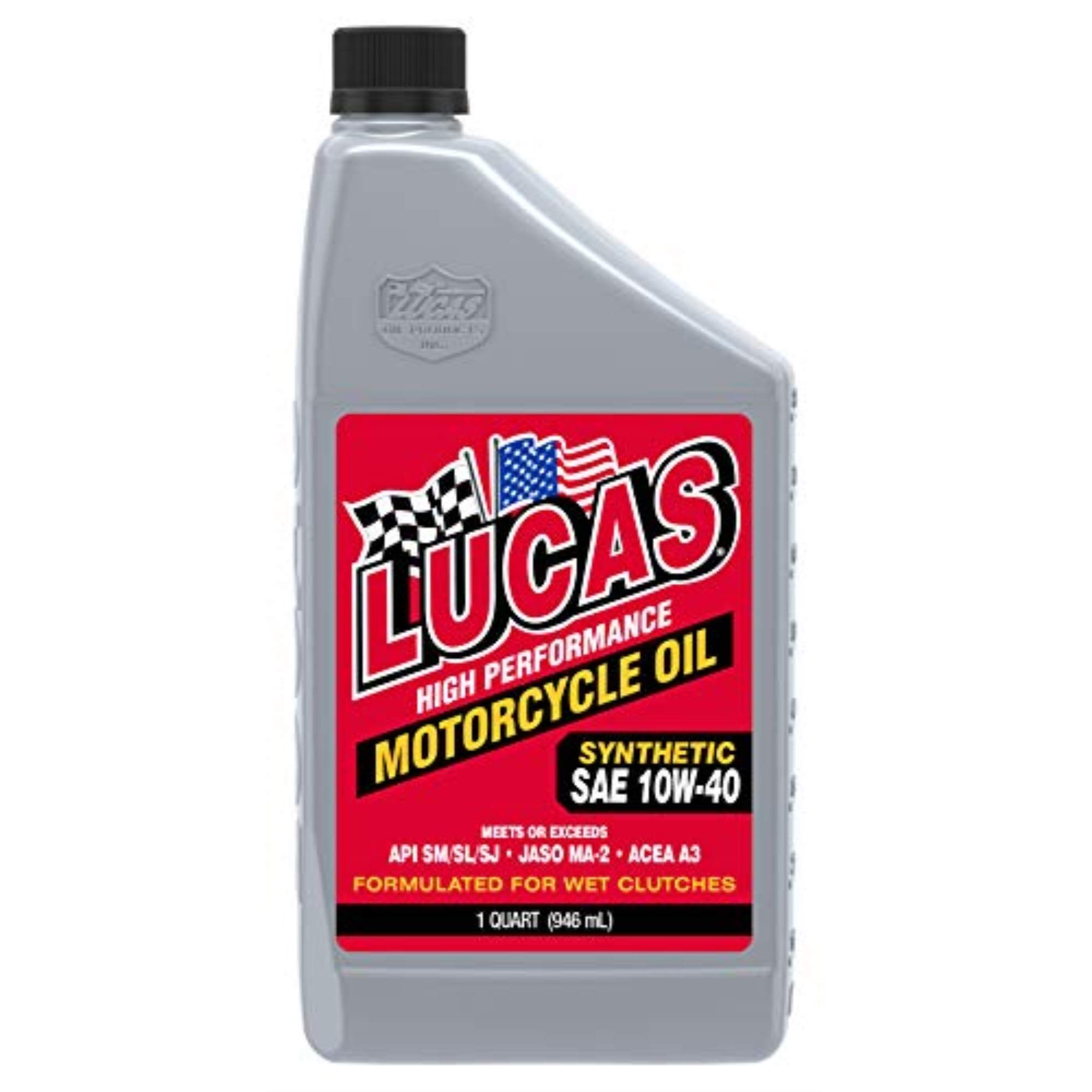
| Lucas Oil 10793 SyntheticBest Shift Feel | Easy, Dependable Shifts | 10W-40 | JASO MA2 | 946 ml | Amazon |
| Yamalube 4T Full Synthetic | OEM Match for Yamaha | 10W-40 | JASO MA | 1 Quart | Amazon |
| Ultra 1 Plus 4T | Clutch-Grip Specialty | 10W-40 | JASO MA2 | 32 fl oz | Amazon |
| Yamalube All Purpose | Budget Multi-Machine Mineral | 20W-50 | JASO MA | 1 Gallon | Amazon |
| Maxima Pro Plus+ | Premium Ester Build | 10W-40 | Exceeds JASO MA | 2 Liters | Amazon |
| Castrol Actevo 4T | Tri-Zone Blended Protection | 10W-40 | Exceeds JASO MA-2 | 6 x 32 fl oz | Amazon |
| Motul 300V | Hardcore Track Racing | 10W-40 | Passes JASO T904 | 4000 ml | Amazon |
In‑Depth Reviews
1. Liqui Moly 4T 10W-40 Street (4-Liter)
Our pick — over 4.5★ from 750+ verified ratings; the strongest balance of quality and price.
The crowd favorite that turns notchy gearboxes into silky-smooth shifts.
This German-made 10W-40 is built on a high-performance synthetic base, designed to keep the engine clean and well-lubricated in everything from normal commutes to extreme operating conditions. It is explicitly suitable for engines with or without a wet clutch, so it covers nearly any 4-stroke bike or side-by-side you own.
Buyers report a night-and-day difference in gearbox feel. A 2023 Kawasaki Vulcan S650 owner swapped from a leading synthetic and noticed instantly smoother shifting, more power, and smoother idling. The built-in spout is a small but appreciated touch that makes pouring into an oil tank far less messy.
The single biggest draw is that the 4-liter jug gives you a full oil change (4000 ml) without buying multiple quarts. As owners mention, “right of the bat you one can notice smoother shifting and more power and smoother idlin” — a tangible upgrade over the previous oil in the same bike.
Rider Consensus: The word “quality” dominates the conversation here — it is the most-cited reason owners buy it again. Value for money runs a close second, which makes sense given the 4000 ml volume for the price of a premium single-liter bottle from some rivals.
Your pick if: you want a trusted, all-round synthetic that improve shift feel without chasing the absolute cheapest quart.
Heads up: the 8-pound jug is heavy to pour from if you are not using a funnel.
2. TRIAX XTerra 4T 10W-40 Full Synthetic
A race-bred ester synthetic that undercuts the premium brands on price.
This 1-quart bottle is a 100% synthetic ester formulation engineered for high thermal stress and high RPMs, making it a genuine option for track days and aggressive street riding. It exceeds the JASO MA-2 standard, the strictest wet-clutch certification, and meets API SL/SN requirements for Japanese OEM warranties.
What surprises riders is the clutch feel. A Yamaha FZ1000 owner stress-tested it for about 500 miles and reported smooth shifting with the clutch working very well. The tune frictional characteristics are engineered to give quick gear changes and protect cam lobes and chains in small 4T engines.
Weighing just 2 pounds, it is far easier to handle than bulkier jugs, and the compatibility list spans Honda, Kawasaki, Yamaha, Suzuki, Polaris, Can-Am, and more. For the price of a single quart, you are getting ester technology normally reserved for bottles twice the cost.
Performance Proof: A 500-mile stress test by a Yamaha FZ1000 owner ended with smooth shifting, confirming the clutch held up under hard riding.
Choose this for: a budget-friendly way to give a sportbike or dirt bike race-grade clutch protection.
Consider otherwise: if you need bulk volume; this is single-quart only.
3. Lucas Oil 10793 Synthetic SAE 10W-40
A dependable full synthetic that makes gear changes feel like butter.
This 946 ml quart of Lucas synthetic 10W-40 is a straightforward, high-quality choice that riders keep coming back to. It earns its JASO MA2 rating, making it safe for wet clutch systems, and the full synthetic formula resists breakdown better than mineral oils.
Riders specifically praise the shift action, saying it made their bike shift smoother. It is also a versatile buy — one owner runs it in a Honda ATV and a Cub Cadet zero-turn mower, while another uses it in a dirt bike with great results.
The liquid volume of 946 ml is slightly less than some competitors, so check your bike’s capacity before you rely on a single bottle for a full change.
Why It Wins: The shift feel is the top talking point, with the smooth action being the reason most owners repurchase. It runs clean too, coming out of the drain pan looking fresh.
Reach for this if: you want dependable shifts and a brand with a stellar reputation for oil.
skip it if: you need a 4-liter jug for multiple machines.
4. Yamaha Yamalube 10W-40 4T Full Synthetic

The factory-fill formula for riders who want zero guesswork.
When you buy Yamalube, you are getting the oil Yamaha engineers designed their engines around. This 1-quart 10W-40 full synthetic is certified to JASO MA and API SL, so wet clutch compatibility is guaranteed by the manufacturer itself.
The formula uses a fully synthesized base oil for thermal stability, helping engines run efficiently in demanding conditions. A 2017 FJ-09 owner with 40,000 miles changes it every ~3,500 miles, noting clutch slip on aggressive shifts signals the change time.
It is also an honest tell for wear: That rider reports reliable performance across 30–110°F.
What Owners Value: “Quality” is the most-cited reason, with performance and value running close behind. Shops buy it in bulk for their whole fleet, which is a strong endorsement of its consistency.
Your pick if: you ride a Yamaha and want the exact spec the factory recommends.
Note: as a single quart, it is priced per volume higher than buying the larger sizes.
5. Ultra 1 Plus 4T 10W-40 Full Synthetic
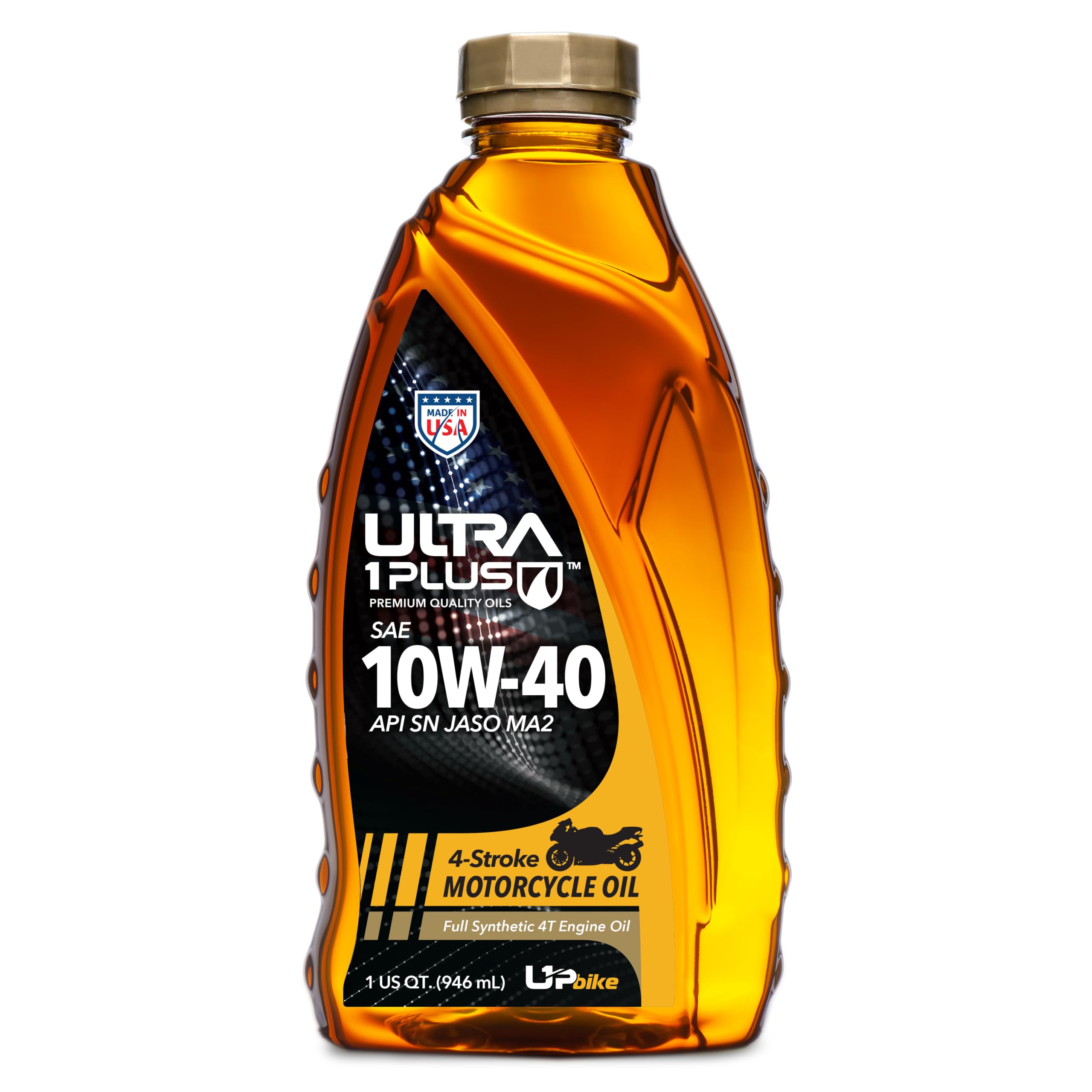
A 32-fluid-ounce synthetic that is over-engineered for clutch engagement.
This Ultra 1 Plus 10W-40 goes beyond the basics, exceeding both API SN and JASO MA2 standards with a formulation explicitly certified for wet clutch systems in high-performance bikes. The high-shear stability and anti-wear agents are designed to extend engine, clutch, and gearbox life at high RPMs.
A 2016 Kawasaki Concours 14 owner who switched to this full synthetic noted the specs far surpass the OEM requirements in terms of API rating and JASO — at a price below the OEM oil. Its 215 °C flash point keeps the protective film stable under extreme heat.
It is compatible with street, off-road, and sport motorcycles, with or without catalytic converters.
Performance Angle: The most-repeated praise centers on oil quality and performance — riders notice the clutch biting firmly and the gearbox feeling precise.
Pick this if: you want a specialty wet-clutch oil that beats OEM specs for less.
Consider otherwise: if your bike needs more than 32 fluid ounces for a single change.
6. Yamalube All Purpose 4-Stroke 20W-50 (Gallon)
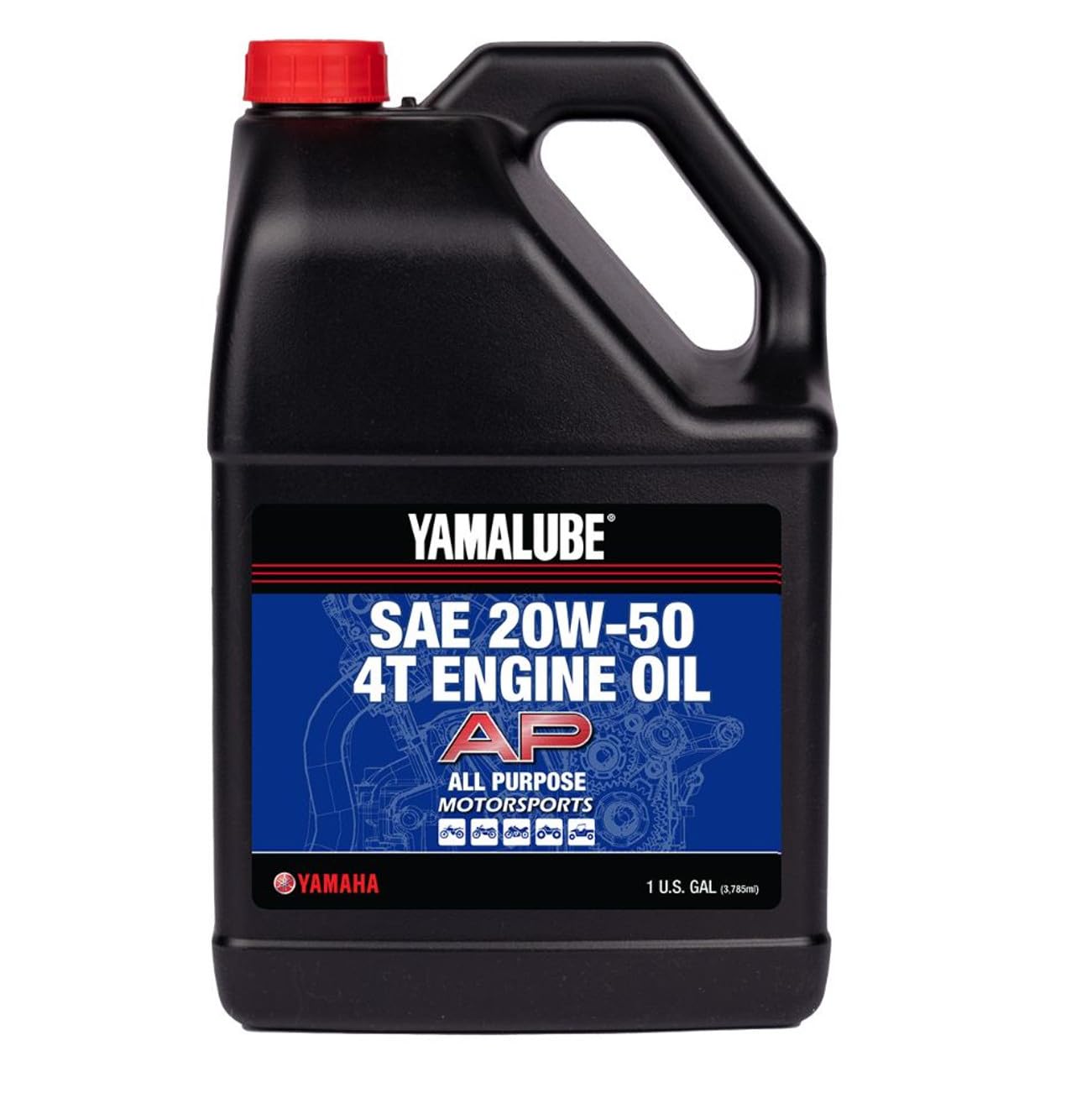
The budget-minded gallon that keeps a whole fleet of machines happy.
If you have multiple bikes, an ATV, and a scooter, this 1-gallon jug of 20W-50 mineral oil is the cost-effective way to service them all. It meets or exceeds JASO MA requirements, which is the certification that ensures proper wet clutch performance.
Its 236 °C flash point suits hot climates where a 20W-50 weight is recommended. One owner runs it in a Harley-Davidson alongside the Japanese machines, praising its reliability. The 7.5-pound gallon container is the real value play here.
That heavier viscosity is note — it is not the right choice for a bike that calls for a thinner 10W-40.
Why Buyers Love It: “Quality” is the dominant praise at 37 mentions, with value for money next at 18.
Your pick if: you want a reliable mineral oil for multiple machines without spending premium synthetic money.
Heads up: 20W-50 is thicker, so confirm your owner’s manual approves it for your engine.
7. Maxima Racing Oils Pro Plus+ 10W-40 (2-Pack)
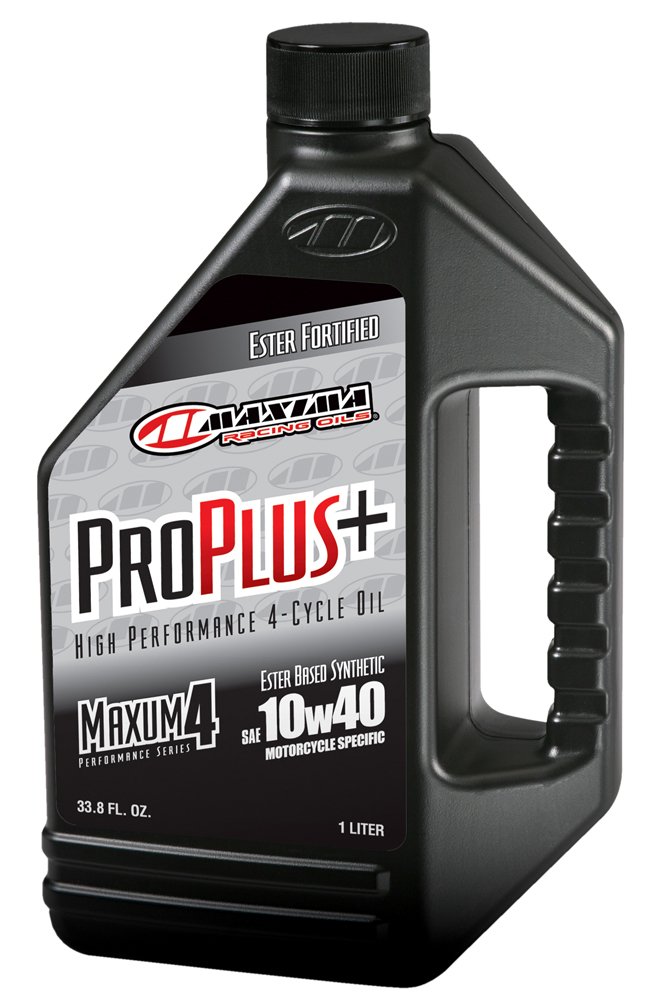
An ester-fortified synthetic that riders say shifts like butter.
Maxima Pro Plus+ is an ester fortified 100% full synthetic 4T engine oil, formulated to exceed JASO MA requirements for 4-cycle engines with integrated wet clutches. The ester base clings to metal surfaces, providing a durable film that survives high heat and high RPMs.
The 2-liter pack gives you two full quarts (67.6 fluid ounces), enough for most single-cylinder dirt bikes and street bikes. Owners consistently highlight the shifting — “WHAT I REALLY NOTICED WAS THE SHIFTING! Smooth like butter” is a typical response from a DR owner who keeps a gallon on hand.
Recent use on a 2006 KX450F showed high protection levels, and long-term riders report running bikes over a hundred thousand miles on this exact oil.
What Earns the Premium
- Ester technology for maximum film strength at high RPM
- Designed expressly to prolong wet clutch life
- Noticeably quieter operation per owner feedback
Consider This First
- Premium price versus standard full synthetics
- 2-liter pack may not cover larger twins in one go
Reach for this if: you want top-shelf ester protection and a gearbox that rewards you with crisp shifts.
Look elsewhere if: your budget is tight and you ride a low-stress commuter.
8. Castrol Actevo 4T 10W-40 (Pack of 6)

A six-quart bulk buy with triple-zone protection for engine, clutch, and gearbox.
Castrol’s Actevo 4T uses Trizone technology to protect all three critical zones — engine, clutch, and gearbox — in one blend. The Active Protection Molecules enhance the oil’s ability to cling to vital engine components, which matters most during cold starts.
It exceeds API SG and JASO MA-2, confirming wet-clutch safety. A Ninja 300 owner ran it 24,000 miles over five years, reporting smooth shifts, no ticking, and a clean engine.
The pack of 6 quarts covers multiple changes or multiple bikes. It has earned a reputation for longevity — One owner logged 4,000 miles without breakdown in 100°F+ heat.
Long-Term Verdict: “Oil quality” is the runaway top praise, and the smoothness of the shifts is the second most-cited reason. For Goldwing owners, the top-end noise reduction is a bonus.
Choose this for: a dependable synthetic blend (a mix of man-made and refined base oils) that shields your clutch, gears, and bearings at a per-quart price that is tough to match.
Note: the 6-pack is a bulk commitment — check your storage space.
9. Motul 300V 10W-40 SynEster (4 Liter)

The double-ester race oil for riders who live above 8,000 RPM.
Motul 300V is the benchmark racing oil, using double ester technology to provide excellent lubricity, better engine response, and maximum engine RPM. The 4-liter jug (4000 ml) is built for road racing and motocross, and it passes the JASO T904 wet clutch compatibility test.
Its 250 °C flash point is the highest here, so it resists thermal breakdown during track sessions. Customers note ultra-smooth shifting, cooler engine temperatures, and better cold starts. The distinctive greenish color makes leak detection easier.
This is a racing oil with no detergents, so it demands a change interval of roughly 1,000–1,800 miles for best protection. It is not intended for long street intervals.
The Trade-Off: It is the priciest pick here, but the 4-liter jug covers two changes on a 600cc sportbike — the value lands when you ride hard and change often.
Your pick if: track days and aggressive canyon riding are your weekend plans.
pass on it if: you want a low-maintenance oil for daily commuting — this one needs frequent changes by design.
Understanding the Specs
JASO MA vs MA2
JASO is the Japanese standard that tests how an oil behaves with a wet clutch. JASO MA means the oil keeps enough friction for the clutch to grip properly. JASO MA2 is a tighter, higher standard with an even more precise friction range — the safest bet for modern high-performance bikes.
Viscosity and Temperature
The numbers like 10W-40 tell you how thick the oil is. The “W” number is the cold-weather performance (10W flows well in winter), and the second number (40) is the hot-weather thickness. A 20W-50 is thicker at operating temperature, which suits hot climates and air-cooled engines that run hotter.
FAQ
Will car oil ruin my motorcycle wet clutch?
What is the difference between JASO MA and MA2?
How often should I change my wet clutch oil?
Is full synthetic oil worth the extra cost for a wet clutch?
Can I use a 20W-50 oil instead of a 10W-40?
What is an ester-based oil?
How much oil do I need for a single motorcycle oil change?
Why does my clutch slip after an oil change?
Final Thoughts: The Verdict
For most riders, the engine oil for wet clutch winner is the Liqui Moly 4T because its synthetic formula delivers the clearest shift improvement and the 4-liter jug covers a full change. If you want a race-grade ester at a budget price, the TRIAX XTerra is a standout. And for track-only riders who change oil often, the Motul 300V is the gold standard — just be ready for its short change intervals.
How We Picked
We do not accept paid placement. Every pick is matched to a real buyer and a real use-case; we do not hands-on test units.
Sources & Methodology
Specifications: manufacturer listings and product documentation. Review insights: verified customer reviews, as of August 2026. Pricing: not shown on this page (it changes often); check the current price via the retailer link.
As an Amazon Associate, Trending Car earns from qualifying purchases. This does not affect which products we feature.