
Our readers keep the lights on and my garage snacks stocked. As an Amazon Associate, I earn from qualifying purchases.
Specs are compiled from manufacturer listings and verified buyer reviews and can change over time — please confirm the key details on the product page before buying.
An older engine with over 75,000 miles on the clock needs more than just fresh lubrication — it needs oil that swells dried-out seals to stop leaks, handles sludge, and protects worn metal parts. The best choice isn’t the most expensive bottle on the shelf; it’s the one formulated specifically for high-mileage engines, and this guide breaks down the top performers by what they actually do for your car.
I’m Min Islam — the founder and writer behind Trending Car. This guide is built by comparing the manufacturers’ published specifications and the patterns across verified customer reviews, so you get each pick’s real strengths and trade-offs instead of marketing spin.
You will learn which high-mileage additives actually matter for a tired engine, and we rank the best synthetic blends for older engines by their seal conditioners, wear protection, and real-world owner feedback. engine oil for older engines that revives performance while staying affordable.
Our Picks at a Glance

How To Choose The Best Engine Oil for Older Engines
Once a car passes roughly 75,000 miles, its internal seals can harden and shrink, which leads to the two most common complaints: oil leaks and burning oil. High-mileage formulas are engineered to address this with extra seal conditioners, which are chemicals designed to soften and swell those aged gaskets back to a healthier state.
Decode the thickeners — viscosity grade (5W-30 vs 5W-20)
The “5W-30” label tells you how the oil flows in cold and hot conditions. The “5W” means it stays thin enough to circulate on a freezing start, while the “30” means it thickens properly at high operating temperatures. Your owner’s manual dictates the correct grade — most older mainstream cars need 5W-30, but some newer or fuel-focused engines specify the thinner 5W-20. Choosing the wrong one can rob you of fuel economy or leave parts under-protected.
Full synthetic vs synthetic blend vs conventional
Full synthetic oils are engineered in a lab for maximum heat resistance and sludge control, which is why they dominate the premium tier. Synthetic blends mix conventional oil with a portion of synthetic for a price between the two. Conventional oil is the cheapest but degrades fastest in a hot, older engine. For a high-mileage motor, full synthetic gives the strongest protection against the deposit buildup that kills engines.
Look for the ILSAC GF-6 and API SP badges
These are the industry’s testing standards. If a bottle meets ILSAC GF-6, it specifically helps prevent low-speed pre-ignition (LSPI) — a condition where fuel ignites prematurely and can crack pistons in turbocharged engines. API SP is the newest gasoline-engine rating and covers similar protections. Seeing both badges on the label is the easiest way to confirm you’re buying modern, well-tested chemistry rather than old stock.
Quick Comparison
| Model | Best For | Viscosity | Total Volume | Max Oil Change Interval | Amazon |
|---|---|---|---|---|---|
| Mobil 1 High Mileage 5W-30★ Best Overall | Overall synthetic protection | 5W-30 | 5 Quarts | 10,000 miles | Amazon |
| Havoline Smart Change 5W-30Best Value | Budget bulk buy | 5W-30 | 6 Quarts | — | Amazon |
| Castrol EDGE High Mileage 5W-30Top Performer | Extended drain intervals | 5W-30 | 160 fl oz | 15,000 miles | Amazon |
| Pennzoil High Mileage 5W-30 | Stop-leak synthetic blend | 5W-30 | 192 fl oz | — | Amazon |
| Valvoline MaxLife 150K 5W-30 | Engines over 150,000 miles | 5W-30 | 5 Quarts | — | Amazon |
| Mobil Full Synthetic High Mileage 5W-30 | Six-quart trucks | 5W-30 | 192 fl oz | 7,500 miles | Amazon |
| Royal Purple HMX 5W-20 | Performance restoration | 5W-20 | 5 Quarts | — | Amazon |
| Mobil 1 Extended Performance 0W-20 | Maximum drain intervals | 0W-20 | 5 Quarts (Pack of 2) | 20,000 miles | Amazon |
In-Depth Reviews
1. Mobil 1 High Mileage Full Synthetic Motor Oil 5W-30
Our pick — over 4.5★ from 10,000+ verified ratings; the strongest balance of quality and price.
The 10,000-mile synthetic that keeps 100,000-mile engines feeling fresh.
This is the oil owners pick when they want full synthetic protection without overthinking it. It’s designed for engines with over 75,000 miles and uses Mobil 1’s Triple Action Formula to handle performance, protection, and cleanliness in one pour. It meets ILSAC GF-6 standards, so you get low-speed pre-ignition (LSPI) protection — that’s the safeguard against a condition that can crack pistons in modern turbocharged engines.
The thermal range is genuinely wide: It protects internal engine heat up to 500 degrees F and keeps flowing in cold starts down to -30 degrees F.. Owners who switched from conventional oil report a smoother engine operation right away, and several appreciated the clear fill marker on the container when their car needed a 3.75 qt change. Buyers report the bottle’s stable, low center of gravity prevents tipping — a small but real convenience when you’re pouring into a tight bay.
This is the crowd favorite — It holds a 4.9-star rating across 10,000+ owners.. It’s a 5-quart bottle, so it suits the majority of cars and light trucks; if your vehicle needs exactly 5 quarts, you’ll be done in one pour.
Why owners stick with it
- Full synthetic formula proven to prevent sludge and deposit buildup
- 10,000-mile drain interval reduces how often you’re under the car
- High heat and low temperature protection in one bottle
Who should think twice
- 5-quart size forces a second bottle for trucks needing 6 quarts
- Full synthetic costs more than conventional per change
Reach for this if: you want the highest-rated synthetic for an everyday high-mileage car and prefer a trusted 10,000-mile interval.
Look elsewhere if: your truck swallows 6 quarts in one change and you’d rather buy a single larger box.
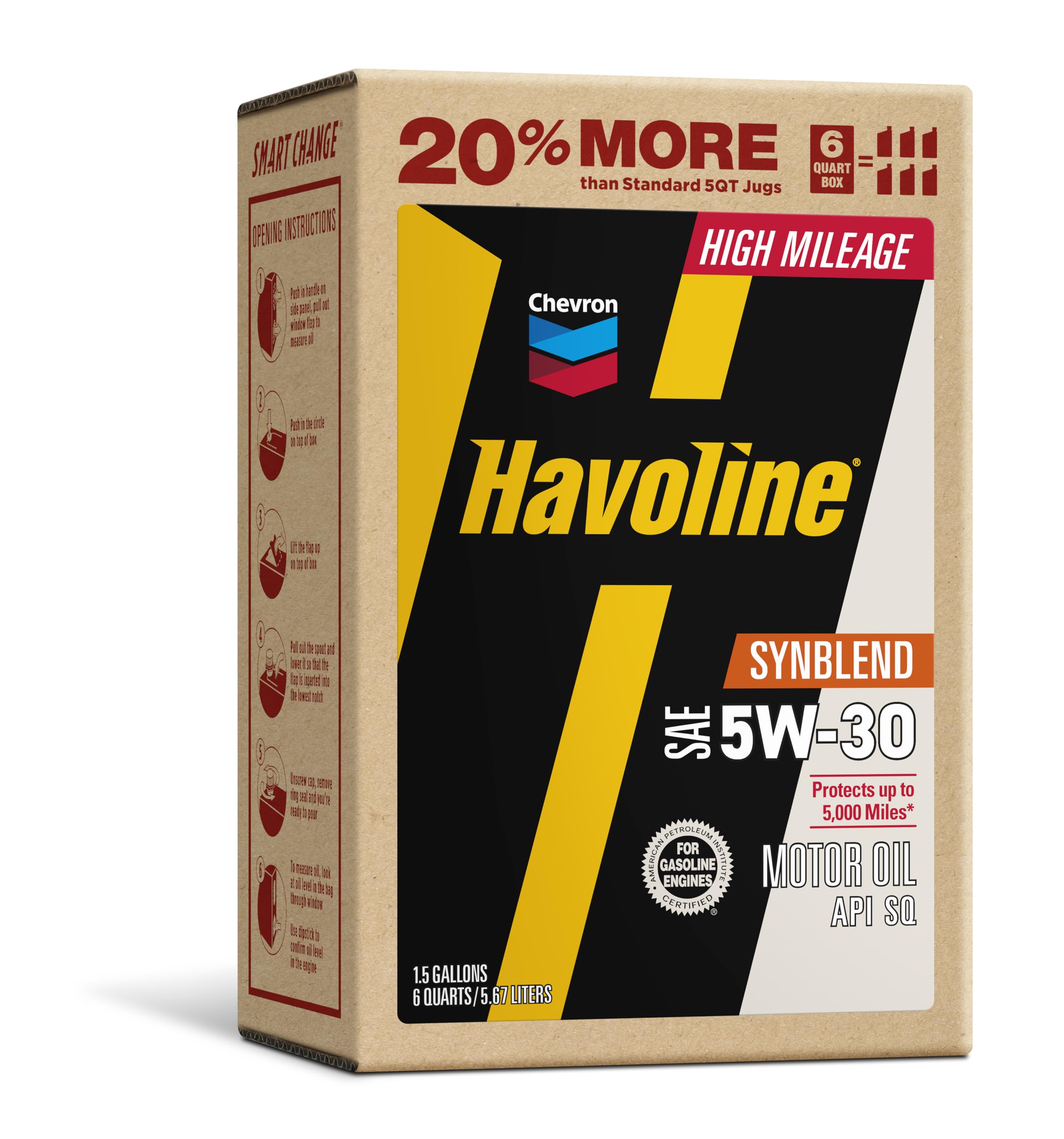
2. Havoline Smart Change High Mileage 5W-30
The 6-quart pouch that fits trucks and quiets a 280k-mile motor.
This Havoline pick solves a specific problem: many full-size trucks call for 6 quarts, and most premium oils only sell 5-quart jugs. This box delivers a full 6 quarts in a bag-in-box pouch, so you won’t hunt for a second bottle. It’s a synthetic-technology blend (not full synthetic) that still helps reduce leaks, prevents oil consumption, and cuts sludge and deposit buildup in older engines.
The reviews are remarkably consistent for a high-mileage product. Someone running a 280k-mile Tahoe reported a quieter, smoother engine on cold starts with zero leaks or consumption, crediting the seal conditioners. A Honda Pilot owner noted the 6-quart box is exactly their engine’s capacity. Even a V8 truck owner with over 400 horsepower from the factory said the oil gave an extra smooth idle — oil quality is the top thing owners praise, and value for money follows close behind.
The pouch packaging gets mixed reactions at first, but owners consistently note it’s durable, leak-free, and easy to pour. It’s designed for both high-mileage and newer cars, including turbocharged engines that need ILSAC GF-6 or API SP spec. If you need 6 quarts and want to stretch your budget, this is the box to grab.
Honest take: The 6-quart capacity and price per ounce make it the smart pick for trucks and V8s, and the seal conditioners earn real owner praise for stopping leaks. The trade-off is a lower review count (a few hundred) than the big-name jugs, so long-term data is thinner.
One thing to know: it comes in a bag-in-box, not a standard jug — a surprise that has left a few owners initially puzzled before they realized how easy it pours.
Grab it for: a truck or SUV that takes 6 quarts and a driver who wants leak-fighting seal conditioners at a budget-friendly price.
Pass if: you’re set on a branded full-synthetic jug and don’t need the extra quart.
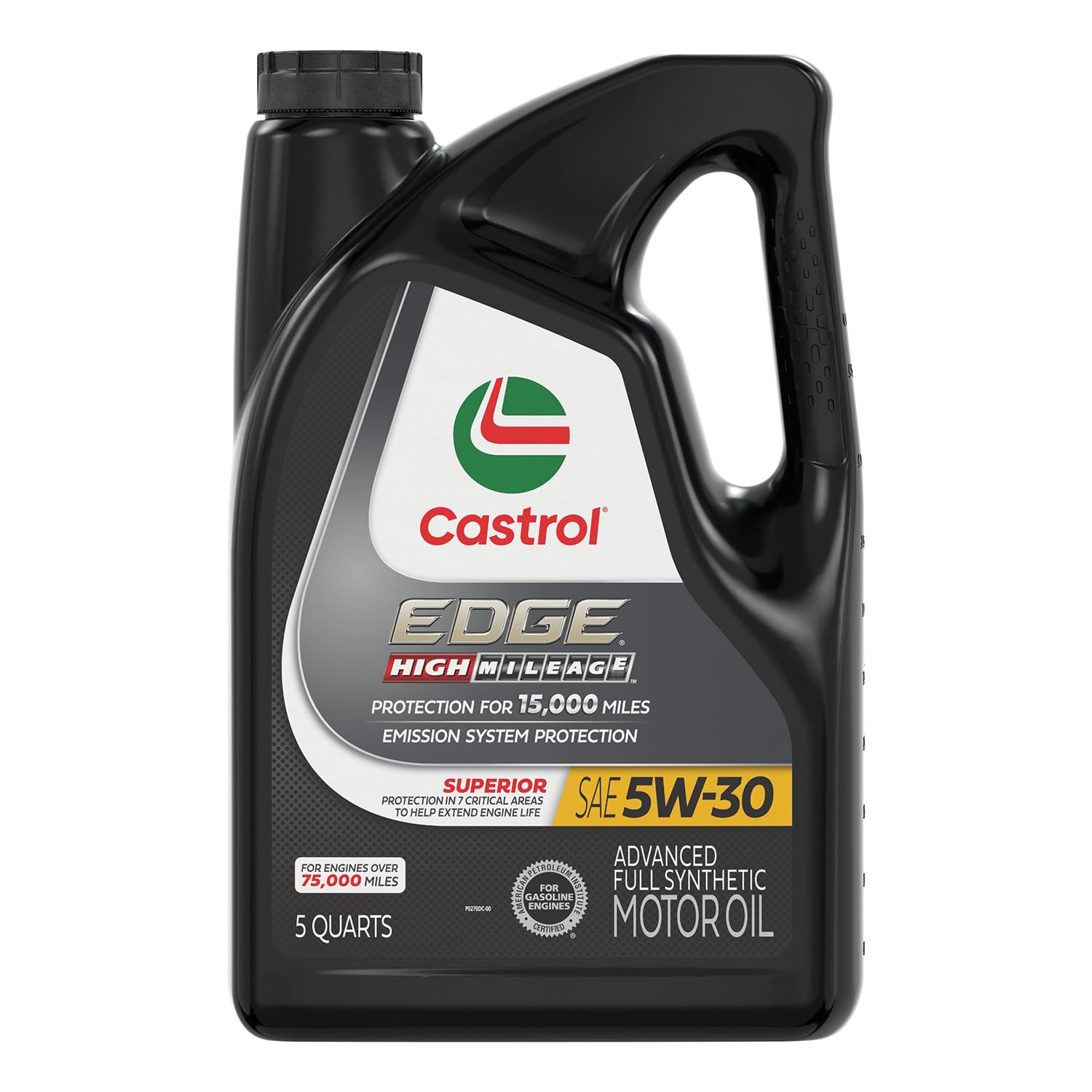
3. Castrol EDGE High Mileage 5W-30 Full Synthetic
A 15,000-mile synthetic that owners trust well past 300k miles.
If your priority is stretching time between oil changes, Castrol EDGE makes the strongest case here. It’s rated for 15,000 miles between changes (or one year, whichever comes first) — a full 5,000 miles longer than the Mobil 1 above. That interval is backed by its Phosphorus Replacement Technology, which helps extend the life of your emission system while still cutting leaks, oil burnoff, and power-robbing deposits.
The spec sheet is a laundry list of approvals: API SP/SN PLUS/SN/SM, ILSAC GF-6, Chrysler MS 6395, Ford WSS-M2C946-B1, and Ford WSS-M2C961-A3. Owners of a 2003 Avalon with 305k miles report it running great, and buyers running Blackstone Labs oil analysis after use confirm it holds up. It’s specifically built for vehicles with over 75,000 miles, and the quality is the thing owners praise most about this one.
Buyers describe the operation as smooth and note it holds up in both cold and hot climates. For an older engine you plan to keep driving for years, this is the one to reach for.
Standout spec: 15,000-mile drain interval with broad OEM approvals — the best “low-maintenance” option in this list.
Fair warning: the 5-quart size means trucks needing 6 quarts will require a second purchase.
Choose this for: drivers who want the longest interval between changes and a full synthetic proven by lab testing.
Skip it for: 6-quart trucks or anyone who prefers changing oil more frequently with a cheaper blend.
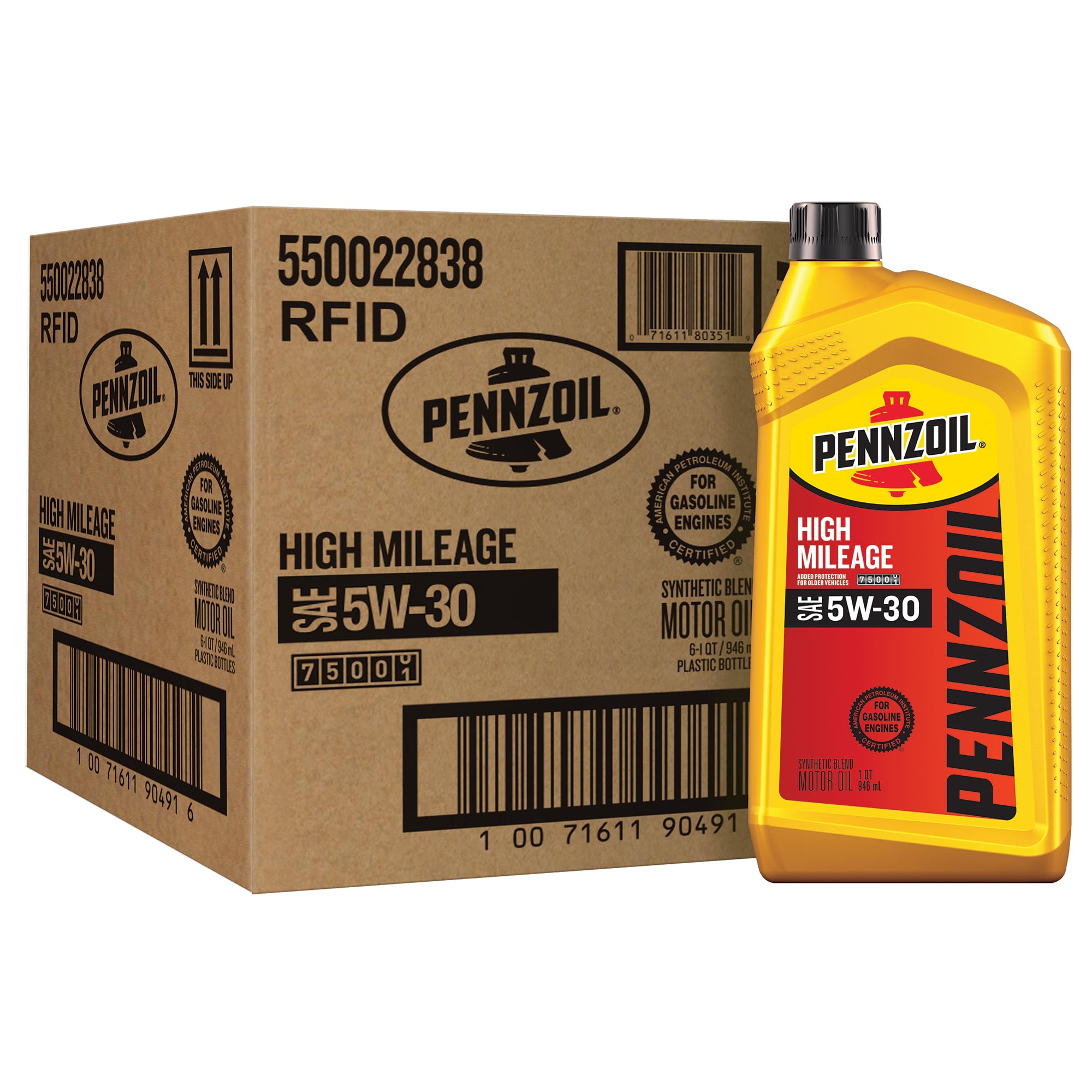
4. Pennzoil High Mileage 5W-30 Motor Oil, 6-Pack
A synthetic blend built to stop leaks in engines past 75,000 miles.
Pennzoil positions this as a synthetic blend, which places it between conventional and full synthetic on both price and refinement. Its core job is specific: help stop leaks and reduce oil consumption in worn engines. For a car that’s already burning or weeping oil, the seal conditioners here are the main event, and owners confirm the formula cleans up an engine and delivers a smooth, noise-free drive.
The 11.9-pound case is the heaviest in this lineup., but you’re getting a complete change plus a top-off for most vehicles. It’s also recommended for modern turbocharged engines where low-speed pre-ignition protection is required, so it’s not just for old-school motors.
Value for money is the thing owners praise most about this pick, with quality close behind. The bottle size (1 quart each) makes topping off between changes simple, and the case format means you always have oil on hand. For a 2006 Chevy HHR owner, it worked exactly as needed — a durable, long-lasting lubricant with no noise.
Why it wins
- 6 quarts for one price — enough for trucks and top-offs
- Stops leaks and reduces oil consumption in worn engines
- Quart bottles are easy to store and pour
Know the trade-off
- Synthetic blend, not full synthetic — a step down in extreme heat resistance
- Heaviest box here at 11.9 pounds to haul around
Buy it for: a leaky high-mileage car where stopping consumption matters more than max performance.
Look past it if: you want a full synthetic and don’t need the extra two quarts.
5. Valvoline High Mileage 150K with MaxLife Plus Technology 5W-30
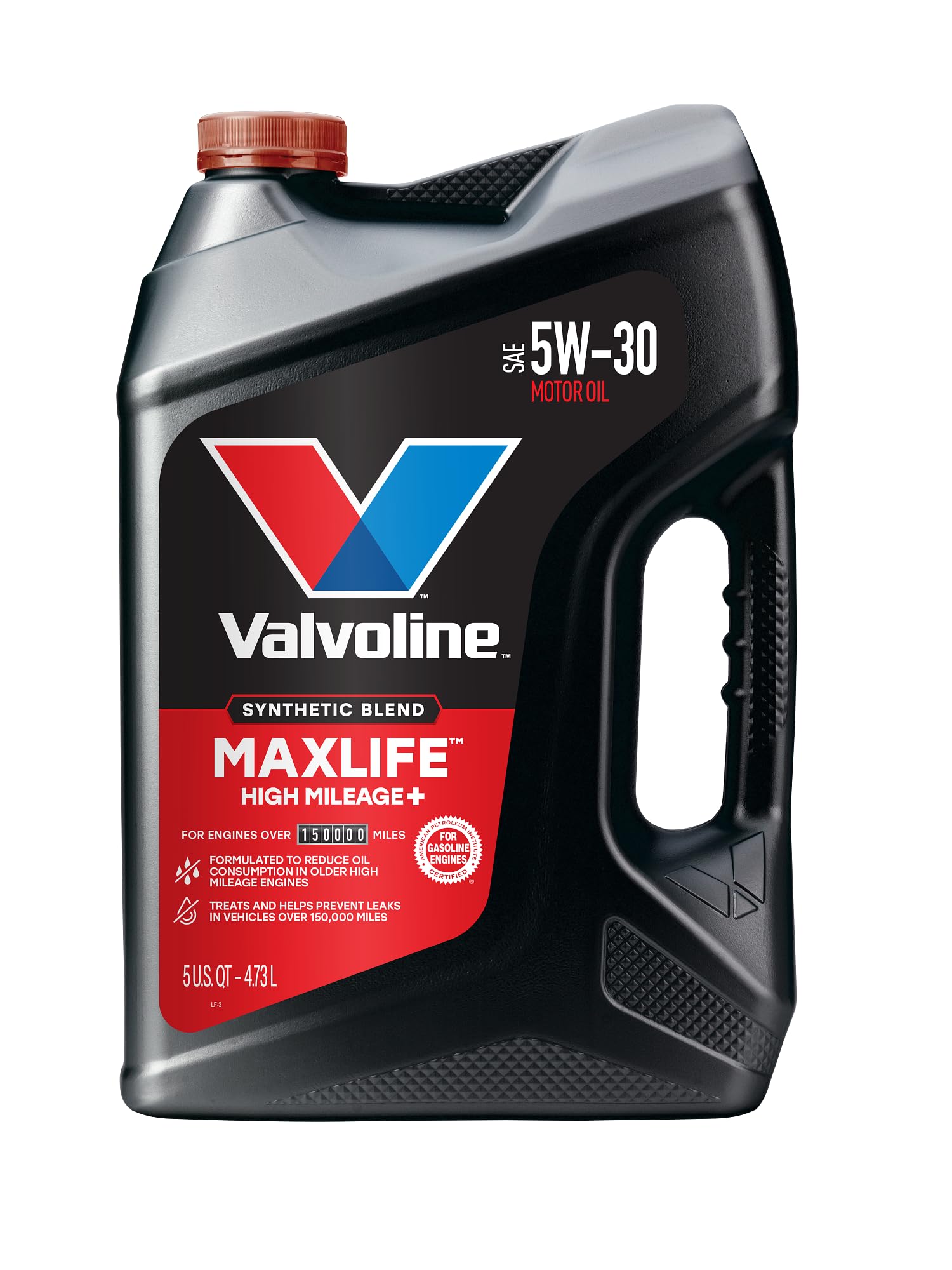
The specialist built for engines that have already crossed 150,000 miles.
Most high-mileage oils draw the line at 75,000 miles, but Valvoline’s MaxLife 150K is formulated specifically for vehicles past the 150,000-mile mark. Its premium seal conditioners are designed to prevent oil leaks and reduce consumption in engines that are truly worn. The anti-wear Moly Additive Protection coats metallic parts to reduce friction.
The spec list is the most modern in this lineup — it meets ILSAC GF-7A, API SQ, API SP, API SN with SN PLUS, along with Ford WSS-M2C971-A1 and Chrysler MS-13340. Owners mention their Jeeps gain power and leaks stop after switching, and The oil’s flash point sits at 394 °F, meaning it resists burning off in extreme heat.. A Silverado 1500 owner with just over 150k miles called it perfect for their truck.
The theme across reviews is consistent: oil quality and performance are what people mention most. One owner’s odometer finally crept over 175k and they made the switch — “definitely worth it.” If your engine is already in the 150k-plus club, this is the formula that’s actually labeled for your situation. The catch is that the 5-quart jug doesn’t cover 6-quart trucks.
Its lane: the only oil here explicitly named for engines past 150,000 miles, with the newest API SQ rating to match.
One caveat: noise level gets a mixed verdict from a small set of owners, so it’s not universally the quietest option.
Pick this for: a high-mileage truck or SUV with 150k+ miles that’s burning or leaking oil.
Move on if: your engine is under 150k and you want a broader all-rounder like the Mobil 1 above.
6. Mobil Full Synthetic High Mileage Motor Oil 5W-30, 6-Pack

The full synthetic 6-pack that keeps GM trucks running strong.
This is the full synthetic answer for vehicles that need 6 quarts. While the Mobil 1 at the top of this list sells a 5-quart jug, this one ships as six 1-quart bottles totaling 192 fluid ounces — exactly what a 6-quart truck or SUV needs for a complete change. It’s designed for vehicles over 75,000 miles and claims protection that’s 1.5X longer than conventional and synthetic blend oils, rated up to 7,500 miles between changes.
The balanced additive system includes extra seal conditioner to help prevent oil leaks, sludge, and deposit formation. It meets API SP resource-conserving, so it’s recommended for all types of gasoline-powered vehicles including turbocharged engines. Owners of GM motors specifically note it keeps their engines running strong, and a Ford F-150 owner says their truck “runs fantastic” on it. One driver with 177,000 miles noted the full synthetic helps their vehicle perform well considering its age.
Value for money is what owners praise most about this pick, with oil quality following right behind. The 1-quart bottle format is also handy for topping off between changes. If you drive a truck that takes 6 quarts and you want Mobil’s full synthetic chemistry without buying a 5-quart jug plus a single, this is the efficient, cost-effective route.
What makes it click
- 6 quarts covers trucks exactly — no second bottle needed
- Full synthetic with extra seal conditioner for leak prevention
- Quart bottles perfect for routine top-offs
Why someone might skip
- 7,500-mile interval is shorter than Mobil 1 and Castrol
- More bottles means more individual containers to dispose of
Best fit: full-size trucks and SUVs that call for 6 quarts and want full synthetic protection.
Not for: drivers chasing a 10,000-or-15,000-mile interval — this tops out at 7,500.
7. Royal Purple HMX High Mileage 5W-20
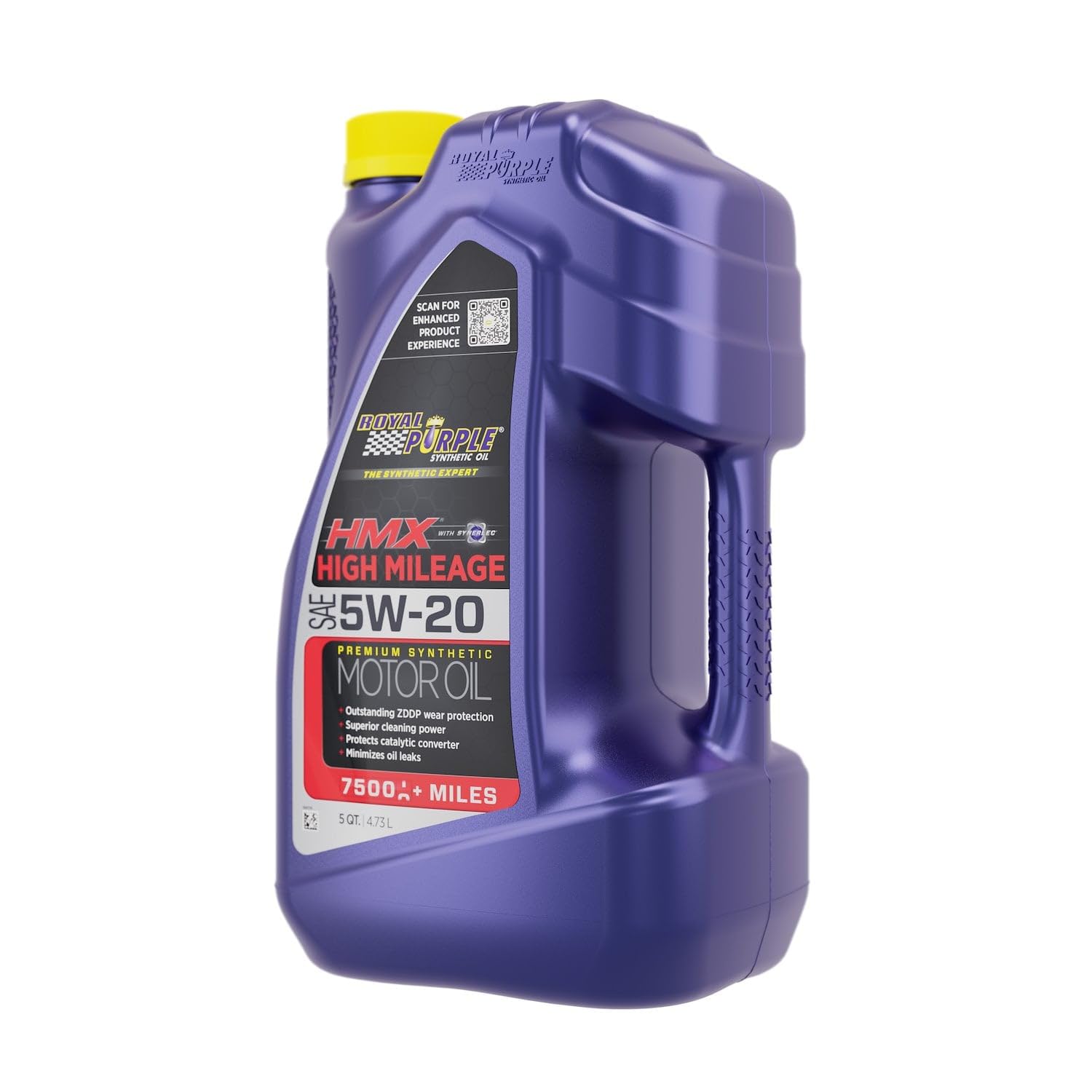
The 5W-20 performance oil that takes the tick out of a Hemi.
Royal Purple is the enthusiast’s brand in this lineup, and the HMX formula is fortified with Zinc/Phosphorus anti-wear additive — a classic high-mileage move to protect flat tappets and older valvetrains. Its proprietary Synerlec additive technology increases oil film strength, allowing for longer oil life, and it’s designed to minimize wear and restore lost engine performance. This oil’s real a neat extra: customers note it “tends to take the tick out of the engine idle,” which is music to anyone driving a 5.7 Hemi.
Note the viscosity: this is 5W-20, not the 5W-30 that dominates this list, so it’s best for engines that spec the thinner grade. The owners are fiercely loyal — one reports using Royal Purple for decades and refusing to use anything else. Another cracked open a Jeep Wrangler with over 115,000 miles and found little to no varnish on the heads after years on this oil. It also provides increased protection against LSPI and exceptional oxidation stability.
Quality is the thing owners praise most, with value close behind. This 5-quart bottle weighs 9.4 pounds. and is rated for a boat fit type per the spec sheet, though it’s used across cars and trucks. For a driver who wants the performance-oriented chemistry and is running a 5W-20 engine, this is the top-shelf option that owners say is worth the extra money.
In a sentence: the performance pick for 5W-20 engines that restores smoothness and protects against wear with Zinc/Phosphorus additives.
The catch: it’s the priciest per-quart option here, and the 5W-20 grade won’t suit every older engine.
Go for it if: your engine specs 5W-20 and you want the premium additive package that owners swear by for quieting ticks.
Choose something else if: your car needs 5W-30 or you want maximum value over maximum performance.
8. Mobil 1 Extended Performance High Mileage 0W-20

The 20,000-mile synthetic that keeps a 300k-mile Honda burning clean.
This is the extreme-duty end of the high-mileage spectrum. Mobil 1’s Extended Performance High Mileage is rated for up to 20,000 miles between oil changes, using the Triple Action+ Formula to combine performance, protection, and cleanliness with the added benefit of power. It’s the longest interval in this entire lineup — double the standard Mobil 1’s 10,000-mile rating — which is a serious statement of confidence in the additive package.
The 0W-20 viscosity is the thinnest here, designed for modern engines that spec a lighter oil for fuel economy. It still delivers excellent heat protection up to 500 degrees F and low-temperature protection down to -40 degrees F. — that’s 10 degrees colder than the 5W-30 options can handle. It meets ILSAC GF-6 standards for LSPI and timing chain wear protection, and one owner runs it in a Honda with 300k miles, reporting no burning and no leaks.
This ships as a 2-pack of 5-quart jugs (320 fluid ounces total, 16 pounds)., so it’s clearly aimed at households with multiple vehicles or heavy users. Owners praise it as top-tier protection and report noticeably smoother, quieter operation in a 2019 Toyota Tacoma TRD Sport. Quality and performance are the two things people mention most.
The big wins
- 20,000-mile interval — the longest of any pick here
- 2-pack of 5-quart jugs covers multiple vehicles
- -40 degrees F low-temp protection for cold climates
Who it’s not for
- 0W-20 won’t fit engines that require 5W-30
- Premium price and 2-pack bulk may be overkill for one car
Reach for this if: you drive a modern 0W-20 vehicle, live in a cold climate, and want to stretch changes to 20,000 miles.
Look elsewhere if: your older engine requires 5W-30 or you don’t need two jugs at once.
Understanding the Specs
Viscosity Grade (5W-30 vs 5W-20 vs 0W-20)
This is the oil’s thickness rating. The number before the W (winter) tells you how it flows in cold temperatures; the number after tells you its thickness at operating temperature. A 0W-20 flows better in extreme cold than a 5W-30, making it the choice for modern fuel-efficient engines. Always follow your owner’s manual here — using the wrong grade can reduce fuel economy or leave parts under-protected.
Seal Conditioners
These are chemicals that soften and swell aged rubber gaskets inside an older engine. As seals harden over 75,000+ miles, they shrink and allow oil to leak out or burn off. High-mileage formulas pack extra seal conditioners to restore that flexibility, which is why they’re the defining feature of this category. If your car is leaking or consuming oil, this is the additive you care most about.
ILSAC GF-6 and API SP/API SQ
These are industry certification standards. ILSAC GF-6 is the latest gasoline-engine standard and specifically addresses low-speed pre-ignition (LSPI) — a condition that can damage turbocharged engines. API SP is the newest American Petroleum Institute rating, and API SQ (seen on the Valvoline) is newer still. Seeing these badges means the oil meets modern protection benchmarks, not chemistry from a decade ago.
Drain Interval (Miles Between Changes)
This tells you how many miles you can drive before the oil needs changing, according to the maker. On this list, intervals range from 7,500 miles up to 20,000 miles. A longer interval saves you money and time, but it needs a stronger additive package to keep protecting. One piece of advice shows up in every review: changing your oil more often beats leaving an expensive brand in too long.
FAQ
What is the difference between high-mileage oil and regular oil?
Can I switch from conventional to full synthetic in an old engine?
How often should I change oil in an engine with over 100,000 miles?
Will high-mileage oil fix my oil leak?
What does 5W-30 mean in plain English?
Is full synthetic worth the extra money for an old car?
What is the best oil viscosity for a high-mileage engine?
What does 15,000 miles between oil changes really mean?
Why do some oils come in 6-quart boxes instead of a 5-quart jug?
What is LSPI protection and why should I care?
Final Thoughts: The Verdict
For most drivers, the engine oil for older engines winner is the Mobil 1 High Mileage 5W-30 — it holds the highest owner rating, offers a 10,000-mile interval, and uses the Triple Action Formula (a blend of additives that cleans, protects, and reduces wear) that owners trust across older GM vehicles. If you want a leak-stopping specialist for a truck, grab the Valvoline MaxLife 150K — the only pick built explicitly for engines past 150,000 miles. And for drivers chasing the absolute longest drain interval, the Mobil 1 Extended Performance 0W-20 is the one to reach for, rated at 20,000 miles between changes. The recurring theme across all of these picks: high-mileage additives work, and owners across every brand report quieter cold starts, fewer leaks, and smoother operation — but checking your oil regularly matters more than any brand name.
How We Picked
We do not accept paid placement. Every pick is matched to a real buyer and a real use-case; we do not hands-on test units.
Sources & Methodology
Specifications: manufacturer listings and product documentation. Review insights: verified customer reviews, as of August 2026. Pricing: not shown on this page (it changes often); check the current price via the retailer link.
As an Amazon Associate, Trending Car earns from qualifying purchases. This does not affect which products we feature.