
Our readers keep the lights on and my garage snacks stocked. As an Amazon Associate, I earn from qualifying purchases.
Specs are compiled from manufacturer listings and verified buyer reviews and can change over time — please confirm the key details on the product page before buying.
Pop the hood of any daily driver, and you are often greeted by a crusty layer of baked-on oil, road grime, and mystery goo. An engine degreaser is the blunt force tool for this mess, but picking the wrong one means either scrubbing for an hour or accidentally stripping paint off a plastic cover. The best engine degreasers dissolve that gunk fast, rinse clean without a greasy film, and are gentle enough on hoses and gaskets so you don’t create a new leak while chasing an old one.
I’m Min Islam — the founder and writer behind Trending Car. This guide is built by comparing the manufacturers’ published specifications and the patterns across verified customer reviews, so you get each pick’s real strengths and trade-offs instead of marketing spin.
Whether you are detailing a show car or just trying to find an oil drip on a 300,000-mile workhorse, the right engine degreaser saves you time and protects your components from unnecessary wear.
Our Picks at a Glance


How To Choose The Best Engine Degreaser
The real difference between degreasers is how they behave on your specific mix of metal, plastic, and rubber.
Foam vs. Spray vs. Gel
Foam clings to vertical surfaces and is great for a thorough, slow soak. A thin spray penetrates tight crevices but runs off fast. A gel sticks like peanut butter to caked-on grime on hot engine blocks, but may leave a residue that requires extra rinsing. Choose based on whether you are cleaning a slightly dusty bay or a decades-old oil pan.
Water-Based vs. Solvent-Based
Water-based degreasers are safer on plastic, rubber, and painted valve covers, and they rinse away easily. Solvent-based formulas cut heavy grease in seconds but can dry out hoses, discolor aluminum, or strip factory paint if left on too long. For a modern engine with lots of plastic shrouding, water-based is the safer choice.
Concentrate vs. Ready-to-Use
A concentrate (usually at a 1:1 or 4:1 dilution) gives you more cleaning power per dollar and lets you adjust strength for the job. A ready-to-use aerosol is more convenient for quick spot cleaning but costs much more per ounce. If you degrease multiple cars or heavy equipment, a concentrate gallon pays for itself fast.
Quick Comparison
| Model | Best For | Form | Volume | Key Feature | Amazon |
|---|---|---|---|---|---|
| SONAX Engine Cleaner★ Best Overall | Safe, eco-friendly cleaning | Spray | 500 ml | Phosphate & Solvent-free | Amazon |
| Adam’s All Purpose CleanerBest Value | Versatile use across car surfaces | Liquid | 16 oz | Dilutes up to 90% | Amazon |
| Oil Eater OriginalIndustrial Strength | Industrial/Shop use | Liquid | 32 oz (2-pack) | USDA approved | Amazon |
| Stanley AP 92 | Brake & clutch cleaning | Aerosol | 12.3 oz (2-pack) | 360° upside-down spray | Amazon |
| KRAKEN BOND | Instant grime removal | Aerosol | 12.3 oz (2-pack) | Ozone-friendly propellants | Amazon |
| Griot’s Garage | Professional detailing | Liquid | 1 Gallon | Gentle on plastics/rubber | Amazon |
| Malco Red Thunder | Heavy duty on tires & wheels | Liquid | 1 Gallon | Biodegradable, Phosphate-free | Amazon |
| GUNK Engine Cleaner | Bulk shop supply | Liquid | 32 oz (6-pack) | Zero-VOC formula | Amazon |
| GUNK Engine Brite Gel | Vertical/overhead grime | Gel | 15 oz (12-pack) | Cling gel doesn’t run off | Amazon |
In‑Depth Reviews
1. SONAX Engine Cleaner
Our pick — over 4.5★ from 600+ verified ratings; the strongest balance of quality and price.
The spray that turned a 300,000-mile filth bomb into a like-new engine bay.
This German formula earns its place at the top because it balances serious cutting power with genuine surface safety. It is phosphate and solvent-free, meaning you can spray it over plastic covers, rubber hoses, and painted valve covers without worrying about etching or discoloration. The 500 ml bottle is small, but its penetration is so strong that buyers report a single bottle cleaning two engine bays with some left over. For the crowd favorite — it holds a 4.6-star rating from a large owner base — the most common refrain is “it works like crazy good.”
Where it stumbles is on seriously caked-on, decades-old sludge. A few owners note that heavy grease on an older truck or classic engine needs a detailing brush to break through. That is not a flaw — it is the nature of a solvent-free formula. The trade-off for being gentle on modern plastics is that it cannot instantly melt rock-hard carbon deposits. Think of it as the precision tool for a well-maintained car, not the sledgehammer for a junkyard engine.
What wins people over: The cleaning performance is praised most heavily across the owner data, and the fact it is safe on air conditioning lines and brake lines means you do not have to mask anything off before spraying.
Reach for it if: You prioritize a safe, eco-friendly formula that still cuts through years of light-to-moderate grime without damaging delicate engine components.
Look elsewhere if: You need to strip thick, crusty grease from a heavy-equipment engine or an unpainted block, where a stronger solvent or gel is necessary.
2. Adam’s All Purpose Cleaner
One bottle that does engine bays, wheels, carpets, and even leather.
Adam’s All Purpose Cleaner is a 16 oz concentrate that lets you dial in the strength for the job. Use it full-strength on heavy grease under a Jeep engine, and owners mention it “works fast” with just a brush. Dilute it up to an extreme 90:1 ratio and it becomes gentle enough for interior upholstery or a delicate paint decontamination. This flexibility makes it the best value pick — you are buying a single product that replaces a shelf full of specialized cleaners. The cleaning performance is the top-ranked aspect by a wide margin, with owners reporting it removes stains that competitors like Chemical Guys could not touch.
The catch is that at 16 oz, the concentrate bottle itself is small. If you plan to do a lot of heavy-duty engine degreasing on fleet vehicles, you will run through it quickly. And while the fragrance gets mixed reactions — some love the mild sweet smell, others are neutral — it is a minor point when the actual cleaning power is this consistent.
What Makes It Versatile
- Dilutes up to 90% for sensitive surfaces like leather and carpets
- Effective full-strength on engine grease, brake dust, and tar
- Pleasant mild smell according to multiple owners
Where It’s Limited
- Small 16 oz bottle goes fast on big jobs at full-strength
- The 16 oz bottle is half the volume of the Oil Eater’s 32 oz single bottle
Best for: The detailer who wants one cleaner for the whole car — engine, wheels, interior, and mats — and is happy to dilute accordingly.
skip it if: You need a massive single-volume jug for shop use and do not want to buy small bottles repeatedly.
3. Oil Eater Original 32 oz All-Purpose Cleaner and Degreaser
The shop favorite used by professional engine builders for final part cleaning.
Oil Eater is a different breed — it is USDA approved for use in food service facilities, which tells you how clean it rinses. The 32 oz bottle is a 2-pack, giving you a total of 64 oz for heavy jobs. Customers note that a professional engine builder uses it full-strength with brushes for final cleaning of engine parts, then rinses with hot water and dries with compressed air. That is a level of trust reserved for a degreaser that leaves zero residue. It is also ultra-concentrated, meaning you can dilute it for floor cleaning, laundry stains, or grill cleaning without losing effectiveness.
The honest downside is that it is aggressive. Owners explicitly warn not to use it on blacktop/asphalt because it leaves white spots, and others note it can strip factory paint if left to soak. At 2 pounds, it feels noticeably heavier, but that weight comes from more active chemistry. This is a professional shop product, not a gentle weekend-warrior spray.
The garage verdict: If your engine bay is truly filthy or you are building an engine from scratch, Oil Eater is the real deal. The recurring gripe is that old concrete stains may not lift, but on metal and parts it is as good as it gets.
Reach for it if: You work on engines professionally or have heavy equipment that needs a biodegradable, industrial-strength degreaser that can also handle pressure washers and parts washers.
Think twice if: You have a modern painted engine bay with lots of delicate plastic — or you are cleaning blacktop surfaces — where its strength can cause discoloration.
4. STANLEY AP 92 Engine Cleaner Spray
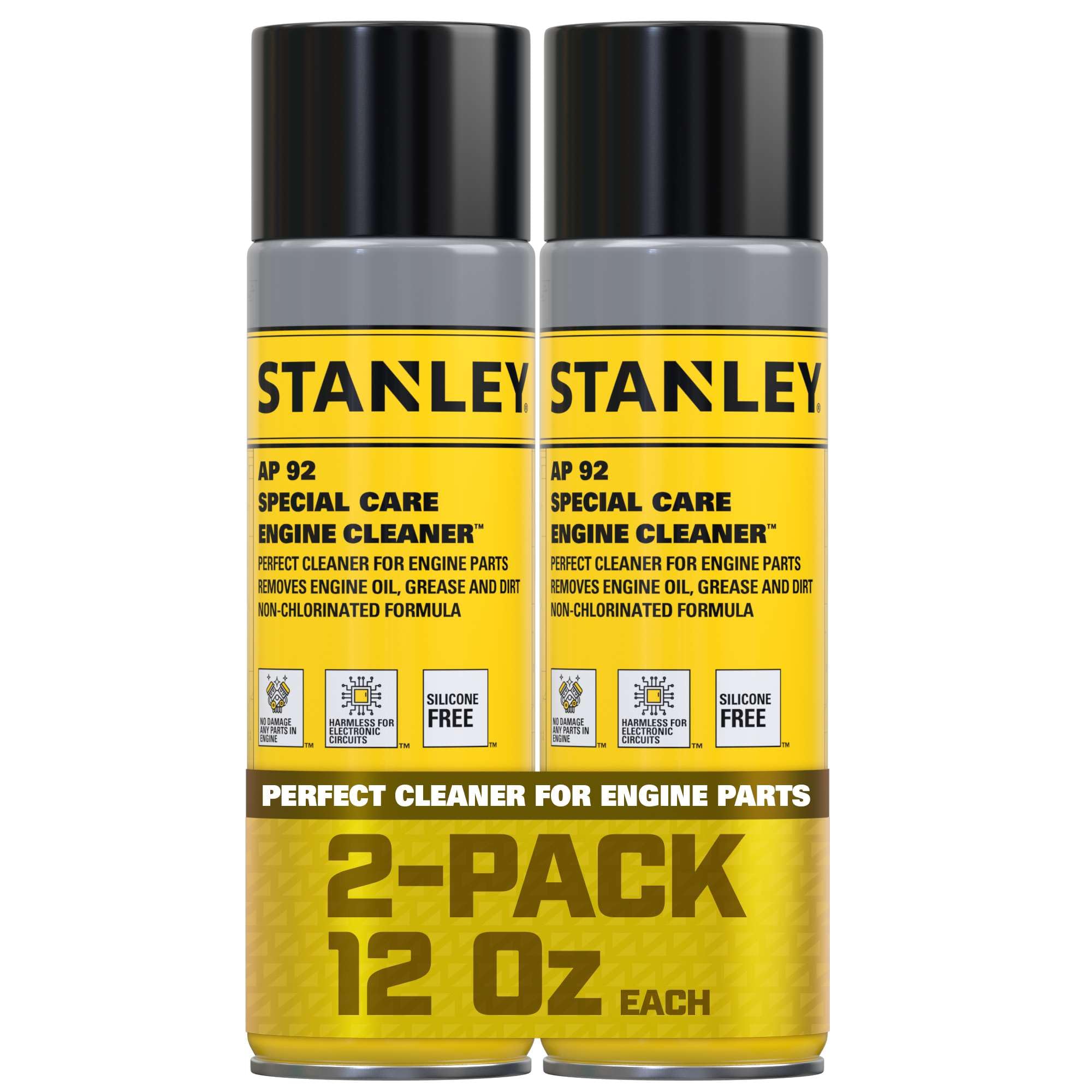
An aerosol that sprays upside down to reach every nook under the hood.
Stanley’s AP 92 is a 2-pack of 12.3 oz aerosols designed specifically for brake and clutch components as much as for engines. The standout feature is the 360° upside-down spray valve — you can invert the can to blast upward into wheel wells, behind brackets, and onto brake backing plates without fighting gravity. The formula evaporates quickly and leaves no residue, which is critical for brake parts where any film can reduce performance. Owners note it handles light-to-moderate grease well and has a pleasant smell.
The hardware is specialized, and that is its limit. Heavy grease requires scrubbing, just like most non-caustic cleaners. A few owners also report that the residue can look like rust on treated surfaces, which is more cosmetic than functional. For a targeted aerosol cleaner that does exactly one job (brake and engine component degreasing) with excellent precision, the AP 92 is a solid choice.
Strengths
- Upside-down spray allows access to hard-to-reach brake and engine areas
- Quick-evaporating and non-corrosive formula leaves no sticky residue
- Effective on brake dust, light oil, and clutch contamination
Limitations
- Small can runs out quickly on large engine bays
- Heavy caked-on grime still needs scrubbing with a brush
Best for: Mechanics and DIYers who need a precision cleaner for brakes, calipers, and tight engine crevices that a liquid spill can’t reach.
pass on it if: You need a large-volume cleaner for a full engine bay degreasing — you’ll burn through a can fast.
5. KRAKEN BOND Engine Cleaner Spray
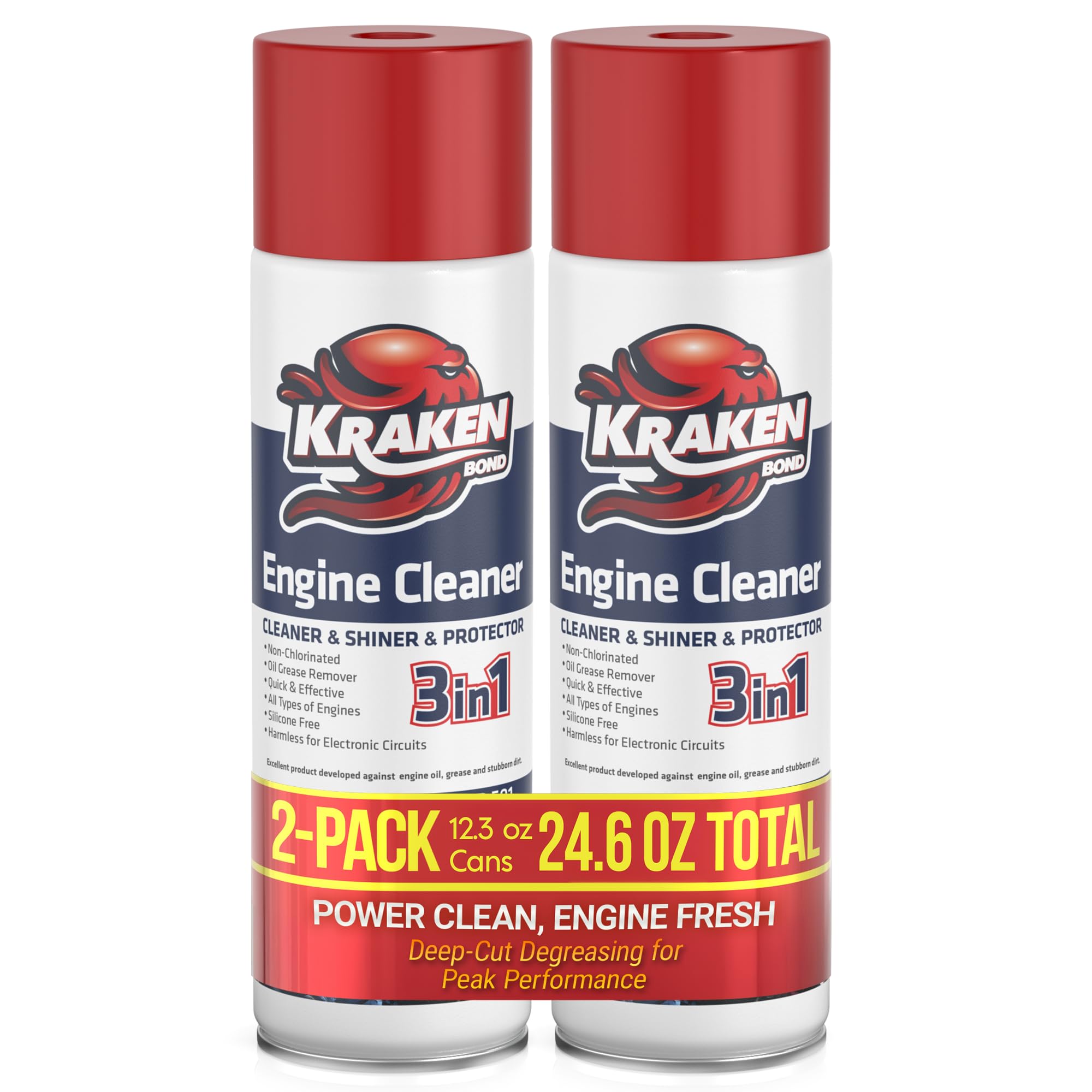
Spray on, walk away — the heavy grease is gone by the time you come back.
KRAKEN BOND is an aerosol engine cleaner from a newer brand that has quickly won a following for its instant results. Reviewers point out that it restored the original color and decals on an old truck engine almost instantly, and a common line in the feedback is “spray it on, walk away.” The 2-pack gives you two 12.3 oz cans, and the formula uses ozone-friendly propellants that are harmless to electronic circuits. The cleaning effectiveness is the most-praised aspect by a very wide margin, and the quality rating is nearly as strong.
The formula is less effective on metal oxidation — it is a degreaser, not a metal polish. If you have rust or discolored aluminum, this will not fix that. The cleaning speed gets mixed reactions from buyers: some say it works instantly without scrubbing, while others note it takes about 30 minutes for a full engine bay. The difference likely depends on how thick the grime is. KRAKEN BOND is best as a touch-up spray for regular maintenance, not a deep restoration tool.
What owners say: The consensus is that it is “one of the best products” they have used for an instant engine bay refresh, but it is not a substitute for a thorough scrub on heavily neglected engines.
Reach for it if: You want a quick, no-scrub option for keeping a daily driver’s engine bay looking clean between major services.
Look elsewhere if: You are restoring a classic engine with heavy grime and oxidation that needs a stronger soak or a metal polish.
6. Griot’s Garage Engine Cleaner
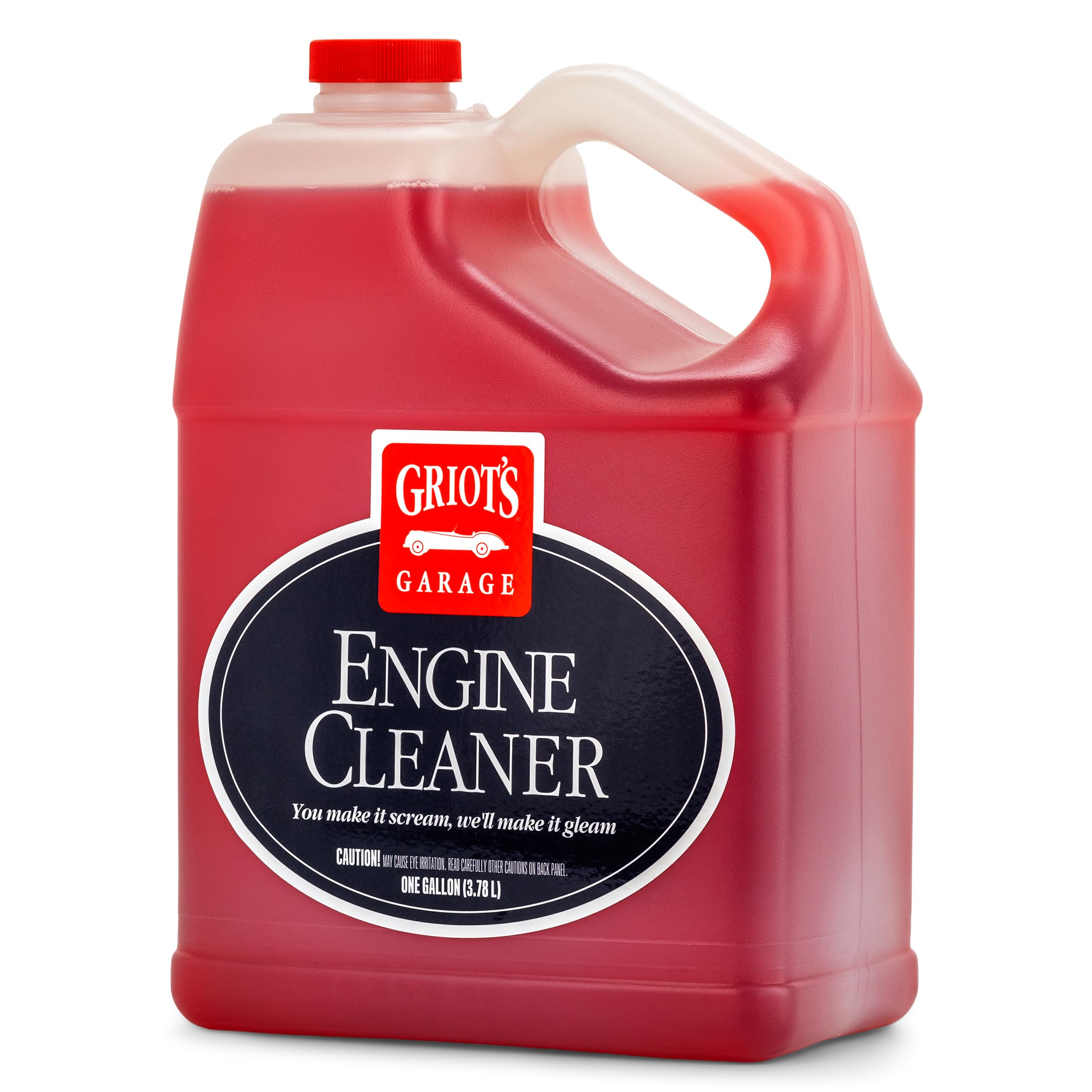
A full gallon that leaves your engine bay looking detailer-fresh without damaging delicate hoses.
Griot’s Garage has built a reputation on high-quality car care products, and this 1-gallon engine cleaner is a perfect example. The formula is designed to break down tough oil, grease, and grime quickly, but owners consistently praise its gentleness on plastics and rubber — it rinses clean without leaving a shiny or greasy residue. The cleaning performance is the top aspect by a significant margin, and the large gallon size means you pay for product rather than packaging. Users report it works beautifully on lawn mowers, riding mowers, and even old Ford Taurus and F-150 engines.
The main complaint is that the advertised spray bottle is not always included in the package — you may need to buy a separate sprayer. Also, at 8.7 pounds for the gallon, it is heavy to handle. A few owners note that the formula dries quickly, which means on a hot day you need to work in sections or reapply. For the professional detailer who values a clean, natural look without artificial shine, Griot’s is the go-to.
Why Detailers Love It
- One gallon provides massive value per ounce compared to aerosol cans
- Safe on delicate plastics, rubber, and painted surfaces
- Rinses free of residue, leaving a naturally refreshed look
Considerations
- Spray bottle may not be included, requiring an additional purchase
- Dries quickly in hot weather, needing section-by-section work
Best for: The serious detailer or enthusiast who goes through degreaser regularly and wants a high-quality, gentle formula in bulk.
it’s not for you if: You prefer a ready-to-use aerosol and don’t want to spray from a separate bottle.
7. Malco Red Thunder
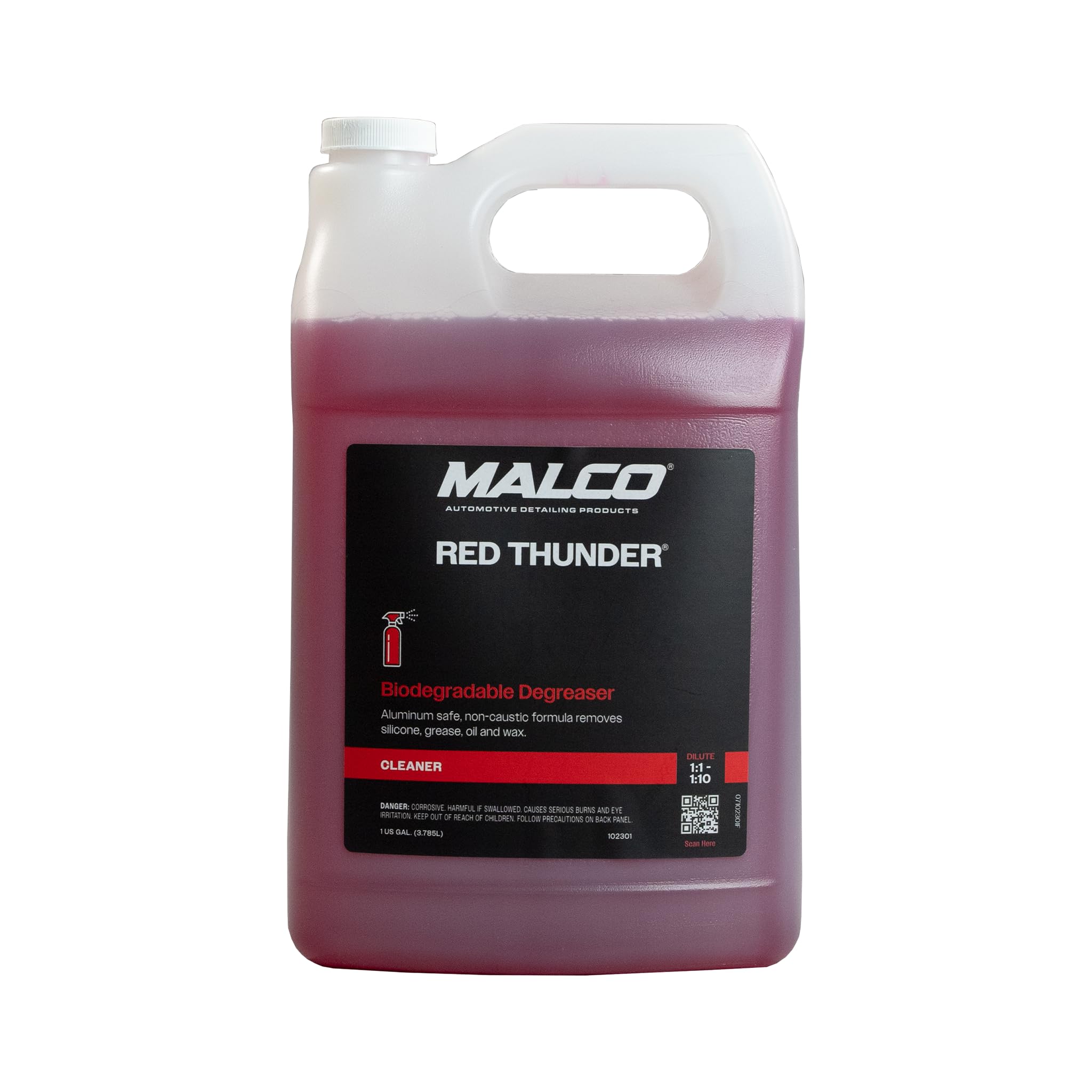
A biodegradable concentrate that cuts through months of road grime in a single pass.
Malco has been making automotive products since 1953, and Red Thunder is their heavy-duty degreaser that is also eco-friendly. It is biodegradable and phosphate-free, so it is safe to use in driveways and wash bays without worrying about runoff restrictions. The 1-gallon jug is a concentrate, meaning you can mix it at a 1:1 ratio for heavy engine and tire cleaning or dilute further for lighter jobs. Shoppers say that a 1:1 mix effectively removed months of grime from truck fender wells, wheels, and tires with light scrubbing, and that it was easier than past products they had used.
The main feedback from owners is that it works as expected — solid, effective, and reliable. The scent is unscented, which some prefer over the strong chemical smells of other degreasers. The trade-off is that it does not have the “instant gratification” of some aerosol foams; it requires a little agitation and dwell time. For the buyer who wants a professional-grade, planet-friendly degreaser that genuinely performs, Red Thunder is a strong contender.
The takeaway: Effectiveness is the most-praised aspect, and the fact it is “body shop and aluminum safe” means you can use it on polished alloy wheels without fear of etching.
Reach for it if: You want an eco-friendly concentrated degreaser that handles heavy road grime on tires, wheels, and engines without harming aluminum or the environment.
Think twice if: You need a fast-acting aerosol for quick spot cleaning and prefer not to mix your own solution.
8. GUNK Engine Cleaner and Degreaser

Six 32-ounce bottles that keep your shop stocked while staying affordable.
GUNK is a 75-year-old family company based in Charlotte, NC, and their EBT32 formula is a trusted water-soluble cleaner. The case of 6 gives you 192 total ounces of a Zero-VOC, biodegradable degreaser that is safe on all metals and plastics under the hood. Owners praise it for being a “very good water soluble cleaner” that works on everything from engine parts to linoleum floors and stove tops. One buyer mentions removing grease buildup from electric burner liners after a 30-minute soak, leaving the metal looking new.
The catch is that it has a strong citrus-like scent that some find pleasant and others find irritating — one owner reported coughing after use, recommending good ventilation. A few owners also note that it doesn’t “break up oily residue” as thoroughly as they hoped, which may mean it needs longer dwell time on heavy grease. For the price per ounce, this is a serious value for any shop that goes through degreaser rapidly.
Why Buy in Bulk
- Zero-VOC formula is safer for indoor use and the environment
- Works on multiple surfaces: engines, floors, countertops, and stoves
- Water-soluble, rinses away cleanly without solvent residue
Things to Know
- Strong citrus scent may be overwhelming in enclosed spaces
- Effectiveness on heavy oily residue can be mixed; longer soak may be required
Best for: A repair shop, fleet garage, or heavy user who wants a safe, effective degreaser in bulk to keep on the shelf for daily jobs.
look elsewhere if: You need a super-fast, no-wait spray for a quick weekend engine detail and don’t need 6 bottles.
9. GUNK Engine Brite Gel

A thick gel that refuses to drip off hot engine sides and overhead pans.
Engine Brite Gel is the go-to when gravity is your enemy. The gel formula clings to vertical and overhead surfaces — owners say it “adheres well” even on hot engine blocks, and a buyer who degreased a transmission and motor outside in a canopy used it with a power washer for deep cleaning. It is designed for dirty, greasy engines and is safe on most under-hood rubber, plastic, and paint. The cleaning performance is the top-rated aspect by a significant margin, and the case of 12 cans ensures you have enough for multiple heavy jobs.
The honest trade-off is the odor — owners describe it as “very potent” and insist on good ventilation. One buyer had to take down side sheets because the smell was overwhelming. The gel also requires multiple applications for truly caked-on grime, and the manufacturer recommends using a nylon brush and letting it sit longer than the instructions say. This is a heavy-duty tool for serious grime, not a quick spritz-and-go product.
Shop wisdom: The gel’s ability to stay put on vertical surfaces makes it the best choice for cleaning the underside of hoods, engine blocks, and transmission pans where a liquid would just run off.
Reach for it if: You are degreasing a vertical engine block, the underside of a hood, or any surface where a liquid degreaser would simply drip away before doing its work.
Think twice if: You are sensitive to strong chemical smells or work in a non-ventilated space — this one demands fresh air.
Understanding the Specs
Dilution Ratios
A dilution ratio tells you how much water to add to a concentrate. A 90:1 ratio means 90 parts water to 1 part cleaner. A higher ratio means you stretch the product further, but it also reduces cleaning power. For heavy engine grease, use full strength or a low 1:1 mix. For light maintenance cleaning of interior plastics, a high 90:1 ratio is gentle enough to not damage surfaces.
Biodegradable & Zero-VOC Labels
A biodegradable degreaser breaks down naturally without leaving harmful chemicals in the soil or water. Zero-VOC means the product does not release volatile organic compounds that create smog and can be harmful to breathe. These labels matter if you are cleaning in a residential area, near storm drains, or in an enclosed garage where ventilation is limited. They do not reduce cleaning power but indicate a safer formula.
FAQ
Can I use an engine degreaser on a hot engine?
Will engine degreaser damage plastic or rubber parts?
How long should I let a degreaser sit before rinsing?
Can I use a pressure washer after applying an engine degreaser?
Is it safe to use an engine degreaser on a modern car with lots of electronics?
What is the difference between a degreaser and an all-purpose cleaner?
Can an engine degreaser remove paint?
How do I dispose of engine degreaser runoff?
Why does my degreaser leave a white residue after drying?
Can I use a kitchen degreaser on my car engine?
Final Thoughts: The Verdict
For most people, the best engine degreaser winner is the SONAX Engine Cleaner because it balances powerful cleaning with total surface safety — no plastic damage, no harsh solvents, and a real owner story that it turns a 300,000-mile engine bay to a like-new look. If you want a single cleaner that also handles wheels, carpets, and interiors, grab the Adam’s All Purpose Cleaner. And for industrial-strength work or shop use where you need a biodegradable formula in bulk, the Oil Eater Original is the one to reach for.
How We Picked
We do not accept paid placement. Every pick is matched to a real buyer and a real use-case; we do not hands-on test units.
Sources & Methodology
Specifications: manufacturer listings and product documentation. Review insights: verified customer reviews, as of July 2026. Pricing: not shown on this page (it changes often); check the current price via the retailer link.
As an Amazon Associate, Trending Car earns from qualifying purchases. This does not affect which products we feature.