
Our readers keep the lights on and my garage snacks stocked. As an Amazon Associate, I earn from qualifying purchases.
Specs are compiled from manufacturer listings and verified buyer reviews and can change over time — please confirm the key details on the product page before buying.
An enduro helmet has to do two things at once: keep you safe on a high-speed, rock-strewn descent and stay comfortable enough for the long, sweaty pedal back up. The wrong one is either too heavy to climb in or too flimsy to trust. This guide cuts through the marketing to find the helmets that actually pull off that balance, with a focus on real-world protection, ventilation you can feel, and a fit that won’t distract you on the trail.
I’m Min Islam — the founder and writer behind Trending Car. This guide is built by comparing the manufacturers’ published specifications and the patterns across verified customer reviews, so you get each pick’s real strengths and trade-offs instead of marketing spin.
Whether you are racing enduro stages at the bike park or tackling your local loop, finding the right enduro mountain bike helmet depends on matching your riding style with the right mix of coverage, airflow, and adjustability features.
Our Picks at a Glance
How To Choose The Best Enduro Mountain Bike Helmet
Enduro riding demands a helmet that can handle both ends of the trail: the lung-busting climb and the white-knuckle descent. You are looking for a specific set of features that prioritize extended rear coverage, a secure fit system, and advanced impact protection. Here are the key factors to weigh before you buy.
Coverage and Safety Certifications
An enduro helmet should offer more coverage at the back of the head and temples than a standard road or XC helmet. Look for a model with a MIPS (Multi-directional Impact Protection System) layer, a slip-plane designed to reduce rotational forces from angled impacts. Some helmets also meet the ASTM F1952 downhill standard, which means they have passed a higher impact test — a good sign for demanding enduro and park riding.
Ventilation and Airflow
You will be sweating on the climb, so the number of vents and the design of internal airflow channels matter. More fixed vents (look for 15 to 20) generally mean more airflow, but the specific channel routing is just as important. A helmet with effective ventilation pulls cool air in through the front ports and shoves hot air out the back, helping you stay clear-headed for the technical descent.
Fit System and Adjustability
A helmet that shifts around on your head is a safety risk. A good fit system gives you 270 to 360 degrees of adjustment with a dial at the back, plus the ability to adjust vertical height and sometimes even pad width. The visor should be adjustable in multiple positions — not just for sun protection but to store your goggles when you lift them for the climb.
Quick Comparison
| Model | Best For | Safety Systems | Ventilation | Weight | Amazon |
|---|---|---|---|---|---|
| SMITH Forefront 2 MIPS★ Best Overall | Best Overall | Koroyd + MIPS | 20 fixed vents | 2 pounds | Amazon |
| Troy Lee Designs Flowline SE MIPSPremium Value | Premium Value | MIPS B-Series | 14 vented ports | — | Amazon |
| Bell Sixer MIPSAdjustable Fit | Adjustable Fit | MIPS Evolve | Dual Flow Ventilation | 1.8 pounds | Amazon |
| POC Tectal | Rescue Tech | MIPS + RECCO | Ventilated airflow channels | 0.35 kg | Amazon |
| iXS Trigger AM MIPS | Full-Face Convertible | MIPS + in-mold | Numerous ventilation openings | 1.3 pounds | Amazon |
| Bell Super DH MIPS | Downhill+Enduro | Flex Spherical+MIPS | 19 vents + 4 chin bar vents | 16 ounces | Amazon |
| Leatt Enduro 2.0 | 3-in-1 Safety | 360 Turbine + in-mold | 20 vents | 640 g | Amazon |
| POC Kortal Race MIPS | NFC Medical ID | MIPS + RECCO | Highly efficient ventilation design | 0.39 kg | Amazon |
| Troy Lee Designs Stage MIPS | Light Full-Face | MIPS + EPP/EPS foam | 25 ports | 690g | Amazon |
| Smith Mainline MIPS | Downhill Certified | Koroyd + MIPS | 21 fixed vents | 770 g | Amazon |
In‑Depth Reviews
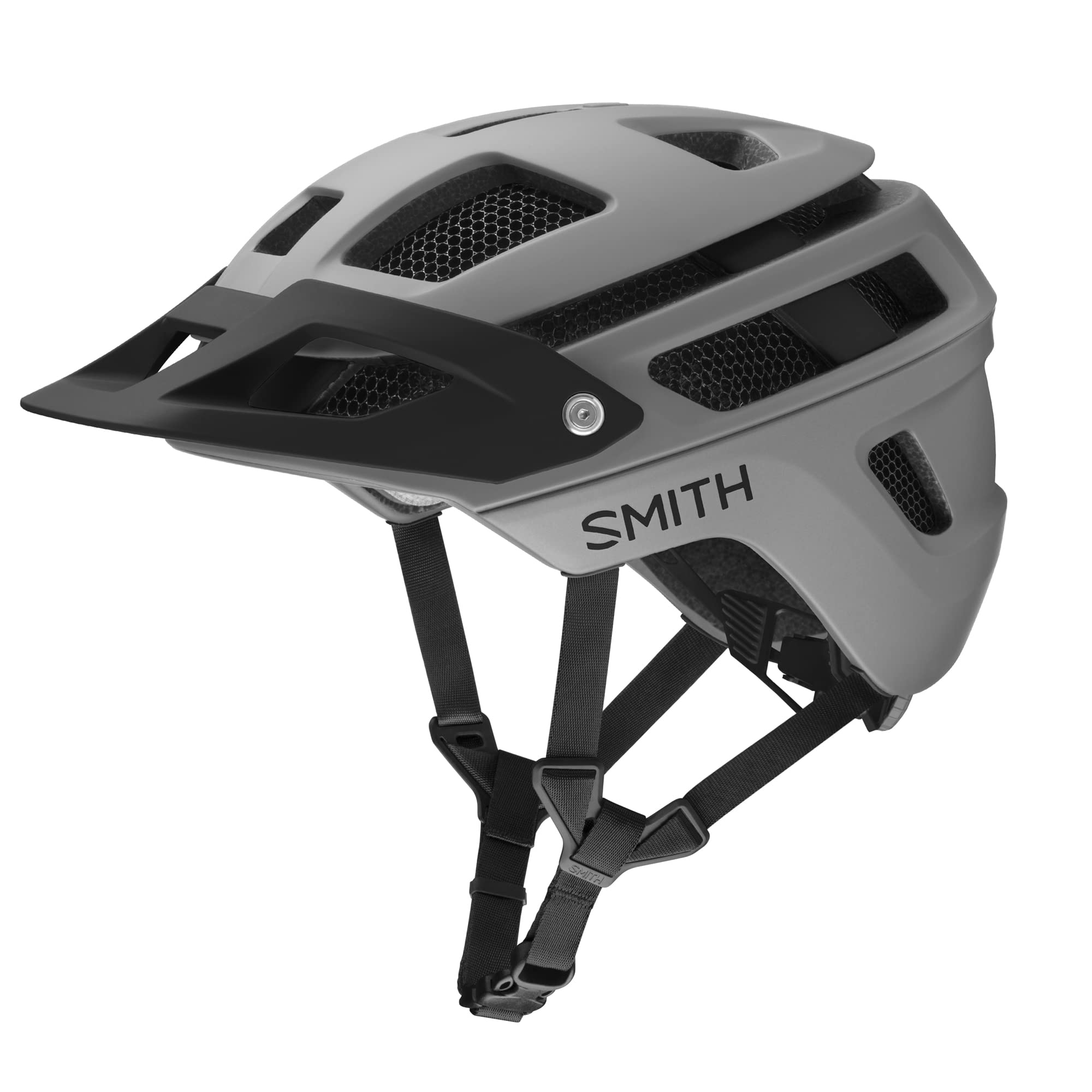
1. SMITH Forefront 2 MTB Cycle Helmet – Adult Mountain Bike Helmet with MIPS Technology
Our pick — over 4.5★ from 950+ verified ratings; the strongest balance of quality and price.
The half-shell that feels like it has your six on every chunky descent.
This helmet is the crowd favorite for a reason — it combines complete Koroyd coverage (a honeycomb-like material that crushes to absorb impact beneath the hard shell) with MIPS to handle both direct hits and rotational forces. With 20 fixed vents, airflow is aggressive enough that you stay cool on long climbs without fogging up your goggles. The VaporFit dial gives you a 270-degree adjustment range, so dialing in a snug, no-shift fit takes one hand mid-ride.
Owners praise the build quality and fit above everything else. The visor has three positions, letting you stash glasses or lift it out of your field of vision on steep sections. Note that the Medium fits a 7 1/4 hat size — a useful reference point for ordering. The only real trade-off is that the strap design can feel a bit awkward around the ears for riders with larger heads, but the performance and confidence this lid inspires make it the top pick for aggressive trail and enduro riding.
What Owners Rave About
- Build quality leads the conversation — 68 owners single it out as a standout trait
- Fit is second-most praised, with many calling it perfect straight from the start
- Lightweight at 2 pounds with 20 vents for serious airflow
A Note on Fit
- Strap placement near the ears can be tricky for very large heads
- Some riders wish for a bit more padding, though it’s slim by design for a secure feel
Reach for this if: you want a half-shell that blends top-tier impact protection (Koroyd + MIPS) with ventilation that works hard, and you prioritize a dialed-in fit that won’t shift on rough terrain.
Look elsewhere if: you need a full-face for constant bike park days, or your head shape doesn’t agree with a more rounded fit profile.
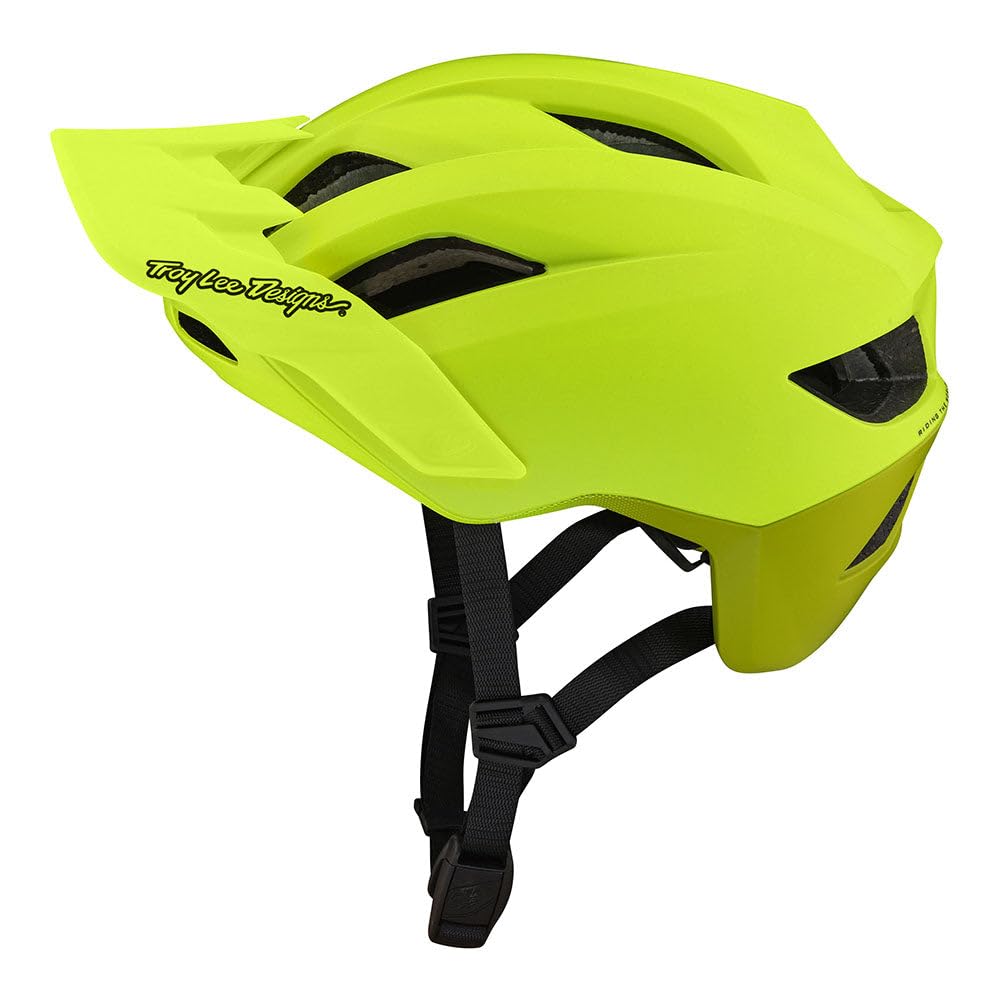
2. Troy Lee Designs Flowline SE Adult Mountain Bike Trail All Mountain Helmet W/MIPS
The racy-looking lid that doesn’t cost a race-team budget.
This is the rare helmet that is NTA-8776 certified for e-bike speeds while still packing MIPS B-Series rotational protection. The 14 vented ports are arranged to pull hot air out and push cool air in, and the full 360-degree fit retention system includes a 3-way rear height adjustment. Owners love the magnetic clip buckle — as one buyer put it, “I love the magnetic clipping for doing it with one hand while steering.” It’s a small detail that makes a big difference when you’re trying to re-clip on a sketchy climb.
The build quality and fit get top marks, with the adjustability earning special praise for accommodating large and oddly-shaped heads. The screwless visor adjusts three ways and stays put under vibration. The main caveat is that with 14 ports, the ventilation is good but not quite as open as helmets with 20 vents, so it runs a touch warmer on the longest, hottest summer climbs. Still, for the feature set — e-bike certification, MIPS, and Troy Lee’s 40 years of racing heritage — it’s a standout value in the premium mid-range.
Perks and Pitfalls: The magnetic FIDLOCK-style buckle is the feature owners keep mentioning, making one-handed operation a reality. The 360-degree adjustability means it fits a wide range of head shapes. On the downside, the 14 vents are a step below the best-ventilated half-shells, so if you ride exclusively in desert heat, you might want more open airflow.
Grab this for: a feature-packed, safety-certified enduro half-shell that delivers premium adjustability and a killer magnetic buckle at a competitive price point.
Skip it for: constant hot-weather climbing where maximum vent count is your top priority.
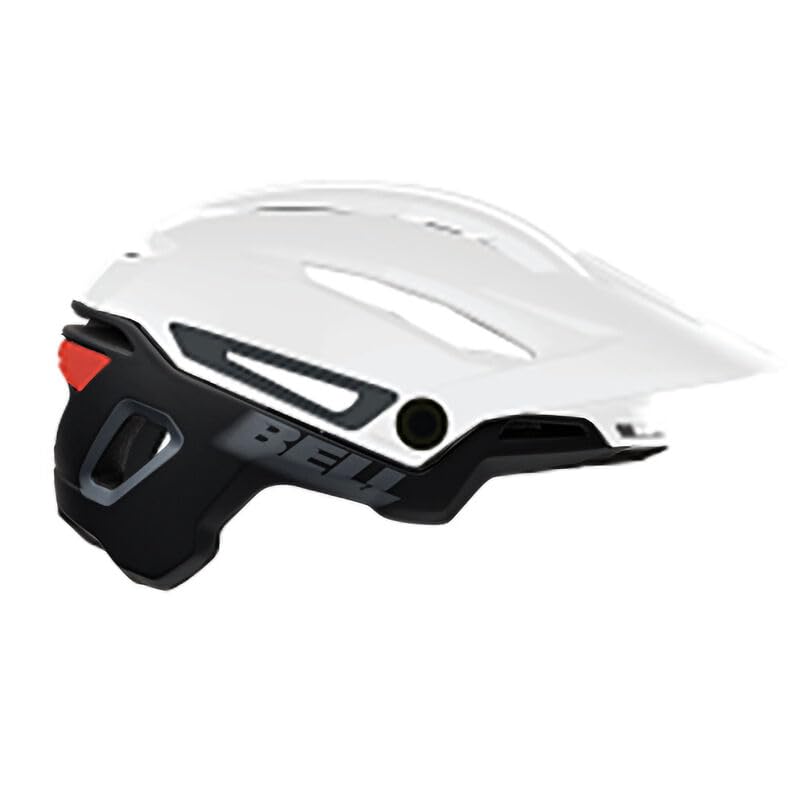
3. Bell Sixer MIPS
The helmet that lets you fine-tune fit in three dimensions.
Bell’s Float Fit Race system goes beyond a simple dial — it offers three-way adjustability in height, pad width, and tension, so you can really dial in the contact points. The MIPS Evolve system integrates the slip plane into the retention system itself, which reduces weight and complexity compared to older versions. Dual Flow Ventilation uses intake ports at the brow to push cool air through a full-head matrix of channels, and the 4-position adjustable visor can be yanked up or down on the fly without slipping.
Reported downsides include visor bolts that can loosen over time (easily fixed with metal replacements and Loctite), and the MIPS retention rubbers may wear out in about a year. Still, the quality and adjustability make this a top contender for riders with specific head shapes.
Three Big Strengths
- Float Fit Race system adjusts height, pad width, and tension — not just circumference
- Light and airy; buyers report it feels like you’re barely wearing a helmet
- MIPS Evolve is integrated into the retention system, reducing bulk and weight
Three Small Complaints
- Plastic visor bolts can fall out — replace them with metal right away
- MIPS retention rubbers may break after about a year of frequent use
- One report of inner packaging arriving crumpled, though the helmet was fine
Get this for: customizable three-dimensional fit that adapts to rounder or more oval head shapes, plus advanced MIPS integration.
Think twice if: you want a no-fuss helmet that requires zero aftermarket tinkering — the visor bolts are a known weak point.
4. POC Tectal

A half-shell built for backcountry confidence.
The Tectal is specifically designed for trail riding and enduro, with extended coverage at the temples and back of the head. It packs an integrated RECCO reflector, which rescue services can use to find you if you crash in a remote area — a unique safety feature you won’t find on most helmets. The unibody PC shell bonded to a reinforced EPS liner improves structural stability without adding weight, coming in at just 0.35 kg. The adjustable peak can be lifted to stash goggles underneath, and the 360° size adjustment system gives you a precise, secure fit.
Owners highlight the comfort and build quality first, with several saying it’s so lightweight “you almost forget you’re wearing a helmet.” The ventilation channels keep you cool even on hot climbs. The adjustable visor and goggle clip make it easy to switch between glasses and goggles mid-ride. The only real downside is that the strap adjusters lack the same refined feel as the rest of the helmet, and a few riders mention the chin strap can feel slightly thin. But for riders who explore solo backcountry trails, the RECCO reflector is a genuine safety advantage.
Standout safety: The RECCO reflector is rare at this tier. Combined with MIPS and a reinforced unibody shell, this helmet gives you a layer of searchability that could make a real difference. The trade-off is a slightly less premium strap system, but the core protection is top-notch.
Best for solo riders: if you spend time on remote enduro trails where getting found matters, the RECCO reflector alone makes this a standout pick.
Not for you if: you need a convertible full-face or want the most premium strap hardware — the Tectal keeps it simple there.
5. ixs Helmets- iXS Bike Helmet Trigger AM MIPS

A full-face that’s light enough for all-day climbing.
The iXS Trigger is marketed as “one of the lightest” all-mountain full-face helmets, coming in at about 1.3 pounds. It uses double-in-mold construction, fusing the polycarbonate shell directly to the EPS foam for structural strength without extra weight. The MIPS brain system is integrated into a smooth EPS liner, and the 2-level adjustable visor offers enough space to stow your goggles. The Fidlock magnetic buckle is a welcome feature for one-handed fastening on the move.
Fit is the most-discussed aspect, with owners reporting it accommodates large heads well while maintaining a sleek, proportional look. The quick-release magnetic buckle gets frequent positive mentions, as does the overall build quality. The biggest selling point is the weight — at 595g, it’s genuinely competitive with many half-shells, making it feasible for climbing with the chin bar on. The main complaint is that the ventilation is decent but not exceptional for a full-face, and the chin bar can get warm on long, slow technical climbs. Still, for aggressive enduro riders who want DH-level coverage without the DH-level weight, this is a top pick.
Light and capable: At around 595g, the Trigger is a proper full-face that you can actually pedal in all day. The Fidlock buckle and double-in-mold build quality are standout features. Just know that full-face ventilation, while good, won’t match an open half-shell on the hottest days.
Ideal for enduro racers: who want a full-face for race stages but don’t want to suffer on the transfer climbs, and who value a proven magnetic closure system.
Skip for park-only riding: if you spend most of your time on chairlift-served trails, you might prefer a burlier DH helmet with even more ventilation.
6. Bell Super DH MIPS

The 2-in-1 that goes from full-face protection to open trail lid in seconds.
The Super DH is a true convertible: a removable chin bar snaps into place for downhill runs and pops off for maximum climbing airflow, with no tools required. It uses Flex Spherical + MIPS, which is Bell’s premium rotational impact system, combined with Progressive Layering (variable-density EPS foam) to manage different impact speeds. The chin bar is wraparound for face protection, and the whole package is DH-certified (ASTM F1952) while staying at 16 ounces — impressively light for the coverage it offers.
Quality is the top praise by a wide margin, with many owners calling it the best MTB helmet period after thousands of miles. It features X-Static and XT2 padding with silver fibers for odor control, and the Sweat Guide pad pulls moisture away from your eyewear. The Overbrow Ventilation system uses intake ports on the brow to push air across your head. The main complaints center on the fit of the chin bar — some find it tight on the cheeks, and replacement pads can be hard to find. The visor bolts are also known to vibrate loose on rough trails. But for versatility, this is a benchmark.
Why It Wins
- Convertible chin bar is DH-certified and removes without tools
- Flex Spherical + MIPS is among the most advanced rotational protection systems
- Weighs just 16 ounces despite the full-face capability
Where It Falters
- Chin bar fits snug on some faces — cheek pad size matters
- Replacement pads are reportedly difficult to source
- Visor bolts can vibrate loose over rough terrain
Perfect for the rider: who pedals to the top and shuttles down — one helmet that does both without compromise. The DH certification means real confidence on serious terrain.
Avoid if: you have a wide face and find full-face cheek pads claustrophobic, or you want a dedicated DH full-face that doesn’t convert.
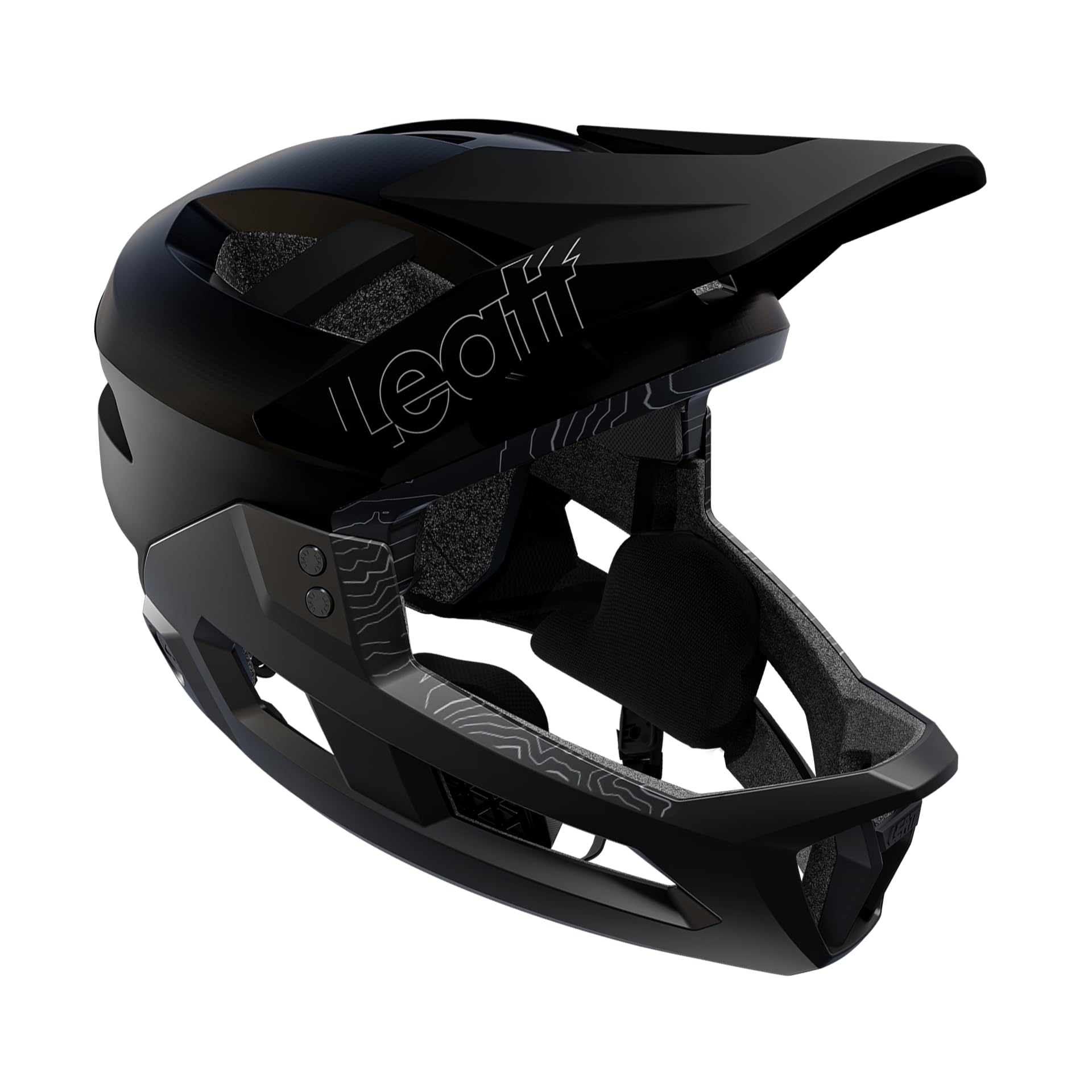
7. Leatt MTB Enduro 2.0 Helmet | 2-in-1 Mountain Bike Full Face with Removable Chin Bar, 360 Turbine Tech & Magnetic Buckle
A convertible that tackles low, high, and rotational impacts in one system.
Leatt’s 360 Turbine Technology sets the Enduro 2.0 apart: it uses 360 Turbine dampers (small discs that function like a MIPS system but with more coverage) combined with the impact foam to create a 3-in-1 safety system for low-speed, high-speed, and rotational forces. The removable chin bar snaps into place for descents and removes with a simple push-button for the climb. With 20 vents, the airflow is effective even at low speeds — exactly what you need on a grinding uphill.
Owners love the fit and comfort, calling it “by far the best helmet I’ve ever boughten for cycling.” The magnetic Fidlock closure system is fast and easy to use with gloves on. The sunglasses dock port is a clever touch for stowing eyewear. The slight downside is that the chin tapers a bit at the bottom, which can make it tight as you pull it over your head. A few owners also note that the chin bar carry space is limited when stowed. But for a lightweight convertible with a truly unique safety system, it’s a compelling choice.
Innovative safety: The 360 Turbine Tech is Leatt’s answer to MIPS, and early owner feedback is positive. The 20 vents are effective, and the push-button chin bar removal is quick. The taper at the chin opening is the main fit note — try it on if you can.
Get this for: a convertible full-face with a novel approach to rotational protection (360 Turbine), effective ventilation with 20 vents, and a comfortable, adjustable fit.
Consider other options if: you have a larger head and find the tapered chin opening restrictive, or you prefer a more traditional MIPS system.
8. POC Kortal Race MIPS – Advanced Trail, Enduro and All-Mountain Bike Helmet

A tech-forward half-shell that stores your medical info for first responders.
The Kortal Race takes the POC formula and adds an NFC Medical ID chip built into the helmet. This chip stores your vital medical details and emergency contact information, letting first responders access it with a smartphone scan — a potentially life-saving feature. It also includes the RECCO reflector for searchability and a MIPS Brain Protection System for rotational impact management. The adjustable peak lifts easily for goggle storage, and the 360° size adjustment ensures a precise fit.
Owners praise the fit and materials most, with many saying the ergonomics and comfort are excellent for both short and long rides. The ventilation design is highly efficient, keeping your head cool in hot conditions. The chin strap can feel slightly short for riders with larger chins, and opinions on value for money are mixed — some feel it’s a “top tier helmet for the price” while others find it a bit pricey. One owner reported the fit-adjustment plastic breaking on the third ride without a crash, though this appears to be a rare defect. Overall, for the safety tech packed in, it’s a compelling premium choice.
Tech highlights: The NFC Medical ID chip is unique to this tier — no other helmet on this list stores your emergency info. Combined with RECCO and MIPS, this is a helmet designed for the prepared backcountry rider. The mixed feedback on long-term durability is note, but the core fit and ventilation get consistent praise.
Best for safety-conscious riders: who want the extra layer of EMT-accessible medical data and backcountry searchability via RECCO.
Not for budget-focused buyers: the price is premium, and you’re paying for safety tech as much as the helmet itself.
9. Troy Lee Designs Stage Adult Mountain Bike Downhill Enduro Helmet W/MIPS

The full-face that feels like a half-shell, with 25 vents to prove it.
At just 690 grams, the Stage is one of the lightest full-face helmets on the market, making it viable for enduro racing where you pedal with the chin bar on. It combines MIPS with a dual-density foam setup — EPP (expanded polypropylene) for low-speed impacts and EPS (expanded polystyrene) for high-speed impacts — to manage a wide range of crash energies. The 25 strategically placed intake and exhaust ports promote continuous airflow, which owners say works surprisingly well even in hot climates like South Florida.
The fit is the second-most praised aspect, with the helmet accommodating a wide range of head shapes thanks to the 2 liners, 3 sets of cheek pads, and 2 neck rolls included in the box. The Fidlock magnetic buckle is standard and fast. The Polyacrylite-injected chin bar with EXO-Skeleton reinforcement gives structural confidence. Owners mention the ventilation is “relatively cool and well ventilated” even in Florida heat. The only minor complaints are about the cheek pad retention pins, which can have longevity issues, and the price, which firmly places it in the premium tier. But for a full-face that weighs nearly the same as a half-shell, the Stage is a standout for enduro racers.
What Makes It Special
- At 690g, it’s nearly half-shell weight with full-face coverage
- 25 vents provide industry-leading full-face airflow
- Dual-density EPP and EPS foam manage both low and high-speed impacts
Honest Caveats
- Cheek pad pins may wear or loosen over time
- Premium pricing puts it at the top of the range
- Some riders find the fit requires extensive pad swapping
Grab this if: you race enduro and want a full-face that doesn’t punish you on the climbs — the weight and ventilation are class-leading.
Skip it for budget buys: the Stage is a premium investment. If you only go full-face at the bike park, a cheaper, heavier full-face might serve you as well.
10. Smith Mainline Cycling Helmet – Downhill Adult Mountain Bike Helmet + Koroyd Coverage + MIPS Technology

The downhill-certified standard that enduro racers swear by.
The Mainline is Smith’s pinnacle full-face, certified to the demanding ASTM F1952 downhill standard and the NTA8776 e-bike standard. It features complete Koroyd coverage across the entire inner shell for energy absorption and ventilation in one material, plus MIPS for rotational forces. With 21 fixed vents, airflow is genuinely impressive for a full-face, and the hybrid X-Static/Ionic+ lining fights odor on multi-day trips. The visor adjusts into three positions to accommodate goggles and glasses.
At 770 grams, it’s a bit heavier than the Troy Lee Stage, but it makes up for it with a more protective feel and a more secure fit via the multiple padding sets (3 washable cheek pad kits, 2 crown liners, and 2 neck rolls). Owners say it integrates perfectly with Smith goggles, with no nose pressure. The main feedback is that the standard d-ring buckle feels dated compared to the magnetic Fidlock buckles found on competitors, and the MIPS liner can be slightly noisy on rough terrain. But for riders who want the highest safety certifications in a full-face that still breathes well, the Mainline is a benchmark.
Protection-first design: The ASTM F1952 downhill certification is rare for a full-face at this weight. The complete Koroyd coverage provides excellent energy absorption. The multiple padding kits let you fine-tune the fit to a degree few other helmets offer. The d-ring buckle is the main concession to tradition.
Choose this for: the highest level of certification in a full-face that still offers impressive ventilation and a customizable fit via multiple pad kits.
Pass on it if: a magnetic buckle is a must-have for you, or you want the absolute lightest full-face on the market (the Stage is lighter).
Understanding the Specs
MIPS and Rotational Impact Systems
MIPS stands for Multi-directional Impact Protection System. It’s a low-friction liner inside the helmet that allows your head to slide slightly on impact, reducing the rotational forces that can cause brain injuries. Many enduro helmets now use MIPS as a baseline, but some brands offer their own versions: Bell’s Flex Spherical (a spherical ball-and-socket design) or Leatt’s 360 Turbine (small dampers that move independently). The key takeaway is that any rotational protection system is better than none for the angled falls common in enduro.
Ventilation and Channel Design
Vent count matters, but the channel routing matters more. A helmet with 20 fixed vents that directs air across the top of your head and out the back will feel cooler than a 20-vent helmet with poorly designed channels. Look for terms like “Dual Flow Ventilation” (Bell) or “AirEvac” (Smith) — these indicate engineered airflow paths that actively push hot air out while pulling cool air in, helping you stay clear-headed for technical lines.
FAQ
Do I need a full-face helmet for enduro riding?
What is the difference between MIPS and Koroyd?
Will an enduro helmet fit my goggles?
How do I measure my head for the right helmet size?
What does ASTM F1952 certification mean?
How long does an enduro helmet last?
What is a RECCO reflector and do I need it?
Can I use an end?
How important is the visor adjustment for enduro?
Final Thoughts: The Verdict
For most riders, the enduro mountain bike helmet winner is the SMITH Forefront 2 MIPS because it blends complete Koroyd coverage, MIPS safety, 20 vents for airflow, and a precise fit system into one well-rounded package that earns near-universal praise from owners. If you need a lightweight convertible full-face for race days, the Leatt Enduro 2.0 gives you 360 Turbine safety and a removable chin bar. And for the rider who wants the lightest possible full-face for all-day enduro missions, the Troy Lee Designs Stage MIPS is the one to reach for.
How We Picked
We do not accept paid placement. Every pick is matched to a real buyer and a real use-case; we do not hands-on test units.
Sources & Methodology
Specifications: manufacturer listings and product documentation. Review insights: verified customer reviews, as of July 2026. Pricing: not shown on this page (it changes often); check the current price via the retailer link.
As an Amazon Associate, Trending Car earns from qualifying purchases. This does not affect which products we feature.