
Our readers keep the lights on and my garage snacks stocked. As an Amazon Associate, I earn from qualifying purchases.
Specs are compiled from manufacturer listings and verified buyer reviews and can change over time — please confirm the key details on the product page before buying.
Finding the right enduro dirt bike tires is the difference between a day spent wrestling a washing machine in the woods and flowing through a rocky section like you actually know what you are doing. You want rubber that bites into wet roots, doesn’t fling off knobs after three rides, and still feels planted when you hit a gravel road between trails. The wrong set will have your rear wheel spinning on loose climbs and your front end washing out in corners — exactly the kind of frustration that kills a good ride.
I’m Min Islam — the founder and writer behind Trending Car. This guide is built by comparing the manufacturers’ published specifications and the patterns across verified customer reviews, so you get each pick’s real strengths and trade-offs instead of marketing spin.
We sorted through the top contenders to bring you the definitive list of the best enduro dirt bike tires that combine real-world traction, durability, and value for riders who push their bikes beyond the fire road.
Our Picks at a Glance

How To Choose The Best Enduro Dirt Bike Tires
A tire that rips on hard-pack might be a total washout in deep sand. Understanding a few core specs makes the difference between a confident buy and an expensive experiment.
Match the Ply Rating to Your Weight and Terrain
The ply count tells you how many layers of casing are under the tread. A higher-ply tire (say 12-ply versus 4-ply) resists pinch flats and sidewall cuts better when you are bashing through rocks at low pressure. The trade-off is a stiffer, heavier ride that feels less compliant on smoother trails.
Knob Height and Pattern
Tall, aggressive knobs dig into loose soil and mud for maximum forward bite. Those same knobs squirm and wear fast on pavement. If you ride a mix, you want a tire that is DOT-approved for brief road links without caving on traction in the dirt.
Tube Type vs. Tubliss Compatibility
Every tire on this list is a tube-type design, meaning it needs an inner tube (or a Tubliss system) to seal against the rim. Going tubeless with a system like Tubliss lets you run much lower air pressure — around 7 psi — for insane grip on rocks and roots without pinch-flatting.
Quick Comparison
| Model | Best For | Ply Rating | Load Capacity | Item Weight | Amazon |
|---|---|---|---|---|---|
| 1. Kenda K760 Rear 100/100-18★ Best Overall | Best Overall | 12-Ply | 805 lbs | 10.6 lbs | Amazon |
| 2. Kenda K760 Front 80/100-21Best Front Match | Best Front Match | 6-Ply | — | 9 lbs | Amazon |
| 3. Tusk Recon Hybrid Front 90/100×21 | Value Trail Front | 4-Ply | — | — | Amazon |
| 4. IRC Volcanduro VE-35 Front 80/100-21 | Racing Compound | Radial | 849 lbs | 8.6 lbs | Amazon |
| 5. IRC M5B EVO Rear 140/80-18 | Premium Bite | 6-Ply | 739 lbs | 11 lbs | Amazon |
| 6. Shinko R505 Sticky 110/100-18 | Hard Enduro Cheater | B | 582 lbs | 10 lbs | Amazon |
| 7. Shinko R525 Cheater 120/100-18 | Loose Loam Specialist | 12-Ply | — | 17.25 lbs | Amazon |
In‑Depth Reviews
1. Kenda K760 Dual/Enduro Rear Motorcycle Bias Tire – 100/100-18 59C
Our pick — over 4.5★ from 250+ verified ratings; the strongest balance of quality and price.
The 12-ply rear tire that shrugs off rocks without emptying your wallet.
Here is the crowd favorite that earns its spot by being genuinely hard to fault. The Kenda K760 rear brings a massive 12-ply casing to the fight — a 12-ply casing compared to the 4-ply Tusk Recon front tire. At 10.6 pounds, it is noticeably heftier at 10.6 pounds versus the IRC front at 8.6 pounds, but that weight pays for itself in sidewall protection when you are slapping through a boulder garden. The load capacity sits at 805 pounds, so even a big bike with gear is well inside the safety margin.
What wins owners over is the no-nonsense reliability: the tire is DOT-approved for a 90/10 dirt-to-road split (meaning 90% off-road, 10% pavement), so the pavement sections between trails won’t shred the knobs instantly. The tall, aggressive knobs dig into sand and loose soil — one buyer called it “a good tire didn’t last long but great deal for the price,” capturing the honest trade-off of a budget-friendly enduro tire that hooks up well but doesn’t have infinite lifespan.
The consensus among the thousands of buyers is clear: this is excellent quality for the money. Some mention faster wear on the leading edge of the knobs, but that is the price you pay for a compound that bites. It is also quiet on pavement — a rare blessing from an aggressive knobby.
What hooks you up
- 12-ply casing gives exceptional rock and pinch-flat protection
- DOT-approved, so pavement hops are legal and the knobs survive them
- Easy to mount, quiet at speed on the road
The honest trade-off
- Knob life is moderate, especially if you ride a heavy bike on hard ground
- Not the lightest option at 10.6 lbs
Best suited for: The rider who wants a bomb-proof rear enduro tire at a price that leaves cash for a front match and a tank of gas.
Look elsewhere if: You need a lightweight race-day tire or you plan to ride mostly pavement — the tall knobs will wear fast on asphalt.
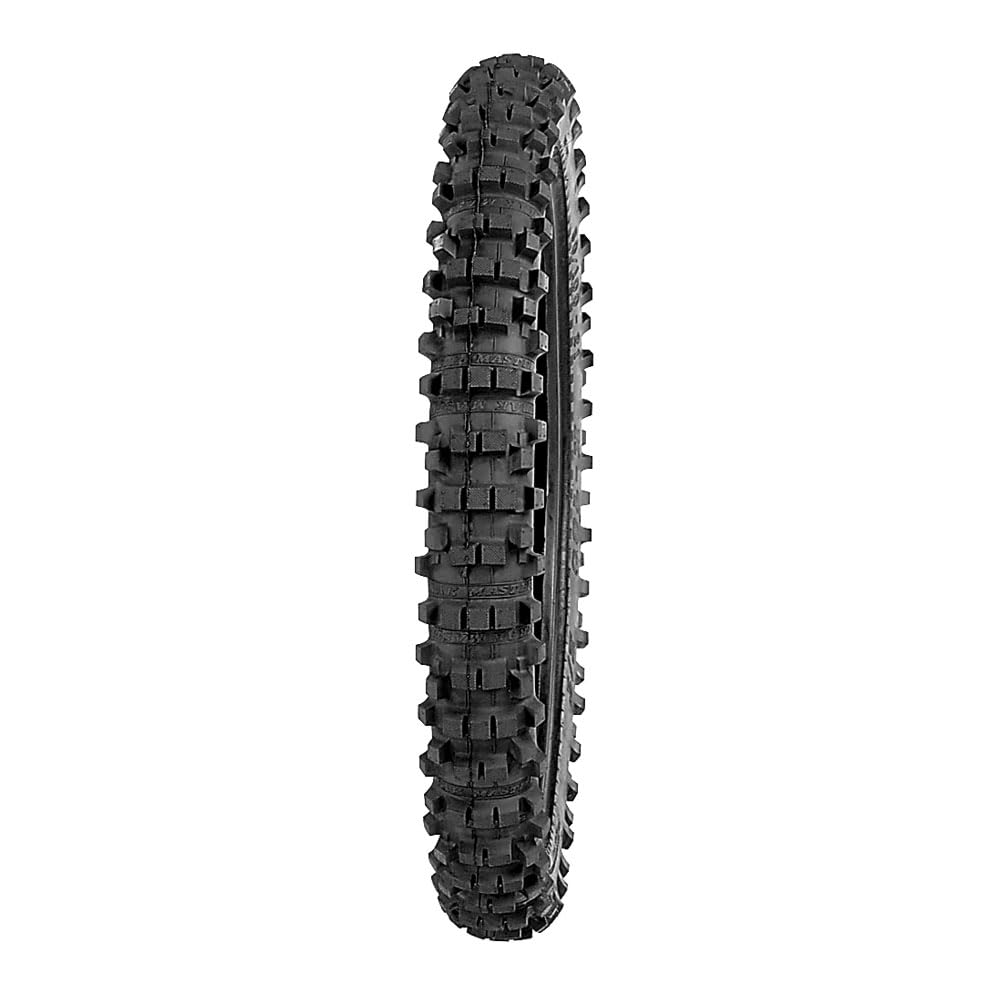
2. Kenda K760 Dual/Enduro Front Motorcycle Bias Tire – 80/100-21 51C
The legendary Trakmaster name delivering front-end confidence on a budget.
This is the front sibling to the K760 rear, purpose-built for the same 90/10 dirt-road split. It uses a 6-ply casing — lighter and more compliant than the 12-ply rear, which makes sense since the front tire doesn’t carry the same load. At 9 pounds, it is 1.6 pounds lighter than the Kenda rear, sharpening steering response without sacrificing too much puncture protection. Owners say it “has great traction in most of the terrain” and that the knobs “rival much more expensive brands.”
The 6-ply construction is enough for aggressive enduro use but keeps the tire from feeling like a truck tire up front. That matters when you are picking a line through root-infested singletrack. The DOT approval is the same as the rear — so you can legally ride this to the trailhead without worrying about legality or rapid knob chunking. The tire is particularly strong in sand and loose soil, where the tall knobs dig in and hold the line. Even on pavement, owners mention it turns with surprising grip for such an aggressive tread.
Trusted by thousands: With one of the highest rating counts in the group, owners consistently praise the traction and quality — the grip and build quality each get over 20 positive mentions. The only recurring caution is that sharp rocks can damage the knobs, so treat it gently in the really nasty stuff.
Paired perfection: Run this front with the K760 rear for a matched set that is tuned to work together across mixed terrain.
The decision: Reach for this front tire if you run the K760 rear and want a consistent, predictable feel front-to-back.
One thing to know: Rock gardens can chew the knobs — don’t expect race-level durability in extreme conditions.
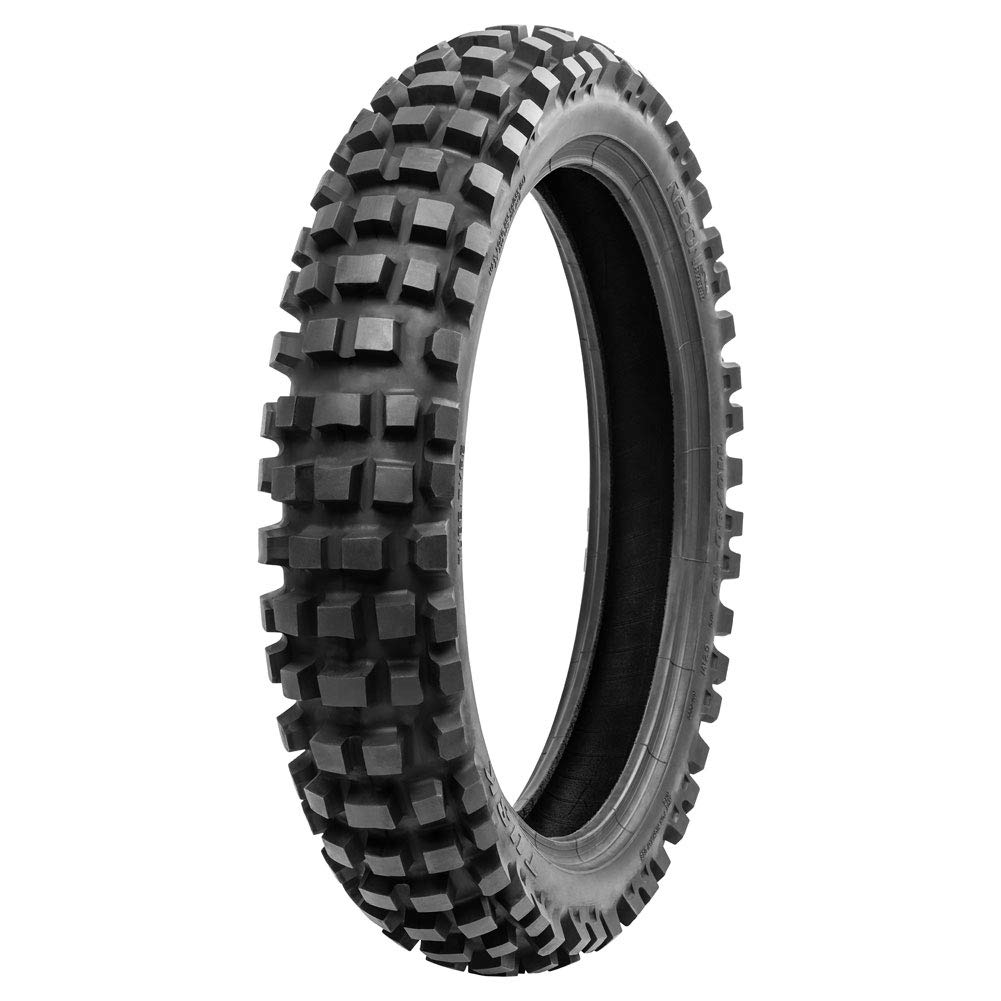
3. Tusk Recon Hybrid Front Motorcycle Tire – 90/100×21 – Technical Trail & Enduro Off-Road
A budget front tire that veteran riders call their go-to for years on end.
This front tire is built with a 4-ply casing — noticeably less armored than the Kenda’s 6-ply or 12-ply options, but also considerably lighter and more flexible in the sidewall. The trade-off is straightforward: you give up some pinch-flat resistance for a more supple ride that follows the terrain like a trials tire. The hybrid compound is designed year-round, and the non-directional tread means you can flip the rotation if one side starts wearing unevenly — a small trick that extends life. Owners have been running it for years: “been using this tire on my dirt bikes for 4 years,” one rider reports, with one set lasting “2 years of fairly regular use.”
The 4-ply construction makes it best suited for trail riding on a mid-size bike like a 250 — the same owner notes it “gets a lotta wheelspin on more powerful bikes.” On a 250 or lighter enduro, the grip is excellent and the price is tough to top. The rubber is formulated for maximum wear, and the soft compound bites well on the loose terrain where you spend most of your time. If you ride a 450 or bigger, skip this tire — you will get wheelspin where you need traction.
Real-world pedigree: This tire has been a consistent choice for years among trail and enduro riders who value grip over brute-force protection. The quality and durability each get strong positive feedback from owners who have put serious hours on the rubber.
Not for big bikes: On a 450 or 500, the 4-ply front can feel vague under hard braking, and the wheelspin comment from owners of larger bikes is a real thing.
Perfect for: Trail riders on 250-class bikes who want excellent front-end grip without spending premium money.
Think twice if: You ride a 450+ or you are bashing through technical rock gardens where a 4-ply front might pinch flat.
4. IRC Volcanduro VE-35 Enduro Front Tire 80/100-21 T10180

A radial-construction front tire engineered specifically for cross-country enduro racing.
Here is the only radial-construction tire on the list, and it is built for a specific mission: cross-country enduro racing where all-surface grip matters from the first lap to the last. The IRC Volcanduro VE-35 is not a budget pick — it is a purpose-built race tire. It carries an 849-pound load capacity, which is 849 pounds, compared to the Kenda rear’s 805 pounds, and at 8.6 pounds it is the lightest front tire here. That low weight pays dividends in how easily the front stays planted through quick direction changes in tight singletrack.
The rubber compound is tune for “all surfaces,” covering dry, rocky, and muddy conditions. The radial construction — rare in enduro tires — allows the tread to flex independently of the sidewall, which means better contact patch on uneven terrain and a more consistent feel through corners. And the 21-inch diameter gives you that extra roll-over clearance through logs and ruts compared to the 18-inch rear on the Kenda (the 21-inch diameter versus the 18-inch rear on the Kenda). Owners confirm it handles deep sand well, one calling out that it “handles the deep sand great.”
The takeaway: If you race or ride at a pace where every tenth of a second in steering response matters, the VE-35’s radial construction and light weight give it a genuine edge over bias-ply fronts. It is not a trail-dawdling tire — it rewards aggressive front-end loading in corners.
One trade-off: Radial tires can feel vague at very low trail pressures compared to a stiff bias-ply, so dial in your pressure carefully before a big ride.
Reach for this if: You race cross-country enduros and want the most technically advanced front tire on the list.
skip it if: You need a versatile do-it-all front for mixed riding — this is a specialist tool, not a generalist.
5. IRC Tire M5B EVO Rear 140/80-18 Motorcycle Tire – T10341

The tall-knob specialist that hooks up like the ground is made of Velcro.
If your enduro riding involves soft loam, deep mud, or grassy singletrack, the IRC M5B EVO rear is the tire that makes you feel like a better rider. It is 5-star-rated with near-flawless feedback — and the reason is simple: the tread pattern is ridiculous. The center knobs are extra tall, penetrating loose dirt to find purchase where lesser tires just spin. The updated center groove gives exceptional self-cleaning characteristics, so the tire doesn’t pack up with mud and turn into a slick ball. At 11 pounds, it is heavier than the Kenda rear (10.6 pounds), but that weight is in the chunky rubber that delivers the bite.
The 140/80-18 width — larger than the Kenda’s 100/100-18 — gives you a bigger footprint. The shoulder knobs are offset to boost control in turns, keeping you hooked through berms instead of sliding out. It is M-rated for speeds up to 81 mph, so pavement is possible even though this is not a DOT tire (it is non-DOT, so road legality depends on your local laws). The load capacity of 739 pounds is enough for most enduro bikes, though it is lower than the Kenda’s 805 pounds. Owners running Tubliss report incredible performance at just 7 psi on hard enduro terrain, with one saying the tire “hooks up excellent” and that the “life of this tire is excellent for it being non DOT” — with 800-900 miles before a knob came off. If you need a DOT-legal tire for road sections, pick the Kenda instead.
Where it dominates
- Self-cleaning tread sheds mud instead of packing up
- Offset shoulder knobs give insane cornering bite
- Long life for a non-DOT tire — buyers report 800+ miles
What to watch
- Non-DOT, so check local road laws before street riding
- 739 lb capacity is lower than some enduro models
Best for: Enduro riders who spend most of their day in loose, soft, and muddy conditions and want the best possible hook-up.
Consider something else if: You need a DOT tire for significant pavement stretches or the 739-pound load limit is too tight for your bike and gear.
6. Shinko R505 Sticky 110/100-18 Tire

A trials-tire compound in a knobby pattern — basically cheating for technical terrain.
Shinko markets this as “almost like cheating,” and owners don’t argue. The R505 Sticky uses a soft, sticky rubber compound borrowed from the Trail Pro trials tire, then wraps it in a knobby tread pattern. The result is a rear tire that sticks to clean granite “like basketball shoes on clean hardwood,” as one rider put it. It fills the gap where a pure trials tire falls short — specifically braking and loose-soil conditions — by giving you the sticky compound plus proper knobs to dig in when the ground goes soft. The load capacity is 582 pounds, noticeably lower than the Kenda and IRC options, so it is best suited for lighter enduro bikes or riders who don’t overload their machine.
This is a non-DOT tire, meaning it is strictly for off-road use. The 110/100-18 sizing fits standard 18-inch rear rims, and the weight sits at 10 pounds — about middle of the pack. what separates it is the terrain it open up: slow, technical sections on rocks, roots, and hard-pack where you need every bit of grip to keep forward momentum at walking speed. Owners confirm it is excellent for desert single-tracks and hard enduro conditions, though longevity after about 100 miles is still an open question for some. The soft compound that makes it so sticky also makes it wear faster on abrasive ground. If you ride mostly pavement or fire roads, skip this tire — it is built for crawling, not cruising.
Sticky secret: If you ride technical, slow-speed terrain and want the confidence to pick your way up wet rocks and through root-choked sections, the R505 is a cheat code.
Not for high-speed: The soft compound overheats at speed and the non-DOT rating means pavement is a no-go for any distance.
Ideal for: Hard enduro and extreme trail riders who need maximum grip at low speeds over rocks, roots, and hard-pack.
Pass on it if: You ride fast, open stuff or need to connect trails with meaningful pavement miles.
7. Shinko R525 Cheater Rear Tire (120/100-18)

The 12-ply cheat code for loose loam that doesn’t give up on sidewall protection.
While the R505 is built for dry, harder conditions, the Shinko R525 Cheater is the sibling tuned for looser, loamier soil. Where the R505 shines on rocks, the R525 excels in the soft stuff — loam, loose topsoil, and softer singletrack where the bigger, softer knobs dig deep. The 120/100-18 size is a wider footprint than the 110/100-18 R505, giving you a larger contact patch for float and bite in the loose.
The 12-ply rating matches the Kenda K760 rear, offering the same level of sidewall armor for riders who run low pressures in aggressive terrain. Owners across wet Northeast conditions confirm it is “great on wet roots and rocks,” and the soft, sticky rubber compound — similar to the R505 but tuned differently — gives confidence in the most demanding terrain. The manufacturer specifically notes that the “525 excels in looser loamier soil” while “the 505 shines in drier harder conditions,” so choose based on your local dirt type. The pressure limit is 33 PSI, and the load capacity is not stated, but the heavy-duty construction implies a high rating.
Why the weight is worth it
- 12-ply casing is bomb-proof for low-pressure enduro riding
- Wider 120/100-18 footprint floats in deep loam
- Soft compound delivers incredible root and rock traction
The extra pounds
- At 17.25 lbs, it is the heaviest rear tire here
- Non-DOT, so pavement is strictly short connectors
Go for this if: Your riding is mostly soft loam, loose singletrack, and wet roots — and you want a tire that survives low pressures with a 12-ply carcass.
Choose the R505 instead if: Your terrain is dry, rocky hard-pack where the lighter compound and less tread weight give better feel.
Understanding the Specs
Ply Rating
Ply is the number of rubber-coated fabric layers in a tire’s casing. More plies (12 vs 4 or 6) mean a stiffer, more puncture-resistant sidewall. That matters when you run low air pressure through rock gardens. The trade-off is a stiffer ride that doesn’t flex over small bumps as smoothly. Lighter enduro bikes can get away with 4-ply, while 450s and aggressive riders should lean toward 6-ply or higher.
Load Capacity
This is the maximum weight the tire is rated to carry at its max air pressure. A 805-pound rating covers most enduro bikes with gear, but if you are running a heavy adventure bike with luggage, you need the higher 849-pound rating from a tire like the IRC Volcanduro. Overloading a tire causes overheating, rapid wear, and dangerous handling — so always match the load index to your bike’s weight plus your full riding kit.
FAQ
What is the difference between a DOT and non-DOT enduro tire?
Will a 140/80-18 tire fit my bike that came with a 100/100-18?
Can I run an enduro tire without a tube?
How long should an enduro rear tire last?
What does the size code 80/100-21 mean?
Is a radial tire better than a bias-ply for enduro?
Can I use a 21-inch front tire on an 18-inch rim?
What pressure should I run in an enduro tire?
What is the difference between the Shinko R505 and R525 Cheater tires?
How do I know if a front tire will match my rear?
Final Thoughts: The Verdict
For most riders, the best enduro dirt bike tires winner is the Kenda K760 Rear because it combines massive 12-ply puncture protection with a crowd-favorite price and proven quality across hundreds of owners. If you want the ultimate front-end feel for racing, grab the IRC Volcanduro VE-35. And for hammering through the nastiest roots and rocks, the IRC M5B EVO is the one to reach for — just make sure your terrain is soft enough to reward those tall knobs.
How We Picked
We do not accept paid placement. Every pick is matched to a real buyer and a real use-case; we do not hands-on test units.
Sources & Methodology
Specifications: manufacturer listings and product documentation. Review insights: verified customer reviews, as of July 2026. Pricing: not shown on this page (it changes often); check the current price via the retailer link.
As an Amazon Associate, Trending Car earns from qualifying purchases. This does not affect which products we feature.