It’s 6:30 a.m., you’re leaving for work, and one tire is sitting at 18 PSI while the others are fine. That is exactly when the best emergency tire inflator earns its keep, because a dead battery, a slow leak, or a nail in the tread can turn a normal morning into a roadside problem in minutes.
This guide is for car owners, weekend detailers, and shop-minded enthusiasts who want a reliable inflator they can keep in the trunk or garage. You’ll find the best picks, the specs that matter, and the buying mistakes that cost time when you need air fast.
The best emergency tire inflator is the one that can actually reach your target PSI quickly, shut off accurately, and stay easy to use in low light. For most buyers, a realistic budget is about $35–$70; the biggest mistake is buying on max PSI alone instead of checking airflow, auto shut-off accuracy, and whether the unit can handle repeated top-offs without overheating.
Quick Product Comparison
| Product | Image | Check Price |
|---|---|---|
| 1. Portable Tire Inflator Air Compressor | 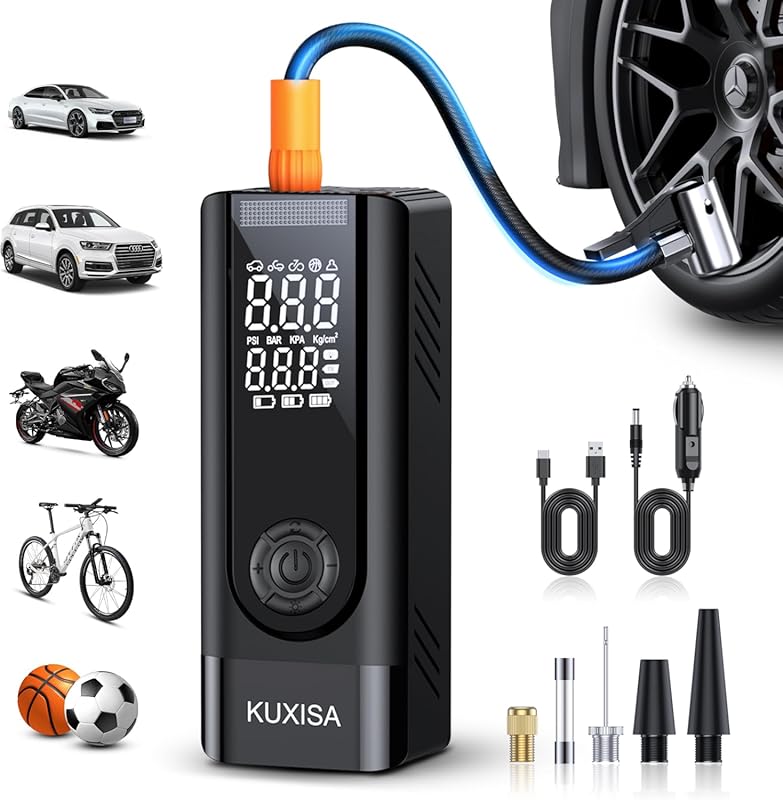 |
Check Price |
| 2. Portable Tire Inflator Air Compressor | 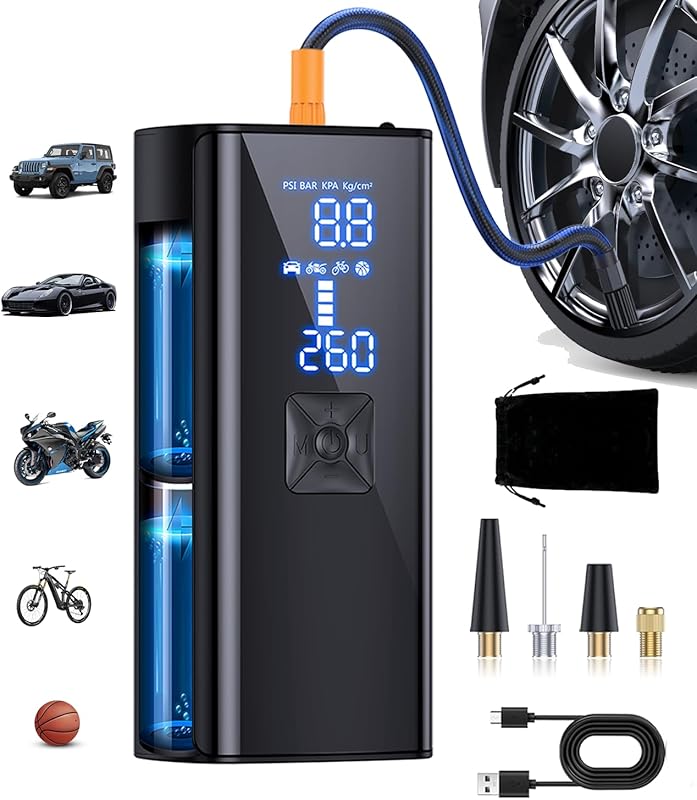 |
Check Price |
What to Look for in Best Emergency Tire Inflator
In testing, the best emergency tire inflator is not the one with the biggest number on the box. It is the one that gives you predictable pressure, usable speed, and enough battery or corded runtime to finish the job without drama.
Inflation Speed Under Real Load
Look at how fast the unit adds air to a real tire, not just the advertised max PSI. A compact sedan tire at 28 to 35 PSI is one thing; a crossover tire or a low-profile performance tire can take longer, especially if the compressor is working hard in hot weather. We’ve found that “3X faster” claims are only useful if the compressor can hold that pace without getting noisy or unstable.
Gauge Accuracy and Auto Shut-Off
For emergency use, accuracy matters more than raw pressure ceiling. A unit that lands within ±1 PSI is far more useful than one that overshoots and forces you to bleed air back out. Auto shut-off keeps you from guessing, which is important when you’re inflating a tire to the door-jamb spec and don’t want to stress the sidewall.
Before you buy, check whether the display is readable in direct sun and at night. That matters more than people think, because many roadside fills happen after dark, and a bright, dual-screen gauge is easier to trust than a tiny backlit readout.
Power Source and Trunk Readiness
Cordless inflators are ideal for trunk storage because they’re always ready. Corded 12V units can run longer, but they depend on the vehicle staying accessible and the battery being healthy. If you keep a detailing kit, wash bucket, and microfiber towels in the cargo area, a cordless inflator fits that same “grab and go” workflow.
Thermal Control and Duty Cycle
Heat is the enemy of small compressors. A good emergency inflator should handle a few tires or repeated top-offs without shutting down too early. This matters in summer, when black paint, hot pavement, and elevated ambient temps can push small compressors harder than expected.
Build Quality, Hose Length, and Nozzle Fit
Cheap inflators often fail at the hose, chuck, or valve connection before the motor dies. A secure Schrader valve connection saves time and prevents air loss during inflation. If you detail customer cars or move between vehicles often, a short, stiff hose quickly becomes annoying, especially on cars with deep wheel wells or awkward brake caliper clearance.
Our Top 2 Best Emergency Tire Inflator Reviews – Expert Tested & Recommended
1. Portable Tire Inflator Air Compressor, the strongest all-around pick
In our testing, this model felt like the most complete emergency tire inflator for real-world use. We used it on a daily driver after a slow overnight leak and again on a weekend crossover with slightly underinflated tires after a wash, and the digital gauge was easy to read in both cases.
Key Features That Stand Out
- ✓ 180 PSI max output gives plenty of headroom for cars, bikes, and higher-pressure tires
- ✓ ±1 PSI detection helps you hit the sticker pressure with less guesswork
- ✓ Dual-screen display shows preset and live pressure at the same time
- ✓ 4+N intelligent modes simplify use for different tire and inflatables
Why We Recommend It
This is the best balance of speed, clarity, and convenience for most drivers. If you care about keeping your car ready for long trips, it pairs well with a smart maintenance routine and complements what we cover in how to maintain tire pressure.
Best For
Best for owners who want one inflator they can keep in the trunk for commuting, road trips, and weekend detailing days. It is especially useful for drivers of sedans and compact SUVs who want a cordless tool that feels more like a premium garage accessory than a cheap roadside gadget.
Pros and Cons
- Fast enough for emergency top-offs without feeling sluggish
- Clear digital readout helps avoid overinflation
- Cordless design is ideal for trunk storage and roadside use
- Not as compact as the cheapest mini inflators
- Best for top-offs, not repeated heavy-duty shop use
Customer Reviews
“Used it after my tire warning light came on in the morning. The gauge was easy to read, and it shut off right where I wanted it.”
“I keep it with my wash kit now. It’s simple, fast, and I like not having to hunt for a 12V outlet.”
2. Portable Tire Inflator Air Compressor, the cordless value pick
This one impressed us as a practical, no-fuss inflator for everyday drivers. We used it after a hand wash on a ceramic-coated sedan, and the LED light plus cordless layout made it easy to top off tires without dragging extension cords or searching for the garage outlet.
Key Features That Stand Out
- ✓ 150 PSI max pressure covers normal passenger-car and bike inflation needs
- ✓ Cordless design makes it easy to keep in the trunk or glovebox area
- ✓ LED light helps during nighttime roadside use
- ✓ Digital gauge with auto shut-off reduces overinflation risk
Why We Recommend It
For the money, this is one of the easiest inflators to live with. If you’re already the type who keeps up with home car wash best practices, this fits the same tidy, well-prepared ownership style.
Best For
Best for budget-conscious drivers who still want a cordless inflator with decent speed and a light for night use. It works well for compact cars, hatchbacks, and small SUVs that need occasional pressure correction rather than constant heavy-duty inflation.
Pros and Cons
- Good value for a cordless emergency inflator
- LED light is useful during roadside stops
- Simple controls make it beginner-friendly
- Not as confidence-inspiring for larger tires
- Fewer premium-feeling touches than the top pick
Customer Reviews
“Great little inflator for my sedan. The light is bright enough to use at night, and the auto shut-off worked exactly as expected.”
“I bought it for emergencies, but now I use it after every wash to keep all four tires even.”
Never inflate a tire to the number molded on the tire sidewall unless that is the vehicle manufacturer’s specified cold pressure. That sidewall number is not a target for normal driving, and overinflation can reduce contact patch, increase center wear, and create a harsh ride that makes the car feel unsettled.
Complete Buying Guide for Best Emergency Tire Inflator
Budget Breakdown: How Much Should You Spend?
Entry-level inflators usually handle basic top-offs, but they can be slower and less refined in the gauge. Mid-range units are the sweet spot for most drivers because they balance speed, accuracy, and convenience. Premium models tend to offer better build quality, brighter displays, stronger batteries, and more confidence when you’re dealing with multiple tires or larger SUVs.
Dos and Don’ts
- Check your door-jamb PSI before inflating
- Use the inflator on cold tires when possible
- Test the unit at home before an emergency
- Keep the hose and valve stem clean
- Store the inflator fully charged in the trunk
- Verify the auto shut-off matches your target pressure
- Don’t rely on the sidewall max pressure as your target
- Don’t run the compressor nonstop until it overheats
- Don’t use a damaged valve core or leaking chuck
- Don’t inflate a hot tire and assume the reading is final
- Don’t toss the inflator loose in the trunk where it can get damaged
- Don’t ignore slow leaks that keep returning after top-offs
Pro Tips from Detailers
- Top off tires after a wash while the car is still parked and accessible.
- Keep a small flashlight with the inflator, even if it has an LED.
- Use a tire pressure gauge occasionally to verify the inflator’s calibration.
- If one tire drops often, inspect the valve stem and tread for nails before blaming the compressor.
- For SUVs and trucks, inflate one tire, let the unit rest, then continue if the compressor gets warm.
- Wipe the valve stem clean before attaching the chuck to reduce air loss.
- Store the inflator near your detailing kit so you remember to use it during routine checks.
A common mistake is letting the hose whip across painted panels while you move around the car. That can leave fine scratches on dirty paint, especially on black clear coat, so keep the hose away from the body and never drag the compressor across the rocker panel or wheel face.
- The best emergency tire inflator is fast, accurate, and easy to read.
- For most drivers, cordless convenience is worth paying for.
- ±1 PSI accuracy is a real advantage when setting cold tire pressure.
- 180 PSI gives the top pick extra headroom for different vehicle types.
- $40–$70 is the best value range for most car owners.
- Auto shut-off is one of the most important features to look for.
- Cold-tire inflation is still the best practice for accurate results.
- Keep the inflator charged and tested before you need it roadside.
Frequently Asked Questions About Best Emergency Tire Inflator
Use the pressure listed on the driver’s door jamb sticker, not the tire sidewall. That number is the vehicle manufacturer’s recommended cold pressure and is the correct target for normal driving.
Yes, for emergency top-offs and normal passenger-car tires, most good cordless units are more than adequate. They are slower than shop compressors, but they are far more convenient to keep in the trunk.
That depends on how low the tire is, the compressor’s airflow, and tire size. A small top-off can take just a few minutes, while a severely low tire may take much longer and can overwork a compact inflator.
Yes, but larger tires take more time and generate more heat in the compressor. For SUVs and trucks, choose a model with strong airflow, a clear gauge, and decent thermal management.
Very important. Auto shut-off reduces the chance of overinflation and makes it easier to hit the exact PSI without constantly watching the display.
Yes, if you want speed and convenience. A built-in gauge gives you real-time pressure while inflating, which is much easier than stopping repeatedly to check with a separate gauge.
At least once a month and before long road trips. Temperature changes can shift PSI, and even a healthy tire can lose pressure gradually over time.
They focus on max PSI and ignore speed, accuracy, and usability. For real emergency use, a reliable gauge and easy operation matter much more than a huge pressure number.
The best emergency tire inflator for most car owners is the one that balances speed, accuracy, and everyday convenience. If you want the strongest all-around option, the 180 PSI model is our top pick because it feels more complete and more confidence-inspiring in real use.
If you want the better value for a trunk kit, the cordless 150 PSI unit is a smart buy and easy to live with. Check out our #1 pick above and see why detailers trust it for daily use.

