
Our readers keep the lights on and my garage snacks stocked. As an Amazon Associate, I earn from qualifying purchases.
Specs are compiled from manufacturer listings and verified buyer reviews and can change over time — please confirm the key details on the product page before buying.
You want an electric bike that won’t empty your wallet, but every listing looks like a numbers game: 50 miles here, 750 watts there. The hard truth is, within this budget, every single bike involves a trade-off — one model shines on hills while another delivers a more comfortable seat. This guide cuts through the marketing to find the real-world winners you can trust with your commute.
I’m Min Islam — the founder and writer behind Trending Car. This guide is built by comparing the manufacturers’ published specifications and the patterns across verified customer reviews, so you get each pick’s real strengths and trade-offs instead of marketing spin.
After digging into the data, the clear verdict is that the best electric bike under $800 is the Qlife Cityone 2.0, thanks to its class-leading 499Wh battery and a peak 1200W motor that feels a tier above the competition.
Our Picks at a Glance
How To Choose The Best Electric Bike Under $800
Finding an ebike in this price bracket means focusing on the specs that actually affect your daily ride. You don’t have infinite budget, but you also don’t want a bike that leaves you stranded. Here is what really matters.
Battery Capacity (Watt-Hours) Over Range Claims
Every brand advertises an impressive “up to 65 miles” range, but those numbers come from perfect lab conditions with a light rider on flat ground at the lowest assist level. The number you should trust is the battery’s energy content in watt-hours (Wh). A bigger Wh number — like 499Wh on the Qlife or 614Wh on the Aipas — directly translates to more real-world miles. A 374Wh battery is enough for a short commute, but if your round trip is over 15 miles, aim for 48V and at least 460Wh.
Peak Motor Power for Hills
You will see two power numbers: “rated” (continuous) and “peak” (short bursts for acceleration and hills). On a budget ebike, the peak wattage tells you if it can climb. A 1200W peak motor, like the one in the Qlife Cityone 2.0, will breeze up an incline that leaves a 500W peak motor struggling. If your town has any serious hills, do not buy a bike with less than a 700W peak rating.
Safety Certification (UL 2849)
Lithium-ion battery fires are rare but catastrophic. UL 2849 is the gold standard safety certification for the entire electrical system of an e-bike. Look for this stamp on the product page — it means the battery, charger, and motor have been tested for overcharging, short circuits, and thermal runaway. Several bikes on this list proudly display this certification, and it is a non-negotiable feature for confidence.
Frame Design: Step-Through vs. Step-Over
Within the budget bracket, the step-through frame is the most common and for good reason: it makes mounting and dismounting easy, especially if you wear work clothes or have limited hip mobility. Step-over (diamond) frames look sportier and are slightly stiffer, but on a heavy budget ebike, the convenience of a low-step frame wins for most commuters. The Funhang, Qlife, and Heybike all offer step-through designs for easy access.
Quick Comparison
| Model | Best For | Battery (Wh) | Peak Motor | Weight | Amazon |
|---|---|---|---|---|---|
| Funhang Step Thru★ Best Overall | Budget Starter | 374.4Wh | 1000W | 62.8 lbs | Amazon |
| Qlife Cityone 2.0Overall Winner | Overall Winner | 499Wh | 1200W | — | Amazon |
| Heybike Cityscape 2.0Commuter King | Premium Commuter | 468Wh | 1200W | — | Amazon |
| ANCHEER Sunshine | Entry-Level Mountain | 374Wh | 750W | — | Amazon |
| Vivi 26″ Mountain | Heavy Riders | 374.4Wh | 749W | — | Amazon |
| ANCHEER 500Wh | Extended Range Value | 500Wh | 750W | — | Amazon |
| Gotrax R1 | Folding Portability | 374.4Wh | 500W | 50 lbs | Amazon |
| TST Fat Tire | Off-Road Value | 720Wh | 1500W | 66 lbs | Amazon |
| Aipas A2 | Class 3 Speed | 614Wh | 750W | 65 lbs | Amazon |
| INVANTI EB16 | Max Range | 748.8Wh | 1500W | — | Amazon |
| Heybike Ranger 2.0 | All-Terrain Fun | 600Wh | 1400W | — | Amazon |
In‑Depth Reviews
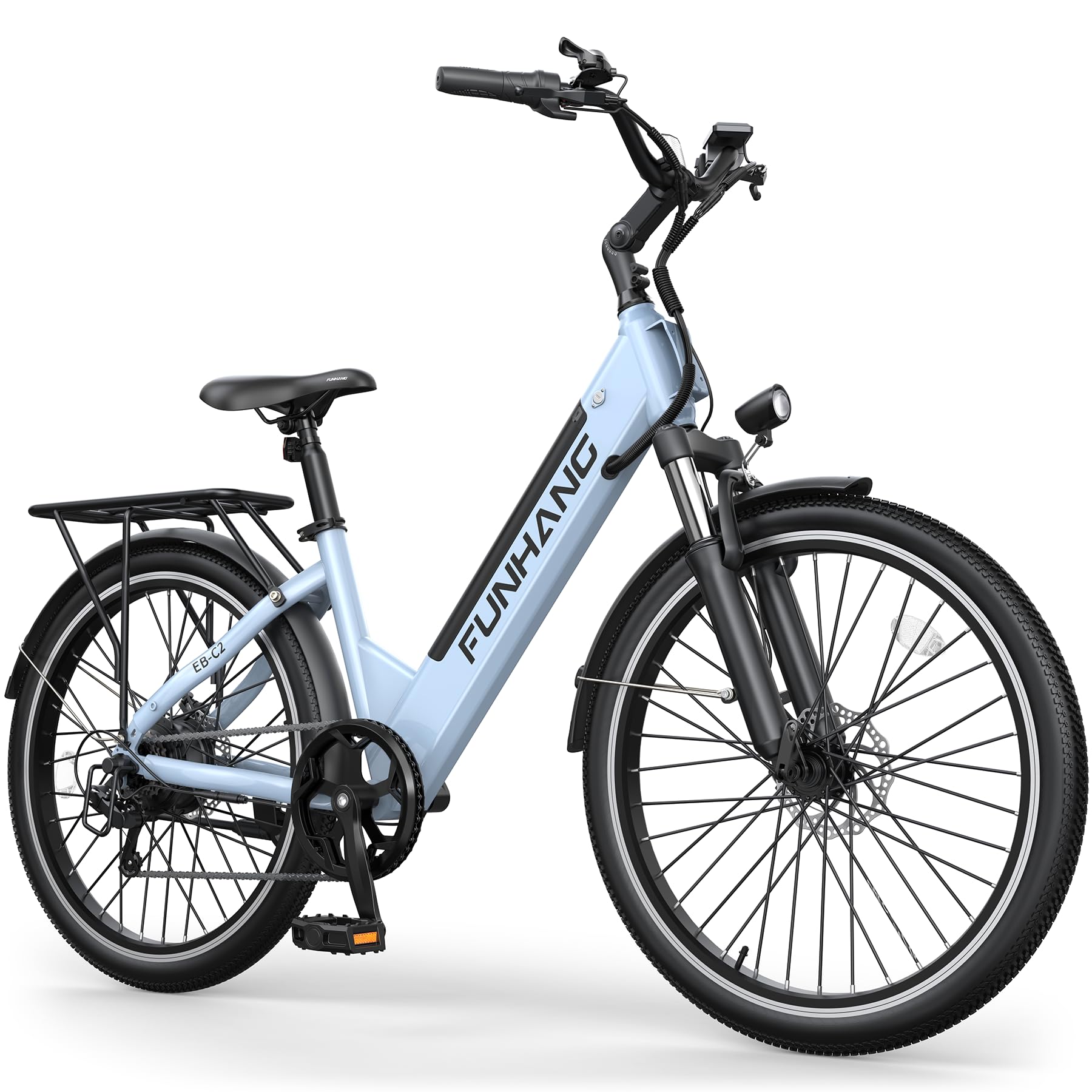
1. Funhang 1000W Peak Ebike
The value leader with a 1000W peak motor that proves budget does not have to mean gutless.
The Funhang is your entry point into the electric bike world while staying affordable. Its 1000W peak motor delivers surprising torque for the price, and the step-thru frame makes it easy to swing a leg over. The 48V 374.4Wh battery is on the smaller side, but in PAS mode (where you pedal with assistance) you can stretch it to 40-50 miles — more than enough for a casual 10-mile commute.
What is remarkable about this bike is its longevity. As one buyer put it plainly: “2000+ miles commuting, only replaced rear tube and tire once.” That kind of real-world durability is hard to argue with. The build quality and value for money are the most-praised aspects among owners. Assembly takes about 45 minutes, and the 7-speed gearing and front suspension make for a comfortable ride. The obvious corners cut are a dim headlight that drains the battery, squeaky brakes, and the lack of a brake light or taillight. Plan on adding an aftermarket lighting kit for safety. The motor at 1000W peak is less powerful than the 1200W+ motors on the Qlife or Heybike, but it still handles moderate hills well.
What wins people over
- Proven durability — one owner logged over 2000 miles commuting with only a tube and tire replacement
- Budget-friendly entry point with a 1000W peak motor that handles hills
- Easy 45-60 minute assembly, suitable for first-time ebike buyers
Where corners are cut
- Dim fender headlight drains the battery; no brake light or taillight included
- Squeaky mechanical brakes from the start — may need adjustment or replacement
- Smaller 374.4Wh battery compared to the 499Wh pack on the Qlife, meaning less real-world range
Best for: first-time ebike buyers who want a proven, cheap commuter and are comfortable adding their own lighting.
Not for you if: you need a powerful 1200W+ motor for steep hills or want a bike with integrated brake lights and a solid headlight.
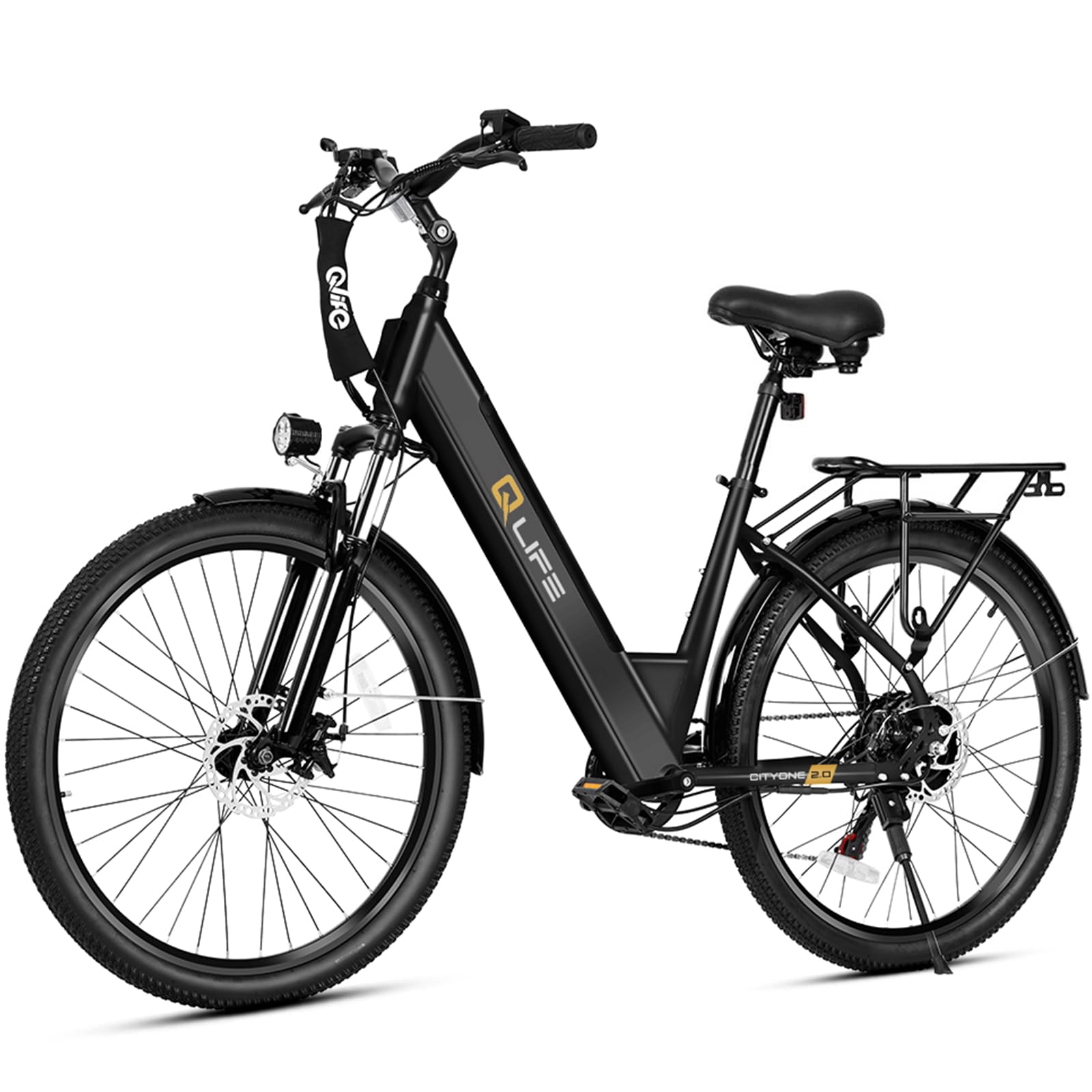
2. Qlife Cityone 2.0 Electric Bike
The budget king that punches way above its weight with a motor that feels like a premium drivetrain.
The Qlife Cityone 2.0 grabs the top spot because it simply out-specs everything else in the price tier on the two things that matter most: battery and motor. This battery is also IPX5 waterproof (resistant to water jets), so rain on your commute is not an instant worry.
The peak 1200W motor is the real story here. Riders confirm it feels genuinely powerful, hitting that 20+ MPH top speed with authority. It makes short work of hills that leave a 1000W peak bike gasping. The low-step frame makes getting on and off easy, and it comes with a 7-speed drivetrain and dual disc brakes for reliable stopping. The crowd favorite here is “value for money” and “ease of assembly” — most owners have it ready to ride within an hour. Budget-tier tires and plastic planetary gears require gentle drivetrain treatment for longevity.
top-tier punch: Its 499Wh battery holds 33% more energy than the 374.4Wh pack in the Funhang, which means noticeably more real-world miles before the low-battery light comes on.
The catch: Expect about 30 miles of real-world mixed riding from the claimed 65-mile range.
Reach for this if: you want the most powerful budget ebike for hilly commutes and can accept that budget components need a little TLC.
Look elsewhere if: you need a bike that is ready to ride with zero bolt-checking or future maintenance tweaks.
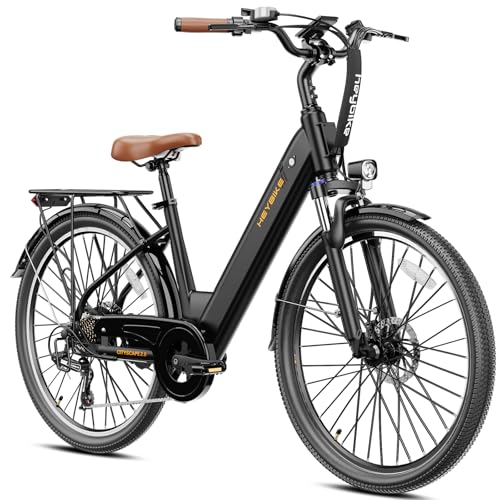
3. Heybike Cityscape 2.0
A polished city cruiser that handles potholes and daily errands without breaking a sweat.
The Heybike Cityscape 2.0 is a purpose-built commuter with an emphasis on comfort and utility. It pairs a 468Wh UL-certified, IPX6 waterproof battery (a step up in water resistance from most rivals) with a 500W motor that peaks at 1200W. That is the same peak power as our top pick, meaning it has plenty of torque for urban inclines.
what separates it is the ride refinement. Owners consistently praise the solid construction and comfortable ride, noting it handles Chicago potholes well. The included rear rack is rated for 264 lbs, so you can haul groceries or a work bag without issue. The color LCD display, loud horn, and integrated lights all add to the daily-driver feel. Assembly is straightforward for a mechanically inclined person, though some owners note the instructions could be clearer. Brakes can be noisy and feel weak at higher speeds, especially for heavier riders.
Daily commuter ready: The 468Wh battery can deliver 30-35 miles in throttle mode, enough for a week of short commutes between charges.
The real pain point: The handlebar is non-adjustable, which can be a problem for very tall or very short riders who need a custom fit.
Perfect for: the daily city rider who values a sturdy build, a loud horn, and a bike that can carry a heavy load.
Think twice if: you need precise, powerful brakes or a fully adjustable riding position right from the start.
4. Aipas A2 Folding Electric Bike
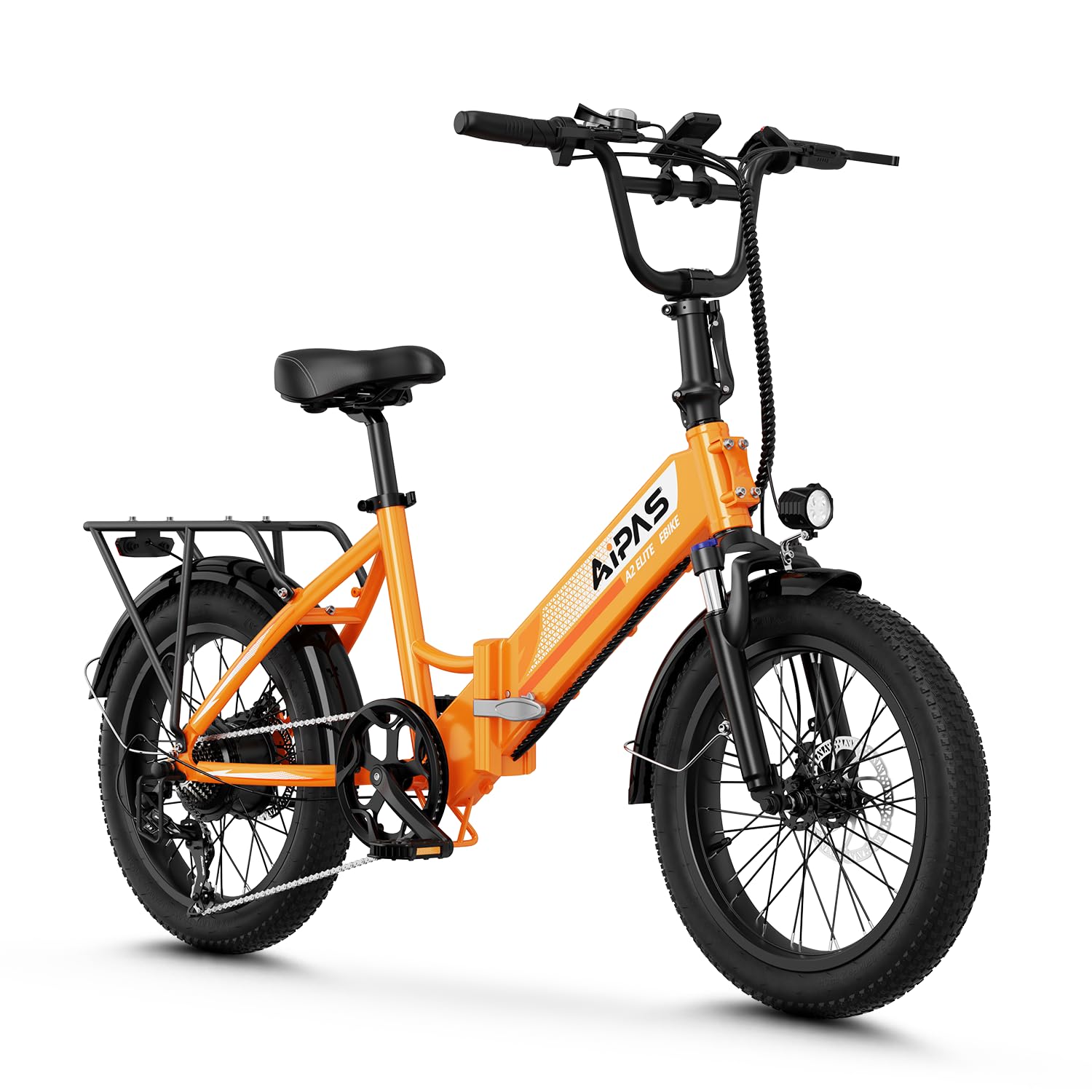
This folding fat-tire e-bike packs a 614Wh battery and Class 3 speed for the multi-modal commuter.
The Aipas A2 is a standout if you need an ebike that folds for your apartment, car trunk, or train commute. Despite its folding frame, it manages to pack a 48V 614Wh removable battery, which is one of the largest capacities at this price. It supports a 750W peak motor that can hit 28 MPH in PAS mode — qualifying it as a Class 3 e-bike in most states. The 20″ x 3″ fat tires and front suspension smooth out bumps on pavement and light gravel.
Assembly is straightforward, and the step-through folding frame makes it easy to mount. Owners rave about the comfortable seat, puncture-resistant tires, and smooth pedal assist. The battery is lockable and IP65 water-resistant (fully protected against dust and low-pressure water jets), adding to its commuter credibility. Real-world riders report about 20 miles of range and a max of 22 MPH downhill. The 28 MPH top speed is unrealistic; halve the range for a typical commute.
Built for mixed commutes: the folding design fits in a car trunk, and the battery at 614Wh offers a massive 33% more capacity than the 468Wh pack on the Heybike Cityscape.
The honest caveat: Halve the 62-mile range and 28 MPH top speed for realistic expectations.
Best for: apartment dwellers or mixed-mode commuters who need a powerful folding bike for the last mile.
skip it if: you cannot tolerate exaggerated range claims and want a bike that hits its stated numbers.
5. INVANTI EB16 Electric Bike
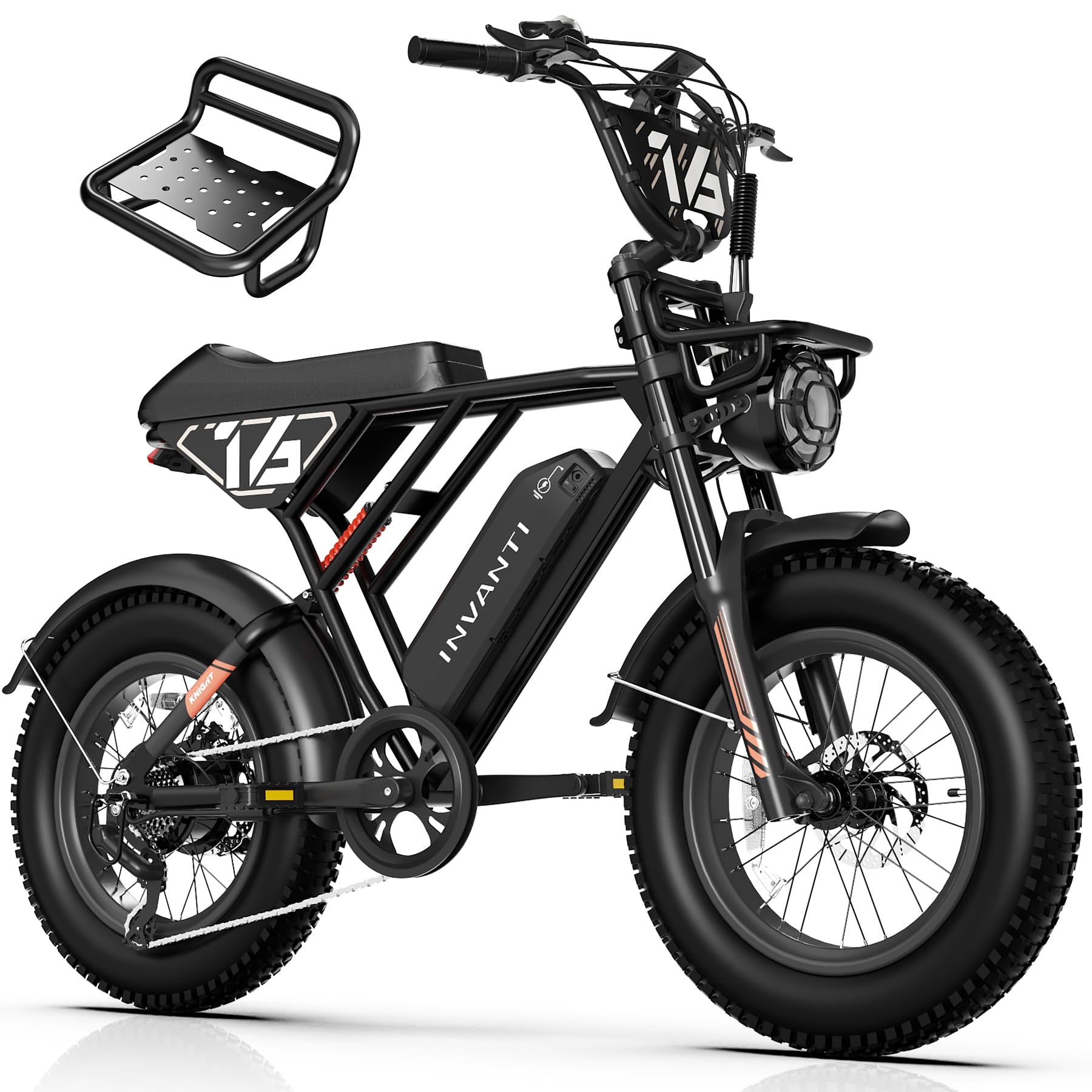
The biggest battery on the list (748.8Wh) gives you the freedom to ignore the charging station for days.
The INVANTI EB16 is built for riders who prioritize range above all else. Its 48V 15.6Ah battery, which equals 748.8 watt-hours, is the largest capacity in this lineup. The 1500W peak motor can hit 28 MPH and conquer 35-degree slopes. The 20″ x 4.0″ fat tires and full front and rear suspension mean it can handle rough terrain as well as pavement.
Owners consistently praise the build quality and speed. One 6’3″, 245-lb rider reports it handles them easily with plenty of power. Another owner got a quick delivery and found the bike durable even after a fall. The battery is removable and IP54 waterproof, so you can charge it indoors without worry. The trade-offs are that the folding clasp can open over bumps if not properly secured (though a failsafe prevents the bike from folding), and the pedals on one unit disintegrated after 15 miles — a quality control issue the company eventually resolved. Customer service is described as responsive, especially for replacement parts.
Range champion: with 748.8Wh, you have well over 100% more battery capacity than the 374Wh found on the entry-level Funhang, translating to double the potential real-world range.
The quirk: The folding clasp requires a double-check before every ride; one owner had it open unexpectedly over bumps.
Grab this for: long weekend adventures or a commute where outlets are scarce — the battery is the biggest in the class.
Skip it for: daily use if you are not willing to check the folding clasp and pedals before every ride.
6. Heybike Ranger 2.0 Foldable
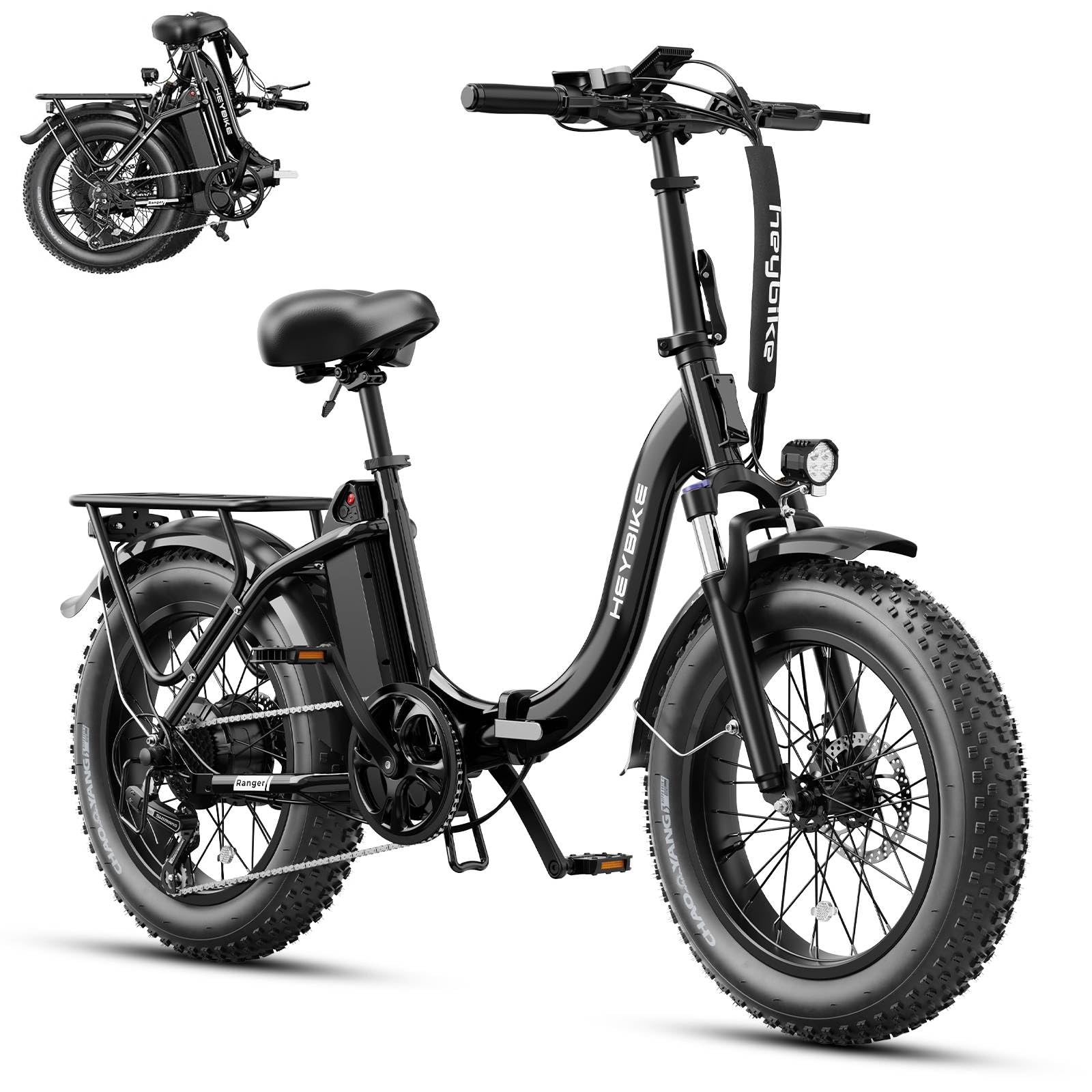
Fat tires and a 600Wh battery turn every surface into a smooth, rideable playground.
The Heybike Ranger 2.0 is built for riders who refuse to stick to pavement. It comes with 20″ x 4″ fat tires that provide massive grip on sand, snow, and mud, plus a front suspension fork to soak up bumps. The motor peaks at 1400W, and the 600Wh battery delivers up to 65 miles of claimed range (expect about half that in the real world).
What surprises most owners is the build quality and ride comfort. The oversized seat is genuinely plush, and the step-through folding frame makes it easy for seniors or anyone with limited mobility to get on and off. Assembly is easy, and the bike performs well on grass and gravel, making it a solid choice for school runs or park cruising. The rear brake may squeak early, and the folding frame mechanism can be stiff to release. The battery life also draws mixed feedback — some owners feel it drains faster than expected, so manage your expectations around the 65-mile claim.
Surface-proof: the 4-inch fat tires and 1400W motor make this a true all-terrain machine, unlike the road-focused Funhang or Qlife.
The catch: The folding lock is stiff, and some units arrive without a manual. The rear brake may need early adjustment.
Perfect if: your commute includes grass, gravel, or dirt paths and you want a bike that feels like a plush cruiser.
Not for you if: you are a heavy rider who needs strong brakes from the start or you hate wrestling with a stiff folding mechanism.
7. TST 1500W Fat Tire Ebike
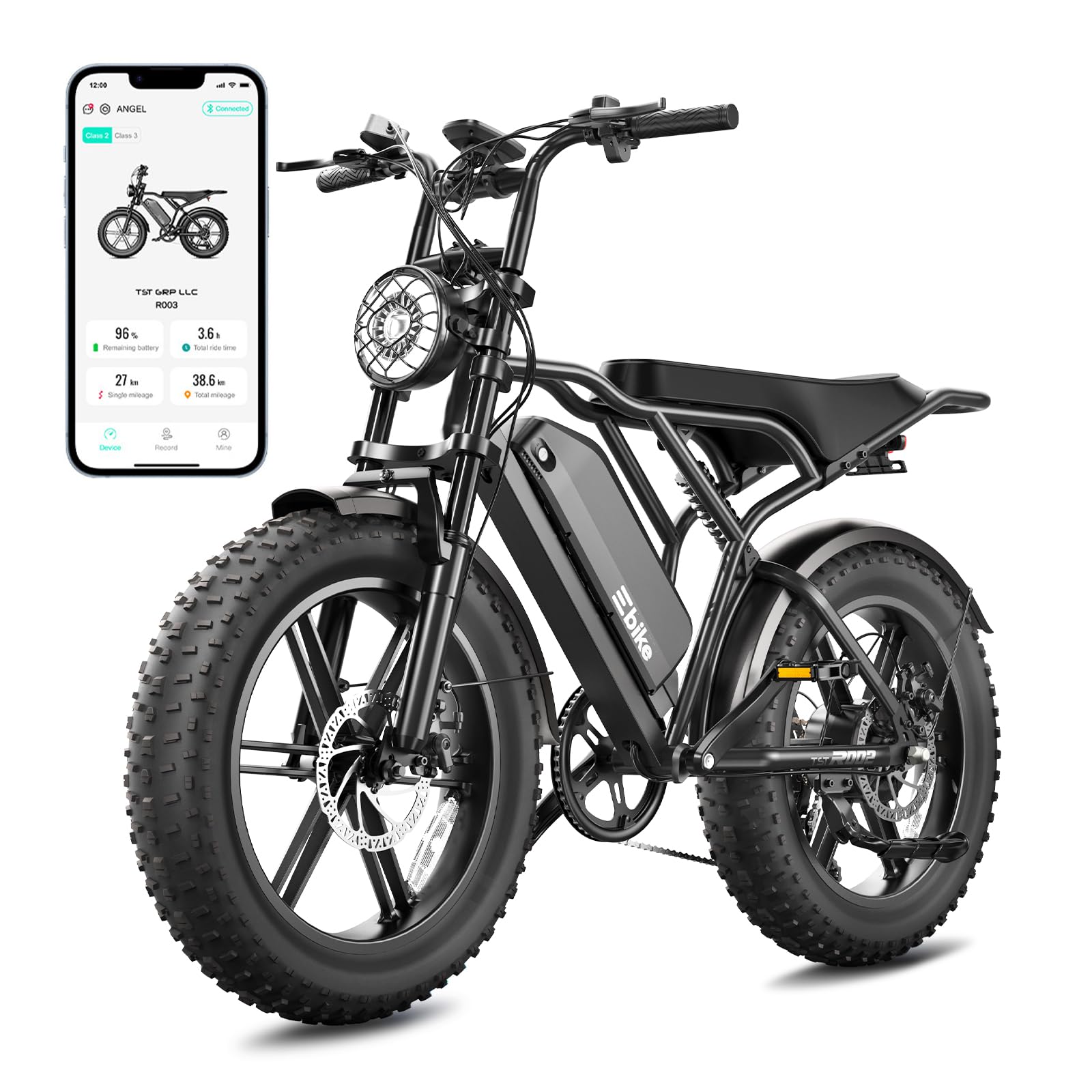
Full suspension and a 1500W peak motor make this the budget-friendly trail tamer.
The TST electric bike is a dedicated off-roader on a budget. It packs a 750W motor that peaks at 1500W, paired with a massive 48V 15Ah (720Wh) battery. The 20″ x 4″ puncture-proof fat tires and both front and rear suspension work together to absorb bumps and vibrations on rugged trails. The max load of 450 lbs is also the highest on this list, making it a solid choice for heavier riders.
Buyers rave about the battery life and range, with one owner describing it as a trustworthy bike that handles bumps well. The speed is adjustable on-the-fly, and some owners note you can open up 28 MPH via a YouTube video and a display setting. The key issue reported is that the handlebar stem can strip threads and the brake pads can squeal. Assembly is manageable with your own tools and a video guide. Customer service is described as responsive, with one owner receiving a free replacement taillight and screws.
Trail-ready: the 720Wh battery and full suspension give it a clear edge over the road-oriented Vivi or ANCHEER for unpaved paths.
The weak link: the stock handlebar stem and brake pads are known to need early replacement; budget for that upgrade.
Ideal for: off-road adventurers and heavier riders (up to 450 lbs) on a tight budget who are handy with a wrench.
pass on it if: you cannot immediately replace the handlebar stem and brake pads for a safer ride.
8. ANCHEER 500Wh Commuter
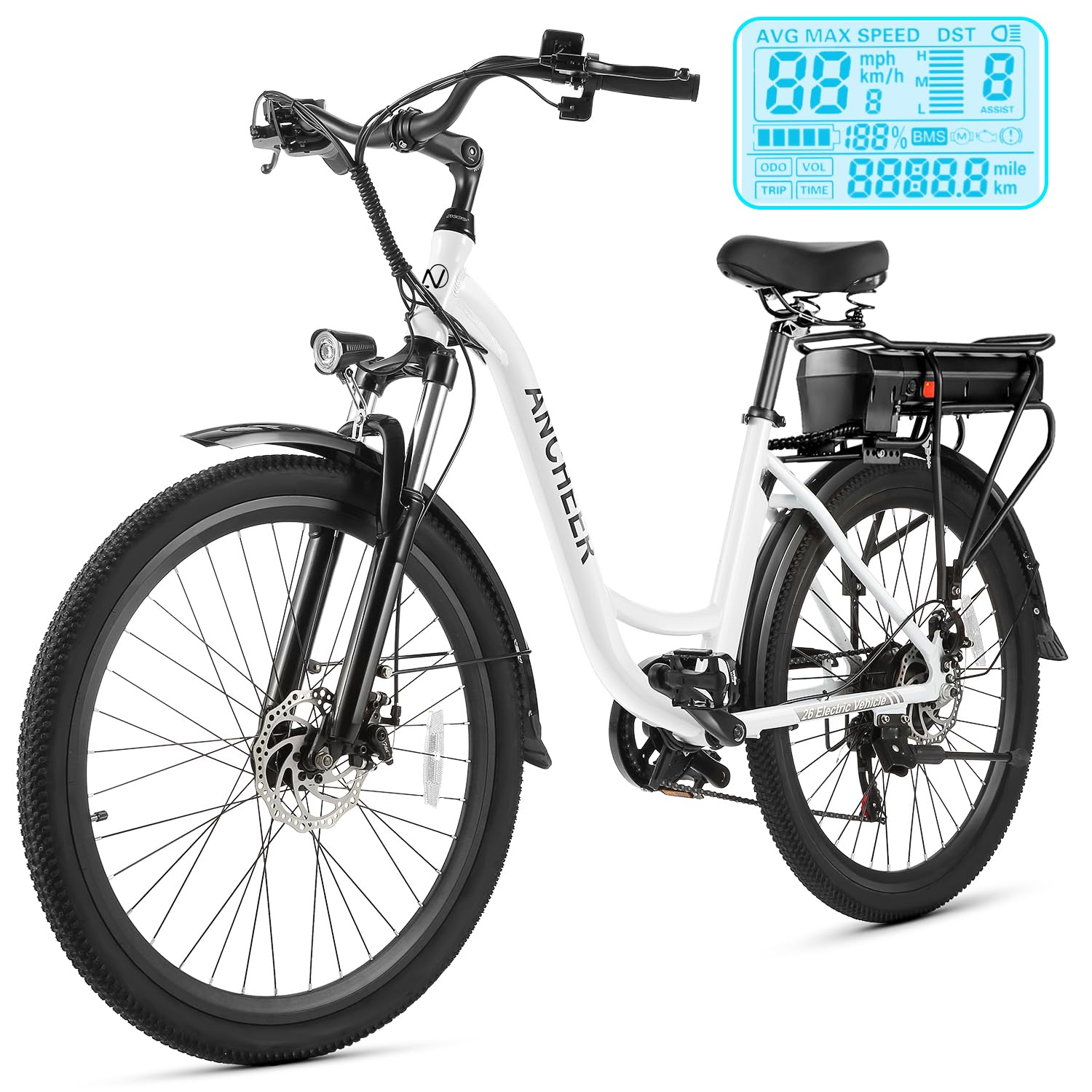
A lightweight aluminum commuter with a 500Wh battery that is a step up in range from the 374Wh crowd.
This ANCHEER model slots into the balance between entry-level and premium. The 48V 500Wh battery is a clear upgrade over the 374Wh packs found on cheaper models, promising noticeably more real-world miles. The 750W peak motor is paired with a 7-speed drivetrain and cruise control for relaxed long rides. The lightweight aluminum frame makes it easier to maneuver and carry than the heavier steel-framed rivals.
Owners find it easy to assemble, with a comfortable seat and a smooth ride. The step-through frame is appreciated by seniors and riders with health issues. The honest feedback is mixed on battery life and reliability — while some find the battery strong, others report it failing, and a few bikes have quit unexpectedly. The brakes can squeal when wet, and the front suspension is not very responsive. It is a solid mid-range option, but not without some quality concerns.
Balanced range: at 500Wh, its battery capacity splits the difference between entry-level (374Wh) and premium packs (614Wh+), giving you about 15-20 real-world miles per charge.
The concern: Reliability is mixed — a minority of buyers report the bike quitting unexpectedly; consider an extended warranty.
Go for it if: you want more range than the basic 374Wh bikes and prefer an aluminum frame for easier handling.
Be cautious if: you need a bike you can depend on 100% without the possibility of a sudden electrical failure.
9. ANCHEER Sunshine 26″ Ebike
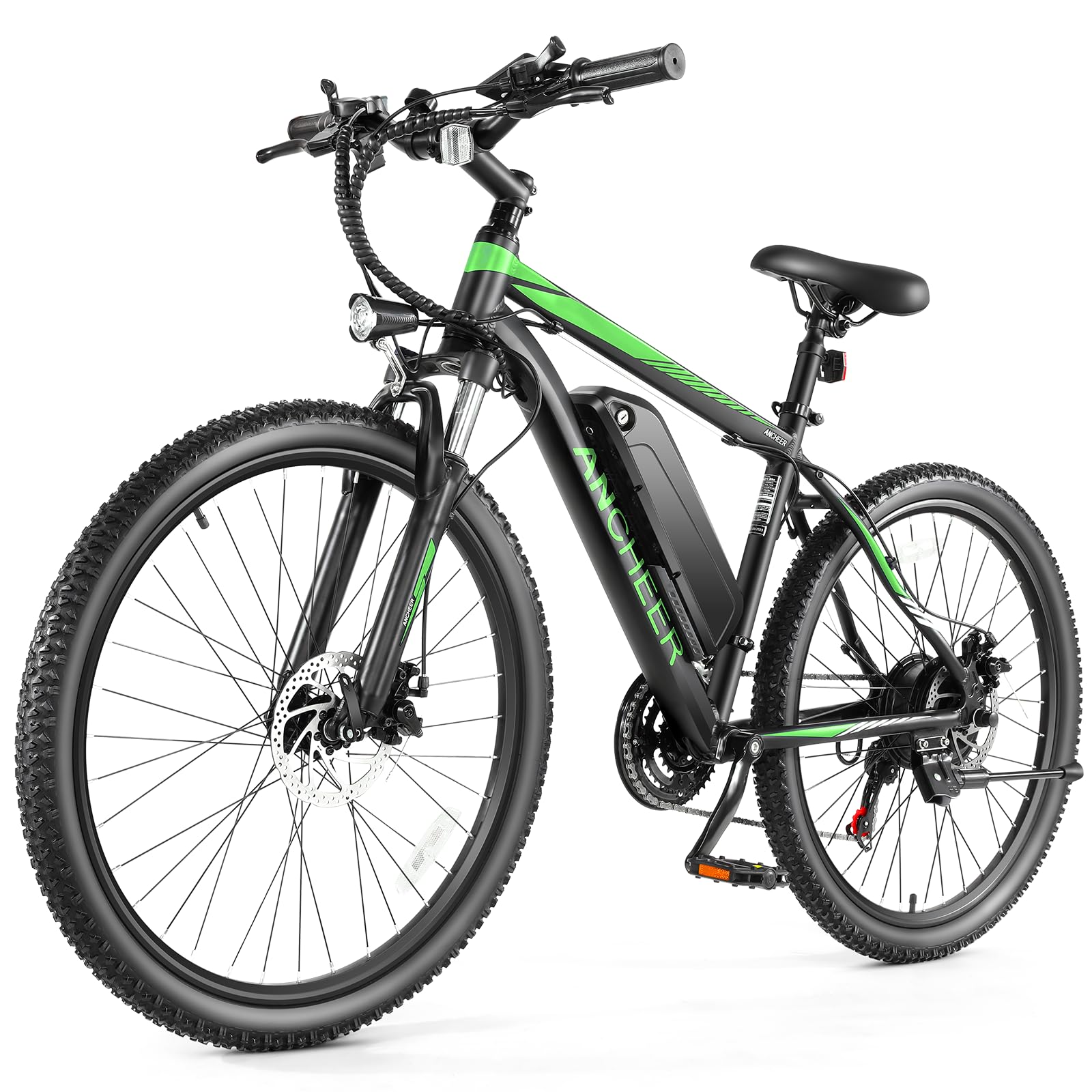
A proper mountain-bike geometry at an ebike price, with hill-climbing torque that surprises owners.
If you want an electric bike that looks and feels like a traditional mountain bike, the ANCHEER Sunshine is your pick. The carbon steel frame and 26-inch wheels give it a familiar MTB posture, and the 750W peak motor provides enough torque for a heavier rider to tackle hills. The 48V 374Wh battery is on the smaller end, but in low pedal-assist mode, it can stretch to a claimed 55 miles. The 7-speed drivetrain and front suspension are standard for this tier.
Owner feedback is overwhelmingly positive on build quality and ease of assembly. The bike handles well on both road and light gravel, with soft tires providing good traction. Assembly takes about 1.5 hours with the included tools and video. Some units arrive with minor damage (like a broken headlight clamp), and the factory components are basic. The ride quality is praised as smooth and the bike is described as “pretty durable” by a 185-lb rider. It is a solid, no-nonsense entry into mountain-style ebiking.
True MTB feel: the 26-inch wheels and carbon steel frame give it a traditional mountain bike stance, unlike the cruiser geometry of the Funhang.
The cost of entry: The 374Wh battery delivers 15-25 real-world miles, not the advertised 55.
Choose this if: you prefer a traditional mountain bike frame and need a budget ebike for light trails and paved commutes.
it’s not for you if: you need the longest possible range or want a step-through frame for easy mounting.
10. Vivi 26″ Mountain Ebike
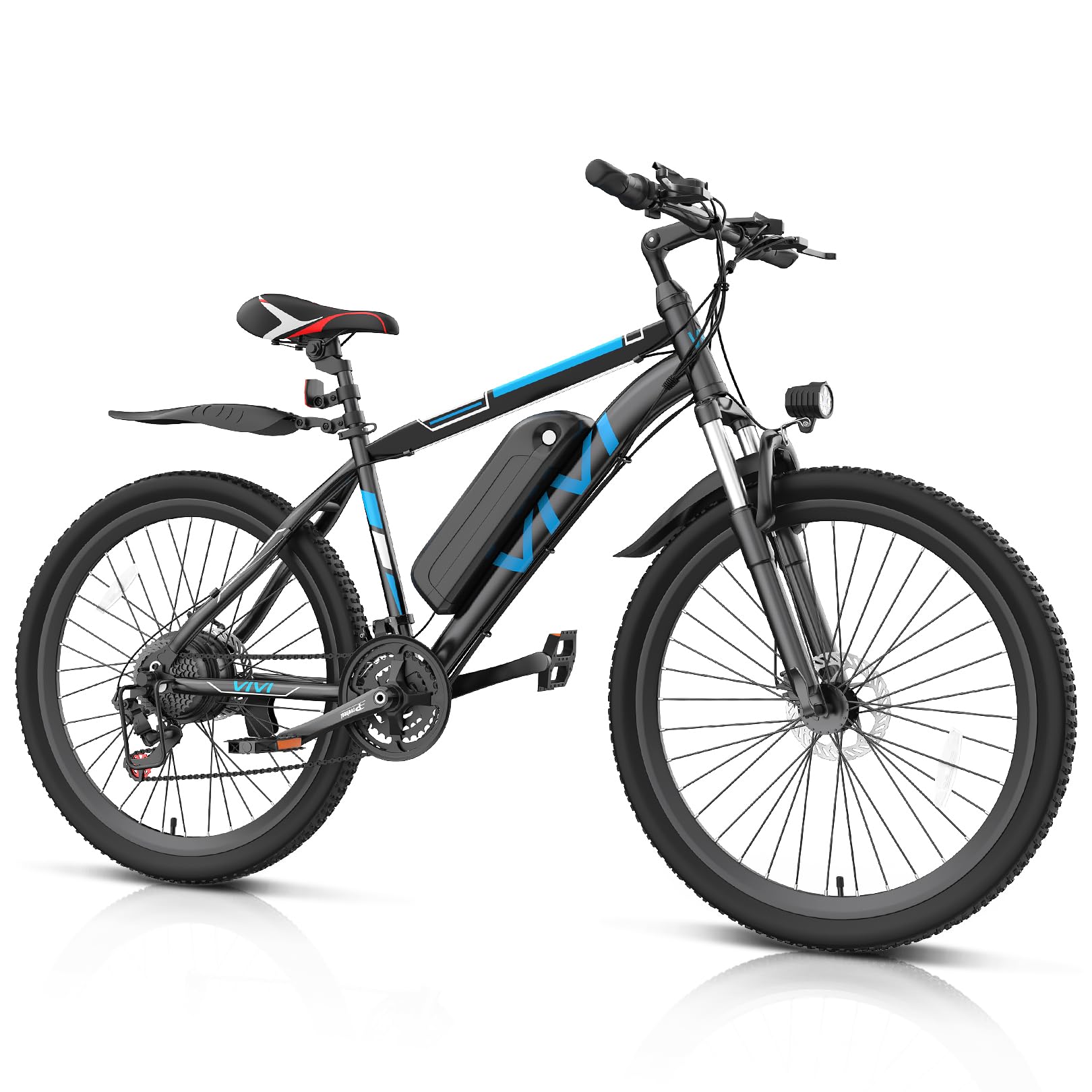
An aluminum-framed mountain bike that one 300+ lb owner calls “honest” — it gets the job done.
The Vivi 26″ electric mountain bike stands out for its lightweight aluminum frame, which makes it easier to handle than the steel-framed competition. The 500W motor (749W peak) is paired with a 48V 374.4Wh removable battery, offering 22-25 miles in pure electric mode and 44-50 miles in PAS mode. The 21-speed drivetrain (front and rear derailleur) gives you a wide gear range for climbing.
This bike is particularly noted as a solid choice for heavier riders. One 300+ lb owner reports a 10-20 mile range at 20 MPH on flats, stating the bike handles his weight well. Another owner (a mom) uses it to pull a bike trailer with kids “with ease.” The quality and ease of assembly are the most-praised aspects. The downsides are a battery life that draws mixed reviews, an uncomfortable stock seat, cheap tires, and an assembly manual full of typos. One rider notes the manual mode (pedaling without assist) feels unstable due to the bike’s weight. A separate owner reports motor and control panel failures, though the seller was responsive with refunds and replacement parts.
Handles weight well: owners up to 300+ lbs report it rides comfortably at 20 MPH, a load capacity that beats most entry-level bikes.
The weak spots: The stock seat is uncomfortable, and the battery life is inconsistent — some owners mention the battery going bad prematurely.
Good for: heavier riders (300+ lbs) who need a lightweight aluminum frame and a wide 21-speed gear range.
Not if: you want a comfortable stock seat or a bike with a flawless track record for battery reliability.
11. Gotrax R1 Folding Ebike

At 50 lbs, this folding commuter is the lightweight champion for trunk-stashing and elevator rides.
The Gotrax R1 is the practical folding option for urbanites with limited storage space. It folds down to 37.4″ x 17.7″ x 27.5″, small enough for a car trunk or under a desk. At just 50 lbs, it is 15+ lbs lighter than most of the other bikes on this list, making it genuinely portable for a 120-lb person to lift. The 500W peak motor (350W rated) is paired with a 48V 374.4Wh battery that takes 5.5 hours to charge and delivers up to 25 miles in PAS mode.
The quality, ride quality, and ease of assembly are the highest praised aspects by a large margin. The bike is described as “sturdy yet lightweight,” with a smooth ride that handles moderate hills and off-road paths. The 20″ x 2.6″ tires and dual disc brakes provide confidence. The main negative is that the battery key must be fully clicked into the “lock” position to power on — a quirk that has confused some new owners. The motor is less powerful than the 750W+ peak motors on other bikes, so it will struggle on very steep hills.
Trunk-friendly: at 50 lbs, it is a full 16 lbs lighter than the heavyweights like the INVANTI and TST, making it genuinely easy to lift and store.
The quirk: You have to turn the battery key fully to “lock” for the bike to power on — a small but easily missed step that has confused new owners.
Perfect for: apartment dwellers and RV adventurers who need a lightweight, truly portable folding bike for the last mile.
Not for: riders with steep hills who need a motor above 500W peak or anyone who wants a full-size 26-inch wheel.
Understanding the Specs
Battery Capacity (Watt-Hours)
This is the single most important spec for real-world range. A higher watt-hour (Wh) number means you can ride farther. Think of it as the size of your fuel tank. A 374Wh battery is good for a short 10-15 mile commute, while a 500Wh or 600Wh pack can handle longer 20-30 mile trips or multiple days between charges. Always ignore the “up to X miles” claims — they are measured under ideal lab conditions. Halve them for real-world expectations.
Peak Motor Power
Motor power is measured in watts (W). The “rated” wattage is the continuous output, and the “peak” wattage is the short burst for climbing hills or accelerating. For a budget ebike under $800, a 750W to 1200W peak motor is the balance. A 500W peak motor is fine for flat city streets. Anything above 1000W peak will power you up moderate hills without breaking a sweat.
FAQ
Will an electric bike under $800 fit someone 6 feet tall?
How long does it take to assemble a budget electric bike?
Is it safe to ride a cheap electric bike in the rain?
What does UL 2849 certification mean for an e-bike?
How far can I realistically ride on a 374Wh battery?
Can I replace the battery on a budget e-bike?
Is folding or full-size better for apartment living?
Can I use a budget e-bike for food delivery?
What is the difference between Class 2 and Class 3 e-bikes?
How often will I need to replace the brakes on a budget ebike?
Final Thoughts: The Verdict
For most people, the best electric bike under $800 winner is the Qlife Cityone 2.0 because its 499Wh battery and 1200W peak motor deliver a combination of power and range that nothing else in this price tier can match, even if the construction feels budget-tier. If you want a folding commuter with genuine portability, grab the Gotrax R1. And for all-terrain fun with fat tires and a high load capacity, the TST Fat Tire Ebike is the one to reach for.
How We Picked
We do not accept paid placement. Every pick is matched to a real buyer and a real use-case; we do not hands-on test units.
Sources & Methodology
Specifications: manufacturer listings and product documentation. Review insights: verified customer reviews, as of July 2026. Pricing: not shown on this page (it changes often); check the current price via the retailer link.
As an Amazon Associate, Trending Car earns from qualifying purchases. This does not affect which products we feature.